DD
MM
YYYY

PAGES

DD
MM
YYYY

spot_img

PAGES

Home Blog Page 205

JP Morgan’s Latest Bitcoin Prediction: $170K in 6-12 Months

0
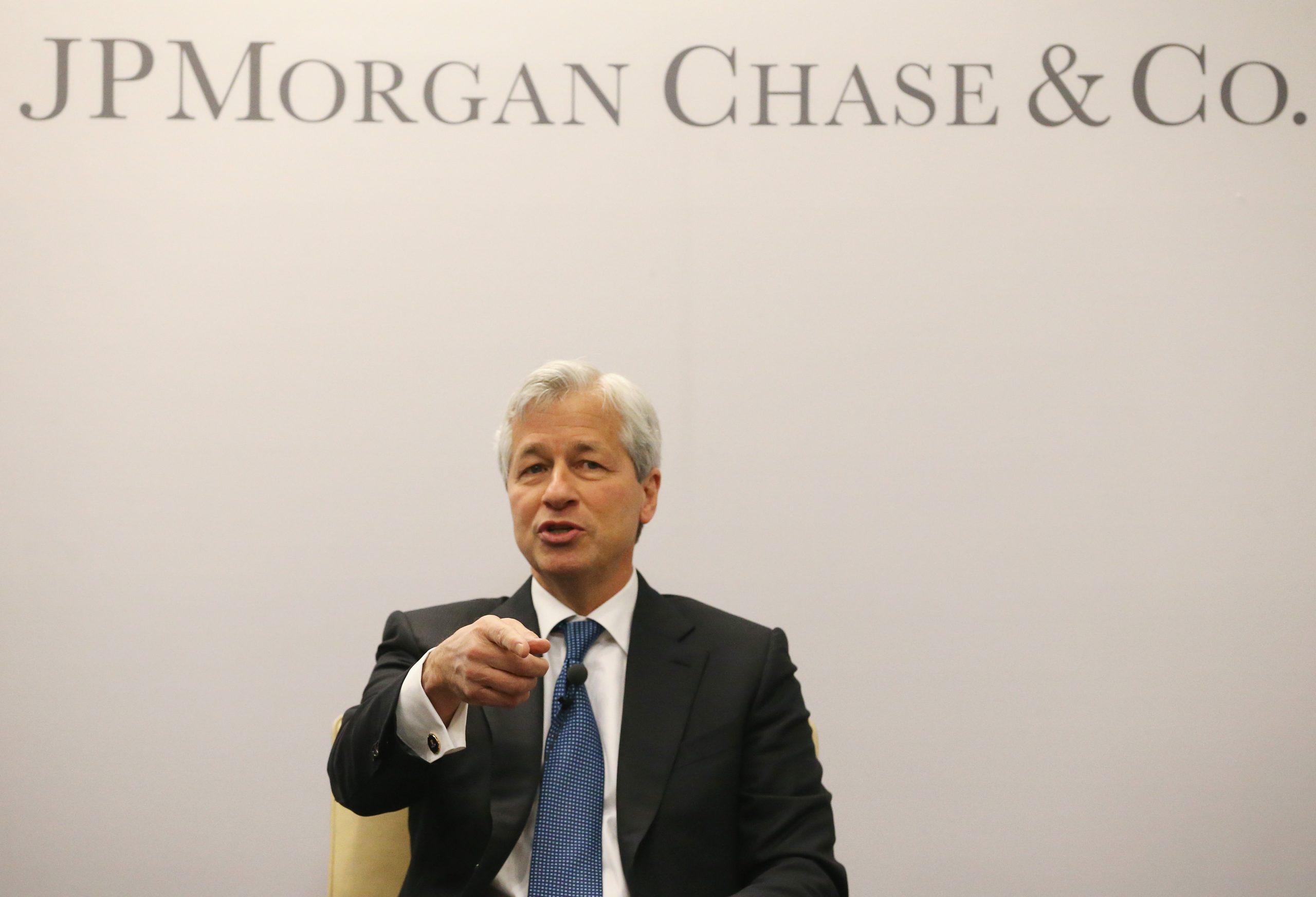
JP Morgan Chase puts contents through its CEO account, it goes viral. But the same content via JPMC account, no one cares (WSJ)

JPMorgan has forecasted that Bitcoin could reach around $170,000 in the next 6-12 months, based on a fresh analysis released on November 6, 2025.

This comes amid a recent pullback in BTC’s price below $100,000 it was trading around $103,000 as of early November 7, marking its first dip under that psychological level in four months. The prediction stands out as bullish, especially against a backdrop of broader market caution, including revised-down targets from firms like Galaxy Digital now at $120,000 for year-end 2025, down from $185,000.

Lead Analyst: Nikolaos Panigirtzoglou, Managing Director, argues Bitcoin is currently undervalued relative to gold when adjusted for volatility. Gold’s recent surge above $4,000/oz has increased its volatility, making BTC more appealing on a risk-adjusted basis.

The BTC-to-gold volatility ratio has fallen below 2.0, meaning Bitcoin now absorbs about 1.8 times more “risk capital” than gold. At BTC’s current market cap of ~$2.1 trillion, this implies a need for a ~67% increase to align with gold’s ~$6.2 trillion in private-sector investments via ETFs and physical holdings.

Price Math: A 67% cap rise from current levels points to ~$170,000 per BTC. JPMorgan notes BTC was ~$36,000 overvalued vs. gold at the end of 2024 but is now ~$68,000 undervalued.

The October 10 liquidation wave the largest ever for BTC perpetual futures has cleared excess leverage, with open interest ratios normalizing. This “deleveraging phase” is seen as complete, setting the stage for upside.

Timeline: “Significant upside” over the next 6-12 months, assuming stable conditions. This isn’t JPMorgan’s first BTC-gold comparison—earlier in October 2025, they eyed $165,000 by year-end—but the new report extends the horizon and refines the target.

While JPMorgan’s take is optimistic, sentiment is mixed: Bearish Signals: October was BTC’s worst month since 2018 (down 4-5%), driven by a $128 million DeFi hack, whale sell-offs ~400,000 BTC dumped, and macro headwinds like potential tariffs. Some analysts doubt a quick rebound to $125,000 by end-2025.

Voices like Mexican billionaire Ricardo Salinas Pliego predict BTC could hit $1 million “very shortly” to rival gold’s reserve status. ETF inflows remain positive overall, despite modest October redemptions.

On platforms like Reddit’s r/CryptoCurrency, responses range from excitement (“I want to believe”) to skepticism (“Kiss of death from JP Morgan”), with some joking about the bank’s track record.

Bitcoin’s year-to-date gains are still robust despite the dip, fueled by ETF demand and its “digital gold” narrative. JPMorgan’s CEO Jamie Dimon remains personally skeptical of crypto, but the firm’s research arm has grown more constructive.

A sustained move to $170 k would re-price the entire crypto capital stack, force central-bank policy responses, and cement BTC as a macro asset—but only if gold and leverage stay in JPMorgan’s forecasted range.

Macro shock – Fed QT + tariff war ? risk-off; BTC drops to $80 k. Regulatory clampdown – SEC reclassifies BTC ETFs as “security” ? forced redemptions. Gold catch-up – If gold volatility collapses, JPM model flips bearish.

Gold ETFs (GLD) see outflows; JPM’s own volatility-adjusted model implies gold needs to hit $4,800/oz to stay competitive ? unlikely in 12 mo. BTC seen as “digital gold 2.0”; reduces relative appeal of 10-yr T-bills.

Possible 25–50 bps upward pressure on yields if institutional rotation accelerates. ETH/BTC ratio likely stays <0.04 until BTC stabilizes; alts underperform until Q2 2026. Meme coins (DOGE, PEPE) still pump on retail hype.

If this prediction holds, it could signal a rebound from the post-peak correction BTC hit $126,000 ATH in October. Keep an eye on gold prices, futures leverage, and ETF flows for confirmation—volatility is BTC’s middle name.


72 Out of Top 100 Cryptocurrencies By Market Cap Are Trading 50% Below ATH

0

According to recent analysis from Galaxy Research, 72 of the top 100 cryptocurrencies by market capitalization are currently trading at least 50% below their all-time highs as of early November 2025.

This reflects ongoing market pressures, including the aftermath of the 2021 bull cycle hype, failed projects, and token dilution from unlocks. Large-cap standouts: A small group of leaders like Bitcoin (BTC), Ethereum (ETH), Binance Coin (BNB), and LEO Token are within 30% of their peaks, showing relative resilience.

Mid- and small-cap struggles: Assets such as Filecoin (FIL), The Graph (GRT), Tezos (XTZ), and Polkadot (DOT) remain 80–95% below ATHs, highlighting challenges in sectors like gaming, AI agents, and overvalued memecoins.

Of nearly 7 million tokens launched since 2021, about 3.7 million have failed, with 1.8 million collapsing in Q1 2025 alone—largely due to easy-launch platforms like pump.fun flooding the market with low-quality projects.

This distribution underscores why a full “altseason” rally has been elusive this cycle: too many tokens competing for attention and liquidity. Investors may want to focus on established names or those with strong fundamentals amid the volatility.

The cryptocurrency ecosystem has seen explosive growth, but it’s equally littered with failures. As of November 2025, out of nearly 7 million tokens launched since 2021, approximately 3.7 million (over 52%) have “died”—meaning they’ve ceased trading, been delisted, or become inactive due to low liquidity, scams, or abandonment.

This year alone has been brutal, with 1.8 million projects failing in the first quarter, the highest single-year rate on record. Platforms like pump.fun, which democratized token launches in 2024, fueled a meme coin frenzy but also amplified low-effort projects prone to collapse.

Failures aren’t new—over 14,000 “dead coins” have been tracked since 2014—but recent data shows a maturing market where survival rates are improving slightly (e.g., under 10% failure in 2023 vs. 70% in 2021).

Yet, in the last two months of mid-2025, 10.5% of active projects vanished due to shutdowns, rug pulls, and illiquidity. Pump.fun boom created 1M+ meme coins; most lacked utility.

Highest quarterly failures; market volatility post-inauguration. 99% of dead coins had low trading volume on pump.fun. Crypto projects flop for a mix of internal and external factors.

Lack of Utility or Real-World Adoption (42%): Many tokens launch with hype but no sustainable use case. Meme coins, for instance, rely on speculation and fade quickly—over 50% of 2024’s launches were memes that collapsed.

Scams and Rug Pulls (29%): Founders abandon projects after draining liquidity. In 2025, rug pulls accounted for a surge, with 92% of blockchain projects dying within a year due to bad actors.

Celebrity-endorsed coins (e.g., those tied to Trump family ventures) have been called out as 90%+ down, labeled scams. Bear markets expose weak fundamentals. Even VC-backed projects fail at 75% rates, often running out of cash or misreading demand.

Post-2025 inauguration volatility hit altcoins hard. Projects like Telegram’s TON halted due to SEC scrutiny. Inactive development (e.g., unupdated websites or socials) signals doom—99% of failures show this.

Oversaturation: With 37M+ unique tokens by September 2025 heading to 100M by year-end, competition is fierce. Only ~415 are listed on major exchanges like Binance.

Algorithmic stablecoin depegged in 2022 crash due to over-leverage; no real backing. $40B+ wiped out; largest single failure. Relic; new version (LUNA 2.0) trades at <1% of ATH, considered dead by most trackers.

Ponzi scheme promising 1% daily returns; collapsed amid fraud allegations. $3B+ investor losses; founders faced charges. Fully defunct; a cautionary tale for “guaranteed returns.”

Tied to collapsed exchange; liquidity crisis exposed mismanagement. $8B+ in user funds lost; Sam Bankman-Fried convicted. Token worthless; exchange bankruptcy ongoing. Scalability-focused but sank due to market indifference and poor adoption. Market cap <5% of peak; ongoing value erosion. Still trading but “failed” by performance metrics; down 95%+ from ATH.

Generic Pump.fun Memecoins (e.g., thousands unnamed). Low-effort launches; no utility beyond virality. 1.4M+ failures in 2024 alone. Bulk delisted; examples like “Peanut the Squirrel” up 4,800% then -57%.

Other mentions include QuadrigaCX exchange failure with $190M locked in cold wallet after CEO’s death and countless 2021 ICOs like BTCST. These failures highlight crypto’s “survival of the fittest” dynamic—good for weeding out junk but brutal for retail investors.

Elixir Sunsets deUSD After Fallout on Stream Finance

0

Elixir, a decentralized finance (DeFi) liquidity provider, announced it is sunsetting its synthetic stablecoin deUSD in response to severe fallout from Stream Finance’s $93 million loss.

Stream, a DeFi yield aggregator, halted withdrawals on November 4 after an external fund manager disclosed the massive shortfall, revealing $285 million in total debt across lenders—including $68 million owed to Elixir.

This exposure triggered a cascade: deUSD’s peg to the USD collapsed to as low as $0.015, wiping out nearly all its value. Elixir has emphasized that while the token is now worthless, it remains committed to redeeming holders 1:1 in USDC.

deUSD launches as a synthetic stablecoin challenging Ethena’s USDe, backed by over-collateralized loans across DeFi protocols. Community analysis reveals recursive minting loops between Stream’s xUSD and Elixir’s deUSD, inflating TVL through circular lending (e.g., Stream mints deUSD, uses it as collateral to borrow USDC, and loops back to mint more xUSD).

FUD builds as Stream fails to provide proof-of-reserves for xUSD; users urged to withdraw from related vaults. Stream halts withdrawals after $93M loss disclosure; its staked stablecoin xUSD depegs to $0.10 amid $285M debt revelation.

Stream holds 90% of deUSD supply ($75M), borrowed to back xUSD. Stream wallets dump deUSD on Curve pools, causing price to crash from $1 to $0.40, then $0.03. Elixir processes 80% of redemptions (excluding Stream), disables mint/redeem functions, takes a holder snapshot, and announces sunset. deUSD trades at $0.026.

Claims portal launches for remaining holders; Elixir coordinates with Euler, Morpho, and Compound to liquidate Stream positions and recover funds. Elixir lent ~65% of deUSD’s backing ($68M USDC) to Stream via Morpho markets for higher yields, taking xUSD as collateral.

When xUSD depegged 77% due to Stream’s loss, deUSD’s backing “vanished,” exposing systemic risks in synthetic stablecoins. Stream controls 99% of deUSD lending positions but declined to close or repay them, freezing liquidity. Elixir disabled withdrawals to prevent Stream from liquidating deUSD holdings prematurely.

Market Panic: Thin liquidity on DEXs like Curve amplified the dump—over $30M in deUSD was sold on-chain in hours, leading to the near-total depeg. This highlights vulnerabilities in recursive leverage loops, where protocols like Stream and Elixir mutually inflate TVL (e.g., $60M growth in weeks via circular minting), but a single failure unravels the system.

Elixir’s Response and User Impact Redemptions

80% of non-Stream holders already redeemed 1:1 in USDC. A snapshot secures the rest; a claims portal live as of November 7 allows remaining deUSD/sdeUSD holders to claim full value. Elixir states: “deUSD holds no value and the stablecoin has been sunset. Please do not buy or invest in deUSD.”

Elixir is withdrawing liquid assets and collaborating with Euler, Morpho, Compound, and vault curators to unwind Stream’s positions. It claims seniority on the $68M loan and expects full honoring of obligations.

Primarily deUSD holders now worthless on secondary markets and lenders to Stream via Morpho/Euler potential losses if recoveries fall short. No direct impact on USDC holders, but it erodes trust in synthetic stables.

Implications for DeFi

This event underscores the fragility of uncollateralized synthetics and leveraged lending: interlinked exposures can propagate failures rapidly, as seen in past cascades like the October 2025 liquidation wipeouts. While Elixir prioritizes user protection, the $93M Stream loss and $128M Balancer exploit recovery signals ongoing risks—analysts warn of eroding confidence in yield-chasing protocols.

Nigerian Stocks Extend Selloff, Lose N2.8tn in Five Days as Tax Fears and Trump’s Threats Rattle Investors

0

Nigeria’s equities market closed deep in the red on Friday, November 7, marking the fifth straight day of losses as investors continued to dump stocks amid fiscal policy concerns and mounting geopolitical tension.

The Nigerian All-Share Index (ASI) fell by 501.7 points to close at 149,524.8 points, down from 150,026.6 points the previous day. The 0.33% daily decline extended the week’s cumulative loss to 2.11%, erasing an estimated N2.8 trillion in market value.

Equity capitalization mirrored the bearish momentum, dropping to N94.9 trillion across 24,637 deals, compared to N95.3 trillion in the previous session. Market activity also thinned, as the total volume of shares traded fell to 527 million from 619 million recorded on Wednesday, signaling a growing retreat by both domestic and foreign investors.

Some analysts believe the latest selloffs are being driven largely by fears surrounding the federal government’s planned 25% capital gains tax, which is scheduled to take effect in January 2026. The tax will apply to profits exceeding N150 million and is being interpreted as a signal that the government may be looking to squeeze additional revenue from investment income amid a worsening fiscal deficit.

Several portfolio managers have said that the move could drain liquidity from the market, especially among high-net-worth investors and institutional funds that rely on equities for long-term returns.

The proposed tax is believed to be raising serious questions about Nigeria’s investment climate, sending the wrong signal at a time when the market is already battling low confidence.

However, fiscal analysts believe the government is under pressure to expand its tax base as debt servicing consumes an increasing share of national revenue. With inflation still in double digits and oil production yet to recover fully, the administration’s fiscal space is tightening rapidly.

Adding to the unease are geopolitical tensions after U.S. President Donald Trump issued a warning of potential military action against Nigeria if the authorities don’t act fast to stop the killing of Christians. The threat has stirred anxiety among foreign investors, many of whom are reportedly reviewing their Nigerian exposure amid fears of sanctions or diplomatic fallout.

This renewed tension follows months of friction between Washington and Abuja, which many have tied to Nigeria’s vocal support for Palestine. The United States has stood by Israel, targeting countries that support Palestine in the Gaza conflict that has claimed thousands of lives before the ceasefire deal brokered by Donald Trump. Trump’s latest comments are seen as a sharp escalation that could have economic implications, especially for Nigeria’s already fragile foreign investment flows.

The selloff has cut across nearly all major sectors, including banking, consumer goods, and industrials, as traders race to protect capital. Analysts say the situation underscores how vulnerable the market has become to both policy unpredictability and external shocks.

On the gainers’ list, NCR and MCNICHOLS provided rare glimmers of green, rising 9.94% and 9.82%, respectively. But the decliners’ chart remained crowded, led by BERGER and CILEASING, which plunged 10.00% and 9.86%.

WEMABANK and CONHALLPLC topped the trading volume chart, driving the day’s activity despite the overall negative sentiment.

Financial analysts have warned that unless the federal government clarifies its capital gains tax policy and moves swiftly to restore investor confidence, the bearish trend could deepen into next week.

Ozak AI vs Bitcoin: Why This $0.014 AI Token Could Deliver 500× the ROI of BTC in the Next Bull Cycle

0

Bitcoin is one of the major tokens in the world of cryptocurrencies. Several cryptocurrencies follow the same trend and are dependent on the Bitcoin price range. The price of the altcoin rises when the price of Bitcoin rises, and it falls when the price of Bitcoin falls. To protect their money, a lot of investors have placed their money in Bitcoin. There are numerous early-stage tokens available on the market, but Ozak AI stands out from the rest since investors are increasingly looking for a bigger return these days.

Ozak AI’s Technology and Tokenomics: The Winning Edge Over Bitcoin

The Ozak AI’s core technology merges AI and blockchain to produce AI predictive tools to analyse the real-time blockchain data and market trends. Its predictive intelligence framework uses Temporal Convolutional Networks (TCNs), Transformers, and LSTM-based hybrid models to analyze markets in real time. Key features include the Smart Execution Layer that automates trades based on AI signals. Ozak Data Vaults ensures faster and secure access to data.

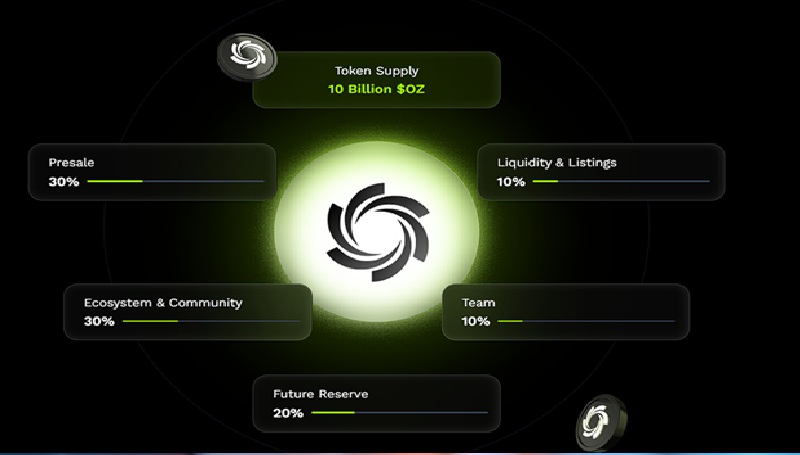
From the total supply of 10 billion OZ tokens, the ecosystem has well structured the tokens into each section. 30% is for presale, 10% each for liquidity and team, 30% for ecosystem and community, and 20% for future reserves. So the tokenomics clearly shows that the token is not just an early-stage crypto based on low price or meme-based, it has well-planned and structured everything in the ecosystem.

How Ozak AI’s $0.014 Entry Price Could Turn Early Buyers Into 500× Winners

As we’ve all seen, early buyers of cryptocurrencies have the potential to earn passive income. Ozak AI, which costs $0.014 and is presently in its 7th presale round. Since the presale is starting at a price of $0.001, early investors have already benefited from it, and those who purchase it are already seeing a 1,300% rise. As of right now, over $4.49 million has been raised through presale fundraising, with more than 1 billion tokens having been sold.

As a result of the token’s rapid adoption, its price rises with each phase owing to the rising demand. According to analyst predictions, the token will hit its goal price of $1 by the end of 2026 and $6 by the end of 2027. You may profit by 500 x if you spend $500 in the current presale phase at $0.014, which would yield 41,666 tokens. If the token hits the $6 milestone, the investment would be worth $249,996.

Why Bitcoin’s Growth Is Slowing Down

Bitcoin is still at the top of the cryptocurrency market, but it can’t make 500 x as much as Ozak AI because it is currently trading at $111k and has a $2.22 trillion market capitalization. Bitcoin has already outperformed its early-stage earnings and has a huge market capitalization.  Bitcoin is growing steadily and slowly, demonstrating stable earnings. For this reason, investors are moving from Bitcoin to Ozak AI in order to increase their return on investment with a smaller initial commitment.

Strategic Alliances: How Ozak AI’s Partnerships Amplify Its Market Power

Ozak AI has recently announced its partnership with two firms, such as Mind AI and Centic. Collabing with Mind AI, it produces a smarter, faster, privacy-safe crypto trading system where Mind AI produces all the market sentiment data into a small private analytics system. Combined with the Centic, it provides context so traders know when to act and why it’s happening, all in real time.

Conclusion

The Ozak AI token is unique from other AI-based cryptocurrencies due to its AI-driven technology, organized tokenomics, and strategic partnership. If the token achieves all of the future objectives outlined in its white paper and the market supports it, which is encouraging, the 500x prediction will be attainable. Therefore, the Ozak AI coin can be the best option for investors looking for a larger return than standard Bitcoin.


For more information about Ozak AI, visit the links below:

Website: https://ozak.ai/

Twitter/X: https://x.com/OzakAGI

Telegram: https://t.me/OzakAGI