


DD
MM
YYYY

PAGES

DD
MM
YYYY

spot_img

PAGES

Home Blog Page 2051

Nigeria’s Total Trade Exports Surged To $50.4bn In 2024, Driven By FX Rate Depreciation And Fuel Subsidies Removal

0

Nigeria’s foreign trade saw a remarkable turnaround in 2024, with total exports surging to $50.4 billion—an increase largely attributed to the naira’s sharp depreciation and the elimination of fuel subsidies.

The latest data from the National Bureau of Statistics (NBS) reveals that total trade volume reached a record-breaking N138 trillion, marking a staggering 106% rise compared to the previous year. When adjusted for exchange rates, this translates to $89.9 billion in dollar terms, reflecting a 22.1% growth.

This resurgence follows a period of contraction in 2023 when the shift to a market-driven exchange rate caused a 35% decline in total trade. However, businesses appear to have adapted to the new economic reality, with trade rebounding sharply in 2024. Looking further back, Nigeria’s peak trade volume in the last five years occurred in 2022, when total trade was recorded at $113.8 billion. At the time, the official exchange rate was N460 to the dollar, but with the parallel market rate at N736 per dollar, a recalculated trade volume would have stood at just $71.7 billion.

The transition to a flexible exchange rate system in 2023 triggered more than a steep 50% naira devaluation, significantly altering Nigeria’s trade dynamics. This depreciation made exports more competitive, while imports became costlier, contributing to a significant increase in export earnings. Yet, beneath these impressive figures lies the fundamental reality that Nigeria’s economy remains heavily dependent on crude oil.

In 2024, total exports nearly doubled, rising by 96.3% to N60.59 trillion. The primary driver was crude oil production, which reached 1.5 million barrels per day. In dollar terms, total exports stood at $50.5 billion—an improvement from $39.6 billion in 2023 but still lower than the $58.2 billion recorded in 2022. When using the parallel market rate for analysis, 2024 emerges as the most lucrative year for Nigeria’s export earnings.

Crude oil exports alone accounted for $36 billion (N55.2 trillion) in 2024, making up about 71% of total exports. This represents an increase from $31 billion in 2023 but remains below the $45.8 billion recorded in 2022. The oil sector continues to be the backbone of Nigeria’s economy, financing government spending and supporting foreign exchange reserves. However, the industry remains plagued by persistent challenges, including large-scale crude oil theft, underinvestment in upstream production, and environmental conflicts that have disrupted output. Despite government interventions, Nigeria has yet to meet its ambitious production target of 2 million barrels per day.

Beyond crude oil, non-oil exports saw a resurgence, reaching $5.9 billion in 2024—the highest level since 2020 in both naira and dollar terms. These exports, largely comprising agricultural and mineral products, have been bolstered by increased regional trade within Africa. However, their contribution remains marginal compared to oil.

Meanwhile, imports continued their upward trend. In dollar terms, total imports amounted to $39 billion (N60.5 trillion) in 2024, based on an official exchange rate of N1,535 per dollar. This is an increase from $34 billion in 2023 but significantly lower than the $55.6 billion recorded in 2022. The persistent decline in imports over the past few years is tied to naira depreciation, which has made foreign goods more expensive and restricted businesses’ access to foreign exchange for imports.

Despite the impressive foreign trade figures, Nigeria’s trade data does not account for services, which form a significant portion of foreign exchange outflows. The country spends heavily on imported services, particularly in technology, consulting, and technical support. These transactions exert additional pressure on the exchange rate, contributing to continued volatility in the forex market.

Nonetheless, the latest figures from the Central Bank of Nigeria (CBN) suggest that the country’s external accounts are stabilizing. Nigeria recorded a current account balance of $5.14 billion in the third quarter of 2024, signaling a tentative improvement despite ongoing forex-related challenges.

While the sharp rise in total trade offers a promising outlook, the sustainability of this growth is said to depend much on addressing the structural weaknesses in Nigeria’s trade composition. Economists have noted that without reducing overreliance on oil exports and strengthening local production to curb import dependency, the economy remains vulnerable to external shocks—especially fluctuations in global crude oil prices and exchange rate volatility. The government’s challenge now is to build on this momentum by fostering a diversified trade strategy that strengthens non-oil exports and mitigates forex pressures.
Get Blucera Access with Tekedia Mini-MBA Annual Registration [video]

0

Tekedia Mini-MBA annual package includes 3 consecutive Tekedia Mini-MBA editions, 2 optional capstones AND annual access to Blucera.com. 

Blucera will launch at the start of Mini-MBA edition 17 on June 9, 2025. Blucera provides eVault custodial services, business tools, libraries of Tekedia videos & course materials, Blucera WinGPT (AI business educator and personal interview coach engineered with libraries of Tekedia materials and more), etc. This video explains the product. 

WinGPT:  Business Education Tool

  • It’s a personalized business education tool.
  • It uses AI to guide learners through business concepts.
  • It draws from Tekedia’s course materials and other selected libraries.
  • It can provide specific guidance based on real-world scenarios.
  • Everything is baked with the nuances of doing business in Africa.

WinGPT: Personal Interview Coach

  • It’s an AI-powered interview and career preparation tool.
  • It analyzes resumes and experience to tailor coaching.
  • It simulates interview scenarios through video.
  • It leverages knowledge of specific companies and industries.

Go here and register, as we have opened registrations for the next edition of Tekedia Mini-MBA (June 9 – Sept 6, 2025)  

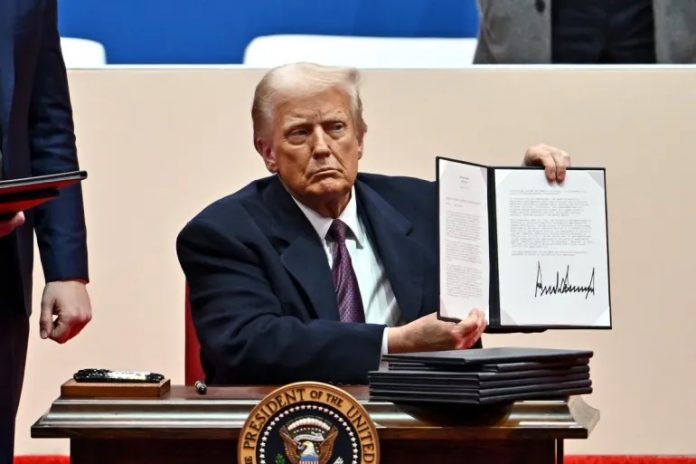
Exploring Trump’s Executive Order to End Debanking Confronting Operation ChokePoint 2.0

0

Corey Petty, Chief Insights Officer of Logos, which operates at the intersection of technology and ideology, views President Trump’s plan to sign an Executive Order targeting the Federal Reserve’s regulatory overreach and debanking practices with a mixture of cautious optimism and critical scrutiny.

The proposed Executive Order aims to roll back policies associated with the Biden administration, particularly those linked to what the crypto industry has dubbed “Operation Chokepoint 2.0.” This alleged initiative involved informal pressure from federal regulators, including the Federal Reserve, on banks to limit or sever ties with cryptocurrency companies, often without transparent justification. Such debanking practices have disproportionately impacted lawful businesses in the crypto sector, stifling innovation and access to essential financial services.

Corey Petty of Logos Posits that This Executive Order is a measured response to Operation Choke Point 2.0 ‘s hindrance to the cryptocurrency industry’s progress toward establishing itself as a credible sector by justly pressuring banks to cut ties with crypto-related businesses. This Executive Order along with the Financial Integrity and Regulation Management Act are policy measures directly combatting debanking to ensure the crypto industry is primed to operate through U.S. banking entities.

Smart policy decisions that remove barriers to progressing the integration of open-sourced blockchain technology in decentralized models will ensure that the U.S. maintains a stake in the digital assets race. Political debanking has historically fueled unrest within traditional banking systems. These actions have not only excluded individuals and businesses from accessing essential financial services but have also undermined public trust in centralized institutions. Decentralized systems combat debanking by fostering financial autonomy, enabling an open and transparent internet while ensuring trustless compliance. The CyberState movement advances these principles by offering alternative governance models that are resilient, transparent, and inclusive. These systems will safeguard against regulatory overreach and allow for innovation to prosper in times of political upheaval.

For Logos, which champions decentralized systems that empower individuals and communities to operate outside traditional financial gatekeepers, addressing this overreach could signal a more favorable environment for blockchain-based projects. By fostering “fair and open” access to banking services, as outlined in Trump’s broader digital asset policy, this move could reduce the friction that decentralized technology providers face when interfacing with the traditional financial system.
However, it’s critical to examine this Executive Order beyond its surface-level appeal.

While it may curb regulatory overreach, the Federal Reserve’s independence from direct White House influence raises questions about the order’s enforceability. The Fed’s policies are not typically dictated by executive action, and its autonomy is enshrined to prevent political interference. This suggests that the order’s impact may be more symbolic than substantive unless it is accompanied by concrete legislative or regulatory changes.

Moreover, the absence of banking regulators, such as the Federal Reserve, from the Presidential Working Group on Digital Asset Markets—established by an earlier Trump Executive Order on January 23, 2025—indicates a potential gap in addressing debanking at its systemic root. For Logos, this omission could mean that the structural barriers to financial inclusion for decentralized projects persist, even if the rhetoric shifts.

From a philosophical standpoint, Logos is fundamentally about reducing reliance on centralized institutions, including banks and regulators, through privacy-preserving and decentralized technologies. While curbing debanking is a step toward fairness, it does not address the underlying issue: the centralized control of financial systems that inherently conflicts with the principles of self-sovereignty. The Executive Order’s focus on protecting access to banking services, while beneficial in the short term, risks reinforcing dependency on traditional financial infrastructure rather than accelerating the adoption of decentralized alternatives.

For network states and self-sovereign communities, the ultimate goal is not merely to gain access to centralized systems but to build parallel systems that render such access unnecessary. Thus, while the order may alleviate immediate pressures, it does not inherently advance the long-term vision of Logos. Furthermore, the broader context of Trump’s digital asset policy—evidenced by his establishment of a Strategic Bitcoin Reserve and a U.S. Digital Asset Stockpile—suggests a strategic embrace of cryptocurrencies as tools of national economic power.

This approach, while potentially beneficial for mainstream crypto adoption, could prioritize state and corporate interests over the decentralized ethos that Logos represents. For instance, the creation of a national digital asset stockpile, potentially funded by seized cryptocurrencies, raises concerns about government centralization of what should be decentralized systems. This could lead to a future where the state exerts undue influence over digital asset markets, undermining the autonomy of network states and self-sovereign communities.

It’s also worth critically examining the political motivations behind this Executive Order. Trump’s pro-crypto stance, bolstered by significant industry support during his 2024 campaign, may be more about consolidating political and economic power than genuinely fostering innovation. The crypto industry’s alignment with influential tech figures and the administration’s broader deregulatory agenda could result in a selective relaxation of rules that benefits large, well-connected players while leaving smaller, truly decentralized projects vulnerable to other forms of regulatory or market pressure.

For Logos, which operates at the intersection of technology and ideology, these dynamic underscores the need to remain vigilant and independent, ensuring that our technology stack serves communities rather than becoming co-opted by state or corporate agendas. Trump’s planned Executive Order targeting the Federal Reserve’s regulatory overreach and debanking practices offers potential short-term relief for the crypto industry, including projects like Logos, by addressing unfair financial exclusion.

For Logos, the focus must remain on building resilient, privacy-preserving infrastructure that empowers network states to thrive outside the traditional financial paradigm, regardless of shifts in political winds. While we welcome measures that reduce immediate barriers, our mission is to render such dependencies obsolete, ensuring true sovereignty for the communities we serve.

Former Uber CEO, Travis Kalanick, Said Company Screwed Up Scrapping Self-Driving Ambitions

0

Former Uber CEO Travis Kalanick has voiced his frustration over the company’s decision to abandon its self-driving ambitions, calling it a major misstep in light of the rapid advancements in autonomous ride-hailing.

Speaking at the Abundance Summit in Los Angeles on Wednesday, Kalanick pointed out that Uber was on the verge of catching up with Waymo before new management pulled the plug on its self-driving division.

“Look, [new management] killed the autonomous car project we had going on. At the time, we were really only behind Waymo but probably catching up, and we were going to pass them in short order … I wasn’t running the company when that happened, but you know, you could say, ‘Wish we had an autonomous ride-sharing product right now. That would be great.’”

Uber’s decision to offload its self-driving unit, Advanced Technologies Group (ATG), to Aurora Innovation in 2020 was seen as a fire sale, prompted by financial struggles and mounting legal troubles. At the time, Uber had already poured hundreds of millions of dollars into the effort, with no clear path to profitability. Under new leadership, the company chose to scale back its ambitions and focus on its core ride-hailing and delivery businesses.

However, as Kalanick’s remarks highlight, the decision may have cost Uber a crucial opportunity in the emerging autonomous ride-hailing industry. While Uber stepped back, Waymo surged forward, deploying its robotaxis in cities like San Francisco, Los Angeles, and Phoenix. Other companies, including Tesla, have also lowered interest in autonomous ride-hailing, betting that robotaxis will be the future of transportation.

Robotaxis: The Future of Ride-Hailing?

The concept of autonomous ride-hailing, or “robotaxi” services, has been gaining traction as the next evolution of urban mobility. The idea is simple: fully self-driving vehicles could replace human drivers, reducing costs for companies like Uber while improving efficiency and safety.

Elon Musk, Tesla’s CEO, has been one of the loudest proponents of this vision, repeatedly stating that Tesla’s Full Self-Driving (FSD) software will eventually power a fleet of autonomous taxis. Musk has predicted that robotaxis will make ride-hailing so cheap that car ownership will become unnecessary for many people. Tesla’s strategy hinges on removing human drivers from the equation entirely, making ride-hailing vastly more profitable by eliminating labor costs.

For Uber, this would have been a game-changer. The company’s entire business model relies on a network of human drivers who take a significant cut of fares. Uber has faced persistent issues with driver shortages, fluctuating wages, regulatory battles, and customer complaints about driver behavior. Robotaxis could have solved these challenges by providing a more reliable, cost-effective alternative.

Kalanick’s comments suggest that he saw autonomous ride-hailing as Uber’s inevitable future. By scrapping its self-driving program, the company effectively handed over the opportunity to competitors.

Did Uber Give Up Too Soon?

Uber’s retreat from self-driving technology wasn’t solely about finances. The company was embroiled in a high-profile lawsuit with Waymo, which accused Uber of acquiring stolen trade secrets related to self-driving technology. The legal battle resulted in a $245 million settlement in 2018 and cast a shadow over Uber’s autonomous ambitions.

Faced with mounting losses and pressure from investors to turn a profit, Uber’s leadership opted to cut its self-driving division in 2020. At the time, the move was seen as pragmatic—autonomous technology was still years away from full commercialization, and Uber needed to focus on sustainable revenue streams.

However, the industry has since shifted dramatically. Waymo’s self-driving cars are now a regular sight in multiple cities, and Tesla continues to make bold claims about its forthcoming robotaxi network.

Uber’s Risky Reliance on Waymo

Uber has now partnered with Waymo, integrating its robotaxis into the Uber platform in select cities, including Austin. The partnership allows Uber users to hail Waymo autonomous vehicles, with Uber hoping its vast customer base will help expand the service.

However, as Kalanick’s comments imply, this partnership may not be sustainable in the long run. If Waymo’s service gains traction, it could decide it no longer needs Uber as a middleman. Uber, which once positioned itself as the future of transportation, could find itself sidelined by the very technology it abandoned.

The ride-hailing industry is changing, and autonomous vehicles are at the center of that transformation. Companies that invest in self-driving technology today may dominate the market tomorrow. By walking away from its autonomous ambitions, Uber may have sacrificed a once-in-a-generation opportunity—one that Kalanick clearly believes the company should have pursued.

Examining Elumelu’s Claim that “Nowhere Else In The World Can Match The ROI That Africa Offers”

0

For years, Africa has been heralded as the last frontier of economic opportunity—a continent bursting with potential, rich in natural resources, and home to the world’s youngest population. Yet, despite the grand projections and optimism, Africa remains one of the poorest continents, struggling with infrastructural deficits, governance issues, and economic instability.

So, when Nigerian billionaire and investment mogul Tony Elumelu took to X to declare that “there is nowhere else in the world that can match the return on investment that our continent offers,” it was bound to spark debate.

Elumelu, a leading proponent of “Africapitalism”—a philosophy that promotes private-sector-driven development—argues that Africa presents an unparalleled investment opportunity. He highlights the continent’s young and rapidly growing population, a $3.4 trillion market under the African Continental Free Trade Area (AfCFTA), and the booming digital economy as key drivers of economic transformation.

“Africa has the youngest population in the world,” he wrote. “By embracing Africapitalism, we emphasize the critical role of the private sector, particularly entrepreneurs, in driving economic and social development.”

A Case for Africa’s Investment Potential

There’s some data to support his optimism. The African Development Bank projects that the continent’s GDP will expand at an average rate of 4% annually over the next decade, driven by entrepreneurship, technological innovation, and intra-continental trade. Internet penetration has surged, reaching 45% in 2023, fueling the rise of fintech, e-commerce, and other digital industries. In 2022, African startups raised a record $5 billion in venture capital funding, proving that global investors are taking notice.

Moreover, the AfCFTA agreement is designed to create a single market of 1.3 billion people, promising to boost intra-African trade by 52% by 2025. If fully implemented, the International Monetary Fund (IMF) estimates it could add $450 billion to the continent’s GDP by 2035, further enhancing Africa’s appeal as an investment destination.

Elumelu believes the time has come for Africa to take control of its economic narrative. “Traditional trade models have too often excluded or marginalized Africa,” he noted. “Now is the time for the world to partner with Africa for mutual and lasting benefit.”

If Africa Offers the Best ROI, Why Is It Still Poor?

However, despite Elumelu’s assertion, Africa remains economically fragile. The question many analysts have asked is: If Africa truly offers unmatched returns on investment, why has it remained poor?

With vast natural resources—including oil, gold, and agricultural wealth—Africa should, in theory, be a global economic powerhouse. But in reality, the continent has struggled with systemic corruption, weak institutions, poor infrastructure, and economic mismanagement. Many of its governments are plagued by policy inconsistencies that scare away investors. Insecurity—ranging from political instability to insurgencies and ethnic conflicts—further complicates the business environment.

Even within Elumelu’s home country, Nigeria, one of Africa’s largest economies, economic challenges persist. The country has faced multiple recessions in recent years, high inflation, and currency devaluation. Also, many multinational companies have exited the country citing unfavorable business climate.

Furthermore, Africa remains largely dependent on foreign aid and loans, further calling into question the claim of unmatched ROI. If investments in Africa yielded such high returns, some analysts argue, wouldn’t the continent be experiencing unprecedented economic prosperity by now? Wouldn’t investors be scrambling to pour money into its markets?

Major global investors still favor markets like the U.S., China, and parts of Europe, where regulatory frameworks are stronger and risks are lower. This is backed by the World Bank’s Ease of Doing Business Index, where many African nations rank poorly due to bureaucratic bottlenecks, weak legal frameworks, and infrastructural deficiencies.

Despite being home to some of the world’s fastest-growing economies, the continent still struggles to attract and retain foreign direct investment (FDI) at the scale seen in Asia or the Middle East.

Moreover, while Africa’s digital economy is growing, its development remains uneven. A significant digital divide persists, with many rural areas lacking basic internet access, and power outages remain a major challenge across the continent. High youth unemployment—despite Africa’s demographic advantage—also suggests that the private sector has not expanded rapidly enough to absorb the growing workforce.

What Africa Needs to Truly Unlock Its Investment Potential

Elumelu himself acknowledges that Africa’s full potential cannot be realized without addressing critical barriers. He points out that investment in infrastructure, digital connectivity, and energy access must be prioritized.

“To fully leverage technology, we must address the digital divide,” he said. “Investments in broadband infrastructure, digital literacy, and cybersecurity are critical to ensuring technology drives equitable growth.”

The billionaire entrepreneur has backed up his words with action. Through his Tony Elumelu Foundation, he has supported an estimated 21,000 African entrepreneurs, who have collectively created more than 1.5 million jobs across all 54 African countries. His efforts highlight the importance of private-sector-driven growth, but systemic challenges remain.

For Africa to truly deliver on its promise, policymakers must do more to create a favorable business environment. Stronger institutions, policy consistency, anti-corruption measures, and investment-friendly regulations will be crucial in converting Africa’s potential into tangible economic prosperity.

However, Elumelu’s optimism is not misplaced—Africa does offer tremendous opportunities. But his assertion that “nowhere else in the world can match the return on investment that our continent offers” remains highly contested. While the continent boasts massive potential, structural deficiencies, governance failures, and investment risks continue to deter many global investors.

If Africa is to live up to the promise of high returns, economists believe that it must first create an ecosystem where investments can thrive—not just in theory, but in reality. Until then, Africa’s paradox will remain: a land of immense opportunity, yet still struggling to fully capitalize on it.