DD
MM
YYYY

PAGES

DD
MM
YYYY

spot_img

PAGES

Home Blog Page 206

Chainlink and FTSE Russell Partnership Will Bring Global Indices Onchain

0

Chainlink has announced a major collaboration with FTSE Russell a subsidiary of the London Stock Exchange Group and provider of the popular Russell indices to publish key global financial benchmarks on blockchain for the first time.

This partnership, revealed on November 3, 2025, leverages Chainlink’s DataLink service—an institutional-grade tool that enables secure, standardized data publishing from traditional finance (TradFi) to onchain ecosystems.

It’s a significant step toward bridging the gap between legacy markets and decentralized finance (DeFi), potentially unlocking trillions in tokenized assets and new regulated products.

Data from major benchmarks including the Russell 1000 (large-cap U.S. stocks), Russell 2000 (small-cap U.S. stocks), Russell 3000 (broad U.S. market), FTSE 100 (U.K. blue-chip stocks), WMR FX benchmarks (foreign exchange rates), FTSE DAR digital asset prices, and FTSE digital asset indices will be made available.

These indices collectively benchmark over $18 trillion in assets under management (AUM) globally. FTSE Russell feeds its data via standard APIs like REST or WebSocket into DataLink, which then distributes it to Chainlink oracle nodes.

This makes the data tamper-proof, verifiable, and accessible across 60+ public and private blockchains—without requiring FTSE Russell to build custom blockchain infrastructure. Smart contracts can now directly reference these trusted feeds for applications like tokenized funds, ETFs, derivatives, and DeFi protocols.

This is FTSE Russell’s first foray into onchain data publishing, joining over 2,000 Chainlink-powered applications used by banks, asset managers, and protocols. It enhances trust in onchain benchmarks, enabling institutions to create compliant products while reducing settlement times and costs.

As Sergey Nazarov, Chainlink co-founder, noted: “FTSE Russell bringing its trusted benchmarks to blockchains via Chainlink is a landmark moment for the industry.” This move signals accelerating TradFi integration with blockchain, following similar efforts like JPMorgan’s tokenized private equity on its Kinexys platform and BlackRock’s tokenized money market funds.

For Chainlink (LINK), it boosts oracle demand and utility, potentially driving token value as more data flows onchain—Chainlink has already secured nearly $100 billion in DeFi total value locked (TVL) and enabled $25 trillion in transactions.

On X (formerly Twitter), the news has sparked excitement, with users highlighting its role in “index-based DeFi use cases” and “unlocking institutional finance.”

The Russell 1000 Index is a market-capitalization-weighted stock market index that measures the performance of the 1,000 largest publicly traded companies in the United States by total market cap.

It is widely regarded as a key benchmark for large-cap U.S. equities and is part of the broader Russell 3000 Index family, maintained by FTSE Russell (a subsidiary of the London Stock Exchange Group).

Top 1,000 companies from the Russell 3000, ranked by total market capitalization. Includes both growth and value stocks across all sectors. Represents large-cap segment though the smallest members may overlap with mid-cap in other indices.

Russell 1000 has twice as many stocks ? broader coverage. S&P 500 is more concentrated (top 10 = ~35% of index). Russell uses objective rules; S&P uses a selection committee.

Institutional Standard Tracks $10+ trillion in assets benchmarked to Russell indices. FTSE Russell partnered with Chainlink to publish Russell 1000 data onchain via Chainlink DataLink.

Enables smart contracts to reference real-time Russell 1000 levels for: Tokenized index funds. High trading volume as index funds rebalance ? known as the “Russell Reconstitution Effect”

The Russell 1000 is the gold standard for tracking America’s largest companies—and now, thanks to Chainlink, it’s available on blockchain, opening the door to institutional-grade DeFi, tokenized real-world assets (RWAs), and smart contract automation at scale.
OpenAI Eyes Cloud Market in Strategic Shift as Sam Altman Hints at New ‘AI Cloud’ Venture

0

OpenAI may be preparing to enter one of the most competitive and capital-intensive sectors in technology — cloud computing.

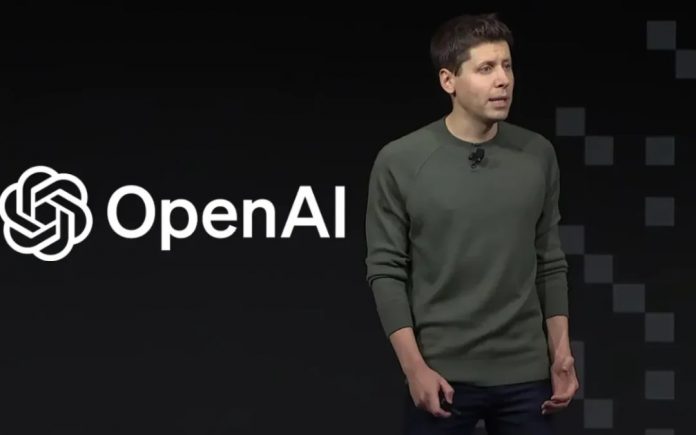
In a post on X on Thursday, CEO Sam Altman suggested the company could soon sell computing capacity directly to businesses and individuals, a move that would put it in direct competition with industry giants like Amazon Web Services (AWS), Microsoft Azure, and Google Cloud.

“We are also looking at ways to more directly sell compute capacity to other companies (and people); we are pretty sure the world is going to need a lot of ‘AI cloud,’ and we are excited to offer this,” Altman wrote.

The statement marks one of the clearest indications yet that OpenAI intends to transform its infrastructure operations into a standalone business line. The shift comes at a time when global demand for high-performance computing power has skyrocketed, driven by the explosion of generative AI tools and large language models that require vast GPU clusters to train and deploy.

OpenAI’s potential entry into the cloud market represents a dramatic expansion of its business model beyond software products like ChatGPT and API services. OpenAI could begin renting access to its advanced computing clusters to developers, research institutions, and enterprises — similar to how Amazon, Google, and Microsoft turned their in-house infrastructure into revenue-generating cloud platforms.

This move would also offer OpenAI a strategic way to offset the extraordinary costs of building and maintaining its growing AI infrastructure. Analysts estimate the company has committed to more than $1 trillion in spending on chips, data centers, and high-speed networking equipment through multi-year partnerships with Nvidia, AMD, and other suppliers.

It is believed that if you’re going to spend over $1 trillion on AI chips, networking gear, and huge data centers, one way to get a relatively quick return on that is by renting out these computing resources to other companies.

While OpenAI has long relied on Microsoft’s Azure for most of its cloud hosting — and in turn powers some of Microsoft’s own AI offerings — the prospect of it becoming a direct cloud vendor introduces a complex dynamic between the two partners. Microsoft owns nearly half of OpenAI’s for-profit arm and has invested over $13 billion since 2019.

Signals Were Already There

Hints of this direction surfaced months earlier. OpenAI’s Chief Financial Officer, Sarah Friar, suggested in September that the company might seek greater control over how its technology and infrastructure are monetized. “Cloud providers have been learning on our dime,” Friar reportedly said during a closed-door investor meeting, arguing that OpenAI needs to capture more of the value its innovations generate for partner platforms.

That sentiment reflects growing tension within the AI ecosystem, as foundational model developers like OpenAI, Anthropic, and Mistral increasingly depend on — yet compete with — the same hyperscale cloud operators that provide their computing backbone.

If OpenAI follows through with its “AI cloud” plan, it will enter a market dominated by AWS, which commands roughly one-third of global cloud revenue, followed by Microsoft Azure and Google Cloud. Each already offers specialized AI infrastructure — from Nvidia H100 GPU clusters to pre-built AI services — giving them a significant head start.

However, OpenAI’s reputation as the creator of ChatGPT, combined with its direct access to cutting-edge AI models, is expected to attract smaller companies and startups seeking purpose-built infrastructure optimized for large language model (LLM) workloads. The company might leverage its existing APIs and model integrations to create a vertically integrated ecosystem where developers can both build and deploy AI systems on OpenAI’s own cloud.

The Financial Pressure Behind the Move

Altman’s post also seemed aimed at addressing a growing question among investors: how OpenAI intends to fund its massive infrastructure expansion and sustain profitability amid surging operational costs. Unlike Microsoft, Amazon, or Google, OpenAI doesn’t yet operate a major cloud business capable of generating steady, large-scale revenue.

That gap is what makes this potential expansion so crucial. OpenAI could unlock a new and recurring revenue stream — one that aligns with its trillion-dollar hardware investments by transforming itself into a cloud service provider.

In contrast, other major tech firms like Meta are grappling with similar infrastructure spending but lack an equivalent revenue model. Meta’s heavy investment in AI and data centers has sparked concerns among investors, given its absence of a commercial cloud platform to monetize those assets.

If realized, OpenAI’s move into the cloud market would mark a major turning point in its evolution from a research-driven lab into a fully-fledged tech conglomerate. But it would also test the company’s ability to balance innovation with business pragmatism — especially as competition intensifies and the economics of AI infrastructure become increasingly complex.

Flutterwave Partners With Payful to Power Seamless High-Value Payments Across Africa

0

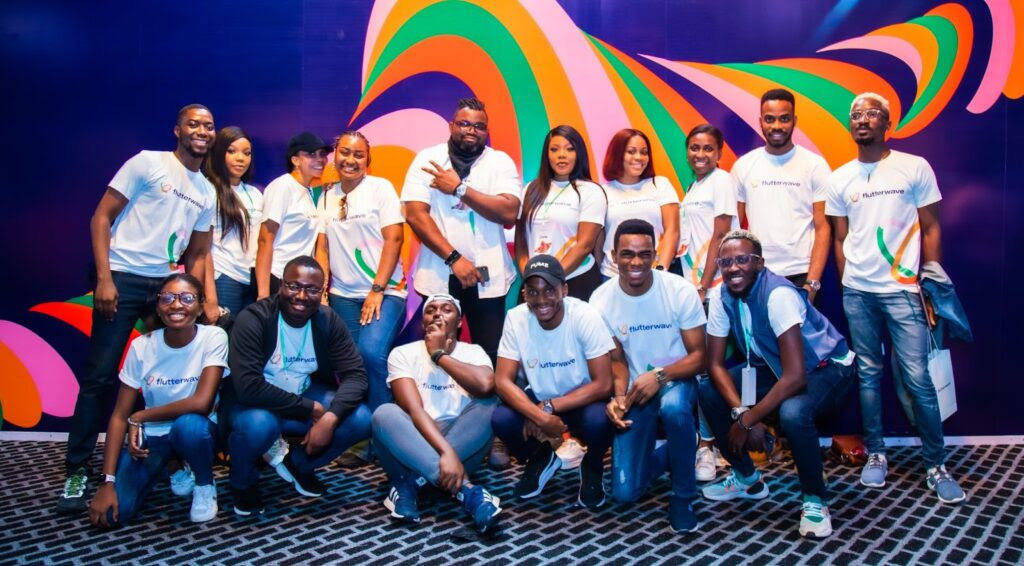
Flutterwave has announced a strategic collaboration with Payful, a global payments technology company known for enabling seamless cross-border transactions.

This partnership aims to simplify high-value payment collection and settlement for businesses operating across Africa.

Through the collaboration, merchants on Payful’s platform can now collect payments locally in African currencies and settle globally in major currencies such as USD and EUR. This capability is powered by Flutterwave’s secure and compliant payment infrastructure, including its Virtual Account solution and multi-currency settlement platform.

Commenting on the collaboration, Flutterwave CEO Olugbenga Agboola stated that Payful needed a trusted partner to drive its expansion into Africa, and Flutterwave was best positioned to meet that need. “Through our Virtual Account solution and multi-currency platform, we enabled Payful to collect payments locally, settle globally, and scale seamlessly—all within one secure and compliant infrastructure,” he noted.

Also commenting on the partnership, Payful wrote,

“Breaking down payment barriers in Africa’s largest economy. Pumped to partner with the absolute powerhouse, Flutterwave, to unlock Nigeria for global exporters! Together, we’re dismantling payment obstacles and making it seamless for businesses to get paid in local Naira. Here’s to a collaboration that drives real growth and simplifies cross-border trade!”

Payful is a global professional cross-border payment platform, which is globally deployed with leading innovative technology strength. The cross-border payment platform is recognized for connecting businesses to efficient global payment rails, enabling large-volume trade transactions and supporting merchants across various sectors.

It focuses on providing customized digital cross-border payment services for global cross-border e-Commerce sellers, foreign trade enterprises, international logistics, air travel hotels, study abroad and other segmented market customers, including cross-border payment, foreign trade payment, service trade payment, global payment, exchange rate management and other full chain digital cross-border payment services.

Navigating Africa’s Complex Financial Environment

Africa offers vast growth potential for global payment companies, but its fragmented financial systems can complicate operations. Payful faced several challenges, including:

  • Inefficient High-Value Payment Collection: Traditional card systems often proved costly or poorly suited for large transactions.

  • Cross-Border Settlement Complexity: The need to convert local currencies into global settlement currencies efficiently posed operational and financial hurdles.

  • Regulatory Barriers: Operating across African markets requires navigating distinct regulatory frameworks and maintaining multiple local financial relationships.

As the company expands into the African market, it seeks to provide users with payment experiences that match global standards in speed, security, and ease.

Why Flutterwave is the Ideal Partner

Payful selected Flutterwave due to its strong regulatory footprint, pan-African payment infrastructure, and single API integration model. Flutterwave’s deep market expertise enables Payful to scale without the complexities typically associated with multi-country expansion.

The Solution: Virtual Accounts for Easy, Local Collections

With Flutterwave’s Virtual Account solution:

  • Payful receives unique virtual account numbers via API.

  • Merchants and users make payments using familiar local bank transfer methods.

  • Funds are settled globally within agreed timelines.

  • All transactions occur under regulated, compliant financial frameworks.

This simplifies the payment experience for merchants and enables smooth, transparent fund movement across borders. Through this partnership, Flutterwave and Payful are unlocking new possibilities for businesses engaging in high-value trade across Africa, strengthening financial connectivity and supporting scalable growth across the continent.

China Lifts Export Controls on U.S. Firms After Trump–Xi Meeting, Signaling a Pause in Trade War Escalation

0

China’s Ministry of Commerce has announced that it will remove export control measures against 15 U.S. entities and suspend similar restrictions on another 16 for one year, effective November 10.

The decision, which allows Chinese exporters to apply for licenses to sell dual-use items to the affected American companies, is a major easing of trade tensions between the world’s two largest economies. It also reverses measures China had imposed earlier this year when several U.S. firms were added to Beijing’s “unreliable entity list” amid tit-for-tat trade restrictions.

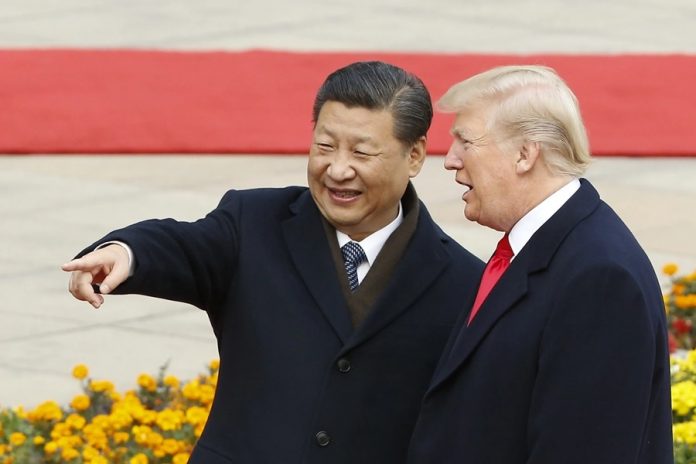
The move comes days after the meeting between U.S. President Donald Trump and Chinese President Xi Jinping in Busan, South Korea — the first direct encounter between the two leaders since 2019. During that meeting, the two sides agreed to lower trade barriers and suspend punitive measures that have weighed heavily on global markets.

Among the outcomes was Washington’s decision to reduce certain tariffs on Chinese imports, including cutting the so-called “fentanyl” tariff from around 20 percent to 10 percent and reducing overall tariffs on Chinese goods from roughly 57 percent to 47 percent. Beijing, in turn, agreed to pause new export controls on rare earths and other strategic materials for one year, while resuming large-scale soybean purchases from the United States.

These developments mark a rare thaw in a trade relationship defined by years of confrontation. Since the onset of the U.S.–China trade war, both sides have resorted to sweeping tariffs, sanctions, and export bans, each claiming the other engaged in unfair practices or posed national security risks.

Washington’s moves to restrict technology transfers, particularly in semiconductors and AI components, were met with Beijing’s own export curbs targeting rare earth minerals — elements essential to producing smartphones, electric vehicles, and military hardware. The resulting standoff rattled global supply chains and deepened economic uncertainty.

China’s latest decision to lift and suspend its export control measures is widely interpreted as a signal of goodwill following the Busan summit. Under the revised policy, Chinese exporters can now apply for licenses to ship dual-use goods to the 15 U.S. entities that had been blocked. For the 16 companies whose restrictions are temporarily suspended, domestic Chinese firms will be able to apply to conduct transactions or resume trade under regulatory approval.

These adjustments effectively ease the trade constraints that had hampered U.S. companies in key sectors, allowing for renewed commercial activity and cooperation in areas that straddle civilian and defense applications.

The Ministry of Commerce said the decision would also extend to measures introduced in March and April, when several U.S. companies were blacklisted under the unreliable entity framework. The ministry emphasized that the suspension would last for one year, suggesting that Beijing is leaving the door open to reimposing restrictions if diplomatic progress stalls.

Analysts say both sides have strong incentives for de-escalation. The Trump administration has been seeking relief for American exporters and manufacturers that faced steep costs from retaliatory tariffs, while China has been under pressure to stabilize its slowing economy and reassure investors amid weak domestic demand. The one-year suspension offers breathing space for trade-dependent industries, though experts warn it represents a tactical pause rather than a permanent settlement of the deeper geopolitical rivalry.

The U.S.–China trade war has been one of the most consequential economic confrontations in modern history. It began under President Trump’s first term when the United States levied tariffs on hundreds of billions of dollars’ worth of Chinese goods, citing unfair trade practices and intellectual property theft. China responded with its own tariffs on American exports, particularly targeting agricultural products like soybeans, wheat, and cotton.

Over time, the dispute expanded beyond tariffs into broader strategic competition over technology dominance, industrial policy, and global influence. Beijing’s control over rare earth elements became a particularly potent tool, as the minerals are indispensable to industries ranging from consumer electronics to aerospace. When China hinted at restricting their exports, markets worldwide reacted sharply, fearing disruptions in critical manufacturing chains.

President Trump described the Busan agreement as “a step toward fairness and balance,” while Chinese state media framed it as “a pragmatic reset in U.S.–China economic dialogue.”

Strategy Inc. Launches STRE: Euro-Denominated Perpetual Preferred Stock

0

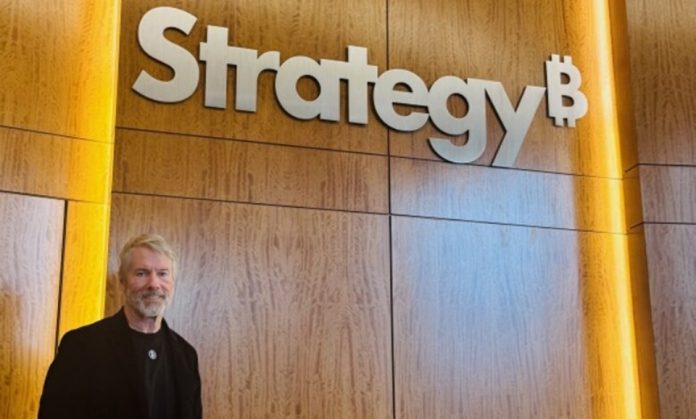
Strategy Inc. (formerly MicroStrategy, ticker: MSTR), the prominent Bitcoin treasury company led by Michael Saylor, announced a proposed initial public offering (IPO) for 3.5 million shares of its 10.00% Series A Perpetual Stream Preferred Stock (STRE).

This marks the company’s first euro-denominated security, aimed at tapping into European and global institutional capital markets to fund further Bitcoin acquisitions and general corporate purposes, including working capital.

Each share has a stated value (par value) of €100. The stock is perpetual, meaning it has no maturity date, and is non-voting. 10% annual cumulative dividend rate on the €100 stated amount, paid quarterly if declared by the board. Unpaid dividends compound at up to 18% annually.

Shares will be listed on the Euro MTF market in Luxembourg under the ticker STRE, targeting qualified institutional investors and professional clients in the European Economic Area (EEA) and the United Kingdom. Retail investors are explicitly excluded.

Net proceeds potentially up to €350 million at par will primarily support Strategy’s ongoing Bitcoin accumulation strategy, which has positioned the company as the largest corporate holder of Bitcoin currently trading closely above $103,000.

STRE ranks senior to existing STRK, STRD, and MSTR common stock but junior to STRF, STRC, and the company’s debt obligations. Strategy can redeem all shares if fewer than 25% of the original issuance remains outstanding or in cases of adverse tax events.

The redemption price equals the liquidation preference plus any accumulated unpaid dividends. In the event of a “fundamental change” (e.g., certain mergers or asset sales), holders can require Strategy to repurchase shares at the €100 stated amount plus accumulated dividends.

Liquidation Preference: Adjusts daily to the highest of:€100 (stated amount), The prior day’s closing market price, or The 10-day volume-weighted average price (VWAP). This mechanism protects investor value by linking it to market performance.

This launch follows Strategy’s Q3 2025 earnings release, where the company hinted at international expansion of its perpetual preferred stock offerings. By introducing a euro-denominated instrument, Strategy is diversifying beyond U.S. dollar-based financing (e.g., STRK and STRF) to access European liquidity, amid a strengthening dollar and Bitcoin’s rally.

The move aligns with CEO Phong Le and Chairman Michael Saylor’s emphasis on leveraging capital markets to bolster the balance sheet with digital assets, without diluting common stock. The offering is subject to market conditions and regulatory approvals, with an investor presentation featuring Saylor and Le available for review.

This development underscores Strategy’s aggressive Bitcoin treasury strategy, now extending to global investors. First €-denominated perpetual preferred stock opens European institutional liquidity, reducing reliance on USD markets and hedging against dollar strength.

Up to €350M in proceeds directly funds BTC buys, reinforcing Strategy’s position as top corporate holder ~621,000 BTC at Q3 2025 without common stock dilution. Daily-adjusted liquidation preference tied to market price or VWAP gives downside protection with equity-like exposure, appealing to yield-seeking institutions.

Higher Cost of Capital: 10% dividend potentially compounding to 18% is pricier than recent USD offerings (e.g., STRF at 8%), reflecting eurozone yield demands and BTC volatility premium. Sets template for future issuances in GBP, JPY, or CHF, enabling 24/7 global fundraising aligned with Bitcoin’s borderless nature.

Euro MTF listing targets pros only; currency fluctuation and ECB policy shifts introduce new variables vs. USD-denominated STRK/STRF. STRE strengthens Strategy’s capital stack, accelerates BTC treasury growth, and signals a maturing, multinational financing playbook—provided Bitcoin momentum holds.