DD
MM
YYYY

PAGES

DD
MM
YYYY

spot_img

PAGES

Home Blog Page 2066

Tucker Carlson’s Interview with Sam Bankman-Fried Fuels Hope of Lighter Pardons

0
Sam Bankman-Fried

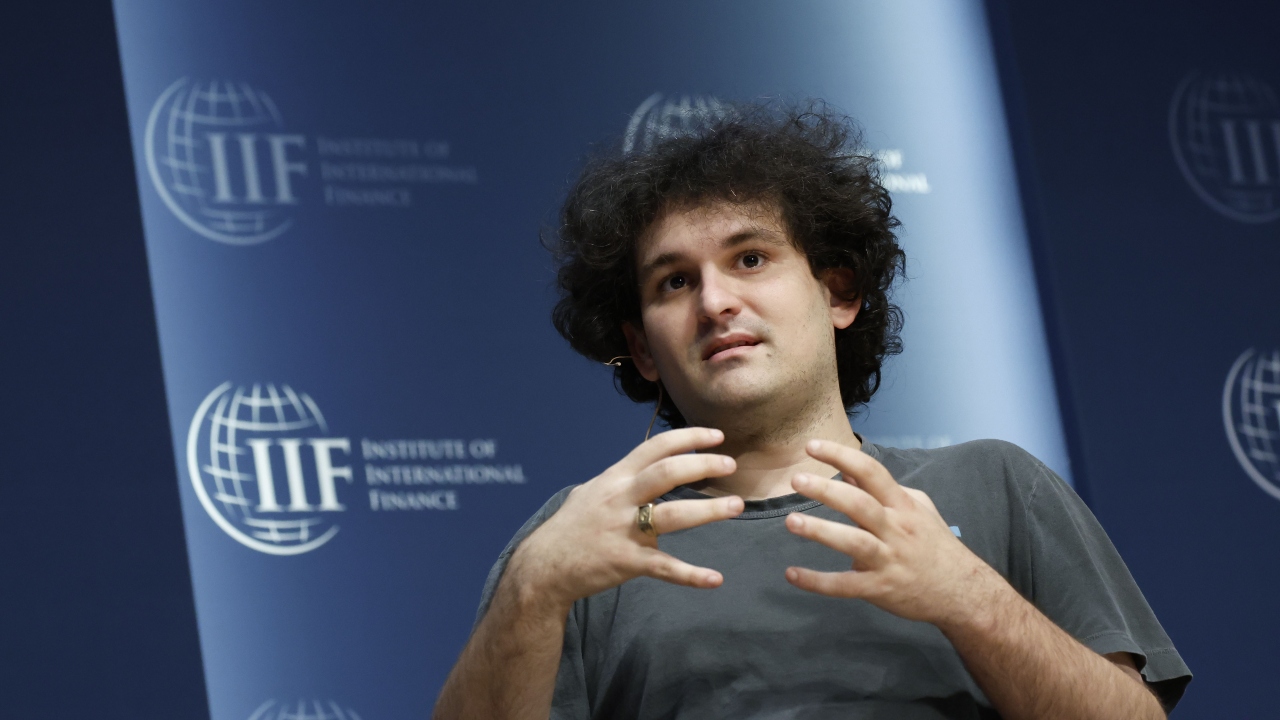
Tucker Carlson conducted an interview with Sam Bankman-Fried from prison, where Bankman-Fried is serving a 25-year sentence for fraud and other crimes related to the collapse of the cryptocurrency exchange FTX. The interview, which was released on March 6, 2025, covered various topics, including Bankman-Fried’s experiences in prison, his interactions with fellow inmate Sean “Diddy” Combs, and his views on cryptocurrency regulation and politics. The nearly 45-minute conversation took place via video call from the Metropolitan Detention Center in Brooklyn, where Bankman-Fried has been held since August 2023.

During the interview, Bankman-Fried described prison life as “dystopian” and “soul-crushing,” mentioning activities like reading books, playing chess, and working on his legal case to pass the time. He also spoke positively of Combs, noting that he had been “kind” to him and others in their unit. Additionally, Bankman-Fried expressed disappointment with the Democratic Party, despite having been a significant donor to their causes, and indicated a shift in his political donations toward Republicans by late 2022.

He also discussed his hopes for more favorable cryptocurrency policies under the Trump administration. Notably, the interview was not approved by the U.S. Bureau of Prisons, which has strict rules about inmate communications. As a result, Bankman-Fried was reportedly placed in solitary confinement following the interview’s release. The collapse of FTX in November 2022 was one of the most significant events in the cryptocurrency industry, with far-reaching financial, regulatory, and societal impacts. The collapse of FTX, once valued at $32 billion, resulted in massive financial losses for customers, investors, and other stakeholders.

FTX had over 1 million users, many of whom lost access to their funds. An estimated $8 billion in customer assets were misappropriated or lost, with depositors unable to withdraw their money after FTX filed for bankruptcy. While some recovery efforts have been made (e.g., through bankruptcy proceedings), many customers are unlikely to recover their full investments.
Investor Losses: High-profile investors, including venture capital firms like Sequoia Capital, SoftBank, and Temasek, as well as hedge funds, lost billions of dollars. These firms had invested heavily in FTX during its meteoric rise, only to see their investments wiped out.

The collapse triggered a domino effect across the cryptocurrency industry, exacerbating an already challenging “crypto winter.” Bitcoin and other cryptocurrencies saw sharp declines, with Bitcoin dropping below $16,000 shortly after the collapse (down from its peak of nearly $69,000 in late 2021). Other crypto companies, such as BlockFi and Genesis, faced liquidity crises and filed for bankruptcy, partly due to exposure to FTX or its sister hedge fund, Alameda Research.

Alameda Research Exposure: FTX’s collapse revealed that Alameda Research, a hedge fund closely tied to FTX and also founded by Sam Bankman-Fried, had borrowed billions in customer funds from FTX to cover its risky trading bets. This misuse of customer funds was a central factor in the collapse.

Governments and regulators worldwide, particularly in the United States, accelerated efforts to regulate cryptocurrencies and exchanges. In the U.S., the Securities and Exchange Commission (SEC), Commodity Futures Trading Commission (CFTC), and Department of Justice (DOJ) ramped up investigations into crypto firms. The collapse highlighted the lack of consumer protections in the crypto space, fueling debates over whether cryptocurrencies should be treated as securities, commodities, or something else.

In the U.S., lawmakers introduced bills aimed at regulating crypto exchanges, stablecoins, and other digital assets. The FTX collapse became a rallying cry for those advocating for clearer rules to prevent similar incidents. For example, the Digital Commodities Consumer Protection Act gained traction as a potential framework for regulating crypto markets. Internationally, regulators in the European Union, Japan, Singapore, and other jurisdictions tightened their oversight of crypto exchanges. The collapse underscored the risks of unregulated offshore entities, as FTX was based in the Bahamas, a jurisdiction with relatively lax crypto regulations at the time.

The scandal damaged the reputation of the cryptocurrency industry, reinforcing perceptions of it as a speculative and risky space prone to fraud. This setback slowed mainstream adoption and eroded trust among retail and institutional investors. Sam Bankman-Fried, FTX’s founder and CEO, was arrested in the Bahamas in December 2022, extradited to the U.S., and charged with multiple counts of fraud, money laundering, and conspiracy. In November 2023, he was convicted on all seven counts, and in March 2024, he was sentenced to 25 years in prison and ordered to pay $11 billion in forfeiture for what prosecutors described as one of the largest financial frauds in history.

Several FTX and Alameda executives, including Caroline Ellison (former CEO of Alameda), Gary Wang (FTX co-founder), and Nishad Singh (FTX’s former engineering director), pleaded guilty to related charges and cooperated with prosecutors. Their testimony was instrumental in Bankman-Fried’s conviction. FTX filed for Chapter 11 bankruptcy in the U.S., and John J. Ray III, a veteran of corporate restructurings (notably Enron), was appointed to oversee the process. The bankruptcy estate has been working to recover assets, including clawing back funds from investments, political donations, and other expenditures made by FTX and Bankman-Fried.

By early 2025, the estate had recovered over $12 billion and announced plans to repay customers, though full recovery remains uncertain. Bankman-Fried was one of the largest political donors in the U.S., contributing over $70 million, primarily to Democratic candidates and causes, during the 2020 and 2022 election cycles. The revelation that some of these donations may have been funded with misappropriated customer money led to calls for recipients to return the funds. Several politicians and organizations either returned the donations or donated equivalent amounts to charity.

Bankman-Fried was a prominent figure in the “effective altruism” (EA) movement, which encourages using wealth to maximize positive societal impact. His actions, including using customer funds to fund his personal and altruistic ventures, damaged the credibility of the EA movement, prompting debates within the community about ethics and accountability.

The collapse eroded public trust in cryptocurrency as a legitimate financial system. High-profile endorsements of FTX by celebrities like Tom Brady, Gisele Bu?ndchen, and Larry David, as well as its naming rights deal for the Miami Heat’s arena, amplified the perception of widespread irresponsibility in the crypto industry. The failure of a centralized exchange like FTX renewed interest in decentralized finance (DeFi) platforms, which operate without intermediaries and are seen by some as less prone to mismanagement or fraud. However, DeFi platforms also face their own regulatory and security challenges.

The collapse highlighted the need for greater transparency in crypto exchanges, such as proof-of-reserves audits, to ensure customer funds are properly safeguarded. Some exchanges, like Binance and Coinbase exchanges, adopted such measures to rebuild trust. Venture capital investment in crypto startups declined significantly in the wake of the collapse, as investors became more cautious. This slowdown affected the pace of innovation in the sector, though some argue it forced the industry to focus on more sustainable and legitimate projects.

The collapse is seen by some as a “cleansing event” for the crypto industry, weeding out bad actors and unsustainable business models. It has forced surviving companies to prioritize compliance, risk management, and customer protections. The crypto market has shown signs of recovery in 2024 and 2025, with Bitcoin reaching new all-time highs and institutional adoption growing. However, the scars of the FTX collapse continue to influence investor sentiment and regulatory approaches.

The collapse of FTX was a watershed moment for the cryptocurrency industry, exposing vulnerabilities in centralized exchanges, lax oversight, and the risks of unchecked ambition. Its impact was felt across financial markets, regulatory frameworks, legal systems, and public perceptions of cryptocurrency. While the industry has taken steps to recover and mature, the lessons of FTX—particularly the importance of transparency, accountability, and robust regulation—will shape its future for years to come.
Top Cryptos to Keep a Watchful Eye on in 2025: 100x Growth is Imminent

0

The crypto market is evolving rapidly, and 2025 is shaping up to be a defining year. While Bitcoin and Ethereum dominate, emerging projects are drawing significant attention.

BlockDAG (BDAG), Berachain (BERA), Movement (MOVE), Hyperliquid (HYPE), Toshi (TOSHI), and Kaito (KAITO) are some of the most talked-about cryptocurrencies right now. Each brings unique innovations to the space, but one project stands out—BlockDAG.

With a record-breaking $201M presale, fast transaction speeds, and upcoming exchange listings, BlockDAG is emerging as a major Layer 1 blockchain to watch.

BlockDAG (BDAG): The Leading Layer 1 Blockchain in 2025

Unlike projects that focus on minor upgrades, BlockDAG is rethinking how blockchain networks operate. Traditional blockchains struggle with congestion and high fees, but BlockDAG’s Directed Acyclic Graph (DAG) structure enables parallel transaction processing, ensuring faster speeds and lower costs.

Why BlockDAG Is Gaining Momentum:

Presale Success: Over $201 million raised, 18.7 billion BDAG coins sold at $0.0248 in batch 27, and a 2,380% surge in price before exchange listings.

Upcoming Exchange Listings: BDAG will launch on 10 major centralized exchanges (CEXs) post-presale, which could trigger a price jump.

March 2025 Testnet Launch: The testnet will test BDAG’s scalability, offering incentives for developers and node operators before the full release.

$30M Developer Grants Program: BlockDAG is driving Web3 adoption by offering grants ranging from $10,000 to $100,000, in partnership with HackerEarth for global hackathons.

X1 Miner App: With 500,000+ downloads, this app allows mobile mining, making BDAG more accessible.

BlockDAG is not just another Layer 1 blockchain—it’s redefining decentralized networks, and the market is taking notice.

2. Berachain (BERA): Solving DeFi’s Liquidity Puzzle

Berachain (BERA) is solving DeFi’s biggest challenge—liquidity fragmentation. Its Proof-of-Liquidity (PoL) model rewards liquidity providers with governance and gas tokens, ensuring a more efficient capital flow.

Unlike traditional blockchains that separate governance and staking rewards, Berachain integrates them to encourage broader participation. Its unique multi-token system helps manage inflation while optimizing transactions. As DeFi continues to expand, Berachain’s innovative approach could make it a dominant force.

3. MOVE: Streamlining Cross-Chain Transactions

Movement (MOVE) is advancing blockchain interoperability through its M1 Shared Sequencing Layer and M2 zk-rollups. These innovations streamline cross-chain transactions, removing delays and security vulnerabilities associated with traditional bridges.

By using a decentralized sequencing layer, Movement enhances transaction processing, making it ideal for DeFi platforms, gaming applications, and enterprise blockchain integrations that require fast and low-cost transfers.

4. Hyperliquid (HYPE): High-Performance Decentralized Trading

Hyperliquid (HYPE) is reshaping decentralized finance by offering zero-slippage trading, rivaling centralized exchanges. Unlike DEXs that rely on liquidity pools with price volatility, Hyperliquid’s advanced order book system ensures deep liquidity and accurate trade execution.

Its copy trading vaults allow users to follow the strategies of top traders. With up to 50x leverage on major assets, Hyperliquid is gaining traction among both experienced and new traders seeking transparent and efficient trading platforms.

3. Kaito (KAITO): AI-Powered Search Redefining Web3

Kaito (KAITO) is integrating artificial intelligence with blockchain research, changing how crypto users access and analyze data. Its AI-powered search engine scans over 10,000 Web3 sources, offering real-time insights for traders, developers, and market participants.

A standout feature of Kaito is its Yap-to-Earn program, which rewards users for engagement, fostering a community-driven model. By leveraging machine learning, Kaito refines search results, helping users navigate the overwhelming volume of crypto news and analytics.

Which Cyrto’s Will Surge Ahead?

The crypto landscape is evolving fast, with new projects emerging regularly. While Berachain, Movement, Hyperliquid, Toshi, and Kaito are gaining recognition, BlockDAG remains at the forefront with its revolutionary technology, successful presale, and upcoming exchange listings.

As BDAG moves closer to its testnet and major exchange debuts, its potential to reach $1 post-listing is becoming increasingly realistic. Those looking for the next major Layer 1 opportunity should take action before presale prices increase.

United States SEC Terminates Probe into YugaLabs

0

Yuga Labs, the creator of the Bored Ape Yacht Club (BAYC) NFT collection, announced that the SEC had officially terminated its probe, which began in October 2022. The investigation focused on determining whether certain NFTs, including those from Yuga Labs, should be classified as securities under U.S. law, similar to stocks, and whether their sales violated federal regulations. Yuga Labs hailed the closure as a “huge win” for the NFT industry, asserting that “NFTs are not securities.”

This development is part of a broader pattern of the SEC de-escalating enforcement actions against crypto-related entities, including dropping lawsuits against exchanges like Coinbase and Kraken, amid a shifting regulatory landscape under the Trump administration. However, the lack of charges does not necessarily provide definitive regulatory clarity, as the SEC has not formally declared NFTs exempt from securities classification, leaving the legal status of NFTs in the U.S. ambiguous.

Non-fungible tokens (NFTs) are digital assets on blockchain networks that represent ownership of unique items, such as digital art, collectibles, music, virtual real estate, or in-game assets. Unlike cryptocurrencies like Bitcoin, which are fungible and interchangeable, NFTs are distinct, with their uniqueness and ownership verified by blockchain technology, typically on platforms like Ethereum.

As NFTs have surged in popularity—evidenced by high-profile sales, such as Beeple’s EVERYDAYS: The First 5000 Days fetching $69 million in 2021—regulatory scrutiny has intensified globally. Below is a detailed explanation of NFT regulations, covering key jurisdictions, regulatory challenges, and critical implications, with references to recent developments like the SEC’s closure of its investigation into Yuga Labs.

In the United States, the primary regulatory question surrounding NFTs is whether they qualify as securities under federal law, which would subject them to oversight by the Securities and Exchange Commission (SEC). The SEC applies the Howey Test, derived from a 1946 Supreme Court case, to determine if an asset is a security. Under this test, an asset is a security if it involves: (1) an investment of money, (2) in a common enterprise, (3) with an expectation of profits, (4) derived from the efforts of others. If NFTs meet these criteria, they must comply with securities laws, including registration requirements and disclosure obligations.

The SEC’s investigation into Yuga Labs, the creator of the Bored Ape Yacht Club (BAYC), which concluded without charges on March 3, 2025, exemplifies this scrutiny. The probe, launched in October 2022, examined whether BAYC NFTs and related offerings, such as the ApeCoin token, constituted unregistered securities. Yuga Labs argued that its NFTs were collectibles, not investment contracts, and celebrated the SEC’s decision to close the case as a victory for the NFT industry, asserting that “NFTs are not securities.”

However, the SEC’s decision not to pursue charges does not provide definitive legal clarity, as it did not issue a formal ruling or guidance on NFTs’ status. This ambiguity leaves NFT creators, marketplaces, and investors in a regulatory gray area, particularly for projects with features resembling securities, such as fractionalized NFTs, staking rewards, or promises of future value appreciation driven by the issuer’s efforts.
Beyond securities laws, other U.S. agencies are involved in NFT regulation. The Commodity Futures Trading Commission (CFTC) could oversee NFTs if they are deemed commodities, though this is less common.

The Financial Crimes Enforcement Network (FinCEN) focuses on anti-money laundering (AML) and know-your-customer (KYC) compliance, requiring NFT marketplaces to monitor transactions for suspicious activity, especially given concerns about NFTs being used for money laundering due to their high-value, pseudonymous nature. The Internal Revenue Service (IRS) treats NFTs as property for tax purposes, meaning sales trigger capital gains taxes, with tax rates depending on holding periods and income levels.

Compliance with tax reporting is complex, particularly for NFT creators receiving royalties, as highlighted by platforms like OpenSea, which in 2025 began issuing 1099 forms to U.S. users to report income from NFT sales. Recent political shifts, particularly under the Trump administration, have influenced the regulatory tone. The SEC’s decision to drop investigations and lawsuits against crypto-related entities, including Coinbase, Kraken, and Yuga Labs, reflects a more permissive stance, aligning with President Trump’s stated goal of making the U.S. the “crypto capital of the planet.”

Legislative proposals, such as the Financial Innovation and Technology for the 21st Century Act, aim to clarify jurisdictional boundaries between the SEC and CFTC, potentially exempting certain NFTs from securities classification if they are deemed decentralized or collectibles. However, without enacted legislation, the regulatory landscape remains fragmented, posing risks for market participants.

Former Nissan Exec Andy Palmer Warns Against Hybrid Strategy as Chinese EV Giants Surge Ahead

0

Andy Palmer, former Aston Martin CEO and a key architect of the Nissan Leaf, has criticized automakers relying on hybrids instead of fully transitioning to electric vehicles (EVs), calling it a “fool’s errand” that risks leaving them behind as Chinese companies dominate the EV market.

Palmer, who led the development of the Nissan Leaf—the world’s first mass-market electric car—believes automakers sticking to hybrids will struggle to compete as the industry moves towards fully electric options.

“Hybrids are a road to hell,” Palmer told Business Insider. “They are a transition strategy, and the longer you stay on that transition, the less quickly you ramp up into the new world.”

Palmer, who served as Nissan’s Chief Operating Officer, said that while hybrids might appear to offer a safer bet as EV adoption slows, the strategy would ultimately render companies uncompetitive for longer. He warned that delaying the switch to EVs would allow Chinese automakers to solidify their lead, particularly as they ramp up international expansion.

“If you just delay transitioning to EVs by diluting it with hybrids, then you are more uncompetitive for longer, and you allow the Chinese to continue to develop their market and their leadership,” Palmer added.

China’s EV Market: A Well-Oiled Machine

China’s dominance in the EV market is no accident. Palmer pointed to the Chinese government’s strategic focus on “new energy vehicles,” which has included an estimated $230 billion in subsidies for EV makers since 2009. Automakers like BYD have leveraged this support to become formidable players, offering a mix of affordable and high-tech EVs and hybrids that are now gaining traction abroad.

“The Chinese cars are bloody good. The Chinese vehicles offer remarkable value for money for what they deliver,” Palmer said, highlighting their advanced battery technology and focus on software.

Palmer, who sat on the board of Dongfeng Motor Company, a joint venture between Nissan and China’s state-owned Dongfeng, witnessed firsthand the aggressive industrial strategy that helped propel Chinese EV makers to the forefront of the global market.

“It starts with an industrial strategy. That’s the big thing to learn. For the best part of 14 years, we have not had an industrial strategy,” Palmer noted, comparing the West’s lack of a coordinated approach to China’s long-term planning.

Tariffs, A Counterproductive Measure

In response to China’s growing influence, both the U.S. and Europe have imposed tariffs aimed at protecting their domestic auto industries. However, Palmer argued that tariffs would only serve to weaken Western automakers’ competitiveness.

“My experience with tariffs is it just makes your indigenous industry lazy. The gap becomes even bigger,” he said, suggesting that a “survival of the fittest” mentality would better prepare Western automakers for the coming battle with Chinese brands, especially in Europe.

“I think the Chinese firms will learn from competing in Europe, because that’s the toughest market in the world. If they can do that, then they’re going to be unbeatable,” he added.

Japanese Automakers on the Back Foot

The rise of Chinese EV companies has put immense pressure on Japanese automakers, including Palmer’s former employer, Nissan, as well as Toyota and Honda.

Nissan recently announced plans to lay off 9,000 workers, while Toyota and Honda struggle with declining sales in China and reduced profits. Reports of merger talks between Nissan and Honda underscore the severity of the situation.

Palmer said that while Toyota initially reaped rewards by focusing on hybrids, this strategy left the company vulnerable as markets like China moved rapidly towards EVs.

“Toyota took the Japanese industry down a cul-de-sac, which it is going to struggle to recover from,” he said.

He also criticized Nissan’s leadership for failing to capitalize on the early success of the Leaf, which has sold over half a million units since its 2010 launch.

“Nissan finds itself now with a very poor lineup of products and without obvious leadership in EVs, and that’s the direct result of poor management,” Palmer remarked.

Breaking the EV Adoption Barrier

While EV sales are still growing, adoption has been slower than expected, prompting automakers to scale back investments. Palmer attributes this hesitation to the high cost of EVs.

“Prices have got to align to those of internal combustion engines. And to make that happen, you’ve got to be able to offer cars with smaller batteries,” Palmer said. He emphasized the need for governments to support charging infrastructure to ease consumer concerns about range.

The average EV price in the U.S. in October was $56,902, compared to $48,623 for traditional gas-powered cars, according to Kelley Blue Book. Bridging this price gap could help accelerate EV adoption.

Learning from China

Palmer urged Western automakers and governments to adopt elements of China’s industrial strategy, particularly in the battery sector. China currently dominates the EV battery supply chain, including critical mineral processing and cell manufacturing.

“If the West wants to catch up, I would advocate copying the Chinese,” he said. “The alternative is everything is Chinese at the moment—even if you were building your own battery cells, you’ve still got to get all the minerals from China. The whole supply chain is stuck.”

Palmer’s cautionary tale is not just for Japanese automakers but for any company hoping to compete in the global EV market. The hesitation to fully commit to EVs in favor of hybrids, he argues, is a strategy that will only deepen the competitive disadvantage against well-positioned Chinese manufacturers.

Latest Crypto News: BlockDAG’s Beta Testnet Goes Live in March! SHIB’s Future in Doubt While ONDO Surges 47% 

0

Crypto traders are tracking Shiba Inu’s slow-burning supply, ONDO’s possible 47% price jump, and BlockDAG’s upcoming Beta Testnet release set for March 2025. SHIB continues to struggle with excess supply, while ONDO’s price outlook remains uncertain. 

In contrast, BlockDAG (BDAG) is pushing forward with a scalable Directed Acyclic Graph (DAG) network, a $30 million grants initiative, and an impressive $201 million presale. BDAG’s rapid traction has caught significant attention as the testing phase nears. With its growing momentum, many are considering BDAG for long-term gains. Could the launch of BlockDAG’s Beta Testnet position it as the strongest performer in 2025, surpassing SHIB and ONDO? Here’s a closer look at the key developments shaping the market.

BlockDAG’s Beta Testnet Launch Set to Advance Blockchain Capabilities!

The Beta Testnet launch of BlockDAG in March 2025 is expected to bring improvements in scalability, transaction speed, and decentralization. The DAG-based system enhances processing power and streamlines mining efficiency, making it a strong competitor to traditional blockchain structures. As the testing phase begins, its capability to manage large transaction loads will become evident.

A $30 million grant program is being introduced to attract talented developers, further strengthening BlockDAG’s ecosystem. In collaboration with HackerEarth, upcoming global hackathons could contribute to the launch of over 201 new dApps. Meanwhile, the X1 Miner app has gained over 500,000 users, supporting further expansion and reinforcing BDAG’s role in the market.

With the presale surpassing $201 million and 18.7 billion BDAG coins already sold, demand continues to surge. The latest batch, priced at $0.0248, has delivered a 2,380% gain for early participants. The BDAG800 promotion currently offers a 400% bonus, positioning BDAG as one of the strongest contenders for significant returns in 2025.

SHIB’s Supply Challenges: Can the Burn Rate Increase Growth?

SHIB enthusiasts remain hopeful about future price increases, but the ongoing burn process is moving at a slow pace. Even after burning over 410 trillion SHIB, around 583 trillion remain in circulation. While Shibarium’s automated burn mechanism and manual reductions by the community aim to reduce supply, the current pace isn’t sufficient for immediate price impact.

For SHIB to reach ambitious milestones like $0.01, adoption levels must rise. Developers are working on integrating SHIB into gaming, metaverse applications, and real-world payment solutions to create stronger demand. Without an accelerated burn strategy and wider usability, SHIB’s price trajectory remains uncertain.

ONDO’s Price Outlook: A Potential 47% Price Swing?

ONDO is currently priced at $1.11 and nearing a crucial point in a descending triangle pattern, indicating a potential market shift. If ONDO surpasses $1.50, projections suggest it could climb to $1.80 or even $3.10. However, if it fails to hold above $1.05, a decline to $0.90 could follow, making this a critical level to monitor.

The last major ONDO rally saw a 350% surge, largely driven by institutional support, including backing from World Liberty Financial following Donald Trump’s election victory. However, the recent 25% decline in value has sparked concerns over price stability. With volatility increasing, both bullish and bearish traders are closely watching the next movements.

Final Words!

While SHIB’s price outlook depends on its burn strategy and ONDO faces key resistance levels, BlockDAG is taking bold steps with its Beta Testnet launch, a $30 million grant initiative, and a record-setting $201 million crypto presale. With a growing mining network, strategic partnerships, and its scalable DAG-based framework, BDAG is emerging as a standout choice for significant returns in 2025. As the mainnet launch gets closer, this could be a key moment for those looking to enter before prices rise further.


Presale: https://purchase.blockdag.network

Website: https://blockdag.network

Telegram: https://t.me/blockDAGnetworkOfficial

Discord: https://discord.gg/Q7BxghMVyu