DD
MM
YYYY

PAGES

DD
MM
YYYY

spot_img

PAGES

Home Blog Page 208

Google Integrates Prediction Market Data from Kalshi and Polymarket into Finance and Search

0

Google announced a major update to its Google Finance platform, incorporating real-time prediction market data from two leading platforms: Kalshi and Polymarket.

This integration allows users to access crowd-sourced probabilities on future events—like elections, economic indicators, sports outcomes, and regulatory decisions—directly alongside traditional financial data such as stocks, commodities, and currencies.

The feature is part of a broader AI-powered overhaul aimed at enhancing research tools and providing more interactive, forward-looking insights. Users can query natural language questions (e.g., “Will the U.S. enter a recession in 2025?” or “Who will win the Super Bowl?”) in Google Search or Google Finance, and the platform will display live odds and probability trends from Kalshi and Polymarket.

This includes historical changes in market sentiment over time, leveraging the “wisdom of the crowds” for sharper forecasts. The data will begin appearing in the coming weeks, starting with Google Labs users before wider availability.

Platforms Involved: Kalshi: A U.S.-regulated exchange under the Commodity Futures Trading Commission (CFTC), focusing on event contracts for topics like inflation, policy, and sports. It recently raised $300 million at a $5 billion valuation.

Polymarket: A decentralized, blockchain-based platform on Polygon, known for high-volume trading on politics, culture, and tech events. It operates outside the U.S. but hit record volumes in October 2025 and raised funds valuing it at $9 billion.

Polymarket confirmed the partnership via an X post, highlighting its role in bringing on-chain transparency to Google’s ecosystem. Financial terms of the deals were not disclosed, but this marks one of the first mainstream integrations of prediction markets into a tech giant’s consumer tools.

Prediction markets have exploded in popularity, with weekly volumes surpassing $2 billion in late October 2025, driven by events like U.S. elections and sports betting expansions. Google’s move signals growing legitimacy for these platforms as sentiment indicators, potentially rivaling traditional economic models.

Analysts note that prediction odds often react faster to news than stocks or bonds, offering traders an edge in hedging risks.This isn’t isolated—other players are jumping in:Robinhood partnered with Kalshi in August 2025 for sports contract trading, calling the space “on fire.”

The NHL became the first major league to integrate with Kalshi and Polymarket. MetaMask plans Polymarket integration, and exchanges like CME are developing similar products. However, regulatory hurdles remain: Polymarket faced past CFTC scrutiny for U.S. operations, while Kalshi’s licensed model provides a compliant contrast.

As adoption grows, this could push for clearer policies on event contracts. The news sparked buzz on X (formerly Twitter), with users hailing it as validation for prediction markets: Polymarket’s announcement post garnered over 7,000 likes, emphasizing “Polymarket x Google” integration.

Traders like @cryptovcdegen called it a “first foray into event-based financial tracking,” stressing its use for elections and crypto regs. @ThuanGlobal noted the shift from “online betting tools” to “market sentiment indicators.”

Overall, this positions prediction markets as a core part of modern finance, blending AI, blockchain, and crowd intelligence for more predictive tools. If you’re trading or analyzing events, keep an eye on Google Finance for these updates—they could become your new go-to for spotting alpha.

Vast Data Signs $1.17bn Deal With CoreWeave as AI Infrastructure Race Intensifies

0

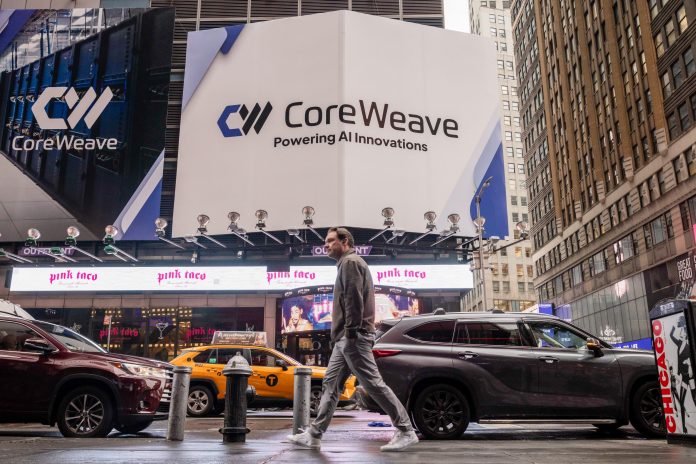
AI infrastructure firm Vast Data has struck a $1.17 billion commercial agreement with CoreWeave, expanding their existing partnership to meet surging demand for computing power that fuels artificial intelligence systems.

The deal, which Vast confirmed to Reuters, marks one of the largest software and data infrastructure contracts in the fast-growing AI cloud sector.

Under the new agreement, CoreWeave, a cloud provider backed by Nvidia, will adopt Vast as its primary data platform for managing and scaling its cloud infrastructure. CoreWeave’s cloud platform is designed to provide customers access to graphics processing units (GPUs), the hardware backbone for training and running large AI models.

Vast said contracts of this kind typically span three to five years, though the company declined to reveal specific revenue milestones or payment structures tied to the deal.

Founded in 2016, Vast Data specializes in building data management and storage software that enables companies to efficiently handle the massive datasets required to train and operate AI models. Its technology is designed to streamline how data is stored, accessed, and processed — an increasingly critical factor for firms competing in the AI arms race. The company charges clients based on capacity and the range of features used.

As part of the new partnership, Vast and CoreWeave plan to align their product development roadmaps to optimize data storage and retrieval for AI workloads. The collaboration aims to increase efficiency and performance across CoreWeave’s expanding GPU cloud ecosystem, which supports customers in AI, visual effects, and computational research.

The deepened alliance will allow Vast to work more closely with CoreWeave while maintaining relationships with other top-tier clients. Vast’s customer base includes major cloud providers such as Amazon Web Services, AI startups like Elon Musk’s xAI, and other “neocloud” firms such as Nebius, according to Vast co-founder Jeff Denworth, who confirmed the details in an interview with Reuters.

The deal also highlights the accelerating investments in AI infrastructure, where companies like Nvidia, CoreWeave, and software firms such as Vast are emerging as the backbone of the generative AI economy. Vast’s platform helps power AI clusters that require enormous bandwidth and storage performance to handle the trillions of parameters used in modern neural networks.

For Vast, the CoreWeave contract represents a major commercial milestone and a validation of its position in the market. The New York-based company said it has been free cash flow positive and reached $200 million in annual recurring revenue (ARR) by January 2025 — a rare achievement among AI infrastructure startups.

The company’s strong financial footing could accelerate its fundraising plans. In August, Reuters reported that Vast was in talks to raise several billion dollars in new funding at a potential valuation of up to $30 billion, with possible investors including Alphabet’s CapitalG and Nvidia.

Vast was last valued at $9.1 billion following a 2023 funding round and is increasingly viewed by analysts as a likely IPO candidate. That speculation gained traction after the company hired Amy Shapero, former Chief Financial Officer of Shopify, in 2024 — a move widely interpreted as preparation for a potential public listing.

The new deal underscores the growing symbiosis between hardware providers like Nvidia, cloud firms such as CoreWeave, and data management platforms like Vast, which together form the unseen architecture behind today’s AI revolution.

With the AI market projected to exceed $1 trillion in annual revenue by 2030, infrastructure partnerships like this are expected to multiply. The expanded CoreWeave deal cements Vast’s status as one of the most strategically positioned startups in the AI supply chain — bridging the gap between compute power and data intelligence.

Samsung’s 512GB P9 microSD Express Card Offers Early Boost for Nintendo Switch 2 Gamers

0

The Nintendo Switch 2 has officially arrived, with one of its most welcome upgrades being backward compatibility with most original Switch titles — a move that ensures early adopters can dive right into their existing digital libraries without waiting for a flood of new exclusives.

The console ships with 256GB of internal storage, which may be sufficient for casual players, but falls short for those with larger game collections or who prefer downloading their titles rather than relying on cartridges.

To address that, expandable storage options are already in high demand, and Samsung’s new 512GB P9 microSD Express card has emerged as one of the top-performing and most affordable choices. Currently available on Amazon for $94.99 — $5 off when buyers clip the on-page coupon — the P9 is roughly $20 cheaper than most competing 512GB microSD Express cards on the market. The smaller 256GB version sells for $54.99.

Although the discount may seem modest, the P9 stands out for its performance and compatibility. It supports sequential read speeds of up to 800MB/s, meaning it can load large games faster and handle high-resolution assets with ease. However, only devices with a microSD Express slot, such as the new Switch 2, can utilize its maximum speed potential. For older gadgets or cameras that use microSD UHS-I slots, the P9 will still function, but at reduced speeds.

The card also has wider utility beyond gaming. Certain high-end cameras, drones, and tablets that support microSD Express can benefit from its read and write performance, especially when recording or transferring 4K and 8K video footage.

As for storage needs, how far 512GB will go depends heavily on the size of each game. Major titles such as Hyrule Warriors: Age of Imprisonment require up to 43.4GB, while smaller indie releases like Silksong take up just 4.1GB. Combined with the Switch 2’s internal storage, gamers could have around 768GB in total, though even that can be quickly consumed by today’s large file sizes. For instance, the Switch 2 version of Final Fantasy VII Remake Intergrade demands a massive 93GB installation.

Even collectors who prefer physical copies may find themselves needing more storage space. An increasing number of publishers are releasing “game-key cards,” which authenticate physical ownership but still require the full digital download onto the system’s internal or expanded storage. Some physical editions are also released months after their digital counterparts, making downloads the only immediate option.

The growing size of modern games — paired with more demanding graphics, higher-quality audio, and frequent updates — has made expandable storage almost essential for serious players. With microSD Express technology now entering the mainstream, the P9’s price-to-performance ratio makes it an attractive option not just for Switch 2 owners, but for anyone who values fast, reliable storage across multiple devices.

Ultimately, while it’s tempting to rely on internal storage, investing in a high-speed microSD Express card like Samsung’s P9 ensures smoother performance, faster load times, and plenty of breathing room as game libraries grow. For gamers on the move, it’s one less thing to worry about — and one more reason the Switch 2 feels ready for the next generation of portable gaming.

Metropolis Raises $1.6bn at $5bn Valuation to Expand Its AI-Driven “Recognition Economy” Beyond Parking

0

Metropolis Technologies, a U.S.-based operator of smart parking systems that leverages artificial intelligence and computer vision to recognize vehicles and automate payments, has raised $1.6 billion in fresh capital to accelerate its expansion beyond parking into retail, restaurants, hotels, and gas stations.

The new funding includes a $500 million Series D equity round led by investment advisory firm LionTree, valuing Metropolis at $5 billion. Other major backers include Eldridge Industries, Vista Equity Partners, BDT & MSD Partners, and the SoftBank Vision Fund. Alongside the equity financing, Metropolis secured a $1.1 billion syndicated term loan led by J.P. Morgan, collateralized by cash flows from its profitable parking operations.

The Los Angeles-based company, founded in 2017, has grown from an AI startup to one of the largest operators of parking infrastructure in the United States. Its technology uses advanced cameras, sensors, and license plate recognition to enable drivers who have opted into its network to enter, park, and exit without stopping to pay. The system automatically charges users through a linked account, removing the need for tickets, kiosks, or human attendants.

Chief Executive Alex Israel said the new funding will help Metropolis build the next phase of what he calls the “Recognition Economy” — a seamless digital payments environment where identity replaces manual transactions. This comes under the company’s vision to create a world where a customer’s presence — not their wallet or phone — completes the transaction.

Expansion Beyond Parking

Metropolis plans to channel the fresh capital toward hiring more technical talent, advancing its AI and vision software, and integrating its payment automation technology into other sectors. Israel said the company is already developing systems for drive-through restaurants, fueling stations, and hotels, where vehicles or customers could be recognized instantly upon arrival and charged automatically for services.

The company also aims to monetize its software through enterprise partnerships, offering subscription-based access to its recognition and payment systems for businesses.

Metropolis has struck partnerships with major real estate operators and retail brands to embed its “intelligent infrastructure layer” into their facilities. This layer uses data analytics and AI models to streamline customer flow, predict occupancy, and enhance payment efficiency — effectively turning physical locations into smart, automated environments.

Strategic Growth Through Acquisitions

Metropolis has scaled rapidly by acquiring established players in parking and vision analytics. Its 2024 acquisition of SP+ Corporation, one of North America’s largest parking management companies, was valued at $1.5 billion and gave Metropolis access to more than 4,200 parking locations across 40 countries. The company now processes roughly $5 billion in annual transaction volume from 50 million customers.

Earlier in 2025, Metropolis expanded its AI capabilities by acquiring Oosto, a SoftBank-backed biometrics and vision analytics firm, for about $125 million. The acquisition has allowed Metropolis to deepen its use of facial and behavioral recognition tools, enhancing security and automation accuracy.

According to financial filings and investor statements, Metropolis has achieved profitability, a milestone that sets it apart from many high-growth AI startups still burning cash. The company’s recurring revenues from parking and payment subscriptions have provided a solid foundation for its broader ambitions.

However, Metropolis’ push into retail and hospitality comes at a time when automation and frictionless payment technologies are drawing mixed results across industries. Amazon, which pioneered the “Just Walk Out” checkout-free shopping concept, recently scaled back the feature in its Fresh grocery stores, citing high operational costs and complex maintenance requirements. However, Amazon continues to license the technology to third-party retailers.

Israel believes Metropolis’ model differs in its focus on infrastructure rather than retail ownership.

It is believed that the company’s strategy of combining physical infrastructure ownership with software-as-a-service (SaaS) revenue could prove lucrative.

Building the “Recognition Economy”

Metropolis’ broader ambition is to create what it calls a “Recognition Economy,” where transactions across daily life — from parking to fueling to shopping — occur automatically based on verified identity and consent. The company envisions its system as a backbone for a future in which every vehicle or individual can move through the world with seamless, secure payment interactions powered by AI.

As part of this mission, Metropolis has been investing in data privacy and security features to ensure transparency in how biometric and visual data are used. Company officials say all recognition systems operate on an opt-in basis, with strict compliance to U.S. and international data protection standards.

With $1.6 billion in new funding and momentum across its core markets, Metropolis is positioning itself not just as a parking operator but as a foundational layer of smart urban infrastructure. The company’s blend of AI, automation, and real-world assets has drawn comparisons to how Tesla integrated energy and mobility — but in Metropolis’ case, the focus is on the physical world of payments and access.

David Sacks Highlights Progress on U.S. Crypto Market Legislation, as MegaETH Token Release Concludes

1

David Sacks, appointed as the White House’s AI and Crypto Czar under President Trump, led a high-profile press conference on February 4, 2025, where he outlined significant advancements in U.S. cryptocurrency regulation.

Joined by key congressional leaders—including Senate Banking Committee Chair Tim Scott (R-SC), House Financial Services Committee Chair French Hill (R-AR), Senate Agriculture Committee Chair John Boozman (R-AR), and House Agriculture Committee Chair Glenn “GT” Thompson (R-PA)—Sacks emphasized the formation of a bicameral working group to fast-track two cornerstone bills: one for stablecoin oversight and another for broader crypto market structure.

This initiative signals a shift from the previous administration’s enforcement-heavy approach, which Sacks criticized as “four years of arbitrary prosecution and persecution of crypto companies,” toward a framework designed to foster innovation and keep digital asset development in the U.S.

Sacks described the effort as ushering in a “Golden Age” for digital assets, with clear rules to prevent crypto startups from fleeing overseas. Senator Scott committed to advancing both bills in the Senate within Trump’s first 100 days, while Rep. Hill noted strong bicameral support, building on last year’s bipartisan House passage of related legislation.

Stablecoin Focus: Sacks spotlighted stablecoins as a strategic priority, arguing they could “ensure American dollar dominance internationally” by digitizing U.S. dollar usage globally. He projected they might create “trillions of dollars of demand for U.S. Treasuries,” potentially lowering long-term interest rates.

On the same day, Sen. Bill Hagerty (R-TN) introduced the Guiding and Establishing National Innovation for U.S. Stablecoins (GENIUS) Act, co-sponsored by Sens. Kirsten Gillibrand (D-NY), Tim Scott, and Cynthia Lummis (R-WY).

The bill proposes a “safe and pro-growth” framework, mandating stablecoins be backed by U.S. assets and regulated primarily by the Federal Reserve and Office of the Comptroller of the Currency (OCC), with exclusions for fraud cases.

Sacks and the lawmakers repeatedly referenced the Financial Innovation and Technology for the 21st Century Act (FIT21) as the blueprint. Passed by the House in May 2024 with a 279-136 vote (including 71 Democrats), FIT21 aims to delineate regulatory roles between the SEC (for securities-like assets) and CFTC (for commodities), while introducing categories like “digital commodities” for decentralized tokens and “permitted payment stablecoins.”

Rep. Hill indicated the new version would include “modest changes” to address prior flaws, such as decentralization notifications to the SEC, and integrate stablecoin provisions for comprehensive clarity. The working group will collaborate with the SEC’s new Crypto Task Force, led by Commissioner Hester Peirce, to refine this.

Sacks’ event aligns with Trump’s January 2025 executive order establishing a Presidential Working Group on Digital Assets, which includes Treasury Secretary Scott Bessent and aims to evaluate a potential “strategic national digital assets stockpile” (e.g., a Bitcoin reserve)—though he noted this is preliminary and separate from immediate legislative pushes.

Education for new lawmakers was also highlighted as a foundational step to “demystify crypto” and showcase blockchain’s potential.This progress reflects crypto’s growing political clout post-2024 elections, with industry stakeholders pushing for rules that enable institutional adoption without stifling growth.

As of November 2025, the bills are advancing through committees, with expectations of full congressional votes soon. For the latest developments, monitoring Capitol Hill updates is recommended.

Sacks’ advocacy underscores a pro-innovation stance, positioning the U.S. to lead in digital finance amid global competition.

MegaETH Token Sale Allocation Checker Release

MegaETH, the Ethereum Layer-2 blockchain focused on real-time performance backed by Vitalik Buterin and investors like Dragonfly Capital, recently concluded its oversubscribed public token sale for $MEGA tokens.

The sale raised $50 million but saw bids exceeding $300 million from over 11,500 wallets, leading to a 28x oversubscription. To handle this, the team implemented a transparent allocation mechanism based on a composite score blending on-chain activity, social signals, and MegaETH-specific engagement.

Top performers receive higher shares via a piecewise continuous curve, with a minimum threshold for qualifiers, while ongoing sybil detection ensures fairness.

On November 5, 2025, MegaETH announced the checker would go live the next day (November 6), allowing participants to verify their allocations. By November 7, it was fully operational and generating buzz in crypto communities, with users sharing results on X.

Wallets are ranked by a blend of:On-chain activity (e.g., transactions, holdings). Social engagement (e.g., X activity, Discord participation). MegaETH-specific contributions (e.g., testnet use, NFT holdings from their “Fluffe” collection).

Distribution Curve: High scorers get full or boosted allocations; lower ranks flatten to a minimum share. Low bidders among high scorers may see upward adjustments. Detected clusters like farmed accounts are excluded and redistributed.

Early supporters via channels like Heisenbruh  often received allocations without lock-ups as a reward for prior involvement. NFT Tie-In: Holders of the soulbound “Fluffe” NFTs 10,000 supply, minted for 1 ETH each are guaranteed at least 5% of the token supply, with potential increases via “evolution” features.

Not everyone qualified—some active users with weak metrics missed out—but the team emphasized the process’s fairness. The official tool is a simple web app where you connect your wallet (e.g., MetaMask) to view results. It’s minimal and focused solely on confirmation.

Visit the site. Enter or connect your wallet address. It displays your status, allocated amount, and any discounts/lock-up details. Community-shared alternatives (e.g., allocations-megaeth.xyz) have popped up, but stick to the official one for accuracy.

MegaETH’s composite scoring on-chain + social + project-specific sets a new standard for anti-sybil, meritocratic token launches. It rewards genuine contributors over whales or bots.

Ongoing cluster detection and redistribution of sybil-allocated tokens signal zero tolerance for farming, boosting long-term community trust. Public checker allows participants to verify fairness themselves, reducing FUD and disputes seen in past sales (e.g., Arbitrum, Optimism).

Future L2s and protocols will likely adopt transparent, multi-signal scoring to avoid backlash and build loyal user bases. Core contributors get no lock-ups, while sale participants face 6–12 month cliffs. This creates tiered liquidity at launch, reducing dump risk.

Secondary Market Prep: Allocations now known ? pre-market trading (e.g., on Whales Market, Aevo) will heat up with clearer supply data. MegaETH’s <1ms latency claim now backed by real community skin-in-the-game.

Developer Incentives: Allocated users likely to build dApps on MegaETH to protect or compound their stake. Dragonfly, Consensys, and EigenLayer backers may integrate MegaETH into their stacks.

Checker success = flywheel for adoption. More users ? more devs ? more TVL. $MEGA likely to have staggered unlock dynamics, favoring long-term holders and reducing Day 1 volatility.

If you participated in the sale or hold Fluffe NFTs, now’s the time to check—results have surprised many, with allocations ranging from full bids for top wallets to minimums for qualifiers.