
DD
MM
YYYY

PAGES

DD
MM
YYYY

spot_img

PAGES

Home Blog Page 208

Nigerian Stocks Dip as Investors Lock in Profits After Strong October Rally, Analysts Dismiss Trump’s Threat as Driver

0

The Nigerian Exchange (NGX) began the week in negative territory, with the All-Share Index (ASI) dropping by 0.25% to close at 153,739.11 points, wiping off approximately N244.9 billion in market value.

The decline was attributed to profit-taking across medium- and large-cap stocks, particularly in the banking, oil and gas, and consumer goods sectors.

Market capitalization fell from N97.8 trillion to N97.5 trillion, signaling a mild correction after weeks of strong gains. This comes on the heels of a robust October rally, during which the market gained nearly 8%, its second-best monthly performance of the year after July.

Although some traders initially tied the downturn to geopolitical tension — particularly a viral post by U.S. President Donald Trump, who threatened to “send troops” to Nigeria over alleged religious killings — analysts quickly dismissed this as a major factor behind Monday’s decline.

The Nigerian stock market has historically shown a high degree of non-reaction to global political headlines, especially those perceived as external or short-term. Despite media reports claiming that “Naira assets tumbled” in response to Trump’s remarks, data did not support any unusual market movement.

The modest pullback is believed to be purely a case of investors taking profits after a strong month, as analysts note that there’s no evidence of panic or foreign flight.

Indeed, trading data published by NairaMetrics reflected stability rather than turmoil. While the ASI slipped slightly, trading volume rose by 18%, reaching 627 million units valued at N25.1 billion, suggesting continued market participation. UBA Plc dominated both volume and value charts, exchanging 136 million shares worth N5.53 billion, reinforcing investor confidence in the banking sector.

Market breadth remained negative, with 24 gainers and 39 losers, led by Honeywell Flour Mills Plc (-10.00%) and Northern Nigeria Flour Mills Plc (-9.98%) on the laggard side. On the flip side, Union Dicon Salt Plc (+9.93%) and Omatek Ventures Plc (+9.92%) topped the gainers’ list.

Despite the brief downturn, the broader sentiment on the NGX remains positive. Some analysts noted that the market’s resilience in the face of global headlines highlights its increasing maturity and internal drivers — including strong corporate earnings, stabilizing foreign exchange rates, and improved liquidity.

Meanwhile, in the currency market, the naira weakened slightly to N1,438/$1 at the official window from N1,422.2/$1 recorded last Friday. Still, the local currency remains on one of its strongest runs in over 18 months, maintaining momentum after its stellar performance in October.

Financial analysts emphasized that the NGX’s “habit of non-reaction” has become a defining feature of the Nigerian equities landscape. Despite global political noise — from U.S. election rhetoric to regional security developments — the market tends to move more in response to local economic fundamentals such as interest rate decisions, inflation data, and company earnings.

It is believed that the Nigerian market has matured beyond knee-jerk reactions, and it’s becoming increasingly earnings-driven, and that’s a positive sign for investors seeking long-term value rather than short-term speculation.

With year-end positioning already underway, most experts expect the market to resume its upward trend, supported by stable corporate performance and continued investor optimism. Monday’s decline, they say, was nothing more than a healthy breather after a sustained rally — not a reaction to political posturing from abroad.
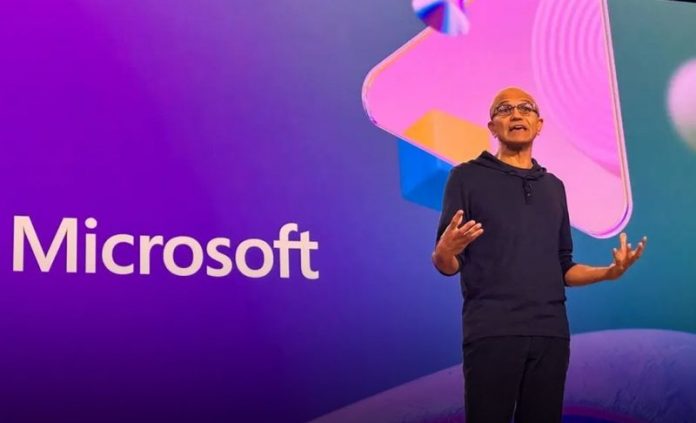

Microsoft to Invest Over $15bn in UAE as Trump Administration Clears Nvidia Chip Exports for AI Expansion

0

Microsoft has announced plans to invest more than $15 billion in the United Arab Emirates by 2029, marking one of the biggest foreign technology commitments in the Gulf nation’s growing push to become a global artificial intelligence hub.

The investment, confirmed by Microsoft Vice Chair and President Brad Smith, includes a sweeping expansion of the company’s AI and cloud infrastructure across the UAE. The move comes alongside fresh approval from the Trump administration for the export of advanced Nvidia graphics processing units (GPUs) — chips critical for training large AI models — to support Microsoft’s data center operations in the region.

“The biggest share of the investment, by far, both looking back and looking forward, is the expansion of AI data centers across the UAE,” Reuters quoted Smith as saying on the sidelines of the ADIPEC energy conference in Abu Dhabi. “From our perspective, it’s an investment that is critical to meet the demand here for the use of AI.”

The UAE, a nation already synonymous with rapid technological transformation, has been spending heavily to attract global AI companies and researchers. It has also strengthened ties with Washington to secure access to high-performance computing technologies that are otherwise restricted under U.S. export controls, especially to countries with close relations to China.

According to Smith, the Trump White House recently approved the export of an amount equivalent to 60,400 Nvidia A100 GPUs, involving the company’s newest GB300 AI accelerators, after revising technology safeguards to prevent unauthorized transfer to third parties. These approvals follow earlier export licenses under the Biden administration, which allowed Microsoft to deploy roughly 21,500 Nvidia A100, H100, and H200 chips in the UAE.

While the latest chips have not yet been shipped, Smith said deliveries would begin “in a matter of months,” emphasizing that they will be used exclusively within Microsoft’s own data centers to support AI model training and cloud computing operations.

Partnership with G42 and U.S. Oversight

Microsoft’s deepening relationship with G42, Abu Dhabi’s flagship artificial intelligence firm, remains central to its regional ambitions. The tech giant took a $1.5 billion minority stake in G42 last year, gaining a board seat now held by Smith.

However, G42’s historic ties to China have attracted scrutiny in Washington, amid growing U.S. concerns that advanced American chips could indirectly reach Beijing through third-party nations. Smith sought to allay such fears, noting that G42 has made “enormous progress” in aligning with U.S. compliance requirements. I think direct access to the most advanced U.S. chips will be part of G42’s future, he said.

G42 has repeatedly stated that it is working closely with U.S. partners and the Emirati government to ensure full compliance with American export laws and standards on AI development and deployment.

According to Smith’s blog post on Monday, Microsoft will have invested $7.3 billion in the UAE between 2023 and the end of this year, while another $7.9 billion is slated for spending from 2025 to 2029. The funds will primarily go toward expanding Microsoft’s cloud and AI infrastructure to meet surging demand from businesses, government agencies, and startups adopting generative AI tools.

Notably, none of the $15.2 billion investment disclosed on Monday will fund Stargate UAE, the first phase of what is planned to become one of the world’s largest AI data center hubs. That massive project, located in Abu Dhabi, was unveiled during President Donald Trump’s visit to the Gulf in May, and will serve as a separate multibillion-dollar initiative jointly backed by the U.S. and the UAE.

A New AI Frontier in the Gulf

It is believed that Microsoft’s UAE investment underscores how the AI arms race is reshaping global technology alliances. As nations compete for computing power, data, and skilled talent, Gulf countries like the UAE — with abundant capital, pro-innovation regulations, and strategic geopolitical positioning — are emerging as pivotal players.

The deal for Washington is believed to represent a balancing act of supporting American tech dominance in friendly regions while keeping critical chip technology out of China’s reach. It also helps Microsoft to cement a key foothold in the Middle East’s rapidly expanding AI economy, ensuring it remains a dominant force as global demand for generative AI and cloud computing continues to surge.

Shiba Inu’s (SHIB) 1,000% ROI Goal Looks Achievable by 2026, But Pepe (PEPE) and This Other Ethereum Meme Coin Will Beat it There

0

A few communities in crypto have the kind of energy Shiba Inu, Pepe Coin, and Little Pepe (LILPEPE) have built. Shiba Inu may aim to achieve a 1,000% return on investment by 2026. However, PEPE and his little pepe might beat them to the target as the presale is continuing and halfway through stage 13, which might hit 2,109% before SHIB hits its 1,000% target.

Shiba Inu (SHIB): Still the King of Meme Culture

At the time of this writing, SHIB’s price is near $0.00001226 with a total market cap near $7.2 billion according to CoinGecko. Since 2021, the project has continued to attract a following, and the community has been burning or removing tokens in an effort to increase the value of the remaining tokens. Long-term growth plans for SHIB’s layer two, Shibarium network, and its metaverse expansion remain in place as of now. SHIB could hit its 1,000% target by 2026 if the crypto market remains bullish.

Pepe Coin (PEPE): Momentum and Market Buzz

Although it is a meme coin, serious investors have speculated that it could be the “next Dogecoin” because its high trading volume and core community may enable PEPE to outperform SHIB in the years leading up to its target year of 2026. As of the time of writing, Pepe Coin trades at $0.00000667 and is set to outperform SHIB’s 1,000% ROI goal in the next few months.

Little Pepe (LILPEPE): The Smart Meme Coin on Ethereum

Little Pepe (LILPEPE) is not just another meme project. It’s built on an Ethereum Layer 2 network that focuses on low fees and faster transactions. It blends meme culture with real blockchain performance. At the time of writing, Little Pepe is priced at $0.0022 in presale stage 13, with over $27.3 million raised out of the $28.77 million goal. According to the official site, 96.32% of this stage is already filled. Early buyers from stage 1 are already up by 120%, while those entering now still have a potential 36.36% gain when the token lists at $0.0030. Little Pepe is also listed on CoinMarketCap and has completed a full CertiK audit. Additionally, the project is offering a massive $777K giveaway and a Mega Giveaway worth over 15 ETH for top presale buyers from stages 12 to 17.

Final Thoughts

It seems fair to say SHIB’s 1,000% ROI goal looks realistic if the market holds strong. PEPE could reach that point sooner, thanks to its volatility and cult following. However, Little Pepe (LILPEPE) feels like the next significant chapter in the meme coin space. With a working ecosystem, presale traction, and an engaged community, it could beat both SHIB and PEPE to the next major run. Currently, Little Pepe is still available for $0.0022, and with the presale almost fully subscribed, the window for early entry is closing quickly. If the projected 2,109% potential plays out, investors joining now could be part of one of the most impressive meme coin stories yet.

For more information about Little Pepe (LILPEPE) visit the links below:

Website: https://littlepepe.com

Whitepaper: https://littlepepe.com/whitepaper.pdf

Telegram: https://t.me/littlepepetoken

Twitter/X: https://x.com/littlepepetoken

 $777k Giveaway: https://littlepepe.com/777k-giveaway/

Bitcoin Plunges Again Amid Bearish Market Momentum as Big Whales Stir Turmoil With Sell-Offs

0

The cryptocurrency market faced a brutal downturn today, with total market capitalization plunging 3.2% to $3.6 trillion, marking one of the steepest single-day drops in months.

According to data from CoinGlass, more than $400 million worth of crypto positions were liquidated in just 24 hours, wiping out over 162,000 long traders.

At the center of the storm was Bitcoin (BTC), which tumbled below the critical $107,500 support level after reaching a recent high of $111,721. The asset is now trading around $107,662 at the time of writing this report, signaling mounting bearish momentum.

Analysts attribute the sharp retracement to the U.S. Federal Reserve’s October rate hike and subsequent comments by Chair Jerome Powell, which dampened hopes of a December rate cut. The resulting surge in the U.S. dollar has intensified selling pressure across digital assets.

Altcoins Bear The Brunt of The Crash

Altcoins suffered even more severe losses. The top 50 cryptocurrencies fell by an average of 4% in 24 hours, with Ethereum, Solana, DOGE, and Uniswap among the hardest hit.

Ethereum liquidations totaled $112.8 million, slightly surpassing Bitcoin’s $96.9 million. Meanwhile, Bitcoin’s market dominance climbed to 60%, highlighting traders’ retreat to relative safety amid growing uncertainty.

Whales Offload Big Raising Market Jitters

Bitcoin fell below key support levels after major holders, often referred to as “whales”, reportedly offloaded large volumes of BTC, triggering heightened volatility and widespread selloffs across exchange.

Fueling the market’s anxiety are large on-chain transfers by prominent Bitcoin whales. Two long-term holders, BitcoinOG and early adopter Owen Gunden, have moved significant sums of BTC to major exchanges in recent weeks, raising speculation of potential selloffs or short positions.

Data shows that since October 1, BitcoinOG has deposited roughly 13,000 BTC (worth $1.48 billion) across platforms such as Kraken, Binance, Coinbase, and Hyperliquid. Similarly, between October 21 and November 3, Owen Gunden transferred 3,265 BTC ($364.5 million) to Kraken, marking a notable reactivation of previously dormant wallets.

Market watchers warn that these inflows, while not definitive proof of imminent selling, often precede heightened volatility. “Whale deposits of this scale typically foreshadow aggressive short activity or large-scale profit-taking,” said one analyst.

Notably, the reemergence of BitcoinOG, a pseudonymous trader known for accurately timing previous market downturns, has intensified fears of renewed bearish pressure. The trader gained notoriety after reportedly earning $197 million during Bitcoin’s October 11 crash through well-timed short positions.

On-chain data indicates that the same wallet cluster continues to send BTC to exchanges, mirroring earlier cycles that preceded downward swings. In the first days of November alone, BitcoinOG transferred 500 BTC ($55 million) to Kraken, alongside several smaller deposits to Hyperliquid.

Meanwhile, Owen Gunden, a respected Satoshi-era holder, has resumed on-chain activity after years of near dormancy. His recent transfers spread across multiple batches suggest strategic repositioning as Bitcoin’s price struggles near $108,000.

Outlook: Caution Takes The Lead

With whales moving coins, institutional demand waning, and macro pressures mounting, market analysts describe the overall sentiment as “cautiously bearish.” The recent plunge underscores how quickly optimism can turn in crypto markets—especially when major holders begin to stir.

For now, traders are watching key support levels closely. A decisive break below $106,000 could open the door to further declines, while any bounce above $110,000 may signal the start of a recovery. Until then, the market remains firmly on edge.

Many Informal Businesses in Nigeria Don’t Think Registering Their Business Holds Any Significant Value – Report

0
CAC

Formalisation has long been hailed as a pathway to business growth, stability, and access to greater opportunities. In theory, when small and micro-enterprises register officially, they gain visibility, access to finance, protection, and the chance to scale.

Despite the Nigerian government’s ongoing efforts to promote business formalisation, millions of micro and small enterprises continue to operate outside the formal economy.

According to Moniepoint’s Informal Economy Report 2025, a significant number of business owners see little incentive to register their enterprises. For them, formality offers no immediate advantage compared to the realities of survival-driven entrepreneurship.

These businesses, often run by individuals in small communities and local markets, prioritise daily income over paperwork, perceiving business registration as a distant milestone rather than a necessary step toward growth, leaving a critical gap in Nigeria’s economic development.

According to experts, the low rate of business registration among micro and small enterprises has prevented many job-creating firms from accessing the financial systems, markets, and support structures necessary to grow. But the reasons behind this persistent informality go beyond mere reluctance, they reflect deep-rooted realities in Nigeria’s business culture and economic landscape.

Here Are Some Reasons Why:

Informality as the Default

For many small business owners across Nigeria, informality is not a conscious act of resistance to regulation. Rather, it is the default mode of operation. These entrepreneurs often run their businesses within tightly knit communities, guided by cultural norms and a focus on day-to-day survival. The concept of registration rarely crosses their minds, as survival, not formality, remains the core motivation.

Survival Over Structure

Most informal businesses are born out of necessity. Faced with unemployment and economic uncertainty, many Nigerians start micro-enterprises as a means of survival. These ventures typically begin as one-person operations focused on meeting basic needs. Formalisation only becomes a consideration when the business grows beyond subsistence level, a milestone many may never reach.

The Perceived Lack of Value

Another major deterrent is perception. Many informal business owners believe registering their businesses offers little to no immediate benefit. They view registration as a distant goal, one meant for larger, more established enterprises. Until they see clear and tangible advantages, such as access to loans or contracts, many entrepreneurs see no reason to go through the process.

Cost and Complexity Fears

There’s also the assumption that formalisation is expensive and bureaucratic. With limited awareness of simplified registration processes or government support programs, many small operators assume it will cost too much or take too long. These misconceptions often discourage them from taking the first step toward formality.

As shared in the report, Dr. Dotun Olowoporoku, Managing Partner at Ventures Platform, believes that formalisation can only succeed when policymakers make it cheaper, simpler, and more beneficial than remaining informal.

“Today, registering with the CAC or FIRS is still viewed as a burden rather than a benefit,” he said. “Policymakers can change this by creating digital one-stop shops where business registration, tax filing, and access to support programs are integrated.”

Dr. Olowoporoku recommends offering two to three years of tax holidays or simplified presumptive taxes for nano-businesses earning under N250,000 monthly. He added that this approach would help reduce what he calls the ‘tax trap’ — the fear among 89% of informal operators that registration will expose them to unaffordable tax obligations.

He further emphasized that simplicity is key. A tiered registration system that scales obligations to business revenue, coupled with tax rebates for digital adoption (such as reduced levies for POS-enabled businesses), could transform formalisation from a cost burden into a growth accelerator.

A tiered registration framework allows small traders and micro-firms to register with minimal requirements and zero or low fees for an initial probationary period. As they grow and cross income thresholds, they can easily upgrade to higher tiers. This model not only eases onboarding but also provides flexibility for entrepreneurs transitioning from the informal to the formal economy.

Notably, the recent regulatory reforms also offer hope. New frameworks such as the Nigerian Insurance Industry Reform Act (NIIRA) 2025 and amendments to the Banks and Other Financial Institutions Act (BOFIA) aim to strengthen consumer protection, simplify compliance, and encourage micro-insurance uptake.

By reducing compliance costs and embedding tangible benefits like access to credit, pensions, and social protection within formalisation programs, these reforms make informal business participation financially attractive. 

The Way Forward

The message is clear, to drive formalisation, Nigeria must make it cheaper, faster, and more rewarding to join the system than to stay outside it.

Simplified registration, targeted tax incentives, and better education about the benefits of formalisation could help shift millions of micro-enterprises from survival mode to sustainable growth, unlocking the potential of informal businesses in the process.