DD
MM
YYYY

PAGES

DD
MM
YYYY

spot_img

PAGES

Home Blog Page 21

Federal Reserve Moves to Build Stablecoin Rulebook Under GENIUS Act

0

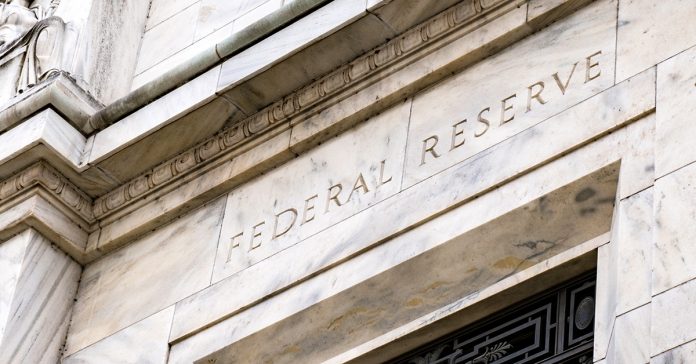
The Federal Reserve has taken a significant step toward bringing payment stablecoins deeper into the regulated U.S. financial system, proposing a framework that would govern stablecoin issuers under the GENIUS Act.

The proposals, released on September 24, 2026, would establish requirements for reserves, capital, risk management and bank applications, while giving the public 60 days to comment after publication in the Federal Register.

At the center of the proposal is a straightforward regulatory principle: a stablecoin should be backed by assets capable of supporting redemption when holders want their money back.

The Federal Reserve would require Board-supervised payment stablecoin issuers to fully back their tokens with permitted reserve assets, including short-term U.S. Treasury bills and other high-quality, liquid assets.

That requirement addresses one of the most important questions surrounding stablecoins. Their value depends not simply on blockchain technology, but on confidence that a token advertised as redeemable for one dollar can actually be converted into dollars at par.

Federal Reserve Governor Michael Barr said reliable and prompt redemption must remain possible even during periods of market stress, when supposedly liquid assets can themselves experience pressure.

The proposed framework would introduce standardized capital requirements designed to address credit and operational risks associated with stablecoin activities. Risk-management standards would accompany those requirements.

While separate rules would cover institutions responsible for safeguarding the assets backing stablecoins. The Federal Reserve would also clarify which stablecoin-related activities are permissible for banks under its supervision.

For banks seeking to enter the stablecoin market, the proposal creates another important layer: authorization. Board-supervised insured state member banks would need approval to establish subsidiaries that issue payment stablecoins.

Applicants would provide information including business plans and financial details, while the proposed process would establish procedures for hearings, appeals and final regulatory determinations. The significance extends beyond individual issuers.

Stablecoins increasingly sit at the intersection of cryptocurrency markets, payments and traditional financial infrastructure. Federal Reserve officials have previously identified potential applications in remittances, global trade, treasury management and other payment activities.

While highlighting concerns around money laundering, terrorist financing and financial stability.  The GENIUS Act therefore represents more than a licensing framework. It creates the legal foundation upon which regulators are now constructing operational rules.

The Federal Reserve’s latest proposals are part of that implementation process, translating statutory requirements into standards that banks and other supervised institutions would have to follow.

There is an important distinction between the proposal and a finalized regulatory regime. The Federal Reserve is seeking public comment, meaning industry participants, banks, technology companies and other stakeholders can still raise concerns or recommend changes.

The Board’s comment period will close 60 days after publication in the Federal Register. The next phase will consequently be less about whether regulation is coming and more about what the final operating architecture will look like.

Reserve quality, redemption rights, capital buffers, custody arrangements and supervisory requirements could determine how easily stablecoin issuers integrate with conventional finance.

The Federal Reserve’s proposal signals that stablecoins are increasingly being treated not merely as crypto instruments, but as payment technologies with potential consequences for banking and financial stability.

The GENIUS Act supplied the legal framework; the Federal Reserve is now working to build the regulatory machinery around it.


10-Year Treasury Yield Hits 5.10%: U.S. Bond Yields Reach Highest Level Since 2007

0

The U.S. bond market has entered a new phase of pressure as the 10-year Treasury yield climbed to around 5.10%, a level not seen since 2007.

The move marks a significant repricing of government debt and places the benchmark borrowing rate at the center of a broader debate over inflation, Federal Reserve policy, economic growth and the sustainability of America’s fiscal position.

The latest rise did not happen in isolation. Stronger-than-expected U.S. business activity, elevated oil prices and increasingly hawkish signals from Federal Reserve officials have encouraged investors to demand greater compensation for holding longer-duration government bonds.

The 30-year Treasury yield has also climbed above 5.3%, reaching levels last seen more than two decades ago.  At the heart of the selloff is inflation. Higher energy prices can feed directly into transportation, manufacturing and household costs.

Making it harder for inflation to return sustainably toward the Federal Reserve’s target. Strong economic activity creates a similar problem: if demand remains resilient while prices remain elevated, investors may expect interest rates to stay higher for longer.

That expectation is particularly important for the 10-year Treasury because its yield influences borrowing costs throughout the economy. Mortgage rates, corporate loans, commercial real estate financing and other forms of credit are all affected by movements in longer-term Treasury yields.

When the benchmark moves above 5%, the cost of capital becomes materially different from the ultra-low-rate environment that dominated much of the previous decade.

For homeowners and prospective buyers, the consequences can appear through mortgage rates. For companies, higher Treasury yields raise the hurdle rate for new investment and can increase the cost of refinancing existing debt.

For financial markets, the shift also changes the relative attractiveness of risk assets. A government bond yielding around 5% provides investors with a substantially larger nominal return than the near-zero yields available during the pandemic era.

That creates another challenge for equities. Higher bond yields increase the discount rate used to value future corporate earnings, which can put pressure on companies whose valuations depend heavily on profits expected years into the future.

Technology and growth stocks are particularly sensitive to this mechanism because a larger portion of their perceived value can depend on distant cash flows. The bond market is also confronting America’s enormous financing requirements.

The federal government must continually refinance maturing debt while issuing new securities to finance persistent fiscal deficits. Recent market analysis has highlighted expectations for substantial additional Treasury issuance, adding to concerns about the supply of government bonds investors must absorb.

Yet the rise in yields is not simply a story about government debt. It reflects the market’s changing assessment of the U.S. economy itself. Investors are weighing stronger activity against persistent inflation, geopolitical risks and the possibility that monetary policy could remain restrictive for longer than previously expected.

The 5.10% threshold therefore carries significance beyond a single market statistic. It represents a return to a borrowing environment that resembles the pre-global-financial-crisis era, when Treasury yields were considerably higher than the historically unusual levels of the 2010s and early 2020s.

The central question is no longer simply whether yields can reach 5%. They already have. The larger question is how long they can remain there—and what that means for mortgages, corporate financing, government interest expenses, equities and the broader global financial system.

ARK Invest Tokenizes Venture Fund on Ethereum as 21Shares Launches Zcash and ETHFI ETPs

0

The boundary between traditional finance and crypto is becoming increasingly difficult to define. Cathie Wood’s ARK Invest is putting its venture-capital strategy on Ethereum, while 21Shares is expanding regulated European access to two very different crypto assets: Zcash and ether.fi.

The moves show how blockchain infrastructure is increasingly being used not simply for cryptocurrencies, but for the packaging, distribution and ownership of investment products.

ARK Invest announced on September 24 that it had partnered with Securitize to tokenize the ARK Venture Fund, known as ARKVX, making it the first ARK fund to be brought onchain.

The fund has approximately $1.3 billion in net assets and invests in private and public technology companies associated with disruptive innovation, including companies such as OpenAI, Anthropic, Stripe and Databricks.

The important distinction is that ARK is not putting shares of those individual companies onto Ethereum. Instead, the blockchain represents investors’ interests in the ARK Venture Fund itself.

Securitize provides the infrastructure for issuance and investor access, while Ethereum becomes the settlement and ownership layer for the tokenized fund interests.

That distinction matters because tokenization is increasingly moving beyond the idea of putting existing cryptocurrencies onchain. The larger proposition is that traditional financial instruments—including funds.

Private-market investments and securities—can use blockchain infrastructure to record ownership and streamline parts of the investment process. For ARK, the move also extends an existing relationship with Securitize.

ARK invested strategically in Securitize in 2025, reflecting the investment manager’s broader interest in tokenized securities and blockchain-based capital markets. The venture-fund launch therefore represents an extension of an established strategy rather than an isolated experiment.

At the same time, 21Shares is pushing crypto further into conventional European brokerage infrastructure. On September 22, the asset manager launched physically backed exchange-traded products for Zcash and ether.fi on Euronext Amsterdam and Euronext Paris.

The products trade under the tickers ZCASH and ETHFI, respectively, and both carry a 2.50% annual fee. The significance of the products is their structure. Investors can obtain exposure through conventional brokerage accounts without directly purchasing, storing or managing the underlying tokens.

The products are physically backed, meaning the relevant crypto assets are held by institutional custodians rather than merely being represented by derivatives.  Zcash brings another dimension to the expansion.

Known for privacy-preserving transactions, ZEC is now available through a regulated exchange-traded product structure in European markets. Ether.fi, meanwhile, represents the decentralized-finance and staking side of the digital-asset economy, giving traditional investors a security-market route to exposure to ETHFI.

The announcements point toward a broader transformation in crypto markets. ARK is bringing a traditional venture fund onto blockchain rails, while 21Shares is bringing individual digital assets into traditional European market infrastructure.

One direction moves financial assets toward blockchain infrastructure; the other moves blockchain assets toward established finance. The central question is no longer whether crypto and traditional finance will interact, but how deeply their infrastructures will converge.

Tokenization, regulated ETPs and institutional custody are creating that bridge, potentially making blockchain-based ownership increasingly familiar to investors who may never directly use a crypto wallet.

KelpDAO Sues LayerZero Over $292M Exploit as New York Targets Polymarket and Kalshi

0

The crypto industry is entering a period in which technical failures are increasingly becoming legal battles, while the rapid expansion of prediction markets is forcing regulators to confront a basic question: when does an event contract become gambling?

KelpDAO’s developer has filed a civil claim against LayerZero and its co-founder Bryan Pellegrino over a $292 million exploit, while New York has sued Polymarket over alleged violations of state gambling laws, following a similar case against Kalshi.

The KelpDAO dispute centers on an April 18 attack involving 116,500 rsETH, worth approximately $292 million at the time.

LayerZero’s own incident report says the attack involved a compromise of internal LayerZero Labs RPC infrastructure alongside a denial-of-service attack against a third-party RPC used by the LayerZero Labs Decentralized Verifier Network.

The report notes that the affected application had been changed from a two-of-two verification arrangement to a one-of-one configuration, leaving a single verifier responsible for message confirmation.

Evercrest Technologies, the company behind KelpDAO, now argues that LayerZero had endorsed the configuration that later became central to the incident. According to the civil claim reported by Decrypt, Evercrest alleges negligent misrepresentation, negligence and defamation, including claims involving statements attributed to Pellegrino.

LayerZero and Pellegrino dispute the allegations, and the claims have not been established by a court. The significance extends beyond the individual dispute. Cross-chain bridges depend on complex combinations of smart contracts, validators, verification systems and infrastructure.

When hundreds of millions of dollars disappear, determining responsibility becomes difficult because security failures can involve both application-level configuration and infrastructure operated by external providers.

The KelpDAO case therefore places a broader question before the industry: how should liability be allocated when developers rely on third-party interoperability infrastructure?

At the same time, prediction markets are confronting a different kind of legal uncertainty. New York Attorney General Letitia James and Governor Kathy Hochul announced a lawsuit against Polymarket, alleging that its prediction-market platform operates as an unlicensed gambling business in the state.

New York argues that the contracts involve uncertain outcomes and therefore fall within the state’s gambling laws. The state is seeking to stop the alleged operation, recover gains and obtain fines and restitution.

The case follows New York’s July lawsuit against Kalshi, which makes similar allegations. The state says Kalshi allows users to wager on events including sports, elections and cultural outcomes without obtaining a New York gaming license.

Kalshi has challenged the state’s position, arguing that prediction markets fall under federal rather than state oversight. That federal-state conflict could become particularly important as prediction markets expand.

The platforms describe event contracts as financial-market products, while New York is treating them under its gambling framework. Polymarket has also been lobbying regulators in Europe and the United Kingdom to recognize its contracts as financial products rather than gambling instruments.

The KelpDAO and prediction-market cases reveal a maturing crypto sector confronting an unavoidable reality: technological innovation can move faster than legal frameworks. Bridges need clearer responsibility standards.

While prediction markets need clearer boundaries between financial contracts and gambling. In both cases, courts and regulators may ultimately determine where those boundaries lie.

Yuga Labs VP 0xQuit Recovers 23,155 NFTs Worth $5.7M in Limit Break Exploit As ENA, NEAR and LINK Rally

The crypto market is once again illustrating the two forces that continue to define the digital-asset industry: rapid innovation and persistent security risk. While tokens such as ENA, NEAR and LINK have helped drive a broader market rally.

The sector is simultaneously confronting another major exploit involving non-fungible tokens, highlighting how quickly confidence can shift when infrastructure is compromised.

At the centre of the latest security incident is Limit Break’s Payment Processor V2, which was exploited in an attack that affected thousands of NFTs. Yuga Labs vice president and prominent NFT security researcher 0xQuit responded by whitehatting 23,155 NFTs valued at more than $5.7 million.

The intervention was aimed at protecting assets that could otherwise have been drained or transferred by attackers exploiting the vulnerability. The scale of the intervention is significant because NFTs are not merely static digital images.

Depending on the collection and infrastructure supporting them, they can represent ownership rights, access, memberships, gaming assets or other forms of digital property. A vulnerability in a payment processor can therefore create consequences far beyond a conventional software malfunction.

Whitehat interventions have become an important part of the crypto ecosystem. Security researchers can sometimes act before malicious actors have fully exploited a vulnerability, moving or securing assets to prevent theft.

In this case, 0xQuit’s intervention demonstrates the increasingly important role that independent researchers and security specialists play in protecting decentralized markets. The recovery was not complete.

Around 660 WETH remained unrecovered, leaving a gap between the value protected and the assets that could not be secured. That distinction matters because the existence of a successful whitehat response does not eliminate the underlying vulnerability or guarantee that every affected asset can be recovered.

The incident arrives as the wider cryptocurrency market is experiencing renewed momentum. ENA, NEAR and LINK have emerged among the tokens contributing to the rally, demonstrating that investor attention remains strong despite the sector’s continuing security challenges.

Market rallies can quickly change sentiment, encouraging traders to increase exposure as momentum builds. ENA’s performance is particularly relevant because Ethena has developed a major presence within the stablecoin and decentralized-finance ecosystem.

NEAR remains closely associated with blockchain infrastructure and decentralized applications, while Chainlink’s LINK occupies an important position in the oracle sector, connecting blockchain-based applications with external data and real-world information.

The contrast between rising token prices and a major NFT exploit captures the complexity of the current crypto market. Capital can move aggressively toward promising assets even while weaknesses remain embedded in the infrastructure connecting users, applications and digital ownership.

The rally may create opportunities, but the exploit provides an equally important reminder that price momentum is only one part of the market equation. Smart-contract risk, protocol architecture, custody mechanisms and third-party infrastructure can all influence the real risk behind an apparently attractive digital asset.

For the broader industry, the Limit Break incident reinforces the importance of security audits, responsible disclosure and rapid-response systems. As billions of dollars move through increasingly complex blockchain applications, vulnerabilities can become financially significant almost immediately.

The crypto market’s latest rally therefore comes with a contradiction: enthusiasm is returning to digital assets, but security remains an unresolved structural challenge. The whitehat recovery of more than $5.7 million demonstrates what coordinated intervention can accomplish.

The unrecovered WETH shows that prevention remains more valuable than recovery once an exploit begins.

China, US Agree on $30bn Tariff Reduction Framework and New AI Dialogue After Xi-Trump Summit

0

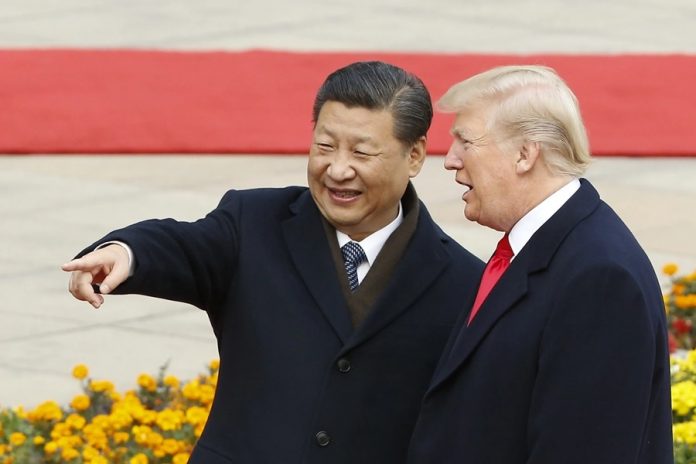
China and the United States have agreed on an eight-point framework that includes a $30 billion reciprocal tariff-reduction arrangement and a new channel for cooperation on artificial intelligence, marking an effort by the world’s two largest economies to stabilize relations after years of escalating trade and technology restrictions.

The agreement was announced by China’s Foreign Ministry on Saturday following President Xi Jinping’s three-day visit to Washington for talks with President Donald Trump. Xi has since returned to Beijing, according to China’s state news agency Xinhua.

The package does not amount to a comprehensive trade agreement. Instead, it establishes several areas in which Washington and Beijing intend to maintain negotiations, extending the temporary truce reached earlier in the year while creating mechanisms for continued engagement on trade, AI and broader geopolitical issues.

At the center of the arrangement is an agreement on reciprocal tariff reductions worth $30 billion, although the details of how the reductions will be implemented were not immediately provided by Beijing.

The two governments also agreed to establish a trade council and extend the outcomes of earlier negotiations held in Kuala Lumpur.

The framework follows the decision by the two sides to extend their existing trade truce by two months. The truce had been scheduled to expire on November 10, but US Treasury Secretary Scott Bessent said earlier this week that the extension would provide additional time for negotiators to work toward a broader agreement.

The sequence of agreements suggests that Washington and Beijing are attempting to prevent the latest improvement in relations from becoming another short-lived pause in their trade conflict.

AI Becomes Part of The Diplomatic Framework

The inclusion of artificial intelligence is considered a big deal because AI has increasingly become intertwined with US-China economic and national-security competition.

Under the agreement, Washington and Beijing will establish a dialogue covering both the risks and benefits of AI. The next round of discussions is scheduled for November.

The two countries will also establish a communication channel for AI-related incidents.

That mechanism could become important as more capable AI systems create new risks that extend beyond conventional commercial competition. A direct communication channel gives the two governments a way to discuss incidents involving advanced AI systems, although the agreement does not establish common regulatory standards or restrictions on AI development.

The timing is notable because AI has become one of the most contentious areas of the broader US-China technology relationship.

Washington has imposed restrictions on China’s access to advanced semiconductors and AI computing technology, while Beijing has intensified efforts to develop domestic alternatives and reduce its reliance on US technology.

The new dialogue therefore creates a narrow area for cooperation within a relationship otherwise characterized by technological competition. It also provides both governments with a mechanism for discussing AI risks without requiring them to resolve their much broader disagreements over technology controls, semiconductor supply chains and national security.

Trade Truce Buys Time, But Major Disputes Remain

The summit produced a framework for continued negotiations rather than a sweeping resolution of the US-China trade conflict.

The two countries agreed to extend the existing trade truce, reducing the immediate risk of another escalation in tariffs while negotiations continue.

The $30 billion tariff-reduction arrangement could provide some relief for businesses on both sides if implemented as described by Beijing. Lower tariffs would reduce the cost of cross-border trade and could give companies greater confidence to make purchasing and investment decisions.

But the longer-term significance will depend on the details.

The announcement does not specify which products will receive tariff reductions, when they will take effect, or how the $30 billion figure will be calculated. Those details will determine how much of the agreement translates into actual changes in trade costs.

The creation of a trade council is therefore potentially as important as the headline tariff figure. A permanent or recurring institutional mechanism could allow disputes to be addressed through negotiations before they develop into broader tariff measures.

The arrangement also gives businesses more visibility after years of uncertainty surrounding US-China trade policy. For companies operating across the two economies, the immediate value may be less about a dramatic reduction in tariffs and more about reducing the probability of another abrupt deterioration in trade conditions.

Broader Geopolitical Commitments

The eight-point consensus extends beyond trade and technology.

China and the US agreed to support each other in hosting the Asia-Pacific Economic Cooperation leaders’ meeting and the Group of 20 summit. Both leaders plan to attend gatherings hosted by the other country, according to the Chinese Foreign Ministry.

The agreement also contains positions on Iran and international waterways.

The two sides agreed that Iran should fulfil its commitment not to develop nuclear weapons. They also agreed that no country or entity should impose transit tolls on international waterways. That language is notable because freedom of navigation and control over major shipping routes have become important geopolitical issues, particularly amid disruptions affecting global energy and trade flows.

The agreement does not resolve the underlying disputes surrounding Iran or maritime security, but it establishes areas where Washington and Beijing have expressed a common position.

From Confrontation to Managed Competition

The summit’s significance lies less in a single breakthrough than in the creation of mechanisms designed to prevent competition from escalating uncontrollably.

The US and China remain strategic competitors across trade, advanced technology, semiconductors, AI, military affairs, and global influence. The new framework does not remove those conflicts. Instead, it creates separate channels through which the two governments can continue negotiating while keeping the broader relationship from being dominated entirely by confrontation.

The AI dialogue is considered a great deal because competition in advanced technology is likely to intensify even if trade relations stabilize.

A sustained reduction in trade tensions could improve supply-chain visibility and lower some costs, but it would not necessarily reverse the structural decoupling pressures already reshaping semiconductor manufacturing, AI infrastructure and strategic technology supply chains.

The next test will be whether the eight-point framework produces concrete measures beyond the summit.

The November AI talks and the implementation of the tariff-reduction arrangement will provide early indications of whether Washington and Beijing are moving toward a more durable system of managed competition or simply extending another temporary period of stability.