DD
MM
YYYY

PAGES

DD
MM
YYYY

spot_img

PAGES

Home Blog Page 210

Amazon Unveils $12bn Louisiana Data Center Expansion Amid Intensifying AI Infrastructure Race

3

Amazon plans to invest $12 billion in new AI-focused data center campuses in Louisiana as part of a broader $200 billion capital expenditure push.


Amazon on Monday announced plans to invest $12 billion in new data center campuses in Louisiana, reinforcing its aggressive expansion of artificial intelligence and cloud infrastructure even as investors weigh the financial implications of surging capital expenditures.

The facilities will be located in Caddo and Bossier Parishes in northwestern Louisiana. Amazon said it expects to create 540 full-time roles tied directly to the data centers and support approximately 1,700 additional jobs connected to the campuses, including electricians, HVAC technicians, construction workers, and security specialists. Beyond direct employment, such projects often generate secondary economic effects through local suppliers, logistics providers, and service industries.

The investment forms part of Amazon’s broader capital spending strategy. Earlier this month, the company projected roughly $200 billion in capital expenditures for the year — a figure that outpaces other hyperscale cloud operators and underscores the scale of infrastructure required to support next-generation AI workloads. Combined, major technology firms have forecast nearly $700 billion in 2026 expenditures as the race to build AI capacity accelerates.

Amazon’s announcement follows a volatile period for its stock. Shares declined for nine consecutive trading sessions after the company’s Feb. 5 earnings report, wiping out more than $450 billion in market value during that stretch. Investors have questioned whether the pace of capital deployment may weigh on near-term profitability, particularly as AI monetization models are still evolving.

A substantial portion of Amazon’s spending is directed toward AI-related assets, including advanced data centers, proprietary chips, networking equipment, and specialized computing clusters. These investments are largely channeled through Amazon Web Services (AWS), the company’s cloud division and primary profit engine. AI services, including model training and inference, are increasingly becoming core growth drivers for AWS, but they require enormous upfront infrastructure commitments.

Amazon’s expansion mirrors similar moves by competitors such as Microsoft and Google, both of which have committed hundreds of billions of dollars to expanding their global data center footprints. Meta has also selected Louisiana for a major project — the $27 billion Hyperion data center joint venture with Blue Owl Capital.

The clustering of hyperscale facilities in Louisiana signals the state’s growing appeal as an infrastructure hub. Factors likely include land availability, grid capacity, regulatory conditions, and economic development incentives. For technology firms, site selection balances proximity to energy sources, transmission infrastructure, fiber connectivity, and tax considerations.

AI models require vast computational power not only for initial training but also for ongoing inference — the process of generating responses or predictions in real time. As enterprises integrate AI into customer service, analytics, healthcare diagnostics, and industrial automation, demand for high-performance computing continues to rise. Hyperscalers are effectively building the backbone for this digital transformation.

Energy, Water, and Community Considerations

The rapid buildout of data centers nationwide has prompted environmental and community scrutiny. Large-scale facilities can consume significant amounts of electricity and water, raising concerns about grid strain and local resource allocation.

Last year, Microsoft withdrew from a planned site in rural Wisconsin after residents raised environmental and financial concerns, illustrating the political and regulatory sensitivity surrounding such projects.

Amazon said it worked with the local utility, Southwestern Electric Power Company, to ensure that it would bear the full cost of energy infrastructure tied to the campuses. The company stated it will pay “100% of the costs” associated with new and upgraded energy infrastructure.

To mitigate electricity demand, Amazon plans to incorporate natural air cooling when feasible, reducing reliance on energy-intensive mechanical cooling systems. The company also said the Louisiana campuses will use only surplus water from the surrounding area, asserting there will be no strain on local water supplies. In addition, Amazon plans to invest up to $400 million in public water infrastructure to support the sites.

Amazon is partnering with data center developer Stack Infrastructure on the project, leveraging the firm’s expertise in constructing and operating hyperscale facilities.

The Louisiana investment points to the structural shift underway in the technology sector. AI has moved from an experimental capability to a foundational computing paradigm, requiring sustained capital outlays comparable to utilities or transportation networks. Data centers are increasingly viewed as critical infrastructure.

For Amazon, the long-term thesis rests on AI-driven revenue growth offsetting the near-term pressure on free cash flow. The company is effectively wagering that enterprises’ migration toward AI-powered services will generate durable demand across cloud storage, compute, machine learning platforms, and related services.

At the state level, Louisiana stands to gain from increased tax revenues, workforce development opportunities, and enhanced infrastructure. However, sustained oversight of environmental impact and grid resilience will likely remain central to public discourse.
Nigeria Targets 5% of GDP for Industrial Financing Under Sweeping 2025 Policy Drive

0

By earmarking up to 5% of GDP for industrial financing, Abuja is signaling one of the most aggressive state-backed industrial funding commitments in Nigeria’s recent economic history.


The Federal Government has unveiled plans to allocate up to 5% of Nigeria’s Gross Domestic Product to industrial financing under the Nigeria Industrial Policy (NIP) 2025, marking a decisive shift toward large-scale production, export expansion and structured job creation.

Contained in the framework released by the Federal Ministry of Industry, Trade and Investment, the policy lays out a coordinated strategy to reposition the economy toward mass manufacturing, deeper value addition, and reduced import dependence.

At the heart of the plan is a strengthened development finance architecture anchored on recapitalizing the Bank of Industry and scaling intervention funds in collaboration with the Central Bank of Nigeria.

“We recognize that no policy succeeds without financing,” the document stated. “By setting aside up to 5% of GDP for industrial financing and leveraging public–private partnerships, this government demonstrates its commitment to matching ambition with resources.”

The 5% allocation is designed to crowd in private capital through structured public–private partnerships while lowering financing constraints that have historically hampered Nigeria’s manufacturing sector.

  • Under the framework:
  • The Bank of Industry is expected to be recapitalized to N3 trillion by 2026.
  • Sector-specific intervention funds are projected to rise to N3 trillion.
  • Credit guarantees for MSMEs will be mainstreamed to de-risk lending.
  • New instruments such as interest-drawback schemes and equity-based financing will be introduced.

This approach represents a shift from fragmented credit schemes toward a consolidated industrial financing ecosystem with clearer institutional responsibilities and performance metrics.

If implemented at scale, the allocation could materially alter capital access conditions for manufacturers, especially in agro-processing, textiles, pharmaceuticals, petrochemicals, and light engineering.

President Bola Tinubu formally unveiled the Nigeria Industrial Policy 2025 last week, directing ministries, departments, and agencies to ensure swift execution.

The policy aligns with Tinubu’s “Renewed Hope” agenda, particularly its emphasis on domestic production, import substitution, and industrial self-sufficiency.

A key feature is the enforcement of a “Nigeria First” procurement stance, prioritizing locally manufactured goods in public spending. The framework also seeks to reduce reliance on imported raw materials by encouraging backward integration and local value chains.

By consolidating fiscal, monetary, trade, and industrial measures into a unified strategy, the government is attempting to address longstanding coordination gaps that have limited the impact of previous industrial programmes.

Target: Manufacturing at 25% of GDP

Nigeria’s manufacturing contribution to GDP has historically remained in the low double digits. The NIP 2025 sets an ambitious target: raising manufacturing’s share to between 20% and 25% of GDP by 2030.

Achieving that would require sustained growth in output, infrastructure upgrades, and improved logistics efficiency, particularly in power supply and transport networks.

Industrial expansion at that scale would also carry employment implications. Manufacturing is typically more labor-intensive than extractive industries, suggesting potential for broad-based job creation, particularly among youth.

Beyond domestic production, the policy underscores export competitiveness as a strategic priority. Nigeria’s export base remains heavily concentrated in crude oil. Industrial diversification is positioned as essential to stabilizing foreign exchange earnings and reducing vulnerability to commodity price shocks.

Strengthening non-oil exports — from processed agricultural goods to finished consumer products — would require improvements in standards compliance, logistics, trade facilitation, and market access.

The policy’s integrated design seeks to align export promotion with financing mechanisms, rather than treating them as separate policy domains.

Implementation Risks and Structural Constraints

While the financing commitment is substantial on paper, execution will determine outcomes.

Key variables include:

  • Fiscal sustainability: Allocating up to 5% of GDP requires disciplined budget management and efficient capital deployment.
  • Governance oversight: Transparent allocation and monitoring of funds will be critical to prevent leakages.
  • Infrastructure readiness: Industrial financing must be matched by reliable electricity, transport corridors, and digital infrastructure.
  • Private sector participation: Public–private partnerships depend on investor confidence and regulatory stability.

Recapitalizing development finance institutions alone will not guarantee productivity gains unless funds are channeled into sectors with clear competitive advantages.

Overall, the Nigeria Industrial Policy 2025 represents one of the most comprehensive industrial blueprints in recent years. By embedding financing targets within a structured implementation framework — complete with timelines and measurable performance indicators — the government is attempting to move from policy declaration to institutional execution.

If the 5% GDP allocation is realized and effectively deployed, it could mark a structural pivot away from oil dependence toward diversified industrial growth.

While the scale of ambition is clear, economists reiterate that the test will lie in translating capital commitments into functioning factories, expanded export lines, and sustainable employment across the country.

U.S. Customs to Halt IEEPA Tariff Collections at Midnight Tuesday

0

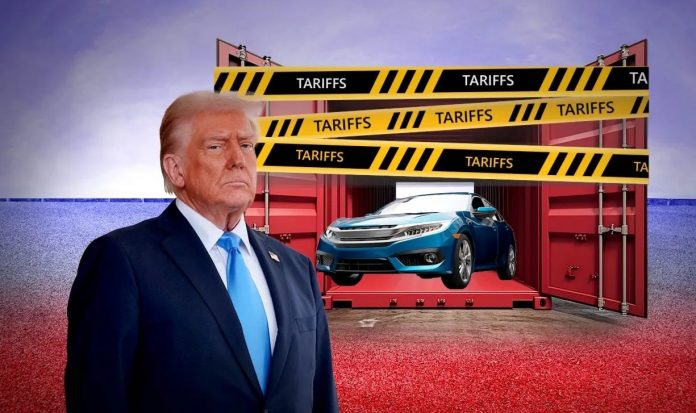
U.S. Customs and Border Protection (CBP) announced late Monday that it will cease collecting tariffs imposed under the International Emergency Economic Powers Act (IEEPA) effective 12:01 a.m. EST (0501 GMT) on Tuesday.

This comes more than three days after the U.S. Supreme Court declared those duties illegal in a landmark 6-3 ruling on Friday.

In a message posted to its Cargo Systems Messaging Service (CSMS), CBP stated it would deactivate all tariff codes associated with President Donald Trump’s prior IEEPA-related orders as of Tuesday. The agency provided no explanation for the delay in halting collections despite the immediate legal effect of the Supreme Court decision, nor did it offer details on the process for refunds to importers who paid duties under the now-invalidated regime.

CBP emphasized that the halt applies only to IEEPA tariffs and does not affect other duties imposed by Trump, including those under Section 232 (national security), Section 301 (unfair trade practices), antidumping/countervailing measures, or the new 15% global tariff enacted under Section 122 of the 1974 Trade Act.

“CBP will provide additional guidance to the trade community through CSMS messages as appropriate,” the agency said.

Supreme Court Ruling and Immediate Aftermath

The Supreme Court’s Friday decision invalidated Trump’s use of IEEPA — a 1977 law granting emergency economic powers — to impose broad “reciprocal” tariffs (10–50%) and fentanyl-related duties since February 2025. Chief Justice John Roberts, writing for the majority, held that IEEPA does not authorize unilateral import taxes absent a specific, imminent foreign threat, ruling the president exceeded congressional intent and violated the separation of powers.

The ruling dismantled the legal foundation for tariffs that had generated an estimated $175–$179 billion in revenue since February 2025, according to the Penn-Wharton Budget Model (PWBM). PWBM’s ground-up model, using Census Bureau import data across 11,000 product categories and 233 countries, calculated roughly $500 million in daily IEEPA-based collections, leading to the cumulative $179 billion figure.

A cross-check with historical CBP assessment data as a share of total Treasury customs receipts yielded a similar $175–$176 billion range. CBP’s last published IEEPA assessment (December 14, 2025) stood at $133.5 billion, with net collections typically lower after adjustments, protests, and refunds.

Trump reacted swiftly to the ruling. On Saturday, he imposed a temporary 10% global levy under Section 122 of the 1974 Trade Act, then raised it to 15% — the maximum rate allowable for 150 days without congressional approval.

“Effective immediately,” he declared on Truth Social, framing the action as necessary to maintain leverage despite the court decision.

U.S. Trade Representative Jamieson Greer defended the continuity of existing trade deals, insisting the ruling affected only IEEPA-based tariffs.

“Our partners have been responsive and engaged in good-faith negotiations and agreements despite the pending litigation, and we are confident that all trade agreements negotiated by President Trump will remain in effect,” Greer said Sunday on CBS’ Face the Nation.

Refund Process and Fiscal Implications

Importers who paid IEEPA duties since February 2025 are now eligible to seek refunds from CBP. The process will involve filing protests or refund claims, subject to administrative review, potentially stretching over months or years. A $175–$179 billion refund would represent a massive one-time cash outflow for the Treasury — exceeding the combined fiscal 2025 outlays of the Department of Transportation ($127.6 billion) and Department of Justice ($44.9 billion).

Treasury Secretary Scott Bessent told Reuters in January that the Treasury could “easily cover” any repayments through planned cash balances ($850 billion at end-March 2026, $900 billion at end-June). The administration has signaled contingency plans to restore tariffs under alternative authorities (Section 232, Section 301) if needed, though these may face their own legal and procedural hurdles.

The refund potential could provide unintended stimulus to businesses and consumers, though administrative bottlenecks at CBP may delay payouts. Importers in affected sectors (steel, aluminum, autos, consumer goods) stand to recover substantial duties, potentially improving cash flow and margins.

The ruling significantly curtails executive authority to impose broad tariffs under emergency powers, reinforcing congressional primacy over trade policy. It may force the administration to rely more heavily on Section 232, Section 301, and antidumping/countervailing mechanisms — processes requiring more evidentiary findings and procedural steps.

For trading partners, the decision offers temporary relief from broad emergency tariffs while signaling that targeted, evidence-based actions under other laws remain likely. The EU, U.K., Japan, and South Korea — early deal-makers with preferential rates — now face uncertainty over whether those concessions survive the transition to new tariff frameworks.

The administration’s pivot to Section 301 probes (covering pharmaceuticals, industrial overcapacity, forced labor, digital services taxes, and more) indicates a shift toward a more targeted, legally durable approach — albeit one that could still provoke retaliation from affected countries.

Trade partners welcomed the ruling. China’s Ministry of Commerce called it “a step toward fairer trade,” while the EU expressed hope for reduced transatlantic tensions. However, if the U.S. reimposes duties under new authorities, retaliatory measures could escalate — potentially reigniting global trade frictions.

For importers, the ruling unlocks a path to refunds but introduces short-term uncertainty as CBP processes claims. Legal experts predict a surge in filings, with class actions possible for smaller importers.

BOJ Faces March Rate Hike Test as Yen Weakness Collides With U.S.-Japan Diplomacy

0

A potential March rate hike by the Bank of Japan would mark not just a monetary adjustment, but a strategic response to currency pressure, diplomatic optics, and the fragile transition away from ultra-loose policy.


The Bank of Japan could raise interest rates as soon as March if the yen resumes its slide ahead of a planned summit between Tokyo and Washington, former board member Makoto Sakurai said, framing currency stability as a decisive factor in the central bank’s near-term calculus.

Prime Minister Sanae Takaichi is expected to visit Washington around the time the BOJ holds its next policy meeting on March 18–19 for talks with U.S. President Donald Trump. The convergence of diplomatic engagement and monetary deliberation heightens the sensitivity of exchange-rate movements in the coming weeks.

Sakurai said Takaichi may seek the BOJ’s support in curbing excessive yen weakness, particularly after Washington conducted rate checks last month to prop up the Japanese currency — a signal, he said, of U.S. preference for a stronger yen against the dollar.

“Currency intervention has only a temporary effect in combating yen-selling pressure. The best way to counter a weak yen is for the BOJ to raise interest rates,” Sakurai said in an interview. He added that he remains in close contact with current policymakers.

A currency problem with political consequences

The yen’s trajectory has become a domestic political issue. Since Takaichi, widely viewed as dovish on fiscal and monetary policy, took office in October, the currency has fallen about 8% against the dollar, touching an 18-month low of 159.45 in January. Although it later recovered, it remains near 155 per dollar, well below the levels prevailing before her administration began.

A weaker yen translates directly into higher prices for imported fuel and food, eroding margins for retailers and small businesses dependent on imported inputs. That will complicate the narrative that inflation is being managed in a stable and sustainable manner.

Japan’s inflation has exceeded the BOJ’s 2% target for nearly four years. While part of that rise has been driven by global energy and commodity shocks, currency depreciation amplifies imported price pressures. Sakurai noted that a renewed yen slide would push up import costs and offset the dampening effect of government fuel subsidies.

The wage backdrop and policy timing

The BOJ’s policy deliberations will unfold against the backdrop of Japan’s annual spring wage negotiations — the “shunto” talks between major companies and labor unions. Strong wage settlements would strengthen the case that inflation is becoming more demand-driven rather than purely cost-push, providing cover for further tightening.

Sakurai said that if the need to combat a sharp yen fall becomes urgent, the BOJ could justify a March hike by pointing to prospects for robust wage growth.

“It would make better sense to wait until April but depending on yen moves, there’s a chance the BOJ could raise rates in March,” he said.

The March 18–19 meeting precedes the April 27–28 gathering, when the BOJ will release updated quarterly growth and inflation forecasts. Traditionally, major policy adjustments are accompanied by revised projections. Moving in March would signal that currency dynamics, rather than forecast revisions alone, are driving the decision.

Markets already expect tightening. A majority of economists surveyed by Reuters anticipate rates rising to 1% by the end of June. Market pricing implies roughly a 70% chance of a hike by April. A March move would accelerate that timeline and underscore the central bank’s responsiveness to exchange-rate volatility.

From ultra-loose to normalization

The BOJ formally ended its decade-long massive stimulus programme in 2024, dismantling a framework that had relied on huge asset purchases and yield curve control — a regime introduced during Sakurai’s tenure from 2016 to 2021. In December, it raised its short-term policy rate to 0.75%, the highest level in 30 years.

Governor Kazuo Ueda has signaled readiness to continue raising rates if economic projections materialize. But the pace of normalization remains contested. Japan’s economy, while resilient, is not immune to global headwinds, including slower growth in major export markets and shifts in global capital flows driven by U.S. monetary policy.

Sakurai said the BOJ may ultimately need to lift rates twice in 2026 and twice again in 2027 to bring the policy rate from 0.75% to around 1.75% — a level he described as neutral, neither stimulating nor cooling the economy.

That trajectory would represent a profound shift for a country that spent years battling deflation and stagnant growth. Yet he warned that hiking too quickly carries risks. Faster tightening could increase bankruptcies among small firms and strain regional banks whose balance sheets are heavily exposed to low-yield assets accumulated during the ultra-loose era.

However, the potential alignment of a rate decision with a high-level summit adds another dimension. A persistently weak yen ahead of talks with Trump could invite scrutiny of Japan’s currency management. Conversely, a firmer yen supported by higher domestic rates could ease diplomatic tension and demonstrate policy alignment.

The message for markets is that exchange rates are no longer a peripheral consideration in Japan’s monetary framework. They are central to it. If the yen resumes its slide, the BOJ may conclude that the costs — higher import prices, political pressure, and diplomatic friction — outweigh the benefits of waiting for additional data.

A March hike would therefore signal more than confidence in inflation dynamics. It would mark the BOJ’s willingness to use interest rates as its primary defense against currency instability, reinforcing the shift from experimental stimulus toward a more conventional, though still cautious, normalization path.

Nigeria Tops Africa’s Stock Market Rankings in 2026 With Record Dollar Gain

0

The Nigerian stock market has emerged as Africa’s best-performing equity market in 2026, marked by rising valuations.

According to reports, the Nigerian exchange delivered a remarkable 34.4% year-to-date return in dollar terms as of February 20, 2026. This comes as the naira currently trades at N1,333 to 1 dollar.

This significant performance marks a major jump from last year, when the market ranked fourth on the continent, signaling renewed global confidence in Nigeria’s capital markets.

According to market data highlighted in a chart by Businessday, Nigeria leads a strong cohort of African exchanges experiencing positive momentum. Tanzania follows closely with a 33.4% return, while Zimbabwe posted 31.9%.

Other notable performers include Ghana (28.6%), Egypt (21.7%), and Zambia (19.5%). Markets in Uganda (18.1%), BRVM (16.7%), Kenya (12.4%), and Namibia (12.4%) complete the top ten.

Nigeria’s stock market rally has been supported by a combination of macroeconomic and market-specific factors. A stronger naira has enhanced dollar-denominated returns, making the market more attractive to international investors. At the same time, improving liquidity conditions and increased foreign portfolio inflows have reinforced bullish sentiment across key sectors.

In recent years, the Nigerian stock market has transitioned from cautious recovery to sustained expansion, positioning itself as one of Africa’s most dynamic investment destinations.

Recall that in 2025, the exchange market, reached a historic milestone by crossing the N100 trillion mark for the first time. This achievement reflects renewed investor confidence and the resilience of the Nigerian capital market. The market capitalization rose from N99.94 trillion to N101.81 trillion, driven by strong demand from both domestic and foreign investors.

Investor sentiment has remained upbeat this year, with continued price rallies and expanding trading volumes signaling confidence in listed companies’ earnings potential. The surge in transactions also reflects growing participation from both institutional and retail investors seeking higher returns amid shifting macroeconomic conditions.

With foreign investors gradually returning to the market, valuation recovery has accelerated, pushing equity prices higher. One of the clearest indicators of the market’s growth is the rapid expansion of total market capitalisation. The value of listed equities has climbed sharply, reaching historic highs and adding trillions of naira within short periods.

This expansion demonstrates not only rising share prices but also increasing depth in the market as more capital flows into Nigerian equities. Many listed companies have reported stronger revenues and profitability with a growing share price. Also, better earnings typically support higher share valuations, encouraging sustained investor demand.

Notably, the significant growth of the Nigerian stock market, comes amid a new wave of retail participation, as young Nigerian investors increasingly turn to the market to build wealth. Interest among young Nigerians has intensified alongside growing conversations about stock investing across digital communities and social platforms.

On X (formerly Twitter), market updates, share price movements, and investment education content now circulate widely online, contributing to a gradual shift in financial awareness. Some analysts note that informal peer-to-peer knowledge sharing across social media has become a major driver of retail market entry.

Outlook

Nigeria’s leadership in Africa’s equity performance rankings underscores the country’s rising prominence as an investment destination. If current trends persist, the Nigerian market could sustain its appeal as a gateway for capital seeking exposure to Africa’s largest economy.

For observers of Africa’s financial landscape, the development highlights how currency stability, policy direction, and investor confidence can rapidly reshape capital market performance across the continent.