DD
MM
YYYY

PAGES

DD
MM
YYYY

spot_img

PAGES

Home Blog Page 210

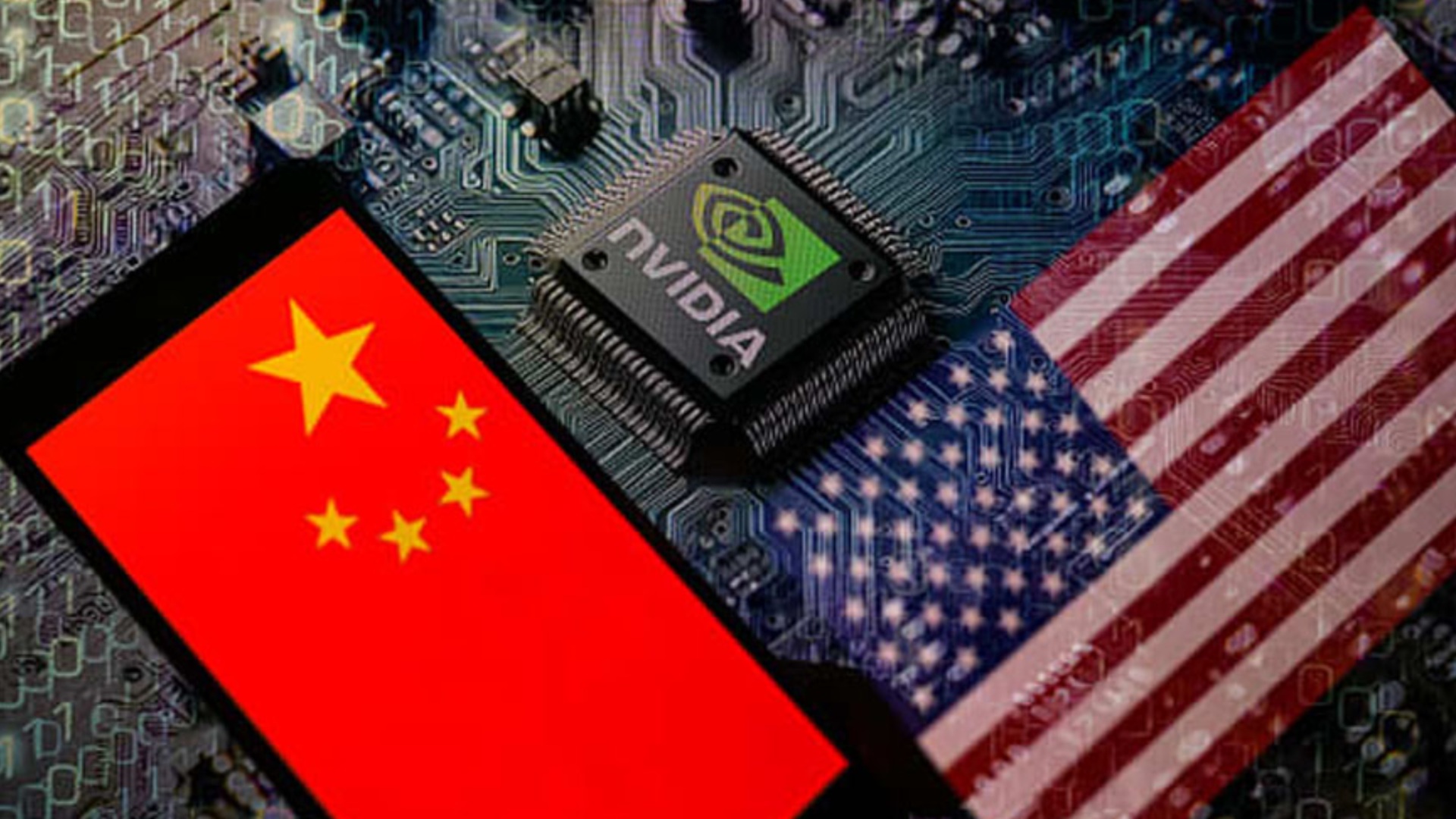
Senators Push Trump to Block China’s Access to Advanced AI Chips, Urge Preservation of U.S. Techn Edge

0

A bipartisan group of U.S. senators is pressing President Donald Trump to strengthen restrictions on China’s access to advanced artificial intelligence (AI) technology, warning that easing limits could erode America’s strategic lead.

The resolution, led by Senators Chris Coons (D-DE) and Tom Cotton (R-AR), comes amid growing concerns that China is closing the AI gap with the United States.

The motion, also cosponsored by Senators Amy Klobuchar (D-MN) and Dave McCormick (R-PA), emphasizes China’s determination to develop frontier AI systems that could challenge U.S. dominance. The senators argue that Beijing’s “inability to make and access computing power is the main impediment to its progress,” urging Washington to maintain tight export controls and keep advanced technology out of Chinese hands.

To preserve U.S. leadership, the resolution calls on the administration to ensure that American companies continue to grant “priority access” to top allies for advanced AI chips, models, and cloud infrastructure—while restricting China and other adversaries.

“We cannot allow China to leap ahead of us and bolster their weapons capabilities, maximize their cyberattacks against American industry, and threaten long-term U.S. economic and national security,” Senator Coons said in a statement. “This bipartisan resolution sets us on a path toward a different future — one in which frontier AI systems are built in the United States by American companies.”

The move comes just days after President Trump appeared to walk back earlier comments suggesting he might allow Nvidia to sell its new Blackwell chip in China. Those remarks drew criticism in Washington, where lawmakers see such sales as undermining national security efforts.

In recent years, the U.S. has imposed sweeping export controls preventing chipmakers like Nvidia and AMD from sending their most advanced processors to China. The measures aim to curtail China’s capacity to train large AI models and power its supercomputing facilities—critical tools in both civilian and military development.

However, Trump’s recent comments about revisiting those restrictions during talks with Chinese President Xi Jinping in Korea sparked unease. Lawmakers say any softening of the rules could accelerate Beijing’s efforts to develop AI-driven weapons systems, cyber tools, and surveillance capabilities.

The debate also reflects tensions within the technology industry. In an interview with The Financial Times this week, Nvidia CEO Jensen Huang said he believes “China is going to win the AI race,” citing the country’s lower energy costs and lighter regulatory environment. Though he later clarified that China remains only “nanoseconds behind America,” his remarks intensified concern among U.S. policymakers about how quickly China is catching up.

That fear deepened earlier this year when Chinese startup DeepSeek released AI models that rivaled Western systems in performance at a fraction of the cost. The launch was seen as evidence that China’s AI ecosystem remains highly adaptive despite U.S. export controls.

To offset concerns about market losses, the Trump administration has reached a compromise with Nvidia and AMD, requiring them to pay a 15 percent commission to the federal government on stripped-down versions of their chips sold to China. The deal allows limited exports of modified products that fall below the threshold of U.S. national security restrictions.

The senators’ resolution now adds political weight to calls for tighter safeguards on U.S. technology, framing AI leadership as a pillar of national defense. Analysts say the proposal is part of a broader effort to formalize a long-term strategy that binds together chip design, manufacturing, and AI research under a coordinated national framework.

Since Trump and Xi met in Korea earlier this week—a meeting described by U.S. officials as “constructive but cautious”—relations have remained tense over technology access and trade. The AI chip dispute has become the latest flashpoint in a broader economic standoff between the world’s two largest economies, whose rivalry increasingly hinges on who controls the computing infrastructure of the future.

As the White House weighs next steps, the bipartisan tone of the Senate resolution signals that Washington’s stance on AI exports to China is unlikely to soften anytime soon.
Meta’s 2024 Ad Revenue Under Scrutiny After Report Claims $16bn Came from Scam and Banned Product Ads

0

Meta projected late last year that around 10% of its total annual revenue — roughly $16 billion — came from advertisements linked to scams and banned goods, according to internal company documents obtained by Reuters.

The cache of internal records, some dating back to 2021, shows that for at least three years, Meta failed to contain an avalanche of fraudulent promotions across Facebook, Instagram, and WhatsApp. The deceptive ads included fraudulent e-commerce and investment schemes, illegal online casinos, and sales of prohibited medical products — all targeted at billions of users across its platforms.

One December 2024 document revealed that Meta’s platforms displayed an estimated 15 billion “higher risk” scam advertisements every day. These are ads flagged internally as likely fraudulent. Another document from the same period estimated that such ads alone brought in about $7 billion in annualized revenue.

Despite detecting suspicious behavior among advertisers, Meta’s automated systems only ban those deemed at least 95% certain to be committing fraud. If the probability falls below that threshold, the company instead imposes higher ad rates — effectively charging suspected scammers more while allowing them to continue advertising. The internal justification for this approach, according to the documents, was to “dissuade” bad actors while minimizing losses from overzealous enforcement.

Meta’s ad-personalization algorithm, which tailors content to user behavior, exacerbates the problem. Users who click on a scam ad are shown more of them, as the algorithm assumes interest.

The internal documents, reviewed across Meta’s finance, lobbying, engineering, and safety divisions, reveal a company attempting to measure and contain abuse while hesitating to implement changes that might harm its multibillion-dollar ad business.

Sandeep Abraham, a former Meta safety investigator and fraud examiner, said the revelations highlight the vacuum of oversight in digital advertising.

“If regulators wouldn’t tolerate banks profiting from fraud, they shouldn’t tolerate it in tech,” he said.

Meta spokesperson Andy Stone disputed the interpretation of the leaked files, arguing they offered “a selective view that distorts Meta’s approach to fraud and scams.” He said the internal projection that 10.1% of 2024 revenue came from prohibited ads was “rough and overly-inclusive,” and that later analysis found “many of these ads weren’t violating at all.”

“The assessment was done to validate our planned integrity investments — including in combatting frauds and scams — which we did,” Stone said. “We aggressively fight fraud and scams because people on our platforms don’t want this content, legitimate advertisers don’t want it, and we don’t want it either.”

Stone added that Meta reduced user reports of scam ads globally by 58% over the past 18 months and removed more than 134 million pieces of scam-related content so far in 2025.

However, internal presentations paint a more conflicted picture. A May 2025 safety division report estimated that Meta’s platforms were involved in roughly one-third of all successful scams in the United States. Another internal review concluded, “It is easier to advertise scams on Meta platforms than Google,” though it did not specify why.

The revelations come as regulators intensify scrutiny of Meta’s ad operations. The U.S. Securities and Exchange Commission (SEC) is investigating the company for hosting financial scam ads, while Britain’s Financial Conduct Authority reported last year that Meta’s platforms accounted for 54% of all payment-related scam losses in 2023 — more than double the combined total for other social networks.

Meta’s recent SEC filings acknowledge that efforts to address illicit ads “adversely affect our revenue,” and that further compliance measures could materially impact future earnings.

The internal documents also reveal the company’s efforts to balance reputation risks against revenue losses. A February 2025 report said Meta’s teams were restricted from taking actions that would cut more than 0.15% of the company’s total revenue — about $135 million out of the $90 billion generated in the first half of 2025 — when tackling fraudulent advertisers.

Meta’s ongoing challenges coincide with its broader transformation into an AI-driven enterprise. The company plans to spend as much as $72 billion this year, largely on artificial intelligence infrastructure. CEO Mark Zuckerberg has reassured investors that Meta’s ad business can fund that spending.

“We have the capital from our business to do this,” he said in July, citing plans to build a data center in Ohio as large as New York’s Central Park.

Internally, Meta has outlined targets to reduce the share of revenue from scams and illegal ads — from 10.1% in 2024 to 7.3% by the end of 2025, and 5.8% by 2027. However, the documents suggest such moves are guided by “regulatory urgency” rather than voluntary ethics.

Even with heightened internal goals, the scale of Meta’s exposure to scams remains staggering. A December 2024 presentation found users encounter 22 billion “organic” scams — those not involving paid ads — each day, in addition to the 15 billion scam ads shown daily. Examples include fake job listings, fraudulent Marketplace offers, and phony crypto promotions impersonating public figures.

While Meta insists it is investing heavily to improve detection, its internal strategy continues to weigh fraud prevention against profitability — a calculation that, according to its own documents, still favors the latter.

Trump Signals Thaw in U.S.-India Relations, Says Trade Talks ‘Going Well’ as India Stops Buying Russian Oil

0

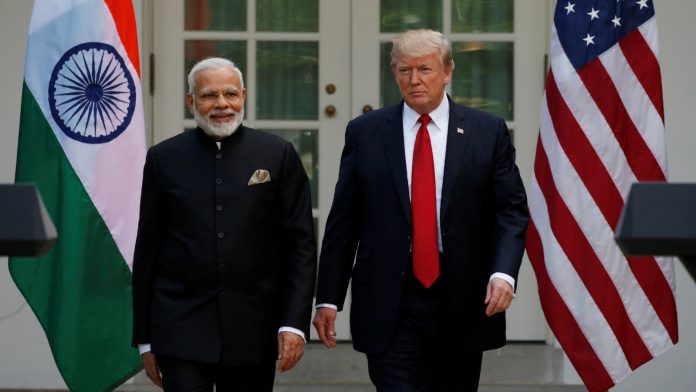
President Donald Trump on Thursday said that trade negotiations with India were progressing positively and hinted at a potential visit to New Delhi in 2026 if invited by Prime Minister Narendra Modi.

The comments, made during a White House press briefing, come as both sides move to mend a relationship strained by tariffs, visa restrictions, and a long-standing dispute over India’s purchases of Russian oil.

Trump described Modi as “a great man” and “a friend,” recalling his last trip to India in 2020, when he was received by a cheering crowd of more than 100,000 at the “Namaste Trump” rally in Ahmedabad.

“India has largely stopped buying oil from Russia,” Trump said, adding that ties between the two nations were “stronger than ever.”

The remarks mark a notable shift in tone following months of friction between Washington and New Delhi. Analysts say Trump’s comments could signal an effort to rebuild trust after a difficult period in which the U.S. imposed steep tariffs on Indian goods and questioned India’s neutrality in the Russia-Ukraine conflict.

Over the past year, U.S.-India relations have faced turbulence due to what many observers described as “missing chemistry” between the two leaders, alongside contentious policy moves from Washington. India currently faces 50% tariffs on its exports to the U.S. — higher than the 47% duties applied to Chinese goods — and an additional $100,000 fee for H1B visa applicants, a change that directly impacts thousands of Indian tech professionals each year.

But perhaps the most contentious issue has been India’s oil trade with Russia.

The oil rift that tested a friendship

When the U.S. and its allies imposed sanctions on Moscow following its invasion of Ukraine, India refused to join the Western embargo and instead ramped up imports of discounted Russian crude. The move was framed by New Delhi as an economic necessity — not a political statement. Indian officials repeatedly emphasized that the country’s energy security could not be compromised, especially given that more than 85% of its oil is imported.

Washington, however, saw India’s position as undercutting the effectiveness of Western sanctions. For months, American officials privately pressed New Delhi to reduce its dependence on Moscow’s crude, warning that continued purchases risked damaging its global standing.

Despite the pressure, India maintained that its engagement with Russia was within the limits of the G7’s price cap framework — which allows the purchase of Russian oil below $60 per barrel — and argued that it was helping stabilize global markets by keeping Russian crude flowing.

However, in recent weeks, New Delhi has quietly reduced its Russian oil purchases, citing U.S. sanctions targeting Russian oil majors Rosneft and Lukoil, which take effect on November 21. As a result, refiners in both India and China have begun to scale back their imports.

A Reuters report on Thursday said Russian oil in Asia is now trading at its steepest discount to Brent crude in a year, a sign that demand from its biggest Asian buyers — India and China — has weakened.

India’s Ministry of Petroleum and Natural Gas did not immediately respond to media requests for comment, but traders familiar with the matter told Reuters that some Indian refiners have switched to Middle Eastern suppliers in anticipation of tighter enforcement of U.S. sanctions.

Still, experts say India’s exit from Russian oil is unlikely to be complete. “Over the long term, completely phasing out Russian oil isn’t realistic for India,” said Prateek Pandey, head of APAC oil and gas research at Rystad Energy. “As Russian crude becomes available at a sharper discount, New Delhi’s ‘economics first’ approach will be tested more than ever.”

A deal in sight

Against that backdrop, Trump’s remarks about “going well” trade talks suggest Washington is ready to ease its tone — and possibly its tariffs. “Negotiations between New Delhi and Washington D.C. are ongoing, and both sides appear optimistic about a trade deal being reached by the end of the year, possibly even in the next few weeks,” said Alexandra Hermann, head of Southeast Asia Research at Oxford Economics.

She noted that the proposed tariff reduction could lower India’s export duties to 20% from the current 50%, aligning the country more closely with regional peers such as Vietnam, Thailand, and the Philippines.

“However, the baseline tariff on India may not fall to Japan and South Korea’s level of 15% due to sticking points around purchases of Russian oil, agricultural imports, and India’s limited scope to commit to sizable investments in the U.S.,” Hermann said.

Trump’s comments come shortly after his meeting with Chinese President Xi Jinping in Korea, where both leaders discussed the global trade slowdown and tariff reform. That meeting, observers say, may have encouraged the White House to recalibrate its trade approach with key Asian economies — particularly India, which Washington sees as a counterweight to Beijing’s regional influence.

3 Ethereum-Based Tokens That Could Turn 1 ETH into 20 ETH

0

The programmable blockchain of Ethereum supports several digital assets which use its secure, decentralized network to power real-world utility and enable smooth token functionality. The innovative technology, growing adoption, and changing market dynamics have gained the interest of many investors in tokens such as Uniswap (UNI), Chainlink (LINK), and Little Pepe (LILPEPE).

Uniswap: DeFi’s Leading Exchange Explores Fee Distribution

Uniswap is among the most extensive decentralized Ethereum exchanges. Its native currency, UNI, is trading at about 5.36 and has a market capacity of about 3.37 billion. According to current market statistics, Uniswap’s 24-hour trading range fluctuated between $4.90 and $5.49, with a trading volume of approximately $275.9 million.

In addition, the Uniswap Foundation plans to convert Uniswap’s governance structure into a Decentralized Unincorporated Nonprofit Association (DUNA). The foundation argues that this move would provide limited?liability protection for governance participants and give the DAO legal recognition.

Furthermore, traders are optimistic that the DUNI framework could enable fee distribution, and analysts expect the protocol fee to be activated soon. Because Uniswap already generates significant fee revenue—over $129 million in the last 30 days—even a small share paid to token holders could boost UNI’s intrinsic value. If the proposal passes and protocol fees begin flowing to UNI holders, the token could see sustained demand from yield?seekers.

Chainlink: Oracle Network Unlocks Institutional Tokenization

Chainlink provides the data feeds that allow Ethereum smart contracts to access real?world information. LINK, its native token, trades around $15.14 with a market capitalization of $10.55 billion. The token’s 24?hour range sits between $14.05 and $15.38, and daily trading volume is close to $973 million. This liquidity reflects the broad adoption of Chainlink’s oracle services across DeFi and beyond.

In addition, Chainlink has joined the Ondo Global Market Alliance, which includes firms such as Swift and Euroclear, to standardize corporate actions data across blockchains. This growing institutional use of Chainlink highlights the network’s role as a bridge between traditional finance and on?chain applications, supporting the view that LINK could appreciate as tokenized asset markets expand.

Little Pepe: Layer 2 Meme Coin Mixes Utility And Incentives

Little Pepe ($LILPEPE) is a meme?coin project built on an Ethereum?compatible Layer 2 blockchain. Unlike typical meme coins that lack utility, Little Pepe offers zero tax on trades, staking rewards, non?fungible tokens (NFTs), and governance through a decentralised autonomous organisation.

According to the project’s dashboard, the presale is in Stage 13, with tokens priced at $0.0022. At that time, the project had sold over 16.64 billion tokens and raised $27.42 million. The next presale stage will lift the price to $0.0023, which represents a price increase of $0.0010. Early buyers have thus seen their entry cost more than double, and further stages could continue this trend.

Little Pepe’s tokenomics allocate 26.5 % of the total supply to the presale, 30 % to chain reserves, 13.5 % to staking rewards, and 10 % each to liquidity, marketing, and exchange reserves. Notably, the project reserves no tokens for insiders, making it community?driven.

The security of $LILPEPE has been proven by its smart contract that passed a CertiK audit which provides more credibility to investors. Furthermore, it has utility features like staking passive income, an NFT marketplace, an NFT launchpad and a governance system which allows holders to vote on proposals.

The presale also offers attractive incentives. A $777,000 giveaway will award ten winners $77,000 each, provided they contribute at least $100. A separate Mega Giveaway offers prizes exceeding 15 ETH to large and random buyers during presale stages 12–17. Because Little Pepe operates on a Layer 2 chain, transactions are fast and low?cost, which suits high?frequency trading and NFT minting. Its zero?tax policy means traders keep their profits with no extra fees. With the combination of staking rewards and a clear roadmap, Little Pepe shifts the meme?coin narrative from mere speculation to a functioning ecosystem. In addition to the ongoing presale momentum, strong community engagement, and plans for exchange listings, $LILPEPE could see outsized returns if demand stays strong.


For More Details About Little PEPE, Visit The Below Link:

Website: https://littlepepe.com

Key Details and Implications of ZKSync’s Updated ZK Tokenomics

0

ZKSync founder Alex Gluchowski announced a major overhaul of the ZK token’s economic model in a detailed proposal titled “ZK Token Proposal Part I.” This update shifts the ZK token from primarily a governance tool to a utility-driven asset, directly linking its value to network revenue and activity.

The goal is to create a self-sustaining “value flywheel” that rewards usage through buybacks, burns, and ecosystem incentives, addressing criticisms of the token’s limited utility since its airdrop in June 2024.

Core Changes in the Proposal

The redesign focuses on two primary revenue sources—on-chain and off-chain—and routes all proceeds to a community-governed entity for ZK token management.

Fees from cross-chain messaging, transfers, and interoperability via the ZK Gateway across the entire Elastic Network (e.g., ZKSync Era, Abstract, Sophon, Lens, ADIChain, and 20+ other ZK Stack chains). This excludes direct ZKSync Era transaction fees, emphasizing ecosystem-wide activity.

Generates organic demand; fees fund buybacks and burns, creating deflationary pressure as network usage grows. Off-Chain Revenue (SaaS/Enterprise Licensing)

Licensing fees from “Prividium” blockchains built for institutions and businesses (e.g., compliance-focused chains for finance). Includes potential sequencer income from running these chains. Diversifies income beyond crypto; all proceeds support staking rewards, protocol development, and grants, tying token value to real-world adoption.

Value Redistribution; 100% of revenues pooled for: Token buybacks and burns (deflationary). Staking incentives (Q4 2025 rollout). Ecosystem grants for growth. Community governance decides allocation via on-chain votes, promoting transparency and long-term holding over speculation.

Integrates with the Elastic Network expansion (10+ new chains by 2026) and Atlas upgrade (15,000+ TPS, 1-second ZK proofs, near-zero fees). Positions ZK as the unifying token for a multi-chain ZK ecosystem, enhancing interoperability and scalability on Ethereum.

This model evolves ZK into an “ecosystem token” rather than a siloed governance asset, with Gluchowski emphasizing: “ZKsync has been building the rails for Incorruptible Finance for years; now, we move to the next phase building the real economy around it.”

The announcement sparked immediate bullish sentiment, with $ZK surging 24% in 24 hours to ~$0.075 market cap ~$550M as of November 5, 2025—up 170% from its October low of $0.028. Weekly gains hit 67%, outperforming a broader market dip of 3%.

Analysts highlight the utility shift as a catalyst for sustainable growth, though upcoming unlocks 167M ZK on November 17 could introduce short-term sell pressure.Technical outlook remains positive: $ZK is consolidating above $0.048 support and the 9 EMA, maintaining a higher-high/higher-low structure.

A break above $0.067 could target $0.075 retests, while a drop below $0.045 risks a pullback to $0.030. Community and Expert On X, users like @BowTiedGolem— Matter Labs BD manager praised the “entirely new tokenomics paradigm” for aligning revenue with growth across 20+ chains.

Joinelastic called it “organic value feedback” for the Elastic Network, countering “pump and dump” narratives. Vitalik Buterin previously backed ZKSync’s Atlas upgrade, indirectly boosting confidence in the ecosystem.

While revenue has reached $30M lifetime per DeFiLlama recent annual figures are low (~$640K), so execution on interop and enterprise adoption is key. The proposal is “Part I,” with more details expected.

This update positions ZKSync as a leader in modular ZK scaling, potentially driving $ZK toward $0.125+ in 2025 if adoption accelerates. For the full proposal, check Gluchowski’s X thread or ZKSync’s governance forum.