DD
MM
YYYY

PAGES

DD
MM
YYYY

spot_img

PAGES

Home Blog Page 210

Driving to a Casino or Tapping Your Phone? How Arkansans Really Place Bets and What That Means for Prices

0

On any weekend in Arkansas, the contrast is clear. Some fans hit the highway, parking outside brick-and-mortar casinos before kickoff, while others scroll through odds from their couch. The decision might seem like a matter of preference, but it has real financial consequences. Where a wager is placed can affect pricing, payouts, and even how bettors experience the game. This overview explores how Arkansans actually divide their play and what that division reveals about the hidden cost of convenience.

The Betting Landscape in Arkansas Today

Retail Casinos Versus Mobile Sportsbooks

Arkansas hosts a handful of full-service casinos alongside a small network of state-approved mobile platforms linked to those venues. This arrangement keeps betting local while limiting the number of competing operators. At physical counters, players benefit from face-to-face service, cash transactions, and paper tickets that feel tangible. On mobile, convenience takes over live lines, instant settlements, and a wide range of markets, including parlays and same-game bets that drive operator profits. Many bettors have embraced this hybrid model, using both channels depending on circumstance and opportunity. Platforms such as casinos that pay real money offer similar structures, showing how technology now mirrors the experience of walking to the window.

Regulation, Taxes, and Market Competition

Arkansas’s licensing structure ties each app to a retail partner, preserving local oversight. Tax rates apply to net gaming receipts, designed to funnel proceeds back into state programs. The limited number of operators, however, restricts price competition. In larger markets, a difference of half a point or a slightly better total line can make a noticeable long-term impact. In Arkansas, odds tend to cluster around identical numbers because there are fewer competitors adjusting in real time. That lack of diversity narrows opportunities for line shopping and can keep prices slightly higher than in broader betting ecosystems.

How Arkansans Actually Place Bets

Weekend Casino Trips and In-Person Habits

Many residents still value the atmosphere of a retail casino. The trip often includes dining, socializing, and the tactile satisfaction of holding a printed ticket. In-person betting allows for direct clarification on complex wagers and the ability to negotiate limits for larger stakes. Some players appreciate the human touch having a writer confirm a slip or help correct an error on the spot. For these bettors, the journey itself is part of the entertainment, and the transaction feels more deliberate than a quick tap on a screen.

The Rise of On-Phone Wagers

Despite that loyalty to tradition, mobile wagering keeps growing fast. Smartphones offer flexibility that physical venues cannot match, especially for in-game bets and quick updates during live events. Bettors can hedge, double down, or jump on new markets instantly. Yet that accessibility comes with risks. A thumb press is easier than a drive, and impulse bets can accumulate quickly. Savvy users combat this by setting spending limits and alerts to maintain control during fast-moving contests.

What “Prices” Mean in Betting

Odds, Hold Percentage, and the Cost of Convenience

Price extends beyond the numbers listed on the board. It also includes the house margin known as hold. On straight bets at -110 odds, the hold sits near five percent if the action splits evenly. Parlays and combination wagers raise that figure because their payouts are calculated on adjusted probabilities rather than pure math. Mobile books feature these bets prominently since they are entertaining and generate higher returns. The tradeoff is subtle but steady: the fun of multi-leg wagers often comes with a hidden premium.

Hidden Costs: Gas, Time, and Fees

Driving to a casino adds tangible expenses. A 120-mile round trip at 28 miles per gallon with gas at 3.20 per gallon costs around 13.70 in fuel alone, plus time, parking, and food. On the other hand, mobile betting may include small withdrawal fees, slower bank transfers, or charges for instant payout options. Both environments carry costs one in time and travel, the other in service fees and potential overbetting. Understanding these tradeoffs helps players calculate the true cost per wager rather than focusing only on the posted odds.

Driving to a Casino vs. Tapping Your Phone: A Cost Comparison

Sample Scenarios and Break-Even Points

Imagine a bettor placing five 100-dollar wagers in one trip. If both in-person and mobile odds sit at -110, but the journey adds 38 dollars in gas and time, the effective extra cost equals 7.60 per bet. If an app lists odds at -112, that difference amounts to about 1 dollar per 100 wagered. For small volumes, the mobile option is cheaper. For larger sessions or bundled tickets, driving could make more sense especially when an in-person visit combines multiple wagers in one trip. The key is understanding where convenience outweighs cost and vice versa.

When Convenience Justifies a Higher Hold

Sometimes paying slightly more for accessibility is rational. Mobile betting allows fast reaction to injury updates or weather changes that affect odds. A bettor can hedge or grab a new number within seconds, protecting earlier positions. For players balancing work or family, the value of convenience often exceeds a few cents of added juice. The trick is recognizing that flexibility has a price and making sure it is a deliberate choice rather than a default habit.

Why Prices Differ Across Channels

Limited Competition and Line Shading

With few operators competing locally, Arkansas sportsbooks can maintain similar prices without losing volume. Line shading small adjustments favoring popular teams also appears, particularly for regional favorites that attract heavy action. Physical counters might delay changes to accommodate loyal customers, while apps update immediately based on algorithmic models. The difference may seem small, but even minor variances can influence profitability over time.

Promotions, Limits, and In-App Friction

Digital books rely heavily on bonuses, boosts, and bet credits to attract users. These incentives can temporarily offset higher hold percentages but usually come with restrictions, rollovers, or withdrawal limits. Some apps also impose lower limits on niche props or rapidly restrict accounts showing consistent profits. Meanwhile, in-person counters may offer better flexibility on large bets but less promotional flair. Each format has friction points digital platforms through pop-ups and default parlay prompts, retail counters through queues and manual corrections.

Practical Ways to Get Better Value in Arkansas

Shop Lines When Possible and Mind the Juice

Even in a smaller market, small discrepancies exist. A half-point difference at key numbers like 3 or 7 can swing long-term results. For readers interested in how data analytics and digital innovation enhance strategic decision-making in business and gaming, Tekedia offers insights into technology-driven optimization and market efficiency. If you maintain multiple accounts, compare odds before committing. The difference between -110 and -115 might look minor but heavily impacts profitability over dozens of wagers. Keeping a personal log of prices and outcomes transforms guesswork into measurable data, helping identify which operators consistently offer the best value.

Bet Timing, Bankroll Rules, and Responsible Play

Timing shapes every bet. Early lines can reward preparation with softer numbers, while late-week bets offer more information and higher limits. Flat staking a steady percentage of bankroll per bet reduces emotional swings. Establish deposit and time limits on apps to stay within boundaries. For in-person bettors, plan trips strategically by grouping wagers or combining casino visits with other entertainment. The goal is to treat betting as structured recreation, balancing enjoyment with discipline.

The Takeaway

Arkansas’s betting market reveals a delicate balance between access and value. Retail casinos deliver atmosphere and service, while mobile platforms win on convenience and speed. Each carries its own cost structure one measured in travel and time, the other in margins and impulsivity. For players who understand both, choosing when and where to bet becomes another form of strategy. The smartest bettors treat every dollar of juice or gallon of gas as part of the same equation, aiming for entertainment that stays within budget and keeps the odds in perspective.


3 Tokens Ready for a Rally 2.5x Larger Than Solana’s (SOL) This Cycle

0

Solana remains in a consolidation phase after dropping over 20% from around $220 in the  October flash crash. However, analysts still expect SOL to finish the year above $350.  That’s an impressive move, but lower cap projects are flashing even more substantial upside potential. Here are three standout projects, led by Little Pepe (LILPEPE), that could easily 2.5x Solana’s gains this cycle.

Little Pepe (LILPEPE): The Meme Layer 2 That’s Redefining the Sector

Little Pepe is not your ordinary frog in the meme coins pool. It’s the world’s first meme Layer 2 chain, combining speed, security, and utility under one viral brand. Little Pepe is pioneering a sniper-bot-resistant, zero-tax, near-zero-fee ecosystem designed explicitly for meme trading. Its presale has already raised $27.4 million, selling 16.6 billion tokens across 13 stages. Each stage has seen higher demand, resulting in a 120% increase in the token price since its launch. That organic growth shows profound investor conviction.

Key features driving investors’ interests:

  • Fastest and safest Layer 2 meme, eliminating sniper bots and rug pulls.
  • Zero buy/sell tax and high staking APY, rewarding both short-term traders and long-term holders.
  • Meme-only Launchpad that will host future meme projects, increasing LILPEPE’s demand and ecosystem value.
  • A completed CertiK audit, with a strict vesting schedule to emphasize transparency.
  • Upcoming tier-1 CEX listings, promising swift liquidity post-launch.

Add to that the ongoing Mega Giveaway, rewarding top buyers with over 15 ETH in prizes, and it’s clear why analysts are calling Little Pepe “the next 50x meme play.” Its unique fundamentals could push it far beyond Solana’s 2025 ROI.

Dash Comes Back Amid Growing Interest in Privacy Tokens

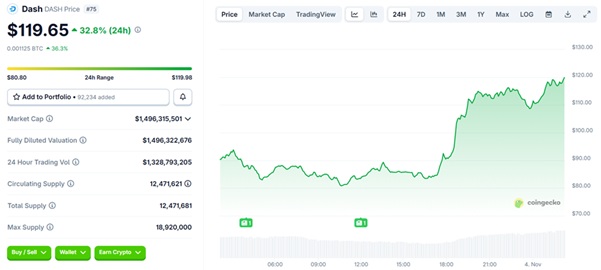
Dash, once known primarily as a digital cash project, is now regaining momentum in the resurgence of privacy coins. The token recently climbed over 140% in the past week, as traders rotate into coins offering on-chain anonymity.


DASH Price Chart | Source: CoinGecko

Dash differs from other privacy projects. It strives to strike a balance between regulatory compliance and privacy through its PrivateSend privacy protocol. This dual approach could make Dash a top pick in a tightening global crypto landscape. If privacy coins continue to outperform, Dash’s low market cap and fast transaction layer make it a strong candidate for a mid-cap rally rivaling even the likes of Solana, especially as capital flows into underpriced sectors.

Aster Shows Potential Leg Up

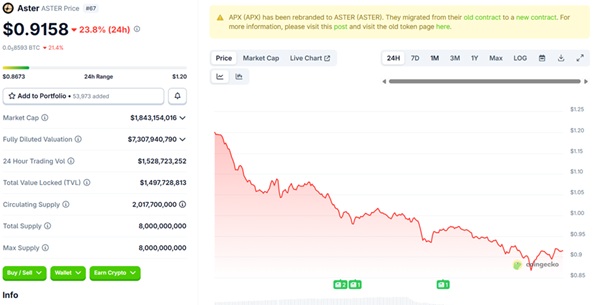
One of the bigger dark horses of 2025, Aster has seen a surge of over 250% in October, driven by the return of investor interest. Aster aims to facilitate private communication between smart contracts across different blockchain networks.


Aster Price Chart | Source: CoinGecko

Backed by a $2 million strategic investment from CZ, Aster’s technology is built for the next wave of privacy-first applications. While short-term volatility remains high, the project’s fundamentals and backing suggest it could easily 5x–10x from current levels once sentiment turns bullish again.

Solana Can Still Rally, but these Coins Could Be Bigger

Because of its established ecosystem and increasing institutional interest, analysts predict that Solana will end the year above $350. However, because of viral narratives, specialized technology, and community hype, smaller markets like Little Pepe, Dash, and Aster are probably going to see an increase of 2.5 times or more. Among the three, Little Pepe stands out as the most explosive opportunity, combining meme virality with real Layer 2 utility. Its $0.0022 presale price could look microscopic once it hits major exchanges at a $0.003 launch price and begins its Layer 2 rollout. Visit littlepepe.com to join the presale before the frogs finish Stage 13 and hop into the next leg of the bull run.

For more information about Little Pepe (LILPEPE) visit the links below:

Website: https://littlepepe.com

Whitepaper: https://littlepepe.com/whitepaper.pdf

Telegram: https://t.me/littlepepetoken

Twitter/X: https://x.com/littlepepetoken

$777k Giveaway: https://littlepepe.com/777k-giveaway/

Embrace AI In Your Business, AI Delivers Value

0

The summary: “KPMG 2025 Africa CEO Outlook survey reveals that AI remains the leading strategic priority for global executives heading into 2026. For African CEOs, this focus reflects a significant shift in mindset. AI is no longer viewed solely as a future growth enabler but as a present tool for operational efficiency, informed decision-making, and long-term organizational resilience.”

Global corporate leadership is reported to currently operate under heightened caution, shaped by ongoing geopolitical tensions and economic unpredictability.

As a result, corporate leaders are increasingly turning to artificial intelligence (AI) and talent development as critical drivers of resilience and growth. Despite newfound optimism, CEOs’ confidence was balanced by realism. CEOs across Africa continued to navigate a demanding landscape shaped by three pressing challenges: integrating AI into core operations (32 percent), managing regulatory pressures (25 percent), and strengthening cybersecurity (24 percent).

I have added two assistants, and they’re Google Gemini and ChatGPT, and those two systems deliver value. If you are not using AI in your business, you are making a mistake. I use both to question the basis of my decision making, “hiring” them to evaluate if my decision making is sound by considering the market, economy, competition, etc.

Embrace AI. It has been a great business for this teacher as every week, I am speaking with executives who are asking questions. Find you space in AI, it has a promise for all.

We believe that AI must be integrated into the fabric of your business. Here, we apply our AI-Centricity Framework so your customers, employees, technologists, partners and suppliers all become nodes of an AI-enabled ecosystem. We know both boardrooms and code, frameworks and chatbots.

Vodacom Settles 17-Year ‘Please Call Me’ Dispute with Former Employee Out of Court

0

South African telecommunications giant Vodacom has reached an out-of-court settlement with former employee Nkosana Makate, ending a 17-year legal battle over the creation of the company’s widely used “Please Call Me” messaging service — one of the most closely followed corporate disputes in South Africa’s modern history.

In a statement filed to the Johannesburg Stock Exchange, Vodacom said its board approved the settlement on November 4, 2025, adding that “the matter was settled by the parties out of court.” The company did not disclose the amount agreed upon but confirmed that the financial impact of the settlement would be reflected in its results for the six months ending September 2025, set to be published on November 10.

As part of the resolution, Vodacom formally withdrew its case from the Supreme Court of Appeal, bringing to a close a protracted legal saga that had reached South Africa’s Constitutional Court — the nation’s highest judicial body. The dispute has spanned nearly two decades, marking one of the longest-running corporate battles in South African legal history.

Makate, a former Vodacom employee, first conceived the idea for the “Please Call Me” service in 2000. The feature allowed prepaid mobile users to send free messages requesting call-backs when they ran out of airtime — a concept that revolutionized mobile communication in South Africa and quickly spread across Africa. At the time, Makate presented the idea to Vodacom’s then-director of product development, who authorized a trial run to test its commercial potential.

According to court documents, Makate was told he would be compensated with a share of the revenue generated by the service. However, Vodacom later declined to pay him, sparking a lengthy legal battle over intellectual property, contractual promises, and compensation.

In 2016, the Constitutional Court ruled in Makate’s favor, affirming that he was entitled to be compensated for his invention and ordering Vodacom to negotiate a fair payment. However, the two sides remained locked in disagreement over how much Makate was owed. Vodacom initially offered him 47 million rand (about $2.7 million), an amount Makate rejected as grossly inadequate. He argued that the service had generated billions of rand in revenue for Vodacom and sought a significantly higher payout.

In July 2025, Vodacom scored a partial legal reprieve when the Constitutional Court found “major flaws” in a lower court’s ruling that deemed the company’s earlier offer inequitable. That decision opened the door for renewed negotiations, which ultimately culminated in this week’s settlement.

While Vodacom’s statement did not reveal the financial terms, analysts believe the company opted for a settlement to protect its brand reputation and avoid further legal uncertainty. The case had become symbolic in South Africa, sparking public debates about corporate fairness, innovation, and the rights of employees who contribute ideas that drive major business successes.

Vodacom, a subsidiary of Britain’s Vodafone Group, now appears keen to close this contentious chapter as it prepares to release its latest financial results. The resolution of the “Please Call Me” dispute removes a longstanding legal overhang from the company’s books and could help restore investor confidence after years of reputational strain.

Makate, who has maintained that he was the rightful originator of the service, has yet to comment publicly on the settlement. For many South Africans, however, the agreement marks not just the end of a personal battle, but a precedent-setting moment for innovation and employee rights in the country’s corporate landscape.

African CEOs Double Down on AI as The key to Resilience And Growth – KPMG Report

0

Global corporate leadership is reported to currently operate under heightened caution, shaped by ongoing geopolitical tensions and economic unpredictability.

As a result, corporate leaders are increasingly turning to artificial intelligence (AI) and talent development as critical drivers of resilience and growth. Despite newfound optimism, CEOs’ confidence was balanced by realism. CEOs across Africa continued to navigate a demanding landscape shaped by three pressing challenges: integrating AI into core operations (32 percent), managing regulatory pressures (25 percent), and strengthening cybersecurity (24 percent).

KPMG 2025 Africa CEO Outlook survey reveals that AI remains the leading strategic priority for global executives heading into 2026. For African CEOs, this focus reflects a significant shift in mindset. AI is no longer viewed solely as a future growth enabler but as a present tool for operational efficiency, informed decision-making, and long-term organizational resilience.

The survey reveals that African CEOs have sought to mitigate pressing business risks by increasing investment in cybersecurity and digital risk resilience, integrating AI into operations and workflows, and investing in solutions and technology innovation for business expansion. These CEOs see workforce AI skills and upskilling, digital security and cybercrime, the rising cost of technology infrastructure, and the integration of AI into operations as the most important factors for future organizational success.

They acknowledge that the integration of AI will impact their workforce, including skills expectations at the recruitment level, and to some extent, their company culture (56 percent). Subsequently, 65 percent of African CEOs note that integration of AI has made them rethink the skills required for entry-level. Across Africa, CEOs are placing talent at the core of their AI strategies. A significant 81 percent believe that upskilling their workforce in AI will directly impact their organization’s success over the next three years, compared to 77 percent globally.

At the same time, only 64 percent of African CEOs are concerned that competition for AI Talent will negatively affect their business, in contrast to 70 percent of global CEOs. This indicates that African CEOs prioritize nurturing AI talent from within their organizations and are investing in long-term skill development rather than relying on rapid external recruitment.

However, the path forward is not without challenges. Persistent infrastructure limitations such as unreliable electricity, limited broadband access, and outdated computing systems continue to impede the deployment of advanced AI systems across the continent. Necessary elements like GPUs, edge devices, and secure cloud solutions remain costly, especially for smaller enterprises.

Despite these constraints, African firms are moving forward strategically. The survey indicates that 34 percent of Africa’s CEOs are investing in technology and solution innovation—surpassing the 26 percent reported among their global counterparts. Rather than waiting for perfect conditions, organizations are prioritizing practical, scalable technologies that lay the foundation for broader AI readiness.

Another critical factor in AI adoption is the quality and relevance of training data. Much of the data used to build today’s leading AI models is sourced from Western regions, where digital behavior, linguistic patterns, and socioeconomic realities differ sharply from those in African contexts. As a result, AI systems trained on these datasets often struggle with accuracy and cultural alignment when applied locally, misidentifying faces, misinterpreting intent, or producing outputs that reflect external social norms.

Addressing this requires investment in the curation of local data, improved labeling practices, and collaborative open-data initiatives among governments, research institutions, and industry players. The most significant barrier to AI-driven growth, however, remains talent. Globally, 32 percent of CEOs express concern about bridging the skills gap required for successful AI deployment.

In Africa, talent competition is particularly intense, with local organizations contending against global technology companies that offer higher compensation and broader opportunities. Despite these challenges, AI adoption is creating more opportunities than threats, particularly in areas of workforce transformation and technical specialization.

As organizations increasingly deploy AI systems that interact with sensitive information, the need for strong cybersecurity measures becomes more pressing. The boundaries between data privacy, model integrity, and cybersecurity are becoming more intertwined.

Trust in AI cannot rest solely on technological performance; it must be grounded in transparency, security, and responsible governance. For African firms advancing digital transformation, integrating trusted AI principles into cybersecurity frameworks will be vital to maintaining operational confidence and safeguarding innovation.