DD
MM
YYYY

PAGES

DD
MM
YYYY

spot_img

PAGES

Home Blog Page 2102

Solana (SOL), Cardano (ADA), Rexas Finance (RXS): Get These 3 Altcoins Immediately

0

Investors continuously seek interesting cryptocurrencies with great expansion potential as the crypto market changes. There are many available currencies in the market, but few stand out as potential candidates for your portfolio in 2025, like Solana (SOL), Cardano (ADA), and Rexas Finance (RXS). These three cryptocurrencies show great potential for price increase in the next months and years and have great usage applications. Here’s why you should consider getting these three altcoins immediately.

Cardano Price Could soar to $15 in 2025

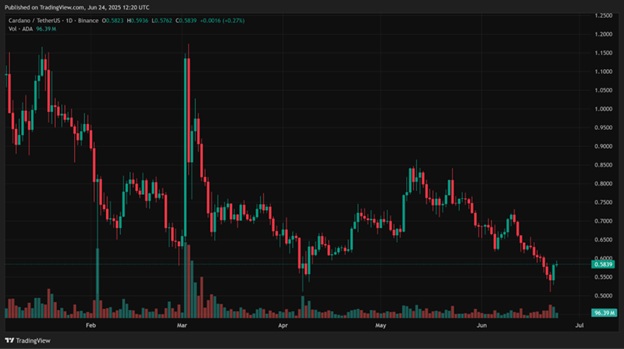
Despite recent market turmoil, ADA has great strength, creating a positive trend that can cause an explosive rise. Crypto expert Ali Charts advises loading up on ADA since the latest crypto market collapse did not effectively drive the token sustainably below its critical support level of $0.67. Ali Charts claims that Cardano is in an accumulation period, which usually precedes notable price movement. ADA’s last display of this kind of trend was followed by an incredible surge that raised the price to a record $4. Although the forthcoming rally might not be as big as in 2021, experts believe ADA might hit a new all-time high of $15 by late 2025. Moreover, the shrinking of the Bollinger Bands on the ADA price chart indicates a significant change. With the Relative Strength Index (RSI) at 41 right now, the Bulls have plenty of space to take the front stage. Forecasting a 200% surge in the immediate term and a longer-term objective of $15, many analysts—including Crypto Rand—have shown hope in ADA’s future possibilities.

Solana’s Current Market Performance and Projections

Overcoming various challenges, Solana (SOL) has had an amazing journey to become one of the best cryptocurrencies regarding market performance and technological competence. After a 1.27% drop from its previous close, Solana is trading at roughly $196.14, according to the most recent statistics. Solana’s solid technological developments help maintain investor confidence, even if its volatility is clear-cut.

Solana’s expansion is mostly driven by its Firedancer update, which greatly increased the network’s scalability and transaction speed. Solana is positioned to lead the smart contract market with the capacity to process an incredible one million transactions every second. Both developers and investors have shown great interest in this update, which will help shape future price hikes. Driven mostly by Solana’s increasing acceptance of its smart contract capabilities, leading asset management company VanEck believes Solana could reach $520 by the end of 2025. Solana’s price should keep climbing as its market share in the smart contract domain grows. This prognosis shows a considerable increase for those wanting to enter now, even if it is cautious relative to Solana’s potential.

Rexas Finance (RXS): The Future of Tokenized Real Estate

Rexas Finance (RXS) represents the future of asset tokenization, specifically in the real estate sector. RXS is transforming real estate investment by allowing buyers, sellers, and swappers of tokenized assets to engage. This strategy makes asset ownership borderless and more efficient than ever by lowering transaction costs, boosting liquidity, and giving access to worldwide markets. The Rexas Finance presale has been quite successful, with $45,921,138 raised and 449,603,400 RXS tokens sold. Currently priced at $0.20, the project is in its last presale stage, and early investors have already received a 6.67x return on investment. Rexas Finance has also disclosed intentions to list RXS on three Tier 1 exchanges on June 19, 2025, at $0.25, improving its liquidity and worldwide visibility. Besides the outstanding presale success, Rexas Finance has started the $1 million prize pool in RXS tokens known as the Rexas Millionaire Giveaway. Both institutional and ordinary investors have been quite involved in this project. With access to the $486 trillion worldwide financial asset market, analysts estimate that upon public launch, Rexas Finance may witness a 15,000% price rise. If this development pattern continues during the next bull run, RXS can become one of the most rewarding investments.

Conclusion

Three altcoins that every investor should be on high alert in 2025 are Solana (SOL), Cardano (ADA), and Rexas Finance (RXS). These cryptocurrencies are very appealing investments because of Cardano’s exponential potential for growth, Solana’s technological innovations and market leadership, and Rexas Finance’s creative approach to real estate tokenization. These three coins are positioned to profit from developing trends and provide outstanding returns to investors as the crypto market changes. Don’t pass up the chance to invest in some outstanding altcoins.


For more information about Rexas Finance (RXS) visit the links below:

Website: https://rexas.com

Win $1 Million Giveaway: https://bit.ly/Rexas1M

Whitepaper: https://rexas.com/rexas-whitepaper.pdf

Twitter/X: https://x.com/rexasfinance

Telegram: https://t.me/rexasfinance

Meta Fires 20 Employees Over Leaks as Zuckerberg Clamps Down on Internal Dissension

0

Meta has reportedly terminated roughly 20 employees for allegedly leaking confidential company information, as CEO Mark Zuckerberg intensifies efforts to crack down on internal leaks.

The terminations follow Zuckerberg’s frustrated remarks during an all-hands meeting last month, where he complained that “everything I say leaks. It sucks.”

Zuckerberg’s lament about leaks was ironically leaked almost immediately, fueling further scrutiny of Meta’s internal culture and management practices. During the meeting, he hinted that the company would need to be less transparent going forward and warned that employees caught leaking sensitive information would face termination.

Now, according to a report by The Verge, Meta has followed through on that warning. In a statement, the company said: “We tell employees when they join the company, and we offer periodic reminders, that it is against our policies to leak internal information, no matter the intent. We recently conducted an investigation that resulted in roughly 20 employees being terminated for sharing confidential information outside the company, and we expect there will be more. We take this seriously and will continue to take action when we identify leaks.”

Meta’s chief technology officer, Andrew Bosworth, confirmed earlier this month that the company was close to identifying the leakers, implying that additional dismissals could follow.

In response to the leaks, Meta has introduced sweeping changes to internal meetings to limit information from spreading. Employees can no longer vote on which questions to ask Zuckerberg, a system that previously allowed the most popular topics to be addressed. Additionally, comments during live presentations have been disabled, and questions deemed potentially problematic if leaked are now skipped altogether.

Zuckerberg has also indicated that Meta’s overall transparency will be reduced, making it harder for employees to access sensitive discussions. These measures highlight a growing culture of secrecy within the company, signaling a shift from its previous open-information approach.

Why the Surge in Leaks?

The sudden spike in leaks at Meta appears to coincide with Zuckerberg’s increasing alignment with Donald Trump in recent months.

Meta’s recent decision to donate $1 million to Trump’s inauguration fund in December has raised eyebrows, as have several controversial policy shifts perceived as concessions to Trump’s political base. These include:

  • The termination of Meta’s DEI (Diversity, Equity, and Inclusion) programs
  • The removal of third-party fact-checkers
  • The scaling back of content moderation policies

Zuckerberg, who previously positioned himself as a champion of free expression, has now faced accusations of bowing to political pressure. While he was among the first tech executives to congratulate Trump on his 2024 election victory, the relationship between the two remains complicated.

Trump has publicly criticized Meta in the past, accusing the company of censorship and political bias. In 2021, Facebook (now Meta) banned Trump for two years following the January 6 insurrection, leading to Trump labeling the platform an “enemy of the people”. He also accused Zuckerberg of plotting against him during the 2020 election, vowing that the Meta CEO would “spend the rest of his life in prison” if he ever did it again.

Now, with Meta’s policies seemingly shifting in Trump’s favor, internal discontent within the company appears to be mounting, leading to a rise in leaks exposing these controversial changes.

Lavish Bonuses for Executives Amid Layoffs

The firing of rank-and-file employees for leaking information comes against the backdrop of executive pay increases at Meta.

The company recently approved a plan to boost executive bonuses by up to 200% of their base salary—a move that has sparked criticism given that Meta is simultaneously cutting 5% of its workforce (approximately 4,000 employees).

Meta has already conducted mass layoffs since 2022, with more than 21,000 employees losing their jobs as part of what Zuckerberg calls the “Year of Efficiency”. However, the contrast between lavish executive bonuses and widespread job cuts has fueled employee dissatisfaction, making leaks even more likely.

Meta Apologizes After Reels Flooded with Explicit Content

Adding to Meta’s recent troubles, the company was forced to apologize yesterday after an “error” caused its Reels platform to be flooded with violent and pornographic content. The incident embarrassed the company at a time when it is already facing backlash over content moderation issues, particularly following its decision to scale back fact-checking and moderation efforts.

With internal tensions rising, Zuckerberg’s crackdown on leaks appears to mark a new era of secrecy at Meta. Employees who were once accustomed to an open culture are now facing harsh penalties for sharing information, while the company’s ties to Trump and executive pay increases continue to spark controversy.

Nvidia CEO Acknowledges Huawei As A Rising Threat Despite U.S. Sanctions

0

Chip giant Nvidia has formally acknowledged growing competition from Huawei, even as the Chinese telecommunications and technology company continues to operate under strict U.S. sanctions.

In its latest annual filing on Wednesday, Nvidia explicitly listed Huawei as a key competitor for the second consecutive year. This development marks a significant shift in the tech industry, as Huawei had not appeared in Nvidia’s competitor list for at least three years prior.

The move underscores Huawei’s rapid resurgence despite U.S. efforts to cripple its technological advancement.

Nvidia’s report highlights Huawei’s growing presence across critical sectors, including semiconductor chips, cloud services, computing processing, and networking products.

Speaking on the competitive landscape, Nvidia’s CEO Jensen Huang acknowledged the increasing challenge posed by Chinese firms, particularly Huawei. In an interview with CNBC’s Jon Fortt on Wednesday, Huang described Huawei as “vigorous and very, very competitive,” emphasizing that China’s domestic tech industry has remained resilient despite external pressures.

“There’s a fair amount of competition in China.

“Huawei, other companies, are … quite vigorous and very, very competitive,” Huang said.

U.S. Sanctions and Huawei’s Remarkable Defiance

Huawei’s continued growth is particularly striking given the heavy sanctions imposed by the United States since 2019. The U.S. government blacklisted Huawei over alleged national security concerns, accusing the company of having close ties to the Chinese government and military. These sanctions effectively cut Huawei off from critical American technology, including advanced semiconductor chips, software, and essential hardware components.

The restrictions severely disrupted Huawei’s operations, especially its lead role in the 5G rollout and once-dominant smartphone division, which relied heavily on U.S.-made processors and Google’s Android operating system. By 2021, Huawei’s revenue had plummeted by nearly 29%, and it was widely believed that the company’s days as a global tech powerhouse were numbered.

However, Huawei has stunned the world by finding ways to circumvent these restrictions and rebuild its technological capabilities. The company poured billions into domestic research and development, accelerating efforts to create homegrown alternatives to Western technology. Its most significant breakthrough came in semiconductor chip design, a sector long dominated by U.S. firms like Nvidia, Qualcomm, and Intel.

Despite being banned from acquiring advanced chips from American suppliers, Huawei, through its chip-design arm HiSilicon, managed to develop its own cutting-edge processors. The company’s Mate 60 Pro smartphone, released in 2023, featured a breakthrough semiconductor chip that enabled 5G-like speeds, shocking industry analysts who believed Huawei lacked the capacity to manufacture such advanced chips without U.S. technology.

Huawei’s comeback was not limited to hardware alone. The company recognized the need to develop its own software ecosystem after being banned from using Google’s Android operating system. In response, Huawei accelerated the development of HarmonyOS, a proprietary operating system initially designed for smart devices. By early 2025, Huawei unveiled HarmonyOS NEXT, its first fully self-developed operating system, marking a major milestone in China’s push for technological independence.

With HarmonyOS NEXT, Huawei effectively eliminated its reliance on U.S. software, a move that further strengthened its position in the global tech market. The operating system’s integration into the newly launched Mate 70 series signified a new era for Huawei’s smartphone division, proving that the company could not only survive but also compete head-on with industry giants like Apple and Samsung.

The fact that Nvidia, the world’s leading AI chip manufacturer, has formally recognized Huawei as a major competitor suggests that Huawei’s influence in semiconductors and AI computing is growing at an unprecedented pace.

While Nvidia still dominates the market for AI-focused chips, Huawei has aggressively expanded its own AI computing capabilities, investing heavily in data centers, AI-driven cloud services, and networking infrastructure. This expansion is particularly concerning for U.S. policymakers, as it signals that China is rapidly closing the gap in areas where the U.S. previously held an undisputed technological advantage.

Nvidia’s concerns also reflect the wider battle for technological supremacy between the U.S. and China. The Biden administration tightened export controls, restricting American companies from selling AI chips and advanced semiconductor manufacturing tools to China. However, Huawei’s ability to navigate these restrictions and continue its rise underlines that U.S. sanctions are losing their effectiveness.

The rivalry between Huawei and Nvidia is expected to escalate in the coming years, particularly in the fields of AI computing, cloud services, and semiconductor innovation.

Solana vs Remittix vs Ethereum: What Crypto Should You Be Investing In For A Solid Return This Cycle?

0

Investors frequently debate which altcoins can deliver a reliable payoff during uncertain market conditions. Three names repeatedly come up, Solana (SOL), Remittix (RTX) and Ethereum (ETH). Each offers distinct advantages and pitfalls that can shape their performance this cycle. Solana touts rapid, low-cost transactions, Ethereum remains the go-to DeFi and NFT heavyweight and Remittix has soared in presale for focusing on bridging crypto and real-world money transfers. Below, we examine each in turn before concluding where many see the most practical path to stable gains.

Solana – Speed and dApp Potential

Solana trades near $137 with about $3.75 billion in 24-hour volume, according to aggregator data. Its rapid transaction speeds and minimal fees once powered a flourishing DeFi and NFT ecosystem.

SOL’s last week chart: coinmarketcap

However, intermittent network slowdowns and performance hiccups have cooled some early enthusiasm. Bulls argue these issues can be resolved and highlight the chain’s active developer base, which continues rolling out dApps for DeFi, gaming and beyond.

If Solana finalizes improvements that ensure reliability, renewed user adoption could propel SOL higher. Yet skeptics point out that lingering doubts about stability may hinder large-scale expansions. The coin’s success likely hinges on capturing more mainstream dApp traffic a feat some watchers say is possible, provided Solana resolves its network woes in time.

Ethereum – DeFi Mainstay With High Fees

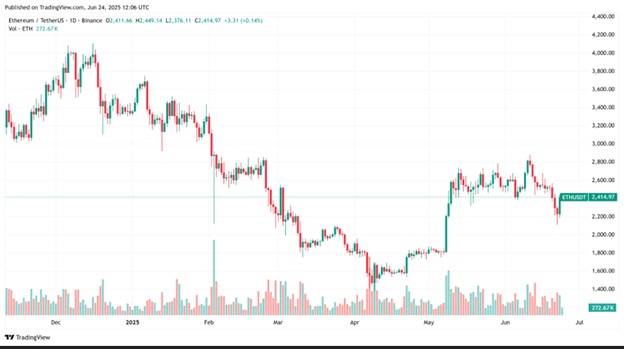
Ethereum remains the bedrock of decentralized finance and NFT projects, trading near $2,270 and logging around $24 billion in daily volume, aggregator data shows. Its massive developer community drives an ever-expanding portfolio of dApps, from lending protocols to NFT marketplaces.

ETH’s last week chart: Coinmarketcap

Despite this, ongoing complaints about high gas fees and slower upgrades can deter new entrants. Enthusiasts remain bullish, believing that forthcoming layer-2 solutions will slash transaction costs and reignite user adoption. However, if aggregator data continues revealing slower DeFi inflows, Ethereum’s near-term upside might be capped.

Long-range supporters argue the chain’s institutional backing and developer strength will prevail over short-term concerns, but potential growth could be more measured compared to smaller alts that solve immediate user problems at lower costs.

Remittix, PayFi Emphasis and $13 Million Presale

Remittix (RTX) offers a different angle, targeting the $190 trillion global remittance market rather than incremental chain or comedic marketing. By simplifying crypto-to-fiat swaps, Remittix aims to let freelancers, migrant workers and unbanked populations bypass 5–10% wire fees.

This practical approach resonates well beyond traditional DeFi circles, evident in Remittix’s robust presale haul of $13 million at a token price of $0.0694. Observers note that bridging local currency can attract a much wider base of everyday users than incremental chain updates. The team also locks liquidity for three years and renounces the contract post-presale, aiming to address rug-pull fears.

Critics acknowledge the need for licensing, agent networks and user-friendly mobile apps. Yet bridging day-to-day finances often resonates more than advanced yield strategies or partial expansions. Interested investors can find presale details at Remittix, with official news and community links at Linktree.

Charting A Path For This Cycle’s Gains

Solana vs Remittix vs Ethereum each showcases a different blueprint for winning over users. Solana banks on low fees and speed but must assure reliability to bring skeptics back, especially after past network slowdowns. Ethereum commands a deep pool of liquidity, but high gas costs and a delayed upgrade path could curb short-term upside.

Remittix (RTX) leans on a PayFi narrative that addresses a massive remittance sector roughly $190 trillion representing a universal need that comedic or purely incremental tokens often ignore. This direct user benefit underpins its $13 million presale success. While no coin escapes risk, bridging everyday money flows can yield more consistent adoption than comedic or incremental expansions alone.

If speed and cheap transactions appeal to you, Solana might be a decent bet once it stabilizes. If you believe DeFi’s foundation will outlast short-term fee complaints, Ethereum remains a solid choice. However, if bridging local currency resonates more than either chain-based approach, Remittix stands poised to deliver a real-world solution that can garner mainstream traction.

Discover the future of PayFi with Remittix by checking out their presale here:

Website: https://remittix.io/

Socials: https://linktr.ee/remittix

Businesses on Stripe Generated $1.4 Trillion in Total Payment Volume in 2024

0

Stripe, an online and in-person payment processing and financial solution for businesses of all sizes, has announced that businesses on its platform generated $1.4 trillion in total payment volume in 2024, up 38% from the prior year, and reaching a scale equivalent to around 1.3% of global GDP.

The company attributed part of last year’s rapid growth to its long-standing investments in building machine learning and artificial intelligence into its products.

This bet seems to be paying off, after the company disclosed that it has continued to increase revenue for existing customers, encouraging more businesses to switch to Stripe, and helping new companies reach significant scale unprecedentedly quickly.

Stripe anticipates that future growth rates will fluctuate and is as enthusiastic as ever about the long-term trends in the internet economy.

Announcing this feat in its annual newsletter, the company wrote,

Stripe was profitable in 2024, and we expect to be so in 2025 and beyond. Durable profitability allows us to plow back much of our operating earnings into research and development. In each of the last six years, Stripe has reinvested a much higher proportion of our earnings in R&D than any comparable company. We believe this ability will prove particularly important in the coming years, as stablecoins, Al, and other forces reshape the landscape. Stripe’s growth to date is evidence of the intense market demand for programmable financial services. The associated transformation is still early.

Stripe Billing is an example of such an investment bearing fruit. Over the last year, Billing was designated as a market leader in its own right by both Forrester and Gartner, recognizing its power and maturity. As we forecast in our 2023 letter, Stripe’s Revenue and Finance Automation Suite, with Billing at its core, has now passed a $500 million revenue run rate. Billing is being used by more than 300,000 companies, manages nearly 200 million active subscriptions, and is emerging as the revenue engine of the AI era.”

Stripe serves a diverse range of businesses across the economic spectrum, from leading corporations. It is worth noting that half of the Fortune 100 rely on its services to rapidly expanding companies, including 80% of the Forbes Cloud 100 and 78% of the Forbes AI 50.

Additionally, Stripe plays a crucial role in supporting new ventures, with one in six newly formed Delaware corporations incorporated through Stripe Atlas. Regardless of their size, Stripe’s customers share a common trait, exceptional growth. Collectively, the revenue processed by businesses on Stripe is increasing at a rate seven times faster than that of all companies in the S&P 500.

In many cases, companies are using Stripe to reinvent their business models. In others, they’re simply looking to increase their revenue from existing activities with striking results. More so, ecosystems like Stripe support cash PDF invoice receipt template which simplify documentations and reconciliations.

Some examples  include:

Hertz moved its payments to Stripe in 2024. The company has since seen a 4% increase in authorization rates for its online payments.

Turo, the world’s largest car-sharing marketplace, used Stripe Optimized Checkout Suite and saw a 4.7% increase in recaptured revenue—equivalent to an additional $114 million each year.

Intercom increased conversion by 2.1% and saved countless developer hours after moving to Stripe Billing.

Forbes switched to Stripe to manage its subscription payments, and it has seen a 23% uplift in revenue in the past 6 months alone.

News Corp Australia, the parent company of Sky News Australia, has seen a 5% increase in authorization rates. It has also retained more than 10,000 readers that would have otherwise inadvertently churned.

Looking Ahead

Stripe has expressed readiness to be well-positioned, to serve the next chapter of the economy. The company noted that more than 700 AI agent startups launched on its platform last year, a figure that it expects will be substantially eclipsed by the total in 2025.