DD
MM
YYYY

PAGES

DD
MM
YYYY

spot_img

PAGES

Home Blog Page 2104

Lafarge Africa Reports Record N152.2 Billion Pre-Tax Profit for 2024

0

Lafarge Africa Plc has released its financial results for the year ending December 31, 2024, reporting a pre-tax profit of N152.2 billion, a significant 93.27% increase compared to the N78.7 billion recorded in 2023.

This performance comes despite escalating production costs, rising taxation, and economic uncertainties that have affected Nigeria’s business environment.

The company’s revenue surged by 71.83%, reaching N696.7 billion, compared to N405.5 billion in the previous year. Cement sales contributed 97% of total revenue, highlighting Lafarge’s dominance in Nigeria’s construction sector. Additionally, total assets grew by 45.37% to N990.5 billion, reinforcing the company’s financial strength.

This report comes at a time when the Nigerian government is urging cement manufacturers to lower cement prices to N7,000 per bag, citing better FX rates. However, manufacturers, including Lafarge and its competitors, have pushed back against these calls, citing an unfriendly business climate, rising production costs, and heavy taxation as reasons for the persistently high price of cement.

The Nigerian cement industry has remained a key driver of economic growth and infrastructure development, contributing significantly to GDP and employment. However, the sector has struggled under the weight of rising input costs, energy expenses, and multiple taxes imposed by the government.

The government’s recent appeal to cement manufacturers to bring down prices to N7,000 per bag has sparked debate. While authorities argue that lower prices will ease the burden on citizens and stimulate construction activity, cement manufacturers insist that the current economic environment does not support such price reductions.

Aliko Dangote, chairman of Dangote Cement, a key rival of Lafarge Africa, recently detailed the tax burden faced by cement manufacturers, stating that for every N1 generated in revenue, 52 kobo is paid in taxes to the government. He highlighted the following taxes affecting the industry:

  • 30% corporate tax
  • 7.5% value-added tax (VAT)
  • 2% education tax
  • 1% health tax
  • 10% withholding tax on dividends paid to shareholders

According to Dangote, these taxes, coupled with soaring energy costs and foreign exchange volatility, have significantly eroded profit margins, making it difficult for companies to lower cement prices without financial losses.

Financial Performance Breakdown

Lafarge Africa’s revenue of N696.7 billion in 2024 represents its highest earnings on record, reflecting the company’s ability to expand market share and sustain demand for its products. However, the cost of sales surged by 76.09%, reaching N350 billion, driven by higher costs for fuel, power, and raw materials.

Fuel and power expenses alone amounted to N158.7 billion, while raw materials and consumables cost the company N73.4 billion. These rising expenses have forced Lafarge to adjust pricing strategies to maintain profitability, further justifying the company’s reluctance to implement government-mandated price cuts.

Despite higher costs, gross profit increased by 67.72% to N346.7 billion, compared to N206.7 billion in 2023. However, operational expenses also saw a sharp rise.

Selling and distribution expenses climbed to N120.4 billion, marking a 54.28% year-over-year increase, largely due to higher transportation and logistics costs. Administrative expenses also rose to N40.1 billion, up from N27.5 billion the previous year, mainly driven by technical service fees and staff-related expenses.

Lafarge recorded a substantial increase in other income, which surged by 706.05% to N7.1 billion, compared to N891.7 million in 2023. This growth was largely attributed to the reversal of an impairment charge on property, plant, and equipment valued at N4.6 billion, along with a government grant of N1 billion.

However, finance income declined by 55.70%, falling from N4.6 billion in 2023 to N2 billion in 2024, reflecting lower returns on cash reserves. At the same time, finance costs surged by 63.76% to N42.5 billion, driven by higher interest rates and debt servicing costs.

Nonetheless, pre-tax profit soared by 93.27% to N152.2 billion, demonstrating Lafarge Africa’s ability to maintain profitability despite economic hurdles.

Strong Asset Growth and Financial Position

Lafarge Africa’s total assets increased to N990.5 billion, a 45.37% rise from the N681.3 billion reported in 2023. Non-current assets climbed to N576.5 billion, reflecting investments in property, plant, and equipment, while current assets grew to N414 billion, up from N239 billion in the prior year.

Within its asset portfolio, cash and cash equivalents stood at N237.8 billion, providing the company with a strong liquidity position. Inventory levels also rose significantly, with spare parts accounting for N52.5 billion and finished goods valued at N25 billion.

Lafarge Africa’s retained earnings increased by 28.29% to N315.5 billion, reflecting its commitment to long-term financial stability and reinvestment in operations.

Lolu Alade-Akinyemi, CEO of Lafarge Africa, expressed confidence in the company’s financial performance and strategic direction, emphasizing the company’s ability to navigate a challenging business environment while delivering record-breaking revenue and profits.

“I am excited to report our record-breaking revenue of N697 billion and PAT of N100 billion for the full year 2024, a testament to our strong market positioning, operational efficiency, cost management, and dedication to value creation.

“Despite a challenging business environment, we have remained resilient, leveraging innovation and green growth in line with our sustainability ambitions, while also delivering value to our stakeholders,” he said.

Dividend Declaration

As part of its commitment to rewarding investors, Lafarge Africa declared a final dividend of 120 kobo per unit of 50 kobo ordinary shares, subject to shareholders’ approval and tax deductions. The dividend will be payable to shareholders whose names appear in the Register of Members as of March 28, 2025.

This dividend declaration reflects Lafarge’s financial strength and its ability to maintain investor confidence despite broader economic pressures.

Creating and Executing Strong Business Vision  – Tekedia Mini-MBA

0

What is your business Vision? And how does that Vision drive the Mission of the firm? It is easier to assemble the best to accomplish challenging tasks than to pursue something boring. Indeed, you can recruit more talented people for a journey to the moon, than to go and dig a ground, because going to the moon is more challenging, and also more exciting. Think about it: nearly every kid will like to work for NASA over one tunnel-boring company because NASA inspires.

In this lecture, I will explain how crafting a winning Vision can help you to attract and retain the best, and in that process, you can win the market. Aspirational vision with a purpose built into it will activate all the necessary factors of production, from capital to labour, and beyond, at scale.

“I want to organize the world’s information” is more inspiring than “I am building a website to store data”. I want “to build a digital human community for all people in the world” is better than “I am creating a website where people share photos and videos”.

What is your business vision? How can you create a great one? Join me tomorrow at Tekedia Mini-MBA Live as I teach on “Creating and Executing Strong Business Vision”. Zoom link in class board https://school.tekedia.com/course/mmba16/

Sat, March 1 | 7pm-8.30pm WAT | Creating and Executing Strong Business Vision  – Ndubuisi Ekekwe

FCCPC Orders MultiChoice to Suspend Price Hike Until It Concludes Ongoing Investigation

0

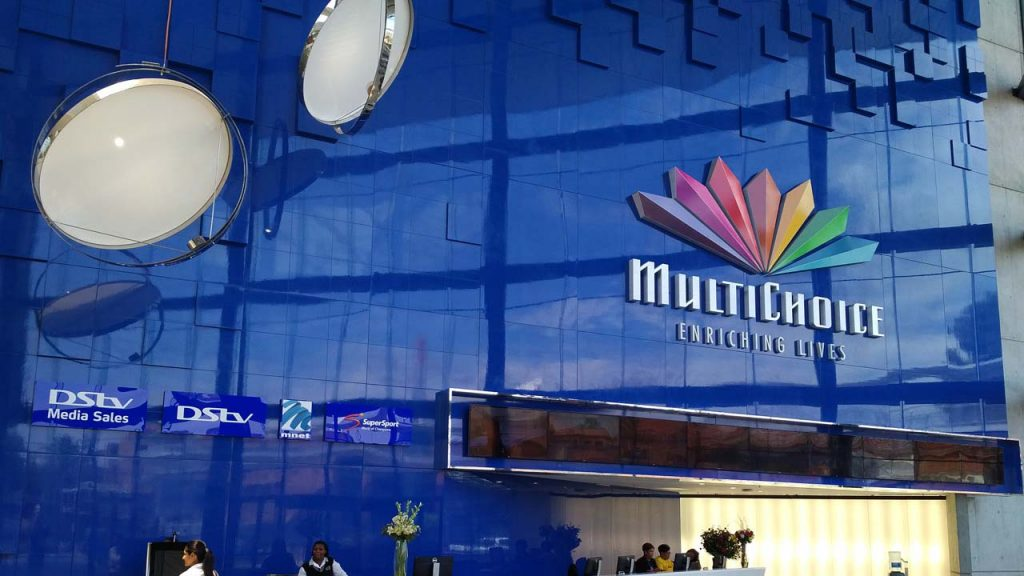
The Federal Competition and Consumer Protection Commission (FCCPC) has ordered MultiChoice Nigeria to suspend its planned price increase for DStv and GOtv subscriptions until the conclusion of an ongoing investigation.

The regulatory intervention comes as Nigerians express growing frustration over frequent price hikes by the South African pay-TV operator.

This directive follows MultiChoice’s request for an extension regarding its scheduled appearance before the FCCPC, initially set for February 27, 2025. The consumer watchdog granted the request but rescheduled the investigative hearing for March 6, 2025. The company must now appear with all relevant officers and provide a comprehensive response regarding the justification for its proposed price increase.

In the meantime, MultiChoice is required to maintain its current pricing structure.

In a statement released on Tuesday, the FCCPC made it clear that MultiChoice must refrain from implementing any price changes until the investigation is completed.

“Pursuant to this, MultiChoice is expressly instructed to maintain the existing price structure as of February 27, 2025, pending the Commission’s review and final determination on the matter,” the FCCPC stated.

The Commission emphasized that suspending the price hike is necessary to prevent consumer exploitation and ensure fairness in the pay-TV market.

MultiChoice’s History of Price Hikes and Regulatory Battles

MultiChoice Nigeria has developed a reputation for frequent price adjustments, often citing economic factors such as inflation, foreign exchange volatility, and operational costs as justification. However, each time the company announces a price increase, it faces regulatory scrutiny.

This is not the first time MultiChoice has been summoned by the FCCPC or other agencies. The company has previously faced investigations and lawsuits over pricing, with regulatory bodies accusing it of failing to offer flexible and competitive pricing models for Nigerian consumers.

However, MultiChoice has historically emerged victorious in most regulatory battles, as Nigerian laws do not impose strict price controls on private businesses. This has allowed the company to proceed with its increments after justifying them as necessary for sustainability.

Will the FCCPC Approve Another Price Increase?

Unlike previous price hikes that were eventually approved, there is no certainty that the FCCPC will allow this latest increment to proceed. A key reason is that MultiChoice already increased its subscription prices twice in 2023, first in April and then again in November. Another hike was implemented on May 1, 2024, further fueling consumer outrage.

With three price increases in less than two years, the FCCPC may take a stricter stance this time.

Breakdown of MultiChoice’s Planned Subscription Price Hike

On Monday, MultiChoice Nigeria informed its customers of yet another price increase, set to take effect from March 1, 2025. The planned increments are significant across all DStv and GOtv packages.

DStv Price Adjustments:

  • DStv Compact: N15,700 – N19,000 (25% increase)
  • DStv Compact Plus: N25,000 – N30,000 (20% increase)
  • DStv Premium: N37,000 – N44,500 (20% increase)

GOtv Price Adjustments:

  • GOtv Jinja: N3,600 – N3,900
  • GOtv Jolli: N4,850 – N5,800
  • GOtv Max: N7,200 – N8,500
  • GOtv Supa: N9,600 – N11,400
  • GOtv Supa Plus: N15,700 – N16,800

The repeated price increases have had a direct impact on MultiChoice’s subscriber base. The company reported that in just six months (April to September 2024), its Nigerian operations lost 243,000 subscribers across DStv and GOtv services.

MultiChoice attributed this decline to high inflation (over 30% as of late 2024) and rising cost of living.

These losses highlight the growing disconnect between MultiChoice’s pricing strategy and the economic reality facing Nigerian households.

“Running a Business in Nigeria Costs 30% More”: Dangote Blames Nigeria’s Industrial Woes on Unstable Electricity, Policy Inconsistencies

0

Aliko Dangote, Africa’s richest man and President of the Dangote Group, has linked Nigeria’s industrialization struggles to unstable electricity and inconsistent government policies, warning that unless these issues are tackled with urgency, Nigeria’s economic growth will remain stunted.

Speaking while hosting Zambia’s Minister of Energy, Makozo Chikote, at the Dangote Refinery in Lagos, Dangote lamented that operating a business in Nigeria is 30% more expensive than in developed countries due to unreliable power supply.

“If there’s no power, there won’t be growth. For example, anything I’m going to do abroad will cost me maybe 30% cheaper than here, because abroad is plug-and-play. You just go, no infrastructure construction. You just build a factory, and you connect to the network; that’s all,” he explained.

He cited Ethiopia as an example of how stable electricity can transform industrial operations, noting that Dangote’s most profitable cement plant is in the East African country because it enjoys consistent and affordable electricity.

“If you look at it today, I tell you that our most profitable cement factory is in Ethiopia because there’s no investment in power. They gave us power at the same rate for five years. So, we plan—it’s a one-price electricity continuously,” he stated.

Nigeria’s Electricity Tariff System Has Failed, Government Admits

Dangote’s remarks coincide with mounting concerns over the federal government’s lack of a clear strategy to fix Nigeria’s chronic power problems.

Recently, the Minister of Power, Adebayo Adelabu, admitted that the Band A electricity tariff structure is failing. Under this system implemented on April 3, 2024, by the Nigerian Electricity Regulatory Commission (NERC), customers were grouped into different bands based on the number of hours of electricity supplied per day. Band A customers, who were supposed to receive 20–24 hours of power daily, were required to pay higher tariffs, while lower bands received less power at cheaper rates.

However, the policy has proven ineffective as many Band-A customers continue to experience prolonged blackouts despite paying higher tariffs. The situation has fueled frustration among consumers and businesses, with many questioning the logic behind the model.

“The current electricity pricing system is not working as planned, and we are working on a more efficient structure,” the power minister recently admitted.

Industrialists Warn: No $1 Trillion Economy Without Stable Power

Industry leaders have long argued that if the Tinubu administration is serious about its vision of growing Nigeria into a $1 trillion economy, solving the power crisis must be a top priority.

Dangote reinforced this view by highlighting how much Nigerian businesses spend on self-generated electricity, a cost burden that makes local production far less competitive than in countries with stable power.

He also warned that inconsistent government policies discourage investment in industrialization.

“One of the problems of industrialization is inconsistencies in government policies, where, just like a footballer, you’re about to score the goal, and the government will remove the goalpost and point behind you that the goalpost is behind. So, you have to now turn. Once you turn back, you have a lot of challenges to get to that goalpost again,” he lamented.

Government Losing Billions from Industrial Failures

Beyond businesses, Dangote noted that the biggest loser when industries struggle or shut down is the government itself, as it collects significant revenue from corporate taxes.

He revealed that for every N1 generated in his cement business, 52 kobo goes to the government in taxes, including:

  • 30% corporate tax
  • 7.5% value-added tax (VAT)
  • 2% education tax
  • 1% health tax
  • 10% withholding tax on dividends paid to shareholders

“This is just for the Federal Government. When you add the state and local government taxes, the figure becomes even higher,” he added.

Dangote stressed that if businesses continue to collapse due to unreliable power and inconsistent policies, the government will suffer major revenue losses.

“When a business fails, one of the biggest losers is the government. Industrialization is key to national development, and policymakers must understand that,” he warned.

The Tinubu administration has set ambitious economic targets, including attracting foreign investment and boosting industrial output. However, with power shortages persisting and tariff policies failing, many experts doubt whether the government is prepared to address the root causes of Nigeria’s electricity crisis.

New Bitcoin Meme Coin BTC Bull (BTCBULL) Nears $3 Million Mark

0

BTC Bull—a new Bitcoin meme coin—has been in high demand since making a grand entry into the crypto town.

The project arrived on presale just two weeks ago, and is already close to hitting the $3 million mark, all thanks to its Bitcoin-driven aesthetics, mega airdrop campaigns, and valuable staking perks.

With the FOMO vibe gaining more ground even amid the multiple ups and downs in the broader market, influential YouTubers are now calling the Bitcoin meme coin the best presale investment for the next bull run.

BTC Bull Is Creating A United Front For Bitcoin

Bitcoin is currently in the worst moment of 2025, having tumbled below the $90k mark on February 25–its lowest level since November 2024. The downward movement in its price followed another wave of liquidations in the broader market, triggered by rising US-China trade tensions and macroeconomic uncertainty.

With over $1.3 billion in total crypto liquidations recorded in the last 24 hours, there are concerns that the OG crypto could continue to edge down, possibly settling between $80k and $85k in the short-term. Its fear and greed index is now pointing to 20, indicating extreme fear.

However, in spite of the downward spiral in the price of Bitcoin, it is still up 30% since the beginning of November and experts believe it is only a matter of time before it stages a comeback.

In a recent prediction, Tom Lee—an influential financial strategist—highlights Bitcoin’s potential to reach between $200k and $250k before the end of 2025, saying he does not think anyone will lose money buying Bitcoin at its current price.

In fact, Ark Invest—a popular investment management firm—in its latest report suggests that Bitcoin is still on pace to meet its 2030 targets of $1.5 million, thanks to the ongoing exploration of a strategic crypto reserve in the United States

Stepping in to help Bitcoin actualize this lofty goal is BTC Bull. While embodying the spirit of a meme coin, featuring a Bull Commando as its main mascot, its core goal is to create a united front that will push the Bitcoin price beyond $1 million.

Major aspects of the project such as tokenomics, token burns, and airdrops are all tied to how Bitcoin moves on the price charts. For instance, when Bitcoin reaches $125k, a token burn will be initiated, which could allow the BTC Bull price to also move up.

Mega BTC airdrops are also scheduled whenever the Bitcoin price hits certain milestones, especially $150k, $200k, and $250k, allowing bulls to reap the rewards of every bullish move made by the crypto king.

The allure of free BTC, coupled with its dynamic staking structure has got smart money investors gravitating toward the presale. At the time of writing, those who stake their tokens in the project’s liquidity pool will benefit from its current APY yield of approximately 150%. However, this reward rate is expected to drop as more tokens are being staked, making early participation more valuable.

Meanwhile, unlike most presales, BTC Bull has already taken drastic steps to ensure transparency and security. Its smart contract has already been audited by both Coinsult and SolidProof, which give the green light for those willing to explore the project.

BTC Bull Tokenomics

There are 21 billion BTC Bull tokens in total, strategically allocated to fuel both short and long-term growth of the project. Below is a highlight of how the allocations have been made:

  • PR and Marketing Fund – 40%
  • Bull Fund – 15%
  • Milestone Burn Fund – 15%
  • BTCBULL Airdrop – 10%
  • Staking Distribution – 10%
  • Exchange Liquidity – 10%

BTC Bull Presents An Avenue To Accumulate Bitcoin Without Buying

As earlier mentioned, BTC Bull’s major goal is to serve as a stream of Bitcoin airdrops for bulls. It has already collaborated with Best Wallet for the upcoming airdrop campaigns.

A multichain, self-custody wallet, Best Wallet supports approximately 60 different chains. This simply means BTC Bull investors will be able to receive their free BTC rewards through any of the blockchains they deem fit.

There are seven milestones highlighted by the project, out of which three BTC airdrops have been scheduled.

  • When BTC attained $100k, the BTC Bull was initiated
  • When BTC hits $125k, the first token burn will happen
  • When BTC smashes $150k, there will be a BTC airdrop
  • When BTC reaches $175k, another round of token burn will occur
  • When Bitcoin hits $200k, the second round of the airdrop will be executed
  • When BTC achieves $225k, there will be another token burn
  • When BTC reaches $250k, another airdrop will happen.

Is BTC Bull The Next 100x Play?

BTC Bull blends the quirks of meme coins with Bitcoin-driven fundamentals, and its focus on providing multiple BTC airdrops and staking perks could help it gain momentum after it lands on crypto exchanges.

BTC Bull’s community-centric posture is another reason it could be one of the best presale investments of 2025.

Already, its strategic social media engagement techniques have helped it earn more than 8k followers on X and over 1k members on its Telegram channel.

Prominent influencers have made a bullish case for the Bitcoin meme coin, with some even calling it the next 100x gem.

In fact, those who gave a more conservative prediction said it could see between 10x to 50x growth immediately after its launch.

Visit BTC Bull Presale