DD
MM
YYYY

PAGES

DD
MM
YYYY

spot_img

PAGES

Home Blog Page 212

AI Drives Worst October Layoffs in Over 20 Years

0

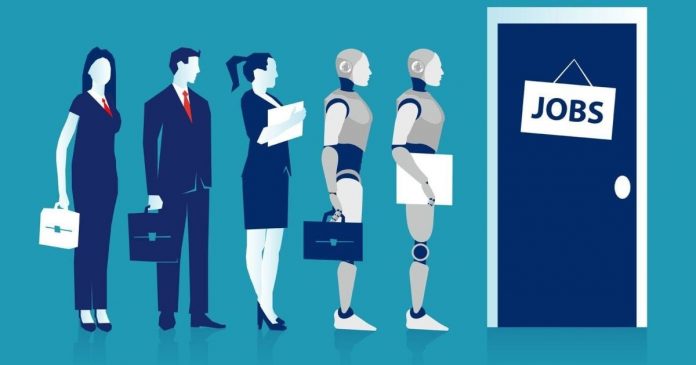
The U.S. job market just recorded its worst October layoff numbers in more than two decades as the rapid rise of artificial intelligence is reshaping industries and accelerating cost-cutting measures.

According to a new report from Challenger, Gray & Christmas, companies announced over 153,000 job cuts last month, nearly three times the number seen a year earlier.

While some sectors are still correcting after pandemic-era over-hiring, analysts say a growing share of layoffs is now tied to AI-driven restructuring, as businesses rush to automate tasks, streamline operations, and reduce labor costs in a tightening economic climate.

The report noted that weakened consumer and business spending has contributed to significant workforce cuts, particularly in warehousing and logistics. Many industries are now correcting previous hiring surges from the pandemic era, shifting toward leaner operational models.

John Challenger, CEO of Challenger, Gray & Christmas, highlighted the scale of the trend, stating that layoffs of this magnitude, such as 48,000 job cuts from UPS and potentially 30,000 from Amazon, are reminiscent of major workforce reductions seen during the 2020 pandemic and the 2009 recession. “When companies make cuts of this size, it signals a real shift in direction,” he said.

Research shows the U.S. has now lost over one million jobs in 2025, the highest total since the pandemic era. Analysts attribute this not only to economic downturns but also to AI-driven restructuring. Andy Challenger, chief revenue officer at the firm, noted that AI is proving to be as disruptive as it was in the early 2000s, fundamentally reshaping how organizations operate.

Tech companies remain at the forefront of AI-driven cuts;

Enrico Moretti, an economics professor at the University of California, Berkeley, said that the largest tech companies like Amazon are at the forefront of AI-related job cuts, “in part because they’re both producers and consumers of AI”.

Recall that the e-commerce giant, which confirmed plans to cut roughly 14,000 corporate roles, said it needs to be “organized more leanly” to seize the opportunity provided by AI. Also, UPS disclosed that it has cut 48,000 jobs since last year. The delivery company’s chief executive previously linked redundancies, in part, to machine learning. Tech giant Microsoft announced plans to cut around 4% of its workforce, which translates to thousands of jobs, as it looks to rein in costs while making heavy investments in AI infrastructure.

Microsoft’s President & Vice-Chair acknowledged that while AI efficiency gains weren’t the main driver of the layoffs, the costs of scaling AI infrastructure and the need to reallocate resources toward growth influenced the decision.

Some companies have outright said they’re replacing workers with AI. Klarna CEO Sebastian Siemiatkowski said in May that the company was able to shrink its headcount by about 40%, in part because of AI. Duolingo said in April that it would stop using contractors for work that AI can handle. Salesforce laid off 4,000 customer support roles in September, saying that AI can do 50% of the work at the company.

In some cases, entire HR, support, and operations departments are being restructured as AI systems assume tasks such as scheduling, customer support, fraud monitoring, and data processing.

Outside of tech, financial services, retail, and logistics are also accelerating automation. Companies in these sectors are increasingly using AI to; Analyze customer behavior, detect risk, manage supply chains, forecast demand, Automate back-office accounting and compliance workflows.

This shift enables faster decision-making, but often at the expense of traditional administrative and clerical roles. This trend is reinforced by a Wharton study showing that 74% of enterprises are already experiencing positive returns from their AI investments.

Notably, while the financial benefits of AI are clear, the transition raises critical questions. As companies prove they can accomplish more with fewer employees, experts are asking what becomes of the workers behind those efficiencies.


Innovation in Metal: The Technology Behind Modern Seating

0

Every chair begins as an idea about comfort and strength. In restaurants where hundreds of guests sit, shift, and stand each day, that idea must become something more: a balance of engineering, artistry, and endurance. Modern commercial-quality metal restaurant chairs have quietly become the backbone of modern dining spaces, combining timeless design with new technology that changes how we experience a seat.

The evolution of these chairs tells a story of innovation shaped by necessity. Designers and manufacturers have learned that metal is not just a material but a medium that can bend, flex, and adapt to human behavior. From laser-cut frames to powder-coated finishes that resist wear, the technology behind modern metal seating turns industrial precision into comfort you can feel.

As dining culture evolves, expectations rise. Guests now look for seating that is not only strong but also refined and responsive. A good metal chair is no longer a rigid frame; it is a living part of the restaurant experience that shapes posture, enhances atmosphere, and reflects a brand’s sense of quality.

The Science of Strength

Behind every sturdy metal chair lies a process of transformation. Sheets of steel and aluminum are cut, welded, and refined to meet exact standards of stability and weight. The structure must support movement while remaining light enough to handle with ease. Engineers test the load capacity of each design using advanced simulation tools, ensuring that every chair can endure thousands of cycles of use without losing its form.

Powder coating, once used only in heavy industry, now protects restaurant furniture from corrosion, scratches, and stains. The finish is electrostatically applied, bonding pigment to metal in a way that seals it against time and moisture. The result is a protective layer that lasts for years while preserving color and texture. What was once purely functional has become an expression of elegance, giving each chair a sleek, modern edge that holds up in both design and durability.

In many workshops, robotics has joined human hands to achieve precision welding and perfect symmetry. This collaboration between craftspeople and machines guarantees consistency from the first frame to the last, making every batch of chairs as strong as the one before it.

Precision Meets Comfort

Technology has not only allowed innovation but has also allowed precision manufacturing to pair with human comfort in ways never before possible. Chairs are now shaped using ergonomic mapping that studies how people sit, lean, and rest. The angles of backrests and the curvature of seats follow data gathered from real movement. Every curve is intentional, designed to relieve pressure and support posture through an evening of dining.

These innovations go far beyond structure. Many modern metal restaurant chairs integrate hybrid materials such as molded wood or upholstered cushions that attach seamlessly to frames. This fusion of hard and soft surfaces creates balance, ensuring comfort without sacrificing resilience. In some high-end models, adjustable glides, reinforced joints, and flexible seat plates absorb subtle movements, letting each guest settle naturally.

Some designers are even experimenting with memory foam inserts and breathable fabrics that complement the strength of metal. The result is a chair that feels human, engineered to welcome every body type without losing its sharp architectural beauty.

Sustainable Engineering in Design

As sustainability becomes a cornerstone of restaurant design, metal once again proves its worth. Unlike plastics that fade or composites that wear unevenly, steel and aluminum can be recycled indefinitely without losing quality. Modern production facilities reuse water from cooling systems, recover heat from welding operations, and repurpose scrap metal into new frames. Each process step reduces waste while keeping manufacturing local and efficient.

Designers are also exploring finishes made with fewer chemicals and coatings that cure at lower temperatures to save energy. These refinements make metal restaurant chairs an environmentally sound choice for venues that value both aesthetics and responsibility. The visual effect is equally powerful: raw metal finishes highlight honesty in design, showing the beauty of materials left closer to their natural state.

In a world increasingly focused on carbon footprints, every decision in manufacturing matters. Choosing metal furniture is not just a design statement; it is an environmental commitment that aligns luxury with longevity.

The Role of Innovation in Style

Metal seating once had a purely industrial image, but technology has transformed its personality. Through 3D modeling, artisans can now experiment with intricate cutouts, sculptural backs, and interlaced geometric patterns that give each chair its signature look. Laser precision allows for designs once impossible by hand, bringing individuality to mass-produced items.

Restaurants use these details to express identity. A minimalist café may favor matte black steel with fine linear silhouettes, while a luxury bistro might embrace brushed brass or chrome accents that catch the light. In both, technology turns practicality into visual storytelling, reminding us that even the hardest materials can be molded into something graceful.

Customization has also become more accessible. With digital fabrication, restaurateurs can now order metal chairs tailored to their concept, adjusting height, finish, or pattern with remarkable accuracy. This blend of flexibility and strength gives each dining space its own personality.

A Future Forged in Steel

The next chapter in metal seating is already being written. Smart manufacturing continues to refine each weld and curve, blending robotics with craftsmanship. New alloys promise lighter frames with greater strength, and coatings now include antibacterial properties for safer, more hygienic dining. Every advancement honors the same timeless goal: creating furniture that feels effortless, reliable, and beautiful all at once.

Metal restaurant chairs embody the harmony between tradition and innovation. They remind us that progress does not replace craftsmanship; it refines it. In their clean lines and enduring form lies a truth about modern hospitality: that strength can be elegant, and technology, when guided by design, can serve comfort with quiet sophistication.

The World Is a Marketplace: The Elon Musk’s $1 Trillion Mandate

0

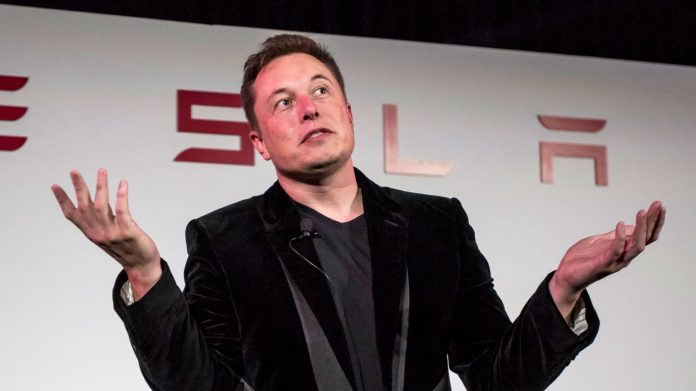
Good People, what a promised payday! More than 75% of Tesla’s investors have approved Elon Musk’s record-setting $1 trillion pay package at the company’s annual shareholder meeting. The board had first unveiled the audacious compensation structure last September, and Musk, in his typical high-stakes style, hinted he might exit if the plan was rejected. The message was clear: approve the plan, or lose the man. The shareholders voted “YES,” and the billionaire sent out a note of gratitude: “I’d like to give a heartfelt thanks to everyone who supported the shareholder votes…I super appreciate it.”

Now, let’s pause. Yes, that’s an extraordinary amount of money for one man, but do not focus on the amount; focus on what must happen for that number to materialize. That $1 trillion is not a gift, it is a performance-linked aspiration. If Musk executes, Tesla’s shareholders will see zeros multiply in their portfolios. The beauty of such a deal is that it aligns ambition with delivery: if he wins, everyone wins.

But beyond Wall Street, something deeper is at play. Musk understands an ancient Igbo truth: “uwa bu ahia” [the world is a marketplace]. Every innovation he builds, from Tesla to SpaceX to Neuralink, is simply an expansion of his market stall in that global bazaar. And to unlock this trillion-dollar cheque, he will deploy every entrepreneurial weapon in his arsenal to capture our collective attention, money, and imagination. Because when the world is a market, every human becomes a potential customer. Build for them, and prosperity will come through enterprise. QED.

Musk, we need you in Abia State Nigeria to teach us something. In the Igbo Nation, traders say, “welcome to my market,” affirming that their world is their marketplace, literally. Tesla is your market, and Tesla is your world. And with $1 trillion on the line, you must now trade with all of humanity. The world is indeed your market, Elon, and in the “uwa bu ahia” philosophy, you must TRADE in Abia State. What do you need from us? You are the best TRADER of the 21st century and you must have your “market” in Abia.

Tesla Shareholders Approve Musk’s New $1 Trillion Pay Deal

0

Tesla shareholders have approved a new compensation package for CEO Elon Musk worth up to $1 trillion, marking one of the largest pay deals in corporate history.

The approval came during the company’s general meeting in Austin, Texas, where Tesla said the package passed with over 75% support from shareholders.

“I’d like to give a heartfelt thanks to everyone who supported the shareholder votes,” Musk said at the meeting. “I super appreciate it.”

The latest pay deal, unveiled in early September, grants Musk 12 tranches of stock options linked to aggressive performance targets. The package’s size and structure have raised eyebrows across corporate and financial circles, given its scale and the controversies surrounding Musk’s previous compensation. Tesla’s stock climbed 2% after the vote results were announced.

Before the new plan’s approval, Musk held about a 13% stake in Tesla, having sold shares over the past two years. Despite this, he has long argued that he has not received any direct salary or bonuses from the company in years. His 2018 pay package, worth roughly $50 billion at the time, remains entangled in a Delaware court case, where shareholders argued that Tesla’s board failed to properly disclose critical details of the deal. A Delaware judge sided with the plaintiffs earlier this year, and the case is currently before the Delaware Supreme Court on appeal.

Given that controversy — and the backlash from some major investors over the earlier $50 billion plan — many believe Tesla’s new $1 trillion deal could also trigger fresh legal challenges. Some analysts believe that shareholders who voted against the plan or abstained could pursue new lawsuits, questioning whether the company has adequately addressed the concerns raised in the Delaware case.

This week, Norway’s $1.9 trillion sovereign wealth fund, one of Tesla’s major institutional investors with a 1.2% stake, voted against the new compensation package. The fund cited the “total size of the award, dilution, and lack of mitigation of key person risk” as reasons for its opposition. However, Tesla’s board and other shareholders maintained that the deal was essential to keep Musk focused on Tesla’s growth, especially amid his expanding involvement in ventures like SpaceX, xAI, and X.

Tesla chair Robyn Denholm defended the package, saying it was necessary to retain Musk and ensure he continues to lead Tesla through its ambitious transition into artificial intelligence, robotics, and energy solutions. Musk himself previously warned that he would develop advanced AI and robotics products outside of Tesla if he didn’t secure at least a 20% voting share — a level of control the new package effectively grants him.

Beyond the compensation vote, Tesla shareholders also reelected three directors — Ira Ehrenpreis, Joe Gebbia, and Kathleen Wilson-Thompson — who were up for election this year. They further approved a proposal for Tesla to invest in Musk’s AI startup, xAI, though the company noted a large number of abstentions and said the board would review the decision in more detail.

In a presentation after the meeting, Musk announced that Tesla plans to build a one-million-unit Optimus humanoid robot production line at its Fremont, California, facility and expand to a 10 million-unit line at Giga Texas in Austin. He also confirmed that production of Tesla’s long-awaited Cybercab robotaxi would begin in April 2026, with Miami, Dallas, Phoenix, and Las Vegas among the first test cities for the service.

Musk additionally revealed that the long-delayed new Tesla Roadster will be officially unveiled on April 1, 2026, with production expected to start 12 to 18 months later.

While the new compensation package signals shareholders’ continued confidence in Musk’s leadership, it also rekindles debate over corporate governance and executive pay — particularly given Tesla’s uneven profitability and rising competition in the electric vehicle market. Legal experts suggest that even with majority backing, the unprecedented scale of Musk’s reward is likely to face renewed scrutiny in court.

MPA Sends Meta ‘Cease-and-Desist’ Letter Over Use of ‘PG-13’ Label on Instagram Teen Accounts

0

The Motion Picture Association (MPA) has sent a cease-and-desist letter to Meta Platforms, demanding that the company stop using the term “PG-13” to describe content filters on teen Instagram accounts, in what has become the latest flare-up in a wave of legal warnings sweeping across the tech and entertainment industries.

According to The Wall Street Journal, the MPA objected to Meta’s announcement last month that teen accounts on Instagram would, by default, only see content aligned with PG-13 movie rating standards. The association called Meta’s language “literally false and highly misleading,” saying the company’s content moderation system, which relies heavily on artificial intelligence, could not be compared to the film industry’s manually curated rating system.

“The MPA has worked for decades to earn the public’s trust in its rating system,” the letter stated. “Any dissatisfaction with Meta’s automated classification will inevitably cause the public to question the integrity of the MPA’s rating system.”

Meta responded that it had not claimed official certification or endorsement from the MPA, arguing instead that its teen settings are merely “guided by PG-13 principles”. The company also said its use of the term falls under fair use, adding that the goal is to give parents and teens a clear sense of what type of content may appear in their feeds.

A Growing Wave of Cease-and-Desist Letters

The MPA’s action comes amid what many have called a “cease-and-desist season”, as the expansion of AI training and content moderation technologies fuels new disputes over copyright, branding, and data use.

In the past year, major media and entertainment companies have ramped up legal warnings against tech firms they accuse of overstepping intellectual property boundaries in the race to train large AI models or adopt creative industry terminology.

In January, The New York Times filed a lawsuit against OpenAI and Microsoft, accusing them of “massive copyright infringement” by allegedly using millions of its news articles to train ChatGPT and other AI products without permission. The Times had earlier sent cease-and-desist letters to both companies before pursuing legal action.

Similarly, in April, Getty Images sent a cease-and-desist letter to Stability AI, alleging that the company scraped millions of copyrighted photos from its library to train the Stable Diffusion image generator. The dispute eventually escalated into a full-fledged lawsuit in the U.K., with Getty accusing Stability AI of “blatant theft.”

Music labels have also joined the fray. Earlier this year, Universal Music Group (UMG) and Sony Music Entertainment sent cease-and-desist letters to several AI startups, including Sunno and Udio, over alleged use of copyrighted music in training data. The Recording Industry Association of America (RIAA) warned that AI models cloning artists’ voices or styles without authorization would face legal action.

It is believed that the MPA’s move against Meta reflects broader anxieties about authenticity and control as AI systems increasingly blur the boundaries between creative labeling, moderation, and certification. While Meta’s use of “PG-13” appears minor compared to large-scale copyright disputes, it strikes at a symbolic issue — who gets to define what’s “safe” or “appropriate” in the digital era.

The MPA’s film ratings, introduced in 1968, have long served as the U.S. standard for movie classification, influencing global media regulation. Meta’s use of “PG-13” in a digital context — one driven by automated AI moderation — is seen from a legal point of view to represent an unprecedented overlap between cinematic and social media governance.

The confrontation adds to a growing list of content-related controversies as Meta navigates the complex intersection of AI moderation, youth safety, and branding. However, for the MPA, it’s a defensive line drawn to preserve a half-century-old system in an era when artificial intelligence increasingly challenges traditional cultural gatekeepers.