DD
MM
YYYY

PAGES

DD
MM
YYYY

spot_img

PAGES

Home Blog Page 2125

“Running a Business in Nigeria Costs 30% More”: Dangote Blames Nigeria’s Industrial Woes on Unstable Electricity, Policy Inconsistencies

0

Aliko Dangote, Africa’s richest man and President of the Dangote Group, has linked Nigeria’s industrialization struggles to unstable electricity and inconsistent government policies, warning that unless these issues are tackled with urgency, Nigeria’s economic growth will remain stunted.

Speaking while hosting Zambia’s Minister of Energy, Makozo Chikote, at the Dangote Refinery in Lagos, Dangote lamented that operating a business in Nigeria is 30% more expensive than in developed countries due to unreliable power supply.

“If there’s no power, there won’t be growth. For example, anything I’m going to do abroad will cost me maybe 30% cheaper than here, because abroad is plug-and-play. You just go, no infrastructure construction. You just build a factory, and you connect to the network; that’s all,” he explained.

He cited Ethiopia as an example of how stable electricity can transform industrial operations, noting that Dangote’s most profitable cement plant is in the East African country because it enjoys consistent and affordable electricity.

“If you look at it today, I tell you that our most profitable cement factory is in Ethiopia because there’s no investment in power. They gave us power at the same rate for five years. So, we plan—it’s a one-price electricity continuously,” he stated.

Nigeria’s Electricity Tariff System Has Failed, Government Admits

Dangote’s remarks coincide with mounting concerns over the federal government’s lack of a clear strategy to fix Nigeria’s chronic power problems.

Recently, the Minister of Power, Adebayo Adelabu, admitted that the Band A electricity tariff structure is failing. Under this system implemented on April 3, 2024, by the Nigerian Electricity Regulatory Commission (NERC), customers were grouped into different bands based on the number of hours of electricity supplied per day. Band A customers, who were supposed to receive 20–24 hours of power daily, were required to pay higher tariffs, while lower bands received less power at cheaper rates.

However, the policy has proven ineffective as many Band-A customers continue to experience prolonged blackouts despite paying higher tariffs. The situation has fueled frustration among consumers and businesses, with many questioning the logic behind the model.

“The current electricity pricing system is not working as planned, and we are working on a more efficient structure,” the power minister recently admitted.

Industrialists Warn: No $1 Trillion Economy Without Stable Power

Industry leaders have long argued that if the Tinubu administration is serious about its vision of growing Nigeria into a $1 trillion economy, solving the power crisis must be a top priority.

Dangote reinforced this view by highlighting how much Nigerian businesses spend on self-generated electricity, a cost burden that makes local production far less competitive than in countries with stable power.

He also warned that inconsistent government policies discourage investment in industrialization.

“One of the problems of industrialization is inconsistencies in government policies, where, just like a footballer, you’re about to score the goal, and the government will remove the goalpost and point behind you that the goalpost is behind. So, you have to now turn. Once you turn back, you have a lot of challenges to get to that goalpost again,” he lamented.

Government Losing Billions from Industrial Failures

Beyond businesses, Dangote noted that the biggest loser when industries struggle or shut down is the government itself, as it collects significant revenue from corporate taxes.

He revealed that for every N1 generated in his cement business, 52 kobo goes to the government in taxes, including:

  • 30% corporate tax
  • 7.5% value-added tax (VAT)
  • 2% education tax
  • 1% health tax
  • 10% withholding tax on dividends paid to shareholders

“This is just for the Federal Government. When you add the state and local government taxes, the figure becomes even higher,” he added.

Dangote stressed that if businesses continue to collapse due to unreliable power and inconsistent policies, the government will suffer major revenue losses.

“When a business fails, one of the biggest losers is the government. Industrialization is key to national development, and policymakers must understand that,” he warned.

The Tinubu administration has set ambitious economic targets, including attracting foreign investment and boosting industrial output. However, with power shortages persisting and tariff policies failing, many experts doubt whether the government is prepared to address the root causes of Nigeria’s electricity crisis.

New Bitcoin Meme Coin BTC Bull (BTCBULL) Nears $3 Million Mark

0

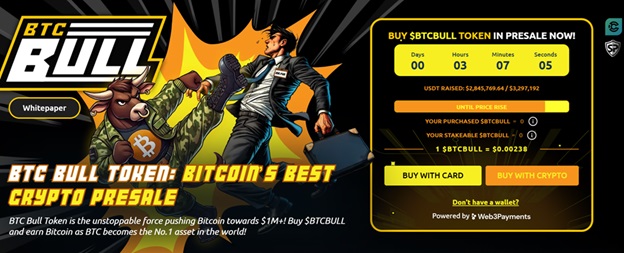
BTC Bull—a new Bitcoin meme coin—has been in high demand since making a grand entry into the crypto town.

The project arrived on presale just two weeks ago, and is already close to hitting the $3 million mark, all thanks to its Bitcoin-driven aesthetics, mega airdrop campaigns, and valuable staking perks.

With the FOMO vibe gaining more ground even amid the multiple ups and downs in the broader market, influential YouTubers are now calling the Bitcoin meme coin the best presale investment for the next bull run.

BTC Bull Is Creating A United Front For Bitcoin

Bitcoin is currently in the worst moment of 2025, having tumbled below the $90k mark on February 25–its lowest level since November 2024. The downward movement in its price followed another wave of liquidations in the broader market, triggered by rising US-China trade tensions and macroeconomic uncertainty.

With over $1.3 billion in total crypto liquidations recorded in the last 24 hours, there are concerns that the OG crypto could continue to edge down, possibly settling between $80k and $85k in the short-term. Its fear and greed index is now pointing to 20, indicating extreme fear.

However, in spite of the downward spiral in the price of Bitcoin, it is still up 30% since the beginning of November and experts believe it is only a matter of time before it stages a comeback.

In a recent prediction, Tom Lee—an influential financial strategist—highlights Bitcoin’s potential to reach between $200k and $250k before the end of 2025, saying he does not think anyone will lose money buying Bitcoin at its current price.

In fact, Ark Invest—a popular investment management firm—in its latest report suggests that Bitcoin is still on pace to meet its 2030 targets of $1.5 million, thanks to the ongoing exploration of a strategic crypto reserve in the United States

Stepping in to help Bitcoin actualize this lofty goal is BTC Bull. While embodying the spirit of a meme coin, featuring a Bull Commando as its main mascot, its core goal is to create a united front that will push the Bitcoin price beyond $1 million.

Major aspects of the project such as tokenomics, token burns, and airdrops are all tied to how Bitcoin moves on the price charts. For instance, when Bitcoin reaches $125k, a token burn will be initiated, which could allow the BTC Bull price to also move up.

Mega BTC airdrops are also scheduled whenever the Bitcoin price hits certain milestones, especially $150k, $200k, and $250k, allowing bulls to reap the rewards of every bullish move made by the crypto king.

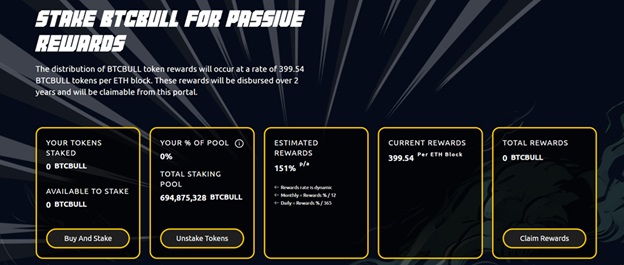
The allure of free BTC, coupled with its dynamic staking structure has got smart money investors gravitating toward the presale. At the time of writing, those who stake their tokens in the project’s liquidity pool will benefit from its current APY yield of approximately 150%. However, this reward rate is expected to drop as more tokens are being staked, making early participation more valuable.

Meanwhile, unlike most presales, BTC Bull has already taken drastic steps to ensure transparency and security. Its smart contract has already been audited by both Coinsult and SolidProof, which give the green light for those willing to explore the project.

BTC Bull Tokenomics

There are 21 billion BTC Bull tokens in total, strategically allocated to fuel both short and long-term growth of the project. Below is a highlight of how the allocations have been made:

  • PR and Marketing Fund – 40%
  • Bull Fund – 15%
  • Milestone Burn Fund – 15%
  • BTCBULL Airdrop – 10%
  • Staking Distribution – 10%
  • Exchange Liquidity – 10%

BTC Bull Presents An Avenue To Accumulate Bitcoin Without Buying

As earlier mentioned, BTC Bull’s major goal is to serve as a stream of Bitcoin airdrops for bulls. It has already collaborated with Best Wallet for the upcoming airdrop campaigns.

A multichain, self-custody wallet, Best Wallet supports approximately 60 different chains. This simply means BTC Bull investors will be able to receive their free BTC rewards through any of the blockchains they deem fit.

There are seven milestones highlighted by the project, out of which three BTC airdrops have been scheduled.

  • When BTC attained $100k, the BTC Bull was initiated
  • When BTC hits $125k, the first token burn will happen
  • When BTC smashes $150k, there will be a BTC airdrop
  • When BTC reaches $175k, another round of token burn will occur
  • When Bitcoin hits $200k, the second round of the airdrop will be executed
  • When BTC achieves $225k, there will be another token burn
  • When BTC reaches $250k, another airdrop will happen.

Is BTC Bull The Next 100x Play?

BTC Bull blends the quirks of meme coins with Bitcoin-driven fundamentals, and its focus on providing multiple BTC airdrops and staking perks could help it gain momentum after it lands on crypto exchanges.

BTC Bull’s community-centric posture is another reason it could be one of the best presale investments of 2025.

Already, its strategic social media engagement techniques have helped it earn more than 8k followers on X and over 1k members on its Telegram channel.

Prominent influencers have made a bullish case for the Bitcoin meme coin, with some even calling it the next 100x gem.

In fact, those who gave a more conservative prediction said it could see between 10x to 50x growth immediately after its launch.

Visit BTC Bull Presale

Will Rexas Finance (RXS) Overthrow the Reign of Solana (SOL) and Cardano (ADA)? Trader Says Sooner Than You’d Think

0

Due to their prominence in scalability and smart contracts, established networks such as Solana (SOL), Cardano (ADA), and others have dominated the market. Now, a newcomer, Rexas Finance (RXS), seems to be quickly picking up speed, with some traders believing it will eclipse these two giants sooner than expected. With the transition from basic transactions to more diverse activities, blockchains focused on real-world asset integration, decentralized finance mechanisms, and improved liquidity are becoming more valuable. While maintaining a specialized focus on tokenization, multi-chain tech, and accessibility to finances, Rexas Finance may outperform Solana and Cardano within the next few years.

Tokenization: The Game-Changer in Blockchain Investment

Rexas Finance is able to tokenize real-world assets, unlike Solana or Cardano, which have yet to embrace this feature. While these networks concentrate on dApps, NFTs, and smart contracts, Rexas is redefining the value of real estate, art, commodities, and intellectual property. Tokenization in blockchain brings memorable value and billions in undisturbed wealth. With Rexas, any investor is able to access real-world assets with income and investment value through enhancing liquidity and dissolving barriers associated with traditional investment and its rigid requirements.

The Certik audit further enhances investor confidence in Rexas Finance because such an audit guarantees that the platform operates at sophisticated security and transparency levels. The platform is also gaining attention for its $1 million giveaway, where 20 winners will be given $50,000 each worth of RXS tokens. While there is growing institutional demand for tokenized assets, Rexas Finance is seemingly at the forefront of the convergence of traditional finance and the decentralized blockchain ecosystems, something that Solana and Cardano have yet to achieve.

Multi-Chain Interoperability: The Key to a Seamless Financial Future

Unlike Solana and Cardano, which function within their own automated ecosystems, Rexas Finance incorporates multi-chain enables interoperability, which lets its users operate with Ethereum, Binance Smart Chain, and other networks. This boosts accessibility as well as liquidity, allowing users to move assets easily without being restricted to one ecosystem. Multi-chain also improves security and scalability by permitting transactions and token trading across networks without incurring significant costs, delays, or system failures. On the other hand, Solana is faced with outages and network congestion issues, while Cardano has been creeping sluggishly toward deploying critical values. Rexas Finance eliminates these concerns by ensuring smooth integration with existing blockchain infrastructure, positioning itself as a true financial gateway for global users. If interoperability becomes the defining factor for blockchain dominance, RXS may surpass SOL and ADA sooner than expected.

A Thriving DeFi and Staking Ecosystem

While Solana and Cardano both have DeFi capabilities, neither matches the comprehensive financial suite that Rexas Finance offers. RXS provides a DEX (Decentralized Exchange) and cross-chain yield aggregator with staking earning systems, giving users a chance to passively earn some funds while making the best use of their capital. The staking pool has some of the highest yields, making it possible for users looking for a better way of earning stable coin interest and compounding to earn significant returns. At the same time, Rexas Treasury – facilitates yield farming and allows users to have automated high-yield strategies while making it extremely simple compared to other protocols within traditional DeFi. On the other hand, Solana’s DeFi landscape is unstable, marked by regular liquidity busts, and Cardano is taking its time with the adoption of DeFi. Rexas Finance is not just participating in this competition; it’s dominating it with low costs and a new, ever-growing, and powerful economy in the new world of decentralized finance.

Presale Success and Market Momentum

Rexas Finance’s final presale stage has been a success, with nearly 90% of tokens sold and over $45.89 million raised. The June 19, 2025 listing date positions it for a strong market debut, with analysts predicting a significant price increase upon launch. This presale momentum reflects strong investor confidence, something both Solana and Cardano lacked during their early stages. While Solana’s early rise was driven by venture capital funding, and Cardano’s growth relied on long-term academic research, Rexas Finance is gaining traction through organic adoption and real-world applications. With a fixed launch price of $0.25, early investors could see substantial returns if demand continues to rise. As market sentiment shifts toward real-use cases over hype, RXS is well-positioned to challenge—and potentially overtake—SOL and ADA as a dominant blockchain player.

Conclusion

The blockchain race is far from over, and while Solana and Cardano have enjoyed years of dominance, Rexas Finance is proving to be a serious contender. By combining tokenized assets, multi-chain interoperability, DeFi innovations, and strong market momentum, RXS is setting the stage for long-term growth and mainstream adoption. Unlike its competitors, which focus primarily on NFTs and smart contracts, Rexas Finance is building a more inclusive, investment-friendly ecosystem that could redefine blockchain utility. If trends continue, RXS could soon become the go-to platform for financial decentralization—overtaking Solana and Cardano much sooner than expected.


For more information about Rexas Finance (RXS) visit the links below:

Website: https://rexas.com

Win $1 Million Giveaway: https://bit.ly/Rexas1M

Whitepaper: https://rexas.com/rexas-whitepaper.pdf

Twitter/X: https://x.com/rexasfinance

Telegram: https://t.me/rexasfinance

Perform Coin and Bitcoin Mining: JA Mining Helps You Earn $48,000 Fast with Efficient Profits.

0

In 2025, JAMining has set a new benchmark in the cloud mining industry with its innovative AI mining technology and environmentally friendly and efficient computing architecture. With globally deployed data centers and intelligent resource optimization systems, JAMining has not only greatly improved mining efficiency, but also provided users with higher income. Regardless of whether you are a local veteran or not, we provide guarantees and financial grade security protection. Whether you are a miner or a beginner in the crypto field, JAMining’s one-stop cloud Mining solutions can meet your needs, allowing you to easily obtain popular cryptocurrencies such as BTC and DOGE without investing in expensive equipment or complex technical work, and enjoy a convenient yet professional mining experience.

How to Start Cloud Mining for Free with JA Mining

Earn Profits with JA Mining Cloud Mining

1: Sign up and get a $100 bonus ($1 for every day you check in).

2: Choose a Contract: After successfully registering, the next step is to choose a mining contract that suits your goals and budget. JAMining offers a variety of contracts to meet different needs, whether you are a beginner or an experienced miner.

Choose a contract that fits your investment strategy:

Contract amount day profit earnings Principal + Total Return
$100


1 1% $1 $100+$1
$200


2 3.5% $7 $200+$7
$500


3 1.8% $9 $500+$27
$1000


5 1.9% $19 $1000+$95
$2600


10 1.95% $50.70 $2600+$507
$10000 20 2.1% $210 $10000+$4200


3: Start making a profit: After selecting and activating a mining contract, you can sit back and let the system do the work for you. JAMining’s advanced technology ensures that your mining operations run efficiently, thereby maximizing your potential earnings.

JA Mining is regulated by the FCA to protect the rights of investors.

JAMining is a company focused on financial technology, and its business encompasses digital asset management and blockchain technology applications. It is worth noting that JAMining is regulated by the UK Financial Conduct Authority (FCA), providing strong compliance protection for its operations.


Company: JA mining

Company website: https://jamining.com/

Company email: info@JA mining.com

Crypto Won the US 2024 Elections

0

The cryptocurrency industry’s significant influence on the 2024 U.S. elections marked a pivotal moment in American politics, reflecting its growing financial clout and strategic mobilization. Here’s how crypto “won” the 2024 elections, based on its unprecedented investment, targeted political strategies, and the resulting outcomes.

The crypto industry emerged as a financial juggernaut in the 2024 election cycle, pouring substantial sums into political campaigns. Crypto-backed super PACs, notably Fairshake and its affiliates, spent over $130 million supporting pro-crypto candidates across congressional races. This figure represented nearly half of all corporate contributions to the election, making crypto one of the largest corporate donors, rivaled only by traditional heavyweights like the fossil fuel industry.

Major players such as Coinbase and Ripple, facing regulatory scrutiny themselves, contributed tens of millions—Coinbase alone donated $50 million to Fairshake—while individual billionaires like Marc Andreessen and Ben Horowitz added millions more to pro-Trump super PACs. This financial firepower dwarfed previous election cycles and underscored the industry’s determination to shape policy in its favor.

Strategically, the crypto industry targeted key races to maximize its influence. In Ohio, Fairshake invested $40 million in ads supporting Republican Bernie Moreno, defeating incumbent Senator Sherrod Brown, a vocal crypto critic and chair of the Senate Banking Committee. This victory signaled to lawmakers that the industry could end political careers.

Across the country, crypto PACs backed 48 candidates, reportedly achieving a perfect success rate with all winning their races. Stand With Crypto reported that 274 pro-crypto candidates secured House seats and 20 won Senate seats, creating what industry leaders called the “most crypto-friendly Congress” ever.

The industry also capitalized on Donald Trump’s presidential campaign, which embraced crypto with promises to make the U.S. the “crypto capital of the planet,” fire SEC Chair Gary Gensler (a regulatory nemesis), and establish a national Bitcoin stockpile. Trump’s shift from calling Bitcoin a “scam” in 2021 to accepting crypto donations and launching his own platform, World Liberty Financial, resonated with the industry’s goals.

Crypto’s influence extended beyond money to voter mobilization and narrative control. Polling from Paradigm and Stand With Crypto suggested a “crypto voter” demographic—often young, tech-savvy, and distrustful of institutions—played a role, with half reportedly leaning Republican and contributing to Trump’s narrow popular vote win (76.8 million votes, under 50%). While only about 7% of Americans held crypto in 2023 per a Federal Reserve survey, the industry amplified its presence through ad campaigns that avoided overt crypto mentions but targeted candidates’ broader appeal, ensuring wider voter reach.

Blockchain-based prediction markets like Polymarket, which saw 80% of its volume tied to election wagers, further shaped public sentiment, gaining mainstream media traction. The outcome was a political landscape primed for crypto-friendly policies. Trump’s victory, coupled with a potential Republican Congress, promised an administration sympathetic to the industry’s calls for regulatory clarity and reduced SEC oversight.

The House had already passed the FIT21 bill in May 2024 with bipartisan support, shifting some regulatory power to the Commodity Futures Trading Commission—a framework the industry favored. Post-election, crypto leaders like Digital Chamber’s Cody Carbone hailed it as “massive,” anticipating reforms aligning with their “wish list,” such as limiting SEC authority and legitimizing digital assets in the financial system.

However, the win wasn’t absolute. Critics, including consumer advocates and figures like ex-SEC official John Reed Stark, warned of risks to consumers from a deregulated crypto space prone to fraud and illicit activity. Some industry insiders cautioned that expectations of immediate, sweeping change might overestimate political realities, given ongoing SEC lawsuits and potential Senate resistance. Still, the 2024 elections demonstrated crypto’s ability to flex financial muscle, sway key races, and align itself with a winning presidential candidate, cementing its status as a formidable political force.