DD
MM
YYYY

PAGES

DD
MM
YYYY

spot_img

PAGES

Home Blog Page 2126

Trump Pressures Apple to Abandon DEI Despite The Company’s Overwhelming Shareholder Support

0

President Donald Trump has escalated his campaign against corporate diversity initiatives, calling on Apple to comply with his executive order to dismantle Diversity, Equity, and Inclusion (DEI) programs.

The president’s demand comes despite Apple’s shareholders voting overwhelmingly to keep these initiatives in place, raising questions about whether the tech giant will stand firm or eventually yield under government pressure.

Trump, who has already influenced several major corporations to roll back their DEI commitments, took direct aim at Apple in a post on Truth Social.

“APPLE SHOULD GET RID OF DEI RULES, NOT JUST MAKE ADJUSTMENTS TO THEM. DEI WAS A HOAX THAT HAS BEEN VERY BAD FOR OUR COUNTRY. DEI IS GONE!!!” he said.

The administration has framed these programs as discriminatory, arguing they disadvantage individuals who do not belong to historically marginalized groups. The White House has also signaled that companies failing to comply could face legal action, with Trump suggesting that the Department of Justice (DoJ) could investigate whether such initiatives violate federal anti-discrimination laws.

Apple’s Shareholders Reject Push to End DEI

Apple has long championed diversity initiatives, and this week, its shareholders reaffirmed their support for DEI efforts. At the company’s annual meeting, a proposal titled “Request to Cease DEI Efforts” was overwhelmingly rejected, with 8.84 billion votes against and just 210.45 million in favor.

The proposal, submitted by the conservative think tank National Center for Public Policy Research, was part of a broader effort to pressure corporations into eliminating DEI programs in response to Trump’s policy stance.

Apple is not the only company facing such pressure. A similar shareholder proposal at Costco’s recent annual meeting was also rejected. However, many major firms, including Google and Meta, have already begun scaling back or eliminating their DEI hiring targets to align with the administration’s directives.

Will Apple Hold Its Ground? 

While Apple has resisted so far, there are growing concerns that the company may eventually cave. CEO Tim Cook has not issued a direct rebuttal to Trump’s demand but told shareholders that “We will continue to create a culture of belonging.” However, Cook also acknowledged that the company may have to make changes to its DEI programs as the legal and political landscape shifts.

Apple’s defiance comes at a delicate time for its relationship with the Trump administration. The company has several high-stakes issues to negotiate with the president, including:

  • Tariffs on China: Trump has repeatedly threatened to increase tariffs on Chinese imports, a move that could significantly impact Apple’s supply chain. With many iPhones and other Apple products still manufactured in China, higher tariffs would drive up costs, making Apple particularly vulnerable to policy shifts.
  • Encryption Battle: Apple has long resisted government efforts to weaken encryption on its devices, arguing that backdoor access for law enforcement would compromise user privacy. Trump has previously pushed for such access and could use regulatory pressure to force Apple’s hand.

Many analysts believe these issues could give Trump leverage over Apple, forcing the company to choose between protecting its DEI programs or securing more favorable trade and regulatory conditions.

Apple is making a $500 billion investment in US manufacturing over the next four years, which includes building a new factory in Houston and hiring over 20,000 people in the US. This move, announced after Cook’s meeting with Trump, was expected to soften the ground for the company.

A Test Case for Corporate Resistance

While Apple remains defiant for now, its decision is being closely watched as a potential turning point in corporate resistance to government pressure on DEI. Many companies have already scaled back their programs, fearing political backlash or legal consequences. Others, like Target, are now facing lawsuits over the alleged financial risks posed by DEI initiatives.

Florida Attorney General James Uthmeier filed a federal lawsuit against Target, accusing the retailer of misleading investors about the financial risks of its DEI and Pride Month campaigns. The lawsuit claims that Target’s stock declined due to consumer backlash and that shareholders were not properly informed of these risks—an argument that could set a precedent for similar cases against other companies.

If Apple ultimately surrenders to Trump’s demands, it could trigger a wider retreat from DEI across the corporate world. However, if the company holds firm, it may embolden others to resist as well.

Software Development Isn’t a Crime in Retrospect to Ongoing Litigations with DOJ on Tornado Cash

0

Coin Center, a prominent nonprofit advocating for cryptocurrency policy, has developed a multifaceted legal strategy to counter what it perceives as overreach by U.S. government agencies, including the Department of Justice (DOJ), Treasury Department, and IRS. These strategies focus on defending the rights of software developers and users of open blockchain networks, emphasizing constitutional protections like free speech and privacy. Below is an overview of Coin Center’s legal approaches as of February 28, 2025, based on their public actions and priorities.

Section 6050I Lawsuit (Treasury/IRS): In June 2022, Coin Center filed a lawsuit against the U.S. Treasury Department challenging the amendment to Section 6050I of the Tax Code, part of the 2021 Infrastructure Investment and Jobs Act. This amendment mandates that individuals receiving over $10,000 in cryptocurrency report intrusive personal details (e.g., sender’s name, Social Security number) to the government.

Coin Center argues this constitutes “unconstitutional financial surveillance,” violating the Fourth Amendment (protection against unreasonable searches) and First Amendment (freedom of association and speech). Although a district court dismissed the case as “unripe” in 2023, a 2024 Sixth Circuit ruling partially reversed this, allowing Coin Center to proceed on its enumerated-powers claim—asserting Congress exceeded its authority. This demonstrates their strategy of pushing constitutional limits through federal courts, potentially aiming for Supreme Court review.

Tornado Cash Sanctions (Treasury/OFAC): Coin Center has challenged the Treasury’s Office of Foreign Assets Control (OFAC) sanctions on Tornado Cash, a privacy-focused Ethereum mixer. In 2022, they sued Treasury, arguing that sanctioning open-source software (not a person or entity) exceeds OFAC’s authority and infringes on developers’ free speech rights. This case ties into broader efforts to protect code as constitutionally protected expression.

Non-Custodial Developer Protections: Coin Center has prioritized preventing “unjust prosecutions” of non-custodial software developers—those who don’t control user funds—targeted by the DOJ for unlicensed money transmission. Notable cases include the 2024 indictments of Tornado Cash developers (e.g., Roman Storm) and Samourai Wallet developers.

Coin Center contends that DOJ’s interpretation—that merely writing code facilitating transactions equates to money transmission—contradicts long-standing Financial Crimes Enforcement Network (FinCEN) guidance (2013 and 2019), which exempts non-custodial actors. Their strategy includes supporting affected developers, like Michael Lewellen’s lawsuit against DOJ, and advocating for legislative codification of FinCEN’s guidance via the Blockchain Regulatory Certainty Act.

Amicus Briefs and Support: Coin Center files amicus curiae briefs to influence court rulings, as seen in their backing of Tornado Cash-related cases, arguing that publishing code is protected speech under the First Amendment. This legal support aims to set precedents shielding developers from criminal liability for others’ use of their software.

While primarily litigation-focused, Coin Center complements its courtroom efforts with legislative proposals. Their 2025 policy priorities include pushing Congress to repeal or amend unconstitutional provisions (e.g., Section 6050I) and clarify developer liability. They’ve worked with lawmakers to introduce bills countering Treasury and DOJ actions, ensuring that if courts don’t fully resolve issues, statutory protections can safeguard their constituents. This dual-track approach—litigation and legislation—maximizes their impact.

Coin Center selects cases with potential to challenge foundational regulatory frameworks. For instance, their Section 6050I lawsuit could, if successful, undermine decades-old anti-money laundering laws beyond crypto, as noted by observers like The Verge in 2022. Similarly, their Tornado Cash litigation questions the scope of sanctions law, potentially affecting how software is regulated across industries. This strategy leverages crypto-specific disputes to address wider civil liberties concerns, appealing to allies like the Cato Institute and Fight for the Future.

Beyond direct legal action, Coin Center educates policymakers and the public to bolster their cases’ legitimacy. Their detailed reports (e.g., “Principles for Crypto Legislation,” January 2025) and events like the 2025 Annual Dinner frame their legal arguments in accessible terms, rallying support from the crypto community and civil rights advocates. This soft power amplifies their courtroom efforts by shaping judicial and legislative perceptions.

Tornado Cash litigation continues to test sanctions law, with Coin Center supporting parallel developer defenses. Their backing of Michael Lewellen’s suit against DOJ (highlighted in a January 2025 X post by Peter Van Valkenburgh) signals ongoing resistance to prosecutorial overreach. Coin Center’s strategies hinge on framing software development as a protected right, using constitutional arguments to curb agency actions, and pursuing systemic change through precedent or law.

Success could redefine tech regulation, but setbacks—like the initial 6050I dismissal—show the uphill battle against entrenched government power. Their persistence suggests a long-term commitment, potentially escalating to higher courts if lower rulings falter. What specific aspect of their strategy interests you most?

German Merz meets Macron in Paris to Dialogue on Critical Issues Bordering on NATO

0

Friedrich Merz, the leader of Germany’s Christian Democratic Union (CDU) and the likely next German Chancellor following his party’s strong performance in the snap election on February 23, met with French President Emmanuel Macron in Paris. This meeting, held just three days after the election, took place at the Elysée Palace and was described as a “working dinner” aimed at exploring agreements and strengthening Franco-German relations. The discussions occurred against the backdrop of a shifting global landscape, particularly with concerns over U.S. policy under President Donald Trump and its implications for European security and transatlantic relations.

The talks reportedly focused on several key areas, including the enhancement of German French cooperation, European defense, and responses to international challenges such as the war in Ukraine and shifting U.S. foreign policy. Both leaders expressed a shared intent to open a “new chapter” in bilateral relations, with sources close to Merz noting a “great deal of agreement” and “numerous starting points for joint initiatives.” The atmosphere was described as friendly and constructive, lasting approximately three hours.

Merz, who speaks French and has a personal affinity for France, emphasized the potential for the two nations to “achieve great things for Europe together,” a sentiment he echoed in a bilingual post on X following the meeting. This rapid engagement signals a mutual urgency to revitalize the Franco-German axis, especially after a period of strained relations between Macron and outgoing German Chancellor Olaf Scholz.

The meeting also reflects broader European concerns, including the need for a unified stance amid uncertainties surrounding Trump’s approach to NATO, Ukraine, and trade policies like the Mercosur agreement. While specific agreements were not publicly detailed, the encounter laid the groundwork for future collaboration, with Merz and Macron aligning on the importance of European unity and strategic autonomy. Merz’s trip to Paris marks his first international visit post-election, underscoring France’s priority in his prospective chancellorship.

Donald Trump’s return to the U.S. presidency has raised concerns in Europe about America’s commitment to NATO, given his past criticisms of the alliance and calls for European nations to increase defense spending. This uncertainty was a likely backdrop to the Merz-Macron talks. Merz and Macron may push for NATO policies that bolster European contributions to the alliance, reducing reliance on U.S. leadership.

This could mean advocating for higher defense budgets among European NATO members (Germany, in particular, has faced pressure to meet the 2% GDP target consistently) and strengthening NATO’s European pillar. Their emphasis on “strategic autonomy” hints at a vision where Europe takes greater responsibility for its defense, potentially reshaping NATO’s operational balance.

The Merz-Macron dialogue reflects a shared recognition that NATO’s effectiveness may hinge on Europe stepping up, particularly if Trump pressures allies to “pay their share” or reduces U.S. troop presence. Their push for unity could stabilize NATO amid uncertainty, but it also risks friction with members like the UK or Poland, who prioritize a U.S.-centric alliance.

The Merz-Macron meeting signals a proactive Franco-German effort to shape Europe’s security architecture ahead of potential U.S. policy shifts.
Impact: If successful, their collaboration could lead NATO toward a more multipolar structure, where European nations collectively wield greater influence. This might involve revisiting NATO’s Strategic Concept to reflect a stronger European voice, especially on issues like hybrid threats, energy security, and relations with China—areas where Franco-German alignment could set the tone.

First Solana ETF Listed on Depository Trust and Clearing Corporation

0

The first Solana ($SOL) ETF being listed on the Depository Trust and Clearing Corporation (DTCC), which handles clearing and settlement for U.S. securities. This doesn’t mean it’s fully approved or trading yet—DTCC listings often signal that the groundwork’s being laid, like getting a ticker assigned and prepping for a potential launch. It’s a big step, though, because it shows issuers are serious about bringing a Solana ETF to market.

The chatter kicked off with filings from heavy hitters like Grayscale, VanEck, Canary Capital, Bitwise, and 21Shares, which hit the Federal Register on February 18, 2025. That started a 240-day clock for the SEC to decide—approve or deny—by October 16, 2025. A DTCC listing this soon suggests confidence from at least one of these players that approval might be coming, though it’s not a guarantee. For context, BlackRock’s Bitcoin ETF popped up on DTCC before its 2023 approval, and it sparked similar hype.

Solana’s a hot candidate because its network’s fast and cheap compared to Ethereum, with bridge volumes hitting $10.1 billion all-time inbound recently. But the SEC’s historically been picky—CME futures volume for SOL has been a sticking point, as it’s lower than what they liked for Bitcoin and Ethereum ETFs. If this ETF clears, it could crack open the door for more altcoin funds. Still, until the SEC gives the green light, it’s just a promising sign—not a done deal.

Solana’s network stands out in the blockchain crowd for a few key reasons—it’s built for speed, scale, and low costs, which makes it a favorite for developers and users alike. First off, its throughput is insane: it can handle up to 65,000 transactions per second (TPS) in theory, though real-world peaks hover around 2,000–3,000 TPS.

Compare that to Ethereum’s 15–30 TPS or Bitcoin’s 7, and it’s a different league. This comes from its Proof of History (PoH) mechanism, which timestamps transactions before they’re confirmed, letting the network process them in parallel instead of one-by-one like most chains.

Low fees are another big win—transactions cost fractions of a cent, usually around $0.00025, while Ethereum gas fees can spike into the dollars or tens of dollars during congestion. Solana pulls this off with a combo of PoH and its Proof of Stake (PoS) consensus, cutting out the computational bloat. That’s why it’s become a go-to for DeFi apps, NFT marketplaces, and even high-frequency trading setups—think Serum or Raydium buzzing with activity.

Scalabilities baked in too. Unlike Ethereum, which leans on layer-2 solutions like Arbitrum to handle more load, Solana’s base layer just keeps chugging. It’s not sharding or offloading—it’s designed to scale with hardware improvements, so as servers get beefier, Solana gets faster. The catch? It’s got higher hardware demands for validators, needing beefy rigs (think 12-core CPUs, 128GB RAM), which some say makes it less decentralized than lighter networks like Bitcoin.

It’s also got a slick developer ecosystem. Rust-based smart contracts are fast to execute, and the network’s got over 11 million active accounts and $10.1 billion in bridge volume inbound as of late 2024. That’s fueled a boom in projects—NFTs minting for pennies, games like Star Atlas, and DeFi protocols like Jupiter pulling in billions in TVL.

Downsides? It’s had outages—five major ones between 2021 and 2023—though uptime’s been solid lately, with no big crashes in over a year. The 2022 FTX collapse hit it hard too, since Alameda was a big backer, but it’s bounced back with $SOL hovering near $200 lately. For speed, cost, and raw capacity, Solana’s a beast—just don’t expect it to be as battle-tested or decentralized as the old guard yet.

Nigeria’s Foreign Reserves Drop by $2.2bn Amid Naira Support and FX Backlog Settlements

0

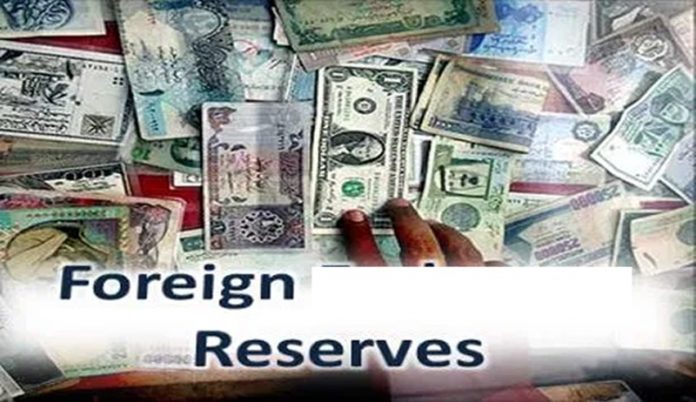
Nigeria’s foreign exchange reserves have plunged by $2.2 billion, heightening concerns over the Central Bank of Nigeria’s (CBN)’s sustained interventions in defending the Naira and its ongoing settlement of outstanding foreign exchange (FX) obligations.

The sharp decline comes amid revelations by Bismark Rewane, CEO of Financial Derivatives Company, that the CBN has spent $8.8 billion in its bid to stabilize the currency.

This interventionist approach—while credited with preventing a steeper depreciation of the Naira—has depleted Nigeria’s FX reserves for six consecutive weeks, marking the longest decline since November 2022 and putting reserves on track to reach their lowest level since October, Per Daily Trust.

According to TrustBanc Financial Group Limited, Nigeria’s FX reserves dropped by $300.11 million week-on-week to $38.74 billion, as of the latest data. This marks a continuous depletion from the $42 billion level recorded in December 2024.

How Reserves Declined by $1.16 Billion in January

In January 2025 alone, Nigeria’s FX reserves fell by $1.16 billion, effectively wiping out the $592.58 million gain recorded in December 2024.

Data from the CBN revealed a steady decline throughout the month, with reserves dropping from $40.88 billion on January 2 to $40.75 billion by January 10. The decline accelerated in the latter half of January, breaking below the $40 billion threshold on January 22, and ultimately closing at $39.72 billion on January 31, 2025.

This 2.84% monthly drop in reserves represents the sharpest decline since April 2024, when the CBN attributed a similar loss to debt repayments and other financial obligations.

What’s Driving the FX Reserves Decline?

1. CBN’s FX Market Interventions

The CBN has been selling dollars to commercial banks, Bureau de Change (BDC) operators, and other authorized dealers to improve FX liquidity and ease pressure on the Naira.

Recent market activity shows that the Naira traded between N1,490/$ and N1,520/$ in the official window, with the CBN reportedly selling $66.80 million to authorized dealer banks.

According to AIICO Capital Limited, these interventions have prevented the Naira from weakening further, leading to recent gains of N8.62 in the official market and N50 in the parallel market, where the currency closed at N1,501.08/$ and N1,510/$, respectively.

However, these gains have come at a steep cost to Nigeria’s foreign reserves, as the CBN continues to burn through billions of dollars to prop up the currency.

2. Settlement of $2.4 Billion FX Backlog

CBN Governor Yemi Cardoso recently announced that the verification process for the remaining $2.4 billion FX backlog has been completed, with payments for valid claims set to begin.

Since September 2023, the CBN has reduced the FX backlog from $7 billion to $2.2 billion, but this settlement process has significantly drained Nigeria’s reserves.

While settling these outstanding obligations is critical to restoring investor confidence, it further limits Nigeria’s ability to withstand future external shocks.

3. Sustained Dollar Sales to BDCs

As part of its FX market stabilization efforts, the CBN resumed dollar sales to Bureau de Change (BDC) operators in December 2024, injecting foreign exchange into the retail market.

Initially, BDCs were allowed to purchase up to $25,000 per week from the Nigerian Foreign Exchange Market (NFEM), but this intervention was only meant to last until January 31, 2025.

However, in a circular signed by Dr. Williams Kanya, Acting Director of the Trade & Exchange Department at the CBN, the deadline has now been extended to May 30, 2025, further raising concerns over the sustainability of these interventions.

The Risk of a Free-Floating Naira: Could It Hit N1,800/$?
Amid ongoing debates about allowing the Naira to float freely, some analysts believe that CBN’s intervention is necessary to prevent extreme volatility.

Dr. Paul Alaje, Chief Economist at SPM Professionals, warned that without CBN intervention, the exchange rate could hit N1,800/$, and possibly N2,500/$ by year-end.

“If the CBN stops intervening, we could see the Naira crash to unprecedented levels. Those who pushed for absolute floatation have now changed their stance, saying the exchange rate should be determined by purchasing power parity (PPP), which would peg it around N1,100/$,” Alaje told Daily Times.

While acknowledging that these interventions are depleting FX reserves, Alaje argued that stability remains crucial, and the real solution lies in boosting exports to improve FX inflows.

“We cannot just keep selling dollars to stabilize the Naira without addressing the root problem. Nigeria must develop policies to increase exports—this has been missing for the last 15 years,” he added.

Can Nigeria Sustain Its FX Reserve Levels?

The sustained decline in reserves raises serious questions about Nigeria’s ability to maintain its current level of FX intervention.

Experts warn that without fresh inflows from oil revenue, foreign direct investment (FDI), or external borrowing, the CBN may be forced to scale back its interventions, potentially triggering another wave of Naira depreciation.

Additionally, Nigeria’s external debt obligations could further strain the reserves in the coming months.