DD
MM
YYYY

PAGES

DD
MM
YYYY

spot_img

PAGES

Home Blog Page 213

Embrace AI In Your Business, AI Delivers Value

0

The summary: “KPMG 2025 Africa CEO Outlook survey reveals that AI remains the leading strategic priority for global executives heading into 2026. For African CEOs, this focus reflects a significant shift in mindset. AI is no longer viewed solely as a future growth enabler but as a present tool for operational efficiency, informed decision-making, and long-term organizational resilience.”

Global corporate leadership is reported to currently operate under heightened caution, shaped by ongoing geopolitical tensions and economic unpredictability.

As a result, corporate leaders are increasingly turning to artificial intelligence (AI) and talent development as critical drivers of resilience and growth. Despite newfound optimism, CEOs’ confidence was balanced by realism. CEOs across Africa continued to navigate a demanding landscape shaped by three pressing challenges: integrating AI into core operations (32 percent), managing regulatory pressures (25 percent), and strengthening cybersecurity (24 percent).

I have added two assistants, and they’re Google Gemini and ChatGPT, and those two systems deliver value. If you are not using AI in your business, you are making a mistake. I use both to question the basis of my decision making, “hiring” them to evaluate if my decision making is sound by considering the market, economy, competition, etc.

Embrace AI. It has been a great business for this teacher as every week, I am speaking with executives who are asking questions. Find you space in AI, it has a promise for all.

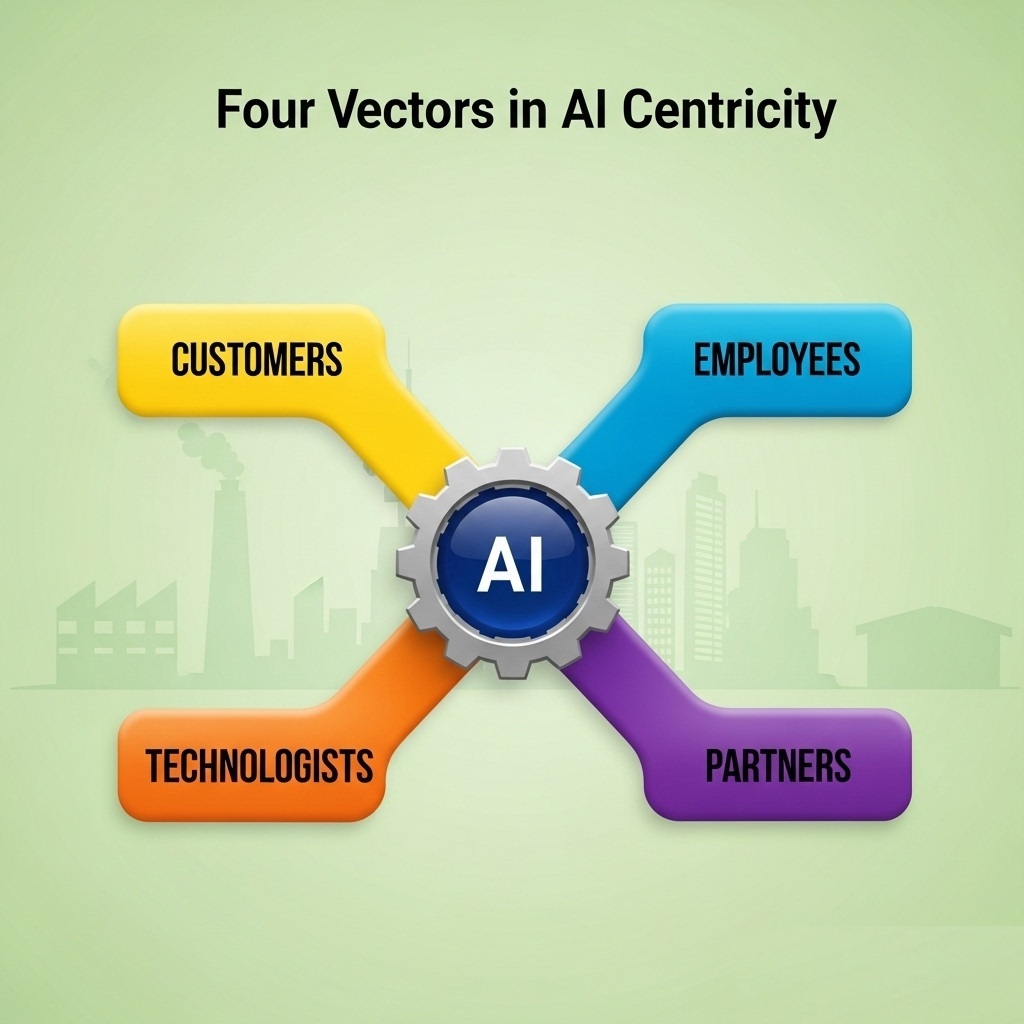
We believe that AI must be integrated into the fabric of your business. Here, we apply our AI-Centricity Framework so your customers, employees, technologists, partners and suppliers all become nodes of an AI-enabled ecosystem. We know both boardrooms and code, frameworks and chatbots.

Vodacom Settles 17-Year ‘Please Call Me’ Dispute with Former Employee Out of Court

0

South African telecommunications giant Vodacom has reached an out-of-court settlement with former employee Nkosana Makate, ending a 17-year legal battle over the creation of the company’s widely used “Please Call Me” messaging service — one of the most closely followed corporate disputes in South Africa’s modern history.

In a statement filed to the Johannesburg Stock Exchange, Vodacom said its board approved the settlement on November 4, 2025, adding that “the matter was settled by the parties out of court.” The company did not disclose the amount agreed upon but confirmed that the financial impact of the settlement would be reflected in its results for the six months ending September 2025, set to be published on November 10.

As part of the resolution, Vodacom formally withdrew its case from the Supreme Court of Appeal, bringing to a close a protracted legal saga that had reached South Africa’s Constitutional Court — the nation’s highest judicial body. The dispute has spanned nearly two decades, marking one of the longest-running corporate battles in South African legal history.

Makate, a former Vodacom employee, first conceived the idea for the “Please Call Me” service in 2000. The feature allowed prepaid mobile users to send free messages requesting call-backs when they ran out of airtime — a concept that revolutionized mobile communication in South Africa and quickly spread across Africa. At the time, Makate presented the idea to Vodacom’s then-director of product development, who authorized a trial run to test its commercial potential.

According to court documents, Makate was told he would be compensated with a share of the revenue generated by the service. However, Vodacom later declined to pay him, sparking a lengthy legal battle over intellectual property, contractual promises, and compensation.

In 2016, the Constitutional Court ruled in Makate’s favor, affirming that he was entitled to be compensated for his invention and ordering Vodacom to negotiate a fair payment. However, the two sides remained locked in disagreement over how much Makate was owed. Vodacom initially offered him 47 million rand (about $2.7 million), an amount Makate rejected as grossly inadequate. He argued that the service had generated billions of rand in revenue for Vodacom and sought a significantly higher payout.

In July 2025, Vodacom scored a partial legal reprieve when the Constitutional Court found “major flaws” in a lower court’s ruling that deemed the company’s earlier offer inequitable. That decision opened the door for renewed negotiations, which ultimately culminated in this week’s settlement.

While Vodacom’s statement did not reveal the financial terms, analysts believe the company opted for a settlement to protect its brand reputation and avoid further legal uncertainty. The case had become symbolic in South Africa, sparking public debates about corporate fairness, innovation, and the rights of employees who contribute ideas that drive major business successes.

Vodacom, a subsidiary of Britain’s Vodafone Group, now appears keen to close this contentious chapter as it prepares to release its latest financial results. The resolution of the “Please Call Me” dispute removes a longstanding legal overhang from the company’s books and could help restore investor confidence after years of reputational strain.

Makate, who has maintained that he was the rightful originator of the service, has yet to comment publicly on the settlement. For many South Africans, however, the agreement marks not just the end of a personal battle, but a precedent-setting moment for innovation and employee rights in the country’s corporate landscape.

African CEOs Double Down on AI as The key to Resilience And Growth – KPMG Report

0

Global corporate leadership is reported to currently operate under heightened caution, shaped by ongoing geopolitical tensions and economic unpredictability.

As a result, corporate leaders are increasingly turning to artificial intelligence (AI) and talent development as critical drivers of resilience and growth. Despite newfound optimism, CEOs’ confidence was balanced by realism. CEOs across Africa continued to navigate a demanding landscape shaped by three pressing challenges: integrating AI into core operations (32 percent), managing regulatory pressures (25 percent), and strengthening cybersecurity (24 percent).

KPMG 2025 Africa CEO Outlook survey reveals that AI remains the leading strategic priority for global executives heading into 2026. For African CEOs, this focus reflects a significant shift in mindset. AI is no longer viewed solely as a future growth enabler but as a present tool for operational efficiency, informed decision-making, and long-term organizational resilience.

The survey reveals that African CEOs have sought to mitigate pressing business risks by increasing investment in cybersecurity and digital risk resilience, integrating AI into operations and workflows, and investing in solutions and technology innovation for business expansion. These CEOs see workforce AI skills and upskilling, digital security and cybercrime, the rising cost of technology infrastructure, and the integration of AI into operations as the most important factors for future organizational success.

They acknowledge that the integration of AI will impact their workforce, including skills expectations at the recruitment level, and to some extent, their company culture (56 percent). Subsequently, 65 percent of African CEOs note that integration of AI has made them rethink the skills required for entry-level. Across Africa, CEOs are placing talent at the core of their AI strategies. A significant 81 percent believe that upskilling their workforce in AI will directly impact their organization’s success over the next three years, compared to 77 percent globally.

At the same time, only 64 percent of African CEOs are concerned that competition for AI Talent will negatively affect their business, in contrast to 70 percent of global CEOs. This indicates that African CEOs prioritize nurturing AI talent from within their organizations and are investing in long-term skill development rather than relying on rapid external recruitment.

However, the path forward is not without challenges. Persistent infrastructure limitations such as unreliable electricity, limited broadband access, and outdated computing systems continue to impede the deployment of advanced AI systems across the continent. Necessary elements like GPUs, edge devices, and secure cloud solutions remain costly, especially for smaller enterprises.

Despite these constraints, African firms are moving forward strategically. The survey indicates that 34 percent of Africa’s CEOs are investing in technology and solution innovation—surpassing the 26 percent reported among their global counterparts. Rather than waiting for perfect conditions, organizations are prioritizing practical, scalable technologies that lay the foundation for broader AI readiness.

Another critical factor in AI adoption is the quality and relevance of training data. Much of the data used to build today’s leading AI models is sourced from Western regions, where digital behavior, linguistic patterns, and socioeconomic realities differ sharply from those in African contexts. As a result, AI systems trained on these datasets often struggle with accuracy and cultural alignment when applied locally, misidentifying faces, misinterpreting intent, or producing outputs that reflect external social norms.

Addressing this requires investment in the curation of local data, improved labeling practices, and collaborative open-data initiatives among governments, research institutions, and industry players. The most significant barrier to AI-driven growth, however, remains talent. Globally, 32 percent of CEOs express concern about bridging the skills gap required for successful AI deployment.

In Africa, talent competition is particularly intense, with local organizations contending against global technology companies that offer higher compensation and broader opportunities. Despite these challenges, AI adoption is creating more opportunities than threats, particularly in areas of workforce transformation and technical specialization.

As organizations increasingly deploy AI systems that interact with sensitive information, the need for strong cybersecurity measures becomes more pressing. The boundaries between data privacy, model integrity, and cybersecurity are becoming more intertwined.

Trust in AI cannot rest solely on technological performance; it must be grounded in transparency, security, and responsible governance. For African firms advancing digital transformation, integrating trusted AI principles into cybersecurity frameworks will be vital to maintaining operational confidence and safeguarding innovation.

Ripple Raises $500m in Fortress- and Citadel-Led Round, Valuing the Crypto Firm at $40bn

0

Ripple has secured a fresh $500 million investment in a new funding round led by Fortress Investment Group and Citadel Securities, valuing the crypto company at $40 billion.

The announcement, made on Wednesday, marks one of the largest private funding rounds in the cryptocurrency sector this year, and a significant vote of confidence in Ripple’s strategy to become a bridge between traditional finance and blockchain technology.

The deal comes just months after Ripple concluded a $1 billion tender offer at the same valuation, a move that had already drawn attention from major institutional investors. The company said the new capital will help deepen relationships with financial institutions, expand its growing suite of blockchain-based financial products, and further entrench its position as a leading provider of digital payment solutions for global markets.

“This investment reflects both Ripple’s incredible momentum, and further validation of the market opportunity we’re aggressively pursuing,” said Ripple CEO Brad Garlinghouse, emphasizing that the latest funding round strengthens the company’s ability to scale its infrastructure and support a broader institutional client base.

Institutional Adoption on the Rise

Ripple’s announcement comes amid a surge of institutional adoption of stablecoins and digital payment rails, following the passage of the GENIUS Act, a U.S. law that established a clear regulatory framework for the issuance and use of stablecoins. The law, aimed at bringing more transparency and security to the digital asset space, has paved the way for greater participation by financial firms, banks, and payment providers.

In this new regulatory environment, companies have begun integrating blockchain-based payment systems for treasury management, collateral settlement, and cross-border transactions. Ripple’s own stablecoin, Ripple USD (RLUSD), has quickly gained traction in these sectors, particularly among corporations looking to reduce transaction costs and speed up settlements.

More institutions are adopting stablecoins such as RLUSD for treasury payments and collateral management, a development attributed to the GENIUS Act, which has effectively opened the door for mainstream financial adoption of blockchain-backed digital currencies.

Ripple’s Expanding Product Suite

Ripple’s business has evolved well beyond its initial focus on cross-border remittances. The company’s expanding product lineup now includes custody solutions, prime brokerage services, corporate treasury management tools, and stablecoin infrastructure — all aimed at integrating blockchain into the existing financial system.

The firm also plans to use the new funding to scale its enterprise-grade liquidity network, expand partnerships with banks and asset managers, and strengthen its capital markets presence, particularly as it positions XRP, its native token, for broader institutional use.

Under the more crypto-friendly Trump administration, Ripple is also exploring deeper engagement with regulators and policymakers, who have signaled openness toward fostering innovation in digital finance. The company said it intends to take advantage of this more favorable policy climate to advance its long-term goal of making blockchain technology “a core part of institutional finance.”

The participation of Fortress Investment Group and Citadel Securities highlights how traditional financial heavyweights are increasingly investing in digital asset infrastructure. Citadel Securities, one of the largest market makers globally, has been expanding its involvement in tokenized assets and decentralized trading mechanisms, while Fortress has been an early backer of blockchain ventures focused on bridging traditional markets and digital ecosystems.

Their involvement in Ripple’s latest funding round underscores a broader shift in sentiment among traditional investors, who are viewing blockchain technology less as a speculative frontier and more as a structural pillar of modern finance.

Ripple’s latest valuation — which places it among the top-tier fintech companies globally — is seen as evidence that institutional investors see the company’s blockchain-based payment rails and regulatory positioning as key long-term advantages.

Founded in 2012, Ripple has long tried to distinguish itself from other crypto firms by focusing on regulated, enterprise-level use cases for digital assets rather than retail speculation. Its flagship product, RippleNet, enables banks and payment providers to process international transfers instantly and at lower costs, leveraging blockchain technology to replace slow and expensive correspondent banking systems.

Over the years, Ripple has cultivated partnerships with several major financial institutions across Asia, Europe, and the Middle East. Despite previous legal challenges with the U.S. Securities and Exchange Commission (SEC) over whether XRP constituted a security, Ripple emerged from that case with partial victories that have allowed it to maintain operations and even expand in multiple jurisdictions.

The company’s growing focus on stablecoins — which maintain a fixed value relative to fiat currencies — aligns with its broader ambition to become a trusted player in digital finance infrastructure. Analysts note that the GENIUS Act has made it easier for firms like Ripple to issue and operate stablecoins under clearer regulatory oversight, reducing uncertainty for institutional clients.

Apple Nears $1bn Annual Deal with Google to Power Next-Generation Siri Using Gemini AI

0

Apple is close to sealing a deal with Google that would see the iPhone maker pay about $1 billion a year for a custom version of Google’s Gemini AI model to power an overhauled Siri, according to Bloomberg.

The arrangement would represent a major step for Apple as it seeks to reinvent its voice assistant and expand its artificial intelligence ecosystem after years of lagging behind competitors.

The proposed partnership forms part of a fast-growing wave of AI-driven deal-making sweeping through the technology industry. Once bitter rivals in the smartphone and software markets, Apple and Google now find themselves bound by mutual need — Apple for advanced AI capabilities to power its devices, and Google for high-value partnerships to cement Gemini’s dominance in a rapidly consolidating AI market.

Under the reported agreement, Apple would gain access to a version of Google’s Gemini model specifically tailored for Siri and other iPhone features. With 1.2 trillion parameters, the model’s complexity and reasoning power far exceed Apple’s current in-house “Apple Intelligence” system, which runs on 150 billion parameters. The upgrade would allow Siri to perform more natural, context-aware tasks, marking the assistant’s biggest leap forward since its introduction more than a decade ago.

According to Bloomberg’s sources, Apple had also tested AI models from OpenAI and Anthropic before choosing to move forward with Google. The decision reportedly followed months of internal evaluation, with Google’s Gemini emerging as the most capable and reliable option for Apple’s immediate needs.

The new Siri, powered by Gemini, is expected to debut next spring, although the timeline could still change depending on technical integration challenges or regulatory scrutiny.

This isn’t the first time Apple and Google have entered into a multibillion-dollar partnership. Google already pays Apple an estimated $18 billion to $20 billion annually to remain the default search engine on Safari across iPhones and other Apple devices. That arrangement, which forms a key part of both companies’ revenue streams, has faced antitrust scrutiny in the United States and Europe. This new AI deal, if finalized, is expected to deepen that relationship further, extending their cooperation into the next frontier of digital technology — artificial intelligence.

Tech giants are increasingly striking cross-company deals to share resources, models, and infrastructure. In recent months, Microsoft has invested billions in OpenAI, Amazon has partnered with Anthropic, and Meta has sought to license its Llama models to hardware manufacturers.

For Apple, the potential deal with Google is as much about necessity as it is about strategy. The company has trailed its peers in launching generative AI products and faces growing pressure from investors and consumers to catch up. Apple aims to balance short-term competitiveness with long-term autonomy by leveraging Google’s technology while continuing to develop its own large language models.

Analysts believe the collaboration could transform Siri into a more conversational, adaptive, and capable assistant — one that can handle nuanced queries, summarize information, and perform multi-step tasks that go beyond voice commands. If successful, it could also signal Apple’s willingness to take a more open approach to partnerships in the AI era, a significant shift from its historically insular ecosystem.

Apple’s deal with Google may prove to be a defining moment — not just for Siri’s evolution, but for the Cupertino giant’s AI adoption.