DD
MM
YYYY

PAGES

DD
MM
YYYY

spot_img

PAGES

Home Blog Page 214

Sam Bankman-Fried’s Appeal of His 25-Year Sentence:

0
Sam Bankman-Fried

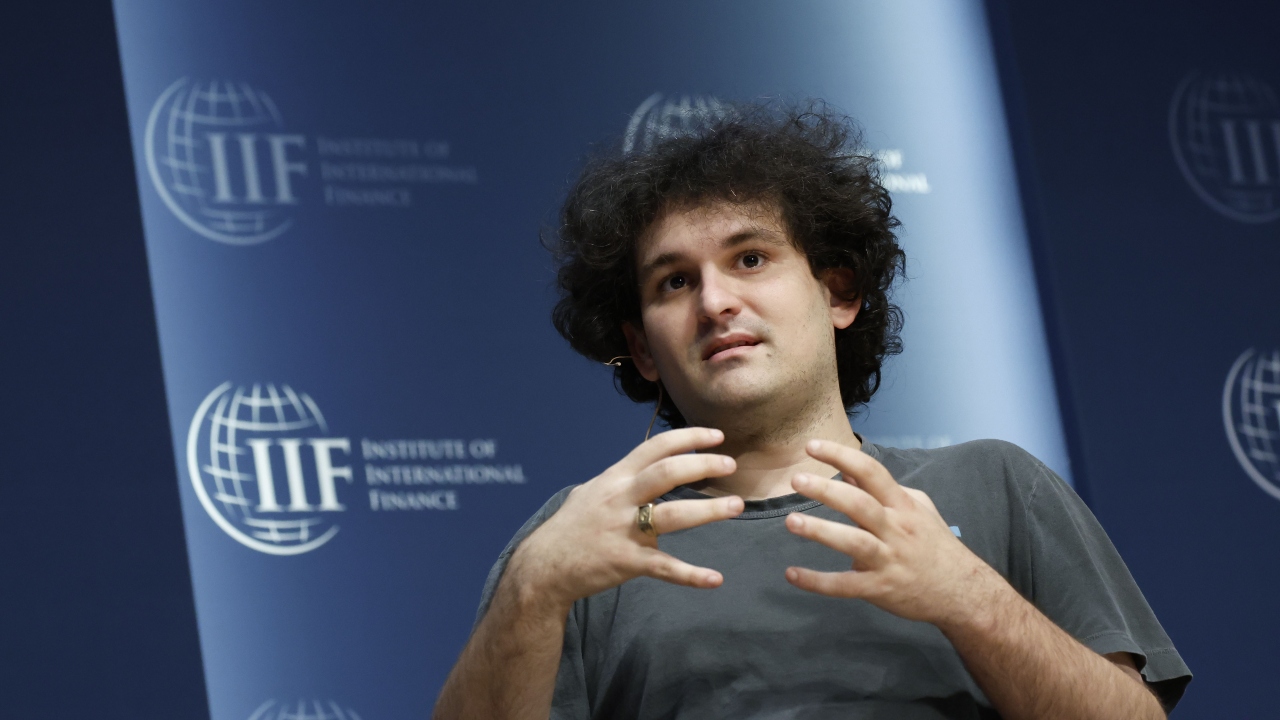
Sam Bankman-Fried (SBF), the disgraced founder of the collapsed cryptocurrency exchange FTX, is actively appealing his conviction and 25-year prison sentence for orchestrating an $8–11 billion fraud scheme.

Convicted in November 2023 on seven counts of fraud and conspiracy, he was sentenced in March 2024 by U.S. District Judge Lewis Kaplan. SBF is currently serving his term at FCI Terminal Island, a low-security federal prison near Los Angeles.

His appeal, filed with the U.S. Court of Appeals for the Second Circuit in New York, argues that the trial was fundamentally unfair due to judicial bias, media prejudice, and evidentiary restrictions. Oral arguments were heard on November 4, 2025—just yesterday—before a three-judge panel.

Barrington D. Parker Jr., Eunice C. Lee, and Maria Araujo Kahn. SBF’s legal team, led by attorney Alexandra Shapiro, presented four main grounds for reversal or a new trial.

Judicial Bias and “Presumption of Guilt”. Claims Judge Kaplan’s pretrial remarks and actions, such as labeling parts of SBF’s testimony “a joke,” created an appearance of bias. They argue a “rush to judgment” by prosecutors, media, and the judge violated SBF’s presumption of innocence.

Evidentiary Exclusions

The defense was barred from presenting evidence of FTX’s alleged solvency (e.g., liquid assets sufficient to cover customers) and advice from in-house lawyers, which could have shown SBF acted in good faith or relied on legal guidance.

Unfair Pretrial and Trial Procedures

A unique “free preview” rule forced SBF to testify outside the jury’s presence, giving prosecutors an advantage in cross-examination. Limits on his testimony the next day further “cut off the defense by the knees.”

Intense pretrial publicity tainted the jury pool, making a fair trial impossible in Manhattan. The team seeks to vacate the conviction, sentence, and $11 billion forfeiture order. They emphasize that the fraud stemmed from “risk management failures,” not intentional crime, and note emerging evidence that FTX held billions in assets to repay clients.

The November 4 hearing lasted about an hour, with judges interrupting Shapiro frequently and appearing unmoved. Key exchanges included: Judge Maria Araujo Kahn pressing whether the defense conceded the trial evidence was sufficient for conviction, highlighting the high bar for reversal.

Judge Parker noting the defense never fully claimed SBF relied on attorney advice for all decisions during the trial. Prosecutors countered with overwhelming evidence: Three FTX executives (Caroline Ellison, Gary Wang, and Christian Drappi) testified against SBF.

Corroborated by documents showing he directed the diversion of customer funds to Alameda Research for risky investments and political donations. No ruling was issued on the spot—appeals courts often take months (or longer) to decide.

If denied, SBF could petition the U.S. Supreme Court, though success rates for such appeals are low under 1% historically for criminal cases. Some reports speculate on a potential presidential pardon, given SBF’s past political donations, but that’s unlikely under current administrations.

Recent posts reflect skepticism and memes about SBF’s odds. For instance, users noted the judges’ tough questioning and quipped that “reputation breaks faster than any chain,” while others highlighted the appeal’s focus on solvency evidence. One post summarized: “SBF appeal under pressure—U.S. appeals court questions his attempt to overturn crypto-fraud convictions.”

SBF’s case remains a cautionary tale for crypto, underscoring risks of unchecked innovation and regulatory gaps. While his appeal faces long odds, it could influence future fraud trials by testing boundaries on media influence and evidentiary rules in high-profile cases.

Solana’s $500 Outlook Impresses, but Analysts Say Ozak AI Could Run Higher

0

Crypto investors are bracing for another explosive year as Solana (SOL) continues to strengthen its position among the market’s top performers. With institutional capital flowing back into high-speed blockchains and new developers flocking to the ecosystem, Solana’s fundamentals are aligning perfectly for a potential rally toward $500. But as impressive as Solana’s forecast appears, analysts say the next massive gainer might not be an established network—it could be an emerging AI-driven project known as Ozak AI, which combines blockchain and artificial intelligence to target a potential 100× upside in the coming cycle.

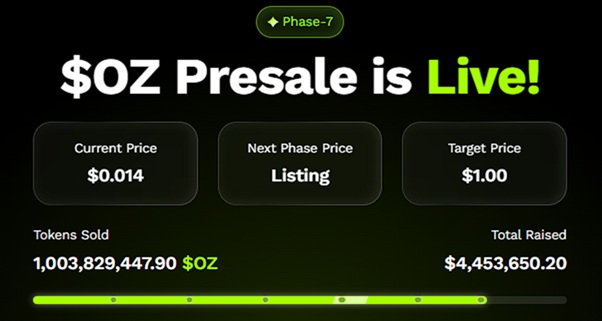
Currently in Stage 5 of OZ presale at just $0.0014, Ozak AI has already raised over $4.4 million and sold 1 billion tokens, signaling that early investors are positioning themselves before what could be one of the most transformative launches of 2025.

Solana (SOL)

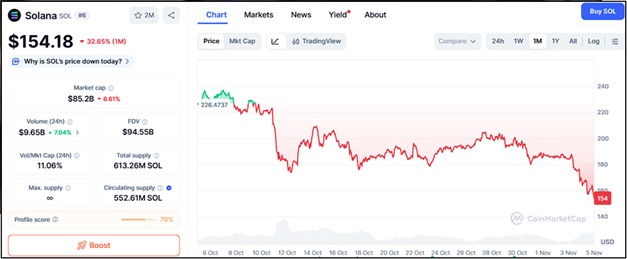
Solana, now trading around $154, continues to stand out for its speed, scalability, and ecosystem depth. Its expanding DeFi and NFT infrastructures, combined with growing institutional integration, are solidifying Solana as the leading smart contract platform behind Ethereum. The recent surge in on-chain volume and stablecoin activity demonstrates growing confidence in its network’s resilience and cost efficiency.

From a technical perspective, Solana shows resistance at $165, $178, and $196, while support levels lie at $142, $130, and $118. If SOL breaks above $178 and maintains momentum, analysts see a clear path toward $500—a level that could make it one of the best-performing large-cap assets of the next cycle.

However, even with a potential 3× rally, Solana’s massive market capitalization limits its explosive upside compared to smaller, early-stage projects. Investors seeking exponential gains—the kind that can turn thousands into millions—are increasingly looking toward innovative, utility-driven presales like Ozak AI.

Ozak AI (OZ)

While Solana focuses on scalability, Ozak AI is revolutionizing how intelligence interacts with blockchain. Its ecosystem is powered by AI prediction agents, machine-learning models capable of analyzing massive amounts of blockchain data, social sentiment, and price movement in real time. These agents identify predictive patterns that give investors and traders a significant advantage in spotting trends before they develop.

What makes Ozak AI so attractive is that it represents the fusion of two of the most powerful narratives in technology—AI automation and decentralized finance. The project’s partnerships with Perceptron Network, HIVE, and SINT enhance its scalability, speed, and interoperability. Together, they enable Ozak AI to leverage over 700,000 AI nodes, integrate real-time blockchain signals, and even connect voice-activated AI systems with Web3 applications.

In terms of credibility, Ozak AI’s CertiK and Sherlock audits set it apart from the average presale, giving investors assurance of security and transparency.

At its current presale price of $0.0014, even small investors can secure large positions before listings. For instance, a $2,000 investment today would buy approximately 1.43 million tokens—worth $1.43 million if Ozak AI reaches $1, marking a 100× return that could easily outperform even the strongest established cryptos like Solana.

Why Analysts Say Ozak AI Could Run Higher

While Solana’s growth is tied to blockchain infrastructure and DeFi demand, Ozak AI’s potential stems from AI adoption, one of the fastest-growing global industries. The 2025–2026 cycle is expected to be dominated by projects that combine AI and blockchain utility—and Ozak AI sits at the core of that convergence.

The project’s predictive AI layer could soon power smarter decentralized applications, automated trading strategies, and real-time blockchain insights. Analysts argue that this technology gives Ozak AI a competitive moat that traditional layer-1 networks can’t match. With a lower market cap and massive innovation potential, Ozak AI’s growth ceiling is far higher than most altcoins entering this bull market.

Solana’s Strength Meets Ozak AI’s Explosive Potential

Solana is undeniably strong—its path toward $500 looks increasingly realistic given its momentum and developer traction. Yet, Ozak AI represents a different kind of opportunity—one that mirrors the early days of Ethereum or Solana before they became household names.

With its blend of AI-driven intelligence, verified audits, and presale-stage entry, Ozak AI offers investors a rare combination of innovation, scalability, and accessibility. In short, while Solana’s growth story impresses, Ozak AI’s trajectory could run much higher, giving early adopters the kind of life-changing upside that only comes around once per market cycle.

About Ozak AI

Ozak AI is a blockchain-based crypto project that provides a technology platform that specializes in predictive AI and advanced data analytics for financial markets. Through machine learning algorithms and decentralized network technologies, Ozak AI enables real-time, accurate, and actionable insights to help crypto enthusiasts and businesses make the correct decisions.


For more, visit:

Website: https://ozak.ai/

Telegram: https://t.me/OzakAGI

Twitter: https://x.com/ozakagi


Growing Revenue and Transforming Companies with Agentic AI

0

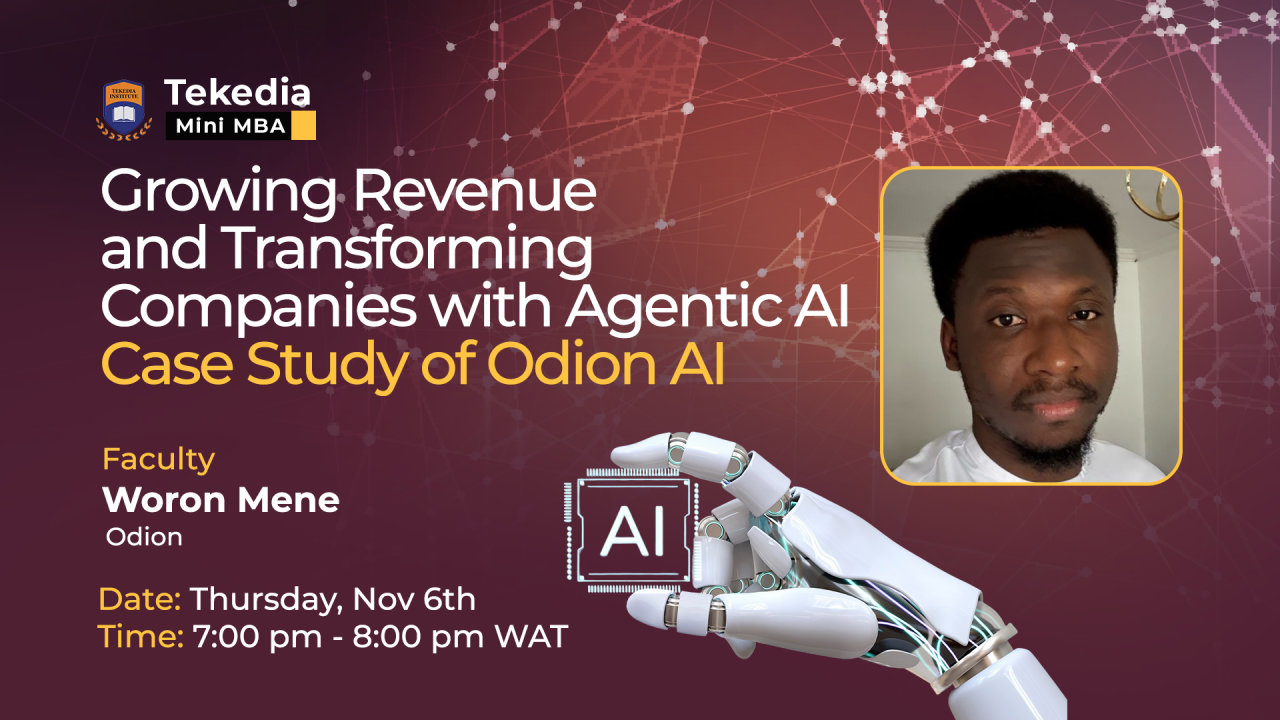
Join us today at Tekedia Mini-MBA on how agentic AI will help you grow revenue and transform your business. Woron Mene and his friend Mavino Ikein are the zen-masters of AI in Nigeria through Odion AI which is winning market shares in banking, industrials and more.

Experience industrial intelligence on the path to the next multiples at the best school – Tekedia Institute – where practitioners teach! Yes, only practitioners teach in our school.

Thur, Nov 6 | 7pm-8pm WAT | Growing Revenue and Transforming Companies with Agentic AI: Case Study of Odion AI – Woron Mene, OdionAI | Zoom link 

Do Not Fear AI Bubble Because Economic Bubbles Are Expected In Huge Disruptive Technologies Like AI

0

The World Economic Forum adds to the AI bubble crusade: “The head of the World Economic Forum (WEF), Børge Brende, has warned that the world could be heading toward three major financial bubbles — in cryptocurrency, artificial intelligence (AI), and debt — as markets experience sharp declines in global technology stocks after months of record highs.”

People talk of AI bubble, but the fact is this: humans are just starting with AI. Part of AI destination is to create replaceable human organs that can possibly unleash “immortatility”, and AI is a forerunner to that future. If AI can help us to understand human anatomy, physiology, etc better, we can recreate human organs and extend lives. So, yes, we can have economic bubble, but we’re still at infancy when it comes to knowledge. In other words, AI is just starting and provided that is the case, the world will be fine.

In IEEE Potential Magazine, I wrote “Imagine a world where those with ear problems could buy electronic cochleas and those with eye problems, electronic retinas on Amazon and eBay. Imagine a world where all problematic human organs can be electronically replaceable to push humans toward the grail of immortality. All this might not be just imagination years from now if neuromorphic circuits continue to advance.”

Good People, AI will play a huge role in understanding the “circuits” of life and once that is done, man and woman will live longer. So, economic bubble or no bubble, this party will be long, and those who risk the bubble are those that will rule tomorrow! Do not allow them to convince you in the way they told you that Bitcoin is worthless only to be investing $billions in it now!

And the most important part: all technology paradigms have economic bubbles. Decades ago, there were close to 60 car brands in Detroit but only 3 or so survived. So, do not see this bubble thing as new. What should be new to you is how to play safe because there will be economic bubbles even as there will be HUGE winners! That is a constant in all new disruptive technologies.

So, use AI, build AI or invest in AI. Do not withdraw because of the bubble fear since bubbles are naturally expected.

WEF Warns of Looming Financial Bubbles in AI, Crypto, and Debt Amid Global Market Volatility

0

The head of the World Economic Forum (WEF), Børge Brende, has warned that the world could be heading toward three major financial bubbles — in cryptocurrency, artificial intelligence (AI), and debt — as markets experience sharp declines in global technology stocks after months of record highs.

Speaking to reporters in São Paulo, Brazil’s financial hub, Brende said that while markets have been buoyed by optimism over AI’s transformative potential, there are growing concerns that valuations across sectors — particularly in tech — have become inflated.

“We could possibly see bubbles moving forward. One is a crypto bubble, second an AI bubble, and the third would be a debt bubble,” he said.

Brende’s warning comes as the global economy faces multiple pressures of high interest rates, persistent inflation, trade frictions, and mounting sovereign debt.

“Governments have not been so heavily indebted since 1945,” he noted, referring to the post-World War II era, when most industrialized nations were rebuilding their economies through borrowing.

However, investors have continued to pour billions of dollars into crypto and AI-related stocks, pushing markets to unprecedented highs. The rally has been driven by expectations that artificial intelligence will revolutionize industries ranging from finance and healthcare to transportation and manufacturing. Companies like Nvidia, Microsoft, and OpenAI have led the surge, with Nvidia crossing a $4 trillion market valuation last month on the back of soaring demand for AI chips.

Analysts and market strategists are beginning to echo Brende’s concerns. They say the scale of speculative investment in AI-related equities and digital assets resembles earlier financial bubbles — such as the dot-com boom of the late 1990s and the cryptocurrency frenzy of 2021. It is believed that the recent pullback in tech shares is not necessarily a cause for panic, but it’s a clear signal that the market was running ahead of fundamentals.

Valuations in some AI-linked companies are believed to have reached “unsustainable” levels.

Global stock indices have dipped from their peaks, led by sell-offs in tech-heavy benchmarks. Yet, many investors remain optimistic, arguing that AI’s long-term benefits justify short-term volatility.

Brende acknowledged that AI carries immense potential to drive productivity and growth, but cautioned that it could also disrupt labor markets and deepen inequality if not managed responsibly.

“AI offers the possibility of big productivity gains but could also threaten many white-collar jobs,” he said.

“What you could — worst case — see is that there is a ‘Rust Belt’ in those big cities that have a lot of back offices with white-collar workers that can more easily be replaced by this AI and increased productivity.”

His warning aligns with concerns voiced by executives and labor experts over the past year. Companies such as Amazon and UPS have announced significant layoffs in administrative and support functions, citing increased automation and digital transformation. In the U.S., labor economists estimate that as many as 30% of white-collar roles could be affected by AI automation within the next decade, especially in sectors such as finance, law, and customer service.

Still, Brende emphasized that technological advancement has historically led to overall economic progress, despite short-term disruption.

“We also know from history that technological changes over time lead to increased productivity, and productivity is the only way over time to increase prosperity,” he said. “Then you can pay people better salaries, and you have more prosperity in society.”

The WEF, known for its annual summit in Davos, Switzerland, where global leaders and corporate executives gather to discuss economic and social trends, has made AI a central focus of its recent agenda. The organization has been calling for international cooperation to establish ethical frameworks for AI development and to mitigate risks related to labor displacement, data privacy, and systemic financial instability.

Brende’s remarks also coincide with a wave of regulatory scrutiny over both AI and digital assets. In Washington and Brussels, lawmakers are pushing for tighter oversight of AI companies to ensure transparency, accountability, and fairness in deployment. Meanwhile, global financial watchdogs — including the International Monetary Fund (IMF) and the Bank for International Settlements (BIS) — have warned that unchecked speculation in cryptocurrencies and sovereign debt could trigger global financial instability.