
DD
MM
YYYY

PAGES

DD
MM
YYYY

spot_img

PAGES

Home Blog Page 2140

Solana Begins Road To Recovery With Holders Optimistic But This Altcoin Is Set To 10x This Year

0

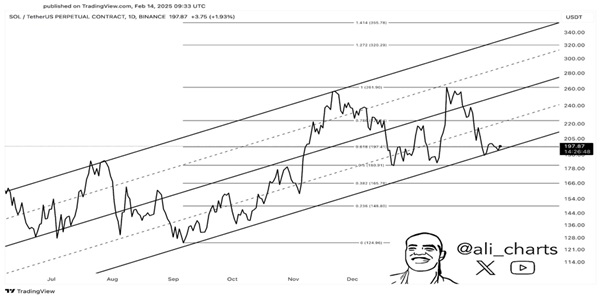
Solana price trends and market updates show that SOL is on the road to recovery following tumultuous times. Holders express hope as Solana sees signs of improvement.

At the same time, a new altcoin is showing strong growth. This project offers real-world solutions that may drive its value to 10x this year. Many experts call it one of the best cryptos to buy for its unmistakable effective solution to cross-border payments.

Solana: On the Road to Recovery

Solana is known for fast transactions and low fees. Recent Solana news highlights that the network has begun a recovery. Holders show hope as the token bounces back from recent drops. Notably, the token surged by over 11% within the past 24 hours and currently trades at $143.52.

Many say Solana could regain its strength if it keeps up the momentum and network upgrades. Reports note that more users are joining the network and new projects appear on the platform. This growth paints a picture of a blockchain that can support many dApps and digital services.

Investors watch the Solana price closely as it moves toward key support levels. Analysts mention that if support holds, the token may soon rise further. SOL is said to be ready to rebound toward $225 or even $264!
Remittix: The Altcoin Set to 10x with Real-World Impact

Remittix stands out by addressing a major problem in global payments. Many people around the world do not have bank accounts. For example, nearly 1.4 billion people lack access to formal banking.

These individuals often rely on slow, expensive ways to send and receive money. Remittix changes that. It offers a system that makes crypto-to-FIAT transfers simple and efficient.

Imagine someone who gets crypto into a wallet, sends it to a money transfer service, and then collects cash to pay for daily needs. Remittix makes this possible with a design that ties the core of cryptography—keeping your privacy and control over your money—to modern banking and finance.

Remittix has sold over 510 million tokens during its ICO. This strong start shows that many investors believe in its mission. The current DeFi coin price of Remittix stands at around $0.0694. This low price gives new investors a chance to join early.

Analysts predict that, if market conditions stay good, Remittix could grow up to 10x in value. That kind of growth would help millions of people send money faster and cheaper.

Security is a top priority for Remittix. The team has run many tests on their smart contracts to check the system’s safety. They have also locked liquidity pools and team tokens for three years. These actions build trust among users and show that Remittix is built for the long run. People looking for the best crypto to buy value a project that solves real-world issues while keeping their assets safe.

https://remittix.io/

Remittix Looks Poised To Drive Crypto Adoption

The service offered by Remittix is simple yet powerful. It cuts out the middle steps that slow down traditional transfers. By doing so, it gives users faster access to funds.

This simple improvement can have a big impact. More people may use crypto if they see that it can solve everyday problems. Remittix may pave the way for wider crypto adoption as a payment method, bridging the gap between digital finance and real-life needs.


Discover the future of PayFi with Remittix by checking out their presale here:

Website: https://remittix.io/

Socials: https://linktr.ee/remittix

 

These 3 Cryptos Cost Pennies But Could Deliver Insane Returns!

0

The crypto market is full of opportunities, but not all low-priced tokens have the potential for massive gains. However, some emerging projects are setting the stage for explosive growth, combining innovative use cases with real-world utility. Here are three high potential altcoins that could deliver significant returns, with FXGuys leading the pack.

>>>JOIN FXGUYS HERE<<<

1. FXGuys ($FXG) – The Top PropFi Project Redefining Trading

Current Stage: Stage 3 Presale | Price: $0.05 | Funds Raised: Over $4 Million

The FX Guys is revolutionizing the trading landscape with its broker-backed crypto prop firm and advanced trader funding program. It’s more than just another token—it’s a game-changer for smart prop traders looking to scale their earnings.

Why FXGuys ($FXG) Could Skyrocket:

  • Staking $FXG allows users to access a 20% profit and revenue share from broker trading volume.
  • Trader Development Ecosystem: Top traders who pass evaluations can access up to $500,000 in funding and keep 80% of the profits.
  • No Buy or Sell Tax & No KYC: FXGuys enables seamless, decentralized trading with same-day fiat and crypto withdrawals.
  • Trade2Earn Program: Every trade earns $FXG tokens, boosting volume and rewards for traders.
  • Custom Trading Platforms: Users can trade on FXGuys Trader or choose from MT5, Match-Trader, cTrader, and DXtrade, depending on their location.

As FXGuys progresses through its presale, its value proposition in the best proprietary trading firms space makes it a must-watch.

2. [Altcoin Name] – A Powerhouse in DeFi Staking

For those looking to maximize passive income, this best defi token is a strong contender. With innovative staking mechanisms and an expanding ecosystem, it allows investors to earn consistent rewards while supporting network security and liquidity.

Key Highlights:

  • High APY staking rewards with flexible lock-up periods
  • Strong tokenomics supporting price stability and long-term growth
  • Active partnerships with major DeFi platforms

Its staking rewards and network growth position it among the top defi coins to consider.

3. [Altcoin Name] – The Future of Instant Cross-Border Transactions

This emerging token is reshaping how instant funding prop firms and retail traders conduct transactions globally. With a blockchain-powered remittance system, it enables near-instant, low-fee cross-border payments.

Why It’s a Strong Bet:

  • Lightning-fast transactions with minimal fees
  • Strong partnerships in the financial sector
  • Advanced security and compliance measures

Its growing adoption makes it a promising choice in the high potential altcoins category.

>>>JOIN FXGUYS HERE<<<

Final Thoughts: Which of These Cryptos Should You Watch?

All three of these cryptos have strong fundamentals and real-world use cases, but FXGuys ($FXG) stands out as the most promising. With its unique prop trading funding program, high staking rewards, and innovative Trade2Earn model, it has positioned itself as a top PropFi project with immense upside potential.

As FXGuys continues its Stage 3 presale, securing $FXG at $0.05 could be a strategic move before it gains mainstream traction. Whether you’re a trader looking for funding, an investor seeking staking rewards, or someone searching for the next big thing in DeFi, FXGuys is one project you don’t want to ignore.

Disclaimer: Cryptocurrency investments carry risk. Always conduct thorough research before investing.


To find out more about FXGuys follow the links below:

Presale | Website | Whitepaper | Socials | Audit


Nigeria, drill baby drill, the party is back!

0

Nigeria, drill baby drill, the party is back: ‘BP has announced a “fundamental reset strategy” aimed at slashing spending on renewable energy and doubling down on fossil fuels. Investments in oil and gas will increase to $10 billion through 2027 — a reversal of the strategy set out by former CEO Bernard Looney to reduce oil and gas output 40% by 2030. The shift comes as investor pressure mounts on BP to improve its financial performance and other energy giants, such as Shell, also abandon green transition targets. – LinkedIn News’.

Nigeria and Africa, shine ya eyes. Yes, no one really cares about this climate risk or whatever they call it if it affects where it matters. When Russia disconnected Germany from cheap gas, Germany re-fired the coal plants. They could have chosen to go energy-less and save the planet! Yes, village-mode as we do in villages across Africa.

Sure – I have nothing against renewable energy. It is a necessary part of the future. But I have an issue when Africa thinks there is anything to win by depriving its people of energy, just to be invited to conferences in Berlin, London, etc as vanguards of the planet. We have fundamental issues where young people cannot see where jobs will come, and nothing is being done on energy security!

Comment on Feed

Comment 1: Prof this is so sad and I don’t agree with your analysis
I think we need to take a “long” look with our country and climate change
We can continue to build on the gains we have in renewable energy ( because we know what the consequences are. We are living it now) while working intensively to create jobs in the energy sector for our youth.
Lets lead the way in showing up the right way for Nigeria ?? and for the African continent

My Response: I used to believe until the UK and Germany re-opened coal plants when Russia cut access to gas. They would have used that opportunity to demonstrate that it was fine to lose energy for the climate.

Comment 2: Thank you for sharing this perspective. It’s a complex issue, and I appreciate the emphasis on the challenges Africa faces in balancing energy needs, economic development, and global climate expectations.
Here’s my contribution to the conversation:

While it’s true that Africa must prioritize its own development and energy security, it’s also important to recognize that the global energy landscape is shifting rapidly. The decisions made by companies like BP and Shell to double down on fossil fuels may provide short-term gains, but they also highlight a broader tension between immediate financial performance and long-term sustainability. For Africa, this presents both a challenge and an opportunity.

Africa has an abundance of renewable energy resources solar, wind, hydro, and geothermal that remain largely untapped. Investing in these resources doesn’t have to mean depriving people of energy or jobs; in fact, it could be the opposite. Renewable energy projects can create jobs, stimulate local economies, and provide reliable energy access to millions who currently lack it. The key is to ensure that these investments are driven by African priorities and benefit African communities, rather than being imposed by external agendas.

At the same time, fossil fuels will likely remain part of the energy mix in the short to medium term, especially as Africa seeks to industrialize and address energy poverty. But relying too heavily on fossil fuels risks locking the continent into outdated infrastructure and technologies, which could become stranded assets as the world transitions to cleaner energy.

The real issue, as you pointed out, is energy security and economic opportunity. Africa should not have to choose between development and sustainability. Instead, it should pursue a balanced approach that leverages its natural resources both fossil and renewable to build a resilient energy system that powers growth, creates jobs, and ensures long-term prosperity. This requires strong leadership, strategic planning, and partnerships that prioritize Africa’s needs over external pressures.

In short, Africa’s energy future should be shaped by Africans, for Africans. The goal should be to harness all available resources in a way that empowers people, drives development, and positions the continent as a leader in the global energy transition not just a follower of outdated models.

Nigeria’s Energy Renaissance: Tinubu’s Administration Seeks to Reverse $80 Billion Investment Exodus

Are There ‘Too Many Layer 2s’ Blockchain Infrastructures?

0

Breitman has long been vocal about blockchain scalability and governance, often emphasizing efficient, cohesive systems over fragmented ones. In the context of “too many Layer 2s,” he likely argued that the proliferation of L2 solutions—secondary frameworks built on top of base blockchains like Ethereum to improve scalability—creates fragmentation. This could degrade user experience due to interoperability issues, inconsistent security models, and diluted liquidity across numerous L2s.

Arthur Breitman from Tezos discussed whether there are too many Layer 2s, rollup designs, AI agents, and meme coins. Arthur shared insightful comments for Ethereum developers, advising, “So my advice to the Ethereum ecosystem: Align on a canonical Ethereum rollup and draw from the best optimistic designs. Don’t wait for ZK.” He also shared his thoughts on AI agents, stating, “People are making a big deal about using AI agents. It’s fun, but people are trying to make it a new paradigm—they are way too overhyped compared to what we’re building.” Finally, he wrapped up the talk with a take on meme coin hype, saying, “A lot of coins are meme coins by definition. They are fun, but don’t pretend that they are more than that.

Tezos itself has focused on integrating rollups (a type of L2 solution) directly into its protocol, such as its “smart rollups,” which are designed to enhance throughput while maintaining decentralization and security. Breitman might have critiqued the Ethereum ecosystem’s approach, where dozens of independent rollups compete, suggesting instead that “enshrined monoliths”—core functions baked into the base layer—could unify and streamline blockchain operations.

On rollup designs, Breitman’s perspective likely draws from Tezos’ innovations. Tezos uses optimistic rollups, which process transactions off-chain and assume they’re valid unless proven otherwise, contrasting with zero-knowledge rollups that rely on cryptographic proofs. He might have discussed how Tezos’ “enshrined” rollups, integrated into the Layer 1 protocol, avoid the pitfalls of external L2s by leveraging the main chain’s security and governance. This could tie into his case for monoliths, where critical infrastructure isn’t outsourced to a patchwork of L2s but centralized in a robust, adaptable base layer.

The inclusion of AI Agents in his talk suggests a forward-looking angle. AI agents—autonomous programs executing tasks on-chain—could benefit from a monolithic design where data availability and computation are handled seamlessly at the base layer. Fragmented L2s might complicate their deployment, requiring cross-chain coordination that slows performance or increases costs. Breitman, with his background in computer science, might see AI as a key use case that demands scalability and coherence, areas where he believes Tezos excels.

At their core, AI agents are programs infused with AI capabilities—think machine learning, natural language processing, or decision-making algorithms. They’re designed to act independently based on predefined goals or learned behaviors. In everyday life, you might recognize simpler versions like chatbots or virtual assistants like Siri. In blockchain, AI agents take this further by executing tasks in a trustless, decentralized environment, often tied to smart contracts.

As for meme coins, their mention could be a nod to their cultural and economic impact on blockchains. These tokens thrive on hype and community engagement, often straining networks with high transaction volumes. Breitman might have used them as an example of why fragmented L2s struggle—meme coin trading could clog disparate rollups, whereas a monolithic system with high throughput (like Tezos’ goal of millions of transactions per second via rollups) could handle such loads efficiently. Alternatively, he might view them skeptically, questioning their value in a fragmented ecosystem versus a unified one focused on utility.

Breitman likely argued that the explosion of Layer 2s and varied rollup designs fragments blockchain ecosystems, harming user experience and security. He’d advocate for Tezos’ approach: a scalable, self-amending Layer 1 with enshrined rollups, capable of supporting emerging trends like AI agents and even meme coins, without the chaos of “too many L2s.” His vision seems to prioritize cohesion and adaptability—hallmarks of Tezos’ design philosophy—over the current trend of decentralized, competing L2 solutions.

Future of Institutional Cryptos

0

The future of institutional cryptocurrency is poised for significant evolution as traditional financiais systems increasingly intersect with the digital asset space. Based on current trends and developments, here’s an outlook on what lies ahead:

Institutional interest in cryptocurrency has been accelerating, driven by the recognition of digital assets as a legitimate asset class. Major financial players like BlackRock, Fidelity, and Strategy have already embraced cryptocurrencies, particularly Bitcoin, as a hedge against inflation and a portfolio diversification tool.

Chen Fang COO of BitGo discussed the future of institutional crypto: “If there was one thing that we do to introduce better market structures — so that these large traditional finance companies trust crypto and trust digital assets — is to separate the roles and responsibilities between an exchange and a custodian, to protect the customers and stop putting billions of client funds on ledgers and losing it.

The approval of Bitcoin and Ethereum ETFs in markets like the U.S. has lowered entry barriers, allowing institutions to gain exposure without directly managing the assets. This trend is likely to deepen, with more pension funds, endowments, and corporations allocating portions of their portfolios to crypto in the coming years.

The future will see a proliferation of sophisticated crypto-based financial products tailored to institutional needs. Beyond spot ETFs, we can expect growth in derivatives (futures, options), tokenized real-world assets (like real estate or bonds), and structured products such as Bitcoin bonds or trusts.

These offerings address key institutional concerns like regulatory compliance, tax efficiency, and risk management, making crypto more palatable for conservative investors. For instance, multi-jurisdictional custody solutions and yield-generating instruments are already emerging to meet institutional demand for security and returns.

Regulation remains a pivotal factor. As governments worldwide refine their stance on digital assets, clearer frameworks will unlock greater institutional participation. The European Union’s Markets in Crypto-Assets (MiCA) regulation and potential U.S. policy shifts under pro-crypto administrations signal a move toward standardization. This clarity reduces uncertainty around compliance and taxation, encouraging institutions to scale up investments. However, overly restrictive policies could pose risks, potentially slowing adoption in certain regions.

Institutional-grade DeFi is gaining traction, blending traditional finance’s stability with blockchain’s innovation. Partnerships like Aave’s collaboration with BlackRock exemplify how DeFi platforms are courting institutional players by offering regulated, high-yield opportunities. As infrastructure improves—think better custody, liquidity, and security solutions— institutions will increasingly tap into DeFi for lending, staking, and asset management, bridging the gap between centralized and decentralized systems.

The influx of institutional capital is reshaping crypto markets. Historically driven by retail speculation, price action is increasingly influenced by institutional strategies, such as long-term holding (e.g., MicroStrategy’s Bitcoin accumulation) or arbitrage via ETFs and futures. This shift may reduce volatility over time, fostering a more mature market. However, it could also marginalize smaller altcoins lacking utility or institutional appeal, concentrating capital in established assets like Bitcoin and Ethereum.

Robust infrastructure is critical for institutional involvement. The rise of institutional-grade custodians (e.g., Coinbase Custody, Fidelity Digital Assets) addresses security concerns, while advancements in blockchain scalability and interoperability enhance transaction efficiency. Tokenization of traditional assets will further integrate crypto into mainstream finance, enabling fractional ownership and greater liquidity—areas where institutions excel.

Despite the optimism, challenges persist. Market volatility remains a hurdle, though derivatives and stablecoins help mitigate it. Cybersecurity risks, highlighted by past exchange hacks, necessitate ongoing improvements in custody and auditing. Additionally, regulatory divergence across jurisdictions could complicate global strategies, while environmental concerns tied to energy-intensive blockchains like Bitcoin might deter ESG-focused institutions unless greener solutions gain traction.

The future of institutional cryptocurrency looks promising, marked by deeper integration into traditional finance, innovative products, and a more regulated landscape. As institutions move beyond mere speculation to strategic adoption, they’ll drive crypto’s maturation, potentially stabilizing markets and cementing its role in the global economy. The pace of this transformation hinges on regulatory developments and technological progress, but the trajectory points toward a future where crypto is a cornerstone of institutional portfolios.