DD
MM
YYYY

PAGES

DD
MM
YYYY

spot_img

PAGES

Home Blog Page 2146

The Apple of America!

0
An Apple logo is seen at the entrance of an Apple Store in downtown Brussels, Belgium March 10, 2016. REUTERS/Yves Herman/File Photo

Apple makes every country jealous when you see what one company can do for a people: “Apple has announced plans to invest more than $500 billion in the United States over the next four years, a commitment that includes hiring 20,000 new employees and launching a server manufacturing facility in Texas.

“The move is widely seen as part of the company’s effort to mitigate the business impact of trade tariffs imposed by President Donald Trump.”

Good People, nations rise when great entrepreneurs and companies emerge. For all the promises of politicians and governments, companies are the vehicles to make them happen. That one company can spend $500 billion in a country makes it clear that country pass country, as they say in the Nigerian slang.

Now, from your perspective, how can Nigeria attract a company that can invest $50 billion? What are the things we need to do? I personally think there are huge opportunities in healthcare, transportation, agriculture, energy, steel and yes investments. But how do we unlock great capital to advance the nation?

My response: empower the personal economies of the citizens as when big companies know that Nigerians are loaded with spending abilities, the $billions will arrive. Yes, we must raise the purchasing power of the people to expect huge investments

What do you think?

Apple on Monday announced plans to hire 20,000 U.S. research and development workers over the next four years and produce artificial intelligence servers domestically. In its “biggest U.S. commitment” so far, the iPhone maker said it would spend $500 billion in the country, including a new manufacturing facility in Houston, as well as a Michigan supplier academy and extra spending on existing suppliers. According to The Wall Street Journal, however, it is unclear how much of the spending is actually new.

As we celebrate Apple, one cannot forget another big one: “Despite a 71% surge in Berkshire Hathaway’s operating earnings last quarter, attention remains focused on how the investment conglomerate plans to deploy its record $334 billion cash pile. While Chairman Warren Buffett didn’t reveal specific plans in his annual newsletter, he endorsed his designated successor, Greg Abel, praising the executive’s stock-picking prowess. The 94-year-old Buffett, though still active, acknowledged the inevitability of leadership change and noted it “won’t be long” before Abel takes the reins.”

Apple Pledges $500bn Investment in U.S. in A Strategic Play Amid Trump’s Tariffs and Encryption Standoff

Apple Pledges $500bn Investment in U.S. in A Strategic Play Amid Trump’s Tariffs and Encryption Standoff

0

Apple has announced plans to invest more than $500 billion in the United States over the next four years, a commitment that includes hiring 20,000 new employees and launching a server manufacturing facility in Texas.

The move is widely seen as part of the company’s effort to mitigate the business impact of trade tariffs imposed by President Donald Trump. However, beyond tariffs, Apple’s expansion may also be tied to another long-running issue: the U.S. government’s demand for backdoor access to encrypted iPhones, which Apple has consistently resisted.

Apple, Trump, and the Meeting That Shaped the Investment Announcement

The announcement follows a private meeting last week between Apple CEO Tim Cook and Trump. While neither party disclosed full details of their discussion, it is widely expected that the conversation focused on two key issues affecting Apple’s business:

  1. Trump’s Tariffs on Chinese-Made Goods – Apple, like many U.S. tech giants, heavily relies on China for manufacturing due to significantly lower production costs. Trump’s administration had imposed a 10 percent tariff on Chinese-made imports, with a threatened increase to 25 percent on chips—a direct blow to Apple, which according to recent reports, manufactures over 95% of its products, including iPhones, AirPods, Macs, and iPads in China, making China the primary production hub for the company.
  2. U.S. Government’s Push for Encrypted iPhone Backdoor Access – The Trump administration had previously pressured Apple to create backdoor access to encrypted iPhones, citing national security concerns and law enforcement investigations. Apple has strongly resisted, arguing that weakening encryption would jeopardize user privacy and security. Trump, who has publicly criticized Apple for refusing government access, may be using tariffs as leverage to extract concessions from the company on this issue.

Trump has long been vocal about his desire for American companies to shift production back to the United States. While this aligns with his “America First” economic policy, it comes at a higher cost for companies like Apple, which have benefited from cheap labor and supply chain efficiency in China.

Apple produces most of its devices in China due to:

  • Lower labor costs – Manufacturing wages in China are significantly lower than in the U.S., reducing production expenses.
  • Established supply chains – China’s advanced manufacturing ecosystem, with suppliers concentrated in areas like Shenzhen, enables faster production cycles.
  • Easier scalability – Chinese factories can quickly ramp up or adjust production based on demand, a flexibility that is difficult to achieve in the U.S.

By imposing steep tariffs on Chinese imports, Trump is effectively forcing U.S. companies to reconsider domestic manufacturing. However, shifting production to the U.S. will inevitably increase costs, which could lead to higher prices for consumers or reduced profit margins for companies.

Apple’s Response: A $500 Billion Investment in the U.S.

Faced with the dual pressure of trade restrictions and government demands on encryption, Apple has now pledged a massive $500 billion U.S. investment. The commitment includes:

  • 20,000 new jobs focused on AI, silicon engineering, and software development.
  • A new factory in Houston, Texas, dedicated to manufacturing servers for Apple Intelligence, the company’s AI-driven suite of features. Apple says this facility will “create thousands of jobs.”
  • Doubling the U.S. Advanced Manufacturing Fund from $5 billion to $10 billion to support high-tech production in the U.S.
  • A multibillion-dollar chip order from TSMC’s Arizona factory, as part of Apple’s strategy to diversify chip sourcing away from China.
  • An Apple Manufacturing Academy in Detroit, offering training and AI consultation services to local businesses and workers.

A Pattern of Investment Announcements Under Trump

Apple’s latest announcement mirrors a similar $350 billion investment pledge in 2018, during Trump’s first term. At the time, Apple also promised 20,000 new jobs, announced a new Austin, Texas campus, and successfully lobbied for tariff exemptions on some of its Chinese-made products.

Apple’s 2021 investment commitment of $430 billion also included plans for a 3,000-employee campus in North Carolina, though that project has since stalled. This raises questions about how much of Apple’s newly announced $500 billion investment represents truly new spending, versus previously planned projects repackaged for political advantage.

Apple’s latest commitment is believed to represent a continued shift toward diversifying production beyond China, which comes with challenges. While a Houston-based server factory and increased U.S. chip production mark steps toward domestic manufacturing, Apple is unlikely to fully abandon China due to cost efficiency.

Time will tell whether this investment will yield long-term benefits for Apple—or merely serve as another strategic maneuver to ease U.S. government pressure.

Volkswagen Plans to Introduce E-Tractors in Nigeria to Boost Agricultural Mechanization, Sparks Concerns Over Power Deficiency

0
French farmers drive their tractors during a demonstration to protest over price pressures, taxes and green regulation, grievances shared by farmers across Europe, in Rennes, Brittany, France, January 25, 2024. REUTERS/Stephane Mahe

Volkswagen, one of the world’s leading automotive manufacturers, is set to introduce electric tractors (e-tractors) in Nigeria as part of a broader initiative to enhance agricultural mechanization and boost food production.

The initiative, backed by the German government, is positioned as a game-changing move that could revolutionize Nigeria’s agribusiness sector.

The plan was disclosed by Nigeria’s Minister of Foreign Affairs, Hon. Yusuf Maitama Tuggar, following a meeting with Mrs. Katja Keul, Minister of State at the German Federal Foreign Office, on the sidelines of the G20 Foreign Ministers’ Meeting. According to Tuggar, Nigeria and Germany have strengthened economic ties, particularly in industrial growth and food security, with Volkswagen’s e-tractor initiative standing out as a key project.

“We welcomed Volkswagen’s plans to introduce e-tractors to Nigeria, backed by the German government, as part of efforts to enhance agricultural mechanization,” Tuggar stated.

The rationale behind the initiative is to provide farmers with access to modern equipment, improving productivity while promoting sustainable and eco-friendly farming practices. Unlike traditional diesel-powered tractors, e-tractors require no fossil fuel, thereby cutting operational costs and reducing Nigeria’s carbon footprint.

With the agricultural sector struggling due to outdated equipment, low mechanization levels, and high production costs, the introduction of e-tractors was expected to be a major relief. However, the plan has reignited concerns over Nigeria’s chronic electricity crisis, with many questioning how electric tractors will function in a country already battling frequent power outages.

Where is the Electricity to Power the E-Tractors?

However, while this development may seem like a long-awaited answer to the country’s agricultural challenges, it has triggered a barrage of concerns, particularly regarding Nigeria’s poor electricity supply and the feasibility of running e-tractors in rural farming communities.

Critics of the initiative argue that while e-tractors might sound innovative, they may not be a practical solution for Nigerian farmers, given the severe power deficit in the country. Nigeria’s electricity generation capacity is woefully inadequate, standing at 5,528 megawatts (MW)—far short of the 30,000MW required for a stable power supply.

In a country where households and industries rely heavily on diesel and petrol generators due to inconsistent power supply, many are questioning: How will farmers in remote, off-grid rural communities charge these electric tractors?

“My gosh as a country do we even care about our interests. That is, that people in the village will use electricity to power tractor. Lol,” Ikenna Chris-Okoro wrote on X.

Nigeria’s agriculture sector is predominantly rural, with millions of farmers operating in villages and settlements where access to electricity is nearly non-existent. Even in urban centers where power infrastructure is better, electricity supply remains unstable, with frequent blackouts that cripple productivity and drive up costs.

Against this backdrop, many have expressed skepticism about the feasibility of the plan, pointing out that many farmers do not even have access to electricity for household use, let alone for running farm machinery. With rural electrification projects still largely underdeveloped and slow-moving, there is concern that the e-tractor initiative could end up being another white elephant project—impressive in theory but impractical in execution.

Agricultural and energy experts believe that the electricity crisis must be addressed first before such an ambitious project can be successful.

Nigeria’s current power deficit has already stifled industrial growth, forcing many businesses to either shut down or relocate due to the high cost of running on alternative power sources.

The concern is that without addressing Nigeria’s fundamental electricity challenges, farmers could find themselves burdened with expensive, impractical machinery that they cannot use effectively. Solar-powered charging stations could be an alternative, but they would require substantial investment and infrastructure development, which the government has not yet committed to.

Germany’s Pledge to Support Other Sectors

Beyond e-tractors, the Nigeria-Germany meeting also touched on broader economic and cultural ties, including the restitution of Nigerian artifacts looted during the colonial era. Tuggar assured that agreements regarding the housing and preservation of these cultural items remain intact.

“We also addressed the ongoing restitution of Nigerian artifacts, reaffirming that the agreements on their housing and preservation remain intact,” he said.

Germany has also commended Nigeria and ECOWAS for their role in promoting regional security, with both countries agreeing on the need for African-led solutions to conflicts such as the Libya crisis.

US SEC Launches Cyber and Emerging Technologies Unit – CETU

0

CETU’s got a team of about 30 fraud specialists and attorneys, led by Laura D’Allaird, who’s been deep in the SEC’s crypto enforcement game for years. Their mission? Hit fraud hard across blockchain, crypto assets, AI, and other emerging tech—think social media scams, dark web schemes, and hacks like the one that siphoned $1.4 billion in ETH from Bybit. They’re not just chasing crypto crooks; they’re also watching for AI-driven fraud, brokerage account takeovers, and shaky cybersecurity compliance by regulated firms. Acting Chairman Mark Uyeda says it’s about protecting investors while letting innovation breathe—rooting out bad actors without choking the market.

This comes as crypto’s taken a beating—$2.3 billion lost to hacks in 2024 alone—and with the SEC under new Trump-era leadership dialing back the old “regulation-by-enforcement” vibe. The unit’s partnering with Commissioner Hester Peirce’s Crypto Task Force, suggesting a shift toward clearer rules over knee-jerk crackdowns. Buzzing about this—some see it as a lifeline for retail investors, others as a sign influencers and founders might face cuffs soon.

Historically, under Gary Gensler’s tenure ending in 2024, the SEC leaned hard into “regulation by enforcement”—a strategy of cracking down on crypto and emerging tech through lawsuits rather than clear rules. They filed 46 crypto-related actions in 2023 alone, targeting unregistered securities offerings (61% of cases) and fraud (57%), like the Terraform Labs case that scored a $4.5 billion judgment after a jury trial.

The focus was on big players—exchanges like Coinbase and Binance—arguing most tokens (except maybe Bitcoin) are securities under the Howey Test. Critics slammed it as patchwork, leaving firms guessing compliance, but the SEC recovered $8.2 billion in 2024, their highest haul ever, showing they weren’t messing around.

Now, with CETU replacing the Crypto Assets and Cyber Unit, the strategy’s evolving under Acting Chairman Mark Uyeda and a Trump-friendly shift. CETU’s 30 fraud specialists and attorneys, led by Laura D’Allaird, are zeroing in on cyber misconduct—think blockchain fraud, social media scams, dark web schemes, and AI-driven cons—not just crypto securities debates. The Bybit hack ($1.4 billion lost) is the kind of mess they’re built for, with a mandate to chase hackers, protect retail investors, and enforce cybersecurity compliance. Unlike Gensler’s broad hammer, CETU’s got a sharper focus: rooting out “bad actors” in emerging tech while playing nice with innovation.

Collaboration’s a new twist. CETU works with Hester Peirce’s Crypto Task Force, launched January 21, 2025, which is all about crafting clearer rules instead of retroactive enforcement. Peirce—aka “Crypto Mom”—wants sensible disclosure and registration paths, not just lawsuits. Posts on X see this as a thaw: less “gotcha” and more guidance. The SEC’s also syncing with other agencies (CFTC, DOJ) and leaning on industry help—think Chainalysis tracing funds or exchanges blacklisting wallets, as after Bybit. It’s a pivot from solo slugfests to a networked defense.

Tools haven’t changed much—they’re still using investigations, subpoenas, and trials—but deployments judicious. CETU’s eyeing AI washing (fake AI claims), insider trading (like the Panuwat peer-stock case), and pump-and-dumps, especially post-meme coin flops. They’re not chasing every token as a security now; fraud’s the bullseye where tech’s the weapon. Enforcement’s still a deterrent—$281 million in 2023 penalties says so—but Uyeda’s signaling a lighter touch, maybe fewer cases (583 in 2024, down 26% from 2023) with bigger impact.

Challenges? Crypto’s decentralized nature and global reach make jurisdiction tricky—Bybit’s attackers might be state-sponsored (Lazarus Group vibes). Courts are pushing back too—2024’s Jarkesy ruling nixed in-house judges for fraud penalties, forcing more federal trials. And with Paul Atkins, a crypto advocate, slated as next chair, expect enforcement to soften further, prioritizing market growth over crackdowns.

So, the strategy’s shifting from Gensler’s warpath to a hybrid: targeted fraud hunts, cyber focus, and industry collaboration, all while nudging toward clearer rules. It’s less about scaring crypto straight and more about securing it without killing it. What’s your angle—curious how this hits firms or just tracking the SEC’s vibe?

Impact-wise, it’s a flex of muscle. The SEC’s hauled in $8.2 billion in penalties from 33 crypto fraud cases last year, and CETU’s poised to keep that pressure on. Bybit’s response—staying solvent, offering a 10% bounty—shows the industry’s scrambling to adapt, but CETU’s broader scope could mean tighter scrutiny across the board. What’s your take—does this clean up crypto, or just scare off the good with the bad?

Nigeria Redesigns Lagos-Calabar Coastal Highway to Cut Costs, Avoid Expensive Bridges

0

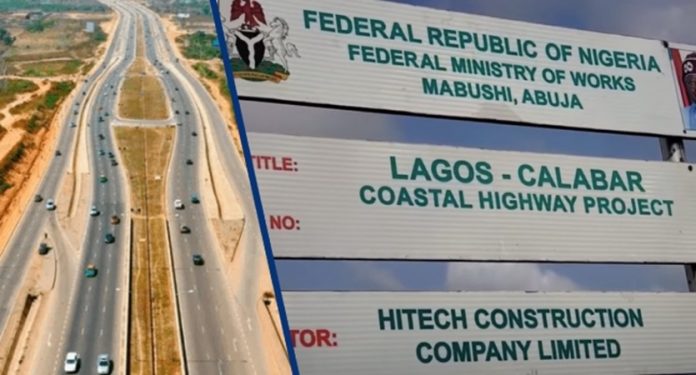
The Nigerian Government is making significant changes to the Lagos-Calabar Coastal Highway, opting for a redesigned route that eliminates nearly 90% of planned bridges across key states, including Ondo, Delta, Rivers, Akwa Ibom, and Bayelsa.

This major shift in strategy is aimed at reducing construction costs while maintaining the project’s economic and infrastructural impact.

Minister of Works David Umahi, speaking at a stakeholders’ engagement meeting in Lagos on Sunday, explained that instead of building costly bridges over water bodies, the government is redirecting the highway to upland areas. This approach is expected to save billions of naira, ensuring that the road remains both cost-effective and profitable.

Why the Redesign?

Originally, the Lagos-Calabar Coastal Highway included multiple bridges, some stretching as long as three kilometers, to accommodate the network of rivers, creeks, and wetlands across the coastal corridor. However, Umahi revealed that these bridges posed a significant financial challenge.

“For the sections of Ondo, the section of Delta, the section of Port Harcourt, the continuous section in Akwa Ibom and Bayelsa, we are confronted with a lot of bridges, some as long as three kilometers. We don’t want to do that. That is going to cost us a fortune,” Umahi said.

The decision to shift the road inland is not just about saving money; it is also about ensuring that the highway is built efficiently, maintained sustainably, and generates a return on investment. By reducing the number of bridges, the government aims to simplify construction, reduce maintenance costs, and speed up completion timelines.

Why Was This Not Done in Lagos?

The decision to redesign the highway in other states has led many Nigerians to ask a critical question: Why was a similar approach not taken in Lagos, where businesses worth billions of naira were destroyed?

While Umahi framed the redesign as a cost-saving measure, many have asked the above question about Lagos, where the government demolished thriving multibillion-dollar businesses to make way for the project.

This contradiction has raised concerns over the government’s priorities, especially given that there are other critical but neglected road projects, such as the East-West Road, that many believe should have been prioritized over the Lagos-Calabar Coastal Highway. The East-West Road, which has been in a state of disrepair for years, is a vital transport corridor for the oil-rich Niger Delta region.

The most prominent casualty of the highway project in Lagos was the Landmark Beach Resort, a popular tourism hub that was completely demolished despite multiple appeals from business owners, stakeholders, and the public.

The Landmark Beach Resort, located along the Lekki coastline, housed a range of commercial activities, including beachfront restaurants, bars, event spaces, and leisure facilities. It was a major tourist attraction, generating significant revenue and employment opportunities. However, the government insisted on demolishing it to ensure that the highway maintained its coastal alignment—a justification that now appears contradictory in light of the recent redesign decisions.

This double standard has sparked criticism, with many believing that the government’s decision to rush into demolitions in Lagos without exploring alternative routes has ethnic sentiments.

Is It Still a Coastal Road?

With the latest redesign, a significant portion of the highway will no longer follow a coastal route, effectively making it an upland highway rather than a true coastal road. This has reignited debate over the project’s purpose. Many have noted that if the government abandoned its coastal alignment, it should not have embarked on the project in the first place.

One of the most crucial sections of the highway is the Lekki Free Zone, where an 80-meter-span bridge has been designed to facilitate truck movement around the Dangote Refinery and other major industrial hubs. This section is expected to significantly ease logistics for businesses operating in the zone, ensuring that goods and raw materials can be transported seamlessly and efficiently.

Umahi assured stakeholders that consultations had been completed, and all necessary approvals—including land revocation and enumeration—had been signed off by the Lagos State Government. This clearance paves the way for uninterrupted construction in the region.

The Government’s Economic Justification

Despite the growing criticism, the government insists that the project is more than just a road and bridge initiative—it is an economic investment corridor designed to spur commercial activities, tourism, and renewable energy projects such as windmill power generation.

“This is beyond roads and bridges. It is an investment. Along the corridor, we’re going to have a lot of commercial activities. Tourism is going to grow in a very dignified and intensified manner. We’re going to have windmill energy. This coastal highway is going to be connected to the existing roads—a lot of them, we inherited,” he said.

Balancing Cost, Efficiency, and Economic Impact

The N15 trillion Lagos-Calabar Coastal Highway remains one of the most ambitious infrastructure projects in Nigeria. While cutting down bridge construction is expected to drastically lower costs, the government still faces the challenge of funding the massive project. Concerns have been raised over budget transparency, the potential for delays, and whether the inland realignment could impact communities or businesses along the coast.

Many Nigerians are now wondering if the project will face the same delays and budget overruns that have plagued previous infrastructure projects.

However, the Federal Government insists that its approach will ensure the long-term viability of the project, making it a critical driver of national development.