DD
MM
YYYY

PAGES

DD
MM
YYYY

spot_img

PAGES

Home Blog Page 2158

Bonk Mania Is Over – FXGuys Takes the Spotlight With a $4M Breakthrough

0

The meme coin frenzy comes and goes, and Bonk (BONK) was no exception. While it saw massive hype, its momentum has started to fade. In contrast, FXGuys is one of the top DeFi coins with real-world use cases.

With FXGuys in Stage 3 of its presale at $0.05 and over $4.4 million raised, it has firmly positioned itself as a Top PropFi Project. Unlike meme coins, $FXG token offers traders and investors long-term value through staking, a prop trading funding program, and Trade2Earn rewards.

So, as the Bonk mania cools down, let’s see why FXGuys is gaining momentum as one of the high-potential altcoins in 2025.

>>>JOIN FXGUYS HERE<<<

FXGuys – A Game-Changer in DeFi and Trading

FXGuys isn’t just another altcoin. It’s a broker-backed crypto prop firm that offers traders access to funding, rewards, and no-buy/sell tax trading. Its unique approach makes it a smart prop trader’s go-to platform.

1. Staking – Earn a Share of Broker Profits

One of the standout features of FXGuys is staking $FXG, which allows holders to earn a 20% revenue share from broker trading volume. Unlike meme coins that rely on speculative hype, this creates a sustainable model where investors benefit from real trading activity.

2. Prop Trading Funding Program – A Future for Smart Traders

Through its prop trading funding program, FXGuys is revolutionizing the best proprietary trading firms by offering traders up to $500,000 in trading capital. Traders who pass evaluations can trade with real funds and keep 80% of their profits.

For traders looking to scale their skills without the risk of personal capital,  the FX Guys is the ultimate instant funding prop firm.

3. Trade2Earn – Earn $FXG for Every Trade

FXGuys introduces a Trade2Earn model, ensuring that every trade on the platform earns $FXG tokens. This encourages trading volume, benefiting both investors and traders alike.

4. No Buy/Sell Tax and Instant Deposits

Unlike many DeFi projects, FX Guys has removed buy/sell taxes on $FXG, allowing for frictionless trading. Additionally, users can enjoy same-day fiat deposits and withdrawals in over 100 local currencies or crypto.

Why FXGuys Outshines Bonk

Bonk gained attention as a meme coin but lacked the long-term value and ecosystem that FXGuys provides. Here’s how FXGuys holds a more substantial investment case:

  • Real Utility – Unlike Bonk, which relies on hype, $FXG token provides financial tools for traders and investors.
  • Passive Income – Staking rewards ensure consistent returns, whereas meme coins fluctuate with market sentiment.
  • Trader-Centric Features – FXGuys caters to professional and smart prop traders by offering prop trading funding programs and no-KYC decentralized trading.
  • Expanding Ecosystem – FXGuys operates as a broker-backed crypto prop firm, supporting trading on MT5, Match-Trader, cTrader, DXtrade, and its own FXGuys Trader platform.

With Stage 3 of its presale underway, investors now have access to the BETA platform, providing a free trial of the FXGuys trading ecosystem.

>>>JOIN FXGUYS HERE<<<

Conclusion: FXGuys Takes Over as the New Market Leader

While Bonk’s time in the spotlight fades, FXGuys is gaining traction as one of the best DeFi tokens in 2024. With staking rewards, a prop trading funding program, and Trade2Earn incentives, it delivers real value beyond speculation.

With $4.4 million raised and its presale price at $0.05, now is the time to get involved with FXGuys and access its BETA platform before it reaches the next level.

To find out more about FXGuys follow the links below:

Presale | Website | Whitepaper | Socials | Audit
 

Cardano’s Long-Term Vision Is Strong, Yet Short-Term Traders Are Betting Elsewhere

0

Cardano’s roadmap for decentralized governance and scalability remains ambitious, but traders are increasingly diverting attention to projects with faster momentum. The Cardano price has anchored below $1 for weeks, reflecting a 21% monthly drop despite major ecosystem updates. This consolidation contrasts with platforms like DTX Exchange, whose hybrid trading model and live presale are drawing capital from those prioritizing agility over long-term bets.

DTX: Empowering Investors with Hybrid Trading Solutions

The crypto sector is witnessing a quiet revolution as platforms reshape how traders interact with global markets. DTX Exchange stands out by blending blockchain’s inherent transparency with access to stocks, forex, and 120,000+ assets under one roof. Its hybrid design closes the gap between retail and institutional players. It will offer tools like 1000x leverage and fractionalized ETF exposure while sidestepping the opacity plaguing many presale-driven projects.

With 700,000+ wallets already secured and $15 million raised, DTX’s public presale highlights retail investors’ appetite for equitable early access. The platform’s capped token supply, paired with third-party audits by firms like SolidProof—positions it as a good crypto to buy for those wary of inflationary tokenomics. As crypto analyst @CryptoGuru2025 noted: “DTX’s approach feels like Binance’s 2017 ICO reloaded—community-first, utility-focused, and built for real traders.”

This strategy prioritizes practical trading advantages, from copy-trading integrations to a unified Phoenix Wallet for cross-asset management. When the platform goes live in Q2, its 200,000 transactions-per-second capacity could challenge legacy exchanges struggling with congestion during market swings.

ADA Struggles as Traders Eye Other Coins

Cardano’s methodical development cadence, marked by recent milestones like the Chang hard fork proposal, hasn’t translated into price momentum. The Cardano price remains range bound as traders reallocate funds to presale projects offering near-term catalysts. ADA’s 14% rebound following its Walmart Africa blockchain deal briefly sparked optimism, but gains quickly flattened—a pattern mirroring its 2024 trajectory.

Market advisors suggest Cardano’s focus on governance and peer-reviewed upgrades appeals more to institutions than retail speculators. Meanwhile, DTX Exchange’s token has surged 800% since its $0.02 debut, capitalizing on demand for platforms merging CeFi liquidity with DeFi’s flexibility. For those viewing ADA as a top crypto in the long-term, DTX’s presale offers a complementary play on trading infrastructure evolution.

Reddit threads and Telegram groups echo this sentiment. One user summarized: “Holding ADA is like owning prime real estate—it’ll mature, but I need projects like DTX to pay the bills now.” This pragmatism underscores a market increasingly split between multi-year bets and tactical plays.

The Cardano Price Seeks Stability at $1

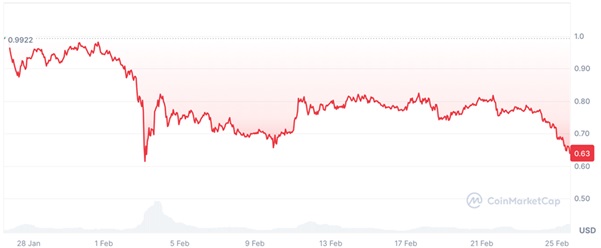
ADA’s $1 price floor has become a litmus test for investor patience. The Cardano price has traded within a 0.7% daily band since Grayscale added it to its Digital Large Cap Fund, signaling accumulation by long-term holders. However, the absence of volatility has pushed active traders towards high-growth presales, with DTX Exchange’s $0.18 token highlighting a strategic shift toward promising, high-potential investments.

Source: ADA Price, Monthly Chart, CoinMarketCap

Cardano’s community-driven initiatives, like Project Catalyst grants, reinforce its decentralized ethos but lack the immediacy traders crave. In contrast, DTX’s roadmap—featuring AI-enhanced analytics and a Q2 launch—provides tangible milestones. The platform’s ability to onboard traditional asset traders while serving crypto natives could make it a potential new crypto to invest in for diversifiers.

Market data paints a clear picture: DTX’s presale growth outpaces ADA’s 30-day performance by 35:1. While the Cardano price reflects strategic accumulation, DTX’s trajectory mirrors early Binance Coin patterns—bridging market gaps with tech that simplifies portfolio scaling. As cross-chain interoperability advances, both projects may thrive, but their audiences are diverging rapidly.

Conclusion

ADA’s research-driven approach secures its place in crypto’s future, but the Cardano price plateau highlights a market hungry for actionable innovation. Platforms like DTX Exchange are filling this gap, offering traders tools to navigate both traditional and digital markets seamlessly. For those balancing long-term holds with tactical moves, understanding these dynamics is crucial. To explore hybrid trading’s potential, consider reviewing DTX’s presale details below.


Check the DTX Website

Buy Presale

Join Telegram Community

Solana Bleeds as 11M $SOL Unlocks from FTX Estates

0

The crypto market is indeed taking a hit as of February 25, 2025, with Solana (SOL) at the center of the storm. Reports indicate that approximately 11 million $SOL tokens—valued at roughly $2 billion based on current prices—were unlocked on March 1, 2025, as part of a scheduled release from Solana’s vesting program tied to early investors and the FTX bankruptcy estate. This massive unlock, representing about 20% of SOL’s circulating supply of 488 million tokens, has sparked widespread concern about downward price pressure, contributing to a broader market bleed.

SOL’s price has tanked, dropping to around $136-$140 per token, down over 15% in the past week alone, with some exchanges showing even steeper 24-hour declines. This slide has pushed the SOL/BTC trading pair to its lowest level in over two years, hovering around 0.00178 BTC per SOL, a range last seen in late 2022 during the FTX collapse fallout.

Solana’s memecoin scene—think BONK, WIF, MEW, and newer players like TRUMP and MELANIA—thrives on hype, community momentum, and cheap, fast transactions. But the unlock, largely tied to the FTX estate dumping tokens bought at $64 last year, has flooded the market with supply, spooking traders. On-chain data shows trading volume spiking—$9.9 billion in 24 hours for SOL alone—but liquidity on DEXs like Raydium is thinning as panic selling outpaces buying

Back then, SOL cratered to $8 before rebounding, but this time, the unlocks scale—far exceeding the $7.5 billion in unlocks spread over the prior three months—has traders bracing for a potential revisit of sub-$100 levels. The market’s fear is palpable, with Bitcoin itself dipping below $94,000 after failing to hold the $100,000 mark, dragging altcoins like SOL deeper into the red.

The unlock stems largely from the FTX estate, which offloaded SOL at $64 per token in auctions last year, netting buyers like Galaxy Digital a hefty profit margin even at today’s depressed prices. While some argue these sales are handled over the counter (OTC) to limit market impact, skepticism runs high—OTC buyers, likely institutional players, may still dump portions on open markets, exacerbating the bleed.

On-chain data backs this up: Solana’s 24-hour trading volume spiked to $9.9 billion, yet liquidity on DEXs like Raydium has thinned, hinting at panic selling outpacing buying interest. Sentiment on X reflects the chaos—users warn of a “bloodbath” for SOL and its memecoin ecosystem, with one noting a 2.3% supply increase from the unlock could sink prices further, especially as on-chain volume dries up.

Others see it as a buying opportunity, pointing to SOL’s historical resilience and its outperformance of Ethereum (ETH) over two years. The broader crypto market isn’t spared either—Ethereum’s hovering around $2,500, and memecoins across chains are reeling, with total market cap shedding billions in days.

The SOL/BTC two-year low underscores Solana’s struggle to hold value against Bitcoin amid this supply shock. While Solana’s tech—boasting 50,000 TPS—keeps it a darling for DeFi and NFT enthusiasts, the immediate outlook is grim. If selling pressure persists and no fresh narrative (like a Pump.fun AMM rollout) emerges, SOL could test $100 or lower, dragging the altcoin market with it. For now, the bleed’s real, and the unlocks ripple effects are just starting to play out.

Saudi Arabia’s SALIC Moves to Secure 80% Stake in Olam Agri in $1.78 Billion Deal

0

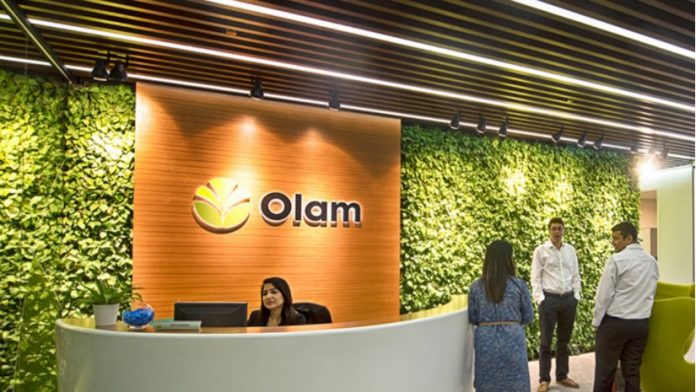
The Saudi Agriculture & Livestock Investment Company (SALIC) has announced plans to acquire a controlling 44.58% stake in Olam Agri Holdings (Olam Agri) for approximately $1.78 billion. This acquisition, which forms part of a broader transaction, will raise SALIC’s total ownership of Olam Agri to 80.01% upon completion of the first tranche.

The deal marks a significant expansion of SALIC’s investments in global agribusiness, reinforcing its strategic commitment to securing reliable food sources amid shifting global agricultural supply chains. For Olam Group Limited (OGL), the parent company of Olam Agri, this transaction represents a major step in its long-term divestment strategy, generating substantial financial returns while repositioning the group’s focus on its remaining businesses.

The Breakdown of The Deal

Under the agreement, SALIC’s purchase will unfold in phases. Following the completion of Tranche 1, OGL will retain a 19.99% stake in Olam Agri. However, OGL has negotiated a put option that allows it to sell its remaining shares to SALIC on the third anniversary of Tranche 1’s completion. This means that OGL will have the flexibility to fully exit Olam Agri in 2027 if it chooses to do so.

The financial windfall for Olam Group from this sale is substantial. Upon the completion of Tranche 1, the company is expected to realize an estimated disposal gain of $1.84 billion, which will be added to OGL’s equity reserves. Furthermore, the combined proceeds from Tranche 1 and the anticipated second tranche (Tranche 2) will generate approximately $2.58 billion in gross cash inflows.

OGL’s Board has outlined that it will carefully assess several strategic considerations before deploying these funds. The company is weighing potential allocations toward debt repayment, capital restructuring, reinvestment in core business areas, and the possibility of a one-time special dividend to shareholders.

The sale aligns with Olam’s broader restructuring efforts. Once Tranche 2 is completed, Olam will have fully divested from Olam Agri, including the previous 35.43% stake sale in 2022. This total divestment is expected to generate gross proceeds of $3.87 billion, significantly boosting Olam Group’s financial reserves by $2.72 billion.

After parting ways with Olam Agri, OGL will continue to retain full ownership of Olam Food Ingredients (ofi) and the Remaining Olam Group. The company is actively exploring strategic options to unlock value from these businesses, including a potential IPO for ofi, which could further enhance shareholder returns and reposition the company within the global food sector.

SALIC’s Investment Strategy

For SALIC, this acquisition is not just about expanding its portfolio—it is a strategic move aimed at reinforcing food security through investments in high-potential agricultural businesses. The company has long pursued a strategy focused on securing stable food supplies through partnerships, acquisitions, and vertically integrated supply chains.

SALIC gains greater control over a key global agribusiness player by increasing its stake in Olam Agri to 80.01%, enhancing its ability to influence food production and distribution on a global scale. Olam Agri’s operations, which span critical agricultural commodities such as grains, edible oils, and animal feed, are expected to play a vital role in supporting Saudi Arabia’s food security objectives as the country works to reduce its dependence on food imports and secure reliable supply sources.

In a statement on the deal, SALIC reaffirmed its confidence in the partnership, stating that “the strengthened relationship with Olam Agri will further its mission of investing in innovative food and agriculture businesses that contribute to global and national food security.”

The transaction also reflects broader global trends, where sovereign-backed investment funds are increasingly prioritizing food security as a strategic imperative. As climate change, geopolitical tensions, and supply chain disruptions continue to pose risks to global food production, countries are doubling down on securing essential agricultural assets—and SALIC’s deepened partnership with Olam Agri is a clear example of this approach.

What’s In It for Olam Group?

For Olam Group, this deal is a continuation of its broader corporate restructuring strategy, which has seen the company streamline its business model by focusing on its highest-value assets. While Olam Agri has been a cornerstone of the group’s operations, the divestment allows Olam to redirect capital and management resources toward its remaining businesses.

Olam’s full ownership of ofi, which specializes in food ingredients such as cocoa, coffee, dairy, nuts, and spices, positions the company to explore new growth avenues in premium food markets. The potential IPO for ofi, if pursued, could provide Olam with an additional capital boost, enhancing its ability to invest in higher-margin businesses with strong consumer demand.

Moreover, Olam’s Remaining Group will continue operating and managing assets that do not fall under ofi or Olam Agri, ensuring that the company retains a diversified footprint in global agribusiness.

However, the Olam-SALIC deal is emblematic of the shifting dynamics in global agriculture and food production. As nations place emphasis on food security and supply chain resilience, investments in agribusinesses with strong operational footprints are becoming increasingly valuable strategic assets. Transactions of this scale are expected to set the tone for future investments, where financial gains intersect with strategic food security objectives.

Apple Shareholders Reject Proposal to End DEI Amid Growing Corporate Rollbacks

0

Apple shareholders have firmly rejected a proposal to dismantle the company’s Inclusion & Diversity program, signaling continued investor support for diversity initiatives even as other major corporations scale back similar efforts.

Per CNBC, the vote took place at Apple’s annual shareholder meeting on Tuesday, where the National Center for Public Policy Research (NCPPR) urged Apple to abolish its diversity, equity, and inclusion (DEI) efforts, arguing that such programs pose legal and financial risks.

The rejected proposal reflected a broader corporate and political shift away from DEI initiatives, driven in part by last year’s Supreme Court ruling against affirmative action in college admissions. Since then, major companies including Alphabet, Meta, Microsoft, Zoom, Amazon, McDonald’s, Target, Ford, Lowe’s, and Walmart have either scaled back or scrapped their DEI programs.

Despite this trend, Apple made it clear that it stands by its diversity initiatives—at least for now. CEO Tim Cook defended Apple’s DEI efforts, emphasizing that diversity remains a key driver of the company’s success.

The proposal, brought forward by NCPPR, specifically called for Apple to eliminate its DEI program, department, policies, and goals, claiming that such initiatives could lead to discriminatory hiring practices and potential legal liabilities. The group cited a CNBC report showing that other tech giants have scaled back diversity programs and referenced President Donald Trump’s recent executive order directing the Department of Justice to investigate potential DEI-related discrimination.

At the meeting, Stephen Padfield, executive director of NCPPR, argued that corporate America is shifting away from DEI initiatives and that Apple should follow suit.

“The risks to Apple stemming from continuing to push these divisive and value-destroying agendas is only increasing in light of President Trump’s recent executive order focusing the Department of Justice on rooting out illegal discrimination being carried out in the name of DEI,” Padfield stated. “The vibe shift is clear. DEI is out, and merit is in.”

Apple, however, rejected the proposal outright, arguing that it is already in full compliance with employment laws and that scrapping the DEI program would interfere with company strategy.

“Our strength has always come from hiring the very best people and then providing a culture of collaboration, one where people with diverse backgrounds and perspectives come together to innovate and create something magical for our users,” Tim Cook said.

However, Cook acknowledged that the evolving legal landscape might force Apple to make changes. The company’s approach to diversity will likely be influenced by growing legal challenges and shifting political pressures at the federal level.

Corporate America Retreats from DEI as Legal Risks Grow

The growing rollback of DEI programs across corporate America has been accelerated by legal and political pressures, particularly following the Supreme Court’s decision on affirmative action in 2024. The ruling, which struck down race-based admissions policies at universities, has had a ripple effect in the private sector, with companies reassessing their diversity hiring and promotion initiatives to avoid legal liabilities.

Since Trump returned to office in January, his administration has wasted no time in targeting corporate DEI policies. One of Trump’s first executive orders in his new term sought to dismantle federal DEI programs, setting the stage for heightened legal scrutiny of diversity efforts in the private sector.

Given these developments, corporations that continue to promote DEI are expected to face increasing pressure from investors, legal challenges, and potential regulatory action.

Apple’s DEI Commitments and Workforce Demographics

Unlike other members of the American tech industry, Apple has remained committed to diversity. The company’s DEI initiatives include internal support groups for underrepresented employees, accessibility features for people with disabilities, and research to mitigate racial bias in Apple products and services.

Apple’s workforce statistics, according to 2022 figures published on its website, show that nearly two-thirds (65%) of the workforce is male, 35% of employees are female, 42% are white and 30% are Asian.

Apple has not indicated whether it will modify its DEI programs in response to shifting legal and political pressures. However, Cook’s comments suggest that the company may eventually be forced to adapt its approach as the federal government and courts continue to scrutinize diversity policies.

Other Shareholder Proposals Rejected

The shareholder meeting also saw the rejection of several other key proposals related to Apple’s corporate governance and ethical responsibilities.

Shareholders voted against a proposal to require Apple to produce reports on:

  • The ethical use of AI and data
  • The costs and benefits of Apple’s efforts to combat child exploitation
  • Apple’s charitable giving practices

Another proposal, brought forward by the National Legal and Policy Center, focused on Apple’s partnership with OpenAI. The group argued that Apple’s deal with OpenAI might contradict its strong stance on privacy and urged Apple to prepare a report on the risks of using private or unlicensed data to train AI models.

Apple opposed the proposal, arguing that it already discloses its AI privacy policies and that an additional report was unnecessary.

While activist proposals were largely rejected, Apple shareholders approved the company’s board of directors, auditor, and executive compensation package.

Notably, Tim Cook’s compensation package for 2024 was approved, with his total pay rising to $74.61 million, up from $64.21 million in 2023. Apple defended Cook’s salary, noting that under his leadership, Apple’s market capitalization has increased by over $3 trillion.

At the meeting, Cook also reaffirmed Apple’s commitment to its $500 billion U.S. investment plan, which was praised by Trump earlier this week.

“The U.S. is our home, and we’re deeply committed to the country’s future,” Cook said.

Additionally, Apple announced plans to increase its annual dividend, with further details expected in May.

“We’ve also paid out more than $165 billion in dividends, including $15.3 billion in just the last four quarters,” Cook stated.