DD
MM
YYYY

PAGES

DD
MM
YYYY

spot_img

PAGES

Home Blog Page 2159

Nigeria Abolishes Visa-on-Arrival As Visa Restrictions Cast Doubt on AfCFTA’s Integration Principle

0

In a move that aligns with a broader trend of African nations tightening their borders, the Nigerian government has announced plans to abolish its Visa-on-Arrival policy, citing inefficiencies and security risks. Instead, visitors will now be required to pre-fill landing and exit cards before arriving in the country, a policy that will allow for better screening and migration management.

The decision, announced by Minister of Interior Dr. Olubunmi Tunji-Ojo on Friday, February 16, marks a significant shift in Nigeria’s immigration policy and underlines a departure from the more open approach that was once championed by African nations under the African Continental Free Trade Area (AfCFTA) agreement. The AfCFTA, which officially came into force in 2021, aims to promote the free movement of people and goods across Africa’s borders.

However, the growing trend of countries tightening their visa policies—including those of Nigeria, South Africa, and Kenya—suggests that the dream of a fully integrated African economy may remain elusive.

Tunji-Ojo, speaking at the closing ceremony of a week-long training on Advance Passenger Information (API) and Passenger Name Record (PNR) data in national security and law enforcement at the headquarters of the Nigeria Immigration Service (NIS) in Abuja, emphasized that the current Visa-on-Arrival system has been compromised by criminals who use it as an easy entry point into the country.

According to him, intelligence reports indicate that criminal elements have exploited loopholes in the visa-on-arrival system, using neighboring countries as entry points into Nigeria through its vast and porous land borders. He announced that in response, the government would extend the API/PNR system to land borders, making it much harder for undocumented individuals to enter the country undetected.

“What the API, PNR gives us is objectivity in decision making, objective profiling, not subjective profiling. What we had was subjective. The visa system, that is one of the core, because I always tell people the visa is not just an approval of entry, it is a migration management device. It is a security device to manage migration into your country,” he said.

The Shift Away from Open Borders in Africa

Nigeria’s decision to cancel the Visa-on-Arrival policy follows a growing wave of African nations tightening visa restrictions, a development that runs counter to the goals of the AfCFTA, which seeks to create the world’s largest free trade area by enabling the seamless movement of goods, services, and people across the continent.

The AfCFTA was designed to unite 54 of Africa’s 55 countries into a single market, fostering regional integration, economic growth, and intra-African trade. Advocates of the agreement believe that allowing for the free movement of businesspeople and professionals would enhance investment opportunities and create a more competitive African market valued at approximately $3.4 trillion.

However, recent developments suggest that key economies on the continent are not fully committed to the free movement aspect of AfCFTA, a situation largely attributed to insecurity. In addition to Nigeria’s visa crackdown, countries such as Kenya, Ghana, and South Africa have all introduced more stringent visa measures over the past year, citing security concerns and the need for tighter migration controls.

These policy shifts have led to growing skepticism about whether AfCFTA can ever be fully implemented. Many analysts believe that, while economic integration is desirable, insecurity, terrorism, and cross-border crime make the free movement of people a politically sensitive issue that governments are increasingly unwilling to embrace.

Security Concerns Trumping Economic Integration

Nigeria’s Minister of Interior justified the decision by pointing to the need for objective migration control, arguing that the existing visa system was too subjective and vulnerable to abuse.

He also criticized the role of Nigerian foreign attachés in visa approvals, stating that visa decisions should no longer be left to discretion but should be entirely automated and subject to rigorous screening.

“We do not want foreign attachés approving and issuing visas. It is not going to be that anymore. We want to screen people more. Nigeria is not a safe haven for criminals and will never be,” he added.

Security concerns, particularly regarding terrorism, human trafficking, and economic sabotage, have been at the center of Nigeria’s decision. The government argues that criminal networks have taken advantage of lenient visa policies, allowing wanted individuals to enter Nigeria under false pretenses.

The tightening of immigration controls is expected to be implemented between March 1 and April 1, 2024, and will include measures such as mandatory pre-filled landing and exit cards, integration of visa processing with global security databases, and real-time tracking of foreign nationals.

“The e-visa solution will be integrated with Interpol, criminal record systems, and other background-checking agencies, so we can take more informed decisions,” Tunji-Ojo said.

The Future of AfCFTA and Free Movement in Africa

The AfCFTA was heralded as a transformative economic agreement that could reshape trade on the continent by removing barriers, harmonizing regulations, and encouraging intra-African business. However, its ambitious vision rests on the ability of African nations to trust one another and open their borders for the free movement of professionals, entrepreneurs, and workers.

The recent wave of stricter visa policies—led by the continent’s largest economies—raises concerns that AfCFTA may never be fully realized. Many African governments fear that without proper security measures, open borders could exacerbate existing challenges such as illegal migration, terrorism, and cross-border crime.

Security experts argue that, while free movement is a noble goal, it cannot be prioritized over national security concerns. Given the instability in regions such as the Sahel, the Horn of Africa, and the Great Lakes, some governments believe that allowing unrestricted travel could make it easier for criminal networks, insurgents, and traffickers to operate across borders.

There are also economic concerns driving the decision to tighten visa policies. Some African nations worry that free movement could lead to an influx of economic migrants from poorer regions, placing pressure on local job markets and public resources.

The decision by Nigeria and other African nations to reverse or tighten their visa policies is widely seen as a setback for regional integration efforts. While trade barriers are being lifted under AfCFTA, restrictions on movement suggest that true economic unity remains a distant goal.

Economists have noted that the challenge facing African leaders now is how to balance national security with the vision of an integrated African market. If major economies like Nigeria, Kenya, and South Africa continue to prioritize border restrictions over AfCFTA’s free movement agenda, it raises fundamental questions about the future of the agreement.

Stellar vs. XRP vs. Rexas Finance: Which Crypto Will Deliver a 3000% Profit by the End of Altcoin Season in Q3 2025?

0

Investors are looking at possible major winners in the crypto market as the altcoin season gets hot, entering the second half of 2025. Although several altcoins, such as Stellar and XRP, are in a bearish phase right now, Rexas Finance is attracting a lot of interest from analysts and investors. Which of these cryptocurrencies, by the end of Q3 2025, will provide the most notable gains for everyone? Let’s explore these three tokens’ present market patterns and future possibilities to find the one with a 3000% profit potential.

Stellar (XLM) Bearish Trend Verified

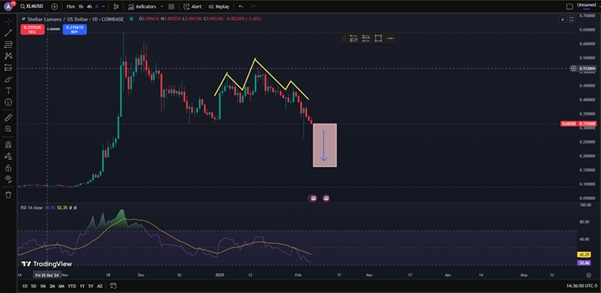
With the currency developing a head-and-shoulders pattern on the daily chart, Stellar’s (XLM) price activity has lately been less than outstanding. This technical configuration often suggests a turn from a bullish trend to a bearish one. While the right shoulder shows a drop, the left shoulder and head reflect higher pricing points; the break below the neckline validates even more downward momentum. Stellar is trading at $0.31 at the time of writing. Should the bearish trend persist, the price might drop as low as $0.22, indicating a possible 35% decrease. Moreover, the Relative Strength Index (RSI) has fallen below the 50.00 signal line, suggesting declining momentum. Given these technical signs, Stellar is a less likely option for the large returns investors hope for by Q3 of 2025 since her long-term development potential is constrained.

XLM 1D and RSI chart, February 6, 2025, | Source: Tradingview

Ripple (XRP): A Struggling Giant

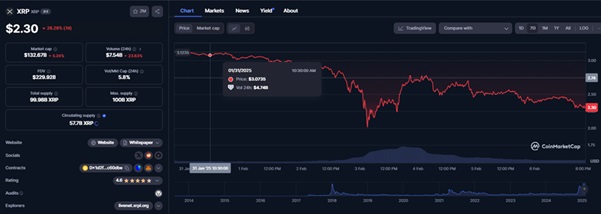
Ripple (XRP) is confronting challenges in early 2025. On February 5, XRP dropped around 5.05% in 24 hours, shedding to $2.30. Over the past week, XRP has lost 21% of its value; generally, the trend is not encouraging. XRP dropped momentarily to $1.80 before rebounding, indicating that sellers are currently in charge of the price.

XRP 1D chart, February 6, 2025, | Source: Coinmarketcap

XRP has been unable to sustain its positive momentum even though it reached highs of $3.40. The RSI has verified a bearish divergence, so XRP may be under more negative pressure because the coin can not keep above the $2.50 support line. Analysts believe that if the bears keep ruling, XRP could drop to $1.60, making it less enticing for investors hoping for exceptional returns by Q3 2025.

Rexas Finance (RXS): The Token Having Unmatched Growth Potential

Rexas Finance (RXS) is a fast-developing cryptocurrency with great potential for expansion, unlike Stellar and XRP. Unlike many other blockchain initiatives, Rexas Finance concentrates on tokenizing actual assets (RWA), including intellectual property, commodities, and real estate. Investors and blockchain aficionados have paid great attention to this original offer since it closes the gap between the conventional financial sector and the expanding digital asset ecosystem. Rexas Finance is experiencing amazing expansion in its 12th presale stage. Following the first stage, the token’s price climbed by 567% from $0.03 to $0.20. The presale exceeded expectations, with $45,403,761 raised and 447,016,515 tokens sold. Analysts estimate that by the time the token formally launches for $0.25 on June 19, 2025, it might experience a massive price spike, with an all-time high (ATH) of $6.00, delivering a jaw-dropping 3000% return for early investors. Rexas Finance’s creative use of distributed finance (DeFi) for asset ownership and its safe, open AI-powered smart contracts help it position itself to rule the blockchain. Furthermore, the continuous $1 million RXS token giveaway, which has already attracted over 1.35 million entries, fuels enthusiasm and demand for the RXS token.

Click Here To Buy Rexas Finance (RXS) Presale

Which Crypto Will Deliver the 3000% Profit?

Although Stellar and XRP are in bearish periods, Rexas Finance is a possible altcoin season winner. Its original approach to real-world asset tokenization, solid presale success, and rising community support qualify it as a top possibility for large increases in the next months. Analysts project a 3000% rise in the value of RXS so that Rexas Finance can yield profits much above the expansion of more established cryptocurrencies like Stellar and XRP. Rexas Finance is the cryptocurrency to watch as we head toward Q3 2025, particularly for those hoping to make big gains. Rexas Finance is positioned for a spectacular increase that might provide early investors hitherto unheard-of returns, while Stellar and XRP may be battling to restore their positive momentum.


For more information about Rexas Finance (RXS) visit the links below:

Website: https://rexas.com

Win $1 Million Giveaway: https://bit.ly/Rexas1M

Whitepaper: https://rexas.com/rexas-whitepaper.pdf

Twitter/X: https://x.com/rexasfinance

Telegram: https://t.me/rexasfinance

Google Faces EU Charges in Big Tech Antitrust Crackdown Amid Rising Trade Tensions with U.S.

0
The US is after Google also

Alphabet’s Google is set to be charged by the European Commission for violating the Digital Markets Act (DMA) after its proposed changes to search result formats failed to address concerns raised by regulators and rival companies.

The charges, which focus on Google’s alleged self-preferencing of its own services over competitors in search results, come at a time of growing tensions between the European Union and the United States.

The move by the European Commission is interpreted by some as a warning to U.S. President Donald Trump’s administration, which has threatened to impose tariffs on European goods. The EU warned that it could retaliate by intensifying scrutiny on Silicon Valley giants, a threat that has added to fears of a transatlantic trade war.

The European Commission launched its investigation into Google in March 2024, scrutinizing whether the tech giant unfairly prioritizes its own services—such as Google Shopping, Google Flights, and Google Hotels—over those of rivals. The probe also examined whether Google imposes unfair restrictions on app developers, preventing them from informing users about cheaper offers available outside the Google Play Store.

The imminent charges stem from the search favoritism issue, which has long been a contentious point between Google and regulators. Despite making multiple adjustments to its search algorithm and design, the company’s proposals have been rejected by competitors and regulators, who argue that they still fail to comply with the Digital Markets Act.

In response to the growing regulatory pressure, Google has defended its position, arguing that further modifications to its search algorithms could negatively impact user experience by removing key features that help consumers find relevant information. In a December 2024 blog post, Oliver Bethell, Google’s Director of EMEA Competition, emphasized that the company was working to reach a “balanced solution” with EU regulators.

Despite these assurances, EU officials remain skeptical. Regulators are particularly unhappy with Google’s threat to revert to a simpler “blue links” format if it is unable to reach an agreement with competitors. This move has been perceived as an attempt by Google to pressure the EU to soften its stance on Big Tech regulation.

Google’s legal battle with the EU is part of a broader conflict between Silicon Valley giants and European regulators. Companies like Google, Apple, Meta, and Amazon have repeatedly criticized the European Commission’s regulations, arguing that overregulation stifles innovation, hampers competition, and limits economic growth.

The Digital Markets Act, which came into force in 2023, imposes strict rules on tech companies with dominant market positions, prohibiting them from favoring their own products and services. Companies found in violation of the DMA face fines of up to 10% of their global annual revenue, a figure that could exceed $28 billion for Google, based on its 2023 revenue of over $280 billion.

Trade Tensions Between the EU and the U.S.

Beyond the legal implications, the case against Google could compound the existing standoff between Brussels and Washington. European officials have warned that they will not hesitate to intensify their crackdown on U.S. tech giants if Washington proceeds with tariff threats.

Against this backdrop, the European Commission’s actions are now seen as part of a broader strategy to assert its regulatory independence and send a message to the U.S. that it will not back down in the face of economic threats.

What’s Next for Google and Big Tech?

With formal charges expected in the coming months, Google faces one of its biggest regulatory challenges to date. If found guilty, the company could be forced to significantly alter its search engine operations, potentially leading to a major shift in the way Google presents search results in Europe.

Meanwhile, the European Commission is also pursuing separate investigations into Apple and Meta, both of which are more advanced. Decisions in these cases could further shape the operation of the Big Tech in Europe.

Nigeria Seeks China’s Support for EV Assembly Plants Amid Calls for Focus on Power Sector

0

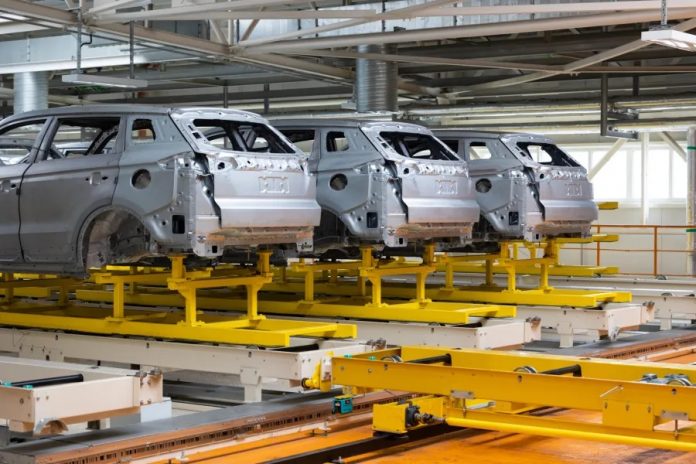
In a bid to accelerate its economic diversification and industrialization drive, the Federal Government of Nigeria has appealed for China’s support in establishing electric vehicle (EV) assembly plants in the country.

The request was made by the Minister of State for Foreign Affairs, Ambassador Bianca Odumegwu-Ojukwu, during a visit by the Chinese Ambassador to Nigeria, Yu Dunhai, to the Ministry of Foreign Affairs.

Describing China as one of Nigeria’s largest trade partners, Odumegwu-Ojukwu emphasized the long-standing economic cooperation between both countries and the need for deeper collaboration, particularly in the automotive sector.

“In line with President Tinubu’s policy to industrialize Nigeria, we expect China’s cooperation to enable us to establish assembly plants for electric vehicles,” she stated.

However, as Nigeria expresses its ambition to advance in the EV industry, analysts have pointed out a critical gap in the country’s infrastructure—electricity. Given Nigeria’s chronic power shortages, economic experts say that the government should prioritize seeking China’s support in resolving its energy crisis before venturing into power-dependent industries like electric vehicle manufacturing.

Nigeria currently generates just over 5,000 megawatts (MW) of electricity, far below the estimated 33,000MW required to meet the country’s industrial and domestic needs. The shortfall has long been a major impediment to economic growth, with businesses and industries forced to rely on expensive diesel-powered generators to keep operations running.

For a country aspiring to develop an EV industry, a stable power supply is non-negotiable. Electric vehicle manufacturing, charging infrastructure, and overall industrial activities require consistent and affordable electricity.

According to energy analysts, the power sector’s inefficiency has stifled industrialization, discouraged foreign investment, and increased production costs across multiple sectors. Nigeria’s struggling manufacturers cite erratic power supply as one of their biggest operational challenges, with many forced to relocate or shut down due to high energy costs. The manufacturing sector, which should be a driving force for economic development, is severely constrained by the unreliable power grid.

Against this backdrop, analysts are urging the government to seek China’s help in addressing the power crisis as a fundamental step toward achieving industrialization and supporting industries like electric vehicle production.

Energy policy experts believe that the Nigerian government must first solve the electricity problem before focusing on power-intensive industries such as electric vehicle production. They suggest that instead of requesting China’s assistance in setting up EV plants, Nigeria should engage Beijing in strategic discussions to significantly boost power generation, transmission, and distribution.

China has vast experience in large-scale power infrastructure projects, including hydroelectric, solar, and coal power plants. Many African nations, including Ethiopia and Zambia, have leveraged China’s expertise to expand their power grids.

China’s involvement in Nigeria’s power sector has been relatively limited compared to other sectors like railways and roads. Analysts believe the government should urgently request China’s assistance in building additional power plants, upgrading the national grid, and enhancing renewable energy projects.

China’s growing involvement in Nigeria’s economy is part of its broader strategy to strengthen its influence across Africa. Over the years, Beijing has heavily invested in Nigeria’s infrastructure, financing projects in transportation, industrial parks, and even the Lekki Deep Sea Port. However, its involvement in Nigeria’s power sector remains minimal despite the country’s glaring electricity challenges.

With trade between both countries surpassing $21 billion in 2024 and Nigeria’s exports to China increasing by over 25%, experts argue that a strategic partnership focusing on power generation would be far more beneficial than prioritizing EV assembly plants at this stage.

Additionally, the recent renewal of a $2 billion currency swap agreement between Nigeria and China is expected to strengthen financial cooperation and promote bilateral trade. However, without sufficient energy to power industries and boost manufacturing, Nigeria may struggle to maximize the benefits of its trade agreements with China.

While Nigeria’s push for EV assembly plants aligns with global trends in green energy and industrialization, it raises concerns about the government’s priorities.

The Lesson from Usain Bolt and Jamaicans, and the Power of Teams

0

If you studied Social Studies in junior secondary, you possibly memorized one of the advantages of partnerships. And that was – “joint hands in making management  decisions”. We memorized those without understanding the implications. Then at senior secondary, the Economics teacher  brought the concepts of division of labour and factors of production. Yes, expertise matters even at unit level but even that “risk taker” within the factors of production cannot achieve much without the “labour”. So, it comes down to building a working team in that firm.

When a company, when a society, when a family, when a nation,…work together as ONE Team, they outperform their individual best.

Usain Bolt ran the world’s best 9.58 seconds for 100 meters. But four Jamaicans ran the 4 x 100 meters relay at 36.84 seconds. If you run the numbers, each became better, running 100 meters, on average, at 9.21 seconds, when they ran together (do not go to the science of inertia and momentum). Simply, by running together, they beat the individual world’s 100 meters record.

The message: Collaborate, partner and advance together