DD
MM
YYYY

PAGES

DD
MM
YYYY

spot_img

PAGES

Home Blog Page 218

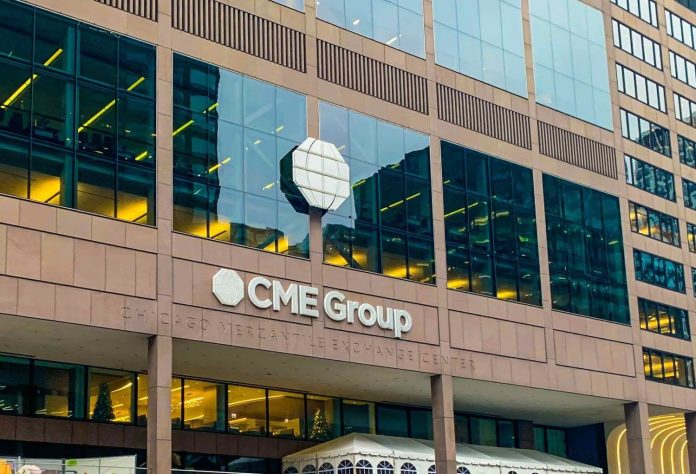
CME Group to Launch 24/7 Trading for Regulated Crypto Futures and Options 

0

CME Group, the world’s leading derivatives marketplace officially confirmed it will launch 24/7 trading for its regulated cryptocurrency futures and options, starting May 29, 2026 pending final regulatory review and approval.

Trading will occur continuously on the CME Globex platform. It begins at 4:00 p.m. CT (Central Time) on Friday, May 29 — equivalent to 5:00 p.m. ET or 10:00 p.m. UTC, depending on daylight saving adjustments. There will be at least a two-hour weekly maintenance period over the weekend to allow for system upkeep.

Weekend and holiday trades from Friday evening through Sunday evening will carry the trade date of the following business day, with clearing, settlement, and regulatory reporting handled accordingly on that next business day.

This move aligns CME’s crypto derivatives more closely with the always-on nature of spot cryptocurrency markets like Bitcoin and Ethereum trading on exchanges that never close. Currently, CME’s crypto products including Bitcoin, Ether, and newer ones like Solana, XRP, Cardano, Chainlink, and Stellar have more limited hours, typically around 23 hours per day with daily breaks.

The decision comes amid strong institutional demand: CME reported record volumes in its crypto suite, including $3 trillion in notional volume across 2025, showing growing interest in regulated tools for hedging and exposure to digital assets. This is covered directly in CME’s official press release and echoed across major crypto/finance outlets.

If approved without issues, it could further bridge traditional finance (TradFi) and crypto by giving institutions more flexible, round-the-clock risk management options. The CME Group’s decision to launch 24/7 trading for its regulated cryptocurrency futures and options starting May 29, 2026 represents a significant evolution in bridging traditional finance (TradFi) with the always-on crypto ecosystem.

This builds on record-breaking activity: $3 trillion in notional volume across 2025 and strong 2026 momentum; average daily volume up 46% year-over-year to ~407,200 contracts, with open interest also rising. Institutions can now react to news, events, or price moves at any time including weekends and holidays, eliminating overnight/weekend risk buildup that previously existed due to limited CME hours ~23 hours/day with breaks.

Reduced basis risk — Better alignment between CME derivatives and 24/7 spot crypto markets on exchanges like Binance or Coinbase minimizes discrepancies and improves hedging efficiency. This caters to surging demand from banks, asset managers, hedge funds, and corporates.

Experts view it as a structural shift toward treating crypto as a mature asset class with sophisticated, regulated tools—further integrating it into portfolios. Round-the-clock access on a major regulated platform like CME Globex should attract more participants, tightening spreads and increasing depth, especially in futures/options for Bitcoin, Ether, Solana, XRP, and others.

More efficient price discovery — Continuous trading reduces gaps from weekend spot moves not reflected in derivatives until Monday, leading to smoother convergence. Potential for reduced volatility in some scenarios — Better real-time risk management could dampen extreme swings, though high-frequency trading (HFT) and algorithmic activity might introduce new short-term volatility.

The infamous Bitcoin “CME gap” (price discrepancies from weekend spot moves vs. closed futures) effectively ends post-launch, as trading becomes continuous. This removes a predictable pattern some traders exploited or feared. Stronger institutional participation often stabilizes prices long-term and signals maturity, potentially boosting confidence and inflows via ETFs or direct exposure.

Mixed views on control — Some critics argue it enables greater Wall Street influence via cash-settled contracts allowing “paper” shorts without owning underlying assets, potentially leading to more manipulation or suppression tactics seen in commodities like gold/silver.

Others see it as validation that crypto’s nonstop model is winning out, with TradFi adapting rather than resisting. Signal of crypto maturation — Amid record volumes and new listings like Cardano, Chainlink, Stellar futures, this reinforces regulated derivatives as a gateway for mainstream capital.

Precedent for other markets — It parallels discussions around 24/7 stock trading on Wall Street, showing crypto leading the push toward always-on global finance. Early commentary ranges from bullish (“Wall Street copying crypto”) to cautious (“institutional capture”), but no immediate massive price surge noted—focus remains on long-term structural benefits.

This is widely seen as bullish for long-term adoption and legitimacy, especially among institutions seeking reliable, CFTC-regulated tools in a volatile space. It doesn’t change crypto’s decentralized core but further embeds it within global financial infrastructure. If volumes continue climbing post-launch, expect even tighter integration between spot and derivatives markets.
A Look At U.S. SEC Proposal on Innovation Exemption for Crypto and Tokenized Assets 

0

The SEC has recently revealed more details on its proposed “innovation exemption” for crypto and tokenized assets as part of its broader 2026 regulatory agenda under Project Crypto.

In remarks delivered jointly with Commissioner Hester Peirce, SEC Chair Paul Atkins outlined the exemption as a temporary, conditional relief measure. It aims to enable limited trading of certain tokenized securities on novel platforms (e.g., those using automated market makers or blockchain-based systems), while the agency develops longer-term rules. Key features include: Volume caps on trading to control scale and risk. White-listing processes for buyers and sellers.

Relief from certain registration or other requirements that may not fit blockchain tech. A “sandbox”-like structure for experimentation by both traditional finance (TradFi) firms and crypto-native players. The goal is to gather data and inform permanent regulations, with an “exit ramp” for participants to transition to full compliance.

This builds on earlier 2025 announcements where Atkins indicated a January 2026 rollout (delayed slightly), and it ties into coordination with the CFTC. The exemption supports innovation in areas like tokenized equities without fully bypassing investor protections, though groups like traditional stock exchanges have raised concerns about potential risks to market integrity.

This comes amid related SEC moves, such as recent guidance reducing broker-dealer net capital haircuts on qualifying payment stablecoins from 100% to 2% aligning them closer to money market funds.

Separately, talks at the White House on stablecoin yield and rewards progressed in a third closed-door meeting on February 19, 2026 involving banks, crypto firms and administration officials. Progress was reported as “constructive,” with incremental advances toward compromise on the contentious issue blocking broader digital asset market structure legislation tied to the CLARITY Act.

No final deal emerged, but the White House appears to favor allowing some limited stablecoin rewards; tied to transactions or activities, not passive holding like interest, rather than a full ban pushed by banks who argue yield-bearing stablecoins threaten traditional deposits.

A draft from White House Crypto Council reportedly proposes “narrow in scope” restrictions, with potential heavy penalties up to $500K daily for evasion. The White House set a March 1, 2026 deadline to resolve this impasse and advance the bill—failure could stall progress.

The core dispute remains whether stablecoins can offer rewards without being treated like bank deposits, with banks seeking stronger curbs and crypto sides pushing for flexibility. These developments signal ongoing momentum in U.S. crypto policy under the current administration, balancing innovation with safeguards—though key hurdles persist on both fronts.

A compromise permitting some incentives could enhance competitiveness, user adoption, and revenue models like transaction-based cashback or rebates. This might strengthen U.S.-based stablecoins’ global position, unlock innovation in payments/liquidity, and support ecosystems like XRP/RLUSD. Full bans would limit utility and push activity offshore.

Banks strongly oppose broad yields, viewing them as competitive threats that could drain deposits, reduce lending capacity, and create regulatory arbitrage. Limited/transaction-tied rewards represent a potential middle ground, but unresolved disputes risk prolonged uncertainty, delaying the CLARITY Act and maintaining the current “flow freeze” for institutional capital.

the White House’s third closed-door meeting showed constructive progress but no final resolution on the key impasse blocking the CLARITY Act (broader digital asset market structure legislation). The administration leans toward allowing limited, narrow rewards tied to transactions, activities, or usage rather than passive holding/interest-like yields on idle balances), with heavy penalties proposed for evasion.

Deutsche Bank Expands Use of Ripple’s System for Cross-Border Payments 

0

Deutsche Bank, Germany’s largest commercial and investment bank, is expanding its use of Ripple’s payment infrastructure to modernize cross-border payments, foreign exchange (FX) operations, multi-currency accounts, and digital asset custody services.

This development, highlighted in mid-February 2026 by German financial outlet Der Aktionär and echoed across crypto media, focuses on integrating Ripple’s blockchain-based tools such as Ripple Payments to achieve faster settlement times—often in seconds rather than the traditional 2-5 business days via legacy correspondent banking or SWIFT networks.

The goal is to reduce costs, improve efficiency, transparency, and bypass intermediaries for global transfers. Deutsche Bank is deepening ties with Ripple-linked service providers for operational enhancements.

This coincides with the bank’s involvement in SWIFT’s separate blockchain-based global payments ledger initiative (as a contributor among a coalition of over 40 institutions), positioning it to “play both sides” in evolving payment rails.

While the integration emphasizes Ripple’s technology for messaging, routing, liquidity management, and settlement, reports do not explicitly confirm live use of XRP for settlements in this context—focus appears on the broader Ripple ecosystem for institutional utility.

This move signals growing institutional adoption of blockchain for traditional finance, potentially pressuring legacy systems like SWIFT while advancing real-time, always-on cross-border capabilities.Crypto news outlets have framed it as bullish for Ripple and XRP, amid discussions of XRP price predictions and market sentiment.

This appears to be a legitimate expansion of collaboration rather than a brand-new “partnership announcement” from scratch, building on prior Ripple integrations in banking. The Deutsche Bank expansion of Ripple infrastructure carries several notable impacts across traditional banking, blockchain adoption, payments ecosystems, and the broader crypto space.

While this is framed as a deepening of collaboration rather than a brand-new deal—and primarily leverages Ripple’s tools for messaging, routing, liquidity, and settlement without confirmed live use of XRP as the bridge asset—the implications are significant.

Cross-border payments shift from 2-5 business days via legacy correspondent banking/SWIFT chains to near-instant settlements (often seconds). Industry estimates repeatedly cite potential reductions in operational costs by up to 30%, achieved by minimizing intermediaries, manual processes, error rates, and trapped liquidity in multi-currency/FX operations.

Faster, cheaper, more transparent transfers attract corporate clients and improve capital utilization. Enhanced regulatory compliance; better AML via blockchain transparency also strengthens the bank’s position.

Deutsche Bank uses Ripple internally for optimization while contributing to SWIFT’s separate blockchain-based global payments ledger with 40+ institutions, MVP targeted H1 2026. This “play both sides” approach hedges legacy systems while adopting modern rails.

This signals accelerating institutional shift away from slow, opaque correspondent banking toward distributed ledger technology (DLT) for real-time, always-on transfers. It complements rather than fully replaces SWIFT, potentially accelerating interoperability between traditional and blockchain networks.

As one of Europe’s largest banks integrates Ripple tools for FX, multi-currency accounts, and digital asset custody, it validates blockchain for enterprise finance—not speculation. This could encourage other institutions to follow, reducing friction in global flows and supporting tokenized assets/stablecoins in mainstream use.

Increased institutional usage of Ripple’s infrastructure enhances credibility, visibility, and potential demand for features like on-demand liquidity which can involve XRP. Even without direct XRP adoption here, expanded RippleNet/XRPL activity indirectly supports the ecosystem.

X discussions highlight excitement around faster/cheaper transfers, institutional momentum, and long-term utility for XRP/RLUSD. Posts frame it as “infrastructure grind paying off” and a step toward modernizing finance, though some note XRP’s price remains tied to broader market conditions rather than immediate token demand.

Analysts view this as strengthening XRP’s real-world relevance in cross-border settlement. Greater network participation often bolsters trajectory, though short-term XRP action depends on macro factors. No explicit confirmation of XRP token usage in Deutsche Bank’s settlements—focus remains on Ripple’s software/ecosystem for efficiency.

Developments are recent, so full rollout impacts will unfold over time, especially alongside SWIFT’s parallel blockchain efforts. Broader digital asset trends; stablecoins entering mainstream banking per Deutsche Bank’s own 2026 outlook webinars provide context, but regulatory clarity remains key for scaled tokenization/RWA growth.

This represents a meaningful step in bridging TradFi and blockchain, prioritizing efficiency and real utility over hype. It positions Deutsche Bank as a leader in payments modernization while contributing to a hybrid future for global finance.

Supreme Court Invalidates Core of Trump Tariff Program, Reshaping U.S. Trade Policy and Economic Outlook

0

The ruling is expected to significantly alter the trajectory of the U.S. economy, with analysts projecting renewed dollar strength and a reset in trade-driven inflation pressures.


The Supreme Court on Friday struck down a central pillar of President Donald Trump’s tariff agenda, ruling that the statute underpinning his sweeping import duties does not authorize the president to impose tariffs.

In a six-to-three decision, the court held that the International Emergency Economic Powers Act (IEEPA) does not grant unilateral authority to levy import taxes. Chief Justice John Roberts delivered the majority opinion. Justices Clarence Thomas, Samuel Alito, and Brett Kavanaugh dissented.

The ruling dismantles the legal foundation for Trump’s near-global “reciprocal” tariffs and a series of additional duties imposed under emergency declarations tied to fentanyl trafficking and other national security claims. In doing so, the court has not only curtailed executive authority but also reshaped expectations for inflation, currency markets, and the broader direction of the U.S. economy.

The Legal Fault Line

IEEPA, enacted in 1977, allows a president to “regulate … importation” after declaring a national emergency to address “unusual and extraordinary” threats. The statute does not explicitly mention tariffs. The Trump administration argued that the authority to regulate importation included the power to impose duties of broad scope and scale.

Lower courts rejected that interpretation, finding that IEEPA was designed primarily to block transactions and freeze assets, not to authorize sweeping import taxes. The Supreme Court’s majority agreed, concluding that Congress had not clearly delegated tariff-setting authority through the statute.

The decision reinforces the constitutional allocation of power over taxation and trade to Congress. While presidents have historically relied on other statutes — including Section 232 of the Trade Expansion Act and Section 301 of the Trade Act of 1974 — to impose targeted tariffs, those laws contain more defined procedural and substantive limits.

By contrast, the administration’s use of IEEPA rested on emergency declarations that critics said opened the door to virtually unlimited duties without direct congressional approval.

Revenue, Markets and the Fiscal Debate

The financial implications are significant as the administration said it collected approximately $129 billion in revenue from IEEPA-specific tariffs as of Dec. 10. Broader estimates vary. The Bipartisan Policy Center estimated U.S. gross tariff revenue in 2025 at about $289 billion, while U.S. Customs and Border Protection reported roughly $200 billion collected between Jan. 20 and Dec. 15.

Trump has repeatedly described tariffs as a major source of federal revenue, asserting in a recent post that “We have taken in, and will soon be receiving, more than 600 Billion Dollars in Tariffs.” He has suggested tariff income could reduce or replace federal income taxes and floated the idea of $2,000 “tariff dividend” payments to Americans.

However, the administration has acknowledged that tariffs are paid by U.S. importers, even as Trump has argued that foreign countries ultimately bear the cost.

With the court’s ruling invalidating key duties, projected tariff revenue will likely fall sharply unless Congress enacts new legislation or the administration pivots to other statutory authorities. That revenue adjustment will feed directly into federal budget calculations and deficit projections.

“The Supreme Court got it right. But they also did Trump a huge favor, as his tariffs are harming the U.S. economy and are paid by Americans. But since the tariff revenue will now stop and past revenue must be returned, the already rising U.S. budget deficit will soar. Got gold?” said Peter Schiff, economist at Euro Pacific.

Economic Reset: Inflation and the Dollar

Beyond legal doctrine, the ruling is expected to alter the macroeconomic landscape.

Economists have long debated the inflationary impact of tariffs. Because importers pay the duties at the border, those costs can pass through to businesses and consumers in the form of higher prices. The near-global “reciprocal” tariffs, first announced at a White House event dubbed “Liberation Day,” triggered market volatility and contributed to uncertainty in supply chains.

By invalidating those measures, the Supreme Court has effectively removed a significant layer of trade-related price pressure. Analysts say that could ease inflation expectations, lower input costs for manufacturers and retailers, and improve corporate margin forecasts.

Currency markets are also closely watching the decision. Trade uncertainty and aggressive tariff policy had weighed on investor sentiment and, at times, pressured the U.S. dollar. With the rollback of sweeping duties, investors are anticipating a more predictable trade environment. That stability, combined with potential downward pressure on inflation, is expected to strengthen the dollar as capital flows respond to reduced policy volatility.

A firmer dollar would carry its own ripple effects — lowering the cost of imports, moderating commodity prices denominated in dollars, and influencing Federal Reserve policy calculations. It may also reshape export competitiveness, depending on how global demand adjusts.

The Economic and Political Implications

The decision limits the executive branch’s ability to deploy emergency powers as a broad trade instrument. It signals that courts will require clear congressional authorization for sweeping economic measures framed as national security responses.

Ahead of the ruling, Trump warned of severe consequences if the tariffs were invalidated. “If the Supreme Court rules against the United States of America on this National Security bonanza, WE’RE SCREWED!” he wrote on Jan. 12.

Treasury Secretary Scott Bessent had said the administration believed the court would not undo the president’s “signature” economic policy.”

The administration now faces strategic choices. It could pursue narrower tariffs under other statutory authorities, seek explicit congressional approval for new duties, or recalibrate toward negotiated trade agreements. Each pathway involves different timelines, political constraints, and economic consequences.

The ruling underscores a structural boundary in U.S. governance: emergency declarations do not automatically confer taxation authority. By drawing that line, the court has introduced greater predictability into trade policy, even as it curtails executive flexibility.

In practical terms, the Supreme Court’s intervention does more than nullify a set of duties. It resets the architecture of U.S. trade policy — and, in doing so, may redirect the trajectory of the American economy in the months ahead.

DBA Announces Closing of its Fund II at $62M 

0

DBA, a New York-based crypto investment firm, has announced the closing of its Fund II at $62 million. This follows their $50 million Fund I raised in 2023, bringing their total capital under management to approximately $112 million across two 10-year closed-end venture funds.

The funds invest across private and public markets, with a focus on early-stage opportunities in blockchain infrastructure, decentralized finance (DeFi), decentralized exchanges like Hyperliquid, internet-native financial markets including stablecoins, prediction/impact markets, and ICO platforms like MetaDAO, and Bitcoin scaling solutions.

DBA is founder-led by: Michael Jordan, former co-head of investments at Galaxy Digital. Jon Charbonneau (former Delphi Digital researcher and prominent Ethereum commentator). Their first fund backed projects such as DoubleZero, Monad, Payy, MetaDAO, AlpenLabs, and took a material position in the $HYPE token associated with Hyperliquid DEX.

The announcement came directly from Michael Jordan on X, where he reflected on DBA’s origins as the “Bear Market Homework Club” — a small community effort that grew into a respected crypto VC player. This raise reflects continued institutional interest in crypto venture capital, even amid market fluctuations, as firms target long-term infrastructure plays in the space.

The recent closing of DBA’s Fund II at $62 million marks a meaningful milestone in the crypto venture capital landscape as of February 2026. Note that some media outlets reported a slightly higher figure of $68 million, likely due to rounding, final commitments, or reporting variances, but the primary source from DBA itself states $62M.

This raise builds on their $50 million Fund I from 2023, pushing total assets under management to around $112 million in long-term, closed-end venture funds. In a market that’s seen cycles of boom and bust, DBA’s ability to secure a larger follow-on fund up ~24% from Fund I reflects growing conviction among limited partners (LPs) — including family offices, institutions, and high-net-worth individuals — that crypto’s core infrastructure plays remain worthy of long-term (10-year) capital commitments.

This comes amid broader 2025–2026 trends: recovering crypto prices, clearer regulatory tailwinds in some jurisdictions, and renewed focus on fundamentals rather than hype-driven memecoins or short-term trades.

It contrasts with more cautious VC environments in other tech sectors and underscores that specialized, conviction-driven crypto funds like DBA can still attract meaningful capital.

DBA emphasizes lead roles in early-stage investments across private and public markets, targeting: Blockchain infrastructure such as scaling solutions, modular stacks like those in Monad or DoubleZero from Fund I.Decentralized finance innovations (DeFi primitives, stablecoins like Payy).

Internet-native financial markets; decentralized exchanges such as Hyperliquid, prediction markets, impact markets, ICO-style capital formation platforms like MetaDAO. Bitcoin scaling and related layers. With fresh dry powder, DBA is well-positioned to write larger checks, lead rounds, and provide hands-on support to founders in these high-conviction areas.

This could accelerate development in underserved niche like prediction/impact markets, which DBA highlights as emerging frontiers for reshaping finance, media, and even social coordination. DBA’s origins as the informal “Bear Market Homework Club” evolving into a respected VC player highlight the power of community-rooted, research-driven investing.

Their track record with Fund I backing winners like Monad, DoubleZero, Payy, MetaDAO, and a material $HYPE position in Hyperliquid gives credibility to their thesis-driven style — focusing on concentrated bets rather than broad portfolios. More founder-friendly capital for aligned builders, especially those tackling complex technical or economic design challenges in crypto.

This raise aligns with other positive crypto VC signals like renewed interest in Bitcoin-native DeFi, Layer-1/2 infrastructure, and institutional-grade tools. It suggests capital is flowing to teams with deep domain expertise and long-term horizons, rather than speculative retail-driven projects.

However, crypto VC remains competitive and high-risk — success depends on execution in volatile markets, regulatory evolution, and macro conditions. DBA Fund II’s close reinforces that thoughtful, infrastructure-oriented crypto investing has durable appeal, even post-bear cycles.

It provides fresh fuel for the next generation of decentralized financial primitives and could contribute to meaningful ecosystem maturation over the coming years.