DD
MM
YYYY

PAGES

DD
MM
YYYY

spot_img

PAGES

Home Blog Page 22

Adeleke Loyalists, APC Critics Trade Accusations Before Osun Vote

0

Political conversations on social media have intensified ahead of the Osun State governorship election 2026, with supporters and critics of Ademola Adeleke exchanging strong views about the future of the state. The election, expected to be one of the most closely watched off-cycle contests in Nigeria, has sparked heated debate among citizens, party loyalists and political observers.

A review of several online comments reveals a mix of political optimism, criticism, and partisan rhetoric as the contest approaches. Many contributors express confidence that Governor Adeleke will secure a second term, while others argue that the opposition, particularly the All Progressives Congress, remains a formidable challenger.

Supporters of the governor frequently predict a decisive victory for the incumbent. Some argue that Adeleke enjoys strong grassroots support and remains popular among voters across the state. Several comments emphasize that political power ultimately lies with the electorate, noting that ordinary citizens will determine the outcome at the ballot box.

One contributor confidently predicted that the ruling party in the state would defeat its rivals “hands down,” suggesting that public approval of Adeleke’s administration would translate into electoral success. Others echoed similar sentiments, asserting that the governor has both the backing of the people and divine support, a common expression in Nigerian political discourse where faith and politics often intersect.

A recurring slogan among supporters is “Imole till 2030,” referencing Adeleke’s campaign identity built around the Yoruba word Imole, meaning “light.” The phrase symbolizes the hope among loyalists that the governor will complete a second term and continue what they describe as ongoing development efforts in the state.

However, not all comments are supportive of the incumbent. Some critics have raised questions about the administration’s policies and governance priorities. One particularly lengthy comment criticized what it described as a lack of clear economic strategies to address poverty and improve productivity. The commenter questioned whether the government’s initiatives were effectively tackling structural economic challenges facing young people and the broader workforce.

Another contributor accused the governor of failing to adequately account for public funds during his previous tenure in public office, a claim often raised in political debates but one that has been strongly contested by Adeleke’s allies.

Opposition supporters also expressed confidence that the political landscape could shift before the election. One comment predicted that the end of Adeleke’s administration would coincide with the election date, suggesting that voters may choose a new direction for the state.

Beyond policy disagreements, many posts reflected the deeply emotional nature of political discourse in the region. Some comments contained direct insults directed at political opponents, while others warned rival politicians that they would regret their actions after the election.

Political observers say such rhetoric is common during election cycles, particularly in highly competitive races. As the campaign season progresses, social media platforms often become arenas where supporters amplify campaign narratives and challenge the credibility of opposing candidates.

Another theme that emerged in the discussions is the perceived role of national political structures. Some commenters claimed that the APC might benefit from federal influence, while others dismissed that argument, insisting that voter sentiment within Osun State would ultimately determine the outcome.

There were also references to internal party dynamics and possible divisions within political camps. One comment suggested that attempts by opposition figures to hold meetings with influential politicians might not necessarily change public perception or voter preferences in key communities.

Despite the heated exchanges, a few contributors urged caution and reflection, noting that politics inevitably involves competition and shifting alliances. One commenter observed that political actors who appear powerful today could lose influence after the election depending on how voters respond.

The debates highlight the growing importance of online platforms in shaping political narratives in Nigeria. Social media discussions increasingly influence public perception, allowing citizens to voice opinions, mobilize support, and critique government performance in real time.

As the election date draws closer, analysts expect political messaging from all parties to intensify both offline and online. Campaign rallies, party meetings and grassroots mobilization efforts are likely to accompany the ongoing digital debates that reflect the diverse political views of Osun residents.

Iran’s Islamic Revolutionary Guard Corps Reimposed a Closure of the Strait of Hormuz 

0

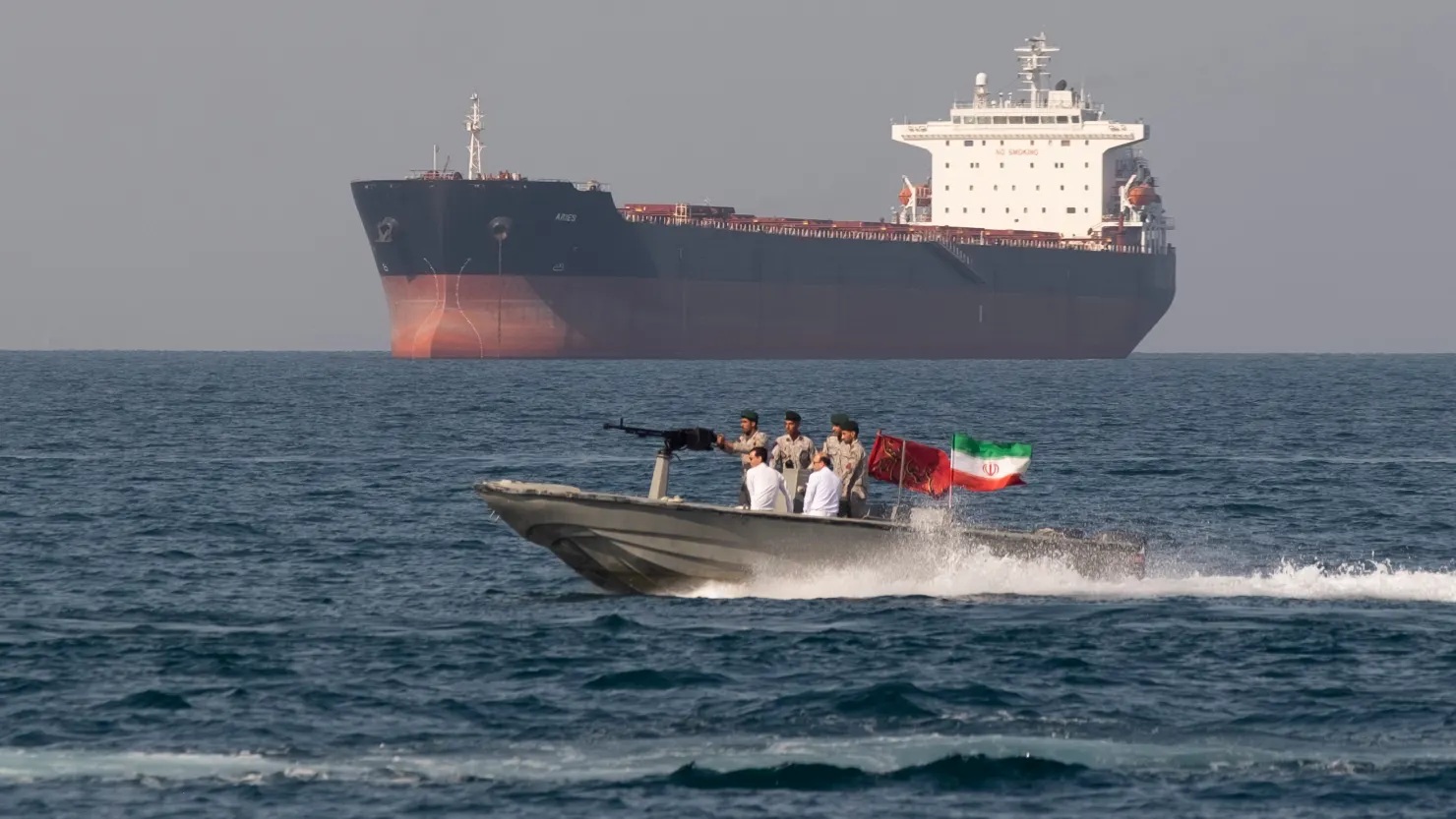
Iran’s Islamic Revolutionary Guard Corps (IRGC) has reimposed a closure of the Strait of Hormuz to commercial traffic, declaring it closed until further notice or until the US lifts its naval blockade of Iranian ports. This reversal came just a day after Iran briefly signaled the strait was reopening.

Reports indicate Iranian forces fired on at least two ships including Indian-flagged vessels attempting to pass, and the IRGC warned that approaching the strait could be seen as cooperation with the enemy. This stems from ongoing tensions in the 2026 US-Iran and Israel-Iran conflict. The strait is a critical chokepoint—about 20-30% of global oil trade and significant LNG passes through it daily. Iran has used control over it as leverage, closing or restricting it earlier in the crisis in response to US/Israeli actions, including strikes and a blockade.

A short-lived reopening followed ceasefire talks, but Iran cited continued US restrictions as the reason for snapping it shut again. Shipping disruptions, attacks on vessels, stranded seafarers, and volatility in oil prices with broader risks to energy and food and fertilizer supplies if prolonged. Markets have reacted with swings, though some reports note relative resilience so far. This fits Iran’s pattern of using the strait for asymmetric pressure while accusing the US of maritime piracy or blockade tactics.

JD Vance’s Trip to Pakistan

Vice President JD Vance is expected to depart or head to Islamabad, Pakistan, today or imminently for a new round of US-Iran peace talks—the second major effort after an earlier session there. He would lead the US delegation possibly including figures like Jared Kushner or Steve Witkoff in some reports. The goal is to negotiate a longer-term end to the conflict, focusing on issues like Iran’s nuclear program, the ceasefire terms, and regional de-escalation.

US officials say Vance is heading there, but Iran’s participation remains uncertain—Tehran has expressed deep mistrust, signaled it may not send a full delegation, or tied attendance to US concessions like lifting the blockade. The first round in early April produced no breakthrough. A ceasefire deadline is looming, raising risks of resumed fighting if talks stall.

Pakistan’s role: Islamabad is acting as a neutral venue and mediator for these sensitive direct or indirect engagements. These events are linked: The Hormuz closure and reported ship incidents are escalating pressures right as the ceasefire window closes and talks are attempted. Trump has sent mixed signals; claiming US control of the strait in some comments while pushing diplomacy via Vance and both sides accuse the other of violating understandings.

Broader context includes Israeli actions, Gulf state concerns, and global ripple effects on energy and shipping. The situation is fluid—diplomatic sources describe it as high-stakes with wide gaps remaining. Watch for confirmation on whether Iranian negotiators actually show up in Pakistan and any immediate military moves around the strait or ceasefire expiration. Oil markets and shipping insurance rates will likely reflect the uncertainty in real time.

Oil prices have been extremely sensitive. A brief Iranian signal of reopening on Friday caused sharp drops, triggering stock rallies. The quick reversal and re-closure announcement, plus reported ship incidents and US actions, reversed much of that—Brent climbed back above $95 up ~5-6% in sessions with WTI showing similar swings recently around $87-90 range, though it had hit over $100 earlier in the crisis.

The conflict including the initial March closure has already pushed Brent past $100-120 at peaks, described by the IEA as one of the largest supply disruptions in history. About 20% of global oil and significant LNG normally transit the strait; effective traffic has been a fraction of normal often near standstill, with just a handful of crossings recently.

Higher crude feeds into pump prices; US national average recently noted around $4+ amid volatility. Europe and Asia face added pressure from LNG disruptions, with reports of fuel rationing, electricity restrictions, and blackouts in some import-dependent areas. Jet fuel and diesel markets are also strained.

Gold Dips on Middle East Uncertainty and Fed Chair Confirmation Hearing

0

Gold prices slipped on Tuesday, giving back some of the safe-haven ground they had clawed back in recent sessions. A firmer dollar and persistent doubts about whether U.S.-Iran peace talks can produce a lasting breakthrough kept buyers on the sidelines, even as oil eased on hopes for more supply from the Gulf.

Spot gold dropped 0.7% to $4,785.56 an ounce by mid-morning in London. U.S. gold futures for June delivery fell 0.5% to $4,804.70.

ActivTrades analyst Ricardo Evangelista said the drop, which underlines the uncertainty of the Strait of Hormuz situation, keeps inflationary concerns alive.

“Today’s decline in gold prices reflects fears that, despite the recent drop in oil prices, the situation in the Strait of Hormuz remains uncertain, with the blockade still in place. This uncertainty is keeping inflationary concerns alive, supporting the U.S. dollar in a dynamic that creates a headwind for non-yielding gold,” he said.

The dollar strengthened against most major currencies, making dollar-priced assets more expensive for overseas buyers and adding pressure on everything from gold to other commodities.

Diplomacy in the region remains fragile. The U.S. said it is confident talks with Iran will proceed in Pakistan, and a senior Iranian official signaled Tehran is at least considering participation. But significant obstacles remain as a two-week ceasefire heads toward its deadline. Iran’s foreign ministry sharply condemned what it called a U.S. attack on the commercial vessel Touska over the weekend and demanded its immediate release.

Oil prices fell on expectations that successful negotiations could eventually reopen more crude flows from the Middle East. Yet the Strait of Hormuz, the narrow waterway that normally carries about one-fifth of global oil and gas shipments, is still effectively blocked, keeping a floor under energy costs and, by extension, inflation worries.

Gold’s traditional role as an inflation hedge is being tested right now. While higher crude since the Iran conflict began has supported the metal, the prospect of sustained higher interest rates has blunted its appeal. Non-yielding assets like bullion tend to lose luster when real yields rise.

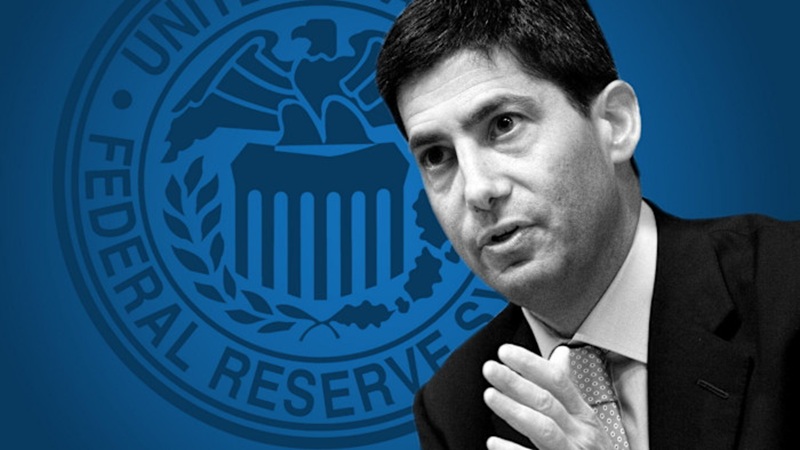
Markets are also watching Washington closely. Kevin Warsh, President Trump’s nominee to lead the Federal Reserve, faces senators at his confirmation hearing on Tuesday. In prepared remarks released Monday, Warsh said he is “committed to ensuring that the conduct of monetary policy remains strictly independent.”

His views on shrinking the Fed’s balance sheet, pursuing lower rates, and narrowing the central bank’s focus have already sparked debate about the future path of policy. Any hint during the hearing that Warsh favors a more restrained approach could influence rate expectations and, by extension, gold’s fortunes.

Among other precious metals, spot silver fell 1.2% to $78.94 an ounce, platinum lost 1% to $2,068.32, and palladium edged 0.3% higher to $1,555.41.The day’s modest pullback in gold reflects a market caught between two competing forces. Geopolitical risk in the Gulf still provides a cushion, but the stronger dollar and the looming Fed leadership transition are reminding traders that the metal must compete with higher-yielding alternatives.

Why Nonprofit Fundraising Efficiency Depends on Better Systems, Not Bigger Campaigns

0

In many industries, growth comes from scaling marketing efforts—more campaigns, more channels, more reach. But in the nonprofit sector, the constraint is rarely awareness alone. Instead, the bottleneck is often operational: how efficiently organizations convert interest into actual donations.

As digital transformation reshapes industries, nonprofits are beginning to realize that fundraising success is less about doing more—and more about doing it better.

The Hidden Inefficiencies in Traditional Fundraising

Nonprofits today operate in increasingly complex environments. They manage multiple campaigns, communicate across channels, and rely on a mix of tools—from spreadsheets to legacy CRM systems—to track donors and contributions.

Yet, despite this growing sophistication, many organizations still experience:

  • High drop-off rates during donation
  • Manual data entry and reconciliation
  • Fragmented donor records
  • Delays in processing contributions

These inefficiencies are not just operational—they directly impact revenue. Every extra step in the donation process introduces friction, and friction reduces conversion.

Digital Transformation Is Changing Donor Expectations

Donors today behave more like consumers than ever before. They expect:

  • Mobile-first experiences
  • Fast, intuitive transactions
  • Clear confirmation and feedback
  • Minimal barriers to giving

If the donation experience is slow, confusing, or overly complex, potential donors abandon the process—often permanently.

This shift mirrors trends seen in e-commerce and fintech, where reducing friction has been proven to increase conversion rates and lifetime value.

The Role of Systems in Fundraising Efficiency

To meet these expectations, nonprofits need to rethink their infrastructure—not just their messaging.

Modern fundraising systems focus on:

  • Streamlined donation flows
  • Mobile-friendly interfaces
  • Automated data capture
  • Integration with donor management systems

Instead of treating fundraising as a campaign problem, leading organizations are treating it as a systems problem.

From Transactions to Experiences

A donation is not just a transaction—it is an experience. And like any experience, it can either reinforce trust or create doubt.

When systems are optimized:

  • Donors complete contributions quickly
  • Data is captured accurately
  • Follow-up communication is timely
  • Reporting becomes easier and more reliable

This creates a positive feedback loop: better experience ? higher conversion ? stronger donor relationships.

A Practical Shift: Simplifying the Donation Layer

One of the most effective ways to improve fundraising efficiency is to simplify the point of donation itself.

Many organizations are adopting tools such as Glass Register donation forms for nonprofits, which are designed to reduce friction in online giving and streamline the donation process for both donors and administrators.

By focusing on simplicity and usability, these systems help organizations capture more value from existing traffic—without increasing marketing spend.

Efficiency as a Strategic Advantage

For nonprofits, efficiency is not just about saving time—it is about maximizing impact.

Every dollar saved in operational overhead is a dollar that can be redirected toward programs and services. Every completed donation represents not just revenue, but trust.

As funding environments become more competitive, organizations that invest in better systems—not just bigger campaigns—will be better positioned to scale sustainably.

Conclusion

The future of nonprofit fundraising will not be defined by who runs the most campaigns, but by who builds the most efficient systems.

Digital tools are no longer optional—they are foundational.

And in a world where attention is scarce and expectations are high, reducing friction may be the most powerful strategy a nonprofit can adopt.

Fed Chair Nominee Kevin Warsh Says Digital Assets Are “Already Part of The Fabric” of U.S. Financial System

0

President Donald Trump’s nominee to lead the Federal Reserve, Kevin Warsh, an American financier and attorney, stated during his Senate confirmation hearing that digital assets have become an established part of America’s financial services industry.

He made this comment during questioning by pro-crypto Senator Cynthia Lummis (R-Wyoming) on Tuesday, April 21, 2026, when asked about incorporating cryptocurrencies into the broader financial system to provide Americans with more investment options and stronger consumer protections,

Warsh responded,

“Digital assets are already part of the fabric of our financial industry, so yes.”

For years, the Federal Reserve has maintained a measured and often skeptical stance toward digital assets. Rather than embracing cryptocurrencies outright, it has consistently emphasized concerns around financial stability, consumer protection, and the potential for illicit activity. Officials have repeatedly warned about the volatility of assets like Bitcoin, highlighting risks to investors and the broader financial system.

The central bank has also been cautious about how crypto could impact monetary policy and the traditional banking system. Its leadership, including figures like Jerome Powell, has stressed the need for clear regulatory frameworks before deeper integration of digital assets into mainstream finance.

Warsh straightforward acknowledgment marks a notable shift in tone from the Federal Reserve, which has historically approached crypto with caution. Analysts and market participants interpreted his statement as a bullish signal that the world’s most powerful central bank may be ready to treat digital assets as mainstream infrastructure rather than an experimental fringe.

Notably, Warsh’s comments carry extra weight due to his personal financial disclosures. In April 2026 filings with the Office of Government Ethics, the former Fed governor revealed over $100 million in assets, including significant stakes in more than 20 crypto-related projects.

His holdings reportedly include, Solana (SOL), Bitwise Asset Management, dYdX and other, DeFi protocols, Polymarket, Bitcoin Lightning Network infrastructure (Flashnet), and various Ethereum Layer-2 solutions and additional blockchain projects.

Warsh has committed to divesting most of these holdings if confirmed, in line with federal ethics requirements. Senators raised questions about potential conflicts of interest, but he maintained he would comply fully before taking office.

Broader Context of the Hearing

The nearly three-hour Senate Banking Committee hearing focused heavily on central bank independence, monetary policy, and Warsh’s relationship with President Trump. The Fed Chair nominee repeatedly emphasized that the Fed must remain “strictly independent” and denied making any pre-commitment to lower interest rates in exchange for the nomination.

Despite the political tension including questions about whether he would act as Trump’s “sock puppet”, Warsh’s crypto remarks stood out as one of the most market-moving moments. His background as a former Fed Board member (2006–2011) combined with his recent venture investments in tech and crypto positions him as potentially the most crypto-familiar Fed Chair in history, should he be confirmed.

Market And Industry Reaction

The statement quickly circulated on social media and crypto news outlets, with many viewing it as validation that digital assets are no longer on the regulatory sidelines. Crypto advocates see Warsh’s perspective as opening the door for more constructive dialogue on regulation, stablecoins, tokenization, and bank custody of digital assets.

Bitcoin and broader crypto markets showed mixed movement during the hearing, with some traders citing the overall bullish long-term implications amid ongoing macro uncertainty. BTC surged past the $78,000 price zone, trading as high as $78,418, raising optimism among investors.

Outlook

Warsh’s acknowledgment that digital assets are now embedded within the financial system could signal the beginning of a more pragmatic era for crypto regulation in the United States.

If confirmed, his leadership may shift the Federal Reserve away from a purely cautious stance toward a more balanced framework that supports innovation while still addressing systemic risks.

In the near term, markets are likely to remain sensitive to policy signals from the Fed, especially around interest rates and liquidity conditions, which historically influence crypto performance.