DD
MM
YYYY

PAGES

DD
MM
YYYY

spot_img

PAGES

Home Blog Page 22

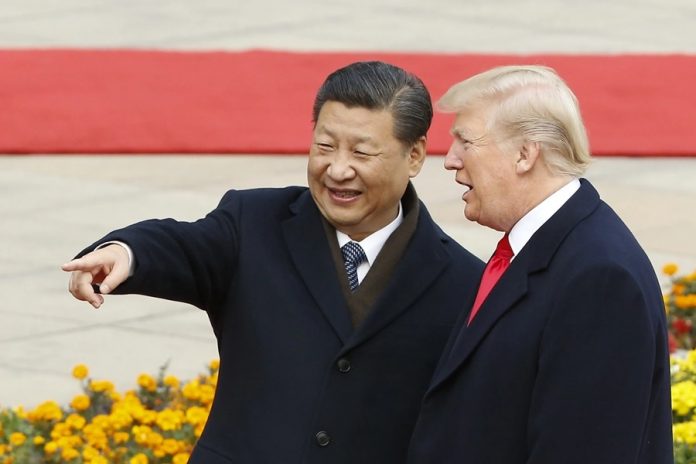
China, US Agree on $30bn Tariff Reduction Framework and New AI Dialogue After Xi-Trump Summit

0

China and the United States have agreed on an eight-point framework that includes a $30 billion reciprocal tariff-reduction arrangement and a new channel for cooperation on artificial intelligence, marking an effort by the world’s two largest economies to stabilize relations after years of escalating trade and technology restrictions.

The agreement was announced by China’s Foreign Ministry on Saturday following President Xi Jinping’s three-day visit to Washington for talks with President Donald Trump. Xi has since returned to Beijing, according to China’s state news agency Xinhua.

The package does not amount to a comprehensive trade agreement. Instead, it establishes several areas in which Washington and Beijing intend to maintain negotiations, extending the temporary truce reached earlier in the year while creating mechanisms for continued engagement on trade, AI and broader geopolitical issues.

At the center of the arrangement is an agreement on reciprocal tariff reductions worth $30 billion, although the details of how the reductions will be implemented were not immediately provided by Beijing.

The two governments also agreed to establish a trade council and extend the outcomes of earlier negotiations held in Kuala Lumpur.

The framework follows the decision by the two sides to extend their existing trade truce by two months. The truce had been scheduled to expire on November 10, but US Treasury Secretary Scott Bessent said earlier this week that the extension would provide additional time for negotiators to work toward a broader agreement.

The sequence of agreements suggests that Washington and Beijing are attempting to prevent the latest improvement in relations from becoming another short-lived pause in their trade conflict.

AI Becomes Part of The Diplomatic Framework

The inclusion of artificial intelligence is considered a big deal because AI has increasingly become intertwined with US-China economic and national-security competition.

Under the agreement, Washington and Beijing will establish a dialogue covering both the risks and benefits of AI. The next round of discussions is scheduled for November.

The two countries will also establish a communication channel for AI-related incidents.

That mechanism could become important as more capable AI systems create new risks that extend beyond conventional commercial competition. A direct communication channel gives the two governments a way to discuss incidents involving advanced AI systems, although the agreement does not establish common regulatory standards or restrictions on AI development.

The timing is notable because AI has become one of the most contentious areas of the broader US-China technology relationship.

Washington has imposed restrictions on China’s access to advanced semiconductors and AI computing technology, while Beijing has intensified efforts to develop domestic alternatives and reduce its reliance on US technology.

The new dialogue therefore creates a narrow area for cooperation within a relationship otherwise characterized by technological competition. It also provides both governments with a mechanism for discussing AI risks without requiring them to resolve their much broader disagreements over technology controls, semiconductor supply chains and national security.

Trade Truce Buys Time, But Major Disputes Remain

The summit produced a framework for continued negotiations rather than a sweeping resolution of the US-China trade conflict.

The two countries agreed to extend the existing trade truce, reducing the immediate risk of another escalation in tariffs while negotiations continue.

The $30 billion tariff-reduction arrangement could provide some relief for businesses on both sides if implemented as described by Beijing. Lower tariffs would reduce the cost of cross-border trade and could give companies greater confidence to make purchasing and investment decisions.

But the longer-term significance will depend on the details.

The announcement does not specify which products will receive tariff reductions, when they will take effect, or how the $30 billion figure will be calculated. Those details will determine how much of the agreement translates into actual changes in trade costs.

The creation of a trade council is therefore potentially as important as the headline tariff figure. A permanent or recurring institutional mechanism could allow disputes to be addressed through negotiations before they develop into broader tariff measures.

The arrangement also gives businesses more visibility after years of uncertainty surrounding US-China trade policy. For companies operating across the two economies, the immediate value may be less about a dramatic reduction in tariffs and more about reducing the probability of another abrupt deterioration in trade conditions.

Broader Geopolitical Commitments

The eight-point consensus extends beyond trade and technology.

China and the US agreed to support each other in hosting the Asia-Pacific Economic Cooperation leaders’ meeting and the Group of 20 summit. Both leaders plan to attend gatherings hosted by the other country, according to the Chinese Foreign Ministry.

The agreement also contains positions on Iran and international waterways.

The two sides agreed that Iran should fulfil its commitment not to develop nuclear weapons. They also agreed that no country or entity should impose transit tolls on international waterways. That language is notable because freedom of navigation and control over major shipping routes have become important geopolitical issues, particularly amid disruptions affecting global energy and trade flows.

The agreement does not resolve the underlying disputes surrounding Iran or maritime security, but it establishes areas where Washington and Beijing have expressed a common position.

From Confrontation to Managed Competition

The summit’s significance lies less in a single breakthrough than in the creation of mechanisms designed to prevent competition from escalating uncontrollably.

The US and China remain strategic competitors across trade, advanced technology, semiconductors, AI, military affairs, and global influence. The new framework does not remove those conflicts. Instead, it creates separate channels through which the two governments can continue negotiating while keeping the broader relationship from being dominated entirely by confrontation.

The AI dialogue is considered a great deal because competition in advanced technology is likely to intensify even if trade relations stabilize.

A sustained reduction in trade tensions could improve supply-chain visibility and lower some costs, but it would not necessarily reverse the structural decoupling pressures already reshaping semiconductor manufacturing, AI infrastructure and strategic technology supply chains.

The next test will be whether the eight-point framework produces concrete measures beyond the summit.

The November AI talks and the implementation of the tariff-reduction arrangement will provide early indications of whether Washington and Beijing are moving toward a more durable system of managed competition or simply extending another temporary period of stability.

Bitcoin Whales Buy the Dip as Accumulation Accelerates

0

Bitcoin’s latest pullback appears to be creating an opportunity for some of the market’s largest investors. As prices slipped from recent highs, one whale stepped in with another substantial purchase, adding hundreds of Bitcoin to an already aggressive accumulation campaign.

According to Lookonchain data, the whale bought 536.93 BTC for approximately $45.28 million, paying around $84,300 per Bitcoin. The transaction came as the market pulled back, suggesting that the investor viewed lower prices as an opportunity to increase exposure rather than a reason to reduce risk.

The purchase is significant on its own, but its broader context is even more notable. Over the past 20 days, the same whale has accumulated 2,460 BTC, spending roughly $194.3 million. The average acquisition price stands at about $78,966 per Bitcoin.

That means the latest purchase was made at a price substantially above the whale’s overall average entry, indicating that the investor has continued buying even as Bitcoin moved higher.

For the broader market, whale accumulation can become an important signal because large holders can influence liquidity and sentiment. When a major investor repeatedly buys during periods of weakness, it can indicate confidence in Bitcoin’s longer-term trajectory.

It can also reduce the amount of Bitcoin immediately available for trading, particularly if the coins are moved into long-term custody rather than used for short-term speculation.

However, whale activity should not automatically be interpreted as a guarantee of higher prices. Large investors can have different objectives, including portfolio rebalancing, strategic accumulation, or positioning around expected market events.

Blockchain data can reveal transactions, but it does not necessarily reveal the investor’s intentions. Still, the scale and consistency of this particular buying campaign stand out. Accumulating 2,460 BTC in only 20 days represents a considerable commitment of capital.

At the whale’s reported average purchase price, the strategy appears to be built around accumulating Bitcoin across different market conditions rather than attempting to identify a single perfect entry point. That approach is important because Bitcoin remains a highly volatile asset.

A move of several thousand dollars can occur quickly, creating substantial differences between short-term purchases and the average cost of a longer accumulation strategy. By continuing to buy during pullbacks, the whale appears to be prioritizing position size and longer-term exposure over short-term price timing.

The activity also arrives at a time when Bitcoin’s institutional market has become increasingly sensitive to liquidity, ETF flows, macroeconomic expectations and risk appetite. Large transactions can therefore attract attention well beyond the blockchain itself.

Particularly when traders are looking for evidence of whether sophisticated capital is accumulating or distributing. For retail investors, the whale’s activity offers more of a market observation than a blueprint.

A large investor may have a different risk tolerance, time horizon and capital base. Following a whale into a trade without understanding those differences can expose smaller investors to risks that the original investor is better positioned to absorb.

Bitcoin’s pullback, therefore, is revealing an important divide in the market. While short-term traders may focus on declining prices and immediate volatility, some large holders appear to be focusing on accumulation.

With 2,460 BTC acquired in 20 days, this whale is clearly demonstrating that market weakness has not prevented it from expanding its Bitcoin position. The bigger question is whether this accumulation becomes part of a broader trend among large holders.

If more whales continue buying into weakness, the market could face a tightening supply dynamic. If accumulation slows, however, the current activity may remain an isolated strategy. The blockchain data points to one clear development: at least one major Bitcoin holder is treating the pullback as an opportunity to buy.

Meta Opens Muse Early Access as AI Assistant Race Shifts Toward Autonomous Agents

0

Meta is opening an early access program for new capabilities coming to its Muse AI assistant, giving users a direct way to test features before they are released broadly as the company accelerates its push to turn AI from a conversational tool into an agent capable of taking actions across devices and services.

The company announced the program on Friday, days after unveiling a broader set of Muse upgrades at its Connect 2026 developer conference. Rather than limiting early testing to randomly selected users, Meta is actively seeking people who want to experiment with the assistant’s newest capabilities.

Users can ask Muse to register their interest in the program through a simple prompt shared by Meta on X: “Can you let the Muse team know I want to be part of the Muse early access program?”

This approach gives Meta a pool of users likely to be highly engaged with AI products and familiar with competing assistants. That matters as the consumer AI market becomes increasingly crowded with products that are moving beyond answering questions toward completing tasks on behalf of users.

Traditional technology companies frequently use randomized A/B testing to measure how different groups respond to new features. Meta’s approach serves a different purpose. By attracting AI enthusiasts who actively want early access, the company can put new agentic functions in the hands of users who are more likely to test their limits, compare them with rival products, and identify where they work or fail.

For Meta, that feedback is necessary as Muse gains access to more parts of a user’s digital life.

From Chatbot To Digital Agent

The features Meta previewed at Connect suggest that Muse is being developed as more than another AI chatbot.

Among the additions is a digital avatar that users will eventually be able to interact with through video conversations. Meta is also expanding shopping partnerships and connectors, potentially giving Muse access to more services that users rely on for everyday transactions.

The company’s Mac application is also being expanded. Meta said Muse will soon be able to use a computer to complete various tasks, a development that moves the product closer to the emerging category of computer-use agents.

A conventional AI assistant primarily generates information or content in response to a prompt. An agent is expected to interpret an objective, interact with software and services, and complete multiple steps with less intervention from the user.

Meta has already been positioning Muse in that direction, with capabilities that allow it to handle tasks such as email, shopping, and travel bookings. The new desktop capabilities could significantly broaden the range of activities the assistant can perform because a computer provides access to applications and websites that may not have dedicated integrations.

The expansion of connectors is similarly important. The more external services Muse can interact with, the more useful it can become as a general-purpose assistant. But that also increases the importance of permissions, authentication, privacy, and safeguards because an agent capable of acting across multiple services can potentially make consequential decisions rather than simply provide information.

AI Glasses Bring Muse into The Physical World

Meta is also extending Muse to its AI glasses, allowing users to interact with the assistant through voice.

The integration could become one of the more consequential parts of Meta’s AI strategy because glasses provide a different interface from smartphones and computers. Users can access an assistant while walking, shopping, or carrying out other activities without having to stop and look at a screen.

The combination of wearable hardware and an agentic assistant also gives Meta an opportunity to connect AI more closely with the user’s surroundings.

A voice request made through glasses can potentially become the starting point for an agent that retrieves information, communicates with another service, or performs a task through a connected device. That creates a different proposition from simply asking a chatbot a question.

It also gives Meta a reason to develop Muse across its broader hardware ecosystem rather than treating the application as a standalone product.

The decision to recruit users directly for early access comes as AI companies increasingly compete on how quickly they can improve agents in real-world environments.

Agentic systems are difficult to develop solely through conventional laboratory testing because their performance depends on unpredictable interactions with websites, applications, users, and third-party services. A feature that works in a controlled demonstration can encounter very different conditions when deployed at scale.

An early-access community can therefore provide Meta with a continuous stream of real-world feedback before features reach the wider user base. The strategy also has a competitive dimension. AI enthusiasts are among the users most likely to experiment with several competing assistants. Getting those users into Muse early gives Meta an opportunity to make the product part of their daily workflows before rival agents become entrenched.

Meta has an unusually large distribution advantage because Muse can potentially be connected to an ecosystem spanning Facebook, Instagram, WhatsApp, and the company’s hardware products. The challenge is converting that distribution into regular use of an AI agent rather than simply exposing billions of users to another chatbot.

The new features point toward Meta’s answer: make Muse useful in situations where users need something done, rather than simply something explained.

Shopping integrations, computer control, voice access and wearable devices all move in that direction.

The early access program is consequently more than a conventional beta-testing exercise. It gives Meta a mechanism to place its evolving agent in the hands of sophisticated users while it works out how much autonomy people actually want from an AI assistant, which tasks they are willing to delegate, and where they expect human control to remain.

Bitget Hack Exposes the Persistent Security Risks Behind Crypto’s Growth

0

Bitget has confirmed a major security breach involving losses estimated at roughly $350 million, placing renewed attention on the security architecture of centralized crypto exchanges and the increasingly sophisticated nature of digital-asset attacks.

While Bitget’s chief executive has said user funds remain safe, the incident illustrates how a breach involving an exchange’s infrastructure can quickly become a wider test of confidence in the cryptocurrency market. The reported attack highlights a familiar contradiction in crypto.

Digital assets can be transferred across borders within minutes and stored without traditional banking intermediaries, but the infrastructure supporting those transactions remains vulnerable to operational failures, compromised credentials and sophisticated cyberattacks.

When a major platform is targeted, the consequences can extend beyond the immediate value of the stolen assets. Bitget’s assurance that customer funds are safe is therefore an important distinction.

An exchange can suffer a substantial security incident without necessarily passing the financial loss directly to users, particularly if the affected assets are held separately, the platform has adequate reserves or the compromised systems are isolated from customer balances.

Nevertheless, users and investors will likely scrutinize how the breach occurred, which wallets were affected and whether the exchange can demonstrate that its internal controls functioned as designed. The potential involvement of North Korean hackers adds another layer to the incident.

North Korean cyber operations have repeatedly been linked by governments, blockchain investigators and cybersecurity firms to cryptocurrency theft, with digital assets providing a source of funds that can be moved through international networks.

Such groups have increasingly targeted exchanges, decentralized protocols, custodians and individual users rather than relying exclusively on traditional financial institutions.

The reported $350 million figure demonstrates why cryptocurrency remains an attractive target for sophisticated cybercriminal organizations. Unlike conventional bank transfers, blockchain transactions can be irreversible once confirmed.

Attackers who gain access to private keys or other critical authorization mechanisms can potentially move enormous sums rapidly, creating an urgent race between thieves, exchanges, blockchain analysts and law enforcement.

Yet blockchain’s transparency can become a defensive advantage. Once stolen assets enter public networks, investigators can track wallet movements, identify transaction patterns and monitor attempts to convert or obscure the funds.

Exchanges and blockchain intelligence companies can sometimes freeze assets when they reach identifiable centralized platforms. The same open ledger that makes crypto attractive to criminals can therefore become an important forensic tool.

The immediate challenge is likely to extend beyond replacing or securing the affected assets. Exchanges operate on trust. Users deposit funds because they expect the platform to maintain reliable custody, execute transactions correctly and protect assets against unauthorized access.

A major breach can force customers to reconsider those assumptions even when an exchange promises that their individual balances remain protected. The incident also raises broader questions about exchange security as cryptocurrency moves toward greater institutional adoption.

Large financial institutions, asset managers and corporations are increasingly interacting with digital assets. That expansion makes cybersecurity not simply a technical concern but a core component of market infrastructure.

Bitget’s response will therefore matter almost as much as the breach itself. Transparent disclosure, independent investigation, wallet monitoring and clear evidence that customer assets remain fully backed could influence how the market assesses the damage.

The broader lesson is uncomfortable but familiar: crypto may have matured enormously as a financial technology, but its security challenges are evolving just as quickly.

The reported Bitget breach is another reminder that protecting digital wealth requires not only strong cryptography and decentralized networks, but disciplined custody, resilient infrastructure and constant vigilance against increasingly capable attackers.

Crypto Theft by North Korea Tops $1 Billion in 2026 After Bitget Attack

0
North Korean leader Kim Jong Un and his daughter Kim Ju Ae visit the Ministry of National Defense on the occasion of the 76th anniversary of the founding of the Korean People's Army in Pyongyang, North Korea in this picture released on February 9, 2024 by the Korean Central News Agency. KCNA via REUTERS

Crypto theft has become one of the biggest security challenges facing the digital asset industry, with hackers and state-linked groups targeting crypto platforms, wallets, and other blockchain infrastructure for billions of dollars.

Among the most persistent actors is North Korea, whose cyber operations have increasingly focused on stealing digital assets to generate revenue.

North Korean-linked hackers have now stolen more than $1 billion in cryptocurrency in 2026, with the latest figure highlighting the growing scale and sophistication of attacks targeting the crypto industry.

The tally was pushed higher following a major attack on Bitget, adding to a series of high-value crypto thefts attributed to North Korean cyber actors this year

On September 24, 2026, attackers executed unauthorized transfers from Bitget’s hot and warm wallets, with the exchange detecting the activity around 18:31 UTC.

Initial estimates put the loss at approximately $351.6 million, later revised upward to $387.5 million after additional assets on networks including Zcash and TRON were identified.

The haul included significant amounts of XRP (roughly 103 million tokens valued near $157 million), ether, USDT, USDC, BNB, AVAX, and other tokens moved across Ethereum, the XRP Ledger, Arbitrum, Avalanche, Optimism, BNB Chain, Base, and additional networks.

Bitget CEO Gracy Chen stated that the attackers did not steal private keys. Instead, they compromised a critical backend system within the wallet infrastructure, spoofed or forged transaction data, and triggered the platform’s own authorization process to move funds.

She wrote on X,

“The security team has initially identified the source of the attack. Hackers breached a key backend system of the wallet service and exploited it to forge transfer information and invoke the authorization signing process, thereby transferring funds out. The possibility of private key leakage can be ruled out, this means a more severe risk scenario has been eliminated.

“Damage control has been confirmed as complete, and there is no risk of further fund outflows from the platform. The specific intrusion methods used by the hackers are still under technical investigation, and a full report will be released upon completion of the investigation.”

Cold wallets remained unaffected, and the company quickly contained further outflows. Withdrawals were suspended while deposits and trading continued.

Bitget’s User Protection Fund, holding more than $464 million, fully covers the losses, and the exchange has pledged to restore customer access once security reviews are complete.

Independent investigators including Mandiant and SlowMist were brought in, and Bitget is cooperating with law enforcement and relevant blockchain teams, some of which have already frozen linked addresses.

Chen described the attack as highly consistent with known patterns of North Korean hacker organizations, citing IP behavior, VPN usage matching previous DPRK-linked activity, and on-chain signatures.

Blockchain analytics firm Elliptic assessed the incident as highly likely linked to the Democratic People’s Republic of Korea, noting similarities in fund movement and laundering techniques, as well as connections to addresses tied to earlier operations such as the $1.5 billion Bybit exploit in 2025.

The Bitget breach ranks as the largest single crypto theft of 2026 to date and elevates Elliptic’s tracked total of suspected North Korean crypto heists for the year above $1 billion.

North Korean state-sponsored groups, often associated with the Lazarus Group and related clusters, have dominated large-scale crypto crime in recent years.

They accounted for a substantial share, frequently cited in the range of half to three-quarters of stolen value in 2026 prior to this incident, building on a 2025 total near $2 billion and a cumulative haul exceeding $6 billion since the mid-2010s.

Security firms and governments have long linked these operations to funding for North Korea’s weapons programs. The attackers’ typical approach emphasizes social engineering, infrastructure compromises, and sophisticated cross-chain laundering rather than pure smart-contract exploits.

The Bitget incident underscores ongoing vulnerabilities at centralized exchanges despite improved security practices. Rapid conversion of stolen assets into ether and other native tokens, followed by movement through mixers and bridges, continues to challenge recovery efforts.

While some funds have been frozen, the bulk remains in attacker-controlled wallets as investigations proceed. Industry observers note that such high-value, targeted operations by sophisticated state actors remain one of the most persistent threats to the crypto ecosystem.