DD
MM
YYYY

PAGES

DD
MM
YYYY

spot_img

PAGES

Home Blog Page 2206

Why card counting is more about strategy than luck

0

When the words “card counting” are mentioned, many minds immediately conjure images of smoky, back-alley casinos. This skill has little to do with being on good terms with Lady Luck.

Actually, this tactic relies most strongly on two ingredients: mathematics and strategy. In the game of blackjack, there’s much more at play: far more brains than blind fortune. So, what exactly is card counting?

In short, card counting is mainly a blackjack strategy that tells if the next hand is likely in the player’s favor or against them. It is not actually memorizing every card which has been played but rather, a running count is kept, representing the relation of high and low cards left in the deck.

Principles of card counting: How does it work?

There are specific card counting systems, such as the popular Hi-Lo method in which you assign distinct values to cards: low cards (2-6) receive a value of +1, high cards (10-Ace) receive -1, and middle cards (7-9) receive 0. You, the counter, keep a running count of the number in your mind as cards are dealt, which then informs you of the most educated betting decisions. This works because a deck rich in high cards favors the player, while a deck rich in low cards favors the dealer.

This is anything but a random process. It involves constant attention and focus, rapid mental arithmetic, strategic decisions regarding the count, and shifts in the size of one’s bets relative to the perceived advantage. Each of these latter elements underlines the fact that card counting resembles the solving of a complex real-time math problem rather than simple good luck. Of course, this is just a brief overview, with a detailed explanation available on AskGamblers

What kind of skills do you need to count cards?

Card counting is not something an individual can master overnight. It requires a certain skill set. Memory is key: you are not memorizing each and every card, but you have to keep the running count right.

Concentration is very important because casinos are contrived to be distracting. A good card counter has to continue with mental concentration amidst noise, flashing lights, and other diversions. You must be able to calculate quickly in your mind as there is much addition and subtraction involved in rapid succession.

Also important is emotional control, being in a position to keep a poker face and not show one’s strategy. Finally, bankroll management is also crucial from a strategic point of view, to know when to raise or lower the bets according to the count. These underpin that card counting has more to do with mental acuity and discipline rather than chance.

Many online casinos offer opportunities for playing blackjack online for free, so you can start testing your card counting skills. Also, when you practice card counting online, you won’t risk getting caught by casino pit bosses. Remember to choose single deck blackjack: the more decks, the harder card counting is.

MIT Blackjack team: The legends that made casinos tighten their security measures

Scores of people and teams throughout history have won with this practice, again reiterating how strategic the approach is. Perhaps one of the best examples is the group called the MIT Blackjack Team. It consisted of students from the Massachusetts Institute of Technology who utilized card counting using advanced techniques amongst the team to win several million dollars in casinos during the 1980s and 1990s.

It wasn’t luck or a hot streak. It was the product of hard practice, teamwork, and the use of statistical principles. The school team’s story was later dramatized in the book “Bringing Down the House” and the movie “21,” both of which served to illustrate the way a properly executed strategy can shift the odds in the player’s favor.

Card counting is not illegal – Casinos just don’t like it

It is always important to understand the law, and despite what one may have gained from popular media, card counting is not specifically illegal in most jurisdictions. So far, casinos have had a justifiable reason to refuse service to anyone they suspect of counting cards. This in turn has created ever-ingenious countermeasures from casinos owners to prevent this, for instance using multiple decks, shuffling more frequently, as well as training dealers to recognize counting behaviors. Another important thing that should be considered is that card counting does not promise a win but rather, it provides a statistical edge over time. It’s important to consider though that the variance in short term games can still lead to a greater probability of losses. This further reinstates the strategic nature of the technique; it is always about playing the long game, never about scoring quick wins.

In summary, card counting in blackjack can be seen as anything but a game of chance. Instead, it is a methodical approach that relies on you approaching the game with mathematical principles in mind, keeping a keen observation of the game as a whole, and having a disciplined execution of your method. While the element of luck is not removed in its entirety, it is undeniably weighted more towards skill and strategy. Most success stories of card counters do not talk about lucky and fortunate gamblers but rather about the people who have mastered their own intricate system and have managed to apply it successfully. So, the next time you hear about card counting, remember, it’s not about hoping for a lucky break. Instead, consider it the act of using your mind to tip the scales in your favor, one card at a time.
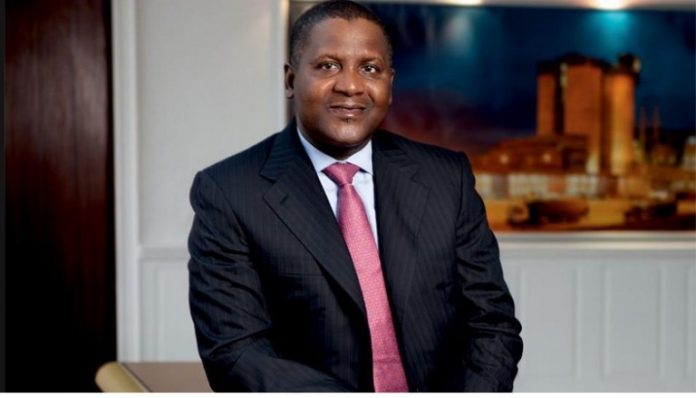

Dangote Invests Over $700m in Sugar Production to End Nigeria’s Raw Sugar Importation

0

The President of Dangote Group, Aliko Dangote, has disclosed that the conglomerate has invested over $700 million in sugar production as part of efforts to eliminate Nigeria’s dependence on imported raw sugar.

Dangote made this known in Abeokuta, Ogun State, during the ‘Dangote Special Day’ at the ongoing 14th Gateway International Trade Fair, organized by the Ogun State Chamber of Commerce, Industry, Mines, and Agriculture (OGUNCCIMA). Represented by the Regional Director, Lagos/Ogun, Dangote Cement, Tunde Mabogunje, he emphasized that the investment covers land acquisition, machinery, infrastructure, manpower, and community development initiatives aimed at strengthening local sugar production.

As Nigeria’s leading sugar producer, Dangote Sugar Refinery (DSR) has played a pivotal role in the sector’s growth. Dangote reiterated the company’s commitment to achieving self-sufficiency in sugar production through its Sugar Backward Integration Plan (BIP).

“In this regard, we have committed over $700 million in land acquisition, machinery, infrastructure, manpower, community relations, corporate social responsibility (CSR), and other impactful activities,” Dangote said.

Beyond sugar, the company is also making major investments in agriculture, with new products expected to hit the market soon to support the government’s food security agenda.

Dangote’s Expanding Global Footprint

Dangote Group’s investment strategy extends beyond Nigeria’s borders. The conglomerate has begun exporting fertilizer to international markets, including France, the United States, Mexico, Uruguay, and Argentina. Additionally, several African countries, such as Benin Republic, Zambia, and Cameroon, have also started receiving fertilizer exports from Dangote’s facilities.

The Dangote Refinery, which recently began operations, has also started exporting refined petroleum products to various countries, reinforcing Nigeria’s presence in the international oil market.

Similarly, Dangote Cement, with operations in over 10 African countries, has contributed significantly to export financing, with cement bags produced in Nigeria now being exported to other nations.

Dangote reaffirmed his group’s commitment to driving Nigeria’s economic diversification, particularly by reducing reliance on imported goods and expanding local manufacturing capabilities.

“As a conglomerate leading Nigeria’s diversification agenda, we will continue to explore opportunities in the manufacturing sector to replace imported goods with locally produced alternatives,” he stated.

This strategy, according to him, would create more jobs for Nigeria’s growing youth population, stimulate industrial growth, and boost economic development.

He also highlighted the importance of trade fairs like the Gateway International Trade Fair, noting that they provide opportunities to:

  • Expand market awareness for Dangote products.
  • Generate more sales and attract new customers.
  • Improve the brand’s image and reputation.
  • Explore new markets that can lead to job creation and economic expansion.

“We are confident that this longstanding partnership with OGUNCCIMA will not only be beneficial to Dangote Group and the state of Ogun, but to Nigeria, and indeed the entire African economy,” he added.

The Speaker of the Ogun State House of Assembly, Oludaisi Elemide, who was present at the event, praised Dangote Group’s massive economic contributions, acknowledging its role in boosting various industries in Nigeria.

“There is no doubt that Alhaji Aliko Dangote has contributed immensely to Nigeria’s economic growth with his investments across various sectors. No household in Nigeria is without at least one Dangote product. I personally buy Dangote salt, and it is what I use in my house and on my farm,” Elemide stated.

The Speaker further encouraged other Nigerian entrepreneurs to emulate Dangote’s patriotism by investing in critical sectors such as oil and gas, agriculture, and manufacturing to drive economic prosperity.

While commending Dangote’s efforts, he also urged the company to improve its environmental sustainability measures, ensuring that its business operations align with eco-friendly practices.

Dangote Group has continued to set the pace for industrial growth in Nigeria, expanding across multiple sectors, including:

  • Agriculture (sugar, rice, and fertilizer).
  • Oil and Gas (Dangote Refinery).
  • Cement Production (Dangote Cement).
  • Manufacturing (salt, flour, and packaged goods).

As Nigeria grapples with economic diversification challenges, the company remains at the forefront of reducing import dependency, creating jobs, and fostering sustainable industrial development.

Mastercard Launches AI-Powered Solution to Strengthen Fraud Detection in Asia Pacific

0

Mastercard, a leader in global payments, has launched “TRACE”, (Trace Financial Crime), an advanced Artificial Intelligence (AI) solution designed to combat financial crime in the Asia Pacific region.

By leveraging vast transaction data from multiple financial institutions, TRACE provides a holistic, network-wide approach to identifying and preventing illicit fund movements, surpassing the limitations of individual banks internal monitoring systems.

The rapid adoption of Real-Time Payments (RTP) has revolutionized digital transactions, enabling near-instant fund transfers across financial institutions. However, this speed has also created opportunities for fraudsters and money launderers who exploit the system by quickly moving funds across multiple accounts. Many criminals use unsuspecting individuals’ bank accounts, often acquired through scams to launder money, making detection more challenging.

Traditionally, financial institutions have relied on isolated fraud detection methods, which often involve manual reviews that lack the ability to track patterns across an entire payment network. TRACE addresses this gap by providing a real-time, Al-powered view of suspicious transactions, proactively flagging fraudulent activity and identifying money mule accounts before they can be used for illicit purposes.

The first rollout of TRACE in Asia Pacific is in the Philippines, in collaboration with BancNet, the operator of the country’s real-time payment system, InstaPay. With 36 domestic banks already onboarded, TRACE is enhancing fraud prevention efforts by helping financial institutions trace illicit fund flows and comply with the Philippines’ new Anti-Financial Account Scamming Act (AFASA).

Speaking on the roll-out of TRACE, executive Vice President services Asia Pacific Matthew Driver said,

“The launch of TRACE in Asia Pacific marks a transformative step toward safeguarding the integrity of Real-Time Payments while combatting the corrosive effects af financial crime. By ensuring that transactions remain secure and compliant, TRACE helps to protect consumers and financial institutions, while also fostering trust in the digital economy-which will be critical for the region’s economic growth. Mastercard is proud to have collaborated with BancNet on its pilot rollout in the Philippines and is ready to collaborate with other stakeholders across the region to implement TRACE to create a stronger, more resilient global financial system.”

Also commenting, Emmie Reyes, Chief Executive Officer, BancNet, said,

“As scams grow more sophisticated, advanced tech-powered prevention and monitoring capabilities are critical. Our partnership with Mastercard and leveraging TRACE gives us and the network participants the intelligence to help detect fraud faster, making scam prevention sharper and more effective”.

TRACE is designed to be network-agnostic, meaning it can be seamlessly integrated into various payment infrastructures across different countries. Its success in the United Kingdom, where it has been in use since 2018, demonstrates its effectiveness. Today, TRACE supports 21 financial institutions in the UK, covering 90% of the Faster Payments Service network, and continues to identify and disrupt fraudulent activity on a large scale.

As digital transactions continue to surge worldwide, so does the sophistication of financial crime. Fraudsters are leveraging advanced tactics to exploit real-time payment systems, making traditional fraud detection methods increasingly inadequate. To combat this growing threat, financial institutions are turning to artificial intelligence-powered solutions to detect and disrupt money laundering and financial scams in real time.

With financial fraud becoming more sophisticated, the adoption of Al-driven tools like TRACE is set to accelerate. Industry experts predict that Al will play a critical role in shaping the future of fraud prevention.

TRACE, developed by Mastercard, exemplifies the next generation of Al-driven fraud prevention tools. With its expansion into Asia Pacific, the AI driven fraud prevention tool is set to play a crucial role in protecting consumers, financial institutions, and regulatory bodies from the evolving threats of financial crime, ensuring the continued growth and security of real-time payment ecosystems.

Nigeria, Algeria, and Niger Sign Agreement to Push Trans-Saharan Gas Pipeline Forward Amid Europe’s Energy Crisis

0

In a renewed bid to link Africa’s vast gas reserves to European markets, Nigeria, Algeria, and the Republic of Niger have signed key agreements to advance the Trans-Saharan Gas Pipeline (TSGP). The agreements, signed in Algiers on February 11, 2025, represent a significant step toward actualizing a project that has been in discussions for decades.

According to Dada Olusegun, Special Assistant on Social Media to President Bola Tinubu, the newly signed agreements involve energy companies from the three countries. The agreements include an update to the project’s feasibility study, a compensation agreement, and a non-disclosure agreement (NDA).

“The TSGP represents a strategic initiative designed to establish a continental pipeline for transporting natural gas from Nigeria, through Niger, to Algeria, facilitating exports to European markets and other international destinations,” the statement said.

The TSGP, estimated to cost $13 billion, is expected to transport Nigerian gas through Niger to Algeria and then to Europe, where energy demand remains high following supply disruptions from Russia.

The project gained renewed importance after the United States and its allies imposed economic sanctions on Russia following its invasion of Ukraine. In response, the European Union placed an embargo on Russian gas, leading to a severe energy crisis across the continent.

Countries like Germany, which previously depended on Russia for over 50% of its gas supply, were forced to seek alternative sources to cushion the impact of soaring energy costs. Europe turned to the United States for liquefied natural gas (LNG) imports, but logistical challenges and high prices have made diversification of supply a priority. The TSGP is now seen as a potential solution, allowing Europe to tap into Africa’s gas reserves while reducing its dependency on traditional suppliers.

For Nigeria, the project offers an opportunity to harness its vast gas reserves, which are among the largest in the world. Despite holding over 206 trillion cubic feet (tcf) of proven gas, much of Nigeria’s reserves remain untapped due to infrastructure deficits and underinvestment in the sector.

While Nigeria currently exports liquefied natural gas (LNG) to Europe through the Nigeria LNG Limited (NLNG) facility in Bonny, its market share remains small. President Bola Tinubu had, in December 2023, expressed his administration’s commitment to positioning Nigeria as a major competitor to Russia in energy exports to Europe. Advancing the TSGP aligns with this vision and could significantly boost Nigeria’s foreign exchange earnings, attract investment into the gas sector, and strengthen diplomatic ties with Algeria and Niger.

However, analysts warn that the success of the TSGP is not guaranteed. US President Donald Trump is leading a move to broker peace between Russia and Ukraine, a move that, if successful, could pave the way for the European Union to reconsider its embargo on Russian gas. The peace negotiation is expected to be held in Saudi Arabia soon, according to Trump.

If peace is brokered between Russia and Ukraine, the embargo might be lifted and European countries will likely prioritize Russian gas over alternatives from Africa due to its lower cost and well-established infrastructure.

Russian gas has historically been cheaper for Europe compared to LNG imports from the United States or pipeline gas from Africa, making a potential shift back to Moscow’s supply a significant risk for the viability of the TSGP.

The project also faces other hurdles, including the challenge of securing the necessary $13 billion investment needed for construction and gas-gathering infrastructure. Security risks in the Sahel region remain another concern, as parts of Niger and Algeria have experienced instability and militant activity, which could threaten the pipeline’s operations.

Additionally, Nigeria is simultaneously working on another major gas project, the Nigeria-Morocco Gas Pipeline (NMGP), which aims to transport gas along the West African coast to Europe. The competition between the two projects raises questions about which one will receive priority funding.

However, the agreements signed in Algiers underlines a renewed commitment from Nigeria, Algeria, and Niger to push the Trans-Saharan Gas Pipeline forward. If successful, the project could unlock Africa’s gas potential and offer Europe a stable alternative to Russian energy supplies.

Which Crypto is Attracting Big Money Investors in February: Solana, Polkadot, or Rexas Finance (RXS)?

0

Institutional investors are showing strong interest in the crypto market this February, with Rexas Finance (RXS) leading the charge. Solana and Polkadot hold significant positions, but RXS’s rapid price increase and real-world asset tokenization are drawing the most attention. As blockchain adoption grows, RXS stands out with its presale success, security measures, and growing ecosystem.

Solana Maintains Market Dominance with Speed and Efficiency

The combination of swift transactions and low expenses makes Solana a primary choice in the market that appeals to developers and institutional financiers. The Solana network’s security and scalability stem from its hybrid consensus structure of Proof-of-Stake and Proof-of-History. The blockchain enables more than 65,000 transactions per second, which makes it appropriate for Web3, NFTs, and DeFi applications. The network maintains an efficient infrastructure that enables the growth of its developer community, which is responsible for ongoing innovation work. Due to institutional support, the blockchain maintains its position as one of the leading investment solutions in this sector.

Solana’s efficient design makes it one of the recommended options for performing large-scale blockchain operations. Solana competes with rising technological solutions that aim to unite different networks and develop applications in real-world environments. More investors seek development opportunities that unite traditional financial frameworks with blockchain technologies. New projects such as Rexas Finance provide improved investment opportunities, even though Solana maintains its strength.

Polkadot Enhances Blockchain Interoperability and Scalability

Polkadot attracts major financial investments through its parachain model, which solves blockchain interconnecting problems. Its parallel blockchain operation capability enhances scalability and transaction speed. The newest addition to Polkadot’s features, “asynchronous backing,” has managed to speed up block production while simultaneously decreasing fees. Polkadot provides unique cross-chain capabilities that enable developers to implement DeFi and governance systems with enterprise solutions. This functionality makes developers opt for Polkadot as their preferred platform for creating unique applications. Launching more parachains enhances Polkadot’s ecosystem, increasing its value in the investment market.

Due to expanding market demand, investors now pay more attention to real-world asset tokenization. The integration of blockchain technology with physical assets has become a driving force in market development. Rexas Finance offers institutional investors better asset tokenization solutions than Polkadot can provide.

Rexas Finance (RXS) Surges with Real-World Asset Tokenization and Innovation

Rexas Finance has become a highly desired investment choice for 2025. The initial $0.03 presale price jumped to $0.20 at its 12th stage of presale, leading to total capital collection exceeding $40.6 million. The fast price rise of RXS shows how much investors trust its market potential and how interest in the token is growing rapidly. The platform’s real-world tokenization capabilities differ from conventional cryptocurrencies. RXS enables users to tokenize real estate, intellectual property, and commodities, reaching a trillion-dollar market segment. Unifying blockchain technology with traditional financial systems will boost RXS’s outlook for future development. Through its launchpad and token builder interface, Rexas Finance has created two essential tools for blockchain project development. This feature benefits the RXS ecosystem, helping new businesses enter via lowered barriers. User demand for RXS tokens increases steadily because more entities embrace project implementations that use its technology.

Security is a central priority at Rexas Finance because the platform underwent a Certik audit, demonstrating reliability and operational transparency. The audit results assure investors about project protection and extended operational life expectancy. RXS stands out as a top investment because it combines functional applications with official support, creating an excellent financial opportunity.

Click Here To Buy Rexas Finance (RXS) Presale

Rexas Finance transcends basic cryptocurrency protocols since it represents an industry-changing innovation in blockchain development. The combination of practical applications and strong investor faith elevates RXS to its position as the best crypto for February 2025. Large-scale investors view RXS as their number one cryptocurrency because of steady market adoption and rising interest.


Website: https://rexas.com

Whitepaper: https://rexas.com/rexas-whitepaper.pdf

Twitter/X: https://x.com/rexasfinance

Telegram: https://t.me/rexasfinance