
DD
MM
YYYY

PAGES

DD
MM
YYYY

spot_img

PAGES

Home Blog Page 2232

Ghanaian Fintech Affinity Africa Secures $8M Seed Funding to Expand Financial Services to Underbanked Communities

0
Fund, money cash dollar

Affinity Africa, a digital banking platform headquartered in Ghana, dedicated to providing affordable and accessible financial services to underserved and underbanked individuals, has secured $8 million in an oversubscribed round.

The round was led by Grazia Equity and BACKED VC to accelerate its mission of delivering affordable and accessible financial services to underserved and unbanked communities.

Speaking on the funding round, Founder and Group CEO of Affinity Africa, Tarek Mouganie said,

“The strong, sustained growth we have seen since the launch of our mobile app shows how much local customers needed a better banking experience, without absurd fees and endless queues. As a customer-centric, technology-driven, fully fledged financial institution, we offer affordable, easy-to-use products, backed by a unique business, model that attracts a growing base of deposits while offering the cheapest instant loans in the region. This oversubscribed funding round is a testament to the belief in our vision and the opportunity to create real and lasting change, starting in Ghana.”

Also speaking, Andre de Haes, founder and managing partner at Backed said,

“At BACKED we are founder first, and we could not think of a better person to build Africa’s local bank than Tarek. He started his career investing in banks through the, 2008 crisis, becoming an expert in regulation and strategy, and has built a world-class banking software stack for Affinity from the ground up. He has a unique ability to connect with and understand customers, which has materialized into extremely impressive early user numbers”.

Founded by entrepreneur Tarek Mouganie in 2022, Affinity Africa operates a branchless banking model powered by a mobile and web app, an extensive agent network, and a proprietary technology platform. This model enhances efficiency, allowing the company to offer banking services with no monthly fees or transaction charges, positioning it among the most affordable players in the industry.

Affinity Africa offers a comprehensive suite of products which include personal and SME accounts, savings, payments, transfers to banks and mobile money wallets, investments, and loans. The fintech has made a profound impact in the region it operates, empowering a large underserved population with easy-to-use affordable banking services. Also, it has financially included thousands of Africans who had been previously neglected by traditional banks.

The digital banking platform, which caters to individuals and micro, small, and medium enterprises (MSMEs), officially launched in Ghana in October 2024. Since then, it has onboarded over 50,000 customers, with 65% having no prior access to formal banking services and more than 60% being women engaged in the informal sector. The fresh funding will support the company’s expansion efforts and its goal of driving financial inclusion across Africa.

Since its launch, Affinity’s growth rates have surpassed expectations. The customer base grew over 3x year-over-year (YoY) with savings growing over 35% month-on-month since the launch of the mobile app in 2024. Using their proprietary scoring engine, Instant loans have also accelerated, growing 30% month-on-month with an NPL of 3%. Affinity Africa prides itself on establishing digital forward and branch-light financial institutions, leveraging Fintech and innovative design-led solutions to improve financial access and affordability.

With this recent funding, the company plans to expand its reach in Ghana ahead of its international expansion to continue driving financial incision across Africa.
Discover How Avocados Can Boost Nigeria’s Economic Future

0

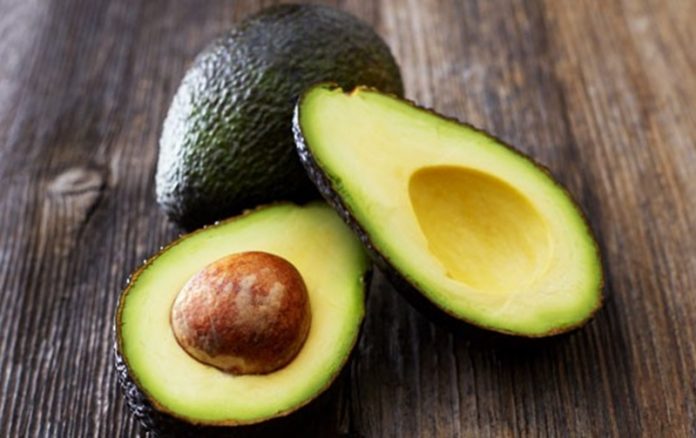
Similar to other tropical fruits, the global avocado market has been estimated and predicted multiple times over the last three years by market analysts. One such analysis indicates that the market was valued at $15.8 billion in 2023 and is expected to exceed $26 billion by 2030. According to our analyst, this equates to an annual growth of over $3.7 billion. In Nigeria, experts suggest that the country has the potential to generate over N12 billion annually if stakeholders actively explore the fruit for industrial use and exportation. An expert also notes that its profitability surpasses that of many other tropical fruits.

Considering the market’s growth, our analyst examines Nigerian public search interest over the past five years. Our analysis indicates significant search activity from the southern and north-central regions, likely influenced by cultural, economic, or agricultural factors. Further examination highlights Cross River, Plateau, Abi, Akwa Ibom, and Edo as the dominant states.

Additionally, our analysis reveals that the majority of users searching for avocado-related information during this period were interested in topics such as avocado oil, the health benefits of avocado, avocado oil for lips, how to use avocado for hair growth, the best oil for hair growth, olive oil versus avocado oil, the uses of avocado oil, and avocado oil for skin care.

Growing Avocado in Nigeria

Avocado farming presents an incredible opportunity for Nigerian farmers, both in terms of health benefits and economic prosperity. With increasing global demand, particularly for Hass avocados and avocado oil, Nigeria stands to gain significantly from expanding its avocado production. Farmers who adopt the best agronomic practices and capitalize on the various avocado by-products can secure a profitable and sustainable future in the industry. Whether for consumption, cosmetics, or export, the avocado truly lives up to its reputation as the “green gold.

Nigeria’s tropical climate provides the perfect conditions for growing Hass avocados, a highly sought-after variety with strong export potential. With abundant underground water sources, farmers in Nigeria can produce avocados year-round. Many are now embracing avocado farming as a lucrative venture, and grafted Hass avocado trees are available to help farmers kick-start their journey. Under good agronomic practices, these trees begin fruiting within 2-3 years, ensuring a quicker return on investment.

Avocado By-Products 

Avocado oil, extracted from pulp, is highly valued in the culinary world for its high smoke point and neutral flavour, making it an excellent choice for cooking. Beyond the kitchen, it plays a crucial role in cosmetics, widely incorporated into skincare and haircare products for its moisturizing and nourishing properties. Avocado seeds, or pits, also offer a range of applications. In the pharmaceutical industry, they are processed into powders or extracts, commonly used in dietary supplements. Additionally, seed extracts are a key ingredient in beauty products, prized for their bioactive properties.

The often-overlooked avocado peel is a rich source of bioactive compounds, including antioxidants and phenolic compounds, which can be harnessed for functional foods or cosmetic formulations. Avocado-based food products have also gained popularity. The fruit is processed into purees, powders, and even avocado-infused honey, expanding its culinary versatility. Moreover, avocado oil is becoming a preferred alternative to traditional shortening in baking, offering a healthier option for baked goods.

Nigeria Rises Five Places in Transparency International’s 2024 Corruption Perceptions Index, but Still More Corrupt Than a Decade Ago

0

Nigeria has recorded a marginal improvement in Transparency International’s 2024 Corruption Perceptions Index (CPI), ranking 140th out of 180 countries, a five-place rise from 145th in 2023.

The country’s score also inched up from 25/100 in 2023 to 26/100 in 2024, reflecting minor progress in the fight against corruption.

The Corruption Perceptions Index (CPI), released annually by Transparency International, measures public sector corruption using data from reputable global institutions, including the World Bank and the World Economic Forum. The scoring system ranks countries from 0 to 100, where 0 represents a highly corrupt country, and 100 signifies an absence of corruption.

Despite Nigeria’s improved ranking, the country remains one of the most corruption-prone nations globally. The report also reveals that Nigeria is now perceived as more corrupt than it was a decade ago, a disappointing contrast to expectations set by former President Muhammadu Buhari, elected in 2015 on the promise of eradicating corruption.

Global Corruption Trends and the Impact of Corruption

The 2024 Corruption Perceptions Index highlights corruption as a persistent global challenge. While 32 countries have significantly improved their rankings since 2012, a staggering 148 countries have either stagnated or worsened.

The global average CPI score remains 43, with over two-thirds of countries scoring below 50, indicating that corruption remains a major barrier to development and governance worldwide.

A notable aspect of the 2024 Transparency International report is the link between corruption and climate change. The report highlights how weak governance structures allow for the mismanagement of climate funds, delaying crucial projects to reduce carbon emissions and combat climate change. In countries with high levels of corruption, climate funds are often diverted, leading to slow progress in environmental protection.

A Decade of Decline: Nigeria More Corrupt in 2024 Than in 2014

The latest CPI rankings paint a bleak picture of Nigeria’s fight against corruption over the past decade. In 2014, Nigeria ranked 136th out of 175 countries with a score of 27/100. By 2024, Nigeria has slipped to 140th out of 180 countries with a lower score of 26/100.

In simpler terms, in 2014, Nigeria was perceived as more corrupt than 135 countries. A decade later, the country is now seen as more corrupt than 139 nations, despite repeated claims of anti-corruption successes.

This is particularly significant considering the widespread optimism surrounding Buhari’s presidency. Elected on an anti-corruption promises, Buhari was seen as Nigeria’s anti-corruption czar, with many expecting him to curb corruption drastically. However, rather than improving, corruption flourished under his watch, with officials in his government accused of looting public funds with impunity.

Comparing Nigeria to Other African Nations

While Nigeria recorded a slight improvement in its ranking, it continues to lag behind several African countries that have made significant progress in tackling corruption. Seychelles remains Africa’s least corrupt country, scoring 72, followed by Cabo Verde (62), Namibia (59), Mauritius (56), Rwanda (57), and Botswana (57). These nations have implemented stronger anti-corruption frameworks, accountability mechanisms, and governance reforms, allowing them to maintain their higher rankings.

Nigeria’s continued struggles with corruption contrast sharply with these nations, whose governments have demonstrated greater political will and institutional integrity in the fight against corruption.

Nigeria’s current ranking is attributed to significant corruption-related challenges, including embezzlement of public funds, bribery, electoral malpractice, weak institutional frameworks, and lack of transparency in public procurement.

To build on its modest gains, anti-corruption advocates recommend strengthening Nigeria’s anti-corruption institutions, particularly the Economic and Financial Crimes Commission (EFCC) and the Independent Corrupt Practices Commission (ICPC). They emphasize the need for stronger accountability measures, judicial independence, and greater transparency in government spending and procurement.

The Nigerian government has repeatedly pledged commitment to fighting corruption, with policies aimed at improving governance and enhancing public sector efficiency. However, experts caution that political will and public participation will be key to achieving meaningful and lasting progress.

While the 2024 Corruption Perceptions Index shows marginal improvement for Nigeria, the overall trend over the past decade is perceived to be disheartening. The country’s ranking and score have failed to improve significantly, leaving it among the most corrupt nations globally.

Breaking…Trump Speaks with Putin

0

In junior secondary, we had many competitions. One of such was to read novels within the African Writers Series, from Chinua Achebe’s Things Fall Apart to Mine Boy by Peter Abrahams. On the Igbo side, my all-time Igbo writer, Tony Ubesie, dropped the matchless peerless novels – Ukwa Ruo Oge Ya O Daa and Isi Akwu Dara N’ala – which I consumed in multiples.

But in all the books, Uwadiegwu, an Igbo novel, was full of wisdom, and could be seen as a practical guide on living life! He dropped many zen-like ideas. For example, if you must borrow, borrow from your kinsmen because when debts are localized, they are better, since by Igbo culture, if you are unable to repay, and your neighbour locks you up, he will also be responsible to take care of your family!

He posited that Nwaoha [a child to the community], Adaoha [a daughter to the community],  Ekeoha [a male child to the community], etc make it clear that a child does not belong to the parents alone, but to the community. And if your lender is part of the community, it gives you a cover in case you cannot repay since raising those kids are part of their issues also.

He went on and on, and none of those things made sense for a teenager but over time, I have come to appreciate the book.  A great session was: do not fight wars with your neighbours for a foreigner because one day any war will end. And if you must fight wars, make sure the wars are not in your homeland.

This takes me to the news that Donald Trump had spoken with Putin of Russia. People, did you read this well? Just imagine if Ukraine’s Zelenskyy read that book because right now, everything Europe has cooked has gone sour. Trump is leading on this matter because Putin and Zelenskyy should not be fighting, just as Israel and Palestine must stop wars [I mean grandchildren of Abraham sharing so much hatred, not good]

Innovation, Growth and the Mission of Firms – Ndubuisi Ekekwe | Tekedia Mini-MBA

0

We will begin the live Zoom component of Tekedia Mini-MBA on Saturday. I will discuss the mission of firms and why innovation is very vital for companies to accomplish whatever they have set out to do. Simply, innovation must facilitate growth. We will solve the equations of markets:

Great Company := Awesome Products + Superior Execution.

Innovation := Invention + Commercialization.

Sat, Feb 15 | 7pm-8.30pm WAT | Innovation, Growth and the Mission of Firms – Ndubuisi Ekekwe  | Zoom link  in the board.

Registration continues for the 16th edition of Tekedia Mini-MBA here