DD
MM
YYYY

PAGES

DD
MM
YYYY

spot_img

PAGES

Home Blog Page 2240

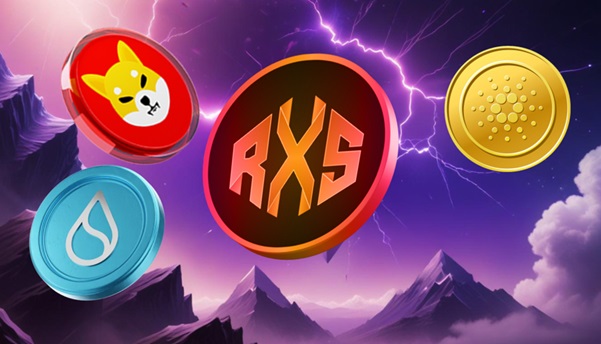
4 Tokens to Turn $765 into $10,765: Sui (SUI), Cardano (ADA), Shiba Inu (SHIB), and Rexas Finance (RXS)

0

The quest to find the following big tokens is one many investors are currently engaged in due to the direction cryptocurrency is heading. Shiba Inu, Sui, Cardano, Rexas Finance, and many more are expected to be some of the best investment opportunities in 2025. Due to their fundamentals and innovation integration, these tokens are part of substantial investments.

Sui (SUI): The Layer 1 Solution on the Rise

Sui, a blockchain engineered for speed, trades at $3.69 with a market cap of $11.1 billion. It focuses on transaction throughput, positioning it as a robust layer-one blockchain. Sui stands out because decentralized applications, or dApps, are backed by sufficient tools that encourage developers to build. Another reason Sui is increasing in popularity is the trend of higher adoption. Developers constantly compete due to the inexpensive transaction interface and structures Sui offers. Experts maintain that if the ecosystem continues expanding as it currently is, it may even reach $15 within 2025.

Cardano (ADA): A Pioneer in Blockchain Tech Development

Currently priced at $0.9054 and with a market cap of $31.85 billion, ADA has been at the center of blockchain growth. It is also known for its rigorous academic focus, which allows it to keep sustainability as a core focus. Cardano has recently experienced a 145% rise in trading volume, showing increased activity. With its focus on expanding contracts and a scaling solution known as Hydra, predictions show it could rise to over $2 in 2025, making it an attractive investment.

Shiba Inu (SHIB): The Meme Coin Staying Strong

Priced at $0.00001817 with a market cap of $10.7 billion, SHIB’s resilience holds even amid trembling conditions. Its ecosystem is complete with its layer 2 scaling solution, which has dramatically mitigated transaction costs while improving utility. Analysts claim that the token will benefit from the immense support of the community and the new innovations around the ecosystem. A potential rally towards $0.00005 by the end of 2025 would translate to considerable profits for holders.

Rexas Finance (RXS): Revolutionizing Real-World Asset Tokenization

Rexas Finance is a history-defining cryptocurrency project with features that appeal to retail and institutional investors. RXS is selling at $0.20, with a total amount raised of $44.1 million and 440 million tokens sold. With a focus on real-world asset tokenization, RXS makes investing in real estate, art, and other high-value commodities easier.

Rexas Finance’s key features include the Rexas AI, which allows investors to make better decisions and the Rexas Treasury, which improves asset management. In addition, the project has the Rexas Launchpad, which enables crypto projects to launch and gain visibility and funding. These factors place RXS at the forefront of the next development phase in the blockchain space. Rexas Finance’s presale and adoption success, even before the token launched, implies strong support for the project after the initial buyers. Rexas Finance is set to be listed at $0.25 on June 19, 2025, and from that date, RXS has the potential to explode, with expectations pricing the token between $5 and $7.

Reasons You Should Invest In These Tokens

Sui, Cardano, Shiba Inu, and Rexas Finance are each valuable and cater to different aspects of the crypto market. Sui provides excellent scalability and transaction efficiency, making it suitable for developers and enterprises. On the other hand, Cardano focuses on long-term innovation, sustainability, and environmental issues, strengthening the token’s credibility. The robust community support and ecosystem developments of the Shiba Inu token further ensure its continuous existence. Rexas Finance appeals to investors eager to see real change, offering unique solutions in tokenizing real-world assets. All these tokens can create a portfolio adaptable to market changes while combining innovation and growth potential. If an investment of $765 were made across the four assets, there is a high chance that the return on investment would be over $10,000 by 2025. These tokens are too necessary for any crypto portfolio, as investors should aim to diversify and maximize their gains.


For more information about Rexas Finance (RXS) visit the links below:

Website: https://rexas.com

Win $1 Million Giveaway: https://bit.ly/Rexas1M

Whitepaper: https://rexas.com/rexas-whitepaper.pdf

Twitter/X: https://x.com/rexasfinance

Telegram: https://t.me/rexasfinance
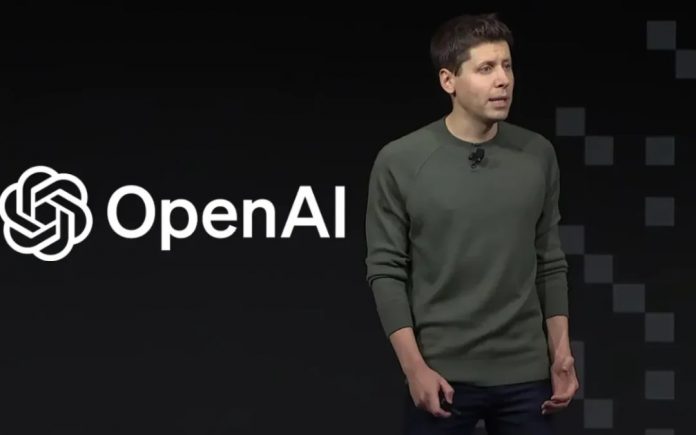
Sam Altman Admits OpenAI is ‘On the Wrong Side of History’ as DeepSeek and Open-Source AI Challenge Silicon Valley’s Status Quo

0

In an unexpected admission, OpenAI CEO Sam Altman acknowledged on Friday that his company has been “on the wrong side of history” when it comes to transparency in artificial intelligence (AI).

The statement, made during an Ask Me Anything (AMA) session on Reddit, marked a significant shift in the ongoing debate about whether AI models should be open-source or closely guarded by private companies.

“I personally think we have been on the wrong side of history here and need to figure out a different open-source strategy,” Altman wrote in response to a question about OpenAI’s lack of transparency. However, he noted that “not everyone at OpenAI shares this view, and it’s also not our current highest priority.”

Altman’s comments come at a time when OpenAI is under increasing pressure from open-source AI competitors, particularly China’s DeepSeek, whose rapid advancements have rattled Silicon Valley and the global tech industry.

The Rise of DeepSeek: China’s Open-Source Disruptor

DeepSeek, an AI startup founded by a team of former Tencent, Alibaba, and Tsinghua University researchers, made headlines in late 2024 with the release of its R1 chatbot. This model offers performance comparable to OpenAI’s GPT-4 at a fraction of the cost.

But what truly set DeepSeek apart was its open-source approach. Unlike OpenAI, which has moved toward a closed, commercial model, DeepSeek positioned itself as a public-spirited AI initiative that allows developers worldwide to freely access and modify its technology.

DeepSeek’s move was immediately seen as a direct challenge to OpenAI, Google DeepMind, and other Western AI leaders. While OpenAI and Google justify their secrecy as a way to protect intellectual property and prevent AI misuse, DeepSeek has argued that openness fosters greater innovation and trust in AI.

The impact of DeepSeek was felt almost overnight. Within weeks of its release, major AI developers, startups, and universities began experimenting with DeepSeek’s open-source models, reducing their dependence on OpenAI and Google’s proprietary systems.

Even government agencies and corporations in Europe, India, and the Middle East started exploring DeepSeek as an alternative, citing concerns about U.S. tech dominance and data sovereignty.

DeepSeek’s rise sent shockwaves through Silicon Valley. While Meta, Mistral, and some other AI firms have embraced open-source models to varying degrees, the established giants—OpenAI and Google DeepMind—have remained committed to closely guarding their AI breakthroughs.

However, as DeepSeek demonstrated that high-performance AI can be built and shared openly, it forced a broader industry reckoning. Suddenly, OpenAI and Google were no longer the only players in town, and their dominance in the AI space looked more vulnerable than ever.

During his Reddit AMA, a user directly asked Altman whether DeepSeek’s success had changed OpenAI’s plans for its future models.

“It’s a very good model,” Altman admitted, referring to DeepSeek’s technology. “We will produce better models, but we will maintain less of a lead than we did in previous years.”

This was a striking acknowledgment. OpenAI, which once enjoyed an undisputed lead in AI innovation, now faces the reality that competitors are catching up—and fast.

The Battle Between Openness and Secrecy in AI

The debate over open-source vs. closed AI has become one of the most contentious issues in the tech world. Proponents of open-source AI argue that transparency is essential for accountability, security, and global collaboration. They point out that AI models trained in secrecy can be vulnerable to bias, manipulation, and ethical concerns that might go unchecked without public scrutiny.

On the other hand, companies like OpenAI and Google argue that keeping AI proprietary is necessary to prevent misuse and maintain economic incentives for further innovation. OpenAI, in particular, has shifted from its original open-source mission to a for-profit model backed by Microsoft, citing the need to balance safety with commercial success.

Meta, Mistral, and DeepSeek have challenged this view by releasing open models, claiming that AI should be treated like a global utility rather than a corporate product.

Will OpenAI Change Course?

Altman’s statement suggests that internal divisions exist within OpenAI about its future direction. While he appears open to revisiting OpenAI’s approach, he admitted that it is not a top priority for the company at the moment.

This may be because OpenAI is deeply entangled with Microsoft, which has invested billions in the company and integrated OpenAI models into its products like Azure and Copilot. If OpenAI were to shift toward open-source AI, it could risk undermining its business model and straining its relationship with Microsoft.

Meanwhile, DeepSeek and other open-source challengers show no signs of slowing down. Analysts believe that if they continue to gain traction, OpenAI may have no choice but to adapt—or risk losing its leadership position in the AI race.

Meanwhile, OpenAI will be receiving more investment funds from Japan’s SoftBank.

OpenAI may have a new top backer. Japanese investment firm SoftBank is set to invest $40 billion in the artificial intelligence startup, CNBC reports, citing anonymous sources. The deal would value OpenAI at $260 billion and edge out LinkedIn’s parent company, Microsoft, as OpenAI’s largest investor. The cash infusion is expected to provide additional funding for the previously announced Stargate project, a venture by OpenAI, SoftBank and Oracle that aims to build AI computing centers across the U.S.

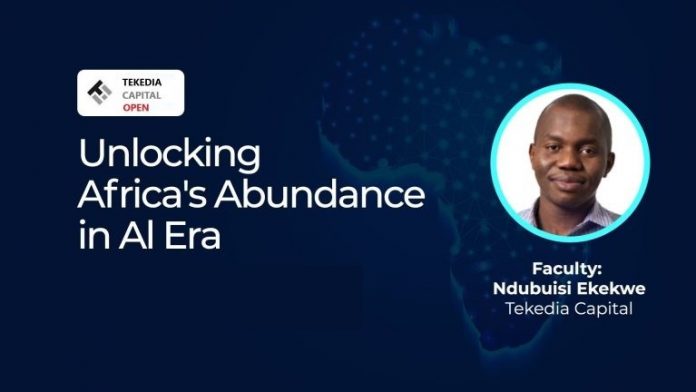
Unlocking Africa’s Abundance in AI Era – Ndubuisi Ekekwe – Tekedia Capital Open [Video]

0

The recorded session

Meeting summary for Unlocking Africa’s Abundance in AI Era

Overview:  Tekedia, the speaker (Ndubuisi Ekekwe), emphasized the importance of understanding numbers in business and the role of technology, particularly AI, in advancing efficiency and innovation. He discussed the evolution of societies and the potential of AI in various industries, while also highlighting the need for clarity on business objectives and the importance of government investment in supply chain development. The conversation ended with discussions on the transformative impact of AI on governance and education, and its potential in the energy sector and building a technology hub.

Understanding Numbers in Business Growth: Tekedia discussed the importance of understanding numbers in business and how this understanding can lead to identifying opportunities and solving market frictions. He emphasized that the world is made up of numbers and that businesses are created to overcome these frictions. He used the example of a restaurant business to illustrate how businesses can help customers overcome market frictions. Tekedia also highlighted the importance of capabilities, knowledge, and tools in creating products and services that meet customer needs. He concluded by stating that advancing these capabilities can advance a business.

Evolution of Technology and Innovation: Tekedia discussed the evolution of technology and its impact on business and society. He emphasized that the world is driven by numbers and the ability to make sense of them. He highlighted the advancements from the abacus to computers and the internet, and how these have enabled global connectivity and transactions. Tekedia also discussed the role of artificial intelligence (AI) in advancing efficiency and utilization of factors of production. He explained that AI is an extension of previous technological advancements, helping to make sense of large data sets. He also touched on the importance of innovation, distinguishing it from invention. He suggested that innovation is the process of translating new ideas into commercialized products and services that can solve market frictions.

Accelerated Society and AI Evolution: Tekedia discussed the evolution of societies from an invention society to an innovation society, and now to an accelerated society. He highlighted the role of AI and autonomous systems in this transition, noting that Africa is still in the invention society era. Tekedia also pointed out that while AI is transforming industries in Western Europe and the US, it presents an opportunity for Africa to participate productively. He emphasized the importance of understanding the business model and the need for the workforce to evolve to work with AI systems. Tekedia concluded by stating that technology is not the goal, but rather the strategic business objective is key.

AI Potential and Industry Applications: Tekedia discussed the potential of AI in various industries, emphasizing the importance of understanding the foundational systems in AI and how to extract value from them. He highlighted the three critical levels in AI: foundation models, language models, and generative AI labs. Tekedia also explained the concept of the “smiling curve” in the context of banking, where companies can position themselves at the edges of the curve to capture more value. He advised that while it’s unlikely for most companies to compete at the level of OpenAI or Google, they can still drive improvements in their own sectors through AI.

AI for Strategic Business Objectives: Tekedia discussed the importance of understanding the strategic objectives of a business and how AI can be used to accelerate those objectives. He emphasized that AI is not the end goal, but rather a tool to facilitate business objectives. Tekedia also highlighted the need for clarity on what a business wants to achieve, as AI can facilitate that. He mentioned that there are many people, including those in Africa, who have mastered fundamental elements in generative AI. He also suggested that AI could be used to create employment and drive new investment opportunities, particularly in the healthcare sector. The conversation ended with a discussion on how AI could be made inclusive to benefit people in remote areas.

Building Africa’s Food Supply Chain: Tekedia discussed the challenges of building a supply chain for food services in Africa, emphasizing the need for government investment and a cooperative effort. He highlighted the importance of tagging and documenting crops and produce in village markets to enable digital transactions and create jobs. He also addressed the issue of food waste in Africa, suggesting that more attention should be given to post-harvest storage and preservation. Adam, a startup founder, expressed interest in sending his pitch deck for an agritech project, while Michael, a farmer, sought AI alternatives for crop monitoring and disease detection. Tekedia advised Michael to consider cooperative farming and suggested that AI could be more effective in this context once the cooperative spirit is revived.

AI’s Impact on Governance and Education: Ahmed discussed the transformative impact of AI on various aspects of life, including governance and education. He highlighted the potential for AI to unify the educational system and increase productivity. Ahmed also expressed optimism about Africa’s future, suggesting that it could become a hub for skilled labor due to its population and the potential for AI-driven production. Lawrence asked about how AI could be utilized in the energy sector and in building a technology hub as a service. Tekedia responded by emphasizing the need for a shift in the energy sector from generation to distribution, and advised against building their own chips, suggesting instead to focus on software to capture more value from partnerships.


Good People, the first Tekedia Capital OPEN for the year will be on Saturday, Feb 8 2025, at 4-5pm WAT. It is a free and open event, and everyone’s invited. Our topic is “Unlocking Africa’s Abundance in the AI Era”.

Last year, Tekedia Capital invested in close to 30 companies in four continents, covering quantum computing (Conductor Quantum, UK), AI-infrastructure insurer carrier (Corgi, USA), B2B fashion (Shoptreo, Nigeria), travel finance (Moreto, Mexico), HNI wealth management (Paasa, India), and others. In our investments, we always look for how companies can build competitive advantages in markets, and compound them over time. Increasingly, we have seen that AI can cushion positive positioning, creating a new basis of competition within sectors, for success. 

In this presentation, I will explain what the AI redesign means for Africa, and how we can unlock the promises, and win for the continent.  The best banks of the future will not be banks that use AI, but AI companies which offer banking services! That means, the way we look at technology creation, and fixing market frictions, must fundamentally change. 

  • Event: Tekedia Capital Open
  • Speaker: Ndubuisi Ekekwe
  • Topic: Unlocking Africa’s Abundance in AI Era
  • Date: Sat, Feb 8, 2025
  • Time: 4-5pm WAT
  • Zoom: click here 

Meanwhile, the next investment cycle of Tekedia Capital begins in April 2025. If you are building an AI company that is designed to transform a physical space market friction (not clicks and likes) or become a foundational AI infrastructure company in a sector [example: a microfinance bank of 10 staff running 99% on AI, or Nigeria’s first legal AI infraco to support what lawyers/judges do via subscriptions, etc ], we have funds for you.

Solana Price Prediction: Fund Manager Calls For $520 SOL Before Year End; Investors Believe They Have Found The Next XRP

0

VanEck, a popular Bitcoin and Ethereum exchange-traded funds (ETF) issuer, recently shared its updated Solana prediction. In January, VanEck shared that following the launch of a Solana ETF, SOL would rise to $500, but now, they have updated their prediction to $520 before year-end.

However, investors have fixed their gaze on Remittix (RTX), the project with the potential to become the next XRP. The Remittix project solves the woes of cross-border technology by offering a distinct PayFi model. Find out why RXT could be the next XRP!

Solana Could Surge To $520 Before Year End!

VanEck is an asset manager responsible for the launch of an Ethereum and Bitcoin ETF. On January 6, VanEck issued its prediction concerning Solana’s performance and stated that the SOL project could reach $500 before the end of the year.

However, the asset manager tweeted that after collating its Solana price outlook for the year-end, SOL could rise to $520. SOL is priced at about $198.2 with a decline of over 17% within the last week due to the overall market decline.

However, analysts predict that SOL could rise to $213 by March following the launch of its SOL ETF. Yet, SOL holders have fixed their gaze on RTX, a new XRP contender.

Do You Wish You Could Send Your Crypto To Your Bank Account? Meet Remittix

Remittix is a dream come true for many investors because it simplifies the complicated process of turning tokens into actual money. If you’re someone who’s familiar with cryptocurrencies, you would agree that the concept of crypto compared to FIAT has been a challenge for many traditional remittance platforms.

But that’s where Remittix comes in; this altcoin offers lasting solutions to these challenges through its stellar PayFi ecosystem. Those wondering which coin is the best to buy now for seamless transactions have found Remittix to be their best bet because of its affordability and transparency.

The World Bank estimates that close to 1.4 billion adults do not have access to financial services. So, even though FIAT powers the world, many people are members of unbanked and underbanked communities.

Traditional platforms like Stripe, Wise and Western Union charge high fees and take longer processing time for their transactions, and all these issues are why Remittix emerges as the best solution. This project bridges the gap between crypto and traditional finance, allowing users to send and receive crypto instantly while ensuring FIAT withdrawals.

So, just picture your crypto wallet that has been sitting there for years with no way of getting your assets converted into real money. Through Remittix, you can send your crypto directly to the bank account of your choice, whether for personal or business remittances with no hidden charges.

Additionally, Remittix offers a unique Pay API model for businesses to manage their crypto cashouts. These companies offer over 50 crypto pairings and 30 FIAT currencies. This Pay API model requires only an internet connection and eliminates intermediaries to enhance businesses’ crypto receipts and deposits.

Due to Remittix’s strategic positioning, its RTX token presale has witnessed massive demand from institutional investors.

Secure Your Portfolio 100X With The RTX Presale.

The Remittix token presale has garnered significant attention from investors who want to enhance their global payment experience. So far, the RTX presale has raised over $11.1 million with each token priced at $0.0539.

Already, over 75.4% of the RTX tokens allocated to their round were purchased and experts believe that once RTX hits the market, early backers will experience a 1000% rally. If you’re still wondering which coin is the best to buy now, join the RTX presale today!

Discover the future of PayFi with Remittix by checking out their presale here:

Website: https://remittix.io/

Socials: https://linktr.ee/remittix

TRUMP Investors Now Collecting ETH-Based Token Yeti Ouro (YETIO)

0

The market has been in a downward spiral ever since newly appointed President Trump announced the tariffs on Mexico, Canada and China. He has since paused the tariffs on Mexico and Canada, and the market has started gaining momentum again. Meme coins took a major hit during this time. TRUMP token took the crypto space by storm ever since its launch, but it has since slumped by two-thirds since then. Investors have taken interest in a new meme coin, Yeti Ouro (YETIO) which is set to revolutionize space.

TRUMP Coin

After the US presidential elections, the market grew exponentially with not only the top tokens but for meme coins as well. TRUMP was officially launched by the POTUS on 17th January on his X (Twitter) profile and the token quickly surged, reaching a market capitalization of over $14.5 billion by 19th January, the day before his inauguration.

But with the news of tariffs, the entire crypto market saw the largest liquidation in the history of crypto and meme coins were not spared from the downfall. Market is recovering after the tariffs have been paused. TRUMP is now trading at $18.74 with an increase of 7.13% in the last 24 hours.

Analysts are debating whether meme coins like TRUMP are still a good investment for higher returns or it’s time for a new project to shine. Investors are looking for more sustainable and utility driven tokens.

YETIO

Yeti Ouro with its token named YETIO aims to be more than just a meme coin, striving to be a utility token with a strong Play-to-Earn narrative.

Yeti Ouro is designed to merge meme culture with real-world utility through its upcoming Play-to-Earn (P2E) game, Yeti Go. The game is currently in the development stage and the project is attracting massive attention through its stage 2 pre-sale.

Yeti Go, an Unreal Engine 5-powered P2E racing game, which lets players compete in fast-paced, player-versus-player races, allowing them to use power-ups and weapons.

Players can also earn YETIO tokens by winning races, completing challenges, and participating in special events. The game is designed to be accessible to every player’s class by offering enough depth for hardcore gamers. YETIO tokens will be the in-game currency for all purchases, fees, and player marketplace. Players will also be able to stake YETIO tokens for additional rewards.

Thousands of investors have already secured their YETIO holdings, preparing for the big Stage 3 price jump in upcoming days. The community is expanding, and big players are coming in, signaling confidence in the project.

Unlike several other meme coins, YETIO has a capped supply of 1 billion tokens. 5% of the tokens will be burned to create the scarcity that will help in YETIO’s price appreciation over time.

The Yeti Ouro project has a clear roadmap with several phases, including community building, major DEX and CEX listings, staking, and the launch of Yeti Go. It aims to provide a sustainable and rewarding ecosystem.

The ongoing presale has been performing well despite the market volatility. Over 160 million YETIO tokens have already been sold and there are only 8 days until the token price increases going into Stage 3. The current price of YETIO is $0.017 with a 10% bonus being offered on all purchases.

Yeti Ouro has gone the extra step and has been thoroughly audited by SolidProof, further strengthening their investors’ trust.

Conclusion

It is important to cut through the noise and find good projects which have long-term investment potential. YETIO’s deflationary tokenomics and DeFi features will help it focus on sustainability.

This could be why investors are moving away from hype based tokens and supporting a new project like YETIO. Yeti Ouro presents that rare opportunity, with being at the forefront of a new era in digital finance and gaming, seamlessly integrating Play-to-Earn mechanics with cutting-edge DeFi solutions.


Join The Yeti Ouro Community

Website: https://yetiouro.io/

X (Formally Twitter): https://x.com/yetiouro

Telegram: https://t.me/yetiouroofficial

Discord: https://discord.gg/YtUsEZ2Zr