With the comparative value of Bitcoin against the US Dollar on the rise, different scenarios are being sensationalized about what will happen if large institutional or sovereign holders liquidate their BTC.
We see mention of Coinbase, Blackrock and Microstrategy. We see mention of the US and China.
But at a 1.1 Million Bitcoin holding, few speak about the elephant in the room – Satoshi Nakamoto, who still, nobody knows much about.
Here is a list of people who are candidates for the pseudonym ‘Satoshi Nakamoto’:
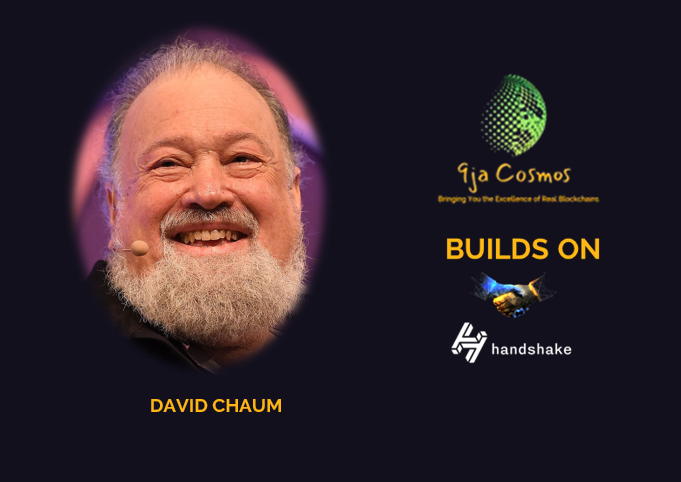
David Chaum
David Chaum is a Cryptographer who first proposed a blockchain-like protocol in his dissertation “Computer Systems Established, Maintained, and Trusted by Mutually Suspicious Groups” His system involved blockchain-like cryptography. It enforced trustlessness, and introduced a means whereby individuals could stay unknown to each other and transact safely, irrespective of if one or more of them had ill-intent. This earned him a Doctorate from California Berkeley in 1982.
He founded International Association for Cryptologic Research (IACR) and launched ‘DigiCash’ in 1990. He has a plethora of academic honours. He’s considered the ‘father of ZKP’ (Zero Knowledge Proof), some say Blockchain.
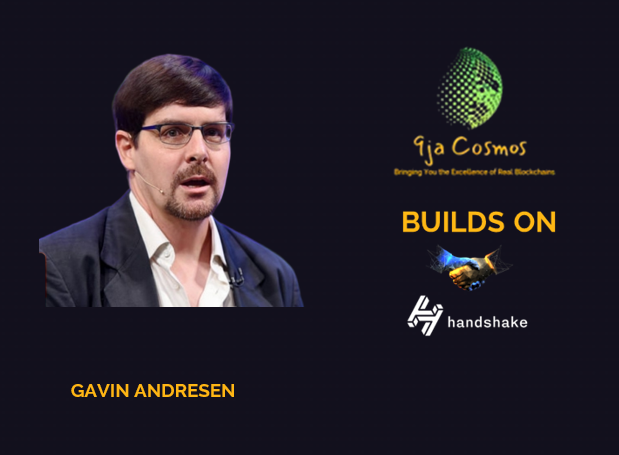
Gavin Andresen
Gavin Andresen was born Gavin Bell in Melbourne, Australia. He moved to the US, studied Computer Engineering in Princeton and worked on 3D Graphics Hardware with Silicon Graphics Computer Systems (SGI). He also developed the loan management platform Prosper.
Andresen built up a relationship with Nakamoto and soon became the dominant contributor of code over ‘Bitcoin Talk’ surpassing that of other contributors such as Hal Finney and the now discredited Craig Wright.
Andresen also launched ClearCoin, a bitcoin exchange based on an escrow system.
In December 2010, Nakamoto left his last publicly known message, naming Andresen as his successor.
Beyond Nakamoto, he took the reins of the project and shaped it into what we know today. This earned him the nickname “the man who built Bitcoin.”
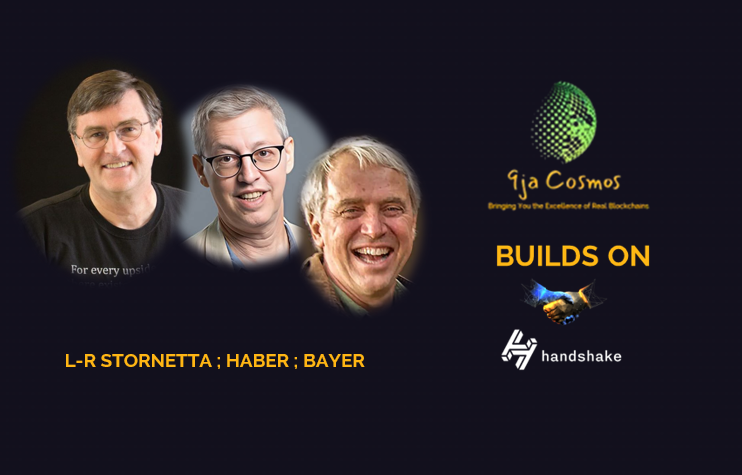
Stuart Haber, Scott Stornetta and Dave Bayer
Stornetta was a Theoretical Physicist who became obsessed with the ‘problem of immutability of digital records’ while at Bell Labs. There he met Haber who is a cryptographer and they began to work together. Their initial solution was based on hash functions and digital certificates.
At the end of 1991 they met Bayer.
Bayer had earned his Ph.D. at Harvard in 1982 under the direction of Heisuke Hironaka with a dissertation entitled The Division Algorithm and the Hilbert Scheme He’s a Professor of Mathematics at Columbia.
By 1992 with Bayers’ lead, the three incorporated Merkle trees into the design. This improved efficiency by allowing several document certificates to be collected into one block.
All three were cited in the white paper published by Nakamoto describing the technological underpinnings of Bitcoin. Some suspect ‘Satoshi Nakamoto’ was invented as a label to anonymously present their work collectively.
Stornetta is known to speak fluent Japanese.
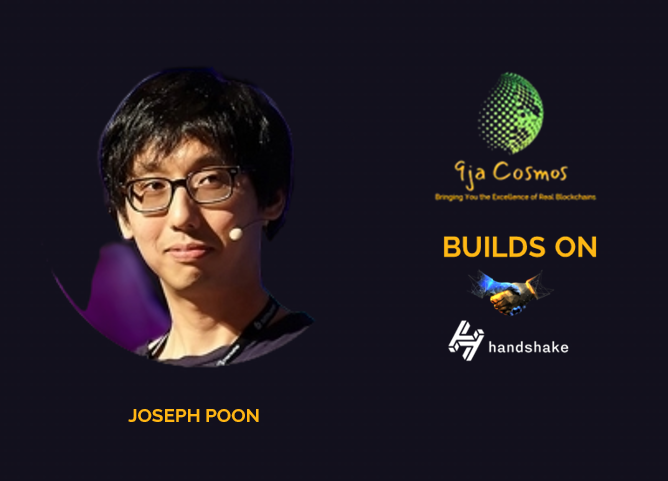
Joseph Poon
Joseph Poon was a lead core dev on Bitcoin. He went on to lead on The Lightning Network, and was Lead Founding Creator on the Handshake Blockchain. He also co-built Plasma with Vitalik Buterin.
Handshake is a fork/copy of Bitcoin sharing its’ DNA to the point BIPs (Bitcoin Improvement Protocols) can (and are) implemented on it.
While Andresen won the ‘contribution war’ on ‘Bitcoin Talk’, securing the ‘Nakamoto Mantle’ over Hal Finney and Craig Wright, Poon wasn’t on there at all. He didn’t have to be. If he isn’t/wasn’t Nakamoto then he had a direct line to him and should know who he is/was. Was Poon just a ‘backend resource’ of Nakamoto or is he actually Satoshi Nakamoto himself?
Handshake came to decentralize Internet (Domain) Names along an exact parallel to Bitcoins’ aims in decentralizing money. Code for a Handshake Name is buried in a block on the blockchain and the process of authoring the names is integrated through the Urkel (Merkel) Tree. There are no smart contracts.
Decentralization Advocate and ‘Handshake Director’ ‘Godfather’ aka rahulsutariya who intermittently appears on X, Telegram, BlueSky and Discord, frequently makes the simple post:
‘…First he (SN) decentralized money. Next, he started decentralizing the internet – starting with DNS (Domain Name Service). Satoshi moved to Handshake $HNS’
Some may take this to mean Poon is Nakamoto
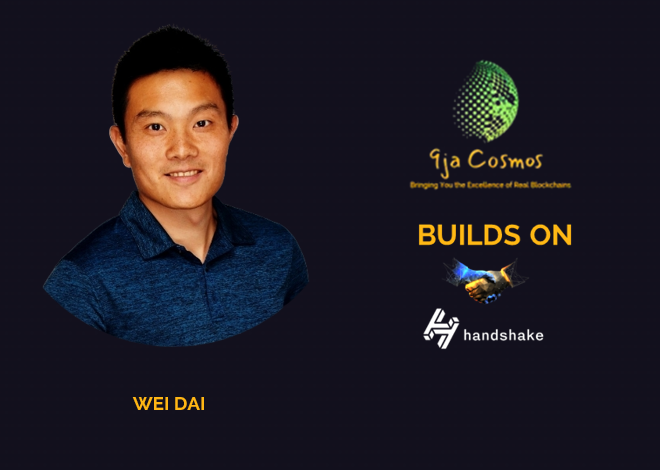
Wei Dai
Wei Dai was an active member of the Cypherpunk movement, as was Satoshi Nakamoto. The Cypherpunk movement advocates for the use of strong cryptography and privacy-enhancing technologies to promote individual rights and resist government surveillance.
Dai graduated with a computer focused BSc. From Washington and went to work for Microsoft.
He became heavily involved in cryptography, first identifying critical Cipher Block Chaining (CBC) vulnerabilities affecting SSH2 and the browser exploit against SSL/TLS known as BEAST (Browser Exploit Against SSL/TLS)
He moved on to release ‘Crypto++’ and ‘VMAC’ but his singular offering which moved the needle was b-money in 1998.
The goal was “money which is impossible to regulate” , and the solution required a specified amount of computational work (since known formally as ‘Proof of Work’ [PoW]).
Wai described it as ‘…a scheme for a group of untraceable digital pseudonyms to pay each other with money and to enforce contracts amongst themselves without outside help‘
Sound familiar?
Wei Dai and Adam Back were the first two people contacted by Satoshi Nakamoto as he was developing Bitcoin. Nakamoto referenced b-money in the subsequent Bitcoin whitepaper.
Nevertheless, it’s already novel that Nakamoto as a pseudonym could carry out online conversations with himself. It sounds even less likely the two people had a shared alter ego, and the perceived dynamic between both of them doesn’t make it believable Satoshi could be just one of them.
Ross Ulbricht
Ross William Ulbricht (US) developed a ‘darknet market’ known as ‘Silk Road’ under the pseudonym ‘Dread Pirate Roberts’. It began in 2011 and halted in 2013 due to his arrest. Silk Road was an unregulated online marketplace making anonymous trustless trade possible using Bitcoin. It became a honeypot for trade in goods and services which couldn’t happen lawfully.
Ulbricht’s sentencing brought more outcry than the actual arrest. Researchers Tim Bingham and Monica Barratt published that Silk Road created a stigma-free, supportive community that enabled drug users to learn from each other rather than rely on pushers. They were able to secure drugs without the logistical challenges, legal hazards, and personal safety risks associated with buying drugs on the street.
Many agreed ‘Silk Road’ made scaling criminal trade easier and made its owner morally ‘wrong’, but most rebelled when Manhattan US attorney Preet Bharara led a prosecution ending with life imprisonment without parole. This was in line with the sentencing of drug kingpins.
Ulbricht pioneered early Bitcoin use but there is a big difference between the wherewithal for the first blockchain and the first DAO Market, so his Nakamoto candidacy is an outsider.
Ulbricht was pardoned by Donald Trump and his prison clothes were put on display at Bitcoin 2025
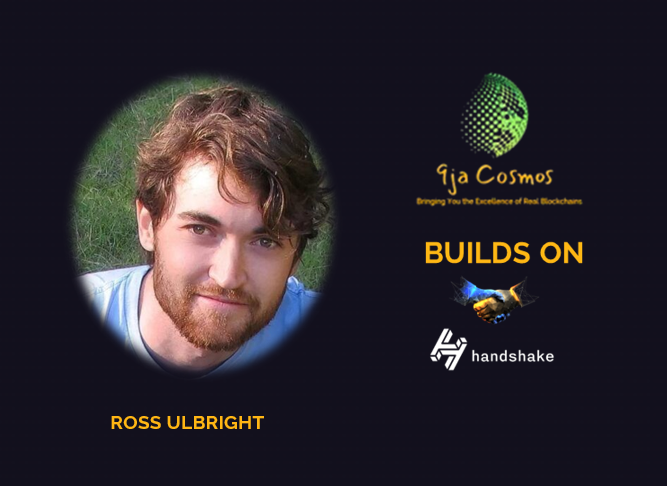
Dorian Nakamoto
Dorian Nakamoto as a choice is somewhere between a distraction and a spoof. It is included for the sole purpose of being dispelled. Dorian graduated in physics from California Polytechnic and worked on classified defence projects.
Hungry for readership eyes, in 2014, Newsweek carried an article claiming him to be Satoshi. Dorian quickly countered the claim, saying that his involvement with bitcoin was never more than curiosity and a small retail investment.
He fully refuted things Newsweek claimed he said about being involved in Bitcoin. Newsweeks’ basis seemed only a vague similarity with Satoshi’s liberal life views, and of course the last name and Japanese background.
The online chatter found traction with the meme brigade and floods of memes arose irreversibly cementing his image in online content and social media forever.
Novice researchers and Bitcoin enthusiasts, rushing their searches, frequently discover his photo online and wrongly perpetuate the myth.
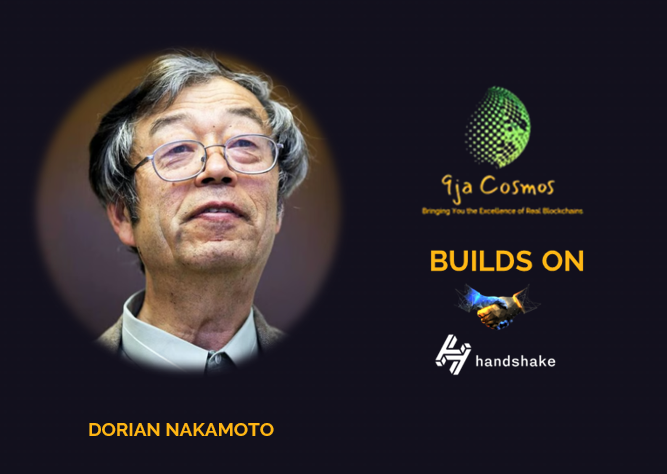
Nick Szabo
Nick Szabo has a number of strange similarities with Wei Dai. He also attended Washington, and in 1998 he released ‘Bitgold’, the same year Dai released ‘b-money’. He also lived suspiciously close to the home of Dorian Nakamoto, but there is no evidence that at any point they knew each other.
He also got accused of being Satoshi Nakamoto the very same year, though not by Newsweek. In response to British journalist Dominic Frisbee, he replied: “I’m afraid you got it wrong doxing me as Satoshi, but I’m used to it.”
Szabo was also a ‘cypherpunk’ and technically, ‘Bitgold’ seems much further down the road to Bitcoin, than ‘b-money’ is.
Nakamoto’s writings contain some linguistic mannerisms that have appeared in the writings of Szabo. Are they reflective of Szabos’ Hungarian heritage, or is it simply an organic adoption of an influencers’ traits?
Of Szabo, Musk said: ‘Obviously I don’t know who created Bitcoin … it seems as though Nick Szabo is probably more than anyone else responsible for the evolution of those ideas. He claims not to be Nakamoto … but he seems to be the one more responsible for the ideas behind it than anyone else.’
YouTuber Ben Armstrong, highlighted a point at which Szabo said ‘When I made Bitcoin’, when he meant to say something about working on Bitcoin BIPs, and claimed it was a Freudian slip.
Contrarily, Szabo formed the notion of a Smart Contract in 1994. Later, Szabo began to get involved with Ethereum to the point, Buterin made efforts to limit his influence. Ethereum denominations are even called (G) Wei, Szabo and Finney. This seems against the cryptographic ideologies and culture of Satoshi Nakamoto. Although Szabo later moved position saying: ‘Sadly, yes, Ethereum, which once sounded so promising, has become a shitcoin as a result of devolving into a centralized cult.’
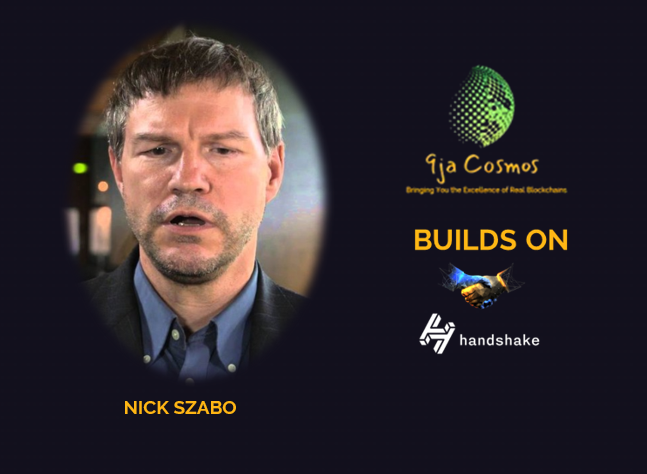
Adam Back
Like many of those with ideological values that match that of Satoshi Nakamoto, Adam Back is a Cypherpunk. With Wei Dai, Back was one of the first two people contacted by Satoshi Nakamoto as he was developing Bitcoin.
Back has a PhD in distributed systems from Exeter.
In 1997, Back invented Hashcash, which is used in the Bitcoin mining process.
In 2016, the Financial Times cited Back as a potential Nakamoto candidate. The YouTube channel Barely Sociable repeated the claim in 2020.
In 2024, a UK court ruled that Wright was in contempt for persistent, false claims to be Satoshi. During those proceedings, Back released a series of emails he had with Satoshi Nakamoto during 2008 and 2009. Back and Satoshi discuss the Bitcoin whitepaper, and Back refers Satoshi to the work of Wei Dei. The series ends in January 2009 with Nakamoto announcing Bitcoin is launched.
Adam Back is the founder/CEO of Blockstream, – blockchain solutions based on the Bitcoin infrastructure. The companys’ lead product is the Liquid Network, which is a Layer 2 Bitcoin sidechain.
The exposed emails make it extremely difficult to consider either Back or Dai as Satoshi candidates.
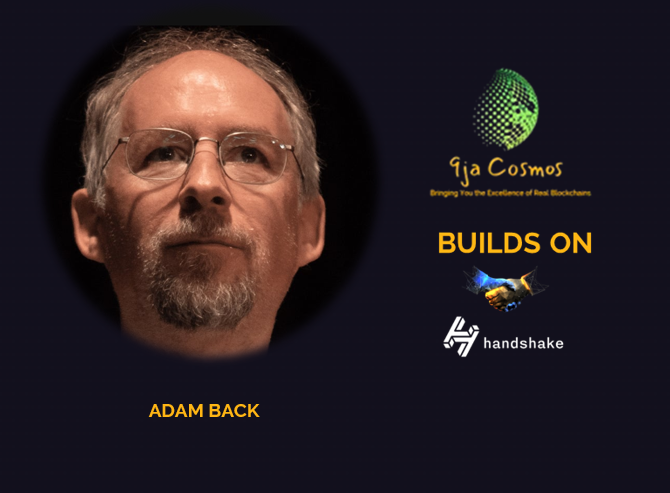
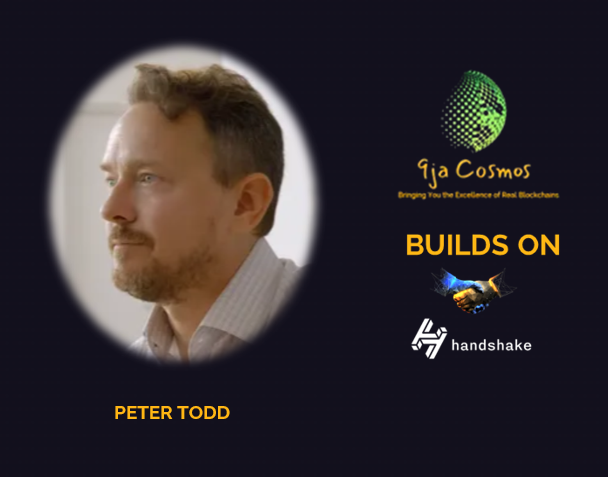
Peter Todd
Peter Todd was named as the real-world identity of Satoshi Nakamoto by Cullen Hoback, HBO.
In 2008, Todd was just finishing a fine arts degree He wasn’t even in the cryptography world yet. There’s no reason he would have needed a pseudonym – he wasn’t a known figure, and didn’t become involved with Bitcoin until 2012.
In April 2012, Todd submitted ‘OP_CHECKLOCKTIMEVERIFY (BIP 65)’
OP_CHECKLOCKTIMEVERIFY allows ‘post-dating’, so Bitcoin sent, can’t be used by the recipient until the future date specified by the transaction.
“For the record, I am not Satoshi,” he responded. “I think Cullen made the Satoshi accusation for marketing. He needed a way to get attention for his film.”
The Aston University Centre for Forensic Linguistics analysed the writing style of 13 Nakamoto candidates. It found Nick Szabo the closest match.
Todd is a born Canadian and uses British English. Some of his writings use indigenous spelling, common with Nakamoto; such as colour and cheque. But that’s not enough proof to establish him as the inventor of Bitcoin.
In an interview after the HBO Documentary was released, Todd told Kevin T. Dugan, staff writer at Intelligencer: Seems like Hoback avoided easily sourced information that could discount me being Nakamoto. It’s not hard to do a bit of research on my life, including talking with my friends and family about me circa 2008, the time when Nakamoto was known to be developing the bitcoin idea.
A check of bips.xyz – a mirror of the official BIPs repository shows BIPs from 2011 to todays date. There is only one BIP with Todd as owner, as compared to Gavin Andresen, mentioned earlier, who has 11.
It appears unlikely Todd is Nakamoto.
I’ve discounted Hal Finney and Craig Wright who are common in similar articles. They, along with Gavin Andresen, were individually engaging with Nakamoto on Bitcoin Talk. As Satoshi named Andresen his successor, it devalues the likelihood of the other two. Separately, early collaborators were floated as the real Satoshi by Financial Times. Adam Back publicly responded that none were, a list which included both himself and Wright. None of the group had a problem with the response except Wright, who sued Back, but dropped it later. Separately a London High Court Judge sentenced Wright to 12 months in prison, suspended for two years. The court was satisfied claiming to be Nakamoto was lying, and ordered him to cease in a previous case, an order he continued to disobey. Wright’s actions were described in court as “legal terrorism” that “put people through personal hell” in his campaign to be recognised as Bitcoin’s inventor.
Who do you think Nakamoto could be? Is it none of the above? Did he pass away from some terminal condition in 2010? And what is to become of that 1.1 Million Bitcoin holding, big enough to topple empires?
Sources: Bitcoin Wiki, Bitstamp.net BBC.com , Ben Armstrong Podcast. Curiousmatrix Forbes, Investor Place Wired, ‘Falling in and Falling out: A Brief Study of the Shifts in Nick Szabo’s Attitude towards Ethereum’ – Chester. Wikipedia,
9ja Cosmos is here…
.9jacom Domains
.det0x Domains
Detoxant 3 Tokenized Artworks
Detoxants – FiendYard Fruit & Veg
Opaque Emotion Pathways Tokenized Artworks
Preview our Sino Amazon/Sinosignia releases (Ente)
Visit 9ja Cosmos LinkedIn Page
Visit 9ja Cosmos Website
Follow 9ja Cosmos on X
Like this:
Like Loading...