DD
MM
YYYY

PAGES

DD
MM
YYYY

spot_img

PAGES

Home Blog Page 2261

BC.Game Login Instructions and Problem Solutions

0

BC Game is now extremely popular for gamblers and bettors from Nigeria. This platform is known for the availability of payment via cryptocurrency, which greatly simplifies the deposit and withdrawal processes for gamblers. To use all the variety of features you will need to have an account on the site. Sometimes, your login information can become too old and you will need to proceed with this process again. Here you will find all the basic information about BC.Game login and what problems you may encounter.

BC.Game Account Login Process

The login process on BC.Game is quite simple and convenient. Below is a step-by-step instruction, following which users can quickly log in to the account on the BC.Game official website of the crypto online casino:

  1. Go to the site and click on the green button “Sign In”, which is located in the upper right corner of the main page;
  2. Choose a login method for the account, such as via email, phone number, Google account, WhatsApp, Steam, Telegram, and others;
  3. Enter the password for the account, if you have chosen the email or phone number;
  4. Double-check the entered information and enjoy online gambling on the site.

Possible Problems With Entering The BC Game Account

On the BC Game official website, users sometimes have problems with the login process. Below you can read information on the main 3 problems, as well as their solutions in the future. Players should also take into account that if they encounter any difficulties on BC.Game Nigeria, they can safely contact the technical support of the site, where they will be quickly and efficiently helped by specialists.

Forgotten Password

If you do now remember your password, while logging in to the account, then there is a simple solution for you. On the BC.Game site, there is a feature to reset your password. To do that, you will need to complete the next steps:

  1. Open the “Sign In” window on the site with a button in the upper right corner;
  2. Click on the “Forgot your password?” sign under the password field;
  3. Enter the email or phone number, that you have used for account creation;
  4. Click on the green “Reset password” button;
  5. Wait for the message from the company and follow the instructions.

Email Or Password Is Incorrect

This problem appears if you have entered the email or phone number and a password, and you can not log in to the BC Game account. In such a case, you will receive a notification with Error 4001 in the upper right corner of the site.


First of all, you should check the correctness of the entered email and phone number. Try to replace one with another. Then make sure that the entered password is correct and use the eye button to see it. If nothing helps, then contact the Support Service of the site and tell them about your problem

Fast Login Is Unavailable

If you have chosen one of the social networks to log in to your account on the BC Game site, then you can face another problem. Sometimes, users can not use the chosen network to log in. In such a case, you should first open the site of the network, and make sure, that you have entered your account there. Try again on the BC.Game site and in case of failure contact the Support Service.

Conclusion

The login process on the BC Game website is actually very simple and fast, thanks to the efforts of the bookmaker. The login interface is convenient and there are only a couple of problems that you may face. In any case, you will be able to contact the Support Service of the site, which works 24/7, and you will get access to your account in a few minutes!

Trump Pauses Tariffs on Canada and Mexico After Concessions on Border Security and Fentanyl Crackdown

0
USC experts talk about the importance of U.S.-China trade and how it affects the economy. (Illustration/iStock)

U.S. President Donald Trump has agreed to pause his planned 25% tariffs on Canadian and Mexican imports for 30 days after reaching last-minute deals with both countries’ leaders.

The decision came after Canadian Prime Minister Justin Trudeau and Mexican President Claudia Sheinbaum made key commitments to bolster their border security, deploy personnel, and take aggressive action against fentanyl trafficking.

The announcement, which arrived just hours before the tariffs were set to take effect at midnight on Tuesday, has temporarily calmed tensions but has done little to quell growing concerns from economists, business leaders, and politicians who criticize Trump’s trade war strategy as reckless and economically damaging.

Many experts have questioned the logic behind Trump’s escalating tariff threats, warning that such policies could lead to higher prices for American consumers, strained diplomatic relations, and economic uncertainty for U.S. businesses reliant on trade with North America.

Background of The Tariffs Wars

Trump has long accused Canada and Mexico of failing to stop the flow of illegal migrants and fentanyl into the United States. He has frequently blamed both nations for what he calls a border crisis, alleging that they have not done enough to prevent the movement of drugs and undocumented individuals across U.S. borders.

On Saturday, Trump made a dramatic move by announcing steep new tariffs on North American imports, declaring that protecting Americans was his duty as president and that he had made a campaign promise to stop illegal aliens and drugs from pouring across U.S. borders.

Under Trump’s original plan, all goods from Canada and Mexico would face a 25% tariff, Canadian energy products would be taxed an additional 10%, and a 10% tariff would apply to all goods from China.

The announcement sparked immediate backlash from Canadian and Mexican officials, as well as from businesses on both sides of the border. Canada and Mexico are two of the United States’ largest trading partners, and tariffs of this magnitude threatened to disrupt supply chains, increase prices on key goods, and strain economic ties.

In response, both nations scrambled to offer concessions that could convince Trump to reconsider his hardline stance.

Canada Concedes to $1.3 Billion Border Plan and Fentanyl Crackdown

During a last-minute phone call on Monday, Trudeau offered a series of commitments in exchange for Trump’s willingness to halt the tariffs. He later outlined these pledges in a post on X. Trudeau announced that Canada would list cartels as terrorists, ensure 24/7 surveillance on the border, and launch a Canada-U.S. Joint Strike Force to combat organized crime, fentanyl, and money laundering.

Trudeau also unveiled a $1.3 billion border security plan, stating that nearly 10,000 Canadian officials would be assigned to border security operations. He pledged new helicopters and surveillance technology to monitor crossings and prevent drug smuggling.

“I just had a good call with President Trump. Canada is implementing our $1.3 billion border plan — reinforcing the border with new choppers, technology and personnel, enhanced coordination with our American partners, and increased resources to stop the flow of fentanyl,” he said.

Trudeau said he is making new commitments to appoint a Fentanyl Czar, list cartels as terrorists, ensure 24/7 eyes on the border, and launch a Canada- U.S. Joint Strike Force to combat organized crime, fentanyl, and money laundering.

“I have also signed a new intelligence directive on organized crime and fentanyl and we will be backing it with $200 million,” he added.

Mexico’s Concessions: 10,000 Troops on the U.S. Border

Meanwhile, in an effort to avoid an economic showdown, Mexican President Claudia Sheinbaum agreed to deploy 10,000 troops to the U.S.-Mexico border to help control illegal crossings. Trump, in a Truth Social post, praised Sheinbaum’s swift action, saying they had a friendly conversation in which she agreed to immediately supply 10,000 Mexican soldiers to stop the flow of fentanyl and illegal migrants into the United States.

As part of the deal, Trump also confirmed that the U.S. and Mexico would enter a 30-day negotiation period, led by Secretary of State Marco Rubio, Secretary of Treasury Scott Bessent, and Secretary of Commerce Howard Lutnick. The tariffs would remain on hold for now, but Trump warned that they could be reinstated if Mexico and Canada fail to meet their commitments.

Experts Warn Trump’s Tariff War Could Backfire

While Trump is touting his move as a victory, economists and business leaders see it differently. Many argue that Trump’s tactics are reckless and damaging, potentially leading to higher costs for American consumers and businesses. Economist Paul Krugman slammed the move, calling it unnecessary economic self-sabotage that could stifle growth and increase inflation.

Business executives have also criticized Trump’s decision, saying it undermines long-standing trade partnerships. Wall Street reportedly described it as a dumb economic move, adding that the U.S. and Canada have one of the closest trade relationships in the world, yet Trump was treating them like an enemy instead of an ally.

Trump’s tariff threats have already prompted retaliatory measures in Canada. Several provincial leaders have pledged to remove American alcohol from store shelves, a move that could escalate tensions. If the U.S. reinstates the tariffs after 30 days, experts warn that Canada and Mexico could retaliate, imposing their own trade restrictions on U.S. products. Such measures could have severe consequences for key American industries, including agriculture, automobiles, and technology.

All The Aggressions for A Biden’s Deal?

Beyond the economic consequences, many are questioning whether Trump’s aggressive tactics were even necessary. Some analysts argue that the agreements reached mirror deals already negotiated under former President Joe Biden. A commentator on social media asked if Trump had really risked the entire U.S. economy to get the same deal Biden got from Mexico.

Trump’s Tariff and Lesson from Nigeria’s Land Border Closure

0

Mexico was normalized. Canada was normalized. But China? I am not sure what will happen as China decides to retaliate over the tariff imposed by the US Government: “China has retaliated against the United States after President Donald Trump imposed a fresh 10% tariff on Chinese imports, reigniting a trade war between the world’s two largest economies. In an immediate countermeasure announced on February 4, China’s finance ministry unveiled a package of tariffs targeting a range of US goods, marking a sharp escalation in economic tensions.”

But I have one side note for Trump and that is simple: you can empower some of these countries to activate “option B” when for decades they have never considered any alternative. For example, Canada may not see China as a friend but there is a way it could be pushed into crosshairs that it would expand its options.

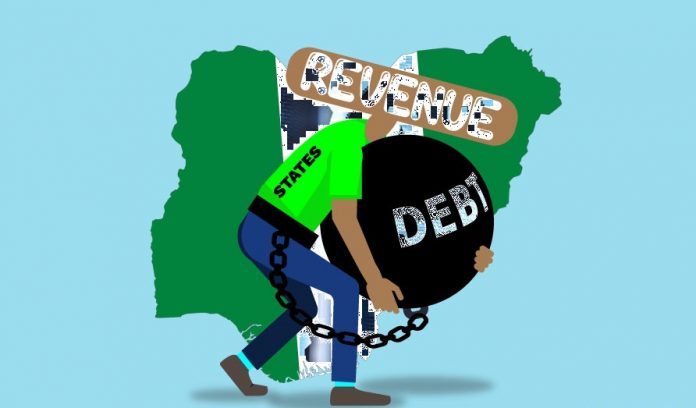
Nigeria disconnected its land neighbours in a mindless policy, and rerouted trade routes ever since. That decision scaled poverty across Nigerian cities and most of those countries have moved beyond Nigeria. Before that land border closure, Onitsha was the core market for many Nigerian neighbours as the largest open market in West Africa. But after the land closure, Onitsha is yet to recover!

Many small producers in Ibadan, Aba, etc went bankrupt as they lost customers in Cameroon, Togo, Benin Republic, etc. In short, Nigeria ended up achieving one thing: Nigeria made Port of Lome in Togo, a country of less than 10 million, to become the largest port in West Africa, ahead of any port in Nigeria then (Port of Abidjan has overtaken Lome now)! We’re more than 23X the size of Togo.

So, the US should not be overly overconfident as it opens a new chapter for the EU. The UK used to brag that it was feeding Europe. But after BREXIT, across all core metrics, the UK has diminished economically. What does that tell us? Trump and his team should be nuanced on these things because they could kick the world to China just as America did to Panama some decades ago, even though Trump wants to return to doing business with the country now!

China introduced a bevy of its own measures against the U.S. in response to President Trump’s tariffs on Chinese goods from Tuesday. They include levies on U.S. coal, oil, liquefied natural gas and agricultural products, as well as an antitrust investigation into Google. Trump, who previously called the 10% tariffs on China an “opening salvo,” said he planned to speak to Chinese President Xi Jinping this week. The U.S. reached agreements Monday to delay tariffs on Canada and Mexico.

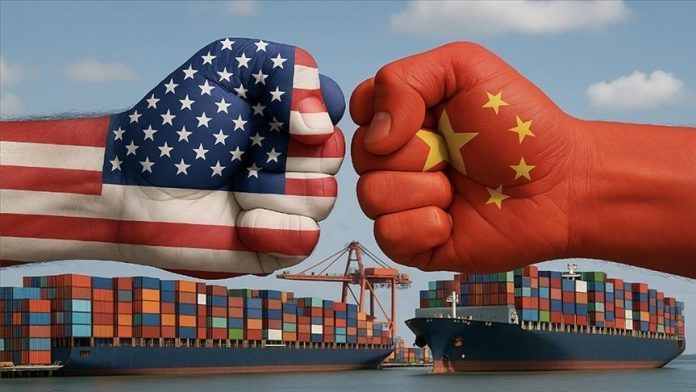
China Retaliates Against Trump’s Tariffs, Imposes 10% and 15% Tariffs on A Range of U.S. Goods

China Retaliates Against Trump’s Tariffs, Imposes 10% and 15% Tariffs on A Range of U.S. Goods

0

China has retaliated against the United States after President Donald Trump imposed a fresh 10% tariff on Chinese imports, reigniting a trade war between the world’s two largest economies.

In an immediate countermeasure announced on February 4, China’s finance ministry unveiled a package of tariffs targeting a range of US goods, marking a sharp escalation in economic tensions.

According to Reuters, China will impose a 15% tariff on US coal and liquefied natural gas (LNG) while an additional 10% tariff will apply to crude oil, farm equipment, and certain automobiles. These measures were announced just hours after the US tariffs went into effect at 05:01 GMT, underscoring Beijing’s resolve to respond forcefully.

Beyond the tariff measures, China’s anti-monopoly regulator launched an investigation into Google over alleged anti-trust violations, a move widely seen as retaliatory. The State Administration for Market Regulation confirmed the probe in a Tuesday statement, raising concerns about the deepening economic rift between the two countries and the potential impact on major US tech firms operating in China.

In another notable move, China’s Commerce Ministry and Customs Administration jointly announced new export controls on key industrial minerals, including tungsten, tellurium, ruthenium, molybdenum, and ruthenium-related items. Citing national security concerns, Chinese officials stated that these restrictions were necessary to safeguard the country’s economic interests. These materials are crucial for high-tech manufacturing, including semiconductors and aerospace components, potentially creating further disruptions for American industries reliant on Chinese supply chains.

President Trump’s decision to impose a blanket 10% tariff on all Chinese goods follows his accusation that Beijing has failed to curb the flow of illegal drugs, particularly fentanyl, into the United States. The new round of tariffs, which also affects Canada and Mexico, includes a provision that would escalate duties further if these nations respond with retaliatory measures, heightening fears of a prolonged economic standoff.

Despite the tariffs, Trump has indicated a willingness to engage in dialogue, with plans to hold talks with Chinese President Xi Jinping. However, analysts warn that the escalating tit-for-tat measures could undermine any potential negotiations, worsening economic uncertainty for businesses and investors worldwide.

The US-China trade war, which initially erupted during Trump’s first term, had seen a temporary lull under the Biden administration, but Trump’s latest move indicates a return to protectionist policies.

Economic experts and business leaders have decried Trump’s strategy, with some calling it short-sighted and counterproductive.

“Imposing blanket tariffs will hurt American consumers and businesses just as much as it does China,” said Colin Graham, head of multi-asset strategies at Robeco in London. “It risks increasing inflation and disrupting supply chains that American companies depend on.”

Meanwhile, industry groups representing American exporters expressed concerns over China’s retaliation.

“These tariffs are a blunt instrument that will inflict pain on both sides,” said Clemence Landers, a former US Treasury official now with the Center for Global Development. “China’s targeted tariffs on key US exports such as energy and automobiles will have a significant impact on American businesses and workers.”

The trade dispute has already prompted backlash from leaders in key American industries. US energy companies have warned that additional levies on LNG and crude oil exports could erode the country’s competitive edge in global markets. Additionally, American automakers, who rely on Chinese supply chains for critical components, have voiced concerns over potential production cost increases.

The renewed trade war threatens global markets, igniting concerns of potential global economic meltdown.

Why One Trader Chooses Rexas Finance (RXS) at $0.20 Over Polygon (POL) and Cardano (ADA) for Massive Short-Term Gains

0

Traders often choose untapped potential over stagnation for short-term gains. While Cardano (ADA) and Polygon (POL) have struggled, Rexas Finance (RXS) offers a new opportunity with its unique real-world asset (RWA) tokenization approach and promising growth trajectory. RXS, priced at $0.20 in its final presale, is attracting attention for its high returns.

Polygon and Cardano: Bearish Trends with Limited Short-term Upside

Polygon (POL): Stuck in a Parallel Channel.

Since mid-December 2024, Polygon’s POL token has stayed in a parallel channel, oscillating between $0.43 and $0.53. While this range is stable, it also indicates a lack of breakout potential, which limits short-term returns for traders. Its POL token is trading at $0.43, down 7% in the past week. Analysts point out that POL’s regular pattern makes it a safer but less profitable choice for investors seeking quick profits. A break over $0.53 is required to spark bullish momentum, but given present market conditions, such a move is uncertain.

Cardano (ADA): Countering Bearish Momentum

Cardano’s ADA coin trades just below $1, at $0.95, after a 7% drop the previous week. Bearish sentiment prevails, with key resistance levels at $1 and $1.056 and the next major support at $0.877. Technical signs point to additional falls unless ADA breaks above its falling trendline. For this trader, POL and ADA’s bearish trajectory and lack of rapid recovery possibilities make it less enticing compared to Rexas Finance’s real-world asset tokenization buzz and presale momentum.

What is Rexas Finance (RXS)?

Rexas Finance is a blockchain-based RWA tokenization platform. It lets users convert real estate, art, and commodities into digital tokens. Trading these tokens on the blockchain makes high-value marketplaces accessible to individual investors. Consider tokenizing a $1 million property into 10,000 $100 digital tokens. Global investors can own parts of this property and get rental revenue proportional to their token holdings. Rexas Finance channels investment democratization with these unique capabilities.

Why Rexas Finance Offers Higher Short-Term Gains

Rexas Finance is at its final presale stage, with each RXS token valued at $0.20, up 600% from its initial stage 1 price of $0.03. $43.7 million has been raised throughout the project’s various stages, and 438 million tokens have been sold. This performance demonstrates great market confidence, positioning RXS for a big price increase upon launch. RXS will launch on at least three major worldwide cryptocurrency exchanges on June 19, 2025, at $0.25.

Experts predict a significant price rise (up to 50x), fueled by its unique ecosystem and entry into the $50 billion RWA tokenization industry, expected to expand to $16 trillion by 2030. Moreover, unlike many presale projects, Rexas Finance chose public presale over venture capital funding. This reduces the potential for large-scale token dumps, frequently witnessed in VC-backed projects, resulting in a more balanced and sustainable market.

Why This Trader Supports RXS

This trader’s reasoning is straightforward: Rexas Finance provides a unique blend of affordability, innovation, and growth potential. While POL and ADA are experiencing static or bearish trends, RXS’s presale performance and strategic placement make it an attractive option for large short-term gains.

  • Accessibility: At $0.20, RXS offers a reasonable entry point for investors.
  • Innovative Ecosystem: Tools such as Rexas Token Builder, AI Shield, and QuickMint Bot improve utility while attracting a wide user base.
  • Industry Potential: Rexas Finance offers unique development prospects by focusing on the $16 trillion RWA tokenization industry. 

Whale Activity Signals Confidence

This trader is not alone in the RXS accumulation trend. Etherscan data shows significant whale activity, with high-value investors accumulating RXS coins throughout the presale. One recently reported activity is an Ethereum whale swapping 54 ETH for RXS tokens.

This trend demonstrates a strong belief in Rexas Finance’s prospects. Unlike ADA and POL, which are battling with market issues, RXS’s novel ecosystem and presale structure are garnering institutional-level interest. The lack of VC funding further decreases the possibility of market manipulation, making RXS a safer bet for regular and institutional investors.

Conclusion: Rexas Finance Wins Investors’ Trust Over Polygon and Cardano

In a market where timing is everything, this trader’s decision to buy Rexas Finance at $0.20 rather than Polygon or Cardano is driven by logic and opportunity. The RXS token’s presale momentum, unique ecosystem, and lack of VC-related risks make it an attractive option for investors looking for short-term returns. Do not pass up the opportunity to join this expanding movement. Visit the Rexas Finance website immediately to secure your tokens before it goes live on top crypto exchanges. There is also an ongoing $1 million giveaway, which allows investors to be among the 20 top participants and earn $50,000 worth of RXS at no additional cost.


For more information about Rexas Finance (RXS) visit the links below:

Website: https://rexas.com

Win $1 Million Giveaway: https://bit.ly/Rexas1M

Whitepaper: https://rexas.com/rexas-whitepaper.pdf

Twitter/X: https://x.com/rexasfinance

Telegram: https://t.me/rexasfinance