
DD
MM
YYYY

PAGES

DD
MM
YYYY

spot_img

PAGES

Home Blog Page 233

Factors to Consider When Selecting a Money Counting Machine

0

Cash-heavy businesses rarely struggle because they lack effort. They struggle because manual counting invites small errors, slow deposits, and uncomfortable end-of-day disputes. A dependable money-counting machine enhances control, improves speed, and provides a clear record of what was handled. The goal is not flashy features. The goal is consistent totals and fewer surprises.

Organizations that explore solutions from providers such as CE often find that the right choice depends on workflow, currency handling needs, and the level of counterfeit risk in their environment. Selecting a bill counter machine becomes much easier when you evaluate performance factors that affect daily operations, not just the headline speed on the box.

Match the Machine Type to Your Cash Workflow

Start by identifying what you count most often and how you count it. Some businesses mainly handle loose bills in a single currency. Others process bundled cash, mixed denominations, or deposits from multiple registers. A machine that fits a retail back office may not fit a bank branch, casino cage, or event venue. Your workflow determines which features add value and which create friction.

Consider how cash enters your counting area. If staff bring stacks from multiple tills, you may want fast feeding and easy batch controls. If you reconcile deposits by denomination, you may need a unit that sorts or at least recognizes denominations accurately. If cash arrives in mixed condition, with folded or worn notes, choose a unit designed to handle rough bills without frequent jams.

Also, plan for where the machine will live. Counting at the front counter demands a compact footprint and quiet operation. Counting in a back room may allow a larger machine with higher throughput and stronger duty-cycle capability.

Focus on Accuracy, Not Just Advertised Speed

Counting speed is easy to market, but accuracy is what protects your business. Look for machines with strong feed control and consistent performance across note condition and stack thickness. A counter that runs fast but miscounts under real conditions costs more time than it saves because staff must recount and verify.

Pay attention to error detection features. Reliable machines stop and alert when they detect suspected doubles, chains, or half notes. These alerts reduce silent miscounts. They also help less experienced staff operate confidently because the machine flags common problems before they become discrepancies.

Accuracy also ties to maintenance habits. A machine can be accurate on day one and degrade if it is not cleaned and calibrated as recommended. When comparing options, consider how easy it is to clean sensors, replace consumables, and keep the unit operating consistently over time.

Evaluate Counterfeit Detection and Fit It to Your Risk Level

Counterfeit detection is a practical necessity for many businesses, but the right level depends on your risk profile. If you handle high volumes of cash, accept cash from unfamiliar customers, or work in industries with frequent counterfeit attempts, stronger detection matters. Common detection methods include ultraviolet, magnetic, infrared, and image-based analysis. The most dependable solutions use multiple detection checks, not a single signal.

Think about what you need the machine to do when it suspects a note. Some machines stop the count and present the suspect bill for review. Others can continue while separating or flagging results, depending on model and mode. Your process should define the best behavior. A high-volume environment may prioritize quick identification without constant interruption. A higher-risk setting may prefer immediate stopping and review.

Also consider currency changes. New banknote designs and security features appear over time. Machines that support firmware updates and easy updates tend to remain useful longer, especially if you accept more than one currency or operate in regions with frequent note redesigns.

Consider Denomination Functions, Batch Modes, and Reporting Needs

Not every business needs value counting, but many benefit from it. A basic counter totals quantity. A value counter recognizes denominations and can provide total value and breakdown by denomination. If your staff must reconcile deposits and prepare bank slips, value counting can reduce manual steps and improve end-of-shift consistency.

Batching is another workhorse feature. It helps when you need to prepare strapped bundles, set consistent deposit stacks, or count a fixed number of bills for float. Look for flexible batch settings and an interface that staff can use without training every new hire for an hour. Simple controls reduce mistakes.

Reporting and audit support matter more than many buyers expect. If your business needs records for reconciliation, internal controls, or loss prevention, look for models that support printed receipts, on-screen totals, or exportable records depending on your setup. Even basic summaries can reduce disputes when numbers do not match.

Check Durability, Serviceability, and Total Cost of Ownership

A money-counting machine is equipment that runs daily, sometimes continuously. Durability matters, especially in busy environments. Ask about duty cycle expectations, jam resistance, and how the unit performs with worn notes and debris. Machines that require constant troubleshooting create hidden labor costs.

Serviceability should influence the purchase decision. Consider warranty length, local service availability, replacement part access, and turnaround time for repairs. If a unit fails during peak season, you want a fast path to recovery. In many businesses, downtime is more expensive than the difference between two models.

Total cost of ownership extends beyond the purchase price. Factor in cleaning supplies, consumable parts, potential extended warranty, and the labor impact of jams and recounts. A slightly higher upfront cost can be justified if it reduces daily friction and improves consistency.

Prioritize Ease of Use, Training, and Operational Fit

Even the best machine fails if staff avoid it or use it incorrectly. Look for a clear display, intuitive buttons, and predictable behavior when the machine detects an issue. If staff must guess what an alert means, they will waste time and risk errors. A good interface reduces hesitation and speeds up routine tasks.

Noise level and ergonomics matter in real workplaces. Some machines are loud enough to disrupt front-of-house operations. Others handle bills with a smoother feed that reduces sound and vibration. If the machine sits near customers or staff workstations, these details affect daily comfort and adoption.

Finally, test operational fit with a simple checklist before buying. What currencies do you accept? How many bills per day do you count? Do you need counterfeit detection? Do you need value counting? Do you need a receipt or a record? A machine that aligns with these answers will deliver consistent benefits without forcing your team into awkward workarounds.
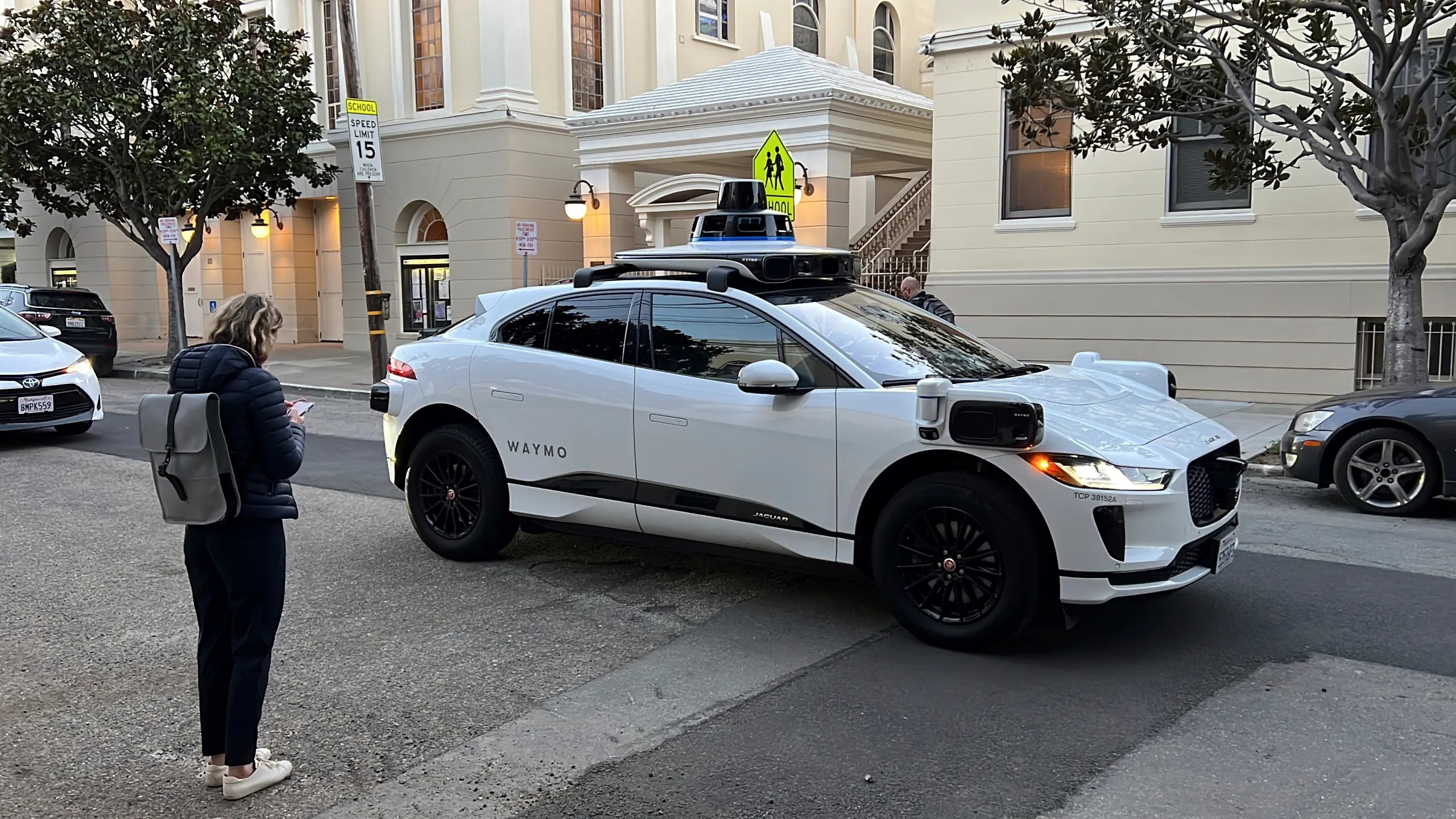

Waymo Defends Remote Assistance Practices Amid Congressional Scrutiny

0

Waymo said remote assistance personnel do not directly drive its robotaxis and have never been used to move vehicles in U.S. on-road operations outside of training.


Waymo, the autonomous vehicle unit of Alphabet, has pushed back against congressional concerns over its use of remote assistance personnel, stating that such staff have never been used to drive its robotaxis during on-road operations in the United States.

In a letter to Democratic Senator Ed Markey, Waymo said it does not use remote driving or “tele-operations” to perform active driving tasks. The company clarified that its remote assistance agents provide advisory support when an automated vehicle (AV) encounters an ambiguous situation but do not directly control steering, braking, or acceleration.

Markey, along with Republican Representative Buddy Carter, has raised concerns about Waymo’s reliance on remote personnel, including some based in the Philippines. In a February 3 letter, Markey said the company had provided limited public information about its policies surrounding remote assistance operations and argued that Congress and the public deserve assurance that such practices will not endanger passengers, road users, or national security.

Carter separately called on the U.S. Department of Transportation to investigate Waymo’s use of remote vehicle operators located overseas, stating that it “raises serious and reasonable concerns about roadway safety, situational awareness, and national security.” The Transportation Department said it would respond to Carter’s request.

Markey has sent similar inquiries to other autonomous vehicle developers, including Tesla, Zoox—owned by Amazon—and Aurora, signaling broader congressional scrutiny of remote operations in the AV sector.

How Waymo’s Remote Assistance System Works

Waymo operates four remote assistance centers: two in the United States, located in Arizona and Michigan, and two in the Philippines. At any given time, approximately 70 remote assistance agents are supporting the fleet, the company said.

According to Waymo, these personnel are not continuously monitoring vehicles in anticipation of intervention. Instead, the automated driving system itself initiates contact when it encounters an unusual or ambiguous situation — for example, navigating complex construction zones or unclear road markings.

The remote assistant provides guidance or contextual information, but the vehicle’s onboard system remains the decision-making authority. Waymo said its robotaxis can reject remote suggestions if the system determines that the advice is not appropriate.

“This distinction is fundamental to our safety model, ensuring the vehicle’s onboard system remains the primary, real-time authority for safe operation,” the company wrote.

Waymo added that in rare circumstances, U.S.-based personnel could prompt a stopped autonomous vehicle to move forward at 2 mph (3 kph) for a short distance to exit a travel lane. However, it said such actions have not occurred outside of training environments. Only the company’s U.S.-based Event Response Team — which handles crashes and safety incidents — has the technical ability to move a stopped vehicle.

The company said the average response time between a request for assistance and delivery of advice is a matter of seconds. During that time, the vehicle’s computer continues to operate independently, processing environmental data and making driving decisions. In most instances, Waymo said, the vehicle resolves the situation on its own without requiring external input.

Broader Implications for the Autonomous Vehicle Industry

The debate highlights a sensitive issue in the commercialization of autonomous vehicles: the extent to which “driverless” systems rely on human backstops. While companies market fully autonomous capability, many deploy layered safety frameworks that include remote support functions.

The involvement of overseas personnel introduces additional questions around cybersecurity, data protection, and response latency. Remote assistance is framed as a redundancy mechanism designed to enhance safety rather than replace autonomy.

Waymo’s clarification seeks to draw a sharp line between advisory input and direct vehicle control, emphasizing that its vehicles are not remotely driven during public road operations.

Scrutiny from regulators and lawmakers is expected to intensify as robotaxi deployments expand in U.S. cities. The outcome of these inquiries could influence future federal guidance on tele-operations, disclosure requirements, and the permissible scope of remote intervention in autonomous vehicle fleets.

Trump Hails $36bn Japanese Investment in U.S. Energy and Critical Minerals as First Tranche of Landmark $550bn Trade Deal

0

U.S. President Donald Trump on Tuesday welcomed Japan’s commitment to invest nearly $36 billion in oil, gas, and critical mineral projects across Texas, Ohio, and Georgia, describing the pledge as the “first tranche” of a sweeping $550 billion strategic investment initiative under the landmark U.S.-Japan trade deal.

“Our MASSIVE Trade Deal with Japan has just launched!” Trump posted on social media. “The scale of these projects are so large, and could not be done without one very special word, TARIFFS.”

The president’s comments underscore his administration’s use of tariffs as leverage to secure foreign investment commitments, a tactic central to the agreement that reduced most Japanese import tariffs to 15%. Japanese Prime Minister Sanae Takaichi framed the investments as mutually beneficial.

“We believe these initiatives truly embody the purpose of this Strategic Investment Initiative, namely the promotion of mutual benefit between Japan and the United States, the enhancement of economic security, and the promotion of economic growth,” she posted on X (translated via Google).

Breakdown of Major Projects

The $36 billion initial tranche comprises three flagship initiatives:

  1. Portsmouth Powered Land Project (Ohio)
    Valued at $33 billion and operated by SB Energy (a SoftBank subsidiary), this natural gas-fired power facility is expected to generate 9.2 gigawatts of electricity. U.S. Commerce Secretary Howard Lutnick called it “the largest natural gas generation facility in history,” highlighting its scale and strategic importance for U.S. energy security and industrial demand.
  2. Texas GulfLink Deepwater Crude Oil Export Facility
    A $2.1 billion project off the Texas coast, developed by Dallas-based Sentinel Midstream. At full capacity, it is projected to enable up to $30 billion in annual U.S. crude exports, strengthening America’s position as a global energy exporter.
  3. Synthetic Diamond Grit Facility (Georgia)
    A $600 million investment to produce diamond grit, dust, and powder—critical raw materials for U.S. industrial manufacturing due to their exceptional hardness and wear resistance. The facility will be operated by Element Six, part of De Beers Group, the world’s leading diamond company. The Commerce Department emphasized the material’s importance to economic and national security.

The announcement follows the U.S.-Japan trade agreement negotiated in late 2025, under which Tokyo committed $550 billion in investments in American projects over the coming decade in exchange for tariff reductions on most Japanese imports to 15%. The deal reflects Trump’s “America First” strategy of using tariffs as leverage to attract foreign capital and manufacturing to the U.S., particularly in strategic sectors like energy, critical minerals, and advanced manufacturing.

The investments align with U.S. efforts to enhance energy security, reduce reliance on foreign supply chains for critical materials, and bolster domestic industrial capacity. The natural gas and oil export projects directly support U.S. energy dominance, while the synthetic diamond grit facility addresses vulnerabilities in industrial abrasives and superhard materials—sectors where China has significant influence.

The news provided a positive catalyst for U.S. energy and industrial stocks. Shares of natural gas infrastructure companies, midstream operators, and critical materials firms rose modestly in early trading. Adani Group’s recent $100 billion AI data center announcement in India and similar global moves underscore the surging demand for reliable, large-scale power generation—demand that projects like Portsmouth Powered Land are positioned to meet.

The deal also highlights Japan’s strategic pivot toward deeper U.S. economic integration amid rising geopolitical tensions with China. Tokyo has sought to diversify supply chains and strengthen alliances with the U.S. following disruptions in critical minerals and semiconductors.

Broader Trade and Investment Dynamics

The U.S.-Japan agreement is part of a series of bilateral deals Trump has pursued since returning to office. Similar frameworks have been negotiated with India, South Korea, and select European partners, with tariffs used as leverage to secure investment commitments and market access concessions.

The $550 billion pledge—while spread over a decade—represents one of the largest foreign direct investment commitments in U.S. history. If fully realized, it would support hundreds of thousands of jobs in energy, manufacturing, and infrastructure while strengthening bilateral ties.

The initial $36 billion tranche, for now, focuses on high-impact, strategic projects that align with U.S. priorities: energy independence, critical materials security, and industrial competitiveness. Business leaders expect that the success of these flagship initiatives will influence the pace and scale of subsequent Japanese investments under the broader agreement.

As the U.S.-Japan partnership deepens, the focus will shift to execution: permitting timelines, regulatory approvals, workforce development, and integration into existing energy and industrial ecosystems.

From Coding to Capability: Educating Africa’s Next Generation of Innovators in the Age of Generative AI

0

Brilliant guys in Google invited me to speak before computer science and engineering educators and professors in Africa today. This is a short overview of the second part of my presentation. The second part is titled “From Knowledge Transfer to Capability Accumulation: from Computer Science to Competence Science”


In the age of Generative AI, we are witnessing one of the most profound shifts in the history of education and human productivity. For decades, universities, especially in Computer science and engineering, have operated under a knowledge-transfer model. The assumption was simple: if students mastered programming languages, and coding, they would be equipped to compete in the global economy. That assumption is now largely obsolete. Generative AI has made coding abundant!

Today, machines can generate software, debug systems, optimize architectures, and translate across programming languages with astonishing speed. Tasks that once took teams of engineers weeks can now be completed in hours. When a skill becomes abundant, it loses its scarcity value. And when scarcity moves, so must education. The competitive advantage of nations and institutions is no longer determined by who teaches the most syntax, but by who cultivates the deepest capabilities.

This is the transition from knowledge transfer to capability accumulation. Yes, replace Computer Science with Competence Science!

To be clear, coding remains important. But it is no longer the differentiator. Knowing how to write code in a world where AI writes better code is like knowing how to operate a typewriter in the age of cloud computing. The locus of value has shifted upward, to judgment, synthesis, context, and the ability to frame meaningful problems.

Generative AI can answer how to build. Humans must still decide what to build, why it matters, and for whom it should exist. These are not coding questions; they are capability questions. As educators, in this AI era, we must move from being transmitters of knowledge to designers of learning ecosystems.

I used a smiling curve to explain that coding is now at the centre with only marginal value while the core value of market creation and design are at the edges. Unless you expand what we teach in those coding classes to capture the components at the edges, students will graduate into a world that does not need their services.

Nigeria’s Financial Apps Advance in UX, But Friction, Support Gaps, And Security Anxiety Persist

0

In the digital economy, user experience (UX) has evolved from a design consideration into a strategic determinant of product success. Global momentum reflects this shift, the UI/UX services market was valued at USD 2.59 billion in 2022, and is projected to reach USD 32.95 billion by 2030, according to Fortune Business Insights.

As expectations rise worldwide, financial mobile applications face mounting pressure to deliver journeys that are not only functional but seamless, intuitive, and reassuring.

In Nigeria, recent findings from the State of UX in Financial Apps Nigeria Report 2025 by Interswitch provided a structured view of how leading platforms are performing. The report applied heuristic evaluation methods to ten prominent financial applications in the country.

These include Access Bank, Opay, First Bank of Nigeria, Providus Bank, Guaranty Trust Bank, Sterling Bank, Kuda, Moniepoint, UBA, and Zenith Bank, assessing their usability principles to identify strengths, design inconsistencies, and improvement opportunities.

Progress in Efficiency and Transparency

According to survey, these financial apps demonstrated measurable advancement in usability fundamentals. The strongest performance emerged in flexibility and efficiency of use, with a 71% rating across evaluated platforms. This reflects an industry-wide shift toward speed and convenience, enabling quick transactions, contactless payments, and streamlined access to routine banking services.

Transaction feedback and system visibility also performed strongly. Most applications provide clear confirmations, real-time updates, and progress indicators that help users understand what is happening at each step. Error prevention mechanisms such as confirmation prompts and contextual warnings further contributed to confidence, particularly when users are performing high-stakes financial actions.

Yet beneath these improvements lies a consistent pattern: usability gains are being undermined by persistent friction points that affect trust, clarity, and emotional reassurance.

Challenges Undermining User Confidence

Despite progress, the report highlights several structural UX gaps that continue to shape user frustration.

1. Mismatch Between Systems and Real-World Expectations

Many evaluated apps employ layouts, icons, and workflows that diverge from familiar digital banking patterns. When navigation structures or transaction flows do not align with users’ mental models, the experience becomes cognitively demanding. Instead of feeling guided, users must interpret unfamiliar pathways increasing friction and reducing confidence.

2. Overreliance on Memory Instead of Visual Guidance

A recurring issue across platforms is the expectation that users remember where functions are located or how tasks are completed. Rather than presenting options clearly for recognition, many apps require recall. This design approach disproportionately affects new users and increases task completion time, especially in urgent financial situations.

3. Weak and Impersonal Support Systems

Support functionality emerged as the most critical weakness. Help features are often buried within menus, overly generic, or lacking real-time responsiveness. Although apps communicate errors relatively well (57% effectiveness), users report that assistance rarely feels immediate, human, or empathetic particularly during failed transactions or payment delays, moments when reassurance is most needed.

4. Security Measures Creating Experience Trade-offs

While security remains a priority, respondents expressed concern that protective features sometimes overshadow usability. Users also reported uncertainty about safeguards in cases of device theft or unauthorized access. This tension between safety and convenience contributes to anxiety rather than trust.

5. Interface Clutter and Cognitive Overload

Users consistently noted that dashboards and home screens contain excessive information, competing visuals, and dense navigation structures. Instead of enabling quick decision-making, cluttered interfaces increase mental load and slow task completion. The preference across demographics is shifting toward simplified, focused interfaces.

The Strategic Opportunity Ahead

Collectively, the findings reveal an industry that has successfully improved functionality but has not fully optimized experience design around human behavior. Nigerian financial apps are effective at enabling transactions; they are less effective at reducing uncertainty, guiding users intuitively, and providing emotional assurance when problems occur.

This gap represents a critical opportunity for differentiation. As digital banking adoption deepens particularly among younger, mobile-first users, competitive advantage will increasingly depend on clarity, empathy, and trust-centered design rather than feature expansion alone.

Outlook

Looking ahead, the next phase of UX evolution in Nigeria’s financial sector is likely to center on three strategic shifts which include, Human-centered support ecosystems, Simplified, recognition-based interfaces and Balanced security design.

Institutions that successfully integrate these elements are positioned to move beyond transactional platforms toward trusted digital financial companions. As competition intensifies and user expectations continue to rise, UX maturity will not merely enhance satisfaction, it will shape customer loyalty, platform adoption, and long-term growth across Nigeria’s digital finance ecosystem.