DD
MM
YYYY

PAGES

DD
MM
YYYY

spot_img

PAGES

Home Blog Page 234

Blockworks Shuts Down News Division Amid Strategic Pivot to Data and Analytics

0

Blockworks, a prominent cryptocurrency media company founded in 2017, announced the closure of its news division, which it had launched in 2021.

This move involves laying off the journalism team and marks a significant shift in the company’s focus toward its higher-margin data, analytics, and software products, which have seen rapid growth over the past two years.

Co-founder Jason Yanowitz shared the news via a post on X (formerly Twitter), emphasizing that the decision aligns with evolving market demands where real-time data platforms and institutional research are increasingly preferred over traditional news reporting.

Yanowitz noted that Blockworks achieved record revenues in 2025 and anticipates another strong year in 2026, driven largely by its data business. He described the pivot as betting on “the greatest opportunity we’ve seen since launching,” while acknowledging the challenges in sustaining editorial operations reliant on sponsorships and events.

The company will continue its newsletters, podcasts, and major events like the Digital Asset Summit (DAS) and Permissionless conferences, with DAS scheduled for Abu Dhabi in 2026.

The newsroom closure affects the editorial team, including reporters who had broken major stories cited by outlets like Bloomberg, Reuters, and The Wall Street Journal.

Yanowitz publicly encouraged other organizations to hire the affected talent, and figures like Akshay BD from the Solana Foundation expressed interest in doing so.

This reflects ongoing turbulence in crypto media, where advertising and reader engagement fluctuate with market cycles. Blockworks, which raised $12 million at a $135 million valuation in 2023 from investors like 10T Holdings and Framework Ventures, is not alone—similar pressures have hit other outlets.

The shutdown was first reported by crypto newsletter Unfolded and quickly amplified across social media. The announcement sparked mixed responses on X and in crypto circles. Many praised the focus on sustainable models, with one user noting it positions Blockworks as a “true data destination” for professionals.

Industry leaders like Monad co-founder Keone Hon lamented the reduction in “unbiased, competent, crypto-native newsrooms,” calling them essential public goods for mainstream adoption.

Others echoed worries about the future of specialized reporting in a sector prone to misinformation. Separately, DeFiLlama’s founder accused Blockworks of reselling free DeFiLlama data on a paid platform for $4,500/year, highlighting tensions in the data ecosystem amid the pivot.

Blockworks’ data model centers on a centralized, validated data warehouse that aggregates, normalizes, and enriches raw on-chain and off-chain cryptocurrency data to deliver actionable insights for investors, protocols, and institutions.

Launched as part of Blockworks Research priced at $4,500/year for full access, it emphasizes transparency, real-time accuracy, and proprietary modeling over fragmented free sources. The pivot to this model in 2025 underscores its role as a high-margin, recurring revenue driver, transforming Blockworks into a data-first intelligence platform.

Raw data is pulled directly from blockchains via node-level inputs and indexers, APIs, and external feeds like TradFi cash flows. This includes on-chain metrics via transactions, wallet activity and off-chain signals like governance proposals, market sentiment.

Proprietary models validate, standardize, and cross-validate data for integrity. For instance, “Network REV” calculates economic throughput by filtering non-spam transactions and adjusting for fee burns, providing a more accurate view of network health than raw fees.

A unified warehouse enables time-series data, sector comparisons, and protocol-specific breakdowns. Data is organized into hierarchical categories like financials, on-chain activity, and supply dynamics, with daily refreshes for near real-time use.

This development underscores the maturation of crypto media, where bootstrapped players like Blockworks which started without venture funding adapt to prioritize recurring revenue over ad-dependent news.
Apple Faces Investor Scrutiny Ahead of Fourth-Quarter Earnings as iPhone 17 Demand, Tariff Costs, and AI Spending Take Center Stage

0

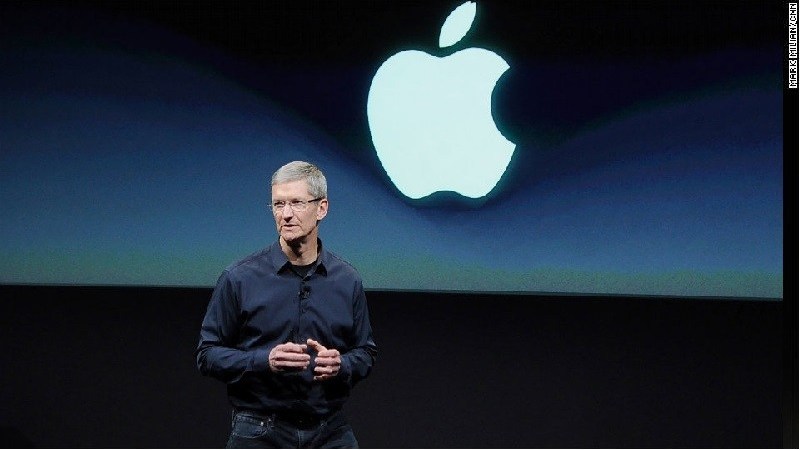
Apple will release its fiscal fourth-quarter earnings on Thursday after market close, marking a critical update for investors watching whether the company can regain growth momentum amid rising tariffs and intensifying competition in artificial intelligence.

The quarter, which ran through the end of September, includes just over a week of sales from Apple’s new iPhone 17 lineup. Early indications point to stronger-than-expected demand, particularly for the entry-level and Pro versions of the device. Analysts and investors are listening closely for comments from CEO Tim Cook and CFO Kevan Parekh on how the new models are performing across key markets, including the U.S. and China.

Analysts surveyed by FactSet forecast that fiscal 2025 could be Apple’s first year of iPhone sales growth since 2022, signaling renewed consumer interest after several muted product cycles. For the September quarter, Wall Street expects Apple to post earnings per share of $1.77 on revenue of $102.24 billion, according to estimates compiled by LSEG.

However, the company’s financial outlook is being shaped by broader macroeconomic pressures, including tariffs under the Trump administration. While Apple has drawn praise from President Donald Trump for pledging to invest $600 billion in U.S. operations and boost domestic semiconductor manufacturing, the tariffs remain a costly challenge. In July, Apple projected up to $1.1 billion in tariff-related expenses, and investors will be watching to see whether actual costs were lower than anticipated. Analysts are also looking for updated projections for the current quarter as trade tensions between Washington and Beijing continue to affect the global supply chain.

Last week, Apple announced that it had begun shipping artificial intelligence servers from its Houston factory, signaling a more active role in the AI and data center space. This comes after years of investor frustration that Apple has lagged behind peers such as Microsoft, Google, and Nvidia in making large-scale AI infrastructure investments. Cook previously said the company was “significantly” increasing its investment in AI technologies, and analysts expect this to show up in Apple’s capital expenditure figures for the quarter.

Some investors are urging the company to accelerate spending in AI and cloud infrastructure to secure its long-term competitiveness. Analysts note that Apple’s traditionally conservative capital deployment strategy contrasts with rivals pouring tens of billions of dollars into generative AI and high-performance computing infrastructure.

Beyond hardware and AI, Apple is also expanding its media and entertainment footprint. Cook is expected to tout the company’s new five-year agreement with Formula 1 to broadcast races in the U.S. on Apple TV—a major step in Apple’s sports streaming strategy. The move strengthens Apple TV’s portfolio following deals for Major League Soccer and other live sports events.

In the previous quarter, Apple delivered 10% year-over-year revenue growth, underlining resilience in its core businesses. For the December quarter, LSEG consensus forecasts suggest Apple could post $132.31 billion in revenue and $2.53 in earnings per share.

The focus now, as investors brace for Thursday’s results, is on whether Apple can sustain its growth trajectory while managing tariff headwinds and proving it can compete in the AI race that is reshaping the global tech industry.

Meta Shares Tumble Over 11%, Highest Decline in Three Years, Amid Massive AI Spending

0

Meta Platforms suffered its sharpest one-day stock decline since October 2022, tumbling more than 11% on Thursday, after investors balked at the company’s surging artificial intelligence expenditures even as it reported robust third-quarter results.

The selloff came after Meta raised its 2025 capital expenditures forecast to between $70 billion and $72 billion, from an earlier range of $66 billion to $72 billion, signaling a further ramp-up in spending on AI infrastructure and data centers. The move places Meta’s investment trajectory among the most aggressive in Silicon Valley, as the company races to secure its place in the global AI arms race alongside Microsoft, Alphabet, Amazon, and Nvidia.

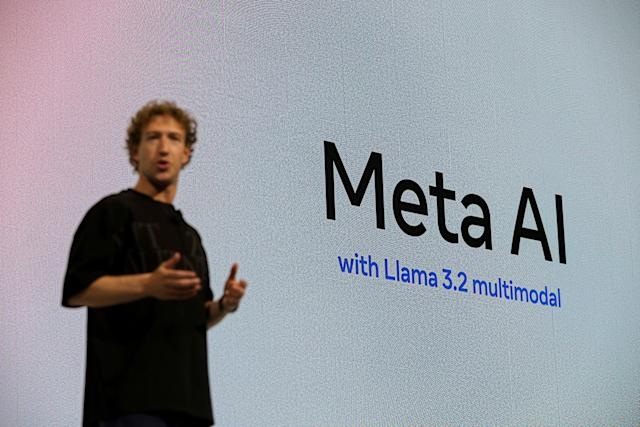
During Wednesday’s earnings call, CEO Mark Zuckerberg staunchly defended the company’s strategy, saying the early benefits of AI integration are already visible across Meta’s platforms.

“It’s pretty early, but I think we’re seeing the returns in the core business,” Zuckerberg said. “That’s giving us a lot of confidence that we should be investing a lot more, and we want to make sure that we’re not underinvesting.”

Zuckerberg said Meta is “aggressively” preparing for the next phase of AI, including the development of what he described as superintelligence—AI systems that far surpass current models in reasoning and autonomy. He argued that Meta’s early and large-scale investments would ensure it remains “ideally positioned for a generational paradigm shift in many large opportunities.”

The company’s AI ambitions span several fronts. Meta is developing custom AI chips to power its large language models and recommendation systems, building vast data center networks to handle growing workloads, and expanding its open-weight model strategy to encourage wider adoption of AI tools across developers.

However, analysts say the spending surge highlights the growing tension between Meta’s long-term vision and short-term investor expectations. While AI is widely seen as the future of computing, many investors worry that Meta’s payoff horizon remains distant and that ballooning costs could weigh on profitability in the coming quarters.

Meta’s rivals are taking similar routes. On Wednesday, Alphabet lifted its capex guidance to between $91 billion and $93 billion, while Microsoft forecast another fiscal year of high spending growth, underscoring the enormous cost of maintaining AI leadership. Yet investors have treated Meta more harshly, partly because its AI monetization strategy—through ads, social media engagement, and messaging tools—is less defined than the enterprise-focused offerings of its peers.

Meta’s heavy AI push includes a $14.3 billion investment in Scale AI, a startup specializing in training data, and the creation of Superintelligence Labs, led by Scale AI founder Alexandr Wang and former GitHub CEO Nat Friedman. The lab is tasked with developing next-generation models that could power Meta’s AI assistants and creator tools across Facebook, Instagram, and WhatsApp.

Zuckerberg has repeatedly said that AI will be at the heart of Meta’s long-term transformation. The company is rolling out AI chatbots, image-generation tools, and digital assistants across its platforms, aiming to boost engagement and advertising revenue.

Despite the stock market’s reaction, Meta’s third-quarter performance beat expectations. The company reported adjusted earnings of $7.25 per share on $51.24 billion in revenue, topping Wall Street estimates. Revenue jumped 26% year-over-year, marking one of its strongest growth rates in recent years, fueled by a rebound in digital advertising and improved monetization of its Reels and WhatsApp Business products.

Meta also absorbed a $15.93 billion tax charge linked to President Donald Trump’s One Big Beautiful Bill Act, a sweeping fiscal policy overhaul that altered corporate tax deductions and foreign income repatriation rules.

Even with the one-time charge, Meta maintained healthy margins and reported strong user engagement across its family of apps. Daily active users on Facebook surpassed 2.2 billion, while Instagram and WhatsApp continued to expand globally.

Still, the selloff reflects deeper market uncertainty about whether Meta’s vast AI spending will translate into tangible profit. Some investors fear that the company’s strategy could mirror its earlier costly pivot to the metaverse — a project that has yet to produce meaningful financial returns despite billions in investment.

Meta’s Reality Labs division, which houses its virtual and augmented reality projects, posted another quarterly operating loss exceeding $3.7 billion, underscoring the challenge of balancing innovation with investor patience.

Zuckerberg, however, maintains that both AI and immersive technologies will converge over time. “AI will be the foundation of everything we build,” he said earlier this month, adding that it will eventually power Meta’s metaverse ambitions.

With the company now valued above $1.5 trillion, Meta remains one of the world’s most influential technology firms. But as the competition for AI dominance intensifies, its path forward is expected to be determined by how soon its colossal bets begin to show tangible returns — not just in user growth, but in profits.

Mono Protocol Nears $3 Million in 2025 Presale Amid Rising Investor Interest

0

Interest in early-stage blockchain projects keeps growing as investors search for crypto presales with real-world use rather than speculation. The Mono Protocol crypto presale has now crossed $2.83 million raised of a $3 million goal, drawing global attention from long-term-focused traders.

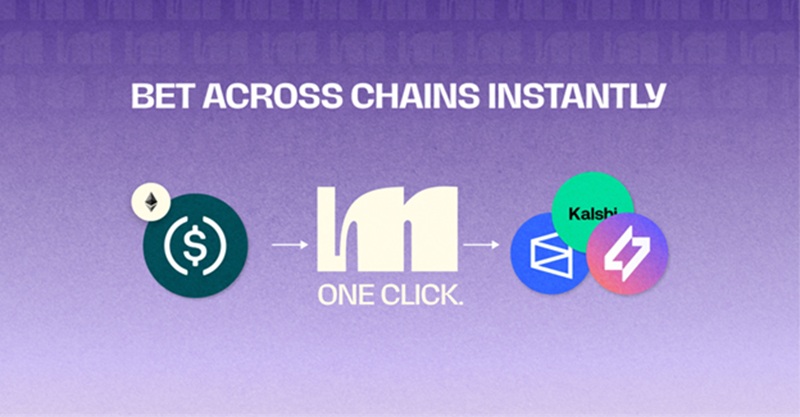
Mono Protocol aims to unify blockchain activity through one account system. Users can hold and transfer assets across several networks without bridges or multiple wallets. The native token, MONO, functions as both a universal gas asset and a governance tool within the ecosystem.

Each token is priced at $0.0450 during Stage 15, ahead of its planned $0.500 launch value, offering a potential 1011 percent return for early participants.

How Mono Protocol Works

Mono Protocol’s web3 crypto presale is built around a unified balance system that interacts with multiple chains. The design brings together assets from Ethereum, Polygon, Base, and Solana within one dashboard.

Through partnerships with WalletConnect, Chainlink, Celestia, and LI.FI, the network executes cross-chain transactions quickly and securely. A feature called Resource Locks prevents frontrunning and guarantees instant completion, protecting users from MEV manipulation.

Half of the MONO supply is dedicated to the new crypto presale, with 10 percent each for liquidity and marketing. The rest supports community rewards, team operations, and treasury development. Following its official launch, the team introduced a Rewards Hub that lets participants track engagement and earn points for ecosystem activity.

Alternatives to the Mono Protocol Presale

Mono Protocol dominates the current cryptocurrency presales, but several other projects are gaining attention for distinct use cases and funding momentum.

Bitcoin Hyper

Bitcoin Hyper is a presale coin targeting Bitcoin’s ecosystem through a layer-two solution that uses zero-knowledge proofs for speed and privacy. Built on an enhanced Solana Virtual Machine, it improves BTC transaction scalability and efficiency. The presale has raised more than $23 million, reflecting strong interest in layer-two innovation.

Maxi Doge

Maxi Doge adds a meme-themed approach to the pre sale cryptocurrency market with staking and gaming rewards. Participants can lock MAXI tokens for returns and join tournaments for community prizes. It has raised over $3.5 million since launch, offering a blend of entertainment and yield appeal.

Pepenode

Pepenode introduces a “Mine-to-Earn” system that rewards players with meme tokens while burning a portion of each upgrade to keep supply deflationary. Its presale has collected $1.8 million, making it one of the smaller yet more creative cryptocurrency presales this year.

Why These Presales Are Gaining Interest

Investors are increasingly drawn to crypto pre sales that prioritize utility and sustainability. Mono Protocol fits this trend by solving cross-chain friction and introducing transparent reporting. Bitcoin Hyper appeals to those tracking Bitcoin’s technical expansion, while Maxi Doge and Pepenode serve communities interested in gaming and entertainment.

Analysts believe that the strongest top crypto presales combine verifiable technology, realistic roadmaps, and experienced teams. Mono Protocol’s live product and MEV-resilient infrastructure demonstrate this approach in practice.

Looking Ahead

Mono Protocol’s presale crypto performance illustrates how early funding can align with real network development. Its expanding partnerships and transparent governance model continue to build momentum as Stage 15 nears completion.

As cryptocurrency presales evolve, projects offering tested products and proven utility are expected to lead the next Web3 adoption wave. Mono Protocol, together with Bitcoin Hyper and Pepenode, represents this shift toward substance over speculation—a sign that the presale market is maturing beyond promises into performance.

Learn More about Mono Protocol


Website: https://www.monoprotocol.com/

X: https://x.com/mono_protocol

Telegram: https://t.me/monoprotocol_official

LinkedIn: https://www.linkedin.com/company/monoprotocol/

Solana Price Forecast As Experts Back WLFI Token, Chainlink and Remittix To Outperform SOL

0

The Solana market is getting significant attention, with investors looking into altcoins that have great potential for growth and applications in the real world. WLFI Token, Chainlink, and Remittix (RTX) are increasingly being pointed out by analysts as leading cryptocurrencies likely to outshine SOL in performance and practical utility.

Of these, Remittix stands out for its cross-border payment capabilities and seamless crypto-to-fiat. Investors now consider Solana against tokens like Remittix, which scales, has fast transaction times, and is usable in the real world, placing them at the front of the emerging blockchain ecosystem.

Market Snapshot: Solana and Competing Tokens

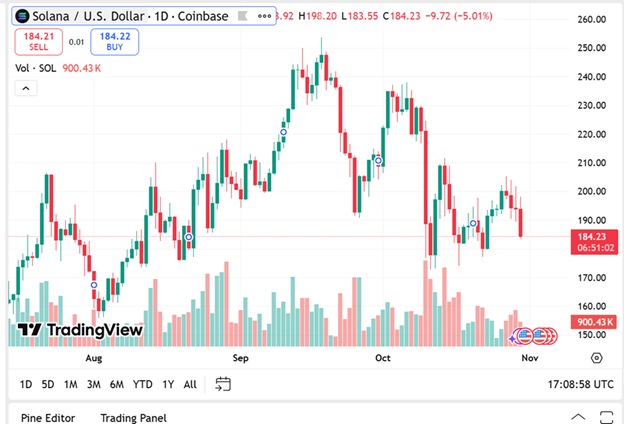
Solana is selling at $184.21, up 5.25% in the last 24 hours, with a market capitalization of $101.89B and trading volume reaching $9.6B, up 32.69%, thus showing continued liquidity and trading interest in the asset.

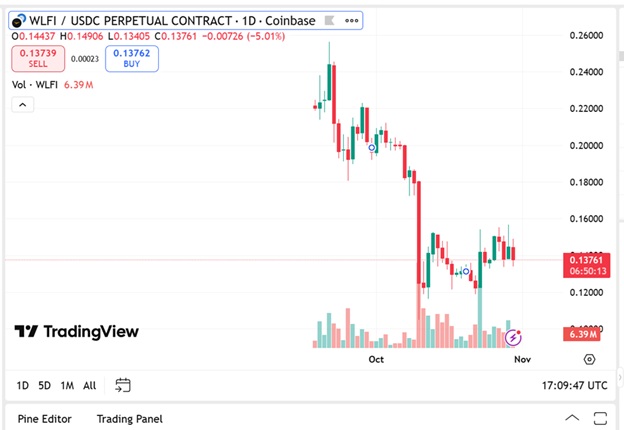
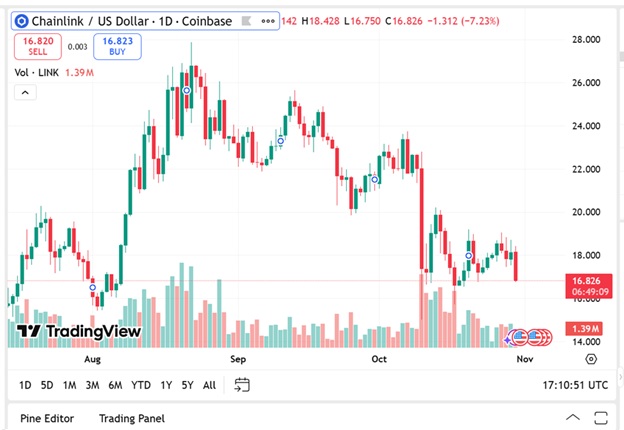
WLFI has pulled back somewhat to $0.1373, down 7.38%while Chainlink is at $16.820, down 6.7%, although its trading volume is up 63.71%, indicating a revisit by investors.

These changes hint at Solana’s dominance while traders are also looking into other assets with unique use cases.

Remittix Pushes Adoption, Funding, and Wallet Expansion

At the current price of $0.1166 per token, Remittix has raised more than $27.7 million  in private funding, indicating very strong early demand for its payment solutions. Having sold more than 681.6 million tokens, the project is rapidly pushing forward its crypto-to-fiat capabilities, extending wallet beta testing to more and more holders – including iOS users.

Top weekly purchasers are invited to join in an effort aimed at perfecting the Remittix Wallet for worldwide adoption.

The project has also achieved CertiK verification, ranked #1 among pre-launch tokens, which brings additional confidence in security and operational integrity. Other growth drivers include a referral program offering 15% USDT rewards, listings planned on centralized exchanges, and upcoming product features targeting real-world payments.

Remittix is well-positioned to offer investors access to a utility-first token with tangible adoption potential, driven by ongoing ecosystem expansion.

The Innovations Steering Remittix’s Expansion:

  • Reach worldwide: crypto-to-bank in more than 30 countries.
  • Real-World Utility: Created for real-life transactions, not for speculation.
  • Security Assurance: Fully audited and CertiK verified
  • Active Community Engagement: Beta wallet and referral rewards
  • Market Momentum: Robust private funding indicates investor appetite.

While Solana continues to work its way through the current market conditions, Remittix is an attractive alternative for any investor focused on actual utility and scalability.

Featuring a growing ecosystem, a strategic roadmap of product releases, and secure underlying infrastructure, Remittix is one of the tokens to watch in 2025 from an adoption and performance standpoint.

Discover the future of PayFi with Remittix by checking out their project here:

Website: https://remittix.io/

Socials: https://linktr.ee/remittix

$250,000 Giveaway: https://gleam.io/competitions/nz84L-250000-remittix-giveaway