DD
MM
YYYY

PAGES

DD
MM
YYYY

spot_img

PAGES

Home Blog Page 2342

Dogecoin Millionaire Points to 3 Top Altcoins to Buy For Generational Wealth Creation in 2025

0

Investors are constantly looking for the top altcoins to buy as a promising supercycle looms. A Dogecoin millionaire has earmarked three tokens as the top altcoins to buy to ensure mouthwatering returns in 2025.

These are RCO Finance (RCOF), Ripple (XRP) and Sui (SUI). Stay tuned to discover why this Dogecoin millionaire chose RCOF, XRP, and SUI as the best choices for 2025.

>> Join RCOF Presale <<<

Whales Accumulate Dogecoin As Analyst Predicts A Strong Rally Incoming

Dogecoin currently trades at $0.369. It has dipped by 14.6% since the release of the TRUMP token on January 18.

However, crypto analyst Ali Martinez has pointed out that Dogecoin whales have taken the chance to accumulate even more Dogecoin. Between January 17 and January 19, Dogecoin whales accumulated 1.83 billion DOGE. This is evidence that investors are bullish on Dogecoin this year.

Another analyst, Rose Premium Signals, has also pointed out that Dogecoin is set to break out of a key zone soon and experience a strong rally. If this happens, Dogecoin could attain $1.05 within the next three months.

XRP Is Gearing Up For The Most Epic Comeback

Egrag Crypto recently shared in an X post that XRP will again touch what they have termed  “The Line” and will set the most epic comeback in motion for XRP. In the meantime, XRP currently trades at a price of $3.19 and has steadily increased by 48% in the past month.

The hope of a more favourable regulatory climate and the possibility of XRP becoming a reserve asset in the US might be the catalysts necessary for such an impressive rally.

Meanwhile, analyst Ali Martinez predicts the next target for XRP price to be $4.40 as it has broken out of a bullish flag. This is why the Dogecoin millionaire is convinced that XRP is one of the top altcoins to buy.

Partnerships And Increased Adoption Is Driving SUI’s Growth

SUI’s market cap has recently risen to $13.8 billion as it continues to grow steadily. It currently trades at  $4.59 and recently announced a partnership with China’s Ant Digital, which will bring ESG-backed real-world assets on-chain. It is now ranked the 13th biggest token by market cap.

Crypto analyst Rose Premium Signals claims that the shape of Sui’s chart indicates a continuing upward trend, and so his predictions are bullish.

He predicts a 73% increase in SUI’s price, which will take it from its current price of $5.7 to $6.7, with a final target of $7.7. This is why SUI is included in the Dogecoin millionaire’s list as one of the top altcoins to buy.

RCOF Is the Dogecoin Millionaire’s First Choice On The List Of Top Altcoins To Buy

Despite the impressive predictions for all the aforementioned tokens, the Dogecoin millionaire believes that the innovative AI-powered project RCO Finance has the most significant potential.

RCO Finance’s utility makes it one of the top altcoins to buy. The RCO Finance ecosystem leverages AI and Machine Learning to create a comprehensive financial platform that helps simplify and optimize financial management.

The platform’s standout feature is its AI-powered Robo Advisor. It provides data-driven, professional investment strategies that cater to each trader’s needs. The Advisor can also analyze data in real-time to automatically adjust user portfolios, safeguarding users against liquidation in high-volatility markets.

RCOF also makes it easy for traders to diversify their portfolios, offering an expansive range of over 120,000 assets spanning 12,500 asset classes. This includes traditional assets like stocks, bonds, ETFs, digital assets like cryptocurrencies, and tokenized real-world assets like real estate and commodities.

Finally, the platform audit was conducted by SolidProof, a top-tier audit firm, so investors are guaranteed the safety of their funds on RCO Finance.

Don’t Wait To Feel FOMO, Join The RCOF Presale Now.

RCO Finance is the only presale token on the Dogecoin millionaire’s list of top altcoins to buy. This means it has the most significant potential to offer investors generational wealth.

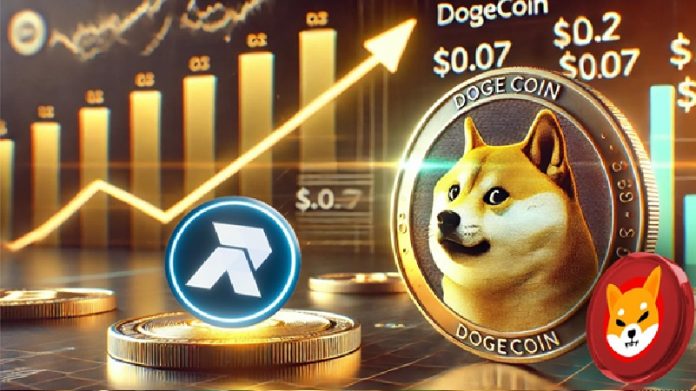
It is at Stage 4 of its presale and trades for $0.07.This will increase to $0.20 at the bonus stage, which means Stage 4 investors will enjoy a 185% profit.

When RCOF rises to $0.60 at launch, investors will enjoy a 760% ROI from the token presale. From the launch onwards, experts predict a 12,000% price rally.

Owning RCOF tokens allows holders to participate in the ecosystem’s community governance structure, where they can vote and deliberate on all core platform issues.

Token holders also earn passive income by staking their RCOF tokens, with very juicy staking rewards, as the Annual Percentage Yields (APYs) on RCO Finance are relatively high.

Therefore, be like this savvy Dogecoin millionaire. Buy RCOF now!

For more information about the RCO Finance Presale:

Visit RCO Finance Presale
Join The RCO Finance Community

Buying Indicator Goes Crazy for This Sub $1 Altcoin, Not Dogecoin or Shiba Inu

0

Dogecoin and Shiba Inu are losing their luster among traders and investors following their lackluster performance in the last few years. From 2021, both SHIB  and DOGE have failed to deliver the explosive growth they are known for, pushing investors to other altcoins.

Enter RCO Finance (RCOF), a rising star taking center stage. This sub $1 AI-powered altcoin has triggered a wave of buying indicators, signaling immense interest from retail and institutional investors. Unlike DOGE and SHIB, RCOF offers cutting-edge features and real-world utility, making it a compelling choice for those seeking exponential returns.

Why Dogecoin and Shiba Inu Are Losing Traction Among Traders

The recent decline in traction for Dogecoin and Shiba Inu among traders and investors is linked to several limitations hindering their growth potential and market appeal.

Both altcoins rely heavily on speculative interest and meme appeal to drive growth. However, this makes them vulnerable to shifting market sentiment, which increases their volatility.

With market sentiment shifting to a more cautious approach to speculative assets, enthusiasm and interest in Dogecoin and Shiba Inu are diminishing. Their high volatility is also deterring investors and traders seeking more stable investments.

Another primary limitation of both Dogecoin and Shiba Inu is their lack of rousing technological features. While other altcoins like Ethereum and Solana offer robust ecosystems for DeFi and NFTs, DOGE and SHIB primarily rely on their meme status. This absence of utility deters serious investors looking for assets with real-world applications.

The rise of new altcoins providing innovative solutions further diminishes the appeal of Dogecoin and Shiba Inu. As traders seek higher growth potential, they are gravitating towards altcoins offering unique functionalities, leaving memecoins behind.

RCO Finance: The Sub-$1 Altcoin Everyone Is Buying

In contrast to Shiba Inu and Dogecoin’s stagnation, RCOF is capturing the market’s attention with its innovative AI features and tangible utility. These features give it unprecedented growth potential, causing buying signals to go crazy as investors rush to get a piece of this altcoin.

RCOF’s impressive growth is driven by its AI integration, which allows it to offer the industry’s first developer-free DeFi platform. The AI handles all operational functionalities, such as security, trade execution, and updating the platform to match changing user and market needs.

It also enables RCOF to provide a suite of tools for smarter trading. From predictive analytics to automated strategies, RCOF ensures investors stay ahead of market trends, maximizing profitability even in volatile conditions.

A stand-out example from this AI toolkit is the robo-advisor, which personalizes investment strategies based on your preferences. It analyzes market and user-specific data to create custom investment and trading plans that perfectly suit your needs.

Factoring in your financial goals, investment timelines, and risk tolerance can suggest appropriate investments that match your profile. It also ensures all its recommendations stay aligned with your preferences.

The robo-advisor offers automated portfolio management and trade execution. This feature offers real-time adaptability, executing trades on your behalf and rebalancing your portfolio to maximize gains and reduce losses.

It offers access to educational resources that explain the complexities of crypto trading and how to navigate financial markets. These resources enable users to boost their knowledge and skills, ensuring they can confidently make sound choices.

This altcoin has integrated real-world assets (RWAs) like ETFs, real estate, commodities and more into its asset offerings. Tokenizing RWAs increases investment options, allowing users to upgrade and diversify their portfolios from one platform. It also democratizes access to these high-value assets, reducing the capital needed since users can buy fractions of RWAs.

Security and transparency are paramount in today’s crypto market, and RCOF delivers on both fronts with its SolidProof audit. This rigorous certification guarantees a secure and reliable ecosystem, instilling confidence in retail and institutional investors.

Get A Piece of RCOF Before It Sells Out

As Dogecoin and Shiba Inu struggle to maintain their momentum, RCO Finance’s utility-driven approach offers innovative features and real-world utility, redefining what it means to invest in crypto. This altcoin’s exponential growth potential makes it a superb alternative to SHIB and DOGE.

Priced at just $0.0777 during the 4th stage of its presale, RCOF is offering you a rare chance to be part of a high ROI project. Early adopters get access to RCOF’s AI features like its robo-advisor, and the platform’s 40% presale bonus sweetens the deal, allowing you to maximize your returns.

So what are you waiting for? Tokens are selling out fast. Invest in RCOF before the presale ends and join the revolution.

For more information about the RCO Finance (RCOF) Presale:

Visit RCO Finance Presale

Join The RCO Finance Community

Waza Launches Multi-currency Account Platform to Revolutionize International Transactions For African Businesses

0

Waza, a Nigerian Y Combinator-backed B2B payments startup, has announced the launch of Lync, a multi-currency account platform designed to power a new era of global trade for businesses in emerging markets.

This innovative solution, powered by a recent $8 million funding round, aims to empower businesses across the African continent to navigate global markets with greater ease and efficiency.

Starting with businesses in Nigeria, Ghana, Kenya, South Africa, and other emerging markets, businesses with existing global operations and need to manage their treasury accounts can use Lync.

With Lync, businesses can receive payments and make transactions in over 100 countries, supporting currencies such as USD, EUR, GBP, NGN, and stablecoins. Unlike competitors that use wallet-based systems, where transactions are processed under the company’s name instead of the customer’s, Lync offers complete banking access. This approach simplifies payment reconciliation for businesses, as funds are processed directly through their accounts.

Founded by Maxwell Obi and Emmanuel Igbodudu, Waza emerged from stealth mode in August 2024, with $8 million in funding to bolster global trade for African and emerging market businesses. The Bank of England predicts that the global cross-border payments market will surpass $250 trillion by 2027. Yet, emerging economies continue to grapple with trade deficits, where the demand for the dollar central to global trade outstrips supply.

In Africa, the situation is made worse by a lack of tech solutions assessing the liquidity needs of enterprises and multinationals. This is where Waza seeks to reshape B2B payments and liquidity access for businesses across the continent.

Recall that in July 2024, Mercury, a San Francisco digital bank that became the preferred banking partner for African startups after Silicon Valley Bank went under in March 2023, announced plans to close the accounts of users in thirteen African countries by August 22, 2024, which left them scrambling to find alternatives.

The San Francisco-based digital bank cited recent changes in how to determine account eligibility” as the reason for the closures.

It wrote via an email,

“Due to recent changes in how we determine account eligibility, we are no longer able to support accounts for businesses with associated addresses located in these countries”. Following the prohibitions, African startups incorporated in Delaware cannot open Mercury accounts unless the founders live in the U.S.”

The closure of Mercury accounts undoubtedly impacted Nigerian startups that were heavily reliant on dollar funding and international operations. This left many scrambling for alternatives. On the bright side, Mercury’s abandonment has put the spotlight on Waza which has been aggressively marketing its solutions.

The startup’s mission is to provide African businesses with a simple, secure, and affordable way to conduct B2B cross-border transactions, even in the absence of hard currencies like USD, EUR, and GBP.

At its core, the company believes that payments should be seamless and transparent. This spurred it to build a user-friendly and reliable platform, with vast liquidity to meet businesses’ global payment demands. Also, it offers users a safe and secure payments platform, following the implementation of military-grade security tools, designed to detect and prevent fraud, with real-time monitoring of transactions and other activities.

Waza is trusted by notable companies such as Flutterwave, Anchor, Paystack, Brass, Hellicarrier, and Sendme. The B2B payments startup which is akin to Mercury Bank for Africa, aims to leverage the $7 trillion global market, providing essential liquidity and payment solutions for businesses in Africa and beyond.

Nigeria’s Energy Sector Attracts $6.7 Billion in Investments in 2024

0

Nigeria’s energy sector received a significant boost in 2024, with a total of $6.7 billion in investments, according to the “Presidency Energy Sector Wrap-Up 2024,” a comprehensive report released by the Office of the Special Adviser to the President on Energy.

The report highlighted that of the total investment, $5.5 billion was channeled into the oil and gas sector, $400 million was allocated to the Presidential Metering Initiative (PMI), and $700 million was directed toward clean mobility and clean cooking projects.

Oil and Gas Sector Dominates

The oil and gas sector emerged as the primary beneficiary, securing $5 billion of the total investment through Shell Nigeria Exploration and Production Company’s (SNEPCO) Bonga North Deep Offshore Project. This marks the first greenfield deep offshore project in over a decade, with the potential to increase Nigeria’s oil production capacity by approximately 110,000 barrels per day.

The report also listed five major acquisitions in the sector:

  1. Renaissance Consortium’s Acquisition of Shell Petroleum Development Company (SPDC): A $1.3 billion deal.
  2. Seplat Energy Plc’s Acquisition of Mobil Producing Nigeria Unlimited (MPNU): A $1.3 billion transaction with ExxonMobil Corporation.
  3. Chappal Energies’ Purchase of Equinor Nigeria Energy Company (ENEC): A $1.2 billion deal with Norway’s Equinor ASA.
  4. Chappal Energies’ Acquisition of TotalEnergies’ 10% Stake in SPDC JV Licenses: Valued at $860 million.
  5. Oando Plc’s Acquisition of the Nigerian Agip Oil Company (NAOC): An $800 million agreement.

These transactions underscore renewed investor confidence in Nigeria’s oil and gas sector.

Presidential Metering Initiative and Clean Energy Investments

In addition to oil and gas, the federal government allocated $400 million to the Presidential Metering Initiative, which aims to improve on-grid power availability, affordability, and reliability. Olu Verheijen, the President’s special adviser on Energy, emphasized the administration’s commitment to energy reform.

“We launched, among other interventions, the new Presidential Metering Initiative (PMI). Our goal, working with all industry stakeholders across public and private sectors, is to improve the availability, affordability, and reliability of on-grid power,” Verheijen stated.

A further $700 million was directed toward clean energy initiatives, focusing on clean mobility and clean cooking, aligning with Nigeria’s long-term energy transition goals.

The report noted that Nigeria achieved a landmark by receiving the highest upstream oil and gas investments in Africa in 2024, accounting for four of the five major investments on the continent.

“In the Oil & Gas sector, 2024 was a year of bold reforms that improved Nigeria’s investment competitiveness,” the report stated.

Nigeria’s Missed LNG Opportunities

Nigeria, despite its vast natural gas reserves, has failed to fully capitalize on its liquefied natural gas (LNG) potential, a situation that has significantly undermined its oil and gas revenue streams. Energy experts are increasingly critical of the government’s inability to meet the Nigeria LNG Limited (NLNG) requirement for 3.5 billion standard cubic feet of gas daily.

Currently, Nigeria’s capacity utilization stands at a dismal 65%, a figure projected to drop further to 44% with the commissioning of the NLNG Train 7 project in 2025.

The Train 7 expansion, expected to raise Nigeria’s LNG installed capacity from 22 million tons per annum (mta) to 30 mta, now risks becoming a monument to missed opportunities. Since October 2022, Nigeria has operated under a state of force majeure, a direct consequence of its chronic inability to meet gas supply obligations.

Energy analysts attribute Nigeria’s failures to a lack of foresight, poor policy frameworks, and chronic mismanagement of its oil and gas sector. Kelvin Emmanuel, an energy analyst, noted the government’s failure to develop a fiscal framework to attract international investments, particularly for deep water fields under production-sharing contract (PSC) models.

“The government’s failure to provide a fiscal framework for deep water fields that fall under the production-sharing contract model has limited institutional-level investments from International Oil Companies (IOCs) interested in participating in the global ramp-up of gas as a transition fuel,” Emmanuel explained.

Emmanuel contrasted Nigeria’s stagnation with global trends, highlighting how nations like the United States have surged ahead in the LNG market. In 2011, the U.S. and Russia were nearly tied, contributing approximately 18–19% of global LNG output. However, by 2025, the U.S. is projected to hold a commanding 26% share of global LNG production, while Russia will drop to 14%, hindered by geopolitical tensions and sanctions.

The U.S.’s dominance in the global oil and gas market is further bolstered by its massive natural gas production capacity of 79.8 billion standard cubic feet daily, derived from its 13.3 million barrels of crude oil. Meanwhile, Nigeria struggles to meet its domestic and international obligations, failing to position itself competitively in the global energy transition.

The Impact of Global Oil Price Volatility

Emmanuel also raised concerns about global oil price dynamics. The U.S., under policies initiated by former President Donald Trump, is planning to add another 3 million barrels of crude oil per day to global markets, a move likely to depress prices further.

This development poses a significant risk to Nigeria, which has based its 2025 budget on an oil price benchmark of $75 per barrel. Emmanuel warned that the government might be forced to present a supplementary budget by Q2 if oil prices fall below this threshold.

“Russia has practically lost out because most of its LNG shipments are sold at an extra premium by third parties to avoid sanctions,” Emmanuel said. “Oil prices are definitely coming back down, and the President needs to revise his benchmark OSP of $75 for 2025 or prepare for a budgetary shortfall.”

A Call to Action

Emmanuel said that Nigeria must shift its focus to gas as a transition fuel, aligning with global trends and the G-7 communique emphasizing the importance of natural gas in the energy transition.

“The government must wake up from its slumber and finally join the global race to turn Nigeria into a gas nation,” he urged.

The NLNG Train 7 project, once seen as a game-changer, now risks becoming a symbol of Nigeria’s inability to leverage its natural resource wealth.

However, the report projected that the country could attract over $5 billion in gas investments by 2029, enhancing gas availability for export and supporting the global energy transition. Additionally, it anticipates Nigeria tapping into more than $30 billion in deep offshore investments within the same period.

“We will continue engaging, collaborating, and communicating with stakeholders across the energy sector and welcome your feedback and comments,” Verheijen said.

Nigeria Rakes in N1.78tn VAT Revenue in Q3 2024 Amid Tax Reforms Debates

0

The Nigerian government reported a Value Added Tax (VAT) revenue of N1.78 trillion for the third quarter of 2024, marking a significant achievement in its revenue generation efforts.

This figure, disclosed in the latest VAT report by the National Bureau of Statistics (NBS), represents a 14.16% increase from the N1.56 trillion collected in the previous quarter and an impressive 88% growth compared to the same period in 2023.

The Breakdown of VAT Revenue Sources and Sectoral Contributions

The revenue generated in Q3 2024 was driven by three primary streams: local VAT payments, foreign VAT payments, and import VAT collections. Local VAT payments contributed the highest share, followed by foreign and import VAT, reflecting the diverse economic activities taxed across the country.

The N1.78 trillion VAT revenue was driven by contributions from three key streams:

  • Local VAT Payments: N922.87 billion
  • Foreign VAT Payments: N448.85 billion
  • Import VAT: N410.62 billion

The manufacturing sector emerged as the largest contributor to the VAT pool, accounting for a significant portion of the total revenue. This was followed closely by the information and communication sector, as well as mining and quarrying activities. At the other end of the spectrum, activities of households as employers, extraterritorial organizations, and water supply and waste management recorded the lowest contributions.

While some sectors demonstrated remarkable growth, such as human health and social work activities, which saw a quarter-on-quarter growth rate of 250.39%, others experienced sharp declines. Water supply and waste management, for instance, suffered a steep drop of 41.92%, reflecting disparities in the growth and contraction of various industries within the economy.

In terms of contributions to the overall VAT pool, the top-performing sectors in Q3 2024 were:

  • Manufacturing: 22.21%
  • Information and Communication: 20.89%
  • Mining and Quarrying Activities: 18.90%

The Debate Over Tax Reforms Bills

The increase in VAT revenue coincides with a heated debate over how these funds should be allocated between the federal and state governments. Currently, VAT revenues are distributed based on a formula that grants 15% to the federal government, 50% to the states, and 35% to local governments. Additionally, 4% of collections are allocated to the Federal Inland Revenue Service (FIRS) as a collection fee, while the Nigeria Customs Service receives 2% for import VAT collections.

A proposed reform to adopt a derivation-based model, which would allocate VAT revenues based on where they are generated, has sparked controversy. Northern states, supported by their governors and traditional rulers, have opposed the move, arguing that it would disproportionately favor economically vibrant Southern states. Proponents of the reform, however, contend that it would incentivize states to enhance their economic productivity and reduce dependence on federal allocations.

Public Sentiment: It’s Not About Paying Taxes, But How They’re Used

This substantial rise in VAT collections highlights the government’s success in expanding its tax base and strengthening compliance mechanisms. However, the achievement comes along with growing public frustration over the perceived mismanagement of tax revenues, as Nigerians increasingly demand transparency and accountability in the use of public funds.

Nigerians, by and large, do not oppose paying taxes. Many recognize the necessity of taxation as a means to fund critical public services, infrastructure, and national development. However, the real issue lies in the judicious use of taxpayers’ money, which remains a contentious topic.

The recurring narrative of corruption, embezzlement, and financial mismanagement has eroded public trust in the government’s ability to use tax revenues responsibly. Over the years, high-profile corruption scandals have emerged, implicating government officials in the diversion of funds meant for healthcare, education, and infrastructure projects. From inflated contracts to outright diversion of funds, the misuse of tax revenues has created a vicious cycle of distrust, non-compliance, and inefficiency.

This pervasive corruption has created a disconnect between citizens and the government, with many questioning why they should continue to pay taxes when basic amenities remain inaccessible or underfunded.

The lack of visible impact from tax revenues has left many Nigerians skeptical about the government’s fiscal priorities.

This mistrust is further compounded by Nigeria’s rising public debt, which has reached an alarming N142 trillion. Despite the increased tax revenues, the government’s reliance on borrowing has not abated, raising questions about where these funds are being channeled and whether they are effectively addressing the nation’s pressing challenges.