DD
MM
YYYY

PAGES

DD
MM
YYYY

spot_img

PAGES

Home Blog Page 2392

Wall Street Bets Says Dogecoin Bull Is About to Drop a Crypto Bomb: Why This Is Good for PropiChain

0

The world of cryptocurrency never lacks excitement, and when Wall Street Bets and Elon Musk are involved, the stakes rise even higher. A recent post from a well-known crypto analyst, Ali Charts, has sent Dogecoin enthusiasts into a frenzy.

The tweet suggests that a massive Dogecoin rally is imminent, stemming from renewed interest from Elon Musk and Wall Street’s growing fascination with meme coins.

But here’s the twist: while Dogecoin’s surge will grab headlines, some investors are already eyeing the spillover effects on emerging projects like PropiChain, a revolutionary AI altcoin that combines artificial intelligence and blockchain to solve real-world problems.

Dogecoin’s Wild Card: The Elon Musk Effect

Dogecoin’s journey to a legitimate cryptocurrency powerhouse has always been intertwined with Elon Musk’s influence. As the CEO of Tesla and SpaceX, Musk has repeatedly demonstrated his ability to move markets with a single tweet.

When he dubbed Dogecoin the “people’s crypto,” it skyrocketed to over $0.70 in 2021, making early adopters millions. Now, the buzz is back, and Wall Street Bets believes Musk might be preparing to unleash another “crypto bomb”. While the details are unclear, speculation is enough to send Dogecoin’s price climbing.

This renewed attention highlights the enduring power of community and hype in the crypto space; but it also creates a fertile environment for PropiChain to capture attention from forward-thinking investors.

Why Dogecoin’s Rally Is Good News for PropiChain

  1. Market Momentum
    A Dogecoin rally typically signals increased retail interest in cryptocurrency. When one coin takes off, investors start looking for the next big thing, often targeting newer, utility-driven projects like PropiChain.
  2. Spotlight on Innovation
    Dogecoin thrives on hype, but it lacks the utility of emerging projects. PropiChain, on the other hand, offers real-world applications, from predictive analytics to decentralized property management. The contrast between speculative tokens and utility-driven coins creates a natural transition for investors seeking long-term gains.
  3. Cross-Market Exposure
    The influx of capital and media attention surrounding Dogecoin often spills over into smaller projects, providing them with the visibility and liquidity needed for exponential growth. For PropiChain, this could be the perfect storm to catapult it into the spotlight.

PropiChain: The Hidden Gem Ready to Explode

Amid the Dogecoin mania, one AI altcoin, PropiChain (PCHAIN) is positioning itself as the breakout star of the next wave of crypto adoption. Combining the power of artificial intelligence with blockchain technology, this altcoin is solving critical problems in the real estate industry. It’s already been listed on coinmarketcap and has completed a BlockAudit security auditing for reliability check.

Here’s why PropiChain is the perfect complement to Dogecoin’s hype-fueled rally:

  1. Real-World Utility
    Unlike Dogecoin, whose value hinges on community enthusiasm, PropiChain leverages cutting-edge technology to provide tangible solutions. From automating property valuations to offering predictive analytics, its applications are practical and scalable.
  2. AI-Driven Market Insights
    Investors using PropiChain gain access to tools that analyze market trends and identify lucrative opportunities. For example, when investing in a property, PropiChain helps users make data-driven decisions to maximize returns.
  3. Emerging Market Potential
    With a presale price significantly lower than Dogecoin’s current value, PropiChain offers investors the chance to enter early. Its growth trajectory mirrors the early days of Dogecoin, but with the added benefit of utility to sustain long-term adoption.

Wall Street and Elon Musk: Catalysts for the AI Altcoin Boom

While Elon Musk’s Dogecoin endorsements create short-term excitement, Wall Street’s increasing interest in cryptocurrency signals a broader shift. Institutional investors are no longer dismissing crypto as a fad; instead, they’re actively exploring projects with utility, scalability, and innovation.

This is where AI altcoins shine. By addressing real-world challenges, they align with Wall Street’s appetite for projects that offer both growth potential and functional value. If Musk’s crypto bomb reignites retail interest, expect Wall Street to follow the money trail to projects like this AI altcoin.

Conclusion

Dogecoin’s potential rally, fueled by Elon Musk and Wall Street Bets, will dominate headlines in the coming weeks. But smart investors know that the real opportunities lie in the ripple effects of this momentum. AI altcoins, with their unique blend of innovation and utility, stand to benefit the most.

As hype brings new funds into the market, the shift from speculative meme coins to utility-driven projects is inevitable. For investors looking to ride the wave while also securing long-term returns, PropiChain is the ultimate play.

Don’t wait for the market to catch on. While Dogecoin grabs the spotlight, the real gains are waiting in the AI revolution, now is the time to get in before this altcoin goes mainstream.


For more information about the PropiChain Presale:

Website: http://propichain.finance/

Join Community: https://linktr.ee/propichain
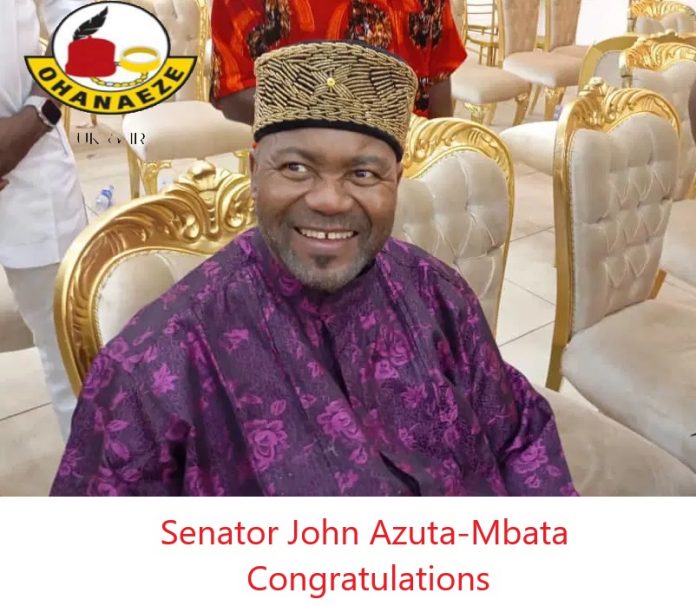
Congratulations Senator John Azuta-Mbata, New President-General of Ohanaeze Ndigbo Worldwide

1

Good People, join me to congratulate Senator John Azuta-Mbata for his election as the 13th President-General of Ohanaeze Ndigbo Worldwide. I am hoping that his election will restore an enviable leadership which Igbo Elders demonstrated after the Biafra War. That leadership quality has since been muted. 

So, Senator Azuta-Mbata is tasked to re-activate that excellence which enabled the Igbo Nation to rebuild one school after another, one market after another, one church after another, etc, despite all the impending odds, after a war.

If you studied what those men and women did between 1970 and 1980, you will agree that Africa has produced one of the finest leadership case studies.  The renaissance which the Igbo Nation demonstrated is even more legendary than whatever China has accomplished. Yes, China did not rebuild from a war! Among many things, the elders focused on two things: rebuilding knowledge infrastructures and providing ways to earn incomes.

For the first part, they got the schools back because they did not want their sons and daughters to fall well behind on education since during the war, other regions were in schools when all schools were closed in the Igbo Nation. How did they do that? They asked ALL communities to set up community development unions, and challenged everyone to contribute. In my village, we have the Ovim Community League which saw that all schools were up and running, under enormous sacrifices where people rebuilt schools before their homes!

Then they exported talent, tasking young people to leave for other areas. Notice that there were no opportunities in the Igbo Nation, meaning that jobs were limited. But as those young men were leaving the Nation, elders reminded them of one thing “onye aghala nwanne ya” [do not leave your brethren behind].  The grand idea was clear: we will do all to support you to go to Lagos, Kano, Kaduna, etc, but once you find success, please come back and pick a brother or sister. Upon that thesis was the Igbo Apprenticeship System built, crystallizing a virtuous circle which within 20 years, the region got into parity with other regions in Nigeria, despite the loss of their bank balances and other assets.

Simply, not many development experts see the Igbo Nation as a place they need to support in Nigeria even though it was the theatre of a brutal war which destroyed centuries of assets. For Senator and our PG, we need leadership to re-engineer that sagacious leadership era for the Igbo Nation and Nigeria at large. 

Good People, I appreciate all the elders who came before us, to ensure that all of us today from the Igbo Nation have the opportunities we have today. Yes, go through the histories of nations, most times, after such wars, the region is lost for decades, but they did not allow that to happen. 

But of course, the challenge of the 1970s is back in the Igbo Nation. And Senator  Azuta-Mbata has to find a new leadership template that will reignite economic vibrancy, citizenship partnership and shared prosperity for all. I wish him good luck because we need that leadership desperately, not just for the Igbo Nation, but all of Nigeria.

Meta Goes MAGA, Moves Content Moderation to Texas, and Introduces Community Note

0
Facebook founder and properties

Meta CEO Mark Zuckerberg has announced that the company will relocate its content moderation teams from California to Texas. The move, which Zuckerberg says is aimed at addressing concerns about ideological bias in content moderation, is being viewed by many as part of a broader realignment of the tech giant’s values.

Many argue that it mirrors Elon Musk’s controversial pivot with X (formerly Twitter), suggesting a growing dissatisfaction with Leftist ideologies among influential social media platforms.

Zuckerberg shared the news in a video posted to Threads, Meta’s fledgling competitor to X.

“We’re going to move our trust and safety and content moderation teams out of California, and our US-based content review is going to be based in Texas,” Zuckerberg said. “As we work to promote free expression, I think that it will help us build trust to do this work in places where there’s less concern about the bias of our teams.”

The relocation of these teams aligns with Zuckerberg’s recent criticism of Meta’s content moderation policies, which he described as having become overly restrictive. He pledged to refocus on free expression, a stance that has been widely interpreted as an attempt to appeal to conservative voices who have long accused tech companies of suppressing their views.

Following Musk’s Lead

Meta’s decision follows a similar path charted by Musk, who relocated X’s and SpaceX’s headquarters to Texas amid mounting criticism of California’s progressive policies. Musk’s move, partially driven by opposition to a California law supporting LGBTQ+ students, has made Texas an increasingly attractive destination for companies seeking to distance themselves from what they perceive as the excesses of progressive politics.

By moving to Texas, Meta places its employees in a state with stringent restrictions on abortion and a ban on gender-affirming care for transgender minors—laws that have been widely criticized by Left-leaning advocates. This context has fueled speculation that Zuckerberg’s decision reflects a broader ideological realignment, signaling solidarity with right-wing causes and an effort to curry favor with the MAGA (Make America Great Again) base.

Ditching Fact-Checking for Community Notes

In addition to the relocation, Meta announced sweeping changes to its content moderation policies. The company will end its independent fact-checking program in the US, replacing it with a Community Notes feature inspired by a similar initiative on X.

Meta framed the change as a bid to reduce bias and restore trust. “We’ve seen this approach work on X – where they empower their community to decide when posts are potentially misleading and need more context, and people across a diverse range of perspectives decide what sort of context is helpful for other users to see,” Meta stated in a blog post.

The fact-checking program, launched in 2016, was initially intended to combat viral misinformation but became a lightning rod for accusations of censorship, particularly from conservative groups. Zuckerberg acknowledged that the program “too often became a tool to censor,” adding that the new approach would provide a less intrusive means of informing users about potentially misleading content.

Undoing ‘Mission Creep’

Meta’s latest announcements also include a rollback of content restrictions related to sensitive topics like immigration and gender identity. Zuckerberg argued that the company’s moderation policies had become too restrictive, limiting legitimate political debate and frustrating users.

“We want to undo the mission creep that has made our rules too restrictive and too prone to over-enforcement. We’re getting rid of a number of restrictions on topics like immigration, gender identity and gender that are the subject of frequent political discourse and debate. It’s not right that things can be said on TV or the floor of Congress, but not on our platforms. These policy changes may take a few weeks to be fully implemented,” Zuckerberg wrote in a blog post.

“As well-intentioned as many of these efforts have been, they have expanded over time to the point where we are making too many mistakes. Too much harmless content gets censored, too many people find themselves wrongly locked up in ‘Facebook jail,’ and we are often too slow to respond when they do.”

To address these issues, Meta plans to scale back its reliance on automated moderation systems for less severe policy violations. Instead, it will prioritize human reporting for such cases while continuing to use automated systems for tackling illegal content and high-severity violations.

Observers note that these changes reflect a growing dissatisfaction among tech leaders with what they see as the overreach of progressive ideology.

Reactions to Meta’s New Direction

The reaction to Meta’s announcements has been mixed. Conservative groups have lauded the changes as long overdue, while progressive activists have raised alarms about the potential consequences of scaling back content moderation and fact-checking.

While Meta’s shift toward free expression aligns with its stated mission, it raises questions about the company’s ability to navigate the increasingly polarized landscape of content moderation. Whether the move to Texas and the adoption of Community Notes will restore trust or deepen divisions remains to be seen.

FBN Holdings Crisis: Shareholders Revolt, Demand Removal of Otedola and Omodayo-Owotuga

0

The stage is set for a high-stakes showdown at FBN Holdings Plc as a group of shareholders, wielding 10% of the company’s shares, has formally demanded an Extraordinary General Meeting (EGM).

ThisDay reports that their aim is to unseat the bank’s Chairman, Mr. Femi Otedola, and his ally, Mr. Julius B. Omodayo-Owotuga, a deputy chief executive of Geregu Power Plc. The demand, made under Section 215(1) of the Companies and Allied Matters Act (CAMA), places FBN Holdings on a 21-day countdown to address one of the most dramatic power struggles in Nigeria’s financial sector.

At the heart of the crisis is an explosive mix of allegations, personal ambitions, and questions about governance that have left the 129-year-old institution embroiled in controversy.

Femi Otedola’s journey to the chairmanship of FBN Holdings is now being dissected with forensic scrutiny. Shareholders allege his rise was orchestrated by former Central Bank of Nigeria (CBN) Governor Godwin Emefiele, who purportedly paved the way for Otedola’s significant share acquisition. The story is said to have begun with a private meeting at Emefiele’s Ikoyi residence, where former First Bank CEO, Dr. Adesola Adeduntan, was instructed to cooperate with Otedola’s takeover plan.

What followed, shareholders claim was a carefully curated strategy to dismantle opposition and establish an unchallenged hold over the bank. Key figures, including Adeduntan, former Chairman Tunde Hassan-Odukale, and others, were removed or sidelined in favor of individuals allegedly loyal to Otedola. The appointment of Mr. Olusegun Alebiosu as Managing Director, despite his poor performance in the recruitment process, and the controversial influence of Mr. Akin Akinfemiwa, a non-executive director, are presented as evidence of Otedola’s consolidation of power.

Private Placement or Power Play?

One of the most contentious issues fueling the crisis is a proposed N360 billion private placement of shares. Many argue that the private placement would disproportionately benefit Otedola, giving him unassailable control of the bank.

“This isn’t about raising capital; it’s about control,” a concerned shareholder was quoted as saying.

Calls for a public offer or rights issue, which would allow broader participation and mitigate concerns over dominance, have been met with resistance. Shareholders fear that the private placement, combined with Otedola’s existing influence, could turn the institution into a personal fiefdom.

Allegations of Past Mismanagement

Otedola’s critics are not stopping at his current maneuvers. They point to his past, citing instances where he was associated with the collapse of financial institutions burdened by non-performing loans. These loans, later absorbed by the Asset Management Corporation of Nigeria (AMCON), have raised questions about Otedola’s “fit and proper” status to lead a financial institution of First Bank’s stature.

“He couldn’t have passed the basic integrity tests without influence from Emefiele,” said one of the dissenting shareholders.

A Bank in Turmoil

The fallout from Otedola’s leadership has reportedly extended to the bank’s operations and staffing. In a sweeping restructuring effort, nearly 100 senior staff members were laid off, a move some see as an attempt to purge opposition and install loyalists.

The dismissal of Group Head Folake Ani-Mumuney, allegedly for hosting a send-off event for Adeduntan, and the removal of journalist Ms. Ijeoma Nwogwugwu from a non-executive role at a subsidiary, have been highlighted as examples of Otedola’s hands-on—and heavy-handed—approach to governance.

“Since when does a non-executive chairman of a holding company dictate operational decisions within the bank?” one industry insider asked.

The Shareholding Dispute

Adding to the crisis is the battle over shareholding. While FBN’s 2023 audited accounts list Otedola as the largest single shareholder with a 9.41% stake, recent data from the Central Securities Clearing System (CSCS) and the bank’s registrars show Barbican Capital, affiliated with Oba Otudeko’s Honeywell Group, holding a 15.01% stake. This discrepancy has led to a legal challenge from Barbican Capital, alleging misrepresentation of shareholding in official reports.

The Role of Regulators

As the shareholders’ demand for an EGM gains momentum, attention turns to the Securities and Exchange Commission (SEC) and the Central Bank of Nigeria (CBN). Both regulators will play critical roles in determining whether the EGM proceeds and what actions might follow if the shareholders succeed in their bid to remove Otedola.

This crisis transcends personalities and extends to the broader issues of corporate governance, regulatory oversight, and the future of Nigeria’s banking sector. For shareholders and stakeholders, the fight at FBN Holdings is not just about who leads but about preserving the integrity of one of the country’s most iconic institutions.

The coming weeks will reveal whether Otedola’s critics can muster the support needed to unseat him or if his grip on the bank will tighten further, reshaping First Bank into a new, controversial chapter of its storied history.

Trump Sentenced with No Punishment in Hush Money Case, Sparks Constitutional and Political Debate

0

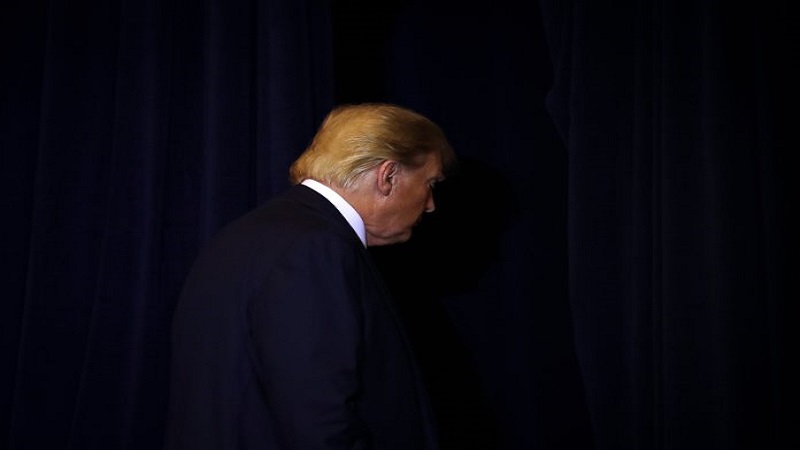
President-elect Donald Trump, facing a historic felony conviction for falsifying business records in connection to a hush money payment, was formally sentenced Friday in New York.

In a highly unusual move, Manhattan Judge Juan M. Merchan handed down an unconditional discharge, declining to impose any punishment. This outcome cements Trump’s conviction while allowing him to assume the presidency unencumbered by fines, jail time, or community service.

What is an Unconditional Discharge?

Under New York law, an unconditional discharge is a sentence that ends a case without imposing penalties such as fines, probation, or imprisonment. While the conviction remains on the record, the judge essentially deems further punitive measures unnecessary.

Judge Merchan’s decision to opt for this leniency in Trump’s case is unprecedented for a felony conviction, particularly given the high-profile nature of the charges. Prosecutors supported the no-penalty sentence, describing it as a way to conclude the case without prolonging constitutional and political debates.

Case Background: The Hush Money Scandal

The case stemmed from a $130,000 payment made to adult film actress Stormy Daniels during Trump’s 2016 presidential campaign. Daniels alleged that the payment was intended to silence her claims of a sexual encounter with Trump a decade earlier. Prosecutors argued that Trump falsified business records to conceal the payment as a legal expense, a violation of New York state law.

Trump maintained his innocence throughout the trial, repeatedly denouncing the case as politically motivated.

During the sentencing hearing, Trump called the trial “a very terrible experience” and denied any wrongdoing. Afterward, he took to his social media platform, declaring: “Today’s event was a despicable charade, and now that it is over, we will appeal this Hoax, which has no merit, and restore the trust of Americans in our once great System of Justice.”

Impact of the Conviction

Though Trump avoided penalties, the felony conviction carries significant legal and reputational implications such as:

  1. Voting Rights: Trump, a registered voter in Florida, retains his right to vote, as Florida restores voting rights to felons upon completion of their sentence.
  2. Firearms Restrictions: Federal law bars felons from possessing firearms, potentially affecting Trump’s gun ownership rights.
  3. DNA Sample Requirement: Under New York law, Trump must submit a DNA sample for the state’s crime database, though it is unclear how this will be enforced given his unique circumstances.

Speaker of the House Mike Johnson joined Trump’s allies in condemning the case, describing it as a politically motivated “witch hunt.” Johnson also attacked the prosecution team, calling them “deranged” and reaffirming his support for Trump’s appeal.

“This entire case against President Trump has been a politically motivated and contrived witch hunt aimed solely at preventing him from returning to the White House,” Johnson stated.

Criticism of Trump’s Behavior

Prosecutors took issue with Trump’s attacks on the judiciary, including his claims of a corrupt and biased legal system. Assistant District Attorney Joshua Steinglass argued that Trump’s rhetoric has undermined public confidence in the rule of law.

“The once and future President of the United States has engaged in a coordinated campaign to undermine its legitimacy,” Steinglass said during the sentencing.

Broader Impacts of The Ruling

This case marks a historic moment in American politics and jurisprudence: the first time a former president—and an incoming president—has been convicted of a felony. While the conviction solidifies Trump’s status as a polarizing figure, it also underscores the tension between the legal system and the political landscape.

With three additional indictments looming, this may be the only criminal case against Trump to go to trial. The outcome sets a complex precedent, leaving legal experts and political observers divided over the implications for justice and governance in the United States.

As Trump prepares to return to the White House, the unresolved questions surrounding his conviction and its political aftermath will likely remain a point of contention for years to come.