
DD
MM
YYYY

PAGES

DD
MM
YYYY

spot_img

PAGES

Home Blog Page 24

Onchain Settlement System often Misunderstood as a Political Challenge to Central Banks

0

The rise of on-chain settlement systems is often misunderstood as a political challenge to central banks or a direct critique of institutions such as the Federal Reserve. In reality, on-chain settlement represents something far more structural and technologically inevitable: the creation of a parallel financial infrastructure built on open standards rather than negotiated access.

It is not necessarily anti-Fed, anti-bank, or anti-government. Instead, it reflects a transition from permission-based financial coordination toward programmable and globally interoperable systems. Traditional finance operates through layers of intermediaries. Banks settle through correspondent networks, clearinghouses, central counterparties, and payment processors.

Access to these systems is not universal. It is negotiated through regulation, banking relationships, jurisdictional approval, and institutional trust. Participation depends heavily on geography, politics, capital requirements, and compliance structures. In this model, financial access is ultimately governed by gatekeepers.

On-chain settlement changes the architecture entirely. A blockchain network does not require bilateral trust agreements between participants in the same way legacy finance does. Settlement occurs according to transparent protocol rules enforced by distributed consensus.

Transactions finalize based on standardized code, cryptographic verification, and network participation rather than institutional negotiation. The distinction is critical because it transforms finance from a relationship-driven system into a standards-driven system. This is why stablecoins, tokenized treasuries, decentralized exchanges, and blockchain-based payment rails continue to expand globally.

Their growth is not merely speculative enthusiasm; it is a response to inefficiencies embedded in the legacy financial stack. International wire transfers can take days. Cross-border liquidity remains fragmented. Access to dollar settlement infrastructure is uneven across emerging economies. Blockchain systems compress these frictions into near-instant finality operating continuously, twenty-four hours a day.

Importantly, none of this automatically diminishes the relevance of central banks. The Federal Reserve still controls monetary policy, interest rates, and the supply dynamics of the dollar. What changes is the mechanism through which value moves across the global economy. The internet did not eliminate governments; it altered how information traveled. Likewise, on-chain settlement does not erase sovereign currencies; it changes how those currencies can circulate and settle.

The philosophical shift is equally significant. Negotiated systems rely on institutional discretion. Standards-based systems rely on protocol compliance. Anyone capable of interacting with the network under the established rules can participate. This creates a more modular financial environment where developers, startups, and even individuals can build financial applications without requiring the approval of entrenched intermediaries.

For many countries outside the traditional financial core, this is especially attractive. Access to dollar liquidity has historically depended on correspondent banking relationships dominated by Western financial institutions. On-chain infrastructure introduces an alternative layer where access is determined less by geopolitical alignment and more by technical compatibility. That distinction explains why stablecoin adoption has accelerated across regions facing inflation, capital controls, or banking instability.

Critics often frame this evolution as a rebellion against the financial order, but that interpretation misses the broader reality. Parallel infrastructure does not necessarily seek to overthrow existing systems. Railroads did not destroy roads; the internet did not eliminate television. Instead, new infrastructure emerges because it offers different efficiencies, capabilities, and economic incentives. On-chain settlement is ultimately an infrastructure story.

It is the financial equivalent of moving from closed proprietary networks to open internet protocols. The future may not belong entirely to decentralized systems or traditional banking institutions alone. More likely, the next era of finance will be defined by coexistence: sovereign monetary systems operating alongside programmable settlement layers that prioritize transparency, speed, interoperability, and open standards over negotiated access.

Rave Sues Apple, Alleging Crushing Competition After Removing Video-Watching App From App Store

0

Rave has filed an antitrust lawsuit against Apple, accusing the iPhone maker of deliberately removing its shared video-viewing app from the App Store to protect Apple’s own competing feature, SharePlay.

The lawsuit, filed Thursday in federal court in New Jersey, escalates another major legal challenge to Apple’s control over its tightly regulated App Store ecosystem, an issue that has increasingly drawn scrutiny from regulators, developers, and courts across multiple countries.

Rave, headquartered in Ontario, Canada, is seeking reinstatement to the App Store as well as what it described as “hundreds of millions of dollars” in damages.

The company alleges Apple removed the app under the pretext of policy violations, while the real motive was to eliminate competition for SharePlay, Apple’s native co-viewing feature introduced in 2021.

“Apple’s pretextual removal of Rave from ?the App Store has ?harmed consumers significantly by ?limiting choice and effectively preventing Apple customers from co-viewing and connecting with non-Apple customers,” Michael Pazaratz, CEO of Rave, said in a press release.

“Apple’s actions ?denied users access to a product they enjoy, disrupted the communities built ?on Rave and ?impaired Rave’s ability to compete fairly based on the strength of its product.”

Rave’s platform allows users across different operating systems, including iOS, Android, Windows, and macOS, to watch videos simultaneously while chatting in real time. The company argues that cross-platform functionality made it uniquely valuable because Apple’s SharePlay primarily operates within Apple’s own ecosystem.

According to the complaint, Apple informed Rave in 2025 that the app was removed for “dishonest or fraudulent activity.” But Rave claims the action was anti-competitive and designed to strengthen Apple’s dominance in digital social entertainment.

The lawsuit also strikes at one of the most controversial aspects of Apple’s business model: its control over app distribution and monetization on iPhones. Rave says its advertising-driven model generated little commission revenue for Apple because it relied less on in-app purchases, making the company commercially less valuable to the App Store economy while still competing with Apple’s own product offerings.

Apple strongly rejected the allegations.

In a statement, the company said Rave was removed after “repeated guideline violations,” including allegedly hosting and sharing pornographic and pirated material as well as receiving complaints involving CSAM, shorthand for child sexual abuse material. Apple said it communicated those violations to the developer multiple times before removing the app.

Rave forcefully denied the allegations.

A spokesperson for the company described the CSAM accusations as “baseless” and said the company maintained zero tolerance for illegal or exploitative content. The firm accused Apple of weaponizing App Store enforcement rules to suppress a competing cross-platform service.

The dispute lands at a time when Apple is already battling mounting antitrust pressure globally over allegations that it uses control of the App Store to disadvantage rivals, extract excessive commissions, and favor its own services.

The most prominent fight remains Apple’s years-long legal war with Epic Games, creator of the video game Fortnite. That case, which began in 2020, challenged Apple’s requirement that developers use Apple’s payment system for digital purchases, allowing the company to collect commissions of up to 30%.

The legal battle triggered major changes to Apple’s business practices and helped fuel broader regulatory action in the United States and Europe. Last week, the U.S. Supreme Court sent parts of the Epic dispute back to federal court in California, ensuring the broader battle over Apple’s App Store dominance remains unresolved.

Rave’s lawsuit now adds another dimension to the growing scrutiny. Unlike Epic, which focused heavily on payment systems and commissions, Rave’s case centers more directly on allegations that Apple used platform control to eliminate a product competitor. That distinction could prove significant because regulators globally have become increasingly focused on whether dominant technology companies unfairly prioritize their own products over third-party developers operating on their platforms.

However, Apple has argued that strict App Store controls are necessary to maintain user safety, privacy, and content moderation standards. But developers increasingly believe those same rules can be selectively enforced in ways that disadvantage rivals to Apple’s own services.

The inclusion of allegations involving pirated content and CSAM could become especially consequential in court. Apple appears to be framing the dispute as a safety and compliance issue rather than a competition issue, while Rave is portraying the accusations as a post-hoc justification for anti-competitive conduct.

The legal and reputational stakes are therefore unusually high for both sides. Rave also said it has launched similar antitrust actions against Apple in Canada, Brazil, the Netherlands, and Russia, signaling a coordinated global legal strategy.

The international nature of the dispute mirrors the increasingly worldwide backlash against large technology platforms as governments and developers push for stricter oversight of digital gatekeepers.

For Apple, the case threatens further erosion of one of its most lucrative and strategically important businesses. The App Store generates billions of dollars annually not only through commissions but also by reinforcing customer loyalty across Apple’s broader ecosystem of devices and services.

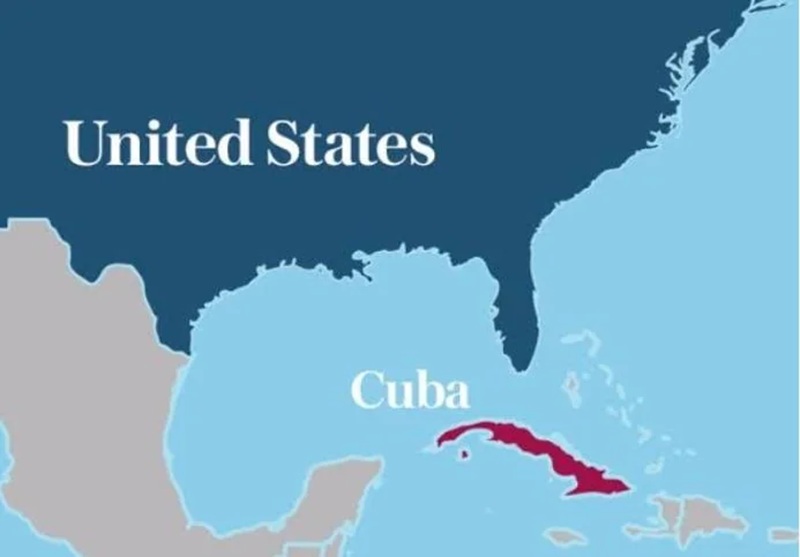
Polymarket’s Odds for US Military Clash Rise to 45%, Regime Change at 55% in Cuba

0

Prediction markets have increasingly become a real-time barometer for geopolitical sentiment, and nowhere is that more evident than on Polymarket. While traditional analysts rely on intelligence reports, diplomatic statements, and military briefings, decentralized prediction markets capture something more immediate: collective perception.

The recent surge in the “U.S. Military Clash” odds to 45% YES reflects a growing belief that direct confrontation involving the United States is becoming increasingly plausible. Yet at the same time, the “Regime Change” odds remaining fixed around 55% reveals a striking divergence in how traders interpret escalation and political outcomes.

This disconnect is important because it suggests the market no longer sees military conflict and regime collapse as automatically connected. Historically, Western military intervention often carried an implicit assumption that governments under pressure would eventually fall. From Iraq to Libya, regime destabilization became associated with military escalation.

But the modern geopolitical landscape is different. Markets now appear to believe that states can absorb sustained conflict without necessarily collapsing politically. The jump in military clash odds likely reflects a broader deterioration in global stability. Traders are responding to rising tensions across multiple theaters simultaneously: maritime confrontations, sanctions wars, proxy conflicts, cyber warfare, and increasingly aggressive military posturing among global powers.

In today’s interconnected world, even a limited regional incident can rapidly escalate into a broader confrontation involving major powers. Markets are therefore pricing in the probability of accidental escalation as much as intentional war. At 45%, the probability is not symbolic fear anymore. It represents a market consensus that the possibility of direct U.S. military engagement has moved from theoretical to credible.

Prediction markets tend to react not just to headlines but to momentum, sentiment velocity, and perceived strategic positioning. A sudden spike often indicates that participants believe decision-makers are entering narrower diplomatic corridors where mistakes become more likely.

However, the more interesting signal may be the stagnation in regime change expectations. Despite rising military fears, traders are not aggressively increasing bets that governments will fall. That suggests confidence in modern state resilience. Authoritarian systems, especially those with strong security apparatuses, alternative trade networks, and domestic resource control, have demonstrated the ability to survive extraordinary external pressure.

Economic sanctions, isolation from global banking systems, and even targeted military actions are no longer viewed as guaranteed pathways to political collapse. Another factor influencing these odds is the growing fragmentation of global power. The international order is no longer dominated by a single uncontested superpower capable of reshaping governments with little resistance. Rival blocs now provide economic, technological, and military lifelines to allies under pressure.

This creates a geopolitical environment where prolonged stalemates are more likely than decisive outcomes. The divergence between military clash and regime change odds may therefore reflect a deeper realization among market participants: conflict in the twenty-first century is increasingly about containment, attrition, and strategic paralysis rather than outright overthrow. Investors and traders appear to believe that escalation can continue indefinitely without producing clear political resolution.

Prediction markets are not crystal balls, but they are useful indicators of collective psychology. The current pricing on Polymarket suggests that traders are becoming more fearful of confrontation while simultaneously losing confidence in the idea that military pressure alone can fundamentally reshape political systems. That shift in perception may be one of the most consequential geopolitical signals of all.

US Treasury Department Privately Reminded Binance of Compliance Requirements

0

The cryptocurrency industry is entering a new phase where geopolitics, national security, and sovereign financial strategy are becoming deeply intertwined.

Two major developments from Washington this week underline that transformation: reports that the U.S. Treasury Department sent a compliance warning letter to Binance over alleged Iran-linked crypto activity, and comments from White House digital asset officials indicating that a formal announcement regarding the U.S. Strategic Bitcoin Reserve could arrive within weeks.

Together, these developments signal that cryptocurrency is no longer viewed merely as a speculative asset class or technological experiment. It is increasingly being treated as infrastructure tied to sanctions enforcement, monetary competition, and national strategic positioning.

According to reports, the U.S. Treasury Department privately reminded Binance that it must fully comply with the monitoring requirements imposed after the exchange’s 2023 settlement with U.S. authorities. The warning reportedly followed allegations that more than $1 billion in crypto transactions connected to Iran-linked entities moved through the platform in 2024 and 2025.

The issue highlights a growing concern among Western regulators: cryptocurrencies are now part of the global sanctions battlefield. For years, Washington relied heavily on traditional banking systems and the dominance of the U.S. dollar to isolate adversarial states from international commerce. However, blockchain networks operate across borders, often beyond the direct control of governments, creating alternative channels for value transfer.

Iran has increasingly turned toward crypto as sanctions pressure intensified. Reports from blockchain analytics firms estimate billions of dollars in crypto activity connected to Iranian actors over the past year. This has forced regulators to shift from merely overseeing exchanges for consumer protection toward treating them as critical enforcement gateways in international finance.

For Binance, the renewed scrutiny comes at a delicate moment. The exchange has been attempting to rebuild its relationship with U.S. regulators after its massive 2023 legal settlement involving anti-money laundering and sanctions violations. Treasury officials reportedly demanded interviews with key executives and requested additional compliance documentation under the existing monitoring agreement.

Yet the broader significance extends beyond Binance itself. The situation demonstrates that crypto exchanges are increasingly being treated like systemically important financial institutions. Governments no longer see major trading platforms as fringe technology companies; they now view them as strategic chokepoints capable of influencing sanctions policy, capital flows, and geopolitical stability.

At the same time, another branch of the U.S. government appears to be embracing cryptocurrency from a completely different angle. Officials connected to the White House digital assets initiative recently stated that a formal announcement regarding the Strategic Bitcoin Reserve is expected within weeks.

Patrick Witt, executive director of the President’s Council of Advisors for Digital Assets, reportedly confirmed that preparations are nearing completion. The reserve itself was initially established through an executive order signed by President Donald Trump in March 2025. The order created a framework for retaining Bitcoin already seized by the federal government instead of liquidating it on the open market.

Bitcoin is increasingly being framed by policymakers as a strategic reserve asset comparable to digital gold. The United States is believed to control one of the largest sovereign Bitcoin holdings in the world, accumulated primarily through criminal seizures and forfeitures. Estimates suggest federal agencies collectively hold hundreds of thousands of BTC.

This represents a remarkable evolution in Washington’s attitude toward digital assets. Only a few years ago, much of the political conversation around crypto focused on fraud, volatility, and systemic risk. Now, the U.S. government is simultaneously tightening enforcement against illicit crypto flows while also exploring how Bitcoin itself could serve national strategic interests.

The contradiction is only apparent on the surface. In reality, both policies stem from the same recognition: digital assets have become too important to ignore. The Treasury’s pressure on Binance reflects an effort to maintain American leverage over global financial systems in an era of decentralized finance.

Meanwhile, the Strategic Bitcoin Reserve reflects growing awareness that scarce digital assets could become geopolitically significant over the coming decades. For crypto markets, these developments send a mixed but powerful signal. On one hand, enforcement pressure on exchanges will likely intensify, especially around sanctions compliance and anti-money laundering obligations.

On the other hand, the notion of the United States formally embracing Bitcoin as a reserve asset provides long-term institutional legitimacy that would have seemed unimaginable only a few years ago. The crypto industry is no longer operating outside the global system. It is becoming part of the system itself.

UFO Evidence of Potential Alien Life Represents the Greatest Paradigm Shift of All Human Interactions 

0

The release of alleged UFO and potential alien life files by the Department of War has ignited one of the most intense public conversations about extraterrestrial existence in modern history. For decades, rumors of secret government programs, unidentified aerial phenomena, and hidden intelligence reports have occupied a strange space between conspiracy theory and legitimate national security concern.

Now, with the publication of classified materials detailing unexplained encounters, advanced aerial objects, and internal military analyses, the debate has entered a new phase. Whether the files ultimately prove the existence of extraterrestrial life or merely expose the limits of human understanding, they represent a profound moment in the relationship between governments, science, and the public.

The documents reportedly include military pilot testimonies, radar recordings, satellite imagery, and analyses of unidentified craft exhibiting flight characteristics beyond known technological capabilities. Several cases describe objects accelerating at impossible speeds, hovering without visible propulsion systems, and maneuvering in ways that appear to defy modern aerodynamics. These revelations have shocked many observers because they originate not from fringe sources, but from official military and intelligence channels.

The mere acknowledgment that governments have taken these sightings seriously lends credibility to claims that were previously dismissed outright. For many years, governments around the world maintained a policy of denial or ridicule regarding UFO investigations. During the Cold War, officials feared that public panic or adversarial powers could exploit widespread uncertainty about unidentified aerial activity.

Military agencies often classified unusual encounters to protect sensitive radar systems and defense technologies. This culture of secrecy created fertile ground for speculation. Stories about hidden crash retrieval programs, reverse-engineered alien spacecraft, and secret underground facilities became embedded in popular culture through films, television, and literature.

This uncertainty is perhaps the most significant revelation of all. In a world where technological superiority is closely tied to geopolitical power, the admission that military authorities cannot identify certain objects raises serious strategic questions. If these phenomena are not extraterrestrial, then they may represent advanced technologies developed by rival nations. Either possibility carries enormous implications for global security and scientific advancement.

Public reaction to the disclosures has been divided. Some people view the files as confirmation that humanity is not alone in the universe. Others remain skeptical, arguing that extraordinary claims require extraordinary evidence. Scientists, meanwhile, have generally urged caution. Many researchers emphasize that unexplained phenomena are not automatically proof of alien intelligence.

Atmospheric anomalies, sensor malfunctions, experimental aircraft, and psychological factors can all contribute to unusual observations. Nevertheless, the scientific community increasingly supports transparent investigation rather than automatic dismissal. The release has also reignited philosophical and religious discussions about humanity’s place in the cosmos. If intelligent extraterrestrial life exists, it would fundamentally alter humanity’s understanding of itself.

Questions about religion, evolution, civilization, and the future of human society would take on entirely new dimensions. Throughout history, major scientific discoveries—from heliocentrism to evolutionary theory—have challenged deeply held assumptions about human uniqueness. Evidence of alien life would likely represent the greatest paradigm shift of all.

Beyond philosophy, the economic and technological consequences could also be enormous. If any recovered materials or observed technologies contain principles beyond current scientific understanding, they could revolutionize energy production, transportation, communications, and defense systems.

Even the pursuit of answers could accelerate investment in aerospace research, artificial intelligence, quantum physics, and space exploration. Governments and private companies alike may see strategic advantage in becoming leaders in the next era of discovery. Critics warn that governments could use UFO narratives to distract from political crises or justify increased military spending.

Skeptics argue that secrecy surrounding national defense creates opportunities for misinformation and exaggeration. In this view, the mystery itself becomes a tool of power, shaping public perception while obscuring more conventional military projects. The Department of War’s release of UFO and potential alien life files marks a historic cultural moment regardless of what future investigations uncover.

Humanity now faces questions once confined to science fiction: Are we alone? What lies beyond Earth? And how prepared are we to confront realities that challenge everything we believe about civilization and existence itself? The answers may take years or even generations to emerge, but the conversation has already transformed the boundaries of public imagination.