DD
MM
YYYY

PAGES

DD
MM
YYYY

spot_img

PAGES

Home Blog Page 24

Ongoing US-Israel Military Escalation in Iran Highlights Divisions Across Africa

0

The ongoing US-Israel military campaign against Iran escalating in early 2026 with strikes, the reported killing of Supreme Leader Ayatollah Ali Khamenei, and Iranian retaliatory attacks on Gulf states and shipping has highlighted divisions across Africa.

Reactions vary sharply by region, reflecting longstanding geopolitical, economic, and ideological fault lines—much like splits seen in responses to Ukraine, Gaza, or broader Global South alignments. Horn of Africa Aligns with Anti-Iran StanceStates like Ethiopia, Kenya, Somalia, and Somaliland have condemned Iran’s actions and retaliatory strikes.

This stems from pragmatic calculations: Heavy reliance on remittances from millions of migrant workers in Gulf states especially Saudi Arabia and the UAE. Economic ties to Gulf monarchies and broader US and Israeli-aligned networks. Strategic positioning along the Red Sea, where Gulf rivalries (Saudi/Egypt/Turkey vs. UAE/Israel axes) already overlay local conflicts like Sudan’s civil war or Ethiopia-Eritrea tensions.

These countries appear to bet on the US-Israel side prevailing, prioritizing stability for remittances and trade over ideological solidarity. South Africa under President Ramaphosa has invoked the UN Charter, criticizing unilateral strikes without Security Council mandate or clear justification.

Senegal echoed this, with its leadership calling such actions “extremely serious” violations of sovereignty. These positions align with BRICS ties; South Africa remains linked to Iran via the group, a tradition of non-alignment, anti-imperial rhetoric, and emphasis on multilateralism.

Countries like Nigeria, Ghana, and broader ECOWAS members have urged de-escalation and dialogue without assigning blame. The African Union has similarly warned of risks to global energy markets, food security, and African economies—without strong alignment.

This cautious approach reflects: Economic vulnerabilities; rising oil prices, disrupted shipping via Suez and Red Sea rerouting around the Cape. Domestic priorities amid insurgencies or debt pressures.
Avoidance of entanglement in distant conflicts.

Africa’s lack of a unified position—54 countries, often 54 nuanced or absent stances—mirrors recurring patterns in global crises. Divisions track familiar axes: Economic dependence on Gulf/US spheres (Horn/parts of East Africa). Ideological/multipolar leanings.

Security spillovers — fears of Iranian proxies or opportunistic attacks in fragile zones like the Sahel where Iran has built ties with juntas in Mali, Burkina Faso, Niger or Horn bases (e.g., US facility in Djibouti as a potential target).

The war exacerbates Red Sea and Horn proxy dynamics, potentially accelerating or complicating conflicts in Sudan, Somalia, or Ethiopia. In short, the conflict exposes and widens Africa’s existing geopolitical fractures rather than creating new ones. Economic self-interest, migration and remittance flows, and great-power alignments dictate responses more than pan-African solidarity or principle.

The continent watches warily, bracing for indirect hits like higher energy costs, trade disruptions, and possible security ripple effects—while its voices remain fragmented. Russia’s stance on the ongoing US-Israel military campaign against Iran is one of strong rhetorical condemnation of the US and Israel, coupled with calls for de-escalation and diplomacy.

While avoiding any direct military involvement or significant escalation on Iran’s behalf. The Russian Foreign Ministry has repeatedly described the US-Israeli strikes as a “premeditated and unprovoked act of armed aggression” against a sovereign UN member state, violating international law, the UN Charter, and norms against interference in internal affairs.

Statements accuse Washington and Tel Aviv of using fabricated pretexts; Iran’s nuclear program, which Russia claims shows no evidence of active weaponization to pursue regime change. They criticize the attacks for occurring under the “cover” of recent diplomatic negotiations, portraying this as deceptive and hypocritical.

Echoing broader Kremlin narratives about Western “double standards” similar to accusations in Ukraine. Russian officials, including Foreign Minister Sergey Lavrov, have warned that the conflict risks broader instability, including nuclear proliferation ironically, by pushing Iran or Arab states toward weapons, humanitarian crises, economic shocks, and attacks on Gulf states’ infrastructure.

They express regret over Iranian retaliatory strikes causing casualties and damage in Arab countries. President Vladimir Putin has been relatively restrained in public but expressed “deepest condolences” to Iranian President Masoud Pezeshkian over Khamenei’s “cynical assassination,” calling it a violation of human morality and international law.

He has positioned Russia as a potential mediator, holding calls with Gulf leaders to relay concerns about Iran’s actions and urge restraint. Despite close ties with Iran, Russia has not entered the conflict militarily—no troops, major new weapons deliveries, or direct confrontation with the US and Israel.

Analysts note this reflects: Russia’s heavy commitment to its war in Ukraine, limiting bandwidth and resources. Desire to avoid direct escalation with the US especially amid any Ukraine-related talks or de-escalation efforts. Calculations to preserve relations with Gulf states; key for oil, trade, and balancing regional influence and even Israel in some contexts.

Reports indicate limited, covert assistance, such as providing intelligence on US military positions (troops, ships, aircraft) to help Iran target or avoid strikes—though this remains unconfirmed officially and appears low-level rather than game-changing. Russian state media and pro-Kremlin voices amplify harsher rhetoric but the Kremlin itself prioritizes “strategic hedging”: condemning verbally, offering mediation, benefiting from higher oil prices/energy disruptions (boosting Russia’s economy), and using the crisis to deflect criticism of its own actions in Ukraine.

Russia stands firmly with Iran diplomatically and rhetorically—portraying the US/Israel as aggressors destabilizing the world—but stops short of material commitment that could draw it into a wider war. Moscow watches warily, focusing on its core interests while Iran fights largely isolated, with only China offering similar verbal solidarity.

X Money Could Redefine Daily Finance as Seamless and Social-Native Product

0

Actor William Shatner posted several screenshots showing key elements about X Money, including: Tabs for Account, Rewards, and Activity. Options for depositing funds, peer-to-peer (P2P) payments, and managing a debit card.

Features like cashback on purchases and up to 6% APY on deposits (high-yield savings).
A debit card with cashback rewards.

The service focuses initially on fiat-based services like instant P2P transfers, direct deposits, and a debit card, partnering with institutions like Cross River Bank. These represent typical leaked or shared beta screenshots of the X Money dashboard, debit card preview, and rewards and activity sections circulating in recent posts.

Elon Musk’s Response to Crypto Integration Speculation

Elon Musk has fueled excitement by reposting or acknowledging with responses like “Yeah” or “This will be big” user predictions and analyses suggesting future crypto support. Speculation includes potential integration of Stablecoins, Dogecoin and XRP tied to Ripple’s infrastructure connections via banking partners.

However, current reports emphasize that the initial rollout prioritizes fiat payments and traditional banking features. No official confirmation exists yet for crypto wallets, trading, or holdings in the launch version—though Musk’s history with crypto and X’s “everything app” vision keep the door open for later additions like in-app crypto trades or payments.

X has already secured money transmitter licenses in over 40 U.S. states, paving the way for broader financial services. This development aligns with Musk’s goal of turning X into a comprehensive platform for messaging, payments, and potentially more including stocks and crypto trading teased in earlier 2026 updates.

The crypto community remains divided between bullish anticipation and viewing some claims as hopium, especially amid unverified XRP and Ripple links. With internal closed beta complete, limited external beta underway; batch activations starting around this week, as shared by users like William Shatner, and features like high-yield savings up to 6% APY, instant P2P transfers, debit cards, and cashback rolling out—these effects are emerging but still speculative in full scope.

Impacts on Traditional Finance and Banking

X Money positions X as a “super app” inspired by WeChat, integrating social networking with payments, potentially disrupting legacy banks and payment processors like PayPal, Venmo, or traditional wires.

Users could handle daily transactions; P2P sends, bill pay, direct deposits without separate apps, lowering fees and friction from intermediaries. Musk has described it as “the central source of all monetary transactions,” potentially making traditional bank accounts optional for many.

By bundling high-yield savings (FDIC-insured via partners like Cross River Bank), debit cards with cashback and personalization via X handle, and future tools (loans, investments, “Smart Cashtags” for live stock views/trades), it challenges banks’ hold on deposits and everyday finance.

Direct tipping, subscriptions, and payouts; already $45M+ distributed to creators could flow seamlessly, reducing platform fees and enabling instant monetization without third-party transfers. This could accelerate financial inclusion for underbanked users though initial U.S.-centric licensing limits global reach early on.

Musk’s repeated nods; reposting predictions of “crypto integration” and calling it a “once-in-a-generation opportunity” fuel speculation, though the initial beta focuses on fiat. With X’s 600M+ monthly active users, even partial crypto support could drive massive adoption, normalizing digital assets in everyday use.

Speculation ties to Bitcoin surges or altcoin pumps, but risks include over-hype or delays due to regulation. Broader crypto could see reinforced legitimacy as part of mainstream platforms, though competition from established fintechs tempers uniqueness.

A single profile for social, messaging, shopping, and finance creates frictionless experiences but raises concerns over power concentration; account suspensions could cut off financial access, likened to “digital deportation” in some regions.

In places like West Africa with mature mobile money like M-Pesa, it could unlock value for creators and freelancers via low-fee global transfers—if rolled out fairly. But US-first focus and regulatory hurdles risk alienating the Global South, where local fintechs already dominate.

Merging social data with financial activity echoes WeChat’s model, amplifying surveillance risks in politically sensitive areas. Capturing even a slice of global digital payments; tens of trillions annually via low acquisition costs could transform X’s valuation, adding revenue from float, lending, ads, and fintech fees—potentially making it one of the most valuable financial entities.

The rollout remains phased with crypto features unconfirmed for launch. Musk calls it a “game-changer,” but execution (regulatory approvals, partnerships like Visa, global expansion) will determine real effects. Early visuals show polished interfaces, building excitement.

X Money could redefine daily finance as seamless and social-native, but success hinges on inclusive rollout, regulatory navigation, and avoiding centralization pitfalls.

Champion Breweries Meets NGX Free Float Requirement After N60bn Capital Raise

0

Champion Breweries Plc has confirmed it has met the minimum free float requirement set by the Nigerian Exchange (NGX) following the completion of a capital-raising programme valued at about N60 billion.

The brewer disclosed this in a statement to shareholders and the investing public on Saturday, saying the transaction resolved its previously flagged free float deficiency and restored full compliance with the Exchange’s listing rules.

The development follows the company’s successful conclusion of a two-part fundraising exercise, comprising a public offer and a rights issue. The transactions expanded the volume of shares available for public trading, lifting the company’s free float above the threshold required for firms listed on the NGX Main Board.

According to the company, the capital raises were approved by the Securities and Exchange Commission and are now in the final stages of settlement through the Central Securities Clearing System (CSCS), which handles electronic share registration and clearing in Nigeria’s capital market.

“All applicants under the Rights Issue have now been credited with their new shares, while crediting for applicants under the Public Offer is ongoing,” the company said.

Champion Breweries added that the transaction also allowed it to resolve the “Below Listing Standard (BLS) Compliance Status Indicator” previously attached to its name on NGX platforms. That designation had been applied after the company was listed among firms that failed to meet minimum free float requirements in the latest X-Compliance Report published by NGX Regulation Limited (NGX RegCo).

With the new shares now entering the market, NGX RegCo is expected to remove the compliance flag.

Capital raise tied to major brand acquisition

Beyond regulatory compliance, the capital raising was designed to support a broader strategic expansion. Champion Breweries structured the programme as a two-step fundraising exercise: a N15.9 billion rights issue offered to existing shareholders and a N42 billion public offer targeted at the wider investing public.

The public offer involved the sale of 2.625 billion ordinary shares of 50 kobo each at N16 per share. The offer opened on January 8, 2026, and closed on January 21, 2026. The company said the net proceeds will primarily fund the acquisition of the Bullet brand portfolio through an asset carve-out arrangement.

Under the plan, ownership of the Bullet brands — including trademarks, recipes, and related intellectual property — will transfer to Champion Breweries across multiple African markets. The deal also includes commercial rights associated with the products and is expected to strengthen the company’s presence in the regional beverage market.

The acquisition forms part of a broader strategy to expand the brewer’s product lineup and boost revenue growth in a highly competitive beer market dominated by larger multinational players.

Free float compliance crucial for market liquidity

Free float refers to the portion of a company’s shares available for trading by the investing public, excluding holdings by insiders, directors, governments, or strategic investors.

Maintaining an adequate free float is a key requirement for companies listed on the Nigerian Exchange because it ensures sufficient liquidity in the market and supports efficient price discovery for shares.

Under NGX rules, companies listed on the Main Board must maintain a free float of at least 20% of issued shares or a free float value of at least N20 billion.

The thresholds vary across listing tiers.

Companies on the Growth Board’s Entry Segment must maintain a minimum free float of 10% of issued shares or shares valued at least N50 million, while those on the Standard Segment must maintain 15% or N50 million. Firms listed on the Premium Board are required to maintain a free float of at least 20% or a value of N40 billion.

Failure to meet these thresholds can trigger compliance warnings, trading restrictions, or eventual delisting if the issue remains unresolved.

Champion Breweries had previously appeared among nine companies identified by NGX RegCo as having free float deficiencies in the Exchange’s periodic compliance report.

By raising new capital and distributing additional shares to public investors, the company has now addressed the issue ahead of the regulatory deadline.

Implications for investors

Analysts say the successful capital raise could have several implications for the company’s stock.

An increase in free float generally improves trading liquidity, making it easier for investors to buy and sell shares without causing large price swings. Higher liquidity can also attract more institutional investors and improve overall market participation in the stock.

At the same time, the expansion of Champion Breweries’ share base may influence short-term price movements as newly issued shares enter the market.

Over the longer term, investor sentiment will likely depend on how effectively the company deploys the proceeds from the capital raise — particularly whether the Bullet portfolio acquisition delivers the expected growth in revenue and market share.

The transaction signals a new phase for Champion Breweries as it seeks to strengthen its balance sheet, broaden its brand portfolio, and position itself for expansion within Nigeria and across other African markets.

Oil Rally Pushes Nigerian Crude Toward $100, But It Spells Trouble At Home As Fuel Prices Rise

0

The global oil market is approaching a critical tipping point, with Nigeria’s flagship crude grade projected to move toward $100 per barrel as geopolitical tensions disrupt supply routes and jolt energy markets.

Nigeria’s Bonny Light crude oil recently traded above $90 per barrel, rising roughly one-third within the week. The surge mirrors gains in Brent crude, which climbed past $92 per barrel on Friday after posting weekly gains of more than 27%.

Energy traders say the rally reflects mounting fears that disruptions in the Strait of Hormuz could trigger a major supply shock. The narrow shipping corridor — linking the Persian Gulf to global markets — carries about 20% of the world’s oil supply.

With tanker traffic slowing dramatically amid the escalating confrontation involving Iran and Israel, analysts believe that crude prices could reach $100 per barrel within days if the disruption persists.

Revenue boost for Nigeria, economic trouble for consumers

For Nigeria, the oil rally could significantly improve government finances. The country’s 2026 federal budget is benchmarked at $64.85 per barrel, meaning prices around $90 — and potentially higher — would generate far greater oil revenue than originally projected.

Higher crude prices typically strengthen foreign exchange inflows and improve fiscal balances for Nigeria, where oil exports remain the dominant source of dollar earnings. The development could help ease pressure on government finances and provide additional funding space for public spending.

However, economists note that the benefits are likely to be partially offset by rising domestic fuel costs.

Despite being one of Africa’s largest oil producers, Nigeria continues to rely heavily on imported refined petroleum products. As global crude prices climb, domestic fuel prices are already surging across the country.

Petrol is now selling above N1,000 per liter in many parts of the country, due to rising depot prices and higher supply costs. Africa’s largest refinery, Dangote Petroleum Refinery, has increased petrol prices twice within a week amid the volatility in global oil markets.

The refinery’s gantry price recently rose to about N995 per liter after cumulative increases of roughly N221 within days. These increases have rippled through the distribution chain, pushing retail prices even higher at filling stations nationwide.

Against this backdrop, fuel marketers have appealed to the federal government to intervene. The National President of the Independent Marketers Association of Nigeria (IPMAN), Abubakar Garima, said rising international oil prices linked to the Middle East crisis are contributing to the spike in pump prices.

“You know what is happening globally is one of the causes,” Garima said in an interview with NairaMetrics.

“We contacted Dangote Refinery, and up till now I think they find it very difficult to get crude oil at a lower rate because of this crisis.”

Garima noted that marketers are also sourcing fuel from other depots, but those suppliers are selling at similarly elevated prices.

“Yes, we buy from other depots; it’s the same thing. Other depots are selling at a higher rate as well. If Dangote sells at a lower rate, it may not be like that; they will bring it down,” he said.

According to him, depot prices are already around N1,000 to N1,010 per liter before transportation and logistics costs are added.

By the time marketers transport fuel to retail outlets, the pump price increases further.

“In the North, they may end up selling it at N1,100 or N1,070, and in the South-West, where they have a lot of depots, they may sell it at N1,050 or N1,030,” Garima said.

“We too are not happy with the development.”

Garima said marketers are urging the federal government to intervene to prevent further increases in fuel prices.

He suggested that authorities consider providing relief to the Dangote refinery by offering crude oil at a lower domestic price rather than tying it strictly to international benchmarks.

“So our advice is that the government can do something to support Dangote in terms of crude oil since he can refine a higher capacity of crude oil in the country,” he said.

“They can give him a price that he is supposed to sell to the marketers so that the masses will not suffer a lot.”

Garima argued that providing such relief could enable the refinery to lower the price at which it sells fuel to marketers, helping reduce pump prices nationwide.

“Our advice is that maybe they should reduce the cost of crude oil to him. They should not base it on the prevailing price in the world,” he said. “I think a relief is necessary because of the situation.”

Global supply disruptions deepen

The surge in oil prices is being driven primarily by the disruption of shipping routes in the Strait of Hormuz.

Iran has threatened vessels attempting to cross the route, warning that ships could be attacked if the conflict escalates further. As a result, tanker traffic has slowed sharply, and several oil supertankers are waiting outside the Gulf rather than entering the high-risk zone. Some oil-producing countries have already begun cutting production as storage facilities fill up with crude that cannot be exported.

Refined fuel markets are also showing signs of strain, with diesel and jet fuel prices climbing as refineries in parts of Asia and the Middle East reduce output.

Investment banks, including JPMorgan Chase and Goldman Sachs, have warned that if the Strait of Hormuz remains blocked for weeks, oil prices could climb above $100 and potentially reach $150 later in the year.

The administration of Donald Trump has attempted to calm markets by announcing naval escorts and insurance guarantees for tankers traveling through the strait. Still, traders say the outlook for oil prices will largely depend on how the conflict evolves.

If tensions ease and shipping resumes, prices could fall quickly. But if the standoff continues, the global oil market — and fuel consumers in countries like Nigeria — could face sustained price pressure in the months ahead.

Epstein’s Crypto Forays Were About Access and Profit Through Networks like Pierce and Ito

0
xr:d:DAFynwP3aMs:2,j:4481489132512863152,t:23102907

Jeffrey Epstein did not help create cryptocurrencies like Bitcoin, XRP, Stellar, or USDT based on extensive reviews of recently released U.S. Department of Justice documents (the “Epstein Files”), media reports, and related discussions.

Epstein’s role was that of an investor, networker, and occasional advisor in the early crypto space after his 2008 conviction for soliciting prostitution from a minor. He leveraged connections to tech elites to insert himself into emerging projects, but there’s no evidence he was involved in their technical creation, protocol design, or founding.

Claims suggesting otherwise often stem from conspiracy theories amplified on social media and videos, which misinterpret emails and investments as direct “creation” rather than opportunistic involvement. Epstein began showing interest in Bitcoin around 2011, viewing it as a “store of value” rather than a currency.

He donated to MIT’s Media Lab at least $850,000, possibly up to $7.5 million, which funded Bitcoin Core developers like Gavin Andresen, Wladimir van der Laan, and Corey Fields after the Bitcoin Foundation’s 2015 collapse.

This indirectly supported Bitcoin’s development, but Epstein wasn’t a creator—Satoshi Nakamoto had already released Bitcoin in 2009. Some speculate this funding influenced Bitcoin’s scalability limits; capping at 7 transactions per second to favor second-layer solutions like those from Blockstream, but that’s unsubstantiated beyond emails showing Epstein’s awareness of developers.

He also invested in Blockstream; $500,000 via a fund with MIT’s Joi Ito and visited co-founder Adam Back’s island. Epstein sold stakes profitably; half his Coinbase shares for $15 million in 2018 but divested from much of crypto prematurely, missing larger booms.

Critics from Bitcoin-maximalist circles emailed Epstein in 2014 warning that competing projects like Ripple and Stellar were “bad for the ecosystem we are building,” urging him to reduce allocations as it created “company damage.” This reflects early turf wars in crypto, where Bitcoin insiders saw alternatives as threats, not any Epstein-led creation effort.

Ripple executives, including CTO David Schwartz, have denied any direct ties to Epstein. Broader analyses; AI reviews of 260,000 records position Epstein as an “information broker” connecting crypto entrepreneurs to policymakers, not a founder.

XRP (Ripple)

No evidence Epstein helped create Ripple or XRP, founded in 2012 by Jed McCaleb, Chris Larsen, and others for cross-border payments. The files show indirect proximity: In 2013, Epstein’s Southern Trust Company was pitched as a Caribbean “gateway” for Ripple, and he expressed interest in using XRP for low-friction international transfers.

The partnership never materialized. A 2014 email from Hill to Epstein explicitly calls Ripple a “threat” to Bitcoin’s ecosystem, suggesting Epstein may have invested but was pressured to pull back. Some videos claim Epstein “might have been an investor” in Ripple, but this is speculative and unproven; Schwartz confirmed no known meetings or funding links.

XRP bulls on platforms like X interpret this as “bullish,” arguing it shows elite resistance to Ripple’s banking-friendly model. However, the SEC’s 2020 lawsuit against Ripple fueled delistings like Coinbase’s, which some tie back to these early rivalries.

Similar to XRP, no creation role for Epstein. Stellar was launched in 2014 by McCaleb after leaving Ripple, focusing on nonprofit, open-source payments. Epstein advised Ito via email on backing Stellar over Ripple for “optics” and easier philanthropy-based money movement. McCaleb was introduced to Epstein by Ito during the transition, with Epstein positioning himself as a “strategic adviser.”

The same 2014 Hill email lumps Stellar with Ripple as “bad” for Bitcoin, implying possible Epstein investment that was discouraged.
Videos and posts speculate Epstein “tried to destroy” Stellar to “glorify Bitcoin,” but this overstates the case—it’s more about investor conflicts in a nascent industry. No direct funding evidence exists, and Stellar denies ties.

The Truth Behind USDT (Tether)

USDT, the largest stablecoin pegged to the USD, was co-founded in 2014 by Brock Pierce, Reeve Collins, and Craig Sellars under Realcoin later Tether. Epstein didn’t create it, but his connections run deep through Pierce, a former child actor and crypto evangelist who co-founded Tether and the Bitcoin Foundation.

Pierce had over 1,800 communications with Epstein, starting around 2011 on Little St. James Island, where he advised on Bitcoin and mining. Pierce brokered Epstein’s $3M Coinbase investment and arranged meetings, including a 2018 Bitcoin discussion at Epstein’s mansion with Larry Summers.

Epstein also invested in Circle (USDC issuer) around 2014-2015 via Pierce’s Cryptocurrency Partners. The “truth” often referenced in conspiracies involves Tether’s controversial history: Studies show USDT minting correlated with 2017 Bitcoin pumps, raising manipulation concerns.

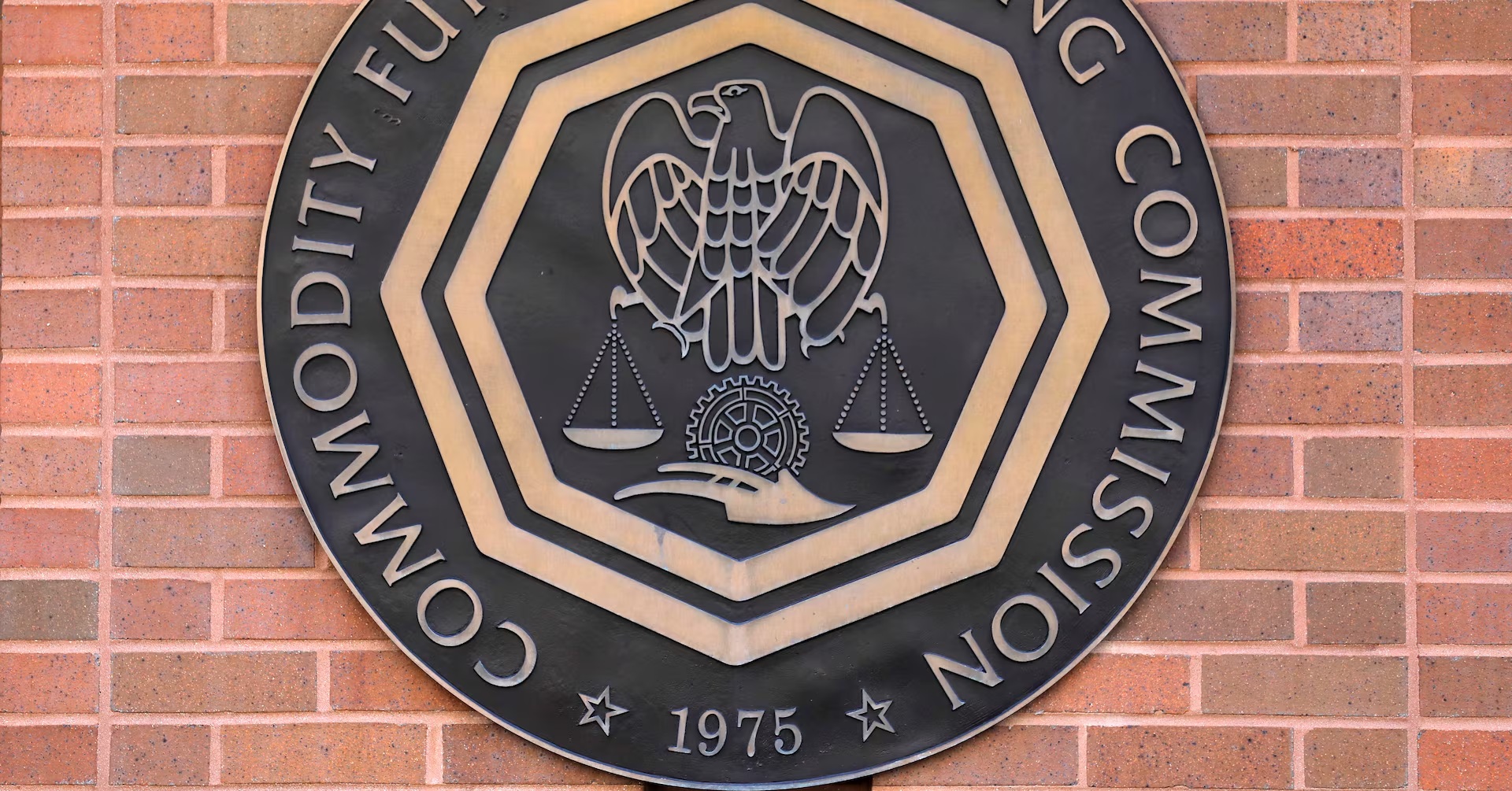
Tether has faced fines; $41M from CFTC in 2021 for misleading reserves claims—only 26% backed at times and audit failures.
youtube.com Some videos call Tether “embarrassing” and suspect Epstein’s indirect hand via Pierce, but no files show direct Epstein investment in Tether.

Pierce visited Epstein’s island post-conviction and counseled him on crypto, fueling speculation, but Tether’s issues predate clear Epstein links. Epstein’s crypto forays were about access and profit through networks like Pierce and Ito, not invention. The files expose elite infighting.