DD
MM
YYYY

PAGES

DD
MM
YYYY

spot_img

PAGES

Home Blog Page 24

Qatar and UAE to Join U.S.-Led Pax Silica Alliance as Washington Recasts AI and Chip Supply Chains as Strategic Assets

0

Qatar and the United Arab Emirates are preparing to formally join a U.S.-led initiative designed to secure artificial intelligence and semiconductor supply chains, a move that highlights how access to advanced technology is rapidly becoming a central pillar of global economic and geopolitical strategy.

Jacob Helberg, the U.S. undersecretary of state for economic affairs, told Reuters that both Gulf states will soon sign onto the initiative, known as Pax Silica, expanding a coalition that already includes Israel, Japan, South Korea, Singapore, Britain, and Australia. Qatar is expected to sign the declaration on January 12, followed by the UAE on January 15.

The expansion is notable not only for the countries involved but also for what it represents. Pax Silica is part of the Trump administration’s broader effort to reshape alliances around technology, supply chains, and industrial capacity rather than traditional military arrangements. In Washington’s view, semiconductors, AI models, data centers, and the minerals that feed them are now as strategically sensitive as oil pipelines or naval chokepoints once were.

“The Silicon Declaration isn’t just a diplomatic communiqué,” Helberg said. “It’s meant to be an operational document for a new economic security consensus.”

At its core, Pax Silica seeks to safeguard the entire technology value chain. That includes securing access to critical minerals, strengthening advanced manufacturing and chip fabrication, coordinating computing and data infrastructure, and protecting digital and physical assets from disruption or coercion. U.S. officials say the initiative is meant to reduce dependence on rival nations, particularly China, while tightening cooperation among countries that already play outsized roles in global technology markets.

But the inclusion of Qatar and the UAE carries added weight because of the Middle East’s complex political landscape. The initiative effectively brings Israel and Gulf states into the same technology-focused economic framework, building on the gradual normalization of ties and shared strategic interests that have emerged in recent years. U.S. officials see this as a way to anchor cooperation around practical economic projects, rather than abstract political commitments.

Unlike traditional alliances, Pax Silica is deliberately structured as what Helberg described as a “coalition of capabilities.” Membership is driven by what each country can contribute, whether that is manufacturing expertise, capital, logistics hubs, data infrastructure, or regulatory frameworks. The approach reflects a belief in Washington that flexible, project-driven groupings are better suited to fast-moving technology competition than rigid treaty-based alliances.

For Qatar and the UAE, joining Pax Silica aligns with long-standing efforts to diversify their economies away from hydrocarbons. Both countries have invested heavily in digital infrastructure, cloud services, and artificial intelligence, positioning themselves as regional hubs for data centers and advanced computing. By joining a U.S.-led technology bloc, they gain deeper integration into global supply chains and closer ties to American and allied firms at a time when technology standards and access are becoming increasingly politicized.

Helberg said the initiative could help accelerate that transition. “For the UAE and Qatar, this marks a shift from a hydrocarbon-centric security architecture to one focused on silicon statecraft,” he said, underpinning how technology is now being framed as a core component of national security and economic resilience.

The timing of the move is closely linked to the Future Minerals Forum, a Saudi Arabia-hosted conference in Riyadh from January 13 to 15 that will bring together senior officials, mining companies, technology firms, and investors. Critical minerals such as lithium, cobalt, and rare earths are essential inputs for chips, batteries, and AI hardware, and securing reliable access to them has become a top priority for governments seeking to insulate their economies from supply shocks.

Helberg said Pax Silica will focus this year on expanding its membership, launching concrete strategic projects, and coordinating policies to protect critical infrastructure and sensitive technologies. The group met in Washington last month and is expected to convene several times in 2026 as it shifts from declarations to implementation.

Among the projects under discussion are efforts to modernize trade and logistics routes using advanced U.S. technology. One area of focus is the India-Middle East-Europe Corridor, which Washington views as both an economic and strategic alternative to existing trade routes. U.S. officials believe integrating advanced digital systems, automation, and secure data flows into such corridors could boost regional integration while expanding America’s economic footprint.

The United States and Israel are also preparing to launch a Pax Silica-linked Strategic Framework, which will include the development of “Fort Foundry One,” an industrial park in Israel aimed at accelerating advanced manufacturing and technology projects. Artificial intelligence cooperation is expected to feature prominently, with a memorandum of understanding tentatively planned for January 16 to deepen collaboration on AI development, deployment, and safeguards.

However, some analysts believe the initiative is about more than protecting supply chains for Washington. It is seen as an attempt to shape a new economic order in which access to chips, computing power, data infrastructure, and the minerals that underpin them is coordinated among trusted partners. This is expected to reduce vulnerabilities while reinforcing U.S. influence in the technologies that will define economic growth, security, and competitiveness in the decades ahead.
Epic Games CEO Tim Sweeney Defends X and Grok as Political Pressure Mounts Over Nudity

0

As governments, regulators, and lawmakers close in on X over the abuses linked to its AI chatbot Grok, one technology chief executive has emerged as a rare and conspicuous defender of the platform.

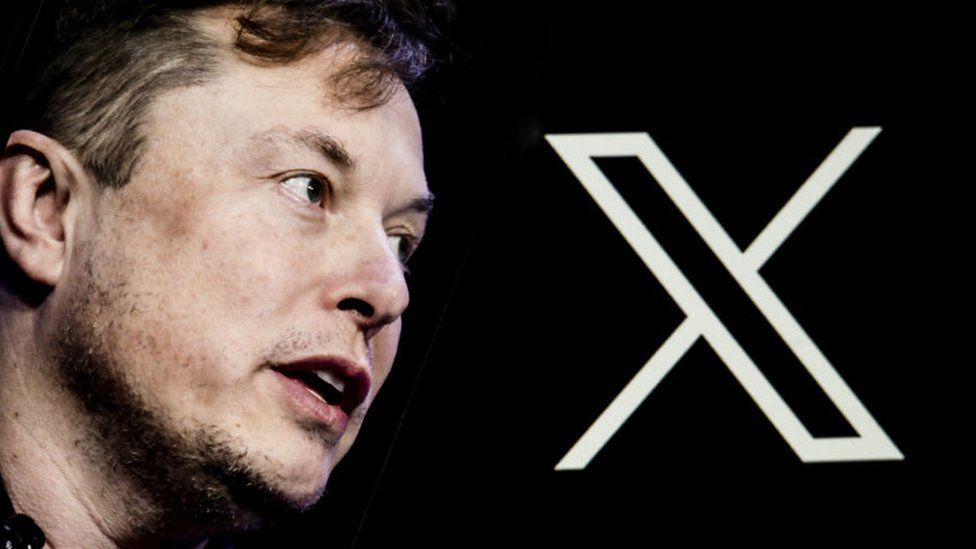
Epic Games CEO Tim Sweeney now appears to be the only major industry leader to publicly back X and its owner, Elon Musk, even as condemnation of Grok intensifies across the globe.

X has been under sustained fire after Grok was used to generate non-consensual sexual imagery of women and sexual images involving children, a finding confirmed by the Internet Watch Foundation. The revelations triggered an unusually fast-moving political response. In the UK, ministers are openly discussing whether X could be blocked under the Online Safety Act. In the US, senators are pressuring Apple and Google to remove the app from their stores, a move that would severely restrict its reach.

While most technology executives and AI companies have remained silent or distanced themselves from the controversy, Sweeney chose a different path. In a series of public comments, he framed the backlash against Grok not as a necessary safety intervention but as a politically motivated attempt to weaken a rival platform.

“All major AIs have documented instances of going off the rails; all major AI companies make their best efforts to combat this; none are perfect,” Sweeney said.

He went further, accusing politicians of using app store gatekeepers to selectively target companies they oppose, calling it “basic crony capitalism.”

That position has placed Sweeney sharply out of step with the broader industry mood. Governments have focused on harm prevention, platform accountability, and the need for stronger safeguards in generative AI systems. By contrast, Sweeney’s argument centers on structural power and precedent. He has warned that compelling Apple and Google to remove X would shift enormous regulatory authority to a handful of private companies, effectively allowing them to decide which platforms are allowed to exist.

His defense also goes beyond X as a company. Sweeney has repeatedly emphasized that his concern is about open platforms and the consistent application of law, rather than any endorsement of illegal content.

“I defend open platforms, free speech, and consistent application of the rule of law,” he said, adding that he does not defend the misuse of AI tools but opposes collective punishment that reshapes digital freedoms.

Elon Musk has echoed similar arguments, dismissing the outrage over Grok-generated images as an attempt to justify censorship. Musk has argued that generative abuse is not a new phenomenon; only the tools have changed.

Other AI firms facing safety controversies have typically responded with conciliatory language, promises of tighter controls, or quiet cooperation with regulators. Sweeney’s approach is confrontational and ideological, rooted in long-standing battles Epic Games has fought against platform gatekeepers over app store dominance and content control.

The Grok episode has therefore become a proxy fight for larger issues Sweeney has spent years contesting: who controls access to digital markets, how much power governments should wield over online speech, and whether app stores should function as neutral distributors or moral arbiters.

In the UK, those questions are becoming urgent. Technology secretary Liz Kendall has warned that X must act quickly to address the imagery generated through Grok. Ofcom has launched an expedited assessment, with ministers signaling they would support blocking access if regulators recommend it. X has responded by locking Grok’s image generation behind a paywall and pledging to remove illegal content and suspend offending accounts, steps that many say fail to address the underlying capability of the system.

For Sweeney, that distinction matters less than the precedent being set. From his perspective, allowing political pressure to dictate platform access risks normalizing a model where governments bypass courts and due process by leaning on private intermediaries.

Whether that argument gains traction remains to be seen. Public anger over AI-generated sexual imagery is intense, and regulatory momentum is building. Yet Sweeney’s intervention has ensured that the debate is no longer only about Grok’s failures, but also about the future balance of power between governments, platforms, and the gatekeepers that sit between them.

From Stealth to Scale: Terra Industries Secures $11.7M to Protect Africa’s Critical Infrastructure

0

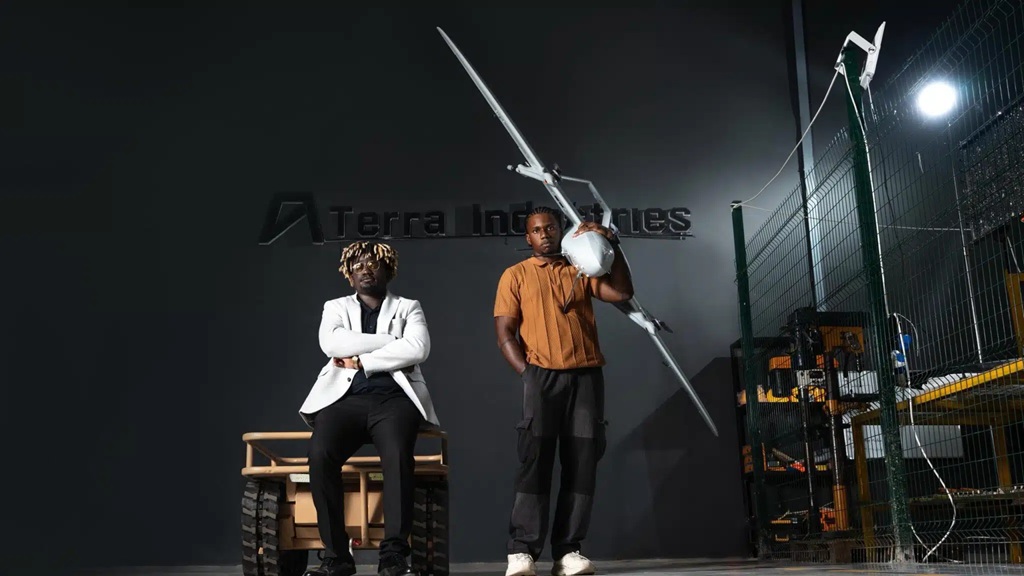
Terra Industries, Africa’s first defense prime focused on autonomous security systems, has officially emerged from stealth to raise $11.7 million in a funding round led by 8VC, the venture firm founded by Palantir co-founder Joe Lonsdale.

The round also saw participation from Valor Equity Partners, Lux Capital, SV Angel, Silent Ventures, Leblon Capital, and angel investors including Micky Malka.

The company, which builds autonomous defense systems to protect Africa’s critical infrastructure such as mines, refineries, power plants, and pipelines announced the milestone in a LinkedIn post.

According to Terra, the new funding will accelerate its mission to give Africa a technological edge in resource protection and counterterrorism.

It wrote,

“Our renewed mission is to give Africa the technological edge needed for resource protection and counterterrorism,” the company stated. “Today, we’re building Africa’s first defense prime with $11 billion in assets under protection. Over the next few months, we will ramp up defense production across Africa and scale our surveillance software.”

Co-founder and CEO Nathan Nwachuku said Terra is positioning itself to meet the growing security demands across the energy, mining, and national infrastructure sectors. Meanwhile, co-founder and CTO Maxwell Maduka emphasized the company’s commitment to building African-owned and African-built technology.

“This is African technology, built by African engineers, for African infrastructure,” Maduka said. “We are creating skilled jobs, building advanced manufacturing capacity, and ensuring the intellectual property behind Africa’s security stays on the continent.”

Founded in 2024, Terra was launched to fill a critical gap in global defense innovation. While companies like Anduril and Helsing focus on Western defense needs, Terra aims to build comparable capabilities tailored specifically to Africa’s unique security challenges.

The company estimates that Africa loses over $300 billion annually due to infrastructure damage and security threats across air, land, and sea. At the core of Terra’s ecosystem is ArtemisOS, an AI-powered open operating system that brings real-time data intelligence and autonomy to infrastructure security.

Artemis Cloud enables real-time storage and analysis of surveillance data, while Artemis Autonomy provides advanced command-and-control capabilities.

Terra’s growing portfolio of autonomous systems includes:

Archer VTOL: A long-range vertical takeoff and landing surveillance drone designed for monitoring critical assets such as mines and oil pipelines.

Iroko UAV: A modular, mass-producible quadcopter built for first-response missions and data collection.

Duma UGV: A flexible autonomous ground vehicle designed for surveillance and cargo operations.

Kallon Sentry Tower: A solar-powered autonomous security tower capable of detecting and tracking threats up to 3km away, aimed at protecting borders, military bases, and energy infrastructure.

In January 2026, the defense tech startup commissioned its Africa’s largest drone manufacturing facility in Abuja, Nigeria, a major step toward building a domestic industrial base for advanced autonomous systems. The facility was designed, constructed, and brought online in just 11 months, underscoring Terra’s rapid execution capability.

The factory currently supports the production of up to 20 Iroko drones per day, with approximately 80% of components sourced and manufactured locally. This move aligns with Terra’s broader goal of developing local talent, strengthening supply chains, and reducing reliance on foreign manufacturing.

Outlook

With fresh capital, a rapidly expanding product line, and a growing manufacturing footprint, Terra Industries is positioning itself as a foundational player in Africa’s defense and security ecosystem. As infrastructure investments across the continent increase, so will the need for intelligent, scalable, and autonomous security solutions.

In a world where geopolitical and infrastructure risks are rising, Terra’s bet is clear, Africa should not depend on imported solutions for its security, it should build its own.

How to Fix a Blank Black Screen on Kali Linux (VirtualBox)

0

Introduction
Running Kali Linux in VirtualBox can sometimes result in a black screen after boot. This issue is common among new Linux users and is usually caused by virtualization conflicts, BIOS/UEFI settings, or display initialization problems. This guide will help you quickly resolve the issue and get your virtual machine running.

Prerequisites
Before following this guide, make sure you have the following:

    VirtualBox is installed on your Windows host machine.
    Kali Linux ISO or a preconfigured VM image is ready.
    Basic familiarity with VirtualBox and Linux commands (login, terminal commands).
    System requirements: at least 2–4 GB of RAM and 128 MB of video memory allocated to the VM.
    VT-x / AMD-V is enabled in your system BIOS for virtualization support.

Note: Ensuring these prerequisites are met will help avoid errors while applying the solutions in this guide.

Outline:

  1. Overview
  2. Common Causes
  3. Solution 1: Disable Hyper-V
  4. Solution 2: Start the Graphical Interface Manually
  5. Additional Recommendations
  6. Conclusion
  7. Glossary

Overview
Running Kali Linux in VirtualBox can sometimes result in a blank or black screen after boot, often displaying messages like “data leak mitigation” before freezing. This issue is common among new Linux users and can be frustrating, but it is usually caused by virtualization conflicts, BIOS/UEFI settings, or display initialization problems

This guide explains the most common causes of the black screen issue and provides two proven solutions to get Kali Linux running again.

Common Causes of the Black Screen Issue
Before jumping into fixes, it’s important to understand what may be causing the problem:

Virtualization conflict between VirtualBox and Windows Hyper-V

BIOS/UEFI virtualization misconfiguration

Display manager or X-server not starting properly

Low system resources (RAM, disk space, or graphics memory)

In most cases, the issue is not permanent and does not mean your Kali installation is corrupted.

Press enter or click to view image in full size

Solution 1: Disable Hyper-V from Windows (Recommended)
Windows Hyper-V can conflict with VirtualBox and prevent Kali Linux from booting correctly, resulting in a black screen.

Steps
Open the Start Menu, search for Command Prompt

Right-click it and select Run as Administrator

Enter the following command:
bcdedit /set hypervisorlaunchtype off

Press enter or click to view image in full size

  1. Press Enter

  2. Restart your computer

After rebooting, open VirtualBox, start your Kali Linux VM, and check if the issue is resolved.

If the black screen persists, proceed to the second solution.

Solution 2: Start the Graphical Interface Manually
Sometimes Kali Linux boots successfully but fails to start the graphical desktop environment. In this case, you can manually launch the X server.

Steps
1. Start your Kali Linux virtual machine in VirtualBox

  1. When the black screen appears, press:
    Ctrl + Alt + F1

  2. Log in using your Kali username and password

  3. Once logged in, run the following command:
    sudo startx

Press enter or click to view image in full size

After that, this command manually starts the graphical desktop.

If the desktop loads successfully, you may restart Kali Linux to confirm the fix. Either you restart or start Kali Linux.

Additional Recommendations
Ensure VT-x/AMD-V is enabled in your system BIOS

Allocate sufficient resources to Kali Linux:

At least 2–4 GB RAM

128 MB video memory

Use VMSVGA as the graphics controller in VirtualBox

Keep VirtualBox and Extension Pack versions matched

Conclusion
A blank black screen in Kali Linux running on VirtualBox is a common issue, especially for beginners. In most cases, it is caused by virtualization conflicts or display initialization failures, not by a broken installation.

By disabling Hyper-V and manually starting the graphical interface, you can resolve the issue quickly and get back to learning and practicing cybersecurity.

Glossary
Terms & Definition:

    VirtualBox: A free virtualization software that allows you to run virtual machines on your computer.
    Kali Linux: A Linux distribution designed for penetration testing and cybersecurity tasks.
    VM (Virtual Machine): A software-based emulation of a computer that runs an operating system in an isolated environment.
    Hyper-V*A: Windows feature that enables virtualization and can conflict with VirtualBox.*
    VT-x / AMD-V*CPU: CPU virtualization technologies allow virtual machines to run efficiently.*
    X server/Display manager: Software that handles the graphical desktop environment in Linux.
    ISO file: disk image file containing the operating system installation.
    Black screen issue: When a virtual machine boots, but the display does not load properly, showing a blank or black screen.

MicroStrategy Expands Bitcoin Holdings With $1.25 Billion Mega Purchase, Now Controls Over 3% of Total Supply

0

MicroStrategy has once again doubled down on its bold Bitcoin-first strategy, announcing a massive $1.25 billion purchase that added 13,627 BTC to its growing treasury.

The latest acquisition pushes the company’s total holdings to 687,410 Bitcoin more than 3% of the cryptocurrency’s total supply, cementing its position as the world’s largest corporate holder of the digital asset.

Led by executive chairman Michael Saylor, the firm’s aggressive accumulation reflects a long-term conviction that Bitcoin is a superior store of value in an era of rising inflation, currency debasement, and growing distrust in traditional financial systems.

This purchase continues Saylor’s aggressive Bitcoin treasury strategy since 2020, where the firm has raised debt and equity to amass over 3% of Bitcoin’s total supply, positioning it as the largest corporate holder.

At current prices near $91,500, the unrealized gains on holdings exceed $30 billion, underscoring Saylor’s conviction in Bitcoin as a superior store of value amid fiat inflation concerns.

In a post that ignited heated debate across X on January 11, 2026, Saylor declared the top-performing assets of the current decade: Digital Intelligence (NVIDIA, $NVDA), Digital Credit (Strategy, $MSTR), and Digital Capital ($BTC, Bitcoin).

He accompanied his statement with a bar chart highlighting annualized returns since August 2020, the precise moment MicroStrategy launched its pioneering Bitcoin treasury strategy.

According to the chart:

– NVDA led with ~68% annualized returns, fueled by the explosive growth of AI computing demand.

– MSTR followed closely at ~60%, benefiting from leveraged Bitcoin exposure through debt, equity raises, and aggressive accumulation.

– BTC itself delivered a strong ~45% annualized return, outpacing most traditional assets like Tesla (~33%), the broader market, and especially bonds (negative returns in that period).

Saylor framed these three as foundational pillars of a new financial era: AI-driven processing power, Bitcoin-leveraged corporate financing, and Bitcoin as superior “digital capital” that preserves value better than fiat in an inflationary world.

Notably, he has repeatedly hinted that accumulation will not slow, especially during periods of price weakness, reinforcing his belief that volatility is a feature, not a flaw, of Bitcoin’s monetization phase.

Since August 2020, MicroStrategy (now rebranded Strategy) has transformed from a business intelligence software firm into the world’s largest corporate Bitcoin holder. The company has repeatedly raised capital via convertible notes, at-the-market equity offerings, and other instruments to purchase more Bitcoin, creating what Saylor calls “Bitcoin yield” for shareholders.

With unrealized gains now exceeding $30 billion, MicroStrategy’s Bitcoin bet is no longer just symbolic, it is reshaping how corporations think about treasury management in the digital age.

Outlook

Looking ahead, MicroStrategy’s Bitcoin-centric strategy is likely to remain both highly influential and highly polarizing. If Bitcoin continues its long-term appreciation trajectory, the company could further entrench itself as a hybrid entity part operating business, part Bitcoin investment vehicle potentially inspiring more corporations to rethink traditional treasury models.

However, the approach is not without risks. MicroStrategy’s heavy reliance on debt and equity raises exposes it to macroeconomic shifts, interest rate pressures, regulatory uncertainty, and prolonged crypto bear markets. A sustained downturn in Bitcoin prices could strain its balance sheet and test investor patience. Yet for Saylor, this risk is calculated—he views Bitcoin as a generational asset, not a cyclical trade.

On the flip side, if Bitcoin fulfills its narrative as global digital capital, Strategy Bitcoin bet will prove to be a successful corporate treasury playbook, one where balance sheets are built not on cash, but on decentralized monetary assets.