DD
MM
YYYY

PAGES

DD
MM
YYYY

spot_img

PAGES

Home Blog Page 2415

EL Salvador Purchases More Bitcoin, Against IMF Order For $1.4 Billion Deal

0

El Salvador has announced the purchase of another bitcoin, which takes the total in the country’s strategic reserve to above 6,102 BTC holdings.

This was disclosed by the country’s National Bitcoin Office posted on X (formerly Twitter).

Part of the post reads,

“El Salvador just added another 1 BTC to our strategic reserve! Can’t stop, won’t stop stacking.

Total SBR Holdings:  6,102.18 BTC

Total added today: +1 BTC

Minimum total to add tomorrow: +1 BTC”.

Reacting to the post, El Salvador’s President Nayib Bukele noted that despite global skepticism, political pressure, and the abandonment of many so-called “bitcoiners,” El Salvador remains steadfast in its commitment to Bitcoin, without plans to stop acquiring the crypto asset.

Part of his post reads,

This all stops in April.” “This all stops in June.” “This all stops in December.” No, it’s not stopping. If it didn’t stop when the world ostracized us and most “bitcoiners” abandoned us, it won’t stop now, and it won’t stop in the future. Proof of work > proof of whining”.

For President Bukele and his government, the continuous purchase of Bitcoin is not just an experiment, but a revolution. Their stance is clear, proof of work prevails over proof of whining.

El Salvador Goes Against IMF Order of Bitcoin Acquisition

El Salvador purchase of more Bitcoin to its strategic reserves, comes against the International Monetary Fund (IMF) requests under its $1.4 billion deal with the Latin American country, aiming to restrict BTC purchases by the public sector.

It is understood that the IMF had added already contained strict limitations on government Bitcoin activities, while allowing retention of existing holdings.

In line with this, Nigel Clarke, deputy managing director and acting chair of the IMF board, wrote in a statement.

“Going forward, program commitments will confine government engagement in Bitcoin-related economic activities, as well as government transactions in and purchases of Bitcoin”.

The agreement, detailed in a March 2025 IMF Country report published, imposes three key crypto-specific requirements.

First, a “continuous quantitative performance criteria” prohibits any new Bitcoin acquisitions by public sector entities, maintaining a “ceiling of o” throughout the program period.

Secondly, the new arrangements also mandates liquidation of the Fidebitcoin trust fund by July 2025 and termination of government participation in the Chivo wallet system.

The third key requirement is the publication of all government Bitcoin wallet addresses, segregation of Chivo user funds, and audited financial statements for crypto-related entities.

In his own stance, Méndez Bertolo, the fund’s executive director for El Salvador said on Feb 26 that the IMF extended fund facility for El Salvador aims to provide several improvements in governance, transparency, and resilience to boost confidence and the country’s growth potential.

He pointed out that the funding deal will minimize Bitcoin-related risks saying,

“The authorities enacted amendments to the Bitcoin Law that clarify the legal nature of Bitcoin and remove from the law the essential features of legal tender. Acceptance of Bitcoin will be voluntary, tax payments will be made in US dollars, and the role of the public sector in the Bitcoin project will be confined.” he added

The director also mentioned that the IMF program is expected to attract substantial additional financial support from international organizations such as the World Bank, the Inter-American Development Bank, and other regional development banks.

Impact of El Salvador’s Bitcoin Adoption

In September 2021, with the entry into force of the Bitcoin Law, El Salvador adopted Bitcoin as currency with legal tender, alongside the US dollar, and started developing the infrastructure to facilitate its use by Salvadorans.

The Bitcoin project was intended to improve financial system access for unbanked individuals and businesses operating primarily in the informal economy, as well to expedite transactions and make remittances easier, faster, and cheaper. In an effort to launch the project, the government provided Salvadorans an initial allowance equivalent to US$30 in Bitcoin via the public e-wallet Chivo.

Before Bitcoin adoption, over 70% of El Salvador’s population lacked access to traditional banking. The introduction of Chivo Wallet, the government-backed Bitcoin app, provided an opportunity for Salvadorans to store, send, and receive money digitally, fostering financial participation.

Notably, Bitcoin adoption has turned El Salvador into a hub for crypto enthusiasts and investors, boosting tourism by over 30% in 2022. The government has also attracted crypto-related businesses and foreign investments, positioning the country as a leader in blockchain technology.

The Future of Bitcoin in El Salvador

El Salvador continues to double down on its Bitcoin strategy, with plans for a Bitcoin City powered by volcano energy and the issuance of Bitcoin-backed bonds. However, the long-term success depends on market recovery, improved infrastructure, and wider adoption among citizens and businesses.

While the experiment has had bold ambitions, its real economic impact remains uncertain, making El Salvador a case study for future Bitcoin-based economies.


Dota 2, CS2, and Fifa: Which Disciplines Are Popular in African Esports

0

Esports in Africa are exploding. Competitive gaming attracted only a select group of people around ten years ago. The gaming market now has multiple millions of dollars and receives worldwide interest. The betting market for esports continues to expand quickly and focuses primarily on Dota 2 CS2 and FIFA games. Local tournament events combined with growing internet access enable African competitors to demonstrate their skills at the international level. The future of African gaming depends on these three esports disciplines that dominate the scene.

The Rise of Esports in Africa

An African esports revolution works because of three fundamental elements: internet access paired with dedicated gamers and an expanding betting market infrastructure. Active internet user numbers in the continent surpass 570 million and continue to grow. Competitive gaming has increased the number of fans who place a bet on major tournaments to generate excitement in esports competitions. The gaming community expands through additional players, creating more tournaments that create better sponsorship opportunities and increased betting pool values.

South Africa leads the pack, while Nigeria, Kenya, and Egypt trail closely behind. Local African leagues have become more attractive to international scouts because they offer prize pools totaling tens of thousands of dollars. Investors are paying attention. Red Bull and MTN sponsor African tournaments, while international betting platforms provide odds for African matches. The African esports sector exceeds mere growth to thrive at an impressive level.

Dota 2: A Niche but Growing Scene

Dota 2 maintains a strong presence in Africa, although it does not rank as the largest esports competition in the region. The casual gaming community supports CS2 and FIFA, but Dota 2 requires advanced skill and strategic gameplay. The lower number of participants leads to outstanding dedication from each involved gamer. What factors lead to Dota 2 increasing popularity across African territories? Key factors:

  • Players in the Dota 2 competition can access substantial monetary rewards through international prize pools. Teams from Africa participate in The International because the event offers prize pools that exceed $40 million.
  • New opportunities arise from local tournament events that recently began in South Africa and Egypt.
  • Strategic bettors choose Dota 2 due to its complicated gameplay, which enables them to find lucrative betting opportunities through hero selection and in-game event markets.

Despite high internet costs and small player numbers, Dota 2 will continue to grow successfully in Africa. New funds will produce African teams that can compete worldwide in the near future.

CS2’s Competitive Popularity in Africa

Counter-Strike 2 stands as the core competitive gaming sector in African esports. CS2 provides intense tactical action that meets every requirement for an exciting esports game. Large CS2 tournaments create a strong demand for betting, which makes people around the world watch these events. South Africa keeps its position as the leading esports market in this region as Egypt, Nigeria, and Kenya enter the scene for the first time. The game spread widely throughout Africa because of its basic computer needs.

Major African CS2 Tournaments

The CS2 gaming environment in Africa develops through grassroots tournaments and elite competitions. The Africa Cyber Gaming League (ACGL) is a vital organizer that delivers national and regional competitions and distributes cash awards to players. Mettlestate operates from South Africa to organize competitive leagues that draw exceptional talent and betting interest.

Comic Con Africa presents its most significant event through its CS2 tournament, which hosts intense competitive matches between professional teams. The gaming events function as entertainment centers and attract large crowds of fans. Several African soccer clubs dream about competing in major international tournaments, but they now use their local competitions as opportunities to establish themselves globally. The rising number of streaming viewers combined with sponsorships signals that Counter-Strike 2 in Africa is about to experience significant growth.

Notable African CS2 Teams

Africa is producing serious CS2 contenders. Bravado Gaming, based in South Africa, is an international gaming legend after achieving success in qualification tournaments. The team has demonstrated that African teams possess world-class abilities by overcoming international competitors. ATK represents a new rising team that is participating in North American leagues, allowing them to develop their abilities against elite competition.

Egypt and Nigeria demonstrate strong team development, while their international success remains in the making. South African esports organization Sinister5 advances the African gaming scene by delivering skilled teams that excel through disciplined gameplay. The betting industry closely monitors these teams because unexpected victories from underdog teams are becoming increasingly common. CS2 in Africa continues to develop beyond growth into an evolution that will draw worldwide attention shortly.

FIFA’s Unmatched Appeal

The game provides a quick experience that matches the preferred sport of football while remaining the primary enthusiasm of the African continent. The necessity of high-end PC systems exists only in Dota 2 and CS2, while FIFA operates without this requirement. The game can be played with only three essential components: console, controller, and internet connection. The ease of access to FIFA tournaments has triggered their explosive growth throughout Africa, starting from neighborhood gaming centers and moving up to international qualifier stages.

African players participate in top-tier international competitions, including the FIFA Nations Cup and the ePremier League qualifiers. The gaming world sees South Africa, Nigeria, and Egypt taking the lead while Ghana and Kenya deliver surprising talents. The unpredictable nature of FIFA betting makes it a massive opportunity, since a straightforward error or scoring event can transform the entire competition. Esports in Africa has developed into a social transformation through FIFA.

The Future of African Esports

African esports serves as a major force that creates new opportunities for big tournaments while attracting big business sponsors and worldwide inclusion. Businesses within the betting industry are expanding through their services for local and international sports betting markets. FIFA CS2 and Dota 2 competitions have turned Africa from an observer into a genuine competitor through their successful introduction of top-tier gaming talent.

CMA Clears Microsoft-OpenAI Partnership, Says It Doesn’t Meet Investigation Criteria

0

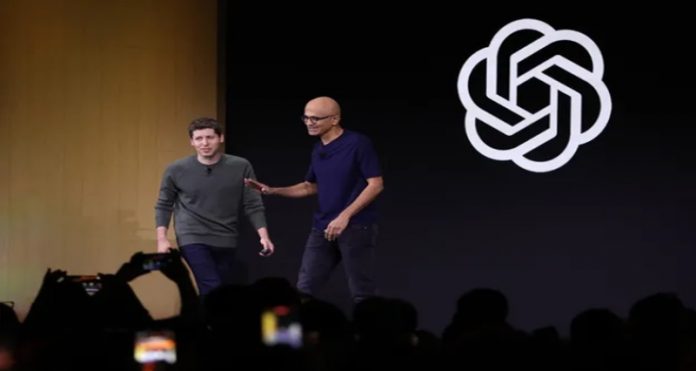
In a significant decision on Wednesday, the United Kingdom’s Competition and Markets Authority (CMA) concluded that Microsoft’s partnership with OpenAI does not meet the criteria for investigation under the U.K.’s Enterprise Act 2002, the law governing anticompetitive practices.

The announcement effectively steers the tech giant clear of potential regulatory hurdles as it deepens its involvement in the booming artificial intelligence (AI) sector.

The CMA, which began its probe in December 2023, had initially raised concerns about Microsoft’s role as a dominant investor in OpenAI. Since 2019, Microsoft has infused nearly $14 billion into the AI startup, solidifying a deep collaborative relationship. The tech behemoth not only integrates OpenAI’s technologies into its Azure OpenAI Service but also works closely with the startup to develop products such as the Copilot chatbot and GitHub Copilot AI coding assistant.

Despite these ties, the CMA found that while Microsoft exerts a “high level of material influence” over OpenAI’s commercial policy, it does not control it.

“Overall, taking into account all of the available evidence […] the CMA does not believe that Microsoft currently controls OpenAI’s commercial policy,” the regulatory body stated. “In other words, there is no change of control giving rise to a relevant merger situation.”

At the heart of the investigation were worries that Microsoft’s growing influence over OpenAI could lead to a “substantial lessening” of competition in the U.K. The CMA feared that Microsoft might leverage its position to restrict competitors’ access to OpenAI’s leading AI models, especially in markets where foundational models play a critical role. The concern extended to the market for accelerated computing, with OpenAI positioned as a significant potential customer.

The situation became more complex following Microsoft’s role in securing OpenAI CEO Sam Altman’s re-appointment in November 2023, a move seen as indicative of its sway over the startup’s strategic direction. The CMA’s scrutiny aimed to determine whether these actions crossed the line into undue control that could distort market dynamics.

Crucially, recent developments have softened Microsoft’s grip on OpenAI. In January, Microsoft announced a renegotiation of its cloud computing agreement with OpenAI, adopting a model where it maintains a “first right of refusal” for specific AI workloads. Additionally, Microsoft granted waivers enabling OpenAI to build extra computing capacity, including a substantial $500 billion data center deal with investor SoftBank.

These adjustments were seen as reducing Microsoft’s potential to monopolize access to OpenAI’s technologies. The deal addressed regulatory concerns about competition and influence by allowing OpenAI to diversify its infrastructure options. This shift was likely pivotal in the CMA’s decision to forgo a formal investigation.

What This Means for the Market

The CMA’s decision not to investigate removes a potential obstacle for Microsoft as it continues to position itself at the forefront of generative AI development. The partnership with OpenAI has already boosted Microsoft’s competitiveness against rivals like Google and Amazon in the AI race. The regulatory green light in the U.K. could accelerate Microsoft’s growth in AI, enabling it to further integrate OpenAI’s models into its cloud services and software products without fear of antitrust backlash.

For OpenAI, this development offers a degree of operational independence and the freedom to pursue new partnerships without regulatory impediments. The decision underscores the broader industry dynamics, where tech giants are increasingly scrutinized for potential monopolistic behavior, particularly in fast-evolving sectors like AI.

While the CMA’s decision highlights that Microsoft’s influence over OpenAI has not crossed into outright control, it also sets a precedent for how regulatory bodies might assess influence in technology partnerships moving forward.

Goldman Sachs has Filed for Token Share Class with the SEC

0

Goldman Sachs has filed with the SEC to introduce a “Token Share Class” for one of its money market funds, specifically the Goldman Sachs Financial Square Treasury Solutions Fund. This move aligns with the firm’s ongoing exploration of blockchain technology and tokenization, though the details suggest a nuanced approach rather than a fully on-chain implementation. The Goldman Sachs Financial Square Treasury Solutions Fund is a money market fund designed to maintain a stable net asset value (NAV) of $1.00 per share, investing in high-quality, short-term Treasury securities. The filing introduces a new “Token Share Class” for this fund.

Contrary to initial assumptions, the shares themselves are not directly issued or recorded on a blockchain. Instead, the prospectus states that “Token Shares are expected to be purchased and held primarily through intermediaries that intend to use blockchain technology to maintain a record or a mirror record of share ownership for their customers.” This implies a hybrid model where intermediaries leverage blockchain for custody or tracking, while the fund’s core operations remain off-chain.

The Token Share Class has a minimum initial investment of $10 million, targeting institutional investors. Fees and ticker symbols are still to be announced, with an effective date listed as May 5, 2025, pending SEC approval. This aligns with Goldman Sachs’ broader push into tokenization, aiming to enhance efficiency, transparency, or settlement processes for institutional clients, though it stops short of fully tokenizing the fund on a public or private blockchain.

Goldman Sachs has been active in blockchain and digital assets for years:
Prior Tokenization Efforts: In 2024, Mathew McDermott, Goldman’s global head of digital assets, announced plans for three tokenization projects by year-end, including a U.S.-focused fund complex initiative. The Token Share Class could be an evolution of this, following Goldman’s work with the European Investment Bank (2022 bond issuance) and Hong Kong Monetary Authority (2023 green bond) on its Goldman Sachs Digital Asset Platform (GS DAP).

Unlike BlackRock’s BUIDL (a tokenized Treasury fund on Ethereum targeting retail and crypto natives), Goldman emphasizes private, permissioned blockchains for institutional clients, citing regulatory compliance and control. This filing reflects that cautious, intermediary-driven approach.

If intermediaries adopt blockchain effectively, it could streamline ownership tracking and reduce settlement times, potentially influencing money market fund operations broadly. Still, the $10 million entry point limits immediate retail impact. With recession odds at 39% for 2025 (per your prior question), tokenized financial products could offer stability or liquidity options for institutions, though this fund’s scale and scope are too narrow to shift macroeconomic trends.

Tariff Synergy: Amid Trump’s tariffs (25% on Canada/Mexico, 10% on China as of March 2025), a tokenized money market fund might appeal to investors seeking safe-haven assets amid trade disruptions, though its Treasury focus already aligns with such strategies. While the filing signals Goldman’s commitment to blockchain, it’s not a revolutionary leap. The shares aren’t natively tokenized on a blockchain like Ethereum, distinguishing this from fully decentralized offerings (e.g., BlackRock’s BUIDL, which hit $500 million in 2024).

Instead, it’s a pragmatic step—using blockchain indirectly via intermediaries—possibly to test infrastructure or meet client demand without regulatory overreach. Skeptics might argue this dilutes the “blockchain narrative,” as it lacks the transparency or immutability of public ledgers, while optimists see it as a bridge to wider adoption.

Goldman Sachs’ filing for a Token Share Class in its Treasury Solutions Fund, effective May 5, 2025, marks a calculated foray into blockchain-adjacent innovation. It’s not a direct on-chain tokenization but a hybrid model leveraging intermediaries, fitting Goldman’s institutional, compliance-focused strategy.

Impacts on markets and the economy will likely be incremental—enhancing operational efficiency rather than driving a crypto boom or averting recession risks tied to tariffs. Tomorrow’s White House Crypto Summit (March 7) might clarify how these fits into Trump’s Bitcoin reserve vision, but for now, it’s a measured step, not a game-changer.

Tether USDT Operations is Not Explicitly Prohibited Under MiCA Rule in Europe Says ESMA

0

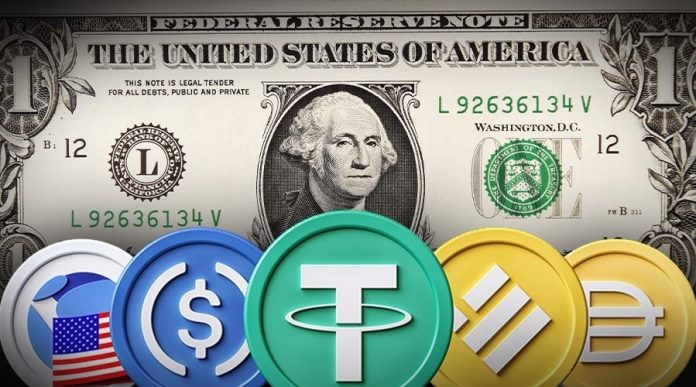
The European Securities and Markets Authority (ESMA) has clarified that custody and transfers of Tether’s (USDT) are “not explicitly prohibited” under the Markets in Crypto-Assets Regulation (MiCA), the EU’s framework for regulating crypto-assets. This statement came on March 3, 2025, amid ongoing discussions about stablecoin compliance in Europe. While MiCA, fully effective as of December 30, 2024, sets strict rules for stablecoin issuers, ESMA noted that providing custody and transfer services for non-MiCA-compliant stablecoins like USDT doesn’t violate the regulation outrightly.

The MiCA is the European Union’s comprehensive framework for regulating crypto assets, finalized in June 2023 and fully applicable as of December 30, 2024. It aims to protect consumers, ensure financial stability, and foster innovation while bringing crypto under a unified EU regulatory umbrella. MiCA compliance details vary depending on the type of crypto-asset or service, with specific rules for stablecoins, crypto-asset service providers (CASPs), and issuers

However, there’s a nuance. ESMA encourages crypto-asset service providers (CASPs) to “prioritize restricting services that facilitate the acquisition” of such non-compliant stablecoins, referencing guidance from January 17, 2025. This means while holding or moving USDT is allowed, CASPs are urged to limit activities that promote buying it—like trading pairs—until March 31, 2025, after which stricter enforcement may kick in. For example, Binance plans to delist nine non-compliant stablecoins, including USDT, for trading in the European Economic Area (EEA) by March 31 but will still support deposits and withdrawals.

This reflects a transitional phase in MiCA’s rollout. Stablecoins must meet specific reserve, transparency, and governance standards to be fully compliant, and Tether has not yet been approved under these rules (unlike 10 other issuers). ESMA’s stance aims to balance market stability with user access while regulators and firms adapt.

E-Money Tokens (EMTs): Stablecoins tied to a single fiat currency (e.g., USD or EUR), functioning like electronic money. Require full backing by fiat reserves. Other Crypto-Assets: Includes utility tokens, cryptocurrencies like Bitcoin, and non-stablecoin tokens, with lighter requirements focused on transparency. Issuers of ARTs or EMTs must be authorized by an EU national competent authority (e.g., France’s AMF or Germany’s BaFin) and operate as a legal entity in the EU.

ARTs need a 1:1 reserve of assets, regularly audited, held in custody by a third party. EMTs must be fully backed by fiat, with funds segregated and redeemable at par value on demand. Issuers must publish a detailed white paper (approved by regulators for ARTs/EMTs) outlining risks, governance, and reserve details. Minimum own funds (e.g., €350,000 for significant ARTs/EMTs) to ensure solvency.

Tether operates out of the British Virgin Islands, not the EU. MiCA demands audited, segregated reserves; Tether’s attestations have historically been less rigorous than required. Tether hasn’t sought or received EU approval as an EMT issuer. ESMA’s March 3, 2025, clarification reflects this: custody and transfers of USDT aren’t banned, but CASPs are nudged to restrict acquisition services (e.g., trading pairs) until March 31, 2025. Post-deadline, non-compliant stablecoins could face full exclusion from EEA markets unless they align with MiCA.

The ambiguity—custody and transfers are fine, but acquisition should be curbed—has sparked debate, with some in the crypto community seeing it as a temporary reprieve for USDT, while others note the looming deadline could still force changes if Tether doesn’t align with MiCA. Adapting to reserve rules and setting up EU operations is costly and complex. Only 10 stablecoins (e.g., Circle’s EURC) are MiCA-approved so far.