DD
MM
YYYY

PAGES

DD
MM
YYYY

spot_img

PAGES

Home Blog Page 2417

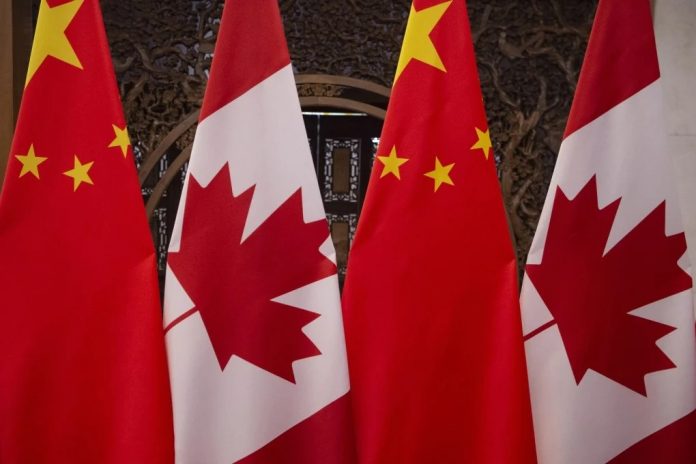
China Imposes 100% Tariffs on Selected Canadian Imports

0

China announced the imposition of 100% tariffs on select Canadian imports, including rapeseed oil, oil cakes, and peas, effective March 20, 2025. Additionally, a 25% tariff was imposed on Canadian pork and aquatic products. This move was in retaliation to Canada’s earlier imposition of a 100% surtax on Chinese-made electric vehicles and a 25% tariff on Chinese steel and aluminum products in October 2024. China’s actions are part of escalating global trade tensions, exacerbated by similar tariff measures from the United States and other Western countries, aimed at countering what they describe as unfair trade practices by China, such as state subsidies and overcapacity.

These tariffs, enacted in retaliation to Canada’s earlier duties on Chinese electric vehicles, steel, and aluminum, target key Canadian export sectors, particularly agriculture and food products, with a total trade value exceeding $2.6 billion annually. Below is an analysis of the potential economic consequences, based on available information and broader economic principles. Canada’s agricultural exports to China, including canola, were valued at around $3.7 billion in 2023, with China being a critical market for products like canola, where over half of Canada’s exports are directed.

The exclusion of canola from the current tariff list may mitigate some damage, possibly as a strategic move by China to keep trade negotiations open, but the ongoing anti-dumping investigation into Canadian canola imports signals potential future risks. A severe contraction in this market could lead to a GDP reduction of 0.5% to 1%, with potential job losses ranging from 50,000 to 100,000 in agriculture and related manufacturing sectors, according to speculative analyses.

The broader economic implications extend beyond agriculture. Canada’s economy is heavily reliant on exports, with trade accounting for 67% of its GDP, and China being its second-largest trading partner, with $47 billion in goods exported in 2024. The tariff-induced disruption of $14.2 billion in annual trade with China, as suggested by some estimates, could exacerbate inflationary pressures by increasing the cost of imports and reducing export competitiveness. This is particularly concerning given the concurrent U.S. tariffs on Canadian goods, implemented under President Trump, which impose a 25% duty on most imports and a 10% duty on energy resources.

These U.S. tariffs alone could cost Canadian households approximately $1,000 annually in higher prices, amplifying the economic strain from China’s actions. The combined effect of these trade barriers could push Canada toward stagflation, characterized by stagnant economic growth and rising inflation, especially if businesses pass on higher costs to consumers.
The Canadian government has responded proactively, committing over C$6 billion to mitigate the impact of U.S. tariffs and explore new markets, which may also help cushion the blow from China’s tariffs.

However, the effectiveness of these measures remains uncertain, as finding alternative markets for specialized agricultural products like rapeseed oil and peas is challenging in the short term, given China’s dominant role as a buyer. Moreover, retaliatory tariffs from Canada, such as the immediate 25% duties on $30 billion of U.S. goods and planned tariffs on an additional $125 billion, could further complicate trade dynamics, potentially escalating costs and disrupting supply chains across North America. This tit-for-tat escalation risks long-term damage to Canada’s export-reliant economy, particularly in sectors like automotive and manufacturing, which are highly integrated with the U.S. and vulnerable to trade disruptions.

It’s critical to consider the broader context of global trade tensions. China’s tariffs are not only a response to Canada but also a signal within the larger U.S.-led trade war, where Canada’s alignment with American policies, such as tariffs on Chinese electric vehicles, has drawn Beijing’s ire. Some analysts interpret China’s actions as a warning shot, leveraging its economic clout to pressure Canada while managing multiple trade disputes with the U.S. and the European Union.

This strategic signaling suggests that China may be holding back on more severe measures, such as including canola in the tariff list, to maintain leverage in future negotiations. However, the ongoing canola investigation could serve as a latent threat, potentially devastating an industry already reeling from past trade disputes with China.

The resilience of Canada’s economy will depend on several factors, including its ability to diversify export markets, the outcome of trade negotiations, and the stability of its financial system. While some speculate about severe outcomes, such as Canada facing bankruptcy, these claims are exaggerated. Canada’s diversified economy, with a strong services sector and significant trade with the U.S., provides a buffer against such extreme scenarios. Nonetheless, the combined pressure from China’s and the U.S.’s tariffs could strain economic growth, increase unemployment, and reduce investor confidence, particularly if the Canadian dollar weakens further, raising the cost of imports and fueling inflation.

China’s tariffs on select Canadian imports are likely to cause significant economic disruption, particularly in agriculture, with ripple effects on GDP, employment, and consumer prices. When combined with U.S. tariffs, the impact could be more severe, potentially pushing Canada into a period of economic stagnation and inflation. However, Canada’s proactive fiscal measures and strategic trade policies may mitigate some of the damage, though the long-term outlook depends on de-escalating trade tensions and diversifying export dependencies.

Staking Crypto is the Low-Risk, High-Return Crypto Investment! Why Are European and American Institutions Increasing Their Staking?

0

Currently, the cryptocurrency market feels like it’s stuck in a sluggish limbo. Prices wobble, trading volumes stutter and investors are left wondering how to get value out of their digital assets in a more unpredictable crypto world. But amidst all this uncertainty, a quiet revolution is happening. European and American institutions like banks, hedge funds, and even pension schemes are doubling down on staking crypto, a strategy that’s proving to be low-risk, high-return. Why? Because crypto staking rewards offer a steady stream of passive income, turning idle assets into profit machines without the rollercoaster of active trading. Crypto staking platforms like UNITED STAKING are leading the charge and catching the attention of institutional players and everyday investors alike. Let’s dive into why staking crypto is the preferred move and how UNITED STAKING is driving this trend.

Maximize Your Earnings with UNITED STAKING

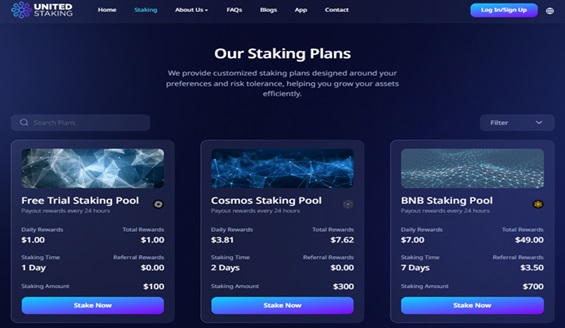
The figures below show the power of crypto staking rewards—daily payouts that compound over time plus referral bonuses that add to your initial amount. A $100 trial earns you a dollar a day, and a $200,000 Polkadot stake can earn you over $800,000. Add the 5% referral commission and you have a system that rewards both participation and promotion.

Staking Plan Investment Duration Daily Earnings Referral Rewards Total Earnings
Stake Free Trial $100 1 day $1.00 $0.00 $1.00
Stake Cosmos $300 2 days $3.81 $0.00 $7.62
Stake BNB $700 7 days $7.00 $3.50 $49.00
Stake Sui $2,000 10 days $24.00 $14.00 $240.00
Stake Ethereum $100,000 58 days $2,700.00 $2,500.00 $156,600.00
Stake Polkadot $200,000 120 days $6,740.00 $8,000.00 $808,800.00

Download the app (available on iOS and Android) and start growing your wealth today.

UNITED STAKING: Simplifying Wealth Generation

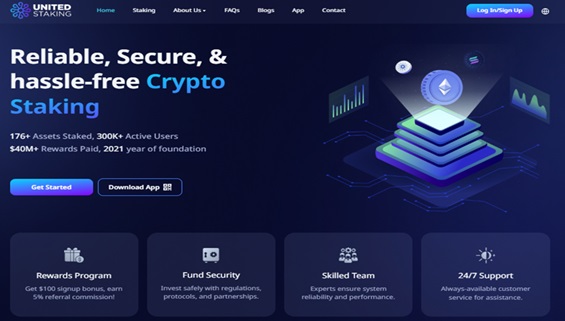
Imagine a platform that takes the complexity out of crypto investing and gives you a simple, secure way to grow your assets. That’s UNITED STAKING in a nutshell. Launched in 2021, this global staking platform now has over 300,000 active users, supports 176+ assets, and has paid out over $40 million in rewards. It’s professionally designed for everyone—from beginners into staking crypto to institutions managing multi-million dollar portfolios.

UNITED STAKING has a seamless sign-up process, daily profit payouts, and top-tier security all wrapped in a user-friendly interface. Whether you’re in London, New York, or one of the 125+ countries it serves, this platform promises a hassle-free way to earn crypto staking rewards. So, what makes it stand out among the best crypto staking platforms? Let’s break it down.

UNITED STAKING’s Standout Features: Security, Flexibility and Lucrative Perks

These are the features that have institutions across Europe and America flocking to UNITED STAKING. In a world where volatility reigns, the platform’s combination of reliability and rewards is a beacon for those who want stability without sacrificing growth. Here’s what makes it stand out:

Easy Start: All you need is just an email, username, password, and a referral code if you have one. Within minutes you’re staking and earning. No complicated steps, no tech wizardry required.

Quick Staking: With one click on “Stake Now” UNITED STAKING does the work for you. Perfect for those who want to get into staking crypto without getting bogged down in blockchain jargon or node management.

Generous Incentives: New users get a $100 sign-up bonus, the affiliate program gives a 5% commission on every referral order, and the Million Bounty Plan rewards community builders with bonuses from $1 to $1,000 for promoting the platform on social media.

Daily Profit Claims: Unlike platforms that make you wait weeks or months; UNITED STAKING pays out crypto staking rewards every 24 hours. Your earnings are deposited into your account and you can withdraw or re-invest.

Security: The platform uses TLS encryption and 2FA to lock down your funds and data so that only you have access.

Flexible Investment Options: From Bitcoin to Dogecoin, UNITED STAKING supports a wide range of assets. You can comfortably tailor your staking portfolio to your risk tolerance—whether you’re going for the $100 trial or a $300,000 Uniswap stake.

Why Institutions Are Staking More

The 2025 crypto market is sluggish and institutions are rethinking their approach. Trading is a gamble when prices stagnate, holding assets without action feels like watching paint dry. But staking crypto gives them a way to put those idle coins to work. For institutions, it’s about securing consistent returns and supporting blockchain networks they believe in. UNITED STAKING intensifies this with low entry points and high reward potential, making it one of the best crypto staking platforms for corporate giants and individual enthusiasts.

But it’s not just about the money. Staking is part of a broader shift towards sustainable crypto practices. Unlike energy-hungry mining, staking crypto is eco-friendly as it uses locked assets rather than computational power. This resonates with European regulators pushing green finance and American firms eyeing ESG (Environmental, Social, Governance) credentials. UNITED STAKING’s transparent and secure setup only makes crypto staking sweeter, offering a platform that institutions trust and retail investors can easily use.

Conclusion

In a crypto market that’s dragging its feet, staking crypto is the smart play—offering low risk, high return, and the ability to thrive while others wait. European and American institutions see the writing on the wall: staking isn’t just a trend; it’s the modern crypto investing. So why wait? Stake today and turn the market’s sluggishness into your golden opportunity.

Tether USDT Freezes over $27M on Russian Garantex Exchange

0

Tether, the issuer of the USDT stablecoin, froze approximately $27 million worth of USDT on Garantex, a sanctioned Russian cryptocurrency exchange. This action forced Garantex to suspend all trading and withdrawal services, with the exchange announcing the halt via its official Telegram channel. Garantex stated that Tether had “entered the war against the Russian crypto market” by blocking wallets containing over 2.5 billion rubles (equivalent to $27 million USD at the time), and warned its users that all USDT held in Russian wallets could now be at risk.

The freeze follows heightened international sanctions against Garantex, which was first targeted by the U.S. Treasury’s Office of Foreign Assets Control (OFAC) in April 2022 for facilitating illicit transactions, including those tied to money laundering and darknet markets like Hydra. More recently, on February 26, 2025, the European Union included Garantex in its 16th sanctions package against Russia, citing its links to EU-sanctioned Russian banks and its role in circumventing sanctions related to Russia’s war in Ukraine. This marked the EU’s first direct sanction of a crypto exchange, amplifying pressure on Garantex’s operations.

Sanctions on Russian banks have been a key component of Western efforts to pressure Russia economically, particularly in response to its invasion of Ukraine starting in February 2022. As of March 7, 2025, these sanctions have evolved significantly, targeting Russia’s financial infrastructure to disrupt its war funding and integration with the global economy.

Tether, as a centralized stablecoin issuer, has the ability to freeze USDT in specific wallets when compelled by regulatory or law enforcement directives, a capability it has exercised before (e.g., freezing $1.4 million USDT in a 2024 tech scam case with U.S. authorities). The freeze aligns with Western efforts to restrict Russia’s access to global financial systems, including cryptocurrency markets used to evade sanctions. The U.S. and UK are also investigating Garantex for allegedly processing over $20 billion in USDT transactions since 2022, one of the largest sanctions breaches tied to the Ukraine conflict.

U.S.: The SEC and FinCEN impose strict securities and AML/KYC rules, as seen in Coinbase’s challenges with tokenizing COIN stock. Tether’s compliance with U.S.-led sanctions reflects this stringent oversight, where centralized entities must align with federal directives, unlike Brazil’s more flexible approach.

Russia: While Russia legalized crypto payments for international trade in 2024 and is exploring a state-backed digital ruble, its exchanges like Garantex face external sanctions rather than internal bans. Domestic law doesn’t prohibit crypto holdings, but Western actions like Tether’s freeze exploit centralized points of control (e.g., USDT), disrupting operations.

Garantex’s daily trading volume had surged over 1,000% since 2022—from $11 million to $121.6 million by March 1, 2025—despite sanctions, underscoring its role in Russia’s crypto ecosystem. However, Tether’s action has crippled its liquidity, prompting Russian lawmaker Anton Gorelkin to warn of further Western pressure on centralized stablecoins like USDT. He argued that while Russia’s crypto market can’t be fully blocked, reliance on controllable assets like USDT is a vulnerability.

This freeze may push Russian users toward decentralized alternatives or other stablecoins, though global regulatory scrutiny is narrowing such options. For Tether, it reinforces its commitment to cooperating with law enforcement, as seen in its T3 Financial Crime Unit with TRON and TRM Labs, but also underscores the geopolitical leverage wielded through centralized crypto assets. Garantex vows to fight the freeze, but its future remains uncertain amid escalating sanctions.

Next Tekedia Capital Investment Cycle: April 7 – May 15, 2025. JOIN Today

0

Greetings. Find below the key dates for the next Tekedia Capital investment cycle.

  • Period: April 7 – May 15, 2025
  • Startups Unveiling in Portal: April 7
  • Demo Day: April 26, 2025

We’re providing this on time to assist members as they plan.

Tekedia Capital >> we fund the future, learn more here capital.tekedia.com.

Tekedia Capital offers a specialty investment vehicle (or investment syndicate) which makes it possible for citizens, groups and organizations to co-invest in innovative startups and young companies around the world. Capital from these investing entities is pooled together and then invested in a specific company or companies.

Membership for 4 investment cycles goes for $1,000 or N1,000,000 depending on your currency of choice. Go here, become a member and join to co-invest.

Grok-3 Predicts This Altcoin at $0.18 Could Surpass Cardano’s Performance Last Cycle With 12,920% Gains

0

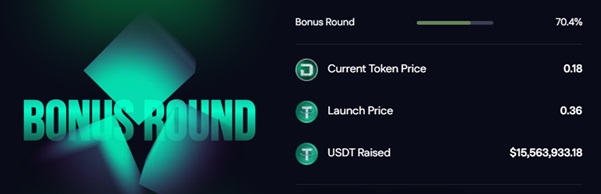
Investors are moving fast in search of profitable coins. And in this race, DTX Exchange has already raised $15.5 million in its presale. Early buyers still have an opportunity to see 2x gains at launch as the price will jump from $0.18 (presale price) to $0.36.

Now, AI model Grok-3 predicts this low-cap altcoin could follow Cardano’s price explosion from the last cycle with potential gains of 12,920%. Could DTX be the next breakout to leave ADA behind with its hybrid trading model and growing demand?

DTX Exchange Raises Over $15.5M as Investors Eye 12,920% Gains

DTX Exchange has raised over $15.5 million in its presale which shows strong investor interest. The presale is selling fast and less than 30% of the bonus round is left. With the launch price set at $0.36, early buyers could see 2x gains at listing and investors are now watching to see if it could match the performance of ADA last cycle.

The platform will allow users to trade crypto, stocks, forex and ETFs all in one place. Traders could maximize their capital and access markets that usually need high investments with 1000x leverage.

Many investors are looking at the Cardano price history which had a massive rally last cycle. Some believe DTX Exchange could follow a similar path and reach 12,920% gains in the future.

Source: DTX Exchange

The platform runs on VulcanX Layer-1 blockchain built for high-speed transactions. It is designed for large scale trading which makes it different from many other exchanges.

Users could also trade fractional assets which means they do not need a large amount of money to invest in different markets. The Phoenix Wallet adds another layer of security that helps traders manage assets safely while accessing over 100k financial instruments.

Security is a key focus and DTX Exchange has passed KYC verification by SOLIDProof. This shows the platform has been tested for security risks which makes it safer for users.

Along with this automated investments help traders manage portfolios without checking the market all the time. Copy trading allows users to follow expert traders which could help beginners make better decisions.

Cardano (ADA) Historic Bull Run: A Benchmark for Explosive Growth

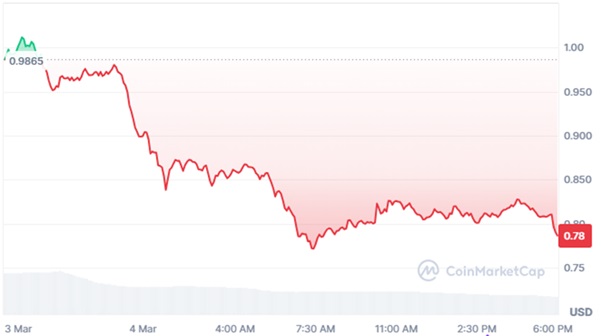
The Cardano’s price surge past $1.15 is breaking a long-term downtrend. The rally came after a major announcement that pushed fresh demand into the market. ADA had struggled below resistance for months but strong buying pressure finally sent it higher. If momentum holds, Cardano price could see more gains in the coming weeks.

Source: CoinMarketCap

Technical indicators confirm that ADA has moved above the 200 EMA which signals a shift into an uptrend. The breakout pattern of ADA that started in December 2024 is now active. If the Cardano price stays above $0.83, it could avoid a deeper correction. Analysts believe a push above $1.05 may send the Cardano price toward $1.90.

While ADA is gaining strength, DTX Exchange offers a hybrid trading model with deep liquidity which could attract both crypto and traditional market traders as it moves toward launch.

Grok-3’s Bold Prediction: Could DTX Outperform Cardano (ADA) Rally?

Grok-3 predicts that DTX Exchange could follow Cardano’s price rally from the last cycle. The presale has already raised over $15.5 million and investors expect 12,920% gains if momentum continues. If DTX sees a similar rise then early buyers could secure massive returns.

For instance, if an investor puts down $1,000 during the bonus round, they could have $4,000 at launch which means a 4x gain. If DTX follows Cardano’s price surge, that same investment could grow to over $130,000 in the future.

Final Thoughts

DTX could be the next big opportunity as investors look at Cardano price history and compare its growth to DTX’s potential. ADA surged in the last cycle and Grok-3 predicts DTX could follow with 12,920% gains.

Right now, investors can still double their investment by buying DTX tokens at $0.18 as the price will rise instantly to $0.36 at launch. With less than 30% of the bonus round left, traders should act now before the chance is gone.

Check out these links for more information about DTX Exchange:

Buy Presale

Visit DTX Website

Join The DTX Community