DD
MM
YYYY

PAGES

DD
MM
YYYY

spot_img

PAGES

Home Blog Page 2428

Taiwan Puts TSMC’s $100 Billion, Other U.S. Investments, Under Review

0

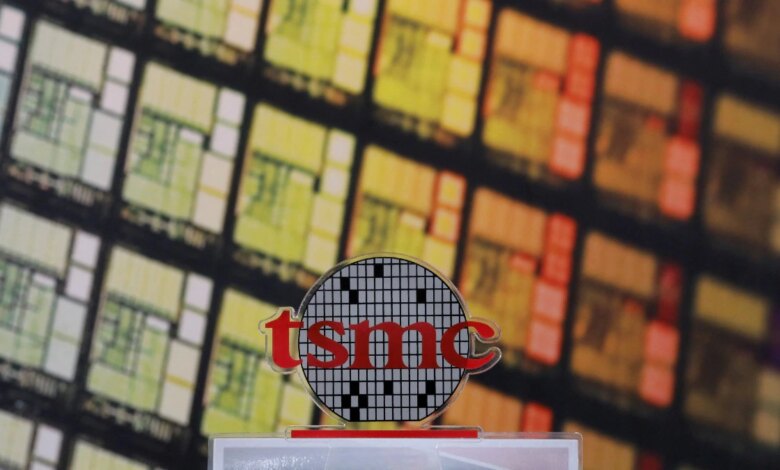
Taiwan will initiate a formal review of Taiwan Semiconductor Manufacturing Company’s (TSMC) investment in the United States, a move that has stirred global attention and raised concerns over its potential impact on the landmark $100 billion investment it has earlier pledged.

The review is set against a backdrop of intensifying U.S.-China geopolitical tensions and mounting pressure from Washington on TSMC to comply with export restrictions against Beijing.

Cabinet spokesperson Michelle Lee announced on Tuesday that the Taiwanese government would evaluate TSMC’s U.S. expansion plans in light of Taiwan’s strategic position in the global semiconductor industry.

“The government’s stance on overseas investments is generally positive if they contribute to the globalization of Taiwan’s industry and enhance our overall competitiveness,” Lee stated, highlighting a cautiously balanced approach amid the complex geopolitical environment.

TSMC’s proposed investment, revealed just days earlier at the White House, involves constructing five additional semiconductor facilities in the U.S., primarily in Arizona. The announcement, made alongside U.S. President Donald Trump, underscored the deal’s significance to American economic and national security.

“Today, Taiwan Semiconductor is announcing that they will be investing at least $100 billion in new capital in the United States over the next short period of time to build state-of-the-art semiconductor manufacturing facilities,” Trump declared.

He emphasized the critical role of semiconductors in the modern economy, describing them as “the backbone of the 21st-century economy.”

U.S. Pressure and the China Factor

TSMC has been under sustained pressure from the U.S. to align with its strategic objectives, particularly concerning China. The Trump administration significantly intensified these pressures, with TSMC cutting off new orders from Huawei in 2020 to comply with U.S. sanctions. These measures were part of broader efforts to curb China’s technological and military advancements, and the Trump administration has maintained this firm stance.

This dynamic places TSMC in a challenging position, balancing its commercial interests with the geopolitical realities dictated by its largest market and strategic partner, the U.S. However, the implications of Taiwan’s review of the $100 billion investment remain unclear, adding uncertainty to an already delicate situation.

Potential Impact of Taiwan’s Review

The review process is expected to scrutinize how TSMC’s U.S. expansion aligns with Taiwan’s economic goals and whether it could weaken the island’s dominance in the global semiconductor market. Taiwan is the primary producer of the world’s most advanced chips, a critical advantage that not only bolsters its economy but also enhances its geopolitical leverage.

Analysts warn that Taiwan’s government may impose conditions to ensure TSMC’s strong domestic presence, potentially affecting the scale or pace of its U.S. projects. There is also speculation that Taiwan might seek assurances that key technologies and production capacities remain firmly rooted on the island.

Tariffs, Incentives, and National Security

TSMC’s U.S. investment is partly driven by President Trump’s tariff strategy, which threatened to impose a 25% levy on imported semiconductor chips. Additionally, the Biden administration’s CHIPS and SCIENCE Act of 2022 offered TSMC a $6.6 billion grant, reinforcing the financial viability of its American expansion.

For the U.S., bolstering domestic semiconductor production is not merely an economic move but also a national security strategy. Semiconductor chips are vital to technology, defense, and infrastructure sectors, and reducing reliance on foreign-made chips is a top priority for Washington.

Taiwan’s semiconductor industry is a cornerstone of its economy, with TSMC playing a pivotal role. The government’s review could be a message to TSMC to avoid over-committing resources abroad in ways that might undermine Taiwan’s technological leadership.

Timeline for Tekedia H1 2025 Investment Cycle

0

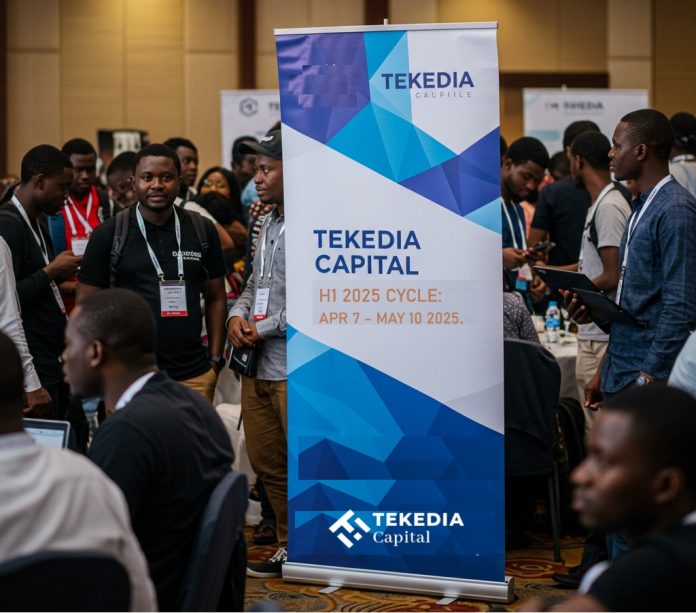
Greetings! Find below the key dates for the next Tekedia Capital investment cycle.

Duration: April 7 – May 15, 2025

Startups Unveiling in Portal: April 7

Demo Day: April 26, 2025

We’re providing this on time to assist members as they plan.

Regards,

Tekedia Team

The End of Remita Era in Nigeria

0

A sensible policy; government should not outsource some core things: “The Federal Government of Nigeria on Tuesday unveiled a new payment platform, the Treasury Management & Revenue Assurance System (TMRAS), to replace REMITA, which has been in use for revenue collection since 2012.

“The new platform aims to enhance the efficiency, transparency, and accountability of federal revenue collections and payments across ministries, departments, and agencies (MDAs), including entities managing donor funds, trust funds, social security funds, and special funds. This development was disclosed in a memo from the Office of the Accountant General of the Federation (OAGF), dated February 28, 2025. The memo stated that TMRAS would go live on March 4, 2025, and its deployment would occur in two phases.”

Then imagine if you are an investor in Remita. Good People, there is a HUGE risk depending on a government super-contract or running a business where you have over concentration on few customers. Glo Intelligence, a Kenya/NY-based startup, failed despite raising more than $100m when its Unilever contract was frozen. Remita has no issues because its parent company is loaded with other revenue lines. But this should teach all founders on why you must diversify your revenue sources.

For Nigeria, this is a good policy. If the government cannot collect its money, what is it good for? I hate it when governments outsource core functions. Great policy provided this is not from one vendor to another; Nigeria needs to build internal public sector capacity and diminish the use of consultants.

A few weeks ago, the Abuja people invited me to come and run a program. I politely sent them a list of my professors in FUTO they could use. Why pay a village boy from America when there are better people at least in Owerri? Build your internal system and stop always looking outside. Happy payment is now inside!

Nigerian Government Launches New Payment Platform (TMRAS) to Replace REMITA

0

The Federal Government of Nigeria on Tuesday unveiled a new payment platform, the Treasury Management & Revenue Assurance System (TMRAS), to replace REMITA, which has been in use for revenue collection since 2012.

The new platform aims to enhance the efficiency, transparency, and accountability of federal revenue collections and payments across ministries, departments, and agencies (MDAs), including entities managing donor funds, trust funds, social security funds, and special funds.

This development was disclosed in a memo from the Office of the Accountant General of the Federation (OAGF), dated February 28, 2025. The memo stated that TMRAS would go live on March 4, 2025, and its deployment would occur in two phases.

Two-Phase Deployment Plan

According to the memo, the first phase will handle only naira-denominated transactions. It will enable the OAGF and MDAs to generate bank statements, monitor account balances, and facilitate automatic deduction and remittance of taxes related to vendor and contractor payments, including Value Added Tax (VAT), Withholding Tax, and Stamp Duty.

The second phase, set to commence on June 1, 2025, will expand to cover foreign exchange transactions and integrate with MDA Enterprise Resource Planning (ERP) systems. This phase will also activate a budget module for MDAs not included in the national budget and manage other non-budgetary financial activities to enforce budgetary control.

One significant feature of TMRAS is the continuation of the automatic deduction of 50% of Internally Generated Revenue (IGR) from federal government agencies and parastatals. The system is designed to automatically split IGR, ensuring immediate remittance to both the Federal Government’s account and the dedicated accounts of the respective MDA. The platform will also provide detailed reports to both the OAGF and the MDA to enhance transparency and accountability.

The memo emphasized that all extra-budgetary payments, including those from Special Accounts, must now be processed exclusively through TMRAS. This measure aims to eliminate manual mandate issuance, promoting a more efficient and transparent management of public funds.

To ensure a smooth transition, REMITA will continue to operate concurrently with TMRAS from March 4 to May 4, 2025. After this period, all MDAs are expected to have fully migrated to TMRAS for payment initiation.

Additionally, only Payment Solution Service Providers (PSSPs) licensed by the Central Bank of Nigeria (CBN) and approved by the OAGF will be allowed to collect government revenue. MDAs have been instructed to direct all PSSPs currently collecting on their behalf to integrate with the official CBN payment gateway to align with the new system. The profiling and certification of PSSPs will commence immediately, with approved PSSPs listed on the TMRAS for collections.

Clarification on REMITA’s Role

Despite the launch of TMRAS, the OAGF has clarified that REMITA, as a CBN-approved payment gateway, will remain operational. In a statement on Tuesday, March 4, the OAGF spokesperson, Bawa Mokwa, noted that REMITA would be integrated into TMRAS alongside other eligible PSSPs to promote payment liberalization.

“REMITA will continue to play a vital role as a licensed payment gateway within the new TMRAS ecosystem,” Mokwa said. “This integration aims to enhance transparency, efficiency, and broaden the payment options available to MDAs and the public.”

This assurance follows directives from President Bola Tinubu and the Coordinating Minister of Finance and National Economy, Wale Edun, to enhance treasury revenue assurance and improve budget performance across MDAs. Edun’s vision for TMRAS aligns with broader government objectives of achieving effective treasury management and improved financial performance among federal institutions.

The OAGF also revealed that the government is transitioning to take over the management of the front-end payment infrastructure, which had previously been managed by SystemSpecs, the developer of REMITA. This shift aims to broaden the collection system to accommodate additional CBN-licensed PSSPs, enhancing the efficiency and flexibility of revenue collection processes.

The introduction of TMRAS is expected to significantly boost the government’s ability to manage revenue collections and payments more effectively. Remita has been serving as the gateway for the Treasury Single Account (TSA) of the Nigerian government since 2012.

However, the success of TMRAS will depend on the seamless integration of current PSSPs and the system’s capacity to handle the complexities of federal financial transactions. The OAGF has advised the public to continue using REMITA for federal government transactions during the transition period and directed them to visit www.fgntreasury.gov.ng for additional payment instructions.

Binance Exchange is Winding Down Support for P2P Cash Zone

0

Binance Exchange is indeed shutting down its P2P Cash Zone, a feature that allowed users to trade cryptocurrencies for cash in person with registered merchants. The closure was announced via emails to users on March 3, 2025, with the service set to wind down fully by March 31, 2025, at 23:59 UTC. Users can place new orders until March 25, 2025, at 23:59 UTC, after which no new transactions will be accepted, though existing orders will still process until the final cutoff.

Launched in 2023, the P2P Cash Zone let users exchange crypto for over 100 local currencies through approved merchants with physical stores, targeting regions with limited banking access. Binance stated the decision reflects a shift to “focus on core services and develop innovative solutions,” though no specific reason—like regulatory pressure or low usage—was detailed.

The shutdown doesn’t affect Binance’s broader P2P platform, where online payment methods (bank transfers, e-wallets) remain available with over 700 options. Users reliant on cash trades are encouraged to adapt to these alternatives. The move could hit liquidity for cash-based traders, particularly in unbanked areas, but Binance hasn’t signaled a full P2P unwind.

With Binance shutting down its P2P Cash Zone by March 31, 2025, users seeking peer-to-peer (P2P) alternatives for trading crypto, especially for cash or local fiat options, have several viable platforms to consider. Binance’s broader P2P platform remains active with over 700 online payment methods, but the Cash Zone’s closure—focused on in-person cash trades—prompts a look at other options.

Here’s a detailed rundown of P2P alternatives based on their features, strengths, and relevance

Binance P2P (Non-Cash Zone) While the Cash Zone is ending, Binance’s core P2P platform continues, allowing users to trade crypto with other users online using bank transfers, e-wallets, and mobile payments. Supports over 100 fiat currencies and 700+ payment methods (e.g., PayPal, M-Pesa, Revolut). Escrow service locks crypto until payment is confirmed, ensuring safety.

Zero trading fees for takers; makers set their own prices. Requires KYC verification and two-factor authentication (2FA). Massive liquidity (200 million+ users), wide payment variety, and trusted escrow system. No in-person cash option post-March 31; regulatory restrictions in some regions (e.g., Nigeria’s NGN delisting in 2024). Users comfortable with digital payments seeking broad market access.

Bybit P2P; Launched in 2022, Bybit’s P2P platform has gained traction as a Binance alternative, especially in restricted regions. Supports 60+ fiat currencies with options like bank transfers, Advcash, and local methods.
No trading fees: escrow secures trades. Requires account verification for P2P access. Over 2 million registered users, growing fast. User-friendly interface, reliable for spot and derivatives trading alongside P2P, and fewer regional bans than Binance. Bybit P2P has smaller merchant pool than Binance; no explicit in-person cash feature. Traders in regions like Nigeria, where Binance faced curbs, or those diversifying platforms.

Noones: A P2P Bitcoin marketplace that emerged as a Paxful successor, focusing on accessibility and cash trades. Noones Offers 250+ payment methods, including cash via in-person or mail options. No buyer fees: sellers pay a small commission. No mandatory KYC for basic trades, though some sellers may request ID. Intuitive escrow system for secure transactions. Noones is strong for cash trading support, privacy-focused (optional KYC), and ideal for unbanked regions. Noones is Bitcoin-centric (limited altcoin support), smaller user base than Binance. Its best for Cash traders and privacy enthusiasts in Africa or developing markets.

LocalCoinSwap is a Hong Kong-based P2P exchange operating since 2017, emphasizing anonymity and diverse payment options. Its supports multiple cryptos (BTC, ETH, etc.) with dozens of payment methods (e.g., cash, PayTM, Alipay). No KYC required by the platform; sellers may impose it for bank transfers. Escrow protection for all trades; fees around 1% for sellers. Its best for Cash-in-person trades available, high privacy, and broad payment flexibility. LocalCoinSwap has smaller liquidity pool; less polished UI than Binance or Bybit. Its best for users prioritizing anonymity and local cash deals over scale.

KuCoin P2P; KuCoin’s P2P desk, part of its broader exchange, offers a straightforward way to trade crypto for fiat. Supports major fiats (USD, EUR, NGN) with methods like bank cards, PayPal, and local options. Zero fees for buyers; sellers cover minor costs. KYC required for trading. Escrow ensures transaction safety. KuCoin’s P2P s tied into KuCoin’s robust ecosystem (spot, futures), decent liquidity. Limited fiat and payment options compared to Binance; no cash-in-person focus. Its best for traders already using KuCoin who want a seamless P2P add-on.

Bitgert P2P; Bitgert’s P2P platform, tied to its BRISE token ecosystem, promotes direct, decentralized trading. Offers crypto-to-fiat trades with flexible pricing set by users. No centralized exchange fees; escrow-based security. Accessible via localbitgert.com (as promoted in early 2025).
Bitgert is ensues decentralized ethos, no middleman fees, growing community. Bitgert P2P is a niche platform with unproven scale, limited fiat support details. Its best for early adopters of Bitgert or those seeking decentralized alternatives.

For ex-Binance Cash Zone users, Noones or LocalCoinSwap are direct replacements for cash trades. Binance P2P and Bybit cover digital P2P needs with scale and reliability. Niche options like Bitgert or PulseChain suit experimental or decentralized-focused traders. Each platform’s escrow and dispute systems are critical.