DD
MM
YYYY

PAGES

DD
MM
YYYY

spot_img

PAGES

Home Blog Page 2431

IntelMarkets (INTL): The Most Undervalued AI Coin at $0.073 Primed to Outpace Ethereum (ETH) and Ripple (XRP)

0

The crypto market had an impressive run in 2024, marked by several Bitcoin (BTC) all-time highs and narratives like AI and memes outperforming. With the AI narrative set to be at the forefront this year, IntelMarkets (INTL) might be the smartest and best crypto investment.

Below $0.1, it is perhaps the most undervalued AI crypto, poised to outpace top altcoins like Ethereum (ETH) and Ripple (XRP). Besides its substantial growth prospects, its unique AI-powered trading platform sets the stage for massive growth and adoption, making it a new DeFi project worth betting on.

IntelMarkets (INTL): Outshining Top Crypto Coins

IntelMarkets (INTL), the latest altcoin investors are betting on, stands out for several reasons. One is its bullish AI-DeFi narrative, building the world’s first AI-powered crypto trading platform. In addition, its upside potential is staggering, edging out top crypto coins, including Ethereum (ETH) and Ripple (XRP).

At $0.073 in the eighth stage of the ICO, it is heavily discounted and buzzing with potential. This contributes to the rising interest in the presale, alongside the expected fair launch, pushing it past $5.6 million in early funding. Given the projected 70x jump in value, it is a promising wave not to miss this cycle.

Another layer of appeal is its novel AI-driven exchange platform. It will be the first to integrate artificial intelligence across all levels, offering users unmatched computing power and other advanced features. Noteworthy are self-learning robots that can learn from previous trades and real-time trading data while analyzing high data volumes in seconds.

Ethereum (ETH): Bulls Target a Breakout

Ethereum (ETH), ranging between $3,300 and $3,500 on the weekly chart, might be primed for a breakout. Key indicators like the 100-EMA and 100-SMA hint at a bounce, potentially breaching the $4,000 resistance.

Flipping this level will set the stage for a parabolic run, likely retesting the all-time high of $4,800 and going on price discovery. At the current price, Ethereum (ETH) might be one of the best altcoins to invest in, contributing to the growing institutional appetite.

Wolf, a crypto analyst on X, predicts Ethereum will hit $6,500 by March and $10,000 by May. Green, also a crypto trader and analyst, has $7,400 as their modest price prediction this year. However, to make the most of this bull run, experts suggest betting on IntelMarkets (INTL), boasting 70x upside potential.

Ripple (XRP): Poised for a Bullish Reversal

Ripple (XRP), one of the best altcoins courtesy of its cross-border payment solutions, ranks among the top 5 cryptos. It surpassed the market caps of Solana (SOL) and BNB, which are some of the biggest highlights of 2024.

The XRP price hovers around $2.1, with sights set on a bullish reversal following the recent downswings. Technical indicators like the altcoin price trading above the 500-SMA and 500-EMA suggest an impending huge leap, placing it among the best cryptos to invest in.

At the same time, Velo_Maxi, a leading expert, expects Ripple (XRP) to range between $7 and $13 this year. Mr_Xoom, another crypto analyst, is equally bullish, suggesting $11 as this cycle’s top. However, considering Ripple (XRP) has skyrocketed over 30,000% since its launch, there is just so much growth it can experience, in contrast to the low-cap IntelMarkets (INTL).

IntelMarkets (INTL): Higher Upside Potential Than Ethereum (ETH) and Ripple (XRP)

As a new and low-cap DeFi coin, IntelMarkets (INTL) has more room for growth than popular cryptos like Ethereum (ETH) and Ripple (XRP). Unsurprisingly, investors have been betting big, making it one of the new DeFi projects not to miss.

For more information about IntelMarkets (INTL) visit the links below:
Buy Presale

Website

Telegram

Analyst Reveals ‘Secret’ that Will Push the RCOF and XRP Price Higher Outperforming Bitcoin

0

The XRP price is poised to make headlines again as analysts predict it could outperform Bitcoin and Ethereum.

This forecast comes alongside the emergence of RCO Finance (RCOF), a new altcoin that aims to disrupt traditional and decentralized finance by leveraging AI technology. Together, these cryptocurrencies could redefine investment landscapes, offering opportunities that might just eclipse the performance of Bitcoin.

XRP Price Momentum: A Bullish Outlook

Recent analyses suggest that XRP is on the brink of a significant surge. Crypto analyst Egrag Crypto has boldly stated that XRP’s market cap could reach between $619.61 billion and $1.56 trillion, potentially outpacing Bitcoin and Ethereum.

This prediction is based on XRP’s unique position in the market, with its current dominance and technical indicators pointing towards rapid growth.

The VRVP (Volume-Weighted Relative Value Performance) of XRP sits above a level where resistance is minimal, hinting at an easier path to new all-time highs.

Furthermore, if the XRP price closes above the Fibonacci 0.5 level in terms of dominance, it could witness a double-digit increase.

This technical setup, combined with XRP’s smaller market cap offering higher upside potential, positions it as a contender to take a lion’s share in the upcoming altcoin rally.

RCO Finance (RCOF): The New AI-Driven Contender

As investors scout for alternatives to established cryptocurrencies like XRP and Bitcoin, RCO Finance’s RCOF token is gaining traction.

RCO Finance (RCOF) is not just another cryptocurrency; it’s the native token of an ecosystem built around an AI-powered financial platform. One of the standout features of the RCO Finance ecosystem is the AI Robo Advisor, which crafts personalized investment strategies by analyzing vast amounts of real-time market data, adapting to each user’s financial goals and risk tolerance. This level of personalization was previously the domain of institutional investors but is now accessible to everyone through RCO Finance.

Moreover, the platform offers access to over 120,000 assets across 12,500 asset classes, from traditional securities to tokenized real-world assets like real estate, providing unparalleled diversification opportunities.

What sets RCO Finance apart is its KYC-free ecosystem, which champions user privacy, allowing for seamless and anonymous participation in financial markets. This is particularly appealing in today’s climate where privacy concerns are paramount.

Additionally, the security of the platform is underscored by its smart contract, which has been audited by SolidProof, ensuring that investors can trust the integrity of their transactions.

As the crypto community looks for the next big thing, RCOF’s integration of AI with a strong emphasis on user autonomy and security positions it as a potential game-changer.

RCO Finance Presale Offers a Golden Window for Early Investors

As the RCO Finance platform readies for its official launch, the team is currently conducting the presale of its native token, RCOF, presenting a compelling opportunity for early investors.

Currently, the presale is in its fourth stage, with the token price having surged by 509% from its initial offering to its current price of $0.07770.

The presale structure is designed to maximize community participation, with each stage offering tokens at progressively higher prices, culminating in a bonus round where tokens are sold at $0.21420, a 175% increase from the current stage.

This setup not only allows for potentially high returns but also ensures that the tokenomics of RCOF are built to sustain growth without the risk of immediate pump-and-dump scenarios post-listing. The deflationary model of RCOF, where unsold tokens are burned, further supports this by potentially increasing the token’s value over time

Investors who get in at these presale prices could see significant gains, especially with the expected listing price of RCOF on crypto exchanges projected to be between $0.4 and $0.6.

For those looking to diversify their crypto investments or find an alternative with substantial growth potential, the RCO Finance presale could be an entry point to significant future gains.

For more information about the RCO Finance Presale:

Visit RCO Finance Presale

Join The RCO Finance Community

Year 2025 Most Promising Job Area for Techies and Non-Techies

1

The question: what area of tech do you think has the best promise in 2025?

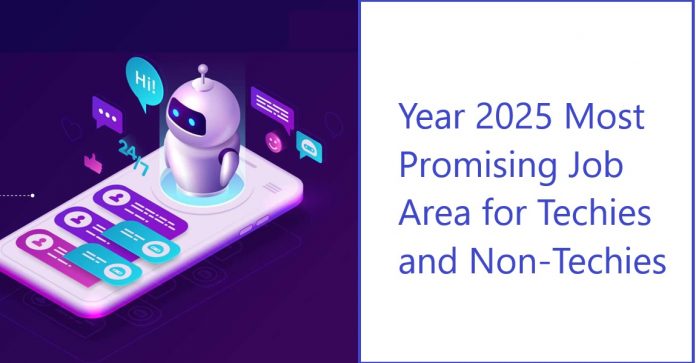
My Response: the creation and development of AI agents will win markets and territories in 2025. Yes, companies are going to go big on AI agents to drive productivity, reduce cost and accelerate competitiveness. 

AI agents are higher machines, above AI workflows and simple automation machines. For years, we have seen automations (i.e. the use of technology to perform tasks with minimal human intervention, with the aim to streamline processes, enhance efficiency, and reduce human error)  from the lens of boolean logic which is largely deterministic since things are predefined at the execution phases.

In 2024, simple automation machines evolved through the power of AI (artificial intelligence) to fuzzy logic like systems where deterministic cases have elements of flexibility. In other works, with AI workflows, you have the ability to execute deterministic assignments with more flexibility compared to what decades-old automation machines offered.

Now, we’re entering the fledgling age of AI agents. AI agents execute non-deterministic assignments in autonomous fashion, bringing elements of adaptability, with reasoning that approaches how humans work. Here, the key is autonomy as AI agents can make decisions and take actions without human intervention. By interacting with their environment, collecting data, AI agents can achieve predefined goals in ways superior to what AI workflows and automation systems have provided. 

Good People, AI agents will anchor new careers in tech and AI-anchored innovations in workplaces in 2025. Of course, before you see AI agents in action, many areas and components are involved, including mathematics, electronics, computer science and the subject domain experts. In other words, there is something for everyone!

Building and scaling AI agents across industries (medical claim, billing, supply chain, finance, etc) will anchor opportunities of the year 2025. Both techies and non-techies will find promises in the space. Yes, you do not need to be a techie to be part of this game, you just have to be a zen-master who understands the nuances of your tasks so that you can provide a “roadmap” for the techies to build and organize intelligent systems for the desired outcome!

Get into the AI agent world at any level you can.

Africa’s Smartphone Market Growth Slows, But Projected To Regain Growth, as Vendors Focus on Affordability

0

Africa’s smartphone market has reportedly experienced sluggish growth, as projections expect to see cautious shipment growth of just 1% in 2025, underscoring the need for sustained efforts to unlock its full potential.

Canalys research reveals that Africa’s smartphone market grew by 3% year on year in Q3 2024, reaching 18.4 million units, reflecting resilience amid a complex economic landscape.

While stabilizing currencies and easing price pressures have provided some relief in specific regions, challenges such as inflation, energy volatility, and subdued consumer demand persist. Rising operational costs, infrastructure gaps, and food inflation continue to weigh on growth prospects.

Nigeria, Africa’s second-largest smartphone market by volume, recorded a modest 1% growth, impacted by a 69.9% depreciation of the Naira from January to September 2024, though it improved slightly to 32.2% in August. This depreciation continues to constrain consumer demand.

Meanwhile, South Africa experienced a 10% decline in shipments, recording six consecutive quarters of double-digit growth, as economic uncertainties dampened consumer spending despite easing inflation and interest rate cuts. Similarly, Kenya’s smartphone shipments dropped 10% due to elevated fuel costs, production challenges, and the fallout from anti-finance bill protests in June 2024.

Egypt emerged as a standout performer, achieving a remarkable 34% growth for the third consecutive quarter. Localized production has significantly reduced import reliance, cutting the smartphone import bill by 99% to $1.65 million in H1 2024 compared to 2021. Conversely, Morocco faced a 24% decline due to a hike in import taxes earlier in the year, highlighting the region’s challenges.

Vendors Focus on Affordability and Local Manufacturing

The smartphone market continues to reflect shifting dynamics, with affordability being a central strategy. This decline has led vendors to focus on affordability and local manufacturing to stay competitive. This is due to factors like limited disposable income, high taxation, and economic instability. To address these challenges, vendors are offering more affordable entry-level smartphones, and adopting “Buy Now, Pay Later” options.

TRANSSION retained its leadership with a 50% market share, driven by it’s 34% growth and affordable offerings from Infinix and TECNO, Xiaomi saw 13% growth, leveraging products like the Redmi14C in key markets despite a 10% decline in average selling prices (ASP).

HONOR achieved a staggering 287% growth, fueled by initiatives like the “YES Program” and “Code with HONOR” in South Africa, alongside potential manufacturing investments to enhance local talent development and accessibility. OPPO and realme also performed strongly, achieving 22% and 101% growth, respectively, by targeting young consumers and emphasizing value-driven strategies.

Despite these gains, structural challenges remain. High device taxes, volatile economic conditions, and the dominance of feature phones (55% of total shipments as of Q3 2024) continue to hinder smartphone expansion. Addressing these issues will require a collaborative approach among governments, vendors, and service providers.

As service providers transition to technology companies and integrate mobile money services, phasing out 2G and 3G networks will free resources for expanding 4G and 5G coverage.

This shift is expected to sustain growth, with Canalys forecasting a 1% CAGR from 2024 to 2028. The future of Africa’s smartphone market depends on forging innovative partnerships and balancing immediate financial needs with long-term goals. By addressing these challenges, Africa can accelerate its digital transformation, driving connectivity, inclusion, and economic growth across the continent.

Survey Reveals 90% of Angel Investors Prefer to Invest in Startups Based in Urban Areas

0

The African Business Angel Network (ABAN) in the latest edition of its annual Africa’s Angel report, offered a comprehensive exploration of emerging trends in Africa’s angel investing landscape.

The survey leveraged primary and secondary data sources to highlight the pivotal role of angel investors in fostering innovation and driving growth across the continent.

Among the key findings, the report reveals that 90% of surveyed angel investors prefer startups based in urban areas, reflecting a strategic focus on environments that typically offer stronger infrastructure, access to talent, and proximity to markets.

The majority of angels favor high-growth startups, with 43% prioritizing scalable and disruptive business models. Additionally, 68% of respondents prefer ventures that generate revenue from both companies and consumers and 50% focus on businesses demonstrating market traction. Inclusive practices are also a priority, as 79% of investors favor companies with strong female representation in leadership or as customers.

However, concerns arise over startups with overvalued capital structures or excessively diluted founder shares, an issue flagged by 73% of respondents. Angel investors employ various financial instruments to balance risk and reward. Half of the surveyed investors use equity agreements, including SAFEs, while 28% opt for debt instruments like loans or convertible notes with short maturities.

The accessible nature of angel investing is evident, as 64% of respondents invest between $1,000 and $25,000 per venture. These investments often require collaboration with other angels due to the relatively modest ticket sizes.

Notably, Angels offer more than financial assistance to startups, playing an integral role in helping them to focus on key elements of the business and achieve key milestones. 93% of respondents provide at least one form of business-related value-added support to entrepreneurs including business advisory (29%), mentoring (26%), access to networks (25%), and governance (13%). Some angels double down on their investments by providing follow-on funding (6%) for their invested company based on strong performance and growth metrics, confidence in the management team, and positive market trends and potential.

The report also explores how broader challenges in Africa’s startup ecosystem, such as funding slowdowns and liquidity constraints, influence angel investment strategies. While 36% of investors remain unaffected by these challenges, 64% have adjusted their approaches, with 61% adopting a more cautious stance by prioritizing follow-on funding, pausing new investments, or reducing capital injection rates.

Interestingly, a small segment, 3%, has increased their activity, recognizing opportunities within the evolving landscape. Investment decisions are driven by several factors, including stable macroeconomic conditions like inflation and interest rates, the ease of conducting due diligence, access to high-quality deals, and a supportive regulatory environment. Policies that offer fiscal incentives and enable cash repatriationalso play a crucial role in shaping these decisions.

As the African innovation ecosystem continues to evolve, angel investors are proving to be essential in bridging funding gaps and nurturing high-potential startups.