DD
MM
YYYY

PAGES

DD
MM
YYYY

spot_img

PAGES

Home Blog Page 246

Amazon to Invest €1.4bn in the Netherlands, as Its Indian Exporters Hit $20B in Cumulative Exports

0

U.S. e-commerce and cloud computing giant Amazon has announced plans to invest more than €1.4 billion (about $1.63 billion) in the Netherlands between 2025 and 2027, marking its largest commitment in the country since launching operations there in 2020.

The move is part of Amazon’s broader strategy to deepen its footprint in the Benelux region and accelerate its European expansion amid growing competition and regulatory scrutiny.

According to the company, the new investment will cover both its retail operations and cloud arm, Amazon Web Services (AWS). It will fund logistics infrastructure, technology upgrades, renewable-energy projects, and artificial intelligence tools designed for businesses that sell on Amazon’s marketplace. The initiative is aimed at supporting thousands of small and medium-sized Dutch enterprises (SMEs) that use Amazon’s platform to reach international customers.

“The Netherlands is an important growth market for us,” said Eva Faict, Amazon’s country manager for Belgium and the Netherlands. “These investments will allow us to better serve our customers, improve our services, and create more opportunities for local entrepreneurs.”

Amazon currently employs around 1,000 people in the Netherlands across its offices in Amsterdam and The Hague, a sorting center in Rozenburg near Schiphol Airport, and a warehouse in Almelo. Since 2020, the company has gradually expanded its operations in the country, but its online sales still trail behind market leader Bol.com, the Ahold Delhaize-owned retail platform that dominates the local e-commerce market. Bol.com recorded approximately €3.1 billion in sales last year, compared to Amazon’s estimated €1 billion.

Although it is lagging behind in market share, Amazon is betting on long-term growth. The company said that more than 4,500 Dutch SMEs currently sell through Amazon.nl, with about 60 percent of the products on the platform coming from third-party sellers. Nearly 90 percent of these SMEs export their goods to other European markets — particularly Germany, France, Italy, and the U.K. — as well as to the United States, using Amazon’s global logistics and digital tools.

Independent research by consulting firm Keystone Strategy shows that Amazon’s Dutch operations supported more than 2,000 indirect jobs and 900 induced jobs across logistics, construction, and professional services in 2024. The same report estimated that Amazon contributed over €200 million to the Dutch GDP that year, and more than €1 billion cumulatively since it first established a presence in the country in 2013.

Faict told Dutch financial daily FD that part of the €1.4 billion investment will go into developing AI tools for entrepreneurs who sell their products on Amazon’s marketplace. The company plans to expand its cloud computing infrastructure through AWS, enabling local businesses to scale globally and leverage advanced technologies such as data analytics, automation, and machine learning.

Amazon’s press office said the new funding will also boost logistics capabilities, allowing for faster delivery, more local fulfillment centers, and a broader network of pickup points. The goal, according to Faict, is to make next-day or even same-day delivery available to more customers across the Netherlands.

The Netherlands’ strategic location — with its deep-water port in Rotterdam, highly digitalized economy, and skilled workforce — makes it a natural logistics and technology hub for Amazon’s operations in continental Europe. Amazon not only strengthens its European network but also aligns with a larger regional push toward digital and AI-driven growth by deepening its presence there.

This latest announcement comes just weeks after Amazon pledged $1.16 billion to expand its operations in neighboring Belgium. The Belgian investment will similarly focus on logistics and small-business support. Together, both moves underscore Amazon’s renewed commitment to the Benelux region, which has become a focal point of the company’s European expansion.

For the Netherlands, Amazon’s investment is expected to generate additional employment, support exports by local SMEs, and boost innovation in AI and cloud technologies. Economists say the spending could contribute to stronger GDP growth in the digital economy and deepen the country’s integration into global supply chains.

However, the investment represents more than an effort by Amazon to grow sales. It is seen as a calculated move to weave its e-commerce, logistics, and cloud infrastructure into the economic fabric of one of Europe’s most technologically advanced economies. The e-commerce giant aims to position itself not just as an online retailer, but as a key player in Europe’s digital transformation.

In effect, this investment reinforces the Netherlands’ status as a cornerstone of Amazon’s European operations and signals the company’s intent to deepen its influence across the continent’s digital economy.

Amazon’s Indian Exporters Hit $20 Billion Milestone Despite U.S. Tariffs

Amazon said on Monday that Indian sellers on its platform have surpassed $20 billion in cumulative exports, a significant milestone achieved ahead of schedule, even as many small exporters continue to grapple with the impact of new U.S. import tariffs imposed in August.

According to the company, nearly $7 billion worth of exports were recorded this year alone, driven by sustained demand for Indian-made products such as cosmetics, toys, furniture, and apparel. Amazon has now set a new target of $80 billion in exports by 2030, signaling confidence in the long-term growth of its cross-border e-commerce network.

The announcement comes amid growing trade tensions between New Delhi and Washington following the United States’ decision to double tariffs on select Indian goods to 50% in response to India’s continued purchase of discounted Russian oil. The new tariffs, which took effect on August 27, have squeezed small Indian exporters, particularly in sectors such as textiles, gems, jewelry, and seafood.

Amazon India executives say the broader export momentum remains strong despite the tariff.

“We focus on controllable inputs, not short-term trade headwinds,” said Srinidhi Kalvapudi, head of Amazon Global Selling India, in an interview. “Our long-term story is structural, not cyclical — and for e-commerce exports, it’s still day one.”

Launched in 2015, Amazon’s Global Selling program allows Indian small and medium-sized enterprises (SMEs) to sell to customers in 18 global markets, including the United States, Britain, Germany, Canada, and the United Arab Emirates. The U.S. remains the largest market for Indian sellers, followed by the U.K. and Germany.

Exports Fall Sharply After Tariffs

According to data from India’s commerce ministry, exports to the U.S. dropped from $6.87 billion in August to $5.43 billion in September, reflecting the direct hit from the higher duties. Shipments of textiles, shrimp, gems, and jewelry were among the most affected.

Still, Amazon’s growing exporter network appears to be cushioning the blow. The company now has about 200,000 active sellers, representing a 33% increase from a year ago, spread across 28 states and seven union territories, including Delhi, Uttar Pradesh, Tamil Nadu, Maharashtra, Rajasthan, Gujarat, and Haryana.

Kalvapudi said the $20 billion milestone was reached earlier than expected, largely due to the surge in exports from smaller manufacturing hubs such as Panipat, Bhadohi, Karur, and Erode.

“What’s most inspiring is that exports are no longer limited to metros — small towns are now major contributors,” he said.

Small Cities Drive Growth

The rise of smaller cities as export hubs underscores a shift in India’s digital trade landscape. In 2024 alone, Panipat and Karur shipped nearly $160 million worth of goods, according to Amazon’s internal estimates.

Popular export categories such as health, beauty, home décor, apparel, and toys have grown more than 35% annually, with increasing participation from local artisans and women-led businesses.

Kalvapudi credited government reforms for helping sustain growth, pointing to the 2023 Trade Policy and the Reserve Bank of India’s simplified e-commerce export rules, which have made it easier for SMEs to access global markets and receive payments.

“These reforms will compound over time as Indian brands expand globally,” he said.

Long-Term Outlook

The new export target of $80 billion by 2030 highlights Amazon’s optimism about India’s manufacturing and export potential, even amid short-term challenges from tariffs and currency fluctuations.

It is believed that the company’s success could strengthen India’s position as a key player in global e-commerce exports, particularly as Western buyers seek to diversify sourcing away from China.

The milestone not only reinforces Amazon’s commitment to India’s small-business ecosystem but also deepens its foothold in one of its most strategically important markets outside the United States.

Japan’s Nikkei 225 Surges to New All-Time High

0

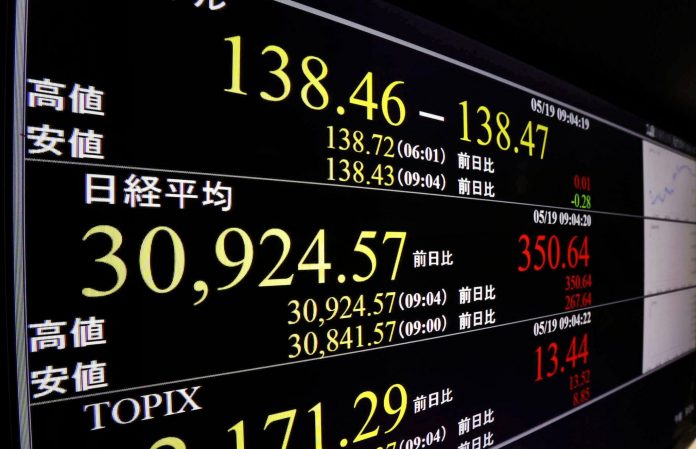
Japan’s benchmark Nikkei 225 stock index has indeed shattered records in late October 2025, marking a dramatic milestone after decades of stagnation.

On October 27, 2025, it closed at 50,512.32, up 2.46% from the previous session, breaking the 50,000-point barrier for the first time ever. This propelled its year-to-date gains to 26.6%, a stark contrast to the index’s long recovery from the 1989 bubble-era peak of around 38,915, which took over 34 years to surpass in February 2024.

By October 28, 2025, the index dipped slightly to 50,315 points, down 0.39%, but it remains well above prior highs and up 29.33% from the same time last year. The broader Topix index also hit a record close of 3,325.05 on October 27, gaining 19.4% YTD.

Key Drivers Behind the Rally

The surge isn’t happening in isolation—it’s fueled by a potent mix of domestic politics, global optimism, and economic tailwinds. Sanae Takaichi’s election as Japan’s first female prime minister on October 21 sparked euphoria.

Her “fiscal dove” stance promises aggressive stimulus potentially over 13.9 trillion yen focused on countering inflation, boosting growth industries, and enhancing national security. This led to an initial 3.4% jump to 49,185.50 on October 20, with the index marching through 49,000 and 50,000 in quick succession.

Sanae Takaichi is a staunch disciple of former Prime Minister Shinzo Abe, Takaichi’s agenda revives and adapts “Abenomics”—the blend of aggressive fiscal stimulus, loose monetary policy, and structural reforms that defined Japan’s post-2012 recovery.

Her approach emphasizes “responsible proactive fiscal policy,” prioritizing growth to combat inflation, boost wages, and generate revenue without immediate tax hikes. This dovish stance has already fueled market optimism, with the Nikkei 225 surging past 50,000 points shortly after her election, driven by expectations of expansive spending.

In her inaugural policy speech to parliament on October 24, 2025, Takaichi declared the fight against rising prices her “top priority,” vowing to “build a strong economy” through strategic investments and household relief. However, operating a minority government in coalition with the Japan Innovation Party (Ishin), she faces challenges in passing bold measures amid opposition scrutiny and a divided Diet.

Analysts note her policies overlap with predecessors like Fumio Kishida and Shigeru Ishiba but lean more heavily on fiscal levers, potentially delaying Bank of Japan (BOJ) rate hikes and weakening the yen further.

Takaichi’s fiscal dovishness has sparked a “run it hot” rally: the Nikkei jumped 4%+ post-election, with foreign inflows averaging 81.5 billion yen weekly. On X, sentiment is bullish, with users hailing her as Japan’s “Iron Lady” or “Margaret Thatcher,” crediting stimulus for Nikkei’s ATH.

Globally, her China-hawk tilt reducing dependence via strategic sectors aligns with U.S. ties, including a planned Trump summit, but risks trade frictions. Critics, including opposition voices on X, decry potential yen freefall and inequality exacerbation, labeling it “phantom prosperity.”

Yet, with 71% approval on inflation handling, her focus resonates amid stagnant wages and geopolitical strains. Takaichi’s minority status demands cross-party compromises, potentially diluting reforms like immigration-linked labor policies she favors strict controls to preserve culture.

Long-term, fiscal expansion risks ballooning debt already >250% GDP, though she insists on “fiscal consolidation ultimately.” Success hinges on Q3 earnings, U.S. election outcomes, and BOJ patience—analysts target Nikkei at 51,000 if stimulus lands.

Forward 12-month EPS growth for Nikkei components hit 9.3% in October, up from 7% in September, signaling analyst optimism. Foreign inflows into Japanese equities have surged, with net purchases on Tokyo and Nagoya exchanges averaging 81.5 billion yen weekly as of mid-October—far above summer lows.

However, not all is rosy. The yen’s freefall USD/JPY pushing higher and shrinking GDP highlight underlying pressures like inflation and a tight domestic labor market. Some observers call it a “fiat illusion” amid stretched short-yen positions and warnings of potential intervention from Japanese officials.

On X, traders are buzzing about the disconnect: booming stocks versus weakening fundamentals, with one post quipping, “Nikkei at ATH. Yen in free fall. GDP shrinking.” The Nikkei has been on a tear since breaking 45,000 in September 2025.

This rally has SoftBank Group 10% index weight as a top influencer, alongside consumer and tech sectors leading gains. Analysts see potential for more upside, targeting 50,860–51,030 if momentum holds, driven by Q3 earnings and stimulus details.

But risks loom: yen volatility, U.S. election uncertainty, and overbought signals could cap gains. On X, sentiment is split—bulls eye a tripling to 120,000 by 2035, while bears warn of a “phantom prosperity” bubble.

Pinterest Launches AI-Powered Personalization Features to Reinvent Its Boards as Shopping and Style Tools

0

Pinterest is expanding its push into artificial intelligence with a new set of AI-powered features designed to make its platform more personalized, interactive, and shoppable.

The company announced Monday that it is introducing several upgrades to its signature boards — including “Styled for you,” an AI-driven collage tool that helps users create outfits from their saved fashion Pins, and “Boards made for you,” personalized collections curated through a mix of editorial insight and AI technology.

The new “Styled for you” feature allows users to combine clothing and accessories into fresh outfit ideas that align with their personal tastes. Users can instantly browse AI-generated suggestions drawn from their saved Pins to find mix-and-match combinations by tapping an item in the collage. It’s part of Pinterest’s growing effort to transform its visual discovery platform into an AI-enabled shopping assistant — a vision that CEO Bill Ready emphasized during the company’s second-quarter earnings call earlier this year.

In addition, Pinterest is experimenting with “Boards made for you,” a feature that generates personalized boards using both human curation and AI-driven insights. These boards will appear in users’ home feeds and inboxes, showcasing trending styles, weekly outfit inspiration, and shoppable content tailored to each user’s interests. The company said it is initially testing these AI-powered experiences in the United States and Canada, with a broader rollout expected in the coming months.

Pinterest’s latest initiative denotes a larger strategy to evolve its boards from simple digital pinboards into dynamic, interactive hubs for lifestyle discovery, fashion inspiration, and online shopping.

These features represent a next step in helping users not just collect ideas, but bring them to life — whether through styling, decorating, or shopping.

The platform has long relied on visual search and recommendation systems, but recent advancements in generative AI have accelerated its efforts to integrate personalization into every layer of the user experience. Pinterest aims to enhance the relevance and creativity of the content users encounter by merging machine learning with human curation.

At the same time, Pinterest is treading carefully in balancing innovation with authenticity. Earlier this year, the company announced new policies to identify and manage AI-generated content, including labeling AI-created or modified images and giving users more control over how much AI-generated material they see. The move came amid growing industry debate over transparency and authenticity in visual content.

Beyond the AI-driven boards, Pinterest is also introducing new tabs designed to organize saved Pins into more intuitive categories. The “Make It Yours” tab will recommend fashion and home décor products based on what users have pinned, while the “More Ideas” tab will suggest related Pins across themes such as beauty, food, and art. An additional “All Saves” tab will make it easier for users to access all their saved content in one place.

These updates will roll out globally over the coming months, reinforcing Pinterest’s ambition to become a hybrid space — part inspiration engine, part personal shopping assistant, and part creative tool powered by artificial intelligence.

The changes are seen as a strategic step in keeping Pinterest competitive with platforms like Instagram, TikTok, and Amazon, which are increasingly blending social discovery with e-commerce. While Pinterest’s revenue growth has rebounded in recent quarters, the company faces pressure to maintain engagement and attract advertisers in a crowded digital marketplace.

Pinterest appears intent on deepening its appeal to both users and brands by leveraging AI to create more personalized and shoppable experiences. Its latest features are expected to solidify its role not just as a visual bookmarking platform, but as a key player at the intersection of fashion, lifestyle, and intelligent retail discovery.

BNB Hits $1,200—Here’s Why Top Traders Are Flipping Their Gains Into Ozak AI for Potential 8,000% ROI

0

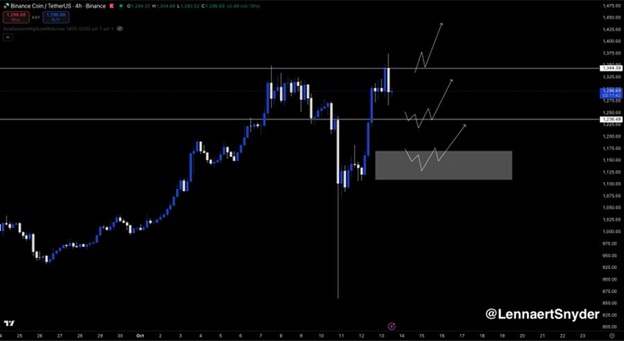
Binance Coin (BNB) price recently surged past the $1,200 mark, reclaiming bullish momentum after a sharp market correction. This move has not only caught the attention of traders but has also sparked a wave of strategic capital rotation. The number of  traders are fast securing BNB gains and are directing them into early-stage investments such as Ozak AI – a presale token initiative that pushes a possible 8,000% gain.

BNB Technical Outlook: Bullish Structure Intact

BNB exhibits a high bullish continuity in the 4 hour chart. It has rebounded after hitting the dollar at the lows and is now consolidating just below critical resistance at $1,345. A clean break out and retest to this level might have the potential to lead to additional price exploration.

There are two important support levels: $1,236 and $1170. The former is a key retest area of bullish continuation formation, and the latter coincides with a larger consolidation region which might be a deep accumulation area. These are the areas that traders are paying close attention to possible pullback trades because the overall uptrend can be seen to have confidence in the overall uptrend.

The high volume spikes during the rebound and the strong recovery candle highlight the momentum on the market. Though long-term moves tend to retrace, the two support zones are deemed to be appealing to reversal traders as well as breakout entries.

The Reason Ozak AI Is Raising Eyebrows

Since BNB traders are making profits they are shifting capital to Ozak AI ($OZ), a presale token that seeks to disrupt predictive analytics in finance. Ozak AI is currently in Phase 6 of its presale and its current offering price is $0.012, the next phase price will be $0.014. The project is being sold at a target price of $1.00, reflecting a theoretical 8,000% plus increase in price since the present level. Although not a realistic number, it has served well in creating investor interest.

The presale has sold nearly 1 billion OZ tokens thus raising around $4.20 million in funding. The presence of the visible progress and live purchase updates on the interface of a platform generates a sense of urgency and social evidence, which drives the momentum towards the final stages of the sale.

A Closer Look at the Technology

Ozak AI is distinguished by a set of predictive AI agents, which are developed on the basis of machine learning algorithms, including ARIMA, linear regression, and neural networks. These agents provide live information and predictive indicators on crypto, equities and forex markets. The investors have the ability to tailor their agents to track certain indicators and create their own strategy, combining automation with customization.

The Ozak Stream Network (OSN) facilitates safe, distributed processing of extensive financial information over numerous nodes and enhances the integrity of data and speed. Ozak AI uses EigenLayer Actively Validated Services (AVS) to enable decentralized validation and Arbitrum Orbit to execute smart contracts efficiently in its architecture and achieves scalability, speed, and verifiability.

Token Utility and Ecosystem

In addition to speculation, another purpose of $OZ tokens in the ecosystem is functional. Holders get access to premium AI agents, governance, rewards as stakeholders and sell their insights into data as a subscription. Those who post predictive signals may also receive passive income upon subscription by other users which forms a data-driven economy on the platform.

The collaborations with such organizations as Weblume and SINT and the listing on CoinMarketCap and CoinGecko are also credible. CertiK and Sherlock security audits confirm the transparency and reliability of the project.

Final Thoughts

Ozak AI has a great presale boost, developed technical framework, and distinct marketing strategy, which makes it a project that many traders are taking notes on.  Nonetheless, adoption, execution and overall market conditions will be the ultimate determinants of the end result of post-launch performance.


For more information about Ozak AI, visit the links below:

Website: https://ozak.ai/

Twitter/X: https://x.com/OzakAGI

Telegram: https://t.me/OzakAGI

Crypto Analysts’ Top 5 Picks for 2025: Why Ozak AI Could Be the Best Buy Before It Exits the $0.012 Phase

0

As the year 2025 continues to unfold, the Ozak AI project has become one of the most notable projects in the world of cryptocurrencies, attracting the close attention of both analysts and investors. At the current stage of the presale price, which is $0.012, Ozak AI uses cutting-edge AI technologies to offer financial market-specific predictive analytics. In contrast to most cryptocurrencies that are largely concerned with transactional capabilities, the ability of Ozak AI to provide real-time, AI-driven market intelligence is the strength of the company. These features allow the traders and institutions to make wiser choices in the most volatile environment, which makes a strong argument for investing early before the token leaves the current pricing stage.

Strategic Alliances that Enable Ozak AI

One of the critical forces that are supporting the prospects of Ozak AI in the market is its strategic affiliations with influential industry stakeholders. Another important factor is the partnership with Pyth Network since it will enable Ozak AI to receive real-time financial data feeds on over 100 blockchains, which will make the data used to train its AI models as recent and complete as possible. Moreover, a collaboration with Dex3 by Ozak AI widens the liquidity offering and improves the trading experiences in dealing with problems that are most likely to be critical in the case of decentralized markets. Such partnerships not only strengthen the technological potential of Ozak AI but also promote the increase in popularity and confidence of the existing blockchain players. The Rewards Hub in the platform also enhances the interaction of the users because it provides staking and governance and reward mechanisms, which cement the existence of a flourishing, long-term growth-based community.

Pre-sale Success and Investment Prospectus.

The presale conducted by Ozak AI has been very successful, and the company has collected more than $4.20 million in the sale of about 983 million tokens at the current price of $0.12. The presale is organized in stages, and the current stage is on the verge of completion. And the next stage is expected to occur with a higher price of the token before the overall launch. This tier pricing will provide the initial investors with a rare privilege to purchase tokens at a good valuation, which is likely to give them maximum returns as the project gains traction. Considerate tokenomics that distribute a significant chunk of the supply to incentivize presale and community rewards offer a strong liquidity and ecosystem-building framework, essential in maintaining interest and growth in the long term.

New Technology and Functionality

Along with partnerships and presale performance, the platform of Ozak AI is also full of innovative functions that attract developers, traders, and enterprises. The platform also promotes easy upgrades of AI models using SINT technology, which allows making upgrades without clicks and maintaining further optimization. The accessibility to different blockchain environments is extremely wide with voice interfaces and cross-chain bridges. Notably, the no-code integration tools utilizing Weblume make it possible to allow the user who is not a technical professional to adopt AI potentials successfully. The live Rewards Hub is an endeavor whereby the user is rewarded for utilizing tokens, voting on governance matters and earning rewards—creating a vibrant environment where engagement can be transformed into an actual gain. All these benefits of technology are what help to point out the ability of Ozak AI to shred the traditional financial analytics with smarter, more convenient solutions.

An Excellent Opportunity in the Year 2025 Is the Case of Ozak AI

Ozak AI is an even-handed proposal to investors who could be willing to join a progressive project that has the prospect of actual growth in 2025. The combination of AI-powered predictive analytics powered by real-time data provided by the Pyth Network, the enhancement of liquidity by Dex3, and a well-developed system of rewards and governance sets it apart from the range of other crypto assets trapped in speculative behavior that lack substantive utility. Placed above its price growth in future presale stages, Ozak AI is currently offering a strategic entry point to investors, who will soon be enjoying the technological innovation and rising market presence of the project. With blockchain and AI technologies being converged, Ozak AI is in a strategic position to capitalize on the intersection, and it can be regarded as one of the best options in the list of the top investments suggested by crypto analysts this year.

Overall, the increasing popularity of Ozak AI due to the high-profile partnerships and a successful presale, good technological base, and visionary community bonuses indicates that it can be bought before the next step of growth, which is the next $0.012 price level. Because the combination of AI innovation and crypto market opportunity is of interest to investors, Ozak AI could be viewed as an opportunity of its own, with impressive opportunities in 2025 and more.


For more information about Ozak AI, visit the links below:

Website: https://ozak.ai/

Twitter/X: https://x.com/OzakAGI

Telegram: https://t.me/OzakAGI