DD
MM
YYYY

PAGES

DD
MM
YYYY

spot_img

PAGES

Home Blog Page 2487

Elevate Your Grades: Essay Support

0

Writing Essays Doesn’t Have to Be Hard

Writing essays can feel like an uphill battle. Staring at a blank screen, unsure where to start, or trying to organize your thoughts into something that makes sense—it’s frustrating. Maybe you know what you want to say, but getting the words out is a whole other struggle. You’re not alone; most students have been there.

The good news? You don’t have to dread essay writing. Once you understand the right approach, everything becomes easier. Writing a great essay isn’t about using big words or making it longer—it’s about structure, clarity, and getting your point across. With the right strategies, you can boost your confidence and improve your grades.

If you need extra help, WriterEssay.com is a great resource to guide you through the process. Sometimes, having a little support can make all the difference. Whether it’s understanding essay structure, improving your writing style, or getting feedback, the right tools can turn essay writing from a struggle into a skill.

Start with a Solid Plan

Know What You Want to Say

Before you start writing, figure out your main point. Every essay needs a clear idea, whether it’s an argument, analysis, or explanation. Ask yourself: What am I trying to prove or explain? Once you have that, everything else will fall into place.

A strong thesis statement is the foundation of a great essay. It should be clear, specific, and debatable. For example, instead of saying, “Social media affects mental health,” try “Social media contributes to anxiety in teenagers by increasing comparison and reducing face-to-face interactions.”
Organize Your Thoughts

Jumping into writing without a plan can leave you lost. Instead, outline your main points. Think of it like a roadmap—when you know where you’re going, it’s easier to get there. Jot down your thesis, key arguments, and examples before you start writing.

Creating an outline doesn’t have to be complicated. Try this simple structure:

  • Introduction: Present the topic and thesis statement.
  • Body Paragraphs: Each one should focus on a single point that supports your thesis.
  • Conclusion: Summarize your argument and restate why it matters.

Do Your Research the Smart Way

Instead of reading everything and hoping for the best, focus on sources that are actually useful. Look for reputable articles, studies, and books that support your argument. Always take notes so you don’t have to keep going back.

A great way to keep your research organized is to create a table of key points:

Source Key Idea How It Supports Your Argument
Smith (2022) Social media increases anxiety Supports thesis with statistical evidence
Brown (2021) Face-to-face interaction benefits mental health Highlights the negative effects of reduced social interaction
Johnson (2020) Excessive screen time affects sleep patterns Adds another dimension to the argument

Make Your Essay Easy to Read

Keep Sentences Short and Clear

Long, complicated sentences don’t make you sound smarter—they make your essay harder to read. Keep it simple. If you can say something in fewer words, do it. Your professor will thank you.

Try breaking up long sentences into two shorter ones. Instead of: “Due to the fact that social media often presents an unrealistic portrayal of reality, many teenagers feel pressured to compare themselves to others, which can lead to anxiety, depression, and low self-esteem.”

Try: “Social media often presents an unrealistic reality. Many teenagers feel pressured to compare themselves to others, leading to anxiety, depression, and low self-esteem.”

Avoid Filler Words

Words like “in order to,” “due to the fact that,” or “it is important to note that” just take up space. Get to the point. Instead of “in order to explain the topic,” just say “to explain the topic.” It’s cleaner and clearer.

Use Strong Examples

Your argument is only as good as your evidence. Use real examples, statistics, or quotes to back up your points. The stronger your proof, the stronger your essay.

Instead of saying, “Social media affects teenagers negatively,” give a concrete example: “A study by the APA found that teenagers who spend more than three hours on social media daily are twice as likely to experience symptoms of anxiety.”

Editing Makes All the Difference

Read It Out Loud

One of the easiest ways to catch mistakes is to read your essay out loud. If something sounds weird, it probably needs to be changed. Reading aloud helps with sentence flow and clarity.

Get a Second Opinion

Ask a friend, teacher, or tutor to look at your essay. They might catch things you missed, like awkward phrasing or unclear points. Fresh eyes always help.

Use Online Tools

Grammar checkers and editing tools can be lifesavers. While they won’t catch everything, they help clean up basic mistakes and make your writing clearer. Try using tools like Grammarly or Hemingway Editor to spot common errors.

Level Up Your Writing Skills

Expand Your Vocabulary (The Right Way)

Using advanced vocabulary is great, but only if it makes sense. Don’t throw in big words just to sound smart. Instead, focus on using precise words that strengthen your argument. Instead of saying “bad,” try “harmful,” “damaging,” or “detrimental.”

A simple exercise to build your vocabulary is to replace weak adjectives with stronger ones. For example:

  • Weak: The book was good.
  • Strong: The book was insightful and thought-provoking.

Master Transitions

Smooth transitions make your essay easier to follow. Instead of jumping from one idea to another, connect them with transition words like:

  • For contrast: However, on the other hand, conversely.
  • For addition: Furthermore, in addition, moreover.
  • For conclusion: Ultimately, in summary, therefore.

Final Thoughts

Essay writing doesn’t have to be stressful. Once you break it down into simple steps—planning, writing, and editing—it becomes manageable. The more you practice, the better you’ll get. And if you ever need extra guidance, WriterEssay is there to help.

With the right support, writing essays can go from frustrating to rewarding!
Okonjo-Iweala to African Leaders: Stop Relying on Foreign Aid, Tap Into Domestic Wealth

2

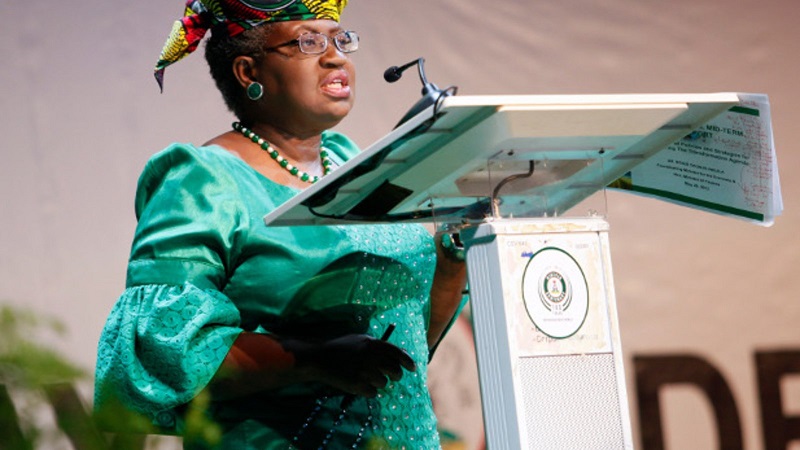
The Director-General of the World Trade Organisation (WTO), Dr. Ngozi Okonjo-Iweala, has issued a stern call to African leaders, urging them to abandon their long-standing reliance on foreign aid and instead mobilize domestic resources to attract investments and drive economic growth. 

Her remarks come at a critical time, as the recent suspension of the United States Agency for International Development (USAID) by the US government has thrown many African countries into uncertainty, exposing the continent’s dangerous overdependence on external assistance.

Speaking on the sidelines of the African Union (AU) meeting in Ethiopia, Okonjo-Iweala warned that the continued dependence on aid not only hinders economic self-sufficiency but also leaves African nations vulnerable to abrupt policy shifts from donor countries.

“Africa really needs to change its mindset about access to aid. We should begin to see it as a thing of the past,” she said.

Instead of waiting for handouts, the WTO chief advised that Africa should focus on two key areas: attracting investment and mobilizing domestic financial resources.

The Impact of USAID Suspension in Africa

Okonjo-Iweala’s call comes amid mounting concerns over the recent suspension of USAID operations by the US government, which has left thousands of aid-dependent projects in disarray across Africa. The decision, made by US President Donald Trump’s administration, has triggered controversy and alarm in many African countries, which have historically relied on USAID-funded programs for critical sectors such as healthcare, education, agriculture, and infrastructure.

USAID is one of the largest sources of development aid for Africa, with an annual budget exceeding $20 billion for projects across the continent. It plays a major role in funding programs related to:

  • Healthcare (HIV/AIDS treatment, malaria eradication, maternal and child health)
  • Food security and agriculture
  • Education and literacy programs
  • Economic development and infrastructure
  • Democracy and governance initiatives

Several African nations, including Nigeria, Kenya, Ethiopia, Ghana, South Africa, and Uganda, have historically been top beneficiaries of USAID funding. The agency’s sudden suspension has left many governments scrambling to fill the funding gap, exposing the fragility of their financial planning and economic policies.

Africa’s Overreliance on Aid is A Dangerous Precedent

Despite Africa’s vast natural and financial resources, the continent continues to heavily depend on external assistance, making it vulnerable to abrupt policy changes in donor nations. According to economic analysts, foreign aid often comes with political strings attached, limiting the sovereignty of African governments in decision-making.

By depending on aid rather than building self-sustaining economies, African nations have weakened their bargaining power on the global stage, often being forced to adhere to donor-imposed conditions that may not always align with their national interests.

Okonjo-Iweala argued that African nations have enough domestic wealth to finance their own development, but leaders must be willing to mobilize these resources efficiently.

Unlocking Africa’s Domestic Wealth Through Pension Funds and Development Banks

A major financial asset that Africa has failed to effectively leverage, according to Okonjo-Iweala, is pension funds. She revealed that the continent holds approximately $250 billion in pension assets, yet much of this money is invested outside Africa, benefiting foreign economies instead of driving local growth.

“The biggest pension funds are in South Africa, followed by Nigeria, Kenya, Morocco, Botswana, and Namibia. These resources are hugely significant, and we need to find ways to tap into them,” she said.

She also emphasized the need to recapitalize Africa’s multilateral development banks, such as the African Finance Corporation (AFC), which have a combined balance sheet of only $70 billion, despite Africa’s annual infrastructure financing gap of over $200 billion.

“Instead of looking outward for financial support, we must strengthen our own institutions,” she urged.

Halting Export of Raw Materials Without Value Addition

Beyond financial resources, Okonjo-Iweala stressed that Africa must take full control of its vast mineral wealth and develop local industries to process its raw materials. She pointed to minerals like lithium, manganese, and copper, which are crucial for electric vehicle (EV) battery production, as prime examples of Africa’s underutilized potential.

Instead of exporting these raw materials cheaply, Africa should invest in processing plants to create jobs, boost intra-continental trade, and develop a strong industrial base.

“We need to develop our processing industries to create jobs, boost intra-continental trade, and ensure we stop exporting raw materials without value addition,” she stated.

Welcome Omodayo Owotuga Foundation Fellows to the #BestSchool

0

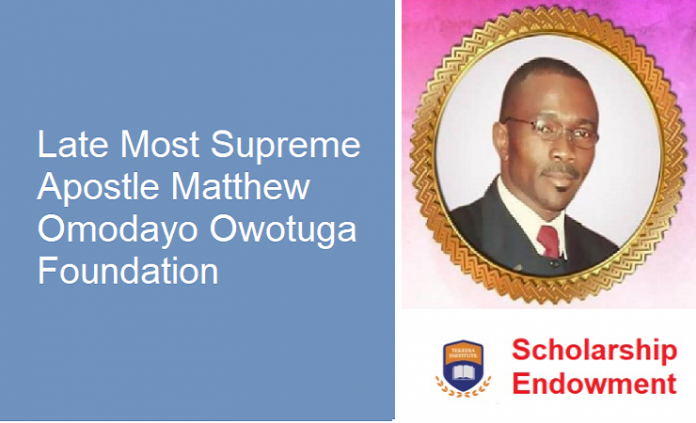
On behalf of the Tekedia Nation, I want to specifically welcome dozens of young people who have joined the current edition of Tekedia Mini-MBA through a generous endowment, made possible by Omodayo Owotuga Foundation, in honor of Late Most Supreme Apostle Omodayo Owotuga, who passed to glory about a decade ago.

The Foundation endowed a generous scholarship in our Institute in 2021 and through that, more than 300 people have attended our program with full scholarships . The Foundation trustees noted that this act of generosity and benevolence was born out of commemorating and promoting the legacy of Late Most Supreme Apostle Omodayo Owotuga.

I welcome all the Fellows to Tekedia Institute as we thank the Foundation for this partnership.  Tekedia Institute is the #1 school to master the mechanics of business management and the construct of entrepreneurial capitalism. Welcome Fellows to the #BestSchool.

FTX Repayments Start from 18th February 2025

0

As creditor repayments for FTX are scheduled to commence tomorrow, there has been notable activity with Bitcoin moving out of wallets associated with the now-defunct FTX cryptocurrency exchange. According to various reports, the first round of repayments is expected to begin on February 18, 2025. This involves distributing over $18 billion to creditors, with a significant portion expected to flow back into cryptocurrencies, particularly Bitcoin and altcoins.

FTX was primarily a cryptocurrency exchange, allowing users to trade a wide variety of cryptocurrencies. It also offered futures and options trading, staking, and yield farming through its associated platform, FTX.US for US customers. Known for its innovative trading products like leveraged tokens and a tokenized version of its native token, FTT. FTX had a close relationship with Alameda Research, a trading firm also founded by Sam Bankman-Fried, leading to conflicts of interest and financial entanglements.

FTX Filed for Chapter 11 bankruptcy in November 2022 after a liquidity crisis was triggered by reports of financial mismanagement and misuse of customer funds for risky investments via Alameda Research. A significant portion of customer funds was allegedly used to prop up Alameda Research, leading to the inability to fulfill withdrawal requests, which ultimately led to its collapse.

Genesis faced liquidity problems after the collapse of the Terra ecosystem in May 2022, exacerbated by the broader crypto market downturn and the fallout from Three Arrows Capital (3AC), a major borrower from Genesis, defaulting on loans. Genesis Global Holdco and two of its lending subsidiaries filed for bankruptcy in January 2023, marking the beginning of a process to restructure and repay creditors. Genesis began preparing for creditor repayments, with movements of assets like Bitcoin out of its wallets noted as part of this process. A settlement of $2 billion was part of the deal to return assets to creditors.

Post-bankruptcy, efforts have been made to recover assets, with billions in cash and crypto being identified. The plan includes repaying creditors with a significant portion of these recovered assets, starting in February 2025, Ongoing investigations and legal actions against former executives, including Sam Bankman-Fried, who has been convicted on multiple counts of fraud and conspiracy.

There’s been speculation and discussion around how these repayments might affect Bitcoin’s price. The influx of liquidity from these repayments could potentially lead to increased buying pressure for Bitcoin if creditors choose to reinvest their recovered funds into the cryptocurrency market. However, the exact market impact remains uncertain, as some creditors might opt to convert their Bitcoin to fiat for financial security or other reasons.

Given the scale of the FTX bankruptcy, with creditors being owed billions, the volume of Bitcoin moving out of FTX wallets is anticipated to be significant. This could lead to increased market volatility in the short term, depending on how and when these Bitcoins are reintroduced to the market by creditors.

FTX collapse had a significant impact on the trust in centralized cryptocurrency exchanges, leading to increased regulatory scrutiny and calls for better practices, transparency, and security across the industry. The FTX repayments will serve as a beacon on investors whose hopes have been on check for a possible repayment plan since FTX filed for Chapter 25 Bankruptcy in 2022.

Lagos State Partners with Lafarge Africa to Convert Non-Recyclable Waste into Alternative Fuel

0

A Bold Step Towards a Zero-Waste Future

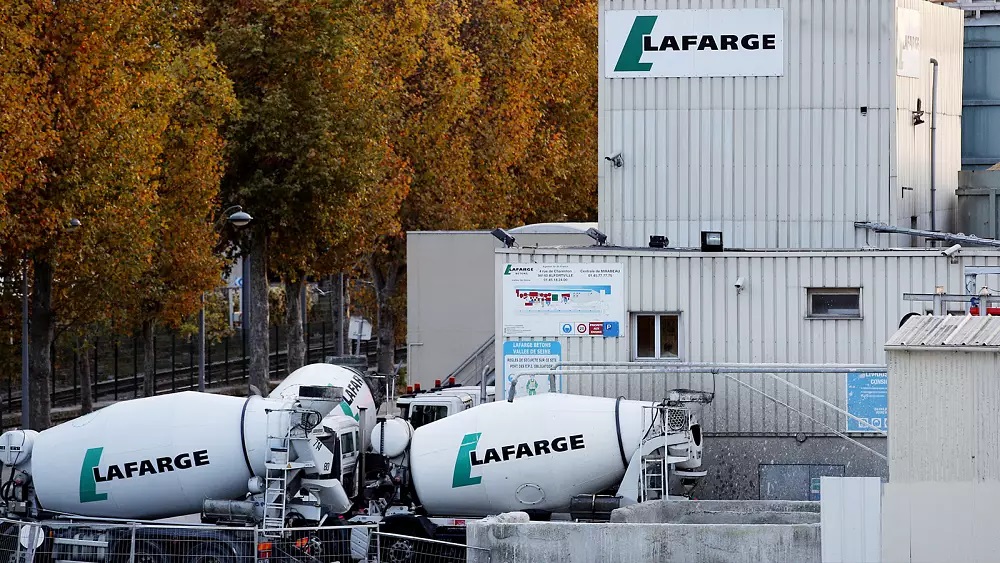
In a move to address Lagos State’s waste management crisis, the Lagos State Government, through the Ministry of Environment and Water Resources, has signed a Memorandum of Understanding (MoU) with Lafarge Africa PLC to utilize non-recyclable combustible waste as an alternative fuel source.

This strategic partnership is part of the government’s broader agenda to reduce landfill waste, promote environmental sustainability, and achieve a circular economy.

Under the agreement, Lafarge Africa will collect and process non-recyclable waste from companies and landfill sites across Lagos before diverting it to its Ewekoro Plant for use as fuel in its production process.

The development was announced by Tokunbo Wahab, Lagos State Commissioner for Environment and Water Resources, via X (formerly Twitter) on Monday.

Wahab described the initiative as a significant step towards a zero-waste future for Lagos State, adding that it will help reduce the pressure on landfills and create a more sustainable waste management system.

A Sustainable Approach Applauded by Environmentalists

Unlike previous instances where waste-related policies resulted in outright bans that negatively impacted businesses, this initiative has been widely praised for striking a balance between environmental responsibility and economic sustainability.

Environmentalists note that such partnerships offer a more pragmatic and effective approach to waste management than restrictive policies that could stifle industrial activities. Lagos is demonstrating how sustainability and economic growth can coexist by incorporating waste into industrial fuel sourcing.

Key Benefits of the Lagos-Lafarge Partnership

According to the Lagos State Government, this collaboration will bring several crucial benefits, including providing a sustainable and reliable fuel source for Lafarge’s production, reducing reliance on fossil fuels, and integrating waste collection with energy production to cut landfill costs and reduce fuel expenses.

The initiative also aligns with local and international environmental policies, ensuring regulatory compliance, and supports the state’s Environmental, Social, and Governance (ESG) goals.

The MoU signing ceremony was attended by top government officials and corporate executives, highlighting the project’s importance. Key attendees included Lolu Alade-Akinyemi, CEO of Lafarge Africa PLC; Olakunle Rotimi-Akodu, Special Adviser on Environment; Dr. Gaji Omobolaji, Permanent Secretary, Office of Environmental Services; Engr. Mahamood Adegbite, Permanent Secretary, Office of Drainage Services; Mrs. Adetoun Popoola, General Manager of LASPARK; Engr. Mukhtaar Tijani, Managing Director of Lagos Water Corporation; and Engr. Adefemi Afolabi, General Manager of LASWAMO.

Lagos’ Expanding Waste Management Initiatives

This partnership with Lafarge Africa is one of several recent collaborations aimed at overhauling Lagos’ waste management system. In recent months, the Lagos State Government has entered into agreements with international firms to develop innovative waste solutions, including partnerships with Dutch companies, Closing the Loop and Harvest Waste Consortium, for landfill decommissioning, waste-to-energy conversion, and electronic waste management.

The state is also working with Ghana-based Jospong Group, which plans to transform collected waste into compost fertilizers and plastic bins, with operations expected to begin within six to seven months. In addition, Lagos is exploring collaborations with Swedish organizations to convert both solid and liquid waste into energy, further reinforcing its commitment to alternative energy sources.

In October 2024, Lagos signed a Letter of Intent with GreenDeal Chemicals & Recycling and Greenback Recycling Technologies Ltd to launch a plastic waste-to-energy initiative at the decommissioned Abule Egba landfill. This pilot project aims to reduce plastic waste and convert it into energy through advanced chemical recycling, supporting the state’s circular economy goals.