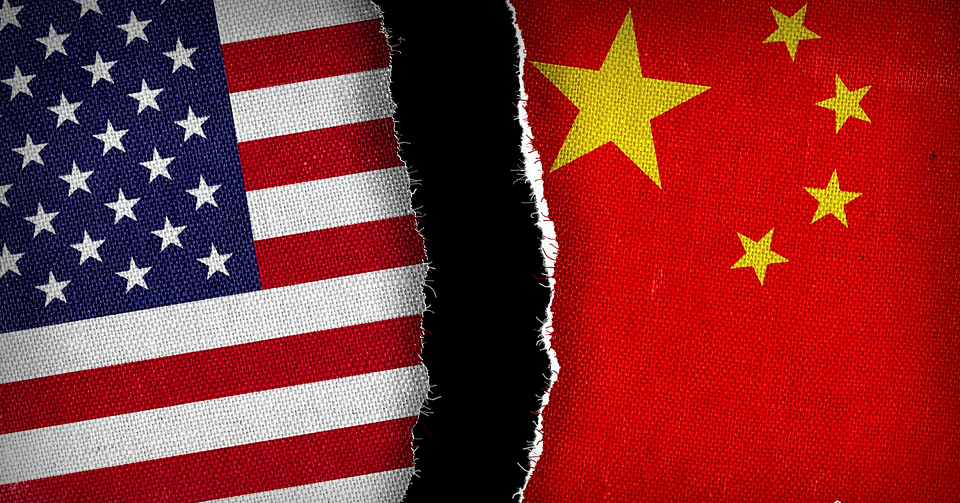
As the trade war between the United States and China escalates, with U.S. tariffs on Chinese imports soaring to 145% and China retaliating with a 125% levy on American goods, Beijing appears to be opting against a seemingly viable countermeasure – devaluing its yuan.
Economists and market analysts believe that while weakening the currency could theoretically offset the impact of President Donald Trump’s tariffs, China’s policymakers are steering clear of this tactic, prioritizing financial stability over short-term trade relief. The decision, rooted in fears of market chaos and capital flight, underscores China’s careful approach as it navigates one of the fiercest economic showdowns in recent history.
The latest punch in the trade war came on Friday, when China’s finance ministry announced the tariff hike from 84% to 125%, a direct response to the White House’s confirmation that U.S. tariffs on Chinese goods had reached 145%, including a 125% base rate and a 20% levy tied to fentanyl concerns. Trump, announcing the base tariff earlier this week via Truth Social, framed it as a necessary move to curb China’s “lack of respect” for global markets, vowing to end its trade dominance. China’s ministry countered, labeling U.S. actions “unilateral bullying” that violates international trade rules, yet signaled restraint by stating it would not match further tariff increases, hinting at alternative strategies.
Amid this tit-for-tat, the yuan’s role has drawn intense interest. Earlier this week, the offshore yuan slumped to a record low of 7.4287 against the dollar, and the onshore yuan hit 7.3509 on Thursday, its weakest since 2007 after the People’s Bank of China (PBoC) set its midpoint rate at its lowest since 2023. The slide fueled speculation that Beijing might devalue the yuan to make Chinese exports cheaper, offsetting the crushing effect of U.S. tariffs. However, economists overwhelmingly argue that China will not pursue this path, despite its potential as a trade weapon, due to the severe risks it poses to the nation’s already fragile economy.
“RMB devaluation will not be part of China’s retaliation toolkit to U.S. tariffs,” said Joey Chew, HSBC’s head of Asia FX, in an interview with CNBC.
She emphasized that a sharp weakening could erode consumer confidence and trigger capital outflows, a scenario China is desperate to avoid. The memory of 2015 comes flashing when a yuan devaluation led to nearly $700 billion in capital flight, destabilizing markets and shaking global confidence.
“Rapid depreciation is inviting financial crisis on its own,” said Dan Wang, China Director at Eurasia Group, highlighting Beijing’s top concern, which is preventing a repeat of such chaos.
The yuan’s stability is tightly managed by the PBoC, which sets a daily midpoint rate and restricts trading to a 2% band around it, unlike free-floating currencies like the dollar or yen. This control was evident earlier this year when the bank intervened to prop up the yuan against a surging dollar, discouraging speculative bets on its decline.
Among 11 analysts polled by CNBC, most predict only a gradual, orderly depreciation, with Mizuho’s Ken Cheung forecasting a year-end onshore USD/CNY rate of 7.12, the lowest in the group.
“The PBoC is guiding some depreciation via the fixing, but a sharp devaluation is not likely,” Cheung said, suggesting China will allow “two-way FX volatility” to navigate turbulent markets.
Even though devaluation could theoretically cushion the blow of 145% U.S. tariffs by lowering export prices, economists argue it’s a flawed strategy at this scale.
“How can a country depreciate by such a level without triggering financial instability? It will be very difficult,” said Jianwei Xu of Natixis, noting that even a significant drop wouldn’t fully offset tariffs of this magnitude.
Veteran investor David Roche took it further, arguing that a stable yuan forces the U.S. to bear the cost of its tariffs, given China’s role as America’s largest supplier.
“The best way to make the Americans pay is to keep the currency stable,” he told CNBC, suggesting devaluation could inadvertently ease pressure on U.S. consumers.
However, not all analysts dismiss the possibility of a weaker yuan. Jonas Goltermann of Capital Economics warned that prolonged high tariffs could push the USD/CNY rate to 8 by year-end, potentially sooner given recent trade war developments. But he conceded that even this wouldn’t negate the tariffs’ impact, denoting the limited upside of devaluation.
Most agree China’s economy, already stuttering with weak domestic demand and export pressures, can’t afford the risks of a currency slide, especially as it targets 5% growth for 2025.
Instead of devaluation, China is turning to other tools. On Friday, the PBoC reaffirmed a “moderately loose” monetary policy, signaling stimulus measures like infrastructure spending and consumer subsidies to offset trade losses.
“China is more likely to utilize domestic stimulus to project market stability,” said Kamil Dimmich of North of South Capital LLP, who suggested Beijing might repatriate capital from U.S. Treasury holdings to bolster the yuan. Trade diversification is another focus, with China deepening ties with ASEAN, Africa, and Latin America to reduce reliance on the U.S. market.
The trade war’s toll is already staggering. In the U.S., consumers face an estimated $1,900 in added costs per household this year, while exporters like farmers lose access to China’s $143.5 billion market. China risks a 1.5-2% GDP hit, threatening millions of jobs in export hubs.
Globally, markets are in turmoil: the S&P 500 dropped 20% from its peak on Friday, Asian indices faltered, and gold hit near-record highs. The European Union, fearing diverted Chinese goods, is exploring new trade deals, including talks to lift tariffs on Chinese EVs, while Japan and Canada navigate their own U.S. tariff battles.
However, economists agree that while devaluing the yuan remains a viable option on paper, its risks far outweigh its rewards.