DD
MM
YYYY

PAGES

DD
MM
YYYY

spot_img

PAGES

Home Blog Page 26

Avigilon vs Axis vs Coram: AI Video Analytics and Open Surveillance Platforms Compared

1

Enterprise video surveillance has entered a period of rapid change. What was once centered on recording video for after-the-fact review has evolved into real-time intelligence that supports safety, compliance, and operations. In 2026, enterprises are no longer asking whether to adopt AI-powered surveillance, but which platform can deliver intelligence without locking them into rigid architectures.

According to MarketsandMarkets, the global video surveillance market is expected to exceed $80 billion by 2030, driven largely by AI video analytics, cloud adoption, and demand for open, interoperable systems. At the same time, enterprises are consolidating vendors, modernizing legacy infrastructure, and rethinking how video data fits into broader security and business workflows.

When organizations compare platforms in this new landscape, three names frequently surface: Avigilon, Axis, and Coram. Each represents a different philosophy around AI, openness, and how surveillance systems should evolve.

Rather than reviewing each platform in isolation, this article compares Avigilon vs Axis vs Coram by examining the key differences that actually matter to enterprises in 2026.

Avigilon vs Axis vs Coram: Key Differences That Matter in 2026

1. System Architecture and Deployment Model

Avigilon

Avigilon is primarily designed for on-premise or hybrid deployments. Its core software, Avigilon Control Center (ACC), runs on local servers that handle video storage and analytics, with optional cloud services layered on top. This architecture gives enterprises strong control over data locality and performance, which is why Avigilon is widely used in government, transportation, and critical infrastructure environments.

The tradeoff is complexity. Scaling typically requires additional servers, storage planning, and ongoing IT involvement at each site.

Axis
Axis takes an open, edge-centric approach to surveillance architecture. Axis cameras are designed to process video and analytics directly at the edge, reducing reliance on centralized servers. Axis Camera Application Platform (ACAP) allows analytics to run on-camera or through partner software.

Axis itself does not operate as a full cloud VMS. Instead, it enables a wide ecosystem of VMS and analytics partners, giving organizations flexibility but also requiring more system design and integration work.

Coram
Coram follows a cloud-native, infrastructure-agnostic model. It connects existing IP cameras to the cloud and layers AI-powered intelligence on top, eliminating the need for traditional NVRs without forcing camera replacement.

This architecture supports phased rollouts and hybrid environments, making it easier for large enterprises to modernize without disrupting existing operations.

  1. AI and Video Analytics Capabilities

Avigilon

Avigilon is known for advanced, forensic-grade AI analytics. Its capabilities include appearance search, behavior detection, and facial recognition where regulations permit. These tools are particularly strong for post-incident investigation and detailed analysis in high-security environments.

Avigilon’s AI is powerful, but it is often optimized for investigative depth rather than rapid, operational response.

Axis

Axis focuses on edge-based AI analytics. Many analytics run directly on the camera, including motion detection, object classification, and scene understanding. Axis also supports third-party AI applications through its open platform, allowing organizations to choose analytics tailored to specific use cases.

While this flexibility is a major strength, it also means analytics quality depends heavily on which applications are deployed and how well the system is configured.

Coram

Coram emphasizes real-time video intelligence designed to reduce human effort. Its AI focuses on making video searchable, surfacing important events quickly, and minimizing time spent reviewing footage.

Rather than relying solely on edge analytics, Coram combines cloud-based intelligence with existing cameras, enabling faster response and operational awareness across sites.

  1. Open Surveillance and Hardware Flexibility

Avigilon

Although Avigilon supports integrations, its strongest performance typically comes from using Avigilon-certified cameras and hardware. This can limit flexibility for organizations with diverse camera brands or long-term hardware investments.

Axis

Axis is widely regarded as the gold standard for open surveillance hardware. Axis cameras are designed to work with a broad range of VMS platforms and analytics providers. This openness allows enterprises to avoid vendor lock-in and design systems that evolve over time.

However, openness also shifts responsibility to the integrator or internal team to ensure compatibility and performance.

Coram

Coram is hardware-agnostic and works with existing IP cameras. Enterprises can keep their current camera investments while modernizing analytics and management through the cloud.

This flexibility is especially valuable for organizations with hundreds or thousands of deployed cameras that cannot be replaced all at once.

  1. Access Control and Unified Security Operations

Avigilon

Access control is available through Motorola Solutions’ broader ecosystem. While integrations exist, video surveillance and access control are often managed as separate systems, which can slow investigations and response during incidents.

Axis

Axis does not provide native access control software. Instead, it relies on partners for access control and unified security workflows. This allows customization but requires additional integration effort to achieve a single operational view.

Coram
Coram integrates video directly with its access control software, linking door events, alerts, and camera footage in one workflow. Security teams can immediately see what happened, where it happened, and who was involved without switching tools.

This unified approach is increasingly important for modern enterprises managing complex facilities and distributed teams.

  1. Scalability and Multi-Site Management

Avigilon

Avigilon scales effectively for large campuses and controlled environments. However, expansion often involves deploying additional servers and infrastructure, which can slow rollout for geographically distributed enterprises.

Axis

Axis hardware scales well globally and is used in large deployments worldwide. However, because Axis relies on third-party VMS platforms, multi-site management experience depends heavily on the chosen software layer.

Coram
Coram is designed for multi-site enterprises from the ground up. Its centralized cloud dashboard allows teams to manage cameras, access events, and alerts across locations while enforcing consistent policies.

This makes Coram well-suited for enterprises operating headquarters, regional offices, campuses, or mixed-use facilities.

  1. Cost Structure and Long-Term Value

Avigilon
Avigilon typically involves higher upfront costs due to servers, storage, and licensing. Long-term value depends on how extensively advanced analytics are used and whether organizations can support ongoing infrastructure needs.

Axis
Axis cameras are often priced at a premium, reflecting build quality and open platform capabilities. Total cost of ownership varies widely depending on which VMS and analytics partners are selected.

Coram
By reusing existing cameras and focusing investment on software and AI, Coram often lowers upfront costs. Long-term value comes from reduced operational overhead, faster investigations, and unified security workflows.

FAQs

Which is better: Avigilon or Axis?

Avigilon is stronger for turnkey analytics and investigative depth, while Axis excels as an open, flexible hardware platform with broad ecosystem support.

Why do enterprises compare Avigilon vs Axis with Coram?

Because Coram offers a third approach that combines cloud intelligence with existing hardware, appealing to organizations that want modernization without vendor lock-in.

Does Axis provide a full video management system?

Axis focuses on cameras and edge analytics and relies on partner VMS platforms for full system management.

Is Coram fully cloud-based?

Coram is cloud-native but supports hybrid environments by working with existing IP cameras rather than requiring full hardware replacement.

Which platform is best for open surveillance strategies?

Axis and Coram both support open surveillance. Axis focuses on open hardware ecosystems, while Coram focuses on open, hardware-agnostic software intelligence.

Key Takeaways

  • Avigilon vs Axis vs Coram reflects three different surveillance philosophies
  • Avigilon prioritizes control and advanced forensic analytics
  • Axis leads in open, edge-based surveillance hardware
  • Coram focuses on cloud-native intelligence without hardware lock-in
  • Unified security workflows are becoming essential for enterprises
  • Long-term flexibility and operational efficiency matter more than brand familiarity

Conclusion

Avigilon, Axis, and Coram each represent a distinct approach to AI video analytics and open surveillance.

Avigilon is built for environments that demand deep analytics and tight control. Axis provides unmatched flexibility through open hardware and a broad partner ecosystem. Coram bridges these worlds by delivering cloud-native intelligence while preserving existing infrastructure and unifying security operations.

In 2026, the right choice is less about which platform is most established and more about which aligns with an organization’s long-term strategy. Enterprises that prioritize adaptability, scalability, and actionable intelligence will be best positioned to thrive as surveillance continues to evolve beyond cameras and into real-time decision-making systems.


A Simple $300 Buy-In Could Reach $150K–$450K If Ozak AI Hits Its High-End Long-Term Range

0

Retail crypto traders are increasingly revisiting the idea that modest early investments can grow into life-changing positions — and one project at the center of that discussion is Ozak AI ($OZ). With the token currently priced at $0.014 in Phase 7 of its presale, a number of analysts and influencers argue that a simple $300 buy-in today may eventually grow into a six-figure or even multi-six-figure position if Ozak AI reaches the upper end of its projected long-term valuation range.

While nothing in crypto is certain, the speculation is rooted in an expanding AI-driven market narrative and the project’s attempt to position itself as a serious infrastructure play instead of a typical presale token.

Why Ozak AI Has Captured Long-Term Attention

The long-term bullish thesis for Ozak AI stems from its intention to build a comprehensive AI ecosystem tailored for traders, developers, and data-intensive crypto users. Unlike many early-stage projects that rely only on token hype, Ozak AI outlines several functional components expected to launch in phases.

Among its core features are:

  • The Ozak Stream Network (OSN) — a real-time data engine designed to deliver low-latency analytics and predictive insights across multiple financial markets.
  • Prediction Agents (PAs) — customizable AI models that users can assign to track market behavior, scan on-chain signals, or monitor sentiment patterns across various assets.
  • AI-driven performance reward loops — where high-accuracy data models can earn additional incentives for users inside the ecosystem.
  • Multi-chain intelligence integrations — giving the platform deeper visibility into market flows beyond a single blockchain.

These features help frame Ozak AI as a toolset rather than a mere speculative token, which is a major reason long-term valuation forecasts have expanded significantly.

Two Confirmed Partnerships Fueling the Higher-End Forecasts

Ozak AI’s growing ecosystem is reinforced by notable collaborations that traders say add long-term legitimacy:

1. Hive Intel – Deep Multi-Chain Data Layer

Hive Intel provides advanced, cross-chain data streams that include wallet behavior, liquidity movement, DeFi and NFT activity, and broader market analytics. This partnership enhances the quality of data feeding into Ozak AI’s prediction models, giving its AI engine a richer and more comprehensive level of insight.

2. SINT – Automated Execution for AI Agents

Through its integration with SINT, Ozak AI plans to pair predictive signals with automated on-chain execution tools. This could allow users to convert insights from Prediction Agents directly into trading actions or automated strategies, bridging the gap between analysis and execution in real time.

Together, these partnerships contribute to the perception that Ozak AI is not just presenting a roadmap — it is actively building around an ecosystem.

Why a $300 Entry May Hold Long-Term Potential

Traders who study early-cycle AI token behavior often point out that modest entries during presales can turn into disproportionately large positions if the project reaches its long-term valuation targets.

In Ozak AI’s case, the idea is straightforward:

  • A buy-in during the presale phase locks in a very low cost basis.
  • If the token later enters its predicted high-end price range — supported by real AI utility, exchange listings, and broad market adoption — the early investment grows dramatically without needing constant reinvestment or trading.

A scenario discussed across various trading communities suggests that a $300 position today could eventually evolve into $150K–$450K if Ozak AI delivers on its more optimistic long-term projections and secures widespread adoption in the AI-crypto sector.

Community Belief: AI Tokens Are Just Getting Started

With AI becoming one of the strongest narratives heading into the next crypto cycle, many traders believe the market is still in the early stages of pricing in the value of AI-driven platforms. The combination of real-world demand for better predictive tools, rising institutional interest in AI, and the sector’s rapid technological advancement has led analysts to argue that the next generation of AI tokens could outperform previous market leaders.

Ozak AI — with live presale traction, advanced feature development, and confirmed partnerships — is increasingly mentioned as one of the potential early-cycle standouts.

A High-Risk, High-Reward Strategy Still — But One Getting Attention

Of course, long-term projections are speculative, and Ozak AI still must deliver its platform, complete its integrations, and achieve user adoption to justify these forecasts. But the possibility that a small entry could turn into a staggering long-term position is precisely what draws early-cycle investors into projects like this.

The message from traders is clear: Ozak AI is shaping up to be one of the most closely observed AI presales of the current cycle — and even a modest investment might hold significant potential if the project hits the upper end of its long-term range.


For more information about Ozak AI, visit the links below:

Website: https://ozak.ai/

Twitter/X: https://x.com/OzakAGI

Telegram: https://t.me/OzakAGI

“Remember Me”: The Lessons from Joseph On Career Elevation

0

He was betrayed by his own brothers, sold into slavery, and eventually thrown into prison. Yet even in confinement, Joseph deployed his gifts. Two of Pharaoh’s servants had troubling dreams, and Joseph interpreted them, a pro bono service, freely offered, yet delivered with excellence. But he also did something profoundly strategic: he asked one of them, “When it is well with you, remember me.” Yes, “remember me” is the vital phrase, not just accepting his “Thank you”.

Time passed, and Pharaoh himself had a dream no astrologer, sage, or thinker could decode. Then the freed servant remembered Joseph: “A young Hebrew interpreted our dreams…and everything happened exactly as he said.” Pharaoh sent for Joseph, and destiny opened.

There are deep lessons here:

(1) Joseph used unpaid work to showcase capability. He added value before he was paid for it.

(2) Joseph was intentional about being remembered. His request was clear: “Mention me to Pharaoh.” He understood that greatness requires both competence and advocacy. And that is the core wisdom: until people can recommend you in your absence, certain elevations will never come. Joseph was still in jail, but a good word spoken in the right room brought him before the king.

So ask yourself: How many times have you asked colleagues, supervisors, or partners, not just to thank you for a job well done, but to remember you when opportunities arise? These days we say “do not mention”, a nonsensical idiomatic way of saying forget I helped!

In my family here, when we rise in the morning, we pray: “Oh Lord, as You send Your angels on assignment today, REMEMBER us. Qualify us for them to remember us. Let Your blessings locate us in the day and in the night. Our hands are lifted up, and by thy grace, we do not stand as strangers before You. Remember us”.

Amazing grace as you ask someone to REMEMBER you. No great career can be unlocked until people can remember and recommend you in your absence. Happy Sunday.

U.S. Plans to Rapidly Revive Venezuela’s Oil Output by Harnessing Chevron and Major Service Firms

0
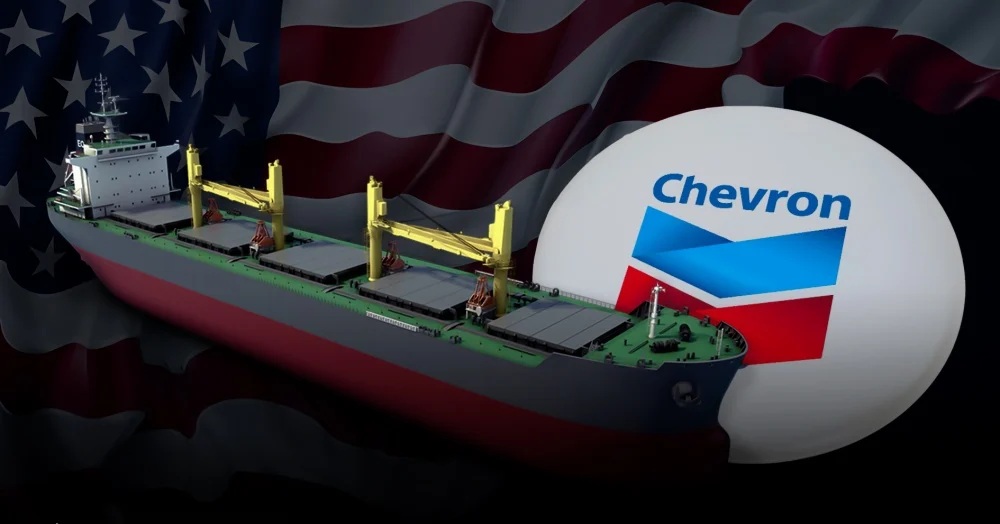
chevron oil tanker
chevron oil tanker

The United States is in active discussions with Chevron and other major oil producers and service providers about a fast-track plan to increase Venezuela’s crude oil production.

This move underscores how energy policy, geopolitics, and economics are converging following the dramatic shift in power in Caracas.

Senior U.S. officials told Bloomberg News that Washington has explored deploying American oilfield service heavyweights, including SLB, Halliburton, and Baker Hughes, to repair and replace Venezuela’s aging equipment and refresh older drilling sites. With limited but targeted investment, officials believe Venezuela could lift crude output by several hundred thousand barrels per day in the short term, as modern U.S. equipment and techniques could quickly bring existing wells back online and unlock incremental production within months.

The discussions come against the backdrop of President Donald Trump’s renewed emphasis on boosting Venezuelan oil production after the capture and removal of long-time leader Nicolás Maduro. Trump said on Friday that U.S. oil companies would soon begin drilling in Venezuela, making clear his desire to restore output in a country that holds some of the world’s largest proven crude reserves. Venezuela’s reserves are estimated at more than 300 billion barrels, but years of mismanagement, corruption, sanctions, and chronic underinvestment have left its oil industry a shadow of its former self.

At its peak in the early 2000s, Venezuela produced as much as 3.5 million barrels per day. By late 2025, output had fallen below 1 million barrels per day, depriving the country of its main source of foreign currency and contributing to a prolonged economic collapse. Reviving Venezuelan crude production offers Washington a strategic opportunity to reshape global energy flows, bolster supply, and deepen U.S. influence in Latin America at a time of heightened competition with China and Russia.

Chevron is central to the plan because it is the only major U.S. oil company that never fully exited Venezuela. Operating under a sanctions waiver, Chevron has been producing roughly 240,000 barrels per day through joint ventures with state-owned PDVSA. Its existing infrastructure, workforce, and relationships put it in a unique position to scale up production more quickly than other international firms if political and regulatory conditions allow. Energy analysts say Chevron’s footprint could serve as the backbone for a broader U.S.-led effort to stabilize and expand Venezuelan output.

Oilfield service companies would play an equally critical role. SLB has previously said it could rapidly boost operations in Venezuela with the right licenses and commercial protections in place, noting that it has maintained a local presence despite years of constraints. Halliburton has also signaled interest in returning more aggressively to the country, though executives have stressed the need for clear payment mechanisms and legal safeguards. Baker Hughes, while less publicly vocal, has been included in discussions aimed at upgrading outdated infrastructure and restoring production capacity that has been offline for years.

The renewed push, however, is not without complications. U.S. sanctions remain a key constraint, and while Washington has shown greater flexibility in recent years, the legal framework governing foreign participation in Venezuela’s oil sector is still evolving. The Venezuelan National Assembly has been debating reforms that would reduce state dominance, expand the role of private operators, and strengthen investor protections, including access to international arbitration. Whether those reforms will be fully implemented and respected remains an open question for companies weighing large capital commitments.

There is also lingering caution among U.S. energy firms after years of asset seizures and contract disputes under previous Venezuelan governments. Even with political backing from Washington, many companies remain wary of committing billions of dollars without long-term guarantees on ownership rights, revenue repatriation, and regulatory stability. Analysts note that near-term production gains from refurbishing existing wells are feasible, but restoring Venezuela’s oil industry to even a fraction of its historical capacity would require sustained investment running into tens of billions of dollars.

Still, the potential upside is significant. Incremental Venezuelan barrels could help ease global supply pressures, influence OPEC+ dynamics, and provide U.S. refiners with greater access to heavy crude well-suited to Gulf Coast facilities. Strategically, a revived Venezuelan oil sector under partial U.S. influence would mark a major shift in hemispheric energy politics and reduce the space for rival powers to deepen their foothold in the country.

In the near term, U.S. officials see the effort as a pragmatic attempt to deliver quick wins by applying modern technology to a system long starved of capital and expertise. In the longer term, the success of the strategy will depend on whether Venezuela can offer the political stability, legal certainty, and governance reforms needed to sustain a lasting recovery of its oil industry.

Singapore Commits over S$1bn to Public AI research as Global race for Talent and Compute Intensifies

0

Singapore will invest more than S$1 billion ($778.8 million) in public artificial intelligence research through 2030, deepening a multi-year push to position the city-state as a leading hub for AI development, deployment, and governance.

The Ministry of Digital Development and Information said on Saturday that the funding will be directed at priority research areas, including the development of responsible and resource-efficient AI systems, as well as building a domestic pipeline of talent spanning pre-university education, tertiary institutions, and faculty-level research.

The government said part of the investment will also be used to strengthen national capabilities that support the adoption and application of AI across industries, signaling a continued emphasis on translating research into commercial and public-sector use.

The latest commitment builds on a series of large public investments that have steadily expanded Singapore’s AI ecosystem over the past three years. In 2024, the government set aside S$500 million to secure high-performance computing resources, a move aimed at easing access to the costly infrastructure required to train and deploy advanced AI models in both the private and public sectors. Around the same period, it committed more than S$500 million to AI research and development through AI Singapore, a national programme created to anchor deep AI capabilities within the country.

These investments have helped Singapore move beyond policy ambition into model development and deployment. In 2023, researchers under AI Singapore released an open-source large language model known as Southeast Asian Languages in One Network, or Sea-Lion, backed by S$70 million in public funding. The model was designed to address a gap in AI systems trained primarily on Western and Chinese language data, and it has since been adopted by regional companies, including Indonesia’s GoTo.

A newer version of Sea-Lion was released in October 2025. It was built on top of Qwen, a foundation model developed by China’s Alibaba, and expanded to improve performance in a wide range of regional languages, including Burmese, Filipino, Indonesian, Malay, Tamil, Thai, and Vietnamese. The update underscored Singapore’s strategy of combining open-source collaboration with targeted national investment to produce systems that are regionally relevant and commercially usable.

Officials have increasingly framed AI as both an economic and strategic priority. By focusing funding on responsible and resource-efficient AI, the government is signaling awareness of growing global concerns around energy use, safety, and governance, at a time when the scale and cost of training frontier models continue to rise. The emphasis on talent development from an early stage also reflects concerns that access to skilled researchers and engineers could become a binding constraint as global competition for AI expertise intensifies.

The new funding pledge comes as governments worldwide race to secure AI capabilities through public spending, industrial policy, and partnerships with the private sector. While the United States and China continue to dominate spending at the frontier level, smaller economies such as Singapore are carving out niches by focusing on applied research, regional language models, and frameworks for trusted deployment.

The approach aligns with Singapore’s broader economic strategy that prioritizes technology adoption, workforce upskilling, and regional relevance over sheer scale. The government is seeking to ensure that AI becomes embedded across sectors rather than remaining concentrated in research labs, by coupling large investments in compute and research with practical support for industry adoption.

The Ministry of Digital Development and Information said the new investment will run through 2030, providing long-term funding certainty at a time when AI research cycles and infrastructure planning increasingly span multiple years.