DD
MM
YYYY

PAGES

DD
MM
YYYY

spot_img

PAGES

Home Blog Page 26

Nvidia Cuts Asia’s AI Chip Customers In Half As U.S. Export Crackdown Squeezes Access

0

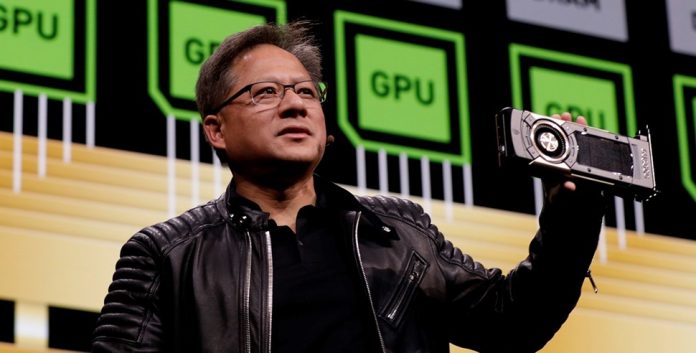
Nvidia has reportedly cut by more than half the number of Asian customers authorized to purchase its advanced artificial intelligence chips after introducing a stringent “white list” approval system.

The move highlights the growing impact of U.S. export controls on the global AI supply chain and intensifies pressure on cloud providers operating across Asia.

The Financial Times reported on Monday that the AI chipmaker has significantly expanded compliance checks in Singapore, Malaysia and Japan over the past several months to ensure its processors do not ultimately reach China through intermediary companies.

According to the report, more than half of Nvidia’s previous customers, particularly so-called neo-cloud providers that rent AI computing capacity, failed the company’s initial compliance review and were removed from the approved customer list. Those companies can reapply after implementing changes to satisfy Nvidia’s requirements.

The reported overhaul represents one of Nvidia’s most aggressive compliance efforts since Washington began tightening restrictions on exports of advanced AI chips. Rather than relying primarily on contractual assurances, Nvidia is now reportedly conducting extensive due diligence that includes visiting customers’ data centers, verifying commercial contracts, and interviewing end users before approving sales.

The stricter vetting reflects mounting pressure from the Trump administration to prevent advanced U.S. semiconductor technology from reaching Chinese entities through third countries. As export restrictions have expanded, Southeast Asia has emerged as a critical area of scrutiny because many Chinese companies have established overseas subsidiaries or leased computing capacity from regional cloud providers.

The U.S. Commerce Department reinforced those concerns in May when it issued new guidance aimed at preventing advanced AI processors from reaching overseas subsidiaries of Chinese companies. The guidance specifically highlighted the risk that Nvidia’s latest Blackwell AI chips could be diverted through countries including Malaysia, even if the original purchaser was located outside China.

According to the Financial Times, the Commerce Department is actively involved in Nvidia’s enhanced screening process, providing oversight and political backing as the company strengthens its compliance framework.

The development shows that export controls are evolving from restrictions on products to restrictions on customers. Earlier rounds of U.S. measures focused primarily on limiting which chips could be sold to China. The latest approach places greater emphasis on monitoring who ultimately uses the hardware, requiring chipmakers to verify entire supply chains and end-user relationships before completing transactions.

The changes are likely to have significant implications for Asia’s rapidly expanding AI infrastructure market. Over the past two years, countries such as Singapore, Malaysia and Japan have become important regional AI computing hubs as cloud providers raced to deploy Nvidia’s graphics processors for enterprise customers developing generative AI applications.

Neo-cloud providers have been among the fastest-growing buyers of Nvidia’s chips, building data centers that rent GPU capacity to startups and enterprises unable to purchase hardware directly. However, that business model also creates greater compliance risks because computing resources can be resold to multiple customers, making it more difficult to verify the ultimate end users.

The tougher screening process could therefore slow AI infrastructure expansion among smaller cloud operators while favoring established hyperscale companies that already maintain extensive compliance systems and have direct relationships with regulators.

The measures also underscore Nvidia’s increasingly delicate position between surging global AI demand and tightening geopolitical restrictions. The company remains the dominant supplier of AI accelerators worldwide, but it has repeatedly found itself at the center of U.S.-China technology tensions. Washington has progressively expanded export controls covering Nvidia’s most advanced chips, forcing the company to redesign products for the Chinese market while simultaneously strengthening oversight of sales elsewhere in Asia.

The latest reported compliance initiative comes as demand for AI chips continues to outstrip global supply. Nvidia’s Blackwell processors remain among the industry’s most sought-after AI accelerators, with cloud providers, governments and enterprises competing to secure limited production capacity. Against that backdrop, access to Nvidia’s “white list” could become important for AI infrastructure companies seeking to expand their computing capacity.

For the broader AI ecosystem, the reported move signals that regulatory compliance is becoming as important as technical capability. Companies purchasing advanced AI hardware may now face far more extensive scrutiny over ownership structures.


China’s Robotics Startup LimX Dynamics to Go Public, Joining the Country’s Humanoid Robotics Race Toward IPO

0

Chinese humanoid robotics startup LimX Dynamics is preparing to go public just four years after its founding, marking the extraordinary pace at which China’s embodied artificial intelligence industry is evolving as investors pour billions into one of the country’s fastest-growing technology sectors.

Founder and Chief Executive Will Zhang said an initial public offering is no longer optional for leading robotics companies, explaining that access to public capital will be critical as the industry enters a capital-intensive phase focused on commercial deployment rather than technological experimentation.

“Listing is a must,” Zhang told reporters ahead of the company’s announcement on Tuesday that it had raised 200 million yuan in a pre-IPO financing round. He added that the timing of a listing would be crucial.

Drawing parallels with China’s electric vehicle industry, Zhang said today’s humanoid robotics market resembles the period when EV manufacturers such as Nio, Xpeng and Li Auto successfully tapped U.S. capital markets between 2018 and 2020 to finance rapid expansion.

“Once the technology is mature, if the company doesn’t list, then like WM Motor, it may disappear,” Zhang said in Mandarin.

There is growing recognition that China’s humanoid robotics industry is entering a consolidation phase where financial strength, manufacturing scale, and commercialization capabilities could become more important than breakthrough research alone.

The latest funding round values LimX Dynamics at 15 billion yuan ($2.21 billion), according to the company. Overseas investors, including UAE-based Stone Venture, Italy’s GGG, and Germany’s Redstone VC, joined existing Chinese investors in backing the startup, reflecting growing international interest in China’s robotics ecosystem.

Domestic investors participating in the financing include Lens Technology, IDG Capital, WestSummit Capital, Nio Capital, and Hefei Binhu Industry Development Group.

LimX said it has already begun confidential preparations for an initial public offering, with Hong Kong emerging as the preferred listing venue.

Choosing Hong Kong over U.S. exchanges is a pattern seen among Chinese technology firms seeking access to international capital while avoiding heightened geopolitical and regulatory risks associated with overseas listings. Hong Kong has increasingly taken a position as the preferred fundraising destination for China’s next generation of AI, semiconductor, and advanced manufacturing companies.

The company’s IPO ambitions come as investment in China’s humanoid robotics sector reaches unprecedented levels.

According to industry research firm Xiniu, investment in humanoid robotics surged to 47.09 billion yuan ($6.95 billion) during the second quarter, more than doubling from the previous quarter and increasing more than sixfold compared with the same period a year earlier.

The rapid increase reflects growing investor confidence that humanoid robots are moving beyond laboratory demonstrations toward commercial deployment across manufacturing, logistics, healthcare, hospitality and service industries.

China’s central government has made “embodied AI” a strategic priority, viewing intelligent robots as the next frontier of industrial automation and an important pillar of its broader artificial intelligence ambitions.

Industry estimates suggest there are now well over 100 Chinese companies developing humanoid robots, creating one of the world’s most competitive robotics ecosystems.

That competition is also driving a wave of public listings.

Morgan Stanley noted in a report last week that several robotics companies, including DeepRobot and Leju, are pursuing IPOs, while industrial robot manufacturers increasingly view public markets as essential for financing expansion.

The investment bank expects China’s industrial robotics market to grow 18% this year and forecasts shipments of approximately 50,000 humanoid robots, signaling that commercialization is beginning to accelerate after years of research and prototype development.

China has also moved to accelerate listings for strategically important robotics firms. Humanoid robot maker Unitree recently received fast-tracked approval to pursue a Shanghai listing, while Hong Kong regulators continue reviewing applications from hundreds of companies seeking to access the city’s capital markets.

For LimX, the next stage of growth will depend less on technological breakthroughs and more on manufacturing execution and customer adoption.

“The technology has already crossed the ‘0 to 1’ stage,” Zhang said, referring to the transition from basic innovation to commercially viable products.

“The next challenge is building products that truly meet customer needs.”

The company is presenting itself as a supplier of fully autonomous commercial service robots rather than focusing solely on industrial manufacturing. LimX said it plans to begin a multi-year initiative to deliver thousands of humanoid robots across the Middle East, highlighting the region’s emergence as an important destination for AI and robotics investment as Gulf governments accelerate economic diversification and automation strategies.

The startup is also shipping its Luna humanoid robot to customers in South Korea, targeting entertainment and commercial service applications as it expands internationally.

Chinese robotics firms are seeking overseas growth opportunities alongside domestic demand, particularly in markets investing heavily in automation to address labor shortages and improve productivity. Thus, the international expansion trend among them.

The race toward commercialization comes as global competition in humanoid robotics intensifies. U.S. technology companies, Tesla, Figure AI and Apptronik, are accelerating development of general-purpose humanoid robots, while Chinese manufacturers are leveraging the country’s extensive manufacturing ecosystem, supply chain advantages and government support to narrow the technology gap.

Unlike the early AI software boom, where competitive advantages were driven largely by computing power and foundation models, the humanoid robotics industry requires expertise spanning artificial intelligence, semiconductors, sensors, actuators, batteries, advanced materials and precision manufacturing.

That complexity is increasing capital requirements across the sector, making access to public equity markets increasingly important for companies seeking to scale production.

Semiconductor Startup Tylsemi Raises $43m in Seed Fund To Develop Modular Chip Tech

1

TYLSemi, a semiconductor startup founded by former AlphaWave executives shortly after Qualcomm acquired the company, has raised $43 million in seed funding to develop modular chip technology aimed at helping companies build custom artificial intelligence processors more quickly and at lower cost.

The fundraising comes as demand for custom AI chips accelerates beyond hyperscalers such as Meta, Microsoft, Amazon and Google, creating opportunities for startups seeking to lower the barriers to designing specialized semiconductors for AI workloads.

The company was founded by Mohit Gupta and Sunil Bhardwaj, who previously held senior positions at AlphaWave, the high-speed connectivity chip company acquired by Qualcomm. Their new venture aims to disrupt one of the AI semiconductor industry’s most lucrative businesses by replacing proprietary chip designs with standardized, interoperable building blocks.

The AI infrastructure boom has triggered a surge in demand for custom application-specific integrated circuits (ASICs), allowing cloud providers and large enterprises to reduce dependence on Nvidia’s increasingly expensive graphics processors.

Companies such as Meta Platforms have already partnered with Broadcom to develop proprietary AI chips, while Broadcom and Marvell Technology have emerged as dominant providers of the high-speed interconnect technologies that allow different parts of AI processors to communicate efficiently.

Those technologies have traditionally been available only through proprietary development partnerships, effectively locking customers into a particular vendor’s ecosystem and making it costly to switch suppliers.

TYLSemi is betting that the next phase of AI chip development will move away from that closed model. Instead of developing entire processors, the startup plans to supply chiplets—small semiconductor modules that perform specific functions and can be combined with components from multiple vendors using open industry standards.

Customers would then integrate these chiplets with other technologies before packaging them into complete AI processors tailored to their own workloads. The approach was introduced at a time in the semiconductor industry when chiplet architectures were increasingly replacing monolithic chip designs. By breaking complex processors into smaller modules, manufacturers can improve production yields, shorten development cycles, and reduce costs while allowing individual components to be upgraded independently.

“I feel progress happens with standardization,” Gupta told Reuters.

“Whenever you do proprietary lock-in, it’s a short-term game. Yes, you can squeeze (customers) given your position and whatnot, but it’s not healthy for the market.”

Expansion of AI infrastructure is creating openings for new players. Thus, the funding underscores growing investor confidence that the AI hardware market is expanding beyond established chipmakers to include companies building enabling technologies for custom silicon.

The seed round was led by Matter Venture Partners, with participation from Viola Ventures, GHOVC, and Egis Technology.

TYLSemi also disclosed that it secured strategic backing from unnamed companies across the global semiconductor and AI infrastructure ecosystem, suggesting established industry players see value in fostering an open alternative to proprietary AI chip platforms.

The startup enters the market as AI infrastructure spending continues to reach unprecedented levels. Hyperscalers are investing hundreds of billions of dollars annually in data centers and increasingly designing their own processors to improve performance while lowering operating costs. That trend has fueled explosive growth for Broadcom and Marvell, whose custom silicon businesses have become key beneficiaries of the industry’s shift toward AI-specific hardware.

However, their business models rely heavily on proprietary technologies that can limit customers’ flexibility.

TYLSemi is aiming to become a neutral supplier that enables companies to source different chip components from multiple vendors rather than depending on a single semiconductor partner. If widely adopted, that approach could lower development costs, shorten time-to-market and encourage greater competition across the custom AI chip ecosystem.

The company has emerged amid the growing wave of semiconductor startups being launched by veterans of established chip companies. As demand for AI infrastructure expands beyond the largest cloud providers, investors are now backing firms that specialize in critical parts of the semiconductor value chain rather than attempting to compete directly with industry leaders such as Nvidia.

While TYLSemi remains in its early stages, its focus on open chiplet standards aligns with a broader industry movement toward modular semiconductor design.

DeepSeek Eyes 2026 IPO: China’s AI Powerhouse Gears Up For Public Debut

0

Chinese AI firm DeepSeek is preparing to file for an initial public offering (IPO) as soon as this year, according to reports.

The move marks a significant milestone for one of China’s most prominent AI startups, which has rapidly risen to prominence through its development of high-performance, cost-efficient large language models.

Reactions on X suggest that a potential DeepSeek IPO is generating significant excitement, with many users describing it as one of the biggest AI public listings in recent years.

Some commenters believe investor demand could be enormous if the company proceeds with its listing, citing DeepSeek’s rapid rise and growing influence in the artificial intelligence sector.

Others argue that becoming a publicly traded company could expand the firm’s reach while providing greater transparency into its finances and operations, an important development for a leading Chinese AI company.

Not everyone is convinced, however. Some users questioned the reported timeline, arguing that pursuing an IPO shortly after a major funding round would be an aggressive move for a company still proving the long-term strength of its business model.

Recent reports reveal that DeepSeek is in preliminary talks with new investors about a second funding round, one month after closing its first. The Hangzhou-based company raised about $7 billion at a $52 billion post-money valuation around the end of May. The new discussions center on a pre-money valuation near $71 billion, a 37% step-up, though terms aren’t finalized.

Industry observers expect the filing could pave the way for a listing in 2027, potentially on mainland exchanges. If successful, DeepSeek’s public debut would represent one of the largest tech IPOs in recent Chinese history and provide a major test of international appetite for Chinese AI stocks.

Founded in July 2023 by Liang Wenfeng, DeepSeek operates as a subsidiary backed primarily by High-Flyer, the hedge fund also led by Wenfeng.

The company gained global attention in early 2025 with the release of models like DeepSeek-R1 and V3, which have demonstrated strong reasoning capabilities while using fewer computational resources than many Western competitors.

Its open-source approach has allowed developers worldwide to access and build upon its technology, helping it stand out in a market dominated by resource-heavy models from companies like OpenAI.

In mid-2026, DeepSeek completed a landmark funding round, raising approximately $7.4 billion and achieving a valuation exceeding $50 billion.

This made it China’s most valuable AI startup at the time and significantly boosted founder Liang Wenfeng’s net worth. The fresh capital has fueled aggressive development amid U.S. export restrictions on advanced chips, showcasing China’s determination to advance its domestic AI capabilities through innovation and efficiency.

The anticipated IPO reflects a broader wave of Chinese AI companies seeking public listings, driven by strong investor interest and government support for the sector.

As preparations continue, the company continues to prioritize groundbreaking research while navigating the competitive global landscape.

DeepSeek’s trajectory highlights both the opportunities and challenges facing China’s tech ecosystem in its quest to lead the next generation of artificial intelligence.

Outlook

If DeepSeek proceeds with its IPO plans, it could mark a defining moment not only for the company but also for China’s broader artificial intelligence industry.

A successful public listing would provide DeepSeek with substantial capital to accelerate research and development, expand its computing infrastructure, attract top AI talent, and strengthen its position against global rivals such as OpenAI, Anthropic, xAI, and Google DeepMind.

China’s Smartphone Shipments Extend Decline As Higher AI-Driven Chip Costs Lift Prices: Huawei And Apple Gain Market Share

0
Huawei Mate X

China’s smartphone market contracted for a fifth consecutive quarter in the second quarter of 2026 as rising memory chip prices, fueled by the global artificial intelligence boom, pushed handset prices higher and dampened consumer demand.

The slowdown underlines that soaring AI infrastructure investment is reshaping the consumer electronics industry, with component inflation weighing on smartphone sales even as demand for AI servers and data center hardware remains robust.

According to research firm IDC, smartphone shipments in China fell 4.3% year-on-year to 66 million units during the April-June quarter. First-half shipments were down 4.2% from the same period a year earlier, highlighting persistent weakness in the world’s largest smartphone market despite improving conditions in other parts of the global technology sector.

The decline points to growing pressure on manufacturers as memory chip prices continue to surge. AI-related demand has tightened supplies of DRAM and NAND flash memory, prompting many Android smartphone makers to raise retail prices or scale back lower-cost models to protect margins. Those price increases discouraged many consumers from upgrading their devices at a time when household spending remains subdued, and China’s economic recovery continues to face headwinds.

The smartphone market is increasingly becoming an indirect casualty of the AI investment cycle. Chipmakers such as Samsung Electronics and SK Hynix have prioritized supplying high-margin memory products for AI servers, where demand from cloud providers continues to outpace supply. That has driven memory prices sharply higher, raising production costs for smartphones, personal computers, and other consumer electronics.

Against that backdrop, Huawei Technologies and Apple emerged as the only major smartphone vendors to post shipment growth during the quarter.

Huawei retained its leadership position with a 22.6% market share after shipments increased 19.4% from a year earlier. Apple ranked second with an 18.1% market share, recording the strongest growth among leading vendors as shipments rose 24.4%.

IDC attributed much of their success to pricing discipline.

“Huawei and Apple held their prices steady while competitors were raising theirs, and that gave hesitant buyers a reason to go ahead and purchase in a quarter when most of the market was giving them a reason to wait,” said Arthur Guo, a senior analyst at IDC China.

In contrast, China’s major Android vendors experienced broad-based declines. Xiaomi, which ranked fifth in the market, suffered the steepest fall among the leading brands, with shipments dropping 21.7% year-on-year. Oppo’s shipments declined 9.7%, while Vivo recorded an 11.4% decrease.

IDC said most Android manufacturers responded to surging memory and component costs by increasing handset prices or reducing their budget offerings, making consumers more reluctant to replace older devices. The research firm also noted that the fading impact of government subsidy programs removed an important source of support that had boosted smartphone purchases in previous quarters.

The shipment data also show that explosive spending on AI infrastructure has redirected chip production toward high-performance computing applications, creating supply constraints across the memory market. Memory manufacturers have repeatedly warned that capacity expansion is struggling to keep pace with demand from hyperscale cloud providers and AI developers, while prices for memory chips have climbed sharply over the past year.

That dynamic is creating winners and losers across the technology ecosystem. Memory suppliers continue to benefit from strong pricing power, but smartphone manufacturers face rising input costs and weaker consumer demand. Companies with stronger pricing power or premium brand recognition, such as Huawei and Apple, have been better positioned to absorb higher component costs without passing them on to customers.

The latest figures are boosting concerns that China’s consumer recovery remains uneven. While exports tied to AI hardware and semiconductors have strengthened industrial production, domestic consumption has remained subdued amid ongoing weakness in the property sector and cautious household spending.

The decline in smartphone shipments suggests consumers remain reluctant to spend on discretionary electronics unless offered compelling pricing or product differentiation. With AI-related investment expected to remain elevated for years, analysts expect pressure on memory supplies to persist, meaning smartphone makers may continue facing higher production costs.