DD
MM
YYYY

PAGES

DD
MM
YYYY

spot_img

PAGES

Home Blog Page 264

Amazon Unveils AI-Powered Shopping Assistant to Simplify Shopping Experience

0

Amazon has unveiled a new artificial intelligence-powered shopping assistant called “Help Me Decide,” designed to make product selection easier for customers who struggle to choose between similar items.

The new tool leverages AI to deliver personalized product recommendations based on each shopper’s browsing history, searches, and past purchases.

The e-commerce giant announced that the feature is currently available to a random selection of millions of U.S. consumers, with plans for a broader rollout in the coming months. The move comes as major retailers increasingly experiment with AI-driven shopping experiences, following the rise of platforms such as ChatGPT integrate online checkout features.

“Help Me Decide” appears as a button on product detail pages when a shopper has browsed through several similar items without making a purchase. By tapping the button, customers activate Amazon’s AI system, which analyzes their browsing patterns, purchase history, and stated preferences to recommend the most suitable product.

For instance, if a shopper has been looking for a new camping tent and has previously searched for sleeping bags, stoves, or hiking boots, Help Me Decide may suggest an all-season, four-person tent that meets the customer’s specific needs—such as warmth, size, and family suitability.

Amazon Vice President of Personalization, Daniel Lloyd, explained that the tool is designed to save time and enhance confidence in purchasing decisions.

“Help Me Decide saves you time by using AI to provide product recommendations tailored to your needs after you’ve been browsing several similar items, giving you confidence in your purchase decision,” Lloyd said. “This feature builds on our commitment to use AI to improve the customer experience by making shopping easier and more enjoyable.”

For consumers, the “Help Me Decide” feature could make shopping on Amazon more intuitive and enjoyable. The assistant’s ability to explain why a product is recommended builds transparency and confidence, two factors that can significantly improve customer satisfaction. Over time, this is likely to enhance user loyalty and encourage repeat purchases, strengthening Amazon’s ecosystem that includes Prime subscriptions, ads, and third-party seller participation.

Technology Behind the Tool

Help Me Decide utilizes large language models (LLMs) and various Amazon Web Services (AWS) technologies, including Amazon Bedrock, Amazon OpenSearch, and Amazon SageMaker, to interpret a shopper’s intent and preferences. The system combines this information with product details and verified customer reviews to suggest items that best fit the customer’s requirements.

The feature is currently available in the Amazon Shopping app for iOS and Android, as well as on mobile browsers. Users can find it by visiting the “Keep shopping for” section on the homepage or directly on product detail pages after viewing multiple items in a given category.

Amazon noted that “Help Me Decide” expands its growing suite of AI-powered shopping tools, reinforcing its mission to make shopping faster, more personalized, and enjoyable. The company says it will continue to innovate using AI to enhance convenience and help customers make smarter, more confident buying decisions.

Given Amazon’s massive traffic, even a small improvement in conversion rates could translate into billions of dollars in additional revenue annually. According to Business Insider, Amazon’s earlier AI assistant, “Rufus,” was projected to contribute over $700 million in operating profit through increased downstream sales.

In the medium term, Amazon’s AI-powered shopping assistant could become a cornerstone of its profitability strategy. Beyond boosting direct sales, it strengthens Amazon’s ad targeting, improves inventory management, and enhances the overall user experience.

Analysts expect that widespread adoption of AI-driven shopping will not only boost revenue but also expand Amazon’s margins by automating parts of customer service and recommendation systems that previously required human oversight. Emerging technologies powered by dynamic voice data and conversational AI could further enhance these systems, creating even more intuitive and personalized shopping experiences in the future.


Guinness Nigeria Stages 315.49% Rebound, Posting a Pretax Profit of N15.8bn in Q3

0

Guinness Nigeria Plc has reported a remarkable turnaround in its financial performance for the quarter ended September 30, 2025, posting a pretax profit of N15.8 billion — a surge of 315.49% from the N3.8 billion recorded in the same period last year.

The result marks a strong recovery for the brewer, whose performance in recent years had been weighed down by inflationary pressure, high energy costs, and currency volatility.

For the 15 months, Guinness recorded a pretax profit of N43.7 billion, rebounding from a steep loss of N73.6 billion in the prior comparable period. This recovery was driven largely by robust revenue growth, as demand for its core brands strengthened amid a gradually improving consumer environment and operational efficiency gains across its supply chain.

Revenue for the quarter stood at N98.06 billion, representing a 64.72% year-on-year increase. Turnover for the 15 months climbed to N594.6 billion, with domestic sales contributing N585.6 billion and export sales adding N9.02 billion. Analysts say the domestic market remains Guinness Nigeria’s biggest driver, aided by product innovation, improved distribution, and the popularity of its premium portfolio, such as Guinness Foreign Extra Stout, Malta Guinness, and Orijin.

As expected, the cost of sales increased alongside revenue, rising 49.1% to N61.7 billion from N41.3 billion in the corresponding quarter of 2023. Nonetheless, gross profit doubled to N36.3 billion, up 100.36% from last year, indicating that improved pricing strategies and production efficiencies are helping to offset input cost pressures.

Other income, which includes gains from asset disposals and by-products, fell sharply from N1.3 billion to N209.4 million. Administrative expenses rose 41.48% to N4.7 billion, while marketing and distribution expenses soared 84.49% to N15.3 billion, reflecting intensified brand-building efforts and increased logistics costs.

Even so, operating profit more than doubled to N16.4 billion from N7.8 billion in 2023, highlighting management’s disciplined cost control and stronger operational leverage. Finance expenses stood at N6.0 billion, nearly balanced by finance income of N5.3 billion, leaving a marginal net finance cost of N616 million. This helped Guinness sustain a strong bottom line, with net profit rising 288.26% to N10 billion.

On the balance sheet, total assets climbed to N245.9 billion, up 8.78%, with property, plant, and equipment making up N117.9 billion. Total equity rose to N28.4 billion from N2.1 billion, a reflection of the company’s regained profitability and improved capital structure. Retained earnings, though still negative at N20 billion, show a marked recovery from the previous negative N46.3 billion. Total liabilities fell 2.87% to N217.5 billion, driven by reduced payables.

Guinness Nigeria’s turnaround mirrors a broader pattern of cautious optimism in Nigeria’s beverage and manufacturing sector, where many firms are rebounding from years of economic turbulence. The company’s strong quarter underscores the resilience of legacy manufacturers that have adjusted to rising costs through operational reforms, local sourcing, and strategic product diversification.

Beyond Nigeria, the recovery aligns with the global strategy of Diageo Plc, Guinness Nigeria’s parent company, which has been repositioning its portfolio for stronger growth in emerging markets. Diageo reported in its 2025 full-year results that markets in Africa, Latin America, and the Asia Pacific have continued to deliver resilient performance despite macroeconomic volatility. The group highlighted its focus on “premiumization, supply efficiency, and brand-led growth” as key to sustaining profitability across its markets.

In Africa, Diageo has also been increasing its stake in high-growth segments. In an earlier statement, Nick Blazquez, Diageo’s president for Africa, Turkey, Russia and Central and Eastern Europe, said: “I fully expect that over the long term to be the same, if not accelerate… There will always be ups and downs in emerging economies, and I would caution us not to be over-optimistic. But do I think Africa will accelerate faster than Asia? Yes, I do.”

This strategy has directly supported Guinness Nigeria’s ability to stabilize costs and strengthen its product mix, particularly through locally sourced inputs and regional production integration.

The global beer market itself has shown signs of stabilization following pandemic-era disruptions and inflationary headwinds. According to the International Brewers Association, the global beer industry grew by 4.2% in 2024, supported by recovery in Africa and Asia, where “rising middle-class consumption and youthful demographics” continue to underpin demand. Analysts say Diageo’s focus on localizing production across emerging economies has given it a cost advantage over competitors still relying heavily on imports.

In Nigeria, where consumer purchasing power remains fragile, Diageo’s cost-optimization initiatives have proven vital. Its focus on innovation and sustainability — including investments in renewable energy at breweries and digital transformation in supply chains — has improved operational efficiency. Diageo has indicated that embedding sustainability and digital technology in our operations allows us to reduce costs, improve agility, and continue to deliver value to consumers in challenging environments.

As of October 23, 2025, Guinness Nigeria’s stock closed at N183.75 per share on the Nigerian Exchange Group (NGX), representing about a 161.57% increase this year — one of the strongest performances in the consumer goods sector. Analysts believe the company’s improved fundamentals, supported by Diageo’s broader strategic direction and a recovering beer market, could sustain investor optimism through 2026.

Guinness Nigeria’s strong quarter, therefore, is not just a domestic success story but part of a global resurgence under Diageo’s adaptive strategy — one that blends local market insight with global brand strength to weather economic storms and chart a renewed path for growth.

Nokia CEO Sees AI Boom Mirroring 1990s Internet Surge, Dismisses Bubble Fears

0

Nokia’s Chief Executive Officer, Justin Hotard, says artificial intelligence is propelling a long-term growth cycle reminiscent of the internet explosion of the 1990s, describing it as an “AI supercycle” that will redefine global technology infrastructure for years to come.

“I fundamentally think we’re at the front end of an AI supercycle, much like the 1990s with the internet,” Hotard said in an interview with Reuters. “Even if there’s a bubble, a trough, we’ll look to the longer-term trends. And right now, all those trends are very favorable.”

Hotard’s optimism comes at a time when investors are sharply divided over whether the AI boom is sustainable. A recent Bank of America survey showed that more than half of global fund managers now believe AI-related stocks are in a bubble. Tech luminaries such as Amazon founder Jeff Bezos and OpenAI CEO Sam Altman have also issued warnings that the current wave of investor excitement could result in major financial losses once the market corrects.

“When bubbles happen, smart people get overexcited about a kernel of truth. Are we in a phase where investors as a whole are over-excited about AI? My opinion is yes,” said Altman.

Still, Hotard insists the fundamentals of AI growth are strong, pointing to a surge in data center demand as companies worldwide scramble to build infrastructure capable of handling the computing power that AI applications require.

“Clearly the incremental, growth investment is driven by data centers,” he said. “It’s a huge step up in volume.”

Hotard, who joined Nokia in April after leading Intel’s data centers and AI group, said the company is witnessing a surge in orders from both large technology firms and emerging players across Europe.

“We’re seeing growth across the board,” he said.

Nokia’s renewed focus on AI comes as the Finnish telecom equipment maker reported quarterly earnings on Thursday that exceeded market expectations, buoyed by robust demand for its optical and cloud products. Much of this momentum has been linked to sales tied to AI-driven data centers following its acquisition of U.S.-based optical networking firm Infinera.

The acquisition of Infinera marks a key milestone in Nokia’s transformation—its most significant strategic pivot since exiting the mobile phone market in 2013. While mobile networks remain the company’s backbone, it is now integrating AI into core operational areas such as radio access, fiber optics, and network automation.

Last year, Nokia established a dedicated Technology and AI organization led by its newly appointed Chief Technology Officer, Pallavi Mahajan, another former Intel executive. The unit’s creation signals Nokia’s intent to accelerate the development of next-generation networking tools designed to optimize AI traffic and energy efficiency.

Analysts believe Nokia’s repositioning could be timely. The explosion in AI applications—from large language models to edge computing—has sparked record demand for high-speed data transfer, low-latency connectivity, and cloud optimization technologies. These trends play directly into Nokia’s traditional strengths in telecommunications infrastructure and optical networking.

The company’s strategy aligns with a broader shift underway in the global tech industry. From the United States to Asia, hyperscale firms such as Microsoft, Amazon Web Services, and Google are investing billions in data center expansion, driving up demand for optical transport systems and fiber technologies—areas where Nokia has a competitive footprint.

Still, the AI boom has prompted growing debate over sustainability. The sector’s skyrocketing valuations, which have propelled companies like Nvidia into trillion-dollar territory, have stirred comparisons with the dot-com era—when enthusiasm outpaced actual profitability.

Hotard, however, maintains that, unlike the 1990s, today’s AI growth is underpinned by tangible industrial adoption and real-world use cases spanning telecoms, healthcare, logistics, and cloud computing.

He believes the demand is not theoretical, given the growing deployment of infrastructure across multiple industries.

Nokia’s move into AI represents both a strategic hedge and a bold bet on where future telecommunications demand will converge. The company, by embedding AI into its networking solutions, hopes to improve automation, reduce energy consumption, and strengthen its position in a global race increasingly defined by intelligent infrastructure.

Anthropic Rolls Out Memory Update for Claude, Aiming to Rival ChatGPT and Gemini in Long-Term Recall Features

0

Anthropic is introducing a major upgrade to its Claude AI chatbot, allowing the system to “remember” details from past conversations without user prompting — a move that brings it closer to the long-term memory capabilities already deployed by OpenAI’s ChatGPT and Google’s Gemini.

The new feature, which begins rolling out on Thursday, will initially be available to Max subscribers, who can enable “memory” through their settings. Anthropic confirmed that the feature will reach Pro subscribers “over the coming days,” while Team and Enterprise users have had access since September. The company did not indicate when, or if, the feature would extend to free users.

In a statement, Anthropic said the rollout represents a step toward “complete transparency” in how AI remembers users’ data. Unlike competing systems that sometimes rely on background summaries, Claude’s memory interface will display exactly what the model remembers, allowing users to toggle, edit, or delete individual memories through natural conversation.

“For instance,” the company explained, “users can tell Claude to forget an old job entirely or focus on a new project,” giving them granular control over their stored information. The update will also introduce “distinct memory spaces,” letting users separate memories for different contexts such as work, education, or personal use. This, Anthropic said, should prevent “memory bleed” — where information from one context inadvertently appears in another.

The feature has been one of the most requested among Claude users. Until recently, Anthropic’s chatbot could only recall previous conversations if users explicitly told it to do so, a process many found cumbersome compared to rivals.

The change brings Claude more in line with the competition. OpenAI’s ChatGPT has offered memory since early 2024, enabling persistent recall of details such as names, writing styles, and project information. Google’s Gemini also integrated a similar feature later that year, letting users manage stored memory directly within the chat interface.

Anthropic’s latest release also includes a data portability feature that allows users to import memories from ChatGPT or Gemini. The company said users will be able to copy and paste previous memories into Claude, and export them “anytime” with “no lock-in.” This transparency-first approach appears aimed at distinguishing Anthropic’s data practices from rivals often criticized for retaining user information without sufficient clarity.

The new function could reshape how users interact with Claude. With persistent memory, the AI can offer more continuity, context, and personalization — remembering user preferences, ongoing projects, and specific instructions without requiring restatement. For professional users, it also means Claude can act as a long-term digital collaborator rather than a short-term assistant.

However, AI memory systems have raised ethical and psychological concerns over privacy, bias, and human-like dependence. Experts warn that persistent recall could encourage emotional overreliance on chatbots, fueling phenomena sometimes referred to as “AI psychosis” — where users form distorted perceptions of reality through repeated interaction with highly affirming or sycophantic AI systems.

Anthropic has said it is approaching these risks cautiously. The company maintains that users will always retain “full visibility and control” of what Claude remembers, and that stored data can be deleted or compartmentalized at any time. Its documentation emphasizes that all memories are encrypted and reviewed for safety before integration into user sessions.

The memory rollout marks another juncture in the escalating competition among major AI players. OpenAI, Google, and Anthropic have all been racing to make their chatbots indispensable by improving personalization and reducing the friction of restarting conversations from scratch. The update is expected to help Anthropic close the gap with its better-known rivals — and possibly set a new standard for how AI models handle user recall with transparency and user control at the center.

As AI tools increasingly blend into personal and professional workflows, memory-enabled systems like Claude are expected to define the next stage of the chatbot race.

The Business of AI Is Execution — Let Us Build With You

0

In the emerging era of intelligent enterprises, strategy is no longer enough; you must execute. At Tekedia Institute, we recognise that many organisations are trapped in elegant PowerPoint loops of “AI working groups” that yield little measurable ROI. Yes, chasing buzzwords without building capabilities leads to failure.

At Tekedia, we partner with you to move from AI road-mapping to AI execution. We are not mere consultants; we are practitioners-builders who embed ourselves into your world and drive transformation. This isn’t about slides; it is about People, Processes, Tools – the three pillars of production – coming together so that AI doesn’t just run your operations but re?shapes your organisation.

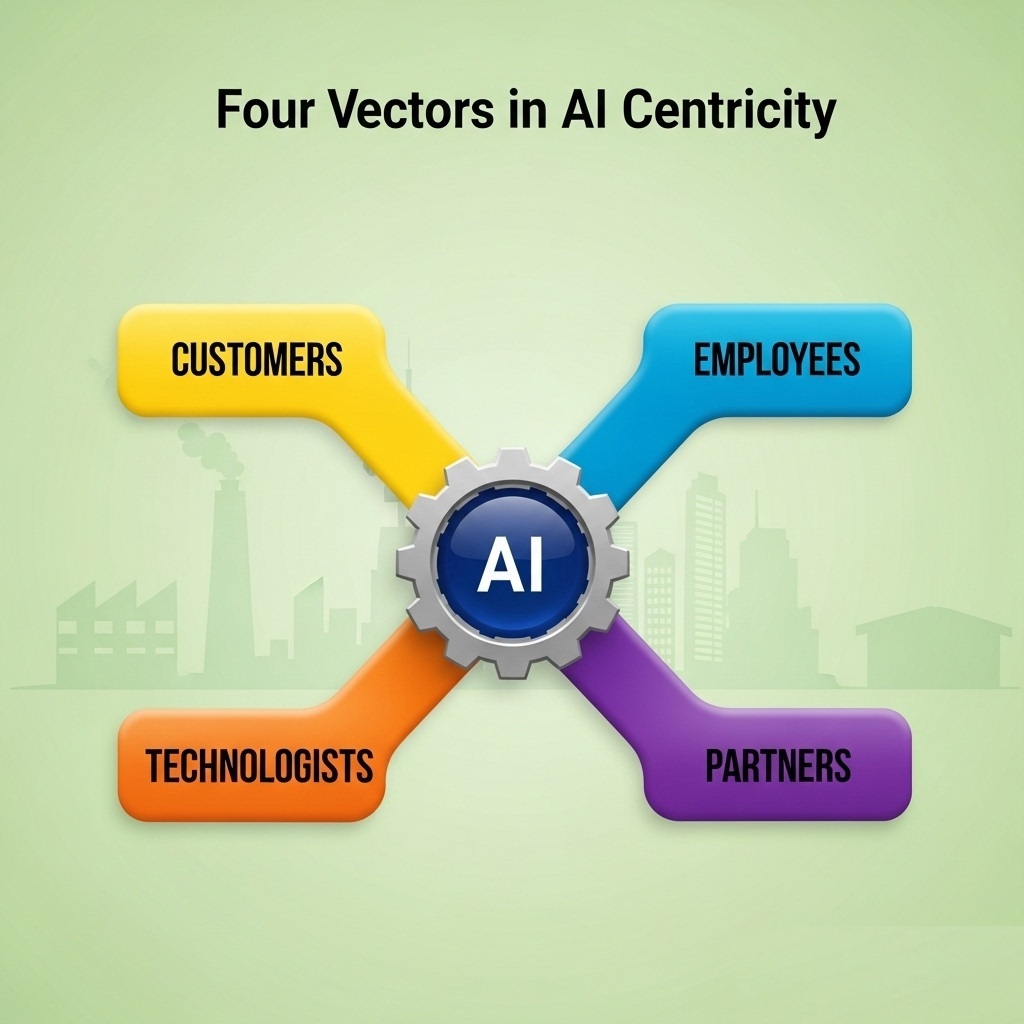
Yes, we don’t do strategy in the abstract. We do engineering of change. We believe that AI must be integrated into the fabric of your business. Here, we apply our AI-Centricity Framework so your customers, employees, technologists, partners and suppliers all become nodes of an AI-enabled ecosystem. We know both boardrooms and code, frameworks and chatbots.

The Outcome: You emerge not merely as a business that uses AI, but one that is AI-anchored. Yes, a firm where the factor of knowledge produces value continuously. As I often say: “Capital without knowledge is like a river without waterbed”. When AI becomes embedded, you shift from incremental productivity to whole-scale transformation.

Learn more at Tekedia Institute’s Enterprise AI Consulting