DD
MM
YYYY

PAGES

DD
MM
YYYY

spot_img

PAGES

Home Blog Page 267

OpenAI is Reportedly Developing Music Tool Capable of Composing Songs from Texts and Audio Prompts

0

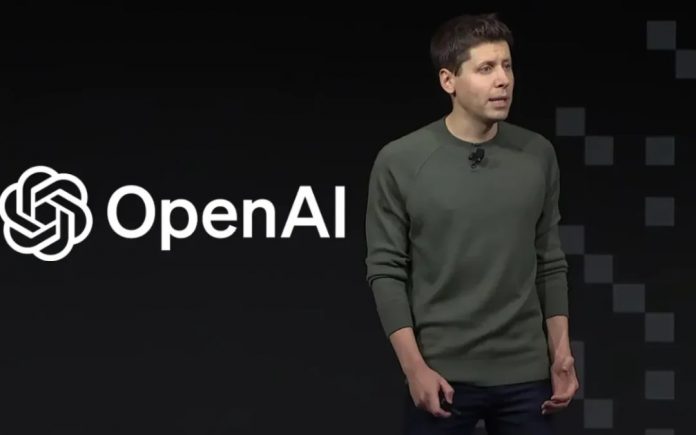
OpenAI is reportedly developing a new generative music tool capable of composing songs and instrumentals from text and audio prompts — another sign of the company’s accelerating expansion beyond conversational AI and into broader creative and consumer markets.

The report, published by The Information, said the model could generate music for videos or add instrumental accompaniment, such as guitar or piano, to existing vocals.

Many believe the project reflects OpenAI’s deepening push into multimedia creation, as it seeks to position itself as an “everything app” — one that integrates, among other things, text, voice, video, and now music — all within a unified ecosystem. The move follows OpenAI’s recent rollout of Sora, its text-to-video model, and its continued development of voice and image generation tools, suggesting a deliberate effort to dominate every creative medium through artificial intelligence.

According to The Information, OpenAI has been collaborating with students from the Juilliard School, one of the world’s most renowned music conservatories, to annotate musical scores. These annotations are being used to train the model to understand rhythm, harmony, and composition structures — a sign that the company is prioritizing accuracy and musical authenticity over mere novelty.

While OpenAI has experimented with generative music models in the past, those earlier prototypes came before the launch of ChatGPT and never reached public release. The current project, however, appears to be part of a broader monetization strategy, as the company grapples with rising operational costs and mounting pressure to generate sustainable revenue.

OpenAI, which has received billions in backing from Microsoft, is spending heavily on computing infrastructure, data acquisition, and AI model training — costs that have ballooned since the introduction of GPT-4 and the ChatGPT Plus subscription service. Despite its soaring valuation, analysts say the company has yet to achieve profitability, and its latest ventures into new industries may reflect a strategic bid to diversify income streams and reduce dependence on corporate licensing deals.

The music tool, once launched, could integrate directly with ChatGPT or Sora, enabling users to generate songs, soundtracks, or musical accompaniment while simultaneously producing lyrics and visuals. Such integration would make OpenAI the first major AI company to offer a seamless, cross-media creative workflow — a potentially transformative move for content creators, filmmakers, and digital artists.

But OpenAI is entering a space already occupied by formidable rivals. Google’s MusicLM and Suno’s AI platform both allow users to generate music from text prompts, while startups like Udio are experimenting with collaborative songwriting tools powered by machine learning. What may set OpenAI apart, analysts say, is its ability to unify multiple creative capabilities under one AI system — a feat no other company has achieved at scale.

Still, the company’s rapid expansion raises familiar concerns about copyright and data ethics. Generative music tools rely heavily on training datasets that often include copyrighted material, with the potential to spark criticism from musicians and record labels who argue that such practices amount to unlicensed use of creative works. OpenAI’s collaboration with Juilliard students appears to be an attempt to preempt such criticism by grounding the model’s training data in properly annotated, licensed compositions.

OpenAI has not commented publicly on the project, nor has it confirmed a release date or product format. However, sources believe the tool could be unveiled as early as 2026 as part of OpenAI’s broader roadmap to merge language, vision, and sound into a unified AI interface.

If successful, the new tool could redefine how music is composed, produced, and consumed — and potentially cement OpenAI’s role not just as a leading AI company, but as a foundational platform for the future of digital creativity.


Porsche Posts €966m Loss Amid China Slump and U.S. Tariffs, Casting Shadow Over Volkswagen Group’s Outlook

0

Porsche AG has reported a steeper-than-expected operating loss of €966 million ($1.1 billion) for the third quarter, marking a sharp reversal from the €974 million profit recorded in the same period last year.

The German luxury automaker said the setback stemmed mainly from costs related to a sweeping rollback of its electric vehicle (EV) expansion strategy and the financial fallout of U.S. import tariffs.

Analysts surveyed by Visible Alpha had anticipated a smaller operating loss of €611 million, highlighting the extent of Porsche’s current troubles. The company’s slowdown denotes the turbulence facing Germany’s once-thriving auto sector as it grapples with the global EV price war led by Tesla and aggressive discounting by Chinese automakers such as BYD.

Porsche, long touted as a symbol of German precision and profitability since its 2022 stock market debut, is now battling a confidence crisis.

“We expect 2025 to be the trough that precedes a noticeable improvement for Porsche from 2026 onwards,” Chief Financial Officer Jochen Breckner said on Friday, adding that “large-scale solutions” were still being negotiated with labor unions to manage the company’s restructuring.

The carmaker maintained that its operating margin for 2025 could fall as low as 2%, compared with 14% last year. For 2026, it expects to rebound to a “high single-digit percentage,” Breckner said.

Porsche also disclosed that U.S. import tariffs will cost it roughly €700 million this year, forcing it to raise prices in the American market to offset part of the impact.

Breckner added that Porsche prices will rise further in the U.S. in the coming months as the company passes on tariff costs to consumers.

The CFO confirmed that Porsche will propose a “significantly lower 2025 dividend” than the €2.31 per preferred share paid for 2024, as part of an effort to conserve cash amid restructuring pressures.

In China, once the company’s biggest growth market, sales are expected to continue falling through 2026.

“We have to assume that the general market conditions will not improve in the foreseeable future,” Breckner said, describing persistent pricing pressures and slower luxury demand in the world’s largest auto market.

The German carmaker plans to cut 1,900 permanent jobs over the next few years, in addition to 2,000 temporary roles already being eliminated in 2025. Breckner said Porsche is preparing “a second package of cost-saving measures” focused on salary scales and employee perks rather than further layoffs, with details expected by year-end.

For the full year, Porsche estimates a €3.1 billion hit to earnings from restructuring and its decision to abandon in-house battery production. That figure includes the cost of dismantling parts of its EV expansion plan, which was once a cornerstone of its future growth strategy.

The company also confirmed that CEO Oliver Blume—who concurrently leads parent company Volkswagen—will step down from Porsche at the beginning of 2026. He will be succeeded by former McLaren Automotive CEO Michael Leiters, a move widely viewed as an effort to restore investor confidence. Leiters, who previously held senior engineering roles at Ferrari and Mercedes-AMG, is expected to inherit what Breckner described as “one of the most challenging transitions in Porsche’s modern history.”

The crisis at Porsche is already reverberating across the Volkswagen Group, which owns a 75% stake in the luxury brand. Porsche’s troubles add to a growing list of headwinds facing the Wolfsburg-based parent company, including a profit squeeze at Audi and declining demand for its mass-market models in China.

Volkswagen’s shares fell after Porsche’s results were published, as investors weighed the impact of the €3.1 billion hit to earnings on the group’s consolidated financials. The slump also adds pressure on Volkswagen’s management, which has been under scrutiny for its slow adaptation to the EV transition and its failure to gain traction against Chinese rivals.

Volkswagen had counted on Porsche’s strong margins to offset weaknesses in other brands. Last year, Porsche contributed more than one-third of Volkswagen Group’s total profit, with its 14% return on sales seen as a benchmark of efficiency. That figure now risks collapsing to as low as 2%, raising concerns among analysts that Volkswagen’s 2025 group earnings forecast may be too optimistic.

Although Volkswagen has not yet revised its consolidated outlook, some analysts believe that the loss of Porsche’s profit cushion could force the group to lower its guidance in coming quarters. Analysts say the automaker’s ability to maintain dividends and fund new EV investments could also come under strain if Porsche’s turnaround stalls beyond 2026.

Volkswagen’s luxury portfolio—comprising Porsche, Audi, Bentley, and Lamborghini—has traditionally served as its financial backbone, compensating for thin margins in mass-market segments such as VW, SEAT, and Skoda. But with Porsche now facing tariffs, declining Chinese sales, and restructuring costs, that advantage appears to be eroding.

In response, Volkswagen is expected to push for deeper cost cuts and may accelerate its strategic review of luxury operations to shield overall profitability. Breckner’s assurance that “2025 will be the trough” was echoed cautiously by investors who see 2026 as a critical year for Porsche to stabilize production, regain demand in the U.S. and China, and deliver the efficiency improvements required to restore margins.

Milk Mocha Presale Countdown Begins with a Massive Whitelist Rush! Join This Viral Meme Coin

0

The Milk and Mocha cartoon bears, loved by millions for their touching moments, now power a global digital economy through the Milk Mocha Token ($HUGS). This initiative goes beyond launching a token, introducing a fresh and structured economic concept.

The $HUGS presale has received an overwhelming response, with the whitelist close to reaching its limit. Central to this growing attention is a model that creates scarcity from the start. This system ensures that the token supply is already tightening, offering one last chance for those looking to join at the very beginning.

40-Stage Presale Framework

The $HUGS presale follows a 40-stage structure instead of a one-time event. Each stage runs for a week, creating an organized and gradual process. The setup gives early buyers a clear mathematical benefit. The price begins at $0.0002 per token in Stage 1 and rises slightly with every new week.

This method offers full transparency, letting people see how value builds with time. For example, $100 in Stage 1 equals 500,000 $HUGS. By the final round, Stage 40, the price rises to $0.04658496, turning that $100 into more than $23,000 in value. The system rewards early supporters, but the whitelist access is nearly filled.

The $HUGS model includes a rare deflationary feature right inside the presale. It is active now, not a future promise. At the end of each weekly phase, unsold tokens are permanently burned, removing them from circulation completely. This process means the total supply of $HUGS keeps shrinking before its public launch. Scarcity is part of its foundation from day one. Those on the whitelist are gaining an asset that becomes rarer each week, giving early access a real edge as the available supply continues to decline.

A Growing World Around $HUGS

Scarcity in the $HUGS model works alongside a clear focus on real-world use, making it a demand-based system. The $HUGS token acts as the main currency for a self-supporting economy. The plan includes a Milk Mocha Metaverse and gaming platform that uses a “token loop.”

Tokens spent by players are reused across the system. A share goes to a player reward pool, another share is burned, and the rest supports the Ecosystem Treasury for upcoming projects. This setup keeps the economy active while reducing supply. Key drivers of demand include:

  • Exclusive NFTs: Limited-edition digital collectibles reflecting the brand’s charm will be available only through $HUGS.
  • NFT Upgrades: Owners can burn $HUGS tokens to increase the rarity and value of their NFTs.
  • Physical Merchandise: The official store will accept $HUGS for items like plushies and clothing, with some products available only through tokens.

Long-Term Holders Take the Lead

The $HUGS system also aims to reward loyalty, matching the deflationary idea by motivating holders to stay engaged. $HUGS holders take part in more than just ownership; they help shape the project’s direction. A key element is the staking option that offers a fixed 50% APY, with rewards calculated in real time. The model is flexible, allowing users to unstake whenever they wish without penalties.

This makes holding an active part of the economy while lowering the circulating supply. Additionally, holders play a role in governance through the Milk Mocha DAO (Decentralized Autonomous Organization). With “HugVotes,” the community can suggest and decide on key matters. Voting power depends on how much $HUGS is staked, giving long-term holders a stronger voice. The community also helps guide marketing plans and chooses charitable efforts to support.

The Start of a Deflationary Era for $HUGS

The Milk Mocha ($HUGS) project links a beloved global brand with a carefully built token economy focused on controlled scarcity from the beginning. Through the weekly burn system in its presale, the supply keeps shrinking stage by stage.

Rather than a rushed release, it follows a structured 40-stage process that limits supply as it grows. With the exclusive whitelist for the presale nearly full, entry at the earliest stage is about to close. For those who recognize the value of a community-run project where supply is designed to decline, this is the moment to act before the initial phase ends.

Explore Milk Mocha Now:

Website: ??https://www.milkmocha.com/

X: https://x.com/Milkmochahugs

Telegram: https://t.me/MilkMochaHugs

Instagram: https://www.instagram.com/milkmochahugs/

Decentralized Exchange Bunni Shuts Down Operations Following Devastating Hack

0

Decentralized exchange platform Bunni has announced the shutdown of its operations following a severe security breach that crippled its growth and financial capacity.

In a statement released on X (formerly Twitter), the company expressed deep regret over the decision, citing the recent exploit as the primary reason behind the closure.

The company wrote,

“It is with saddened hearts that we announce the shutdown of Bunni. The recent exploit has forced Bunni’s growth to a halt, and in order to securely relaunch, we’d need to pay six to seven figures in audit and monitoring expenses alone requiring capital that we simply don’t have.”

According to the statement, rebuilding the platform would have required months of additional development and business efforts, which the team deemed unsustainable under current conditions.

Recall that on September, the platform suffered a multimillion dollar hack, that saw it lose a whopping $8.4 to hackers. Attackers stole Ethereum, USDC, and USDT via the layer-2 unchain and the Ethereum network. Nearly an hour after the incident, Bunni announced on X that all smart contracts have been paused on all networks.

As part of the wind-down process, Bunni confirmed that users will still be able to withdraw their assets via the platform’s website until further notice. The company also revealed plans to distribute remaining treasury assets to holders of BUNNI, LIT, and veBUNNI tokens, based on a forthcoming snapshot. However, the specifics of this distribution are still subject to legal review, with final details to be announced once the process concludes. The team emphasized that its own members would be excluded from the payout.

In a bid to support the broader decentralized finance (DeFi) ecosystem, Bunni has relicensed its v2 smart contracts from BUSL to MIT, allowing others to freely utilize its technological innovations — including Liquidity Distribution Functions (LDFs), surge fees, and autonomous rebalancing mechanisms.

“We have pushed the AMM space forward by a generation, and it would be a shame if our efforts went to waste,” the company added.

The team also stated that it is actively working with law enforcement agencies to recover the stolen funds from the attacker responsible for the exploit.

Bunni’s closure marks another setback in the DeFi space, highlighting the ongoing challenges of security, funding, and sustainability in decentralized finance projects. This incident once again highlights the security fragility of DeFi platforms. Despite the promise of transparency and decentralization, many protocols remain highly vulnerable to cyberattacks. Continuous auditing, real-time monitoring, and robust recovery mechanisms are essential, yet often beyond the financial reach of smaller teams

Notably, the platform closure comes after  blockchain network Kadena, once hailed as one of the most promising blockchain ventures, announced plans to shutdown after running out of funds. Kadena added that the decision came after market conditions made it impossible to sustain operations or promote the projects adoption, as its native token dropped 77% over a month’s timeline.

The collapse of decentralized exchange Bunni and blockchain network Kadena has sent shockwaves through the cryptocurrency community, underscoring growing challenges within the decentralized finance (DeFi) landscape.

Moving forward, future DeFi projects will need to emphasize safety, compliance, and accountabilityto attract both retail and institutional participation.

Changpeng Zhao and Peter Schiff To Debate Bitcoin and Gold Proponents

0

Changpeng Zhao (CZ), the founder of Binance and a prominent Bitcoin advocate, has agreed to debate economist Peter Schiff, a longtime Bitcoin skeptic and gold proponent, on the merits of Bitcoin versus tokenized gold.

The exchange ignited on X (formerly Twitter) on October 23, 2025, following Schiff’s announcement of his upcoming blockchain-based gold tokenization project. While the two have agreed in principle to the debate, no date, format, or moderator has been confirmed yet.

This matchup revives a classic clash in financial circles: digital scarcity (Bitcoin) versus physical scarcity enhanced by blockchain (tokenized gold).

The debate is expected to center on which asset better functions as money—serving as a medium of exchange, unit of account, and store of value—amid Bitcoin’s surge past $126,000 and gold’s record highs above $4,000 per ounce.

On the ThreadGuy podcast, Schiff revealed plans for a mobile app where users can buy, store in vaults like Brinks, transfer, and redeem physical gold via blockchain tokens. He positions it as “the one thing that makes sense to put on a blockchain,” arguing it combines gold’s stability with crypto’s efficiency—enabling debit card spending or instant transfers—without Bitcoin’s “volatility or lack of intrinsic value.”

Schiff has long called Bitcoin a “giant pump-and-dump scheme” that will “go to zero,” while praising tokenized gold as blockchain’s true future. CZ, fresh off a presidential pardon from Donald Trump for his past legal issues, fired back on X, dismissing Schiff’s project as a “trust-me-bro” asset.

He argued that tokenized gold isn’t “truly on-chain” because it relies on third-party custodians for physical storage and redemption, creating risks like management changes or geopolitical instability.

“It’s tokenizing that you trust some third party will give you gold at some later date, even after their management changes, maybe… decades later, during a war,” CZ wrote.

Despite the jab, he praised Schiff’s professionalism and accepted the challenge: “As much as you voice against Bitcoin, you are always professional and nonpersonal. I appreciate that. Can have a debate about it.” CZ added, “Gold won’t go to zero, but Bitcoin is better,” emphasizing Bitcoin’s verifiable scarcity and self-custody.

Schiff’s Formal Challenge: In response, Schiff posted: “I challenge [CZ] to a debate: Bitcoin versus tokenized gold. Which best satisfies the conditions of money, which include being a medium of exchange, a unit of account, and a store of value? Who wants to moderate?”

The banter has sparked widespread buzz on X, with users hailing it as a “clash of monetary philosophies” and speculating on outcomes—some predicting a Bitcoin rout, others seeing tokenized gold as a bridge for mainstream adoption.

Tokenized gold is booming, with the sector’s market cap exceeding $3.75–$4 billion led by Tether Gold at $1.5B+ and PAX Gold at $1.3B+, driven by real-world asset (RWA) tokenization trends. However, critics like CZ echo crypto purists’ concerns: true decentralization requires no intermediaries, a strength Bitcoin holds over gold tokens.

Meanwhile, analysts like Anthony Pompliano note Bitcoin’s outperformance—gaining purchasing power over gold since 2020—hinting at a potential “flippening” in investor preferences. This isn’t Schiff’s first rodeo; he’s debated Bitcoin’s “digital gold” narrative on Fox Business multiple times, always favoring physical assets.

For CZ, it’s a chance to defend Bitcoin’s ethos post-Binance. Potential moderators could include crypto influencers like Anthony Pompliano or traditional finance voices.

Until then, the crypto community is placing informal bets—Bitcoin’s edge in portability and immutability versus gold’s proven 5,000-year track record. Stay tuned; this could shape narratives around RWAs and Bitcoin’s role in the future of money.