DD
MM
YYYY

PAGES

DD
MM
YYYY

spot_img

PAGES

Home Blog Page 2671

5 High-Growth Cryptos That Could Help You Hit the Millionaire Milestone in 2025

0

The cryptocurrency market has seen explosive growth over the past decade, creating millionaires seemingly overnight. As we move closer to 2025, identifying high-growth cryptos with significant upside potential is more critical than ever. Among the standout contenders are projects that combine innovative features like staking, DeFi incentives, and advanced trading solutions. Let’s explore five promising cryptos that could set investors on the path to hitting the millionaire milestone by 2025.

>>>BUY $FXG TOKENS HERE<<<<

1. FX Guys ($FXG): Leading the DeFi Revolution

FX Guys is rapidly emerging as one of the best DeFi tokens in the market, combining decentralized finance with PropFi (Proprietary Finance). The platform’s robust ecosystem includes:

  • Trader Funding Program: A revolutionary offering that provides skilled traders with additional capital to amplify their returns.
  • Staking: The $FXG token holders can stake their assets to generate consistent passive income, reducing supply and driving up value.
  • Trade2Earn: A model that rewards active users with $FXG for engaging in trading activities.

As a Top PropFi Project, FX Guys sets itself apart by providing multiple earning opportunities within a sustainable ecosystem. With strong token utility and growing adoption, the $FXG token has millionaire-making potential, especially as the DeFi sector gains momentum in 2025.

2. Solana (SOL): The High-Performance Layer-1 Blockchain

Due to its unmatched speed and scalability, Solana remains a top contender in the blockchain space. Known for its ability to process 65,000 transactions per second with low fees, Solana is a preferred platform for decentralized applications (dApps), NFTs, and DeFi projects.

Why Solana Stands Out for 2025:

  • Its ecosystem continues to attract developers and projects, further expanding utility.
  • Solana’s focus on speed and low costs positions it as a key player in mass adoption.

With growing institutional interest and real-world use cases, SOL remains a high-growth asset capable of delivering substantial returns.

3. Avalanche (AVAX): Scalability Without Compromise

Avalanche is another high-growth crypto-making waves in the market. Its consensus protocol allows for near-instant transaction finality, solving key issues like congestion and high fees faced by other networks.

Key Drivers for AVAX Growth:

  • Its scalable ecosystem supports dApps, smart contracts, and enterprise-grade solutions.
  • Partnerships with leading DeFi projects ensure strong adoption.

Avalanche’s innovative approach to scalability and performance positions AVAX as a leading contender for explosive growth by 2025.

>>>BUY $FXG TOKENS HERE<<<<

4. Polygon (MATIC): Powering Ethereum’s Scalability

Polygon has firmly established itself as Ethereum’s leading Layer-2 scaling solution. By offering faster and cheaper transactions while leveraging Ethereum’s security, MATIC has become a cornerstone for developers and DeFi projects.

Why MATIC Could Explode in 2025:

  • Polygon’s network adoption continues to skyrocket, with integrations across major platforms.
  • Its role in Ethereum’s ecosystem ensures long-term relevance and growth.

As more dApps and projects migrate to Polygon, the demand for MATIC will drive significant value appreciation.

5. Chainlink (LINK): Bridging Real-World Data to Blockchains

Chainlink remains the gold standard for decentralized oracles, connecting real-world data with blockchain networks. Its utility extends across DeFi, NFTs, and smart contracts, solidifying its role as a core infrastructure provider in the crypto space.

Chainlink’s 2025 Potential:

  • Its continued dominance in the oracle sector ensures growing demand for LINK
  • Expansion into new use cases like dynamic NFTs and hybrid smart contracts opens further opportunities.

LINK offers significant upside potential for investors seeking a high-growth asset with real-world applications.

Why High-Growth Cryptos Like FX Guys Are Key to Wealth Creation

The path to hitting the millionaire milestone in 2025 lies in identifying cryptos with strong fundamentals, real-world utility, and innovative earning mechanisms. Projects like FX Guys stand out for their unique combination of:

  • Staking for passive income.
  • A robust Trader Funding Program to attract professionals.
  • Trade2Earn incentives to reward activity.

These features position FX Guys as one of the best DeFi tokens to watch. With other high-potential cryptos like Solana, Avalanche, Polygon, and Chainlink, savvy investors can build a diversified portfolio capable of delivering exponential returns.

>>>BUY $FXG TOKENS HERE<<<<

Conclusion: Seize the Opportunity for 2025

The cryptocurrency market remains one of our most exciting wealth-building opportunities. By focusing on high-growth cryptos like FX Guys ($FXG) and its innovative ecosystem, investors can maximize their chances of reaching the millionaire milestone in 2025.

For those seeking the next big breakthrough in DeFi and PropFi, FX Guys and similar projects offer the tools and rewards to build long-term financial freedom. The key lies in early adoption, strategic staking, and active participation in ecosystems designed for growth.

To find out more about FXGuys, follow the links below:

Presale | Website | Whitepaper | Socials | Audit

Nigeria Re-examines the Commoditization of Naira with new POS Policies

2

A few months ago I wrote how we have made Naira  a commodity where you need Naira to deposit and withdraw Naira:

Simply, like the POS business which has turned Naira into a “commodity”, enabling the buying and selling of Naira, BDC and POS share the same genes. Yes, I want N10,000 and you can take N100 if you can give me this money as a POS agent.  I want to deposit N20,000, please this N500 is my fee. Magically, Naira is now a commodity where to withdraw or deposit, someone has to pay a fee. When you model that the central bank noted that more than 90% of cash in circulation is outside the banking sector, and a big chunk goes through this POS system, you will agree that it is indeed a great sector. Under that system, how do you convince a young man to start a poultry business when he can insert himself with a POS merchant in the village market to tax the citizens?” 

Put this financialization of Nigeria as you process the new policy: “The Central Bank of Nigeria (CBN) has introduced new cash-out limits for Point of Sale (PoS) transactions, restricting agents to a maximum daily transaction limit of N1.2 million. Additionally, customers are now limited to withdrawing N100,000 per day from PoS agents.”

These measures, outlined in the CBN’s circular titled “Circular on Cash-Out Limits for Agent Banking Transactions,” aim to promote a cashless economy and strengthen the integrity of agent banking operations. The circular, signed by Oladimeji Yisa Taiwo of the Payments System Management Department, underscores the need for enhanced electronic payment adoption and fraud prevention.

Key highlights include a weekly withdrawal cap of N500,000 for customers and the exclusive use of float accounts by agents. The CBN also mandates that agent banking activities be distinctly separated from merchant operations and must apply the approved Agent Code 6010 for transactions.

The directive is addressed to Deposit Money Banks, Microfinance Banks, Mobile Money Operators, and Superagents, emphasizing the need for standardized practices across the agent banking ecosystem. – Source (X)

Good People, many things are happening here. The villager functions on top of POS agents since there is no banking institution available. For the apex bank, its desire to punish electronic transactions with stamp duty and other fees scare the poorest in the march to cashless society. Hope we can reconcile the anomaly where you want the poor to go electronic even as you are charging them fees to do that.

Financialization of Nigeria – The Species of Bureaux de Change and POS Agents

Nigeria Approves Shell’s $2.4bn Assets Sale to Renaissance, As Dutch Co. Announces A FID On Bonga North

0

Shell has received approval from Nigeria’s Minister of State for Petroleum Resources to finalize the sale of its onshore and shallow-water oil and gas assets to Renaissance Group in a deal worth $2.4 billion.

Renaissance confirmed the development on Wednesday, describing the approval as a significant milestone toward completing the transaction. This sale concludes Shell’s nearly 100 years of operations in Nigeria’s onshore oil industry and marks a broader trend of divestment by Western oil majors from the country’s oil sector.

The transaction marks the culmination of Shell’s long-standing operations in Nigerian onshore oil, dating back to its discovery of commercial oil in Oloibiri in 1956. Over the decades, Shell played a dominant role in developing Nigeria’s onshore and shallow-water oil resources, often serving as the face of the nation’s energy sector.

However, the company’s presence in Nigeria has not been without controversy. Decades of oil spills, environmental degradation, and community unrest in the Niger Delta significantly tarnished its reputation. Moreover, challenges such as crude oil theft, pipeline vandalism, and regulatory uncertainties made onshore operations increasingly unsustainable.

The sale to Renaissance is part of Shell’s global strategy to shift focus toward offshore and cleaner energy projects while reducing its footprint in high-risk environments.

Renaissance Capacity Under Question

While the approval represents progress, the deal was initially blocked in October by the Nigerian Upstream Petroleum Regulatory Commission (NUPRC). The regulator raised concerns about Renaissance Group’s capacity to manage the vast assets, which include an estimated 6.73 billion barrels of oil and condensate and 56.27 trillion cubic feet of gas. Renaissance was required to demonstrate its technical and financial capabilities to manage these resources effectively.

The eventual green light from the oil minister signals that these concerns have been addressed. However, industry analysts remain cautious, noting that the transfer of such significant assets will require robust oversight to ensure operational continuity and environmental sustainability.

Neither Shell nor the NUPRC has commented on the approval, leaving questions about how the transition will be monitored and managed.

Shell’s Strategic Shift: Investment in Offshore Projects

As Shell exits onshore oil in Nigeria, it is strengthening its focus on offshore ventures, including its recent decision to proceed with the Bonga North project. Located in Oil Mining Lease (OML) 118, the deep-water development will tie back to Shell’s Floating Production Storage and Offloading (FPSO) facility.

The Bonga North project, involving the drilling and completion of 16 wells (8 production wells and 8 water injection wells), is expected to sustain oil and gas production at the Bonga facility. With an estimated recoverable resource of more than 300 million barrels of oil equivalent (boe), the project is set to reach a peak production of 110,000 barrels of oil per day by the end of the decade.

Zoë Yujnovich, Shell’s Integrated Gas and Upstream Director, described the project as “another significant investment, which will help us maintain stable liquids production from our advantaged Upstream portfolio.”

The Bonga FPSO, which began production in 2005, remains one of Nigeria’s most significant offshore oil facilities, with a daily production capacity of 225,000 barrels of oil. The field, operated by Shell Nigeria Exploration and Production Company (SNEPCo), is a joint venture with partners including Esso Exploration and Production Nigeria Ltd. (20%), Nigerian Agip Exploration Ltd. (12.5%), and TotalEnergies Exploration and Production Nigeria Ltd. (12.5%).

Implications for Nigeria’s Energy Sector

Shell’s divestment is part of a larger trend among international oil companies (IOCs) retreating from Nigeria’s onshore oil industry. ExxonMobil, Italy’s Eni, and Norway’s Equinor have similarly scaled back their operations, citing challenges such as oil theft, sabotage, and prolonged disputes with host communities. These challenges have undermined profitability and posed reputational risks for the companies involved.

While Shell’s exit signifies the end of an era, it also highlights the increasing localization of Nigeria’s oil industry. The Renaissance Group’s acquisition is seen as a critical test of the ability of Nigerian companies to manage and maximize the country’s oil and gas resources.

Economically, the sale transfers significant resources to Renaissance, but questions remain about how the Nigerian government will regulate the new operator. Analysts caution that without strict oversight, the transfer could lead to a repeat of the issues that plagued the region during Shell’s tenure.

The Bonga North Project

While Shell scales down its onshore operations, its investment in offshore projects like Bonga North underscores its commitment to Nigeria’s energy sector, albeit in a redefined capacity. Offshore oil production offers fewer security and environmental risks compared to onshore operations and aligns with Shell’s broader strategy of prioritizing high-yield, low-risk projects.

Bonga North represents a significant boost to Shell’s portfolio, with an estimated internal rate of return (IRR) exceeding the company’s upstream investment hurdle. The project is expected to generate substantial revenue for both Shell and its joint venture partners, contributing to Nigeria’s economy through taxes and royalties.

Nigeria 2025 Budget: Tinubu Projects Inflation to Drop to 15%, Naira: N1500/$1

0

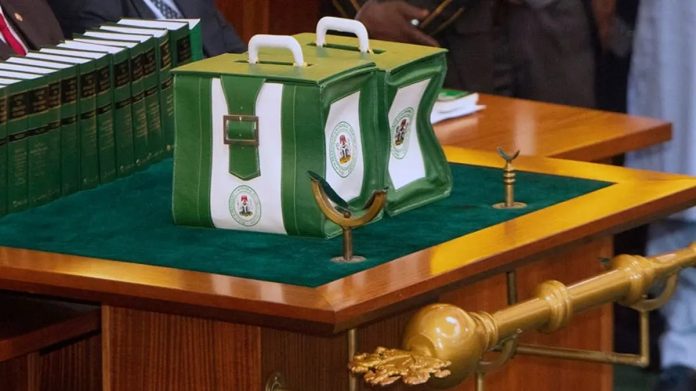
President Bola Ahmed Tinubu, during his presentation of a N49.7 trillion 2025 budget proposal to a joint session of the National Assembly, has emphasized bold economic targets that include a dramatic reduction in inflation and stabilization of the naira.

Speaking on Wednesday during the budget presentation, Tinubu said inflation, which currently stands at 34.6%, is projected to decline to 15% by next year. The president also forecasted an improvement in the exchange rate, with the naira expected to strengthen from approximately N1,700 per US dollar to N1,500.

“This is an ambitious but necessary budget to secure our future,” Tinubu said during his address. “The Budget projects inflation will decline from the current rate of 34.6 per cent to 15 per cent next year, while the exchange rate will improve from approximately 1,700 naira per US dollar to 1,500 naira, and a base crude oil production assumption of 2.06 million barrels per day.”

He explained that the budget’s projections are based on strategic observations, such as the reduction of petroleum product imports, increased export of refined petroleum products, improved agricultural yields due to enhanced security, and reduced reliance on food imports.

Tinubu highlighted key allocations in the budget, with defense and security receiving N4.91 trillion, infrastructure N4.06 trillion, health N2.4 trillion, and education N3.5 trillion.

The president noted that crude oil production is projected at 2.06 million barrels per day, forming a critical component of the budget’s revenue assumptions.

Tinubu’s optimism comes against the backdrop of severe economic challenges that have left Nigerians reeling from inflation and a volatile exchange rate. On Monday, the National Bureau of Statistics (NBS) announced that the headline inflation rate rose to 34.6% in November 2024, up from 33.88% in October. This marks an increase of 0.72 percentage points in a single month.

The year-on-year figures paint an even bleaker picture, with the inflation rate 6.4 percentage points higher than in November 2023, when it stood at 28.2%. Food inflation, which directly impacts the daily lives of Nigerians, surged to 39.93% in November 2024, up from 32.84% in the same month last year.

Meanwhile, the naira has continued its downward spiral in the foreign exchange market, trading as high as N1,700 per dollar in recent days.

How Realistic Are the Projections

Against this backdrop, the president’s projection that the naira will drop to N1500 per dollar has been critiqued. Analysts have noted that the naira’s poor performance in the FX market is largely tied to rising inflation.

“The Naira is currently bad, true. And that’s because the inflation rate in the domestic economy is in tatters.  For as long as inflation continues to rise, the FX rate will suffer,” Rufy, a financial analyst, said.

This means, going by the president’s projection that the inflation rate will decline to 15% next year, the exchange rate is expected to drop below N1,000 per dollar.

Budget Assumptions and Challenges

Tinubu’s budget assumes a reduction in petroleum imports as local refineries, including the much-anticipated Dangote Refinery, ramp up production. The government also expects a bumper agricultural harvest fueled by enhanced security measures, which should reduce food import dependency.

However, achieving these goals will not be without challenges, according to economists. Crude oil production has consistently fallen short of targets due to theft and pipeline vandalism, while insecurity in farming regions continues to disrupt agricultural activities.

Furthermore, the removal of fuel subsidies has worded inflation, pushing up transportation and food costs. This has left many Nigerians questioning how the government plans to bring inflation down to 15% without a comprehensive strategy to mitigate these pressures.

The widening gap between official projections and the harsh realities faced by the populace has bolstered these concerns. Critics point to previous budgets that failed to achieve their targets as bases for the lack of trust in government’s ability to implement the current projections.

SUI To Follow SOL Price Trajectory? Tron BullsEye $5 Level ?Is Lunex Network Set To Outpace Both?

0

The crypto market has gained traction again thanks to the leading cryptocurrency hitting a new all-time high. To clarify, Bitcoin (BTC) defied expectations, smashing through the $107K mark to set a new ATH. BTC’s rally dragged the rest of the broader market towards a recovery, with SUI and TRX recording significant price growth with bullish indicators.

However, analysts are in favor of this new DeFi project?Lunex Network, with the potential of a 1,800% return pre-launch. In just its presale run, Lunex has already experienced over 283% price increase. Meanwhile, it has raised over $5.2 million after selling 2.3 billion tokens, serving as a testament to its growing demand.

Lunex Network (LNEX) Soars Over 283%, Further Gains Ahead

Lunex Network (LNEX) is emerging as the go-to platform for anyone seeking high returns and reliability in the DeFi space. It introduces a DEX protocol, which aims to enhance trading experience like never before by solving some of the biggest DeFi challenges. Lunex’s standout aggregation protocol sources liquidity from multiple exchanges and can even split a single trade to ensure the best possible prices.

Moreover, its advanced smart contract will continuously verify transactions to ensure accuracy. This smart contract approach, backed by real-time information aggregation, has made Lunex a highly efficient and secure platform. Its trader-focus features, including no KYC verification requirements and third-party connectivity, could disrupt the DeFi market, which, per IBS Intelligence data, is expected to reach $48B by 2031.

Grabbing even the tiniest of this market share could heighten its valuation exponentially, securing long-term stability and growth potential. But that’s not all. Lunex holders will enjoy staking rewards and governance voting rights. So far, this DeFi coin is available at $0.0046. Given that its price rises on a three-day basis, further gains are expected.

Tron Bulls Target $5, Is This Level Attainable in This Cycle?

Amid market recovery, Tron (TRX) has experienced an impressive surge, pushing it into the spotlight. The project has demonstrated robust upward momentum after reversing its critical support level of $0.2400. The bulls have taken over the market and are striving to surpass its subsequent resistance level at the $0.3200 and $0.0035 levels, which previously impeded its value in early December.

Per Andrew Griffiths’ insights, the TRON coin could soon hit the $3 and $5 mark. He believes that the popularity of the TRX network as a stablecoin and payment tool would be one of the reasons that would fuel this growth. The rising demand for stablecoins could assist the TRON ecosystem in becoming a stronger contender in the crypto world. Tron’s price performance hasn’t gone unnoticed.

The token has become appealing to investors seeking consistent returns. However, its robust infrastructure has also become an avenue for developers who wish to build dApps. With widespread adoption, the TRX token is expected to sustain its upward trajectory amid the ever-evolving crypto world.

SUI Could Follow Solana’s Price Performance

Sui network has also recorded massive growth in the past few days. The SUI token has seen a 14% increase to hit a new ATH near the $5 mark. This remarkable price performance has propelled the coin among the top 15 cryptocurrencies by market cap after flipping Polkadot (DOT). Per Ali Martinez’s forecast, SUI price performance earlier this year replicated Solana’s initial climb last cycle.

The token jumped to a high of $2.3 before entering a consolidation phase for a few months. However, the altcoin has broken past its previous ATH and could move similarly to Solana, suggesting SUI is positioned for a massive rally. If the price of SUI sustains this pattern, it could hit the $5 mark in the coming days.

The token could be consolidated between the $4.5 and $4.8 price range. Another crypto expert, Crypto Rand, has indicated that SUI is in full bullish momentum, suggesting it would also hit $5 soon. Another expert suggested that the token could hit near the $8 barrier in early 2025 and hit the $16 mark in Q2, following SOL’s path.

What’s Next For Tron (TRX), Sui (SUI) & Lunex Network (LNEX)?

While Tron (TRX) and Sui (SUI) rage with bullish momentum, they could see significant price gains. However, analysts have shifted their focus to Lunex Network (LNEX). This rookie has a smaller market capitalization than its peers. This means that LNEX requires less money for its price to rise. As a result, experts forecast a potential 100x rally post-launch.

You can find more information about Lunex Network (LNEX) here:

Website: https://lunexnetwork.com

Socials: https://linktr.ee/lunexnetwork

Meta Description: As TRX and Sui rage in bullish indicators, the Lunex Network presale presents an intriguing opportunity to offer short-term gains.

Keywords: Sui price performance, Tron ecosystem, TRX price, Sui network, price of Sui, TRX token, TRX price performance. Tron network