DD
MM
YYYY

PAGES

DD
MM
YYYY

spot_img

PAGES

Home Blog Page 268

Tesla Board Warns Shareholders of Risk of Losing Musk if $1tn Pay Package Fails

0

Tesla’s board of directors has issued a stark warning to shareholders, cautioning that CEO Elon Musk could walk away from the company if they fail to approve his proposed $1 trillion compensation plan.

In a letter sent to shareholders on Monday, Tesla Chair Robyn Denholm said the electric carmaker was at a “critical inflection point” and that rejecting the package would jeopardize Tesla’s leadership in artificial intelligence and robotics.

“The fundamental question for shareholders at this year’s Annual Meeting is simple: Do you want to retain Elon as Tesla’s CEO and motivate him to drive Tesla to become the leading provider of autonomous solutions and the most valuable company in the world?” Denholm wrote.

The proposed compensation package, which will be voted on at Tesla’s annual meeting next week, was reintroduced last month after a Delaware judge struck down Musk’s previous record-setting pay deal earlier this year.

Under the new plan, Musk could earn up to $1 trillion over the next decade if he meets a series of steep performance targets. These include boosting Tesla’s market capitalization to $8.5 trillion by 2035 and shipping 1 million Optimus humanoid robots, part of the company’s ambitious push into AI-powered manufacturing and robotics.

If approved, the deal would nearly double Musk’s ownership stake in Tesla from about 13% to nearly 29%, solidifying his control over the company’s direction.

Pushback From Proxy Firms

The plan has drawn sharp criticism from two major proxy advisory firms, ISS and Glass Lewis, which urged shareholders to vote against it, arguing that the payout is excessive and poorly aligned with shareholder interests.

Musk, in response, blasted the firms during Tesla’s latest earnings call, calling them “corporate terrorists.” He warned that their influence could derail Tesla’s long-term vision.

“I just don’t feel comfortable building a robot army here and then being ousted because of some asinine recommendations from ISS and Glass Lewis,” Musk said.

Denholm defended the plan as necessary to retain Musk, who she described as the “driving force” behind Tesla’s innovation in electric vehicles, energy storage, and AI-driven automation.

“Musk may give up his executive position if Tesla fails to adequately compensate him,” Denholm wrote, warning that his departure could cause the company to “lose value as a transformative force.”

She added, “While there may be nothing wrong with being just another car company, our Board believes that Tesla can be more, that our shareholders deserve more, and that Elon is the right leader to help us achieve our full potential.”

In an interview with CNBC on Monday, Denholm clarified that Musk’s main concern is not personal wealth but ensuring he retains “enough influence over the vote at Tesla in the future so that bad things can’t happen with the AI.”

What’s at Stake?

The company’s stock has been volatile in recent months amid concerns over slowing demand for EVs and intensifying competition from Chinese automakers. At the same time, Musk has been shifting Tesla’s focus from cars to robotics and AI infrastructure — a transition that could redefine the company’s business model over the next decade.

Analysts say that if the pay package fails and Musk follows through on his threat to reduce his involvement, investor confidence could take a severe hit. The billionaire also runs SpaceX, X (formerly Twitter), Neuralink, and xAI — ventures that could easily absorb more of his attention if his commitment to Tesla wanes.

Tesla’s board is framing the upcoming shareholder vote as a referendum not just on Musk’s pay, but on the company’s entire strategic direction. Many believed that Tesla’s future — whether it remains a car company or becomes the world’s leading AI and robotics platform — depends on keeping Elon engaged.

The shareholder vote will take place next week, marking one of the most consequential moments for Tesla since its founding.

Goldman Sachs CEO Says AI Will Create Demand for ‘High-Value People,’ Not Job Cuts

0

Goldman Sachs CEO David Solomon says the rapid adoption of artificial intelligence (AI) across the firm will not reduce the need for employees but rather change the kind of talent the bank seeks.

Speaking to Axios ahead of the company’s 10,000 Small Businesses Summit in Washington, DC, Solomon said the technology would enhance productivity and create more opportunities for skilled professionals.

“We need more high-value people,” Solomon said. “We can afford more high-value people to expand our footprint and continue to grow and broaden our business.”

According to Solomon, AI will transform how analysts, associates, and investment bankers perform their duties, helping “productive people become even more productive.” He added that rather than shrinking its workforce, Goldman Sachs expects to grow its headcount over the next decade as the technology reshapes operations.

The bank is already implementing an AI-driven internal restructuring under its OneGS 3.0 initiative. In a memo to employees earlier this month, Goldman said it would introduce a “limited reduction in roles” as part of the transition, while also placing temporary limits on headcount growth through the end of the year.

A Goldman Sachs spokesperson told Business Insider that the firm still expects to end the year with a net increase in staff, noting that its global workforce expanded by 5% to around 48,000 employees in the third quarter.

Solomon explained that while AI will make some positions redundant, particularly in repetitive or back-office tasks, it will also allow the bank to expand into higher-value areas such as client engagement, strategic advisory, and software development.

“There are obviously things where we’re going to have a lot fewer people — but I’d love to have the capacity to go get more people to spend time with clients,” he said at a recent conference, emphasizing that automation will enable more human focus on relationship-building and innovation.

Investing in the AI Future

Goldman Sachs has spent $6 billion on technology this year, according to Solomon, who described the bank as evolving into “a much bigger enterprise.” The firm currently employs around 12,000 technologists, many of whom are working on integrating AI into functions such as risk management, compliance, trading, and software engineering.

Solomon said he expects AI to have the most immediate and visible impact in software development, where automation and large language models are already accelerating code writing and testing.

Speaking on CNBC’s Squawk Box last week, Solomon cautioned that the speed of AI adoption could introduce “volatility” across some job functions.

“The mix of engineers with this technology will again shift and change,” he said, adding that adaptability and technical fluency will become key traits for success in the firm’s next growth phase.

AI’s Expanding Role on Wall Street

Goldman Sachs is among several major Wall Street institutions aggressively deploying AI tools to streamline operations and enhance profitability. Banks, hedge funds, and asset managers are racing to incorporate machine learning into trading algorithms, market analytics, and customer relations, seeing the technology as central to future competitiveness.

Within the firm, executives view AI not as a cost-cutting measure but as a productivity multiplier that could help Goldman broaden its reach across global markets.

Solomon’s comments reinforce his broader message that AI will redefine, not replace, human capital at Goldman Sachs. He seems to believe that AI doesn’t mean fewer people, but rather means better people — people who can use these tools to drive growth.

As the bank heads into 2026, its challenge will be to balance short-term efficiency gains from automation with long-term investment in skilled personnel, a shift that could determine whether Goldman’s AI transformation strengthens its global dominance or simply reshuffles its workforce.

Apple to Introduce Passport-Linked Digital IDs in Wallet, Expanding Its Push Into Digital Identity

0

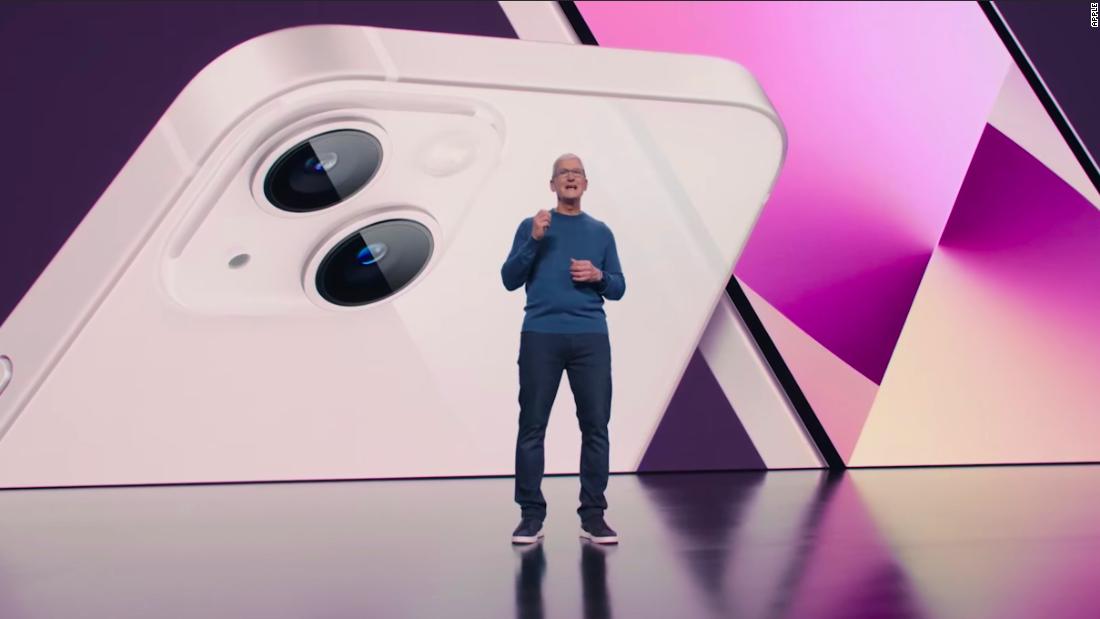
Apple announced that U.S. users will soon be able to create a digital ID using their passport in Apple Wallet, marking a significant step in the company’s expansion beyond payments into identity management.

The new feature, revealed by Jennifer Bailey, Vice President of Apple Pay and Apple Wallet, at the Money 20/20 USA conference, will allow travelers to use a verified passport-based digital ID at select TSA checkpoints for domestic air travel.

The functionality, first teased during the rollout of iOS 26, had not yet launched when the update debuted. Apple said the feature will arrive “in an upcoming software update,” positioning it as part of the company’s broader effort to make Wallet “a secure place for everything that represents you.”

Bailey said the feature “builds on the progress we’ve made with state-issued IDs,” referring to Apple’s ongoing partnerships with U.S. state governments. So far, 12 states and Puerto Rico have adopted support for digital driver’s licenses or state IDs in Apple Wallet—representing roughly a third of U.S. license holders.

A Timely Move Amid Real ID Enforcement

The timing of the announcement aligns with new Real ID enforcement rules that took effect in May, which require compliant identification for air travel within the United States. Many state-issued IDs that haven’t yet met Real ID standards can no longer be used at TSA checkpoints, making Apple’s digital passport ID an attractive alternative for frequent travelers.

Although the feature won’t replace a physical U.S. passport, Apple says it will streamline travel by allowing passengers to verify their identity through their iPhone or Apple Watch, alongside existing digital boarding passes in Wallet.

Bailey emphasized that the integration with TSA will enhance “speed, convenience, and security,” as travelers can move through checkpoints without needing to hand over physical documents.

Wallet’s Expanding Role Beyond Payments

At the conference, Bailey also detailed Apple Wallet’s growing ecosystem, describing it as a digital hub that now extends far beyond payments.

She noted that Apple Pay is now active in 89 markets worldwide, supported by more than 11,000 banks and networks, including 15 domestic payment networks in the U.S. In addition, 90% of U.S. retailers now accept Apple Pay, up from just 3% at its launch 11 years ago.

Wallet’s non-payment capabilities have also expanded rapidly. Users can already store car keys, transit passes, and hotel room keys in the app. Transit support now covers over 250 regions and 800 cities globally, while more than 2 million hotel room keys have been issued through the app, covering 65,000 hotel properties. Meanwhile, 29 car manufacturers and over 300 models support Apple’s Car Key feature, allowing drivers to unlock and start vehicles with their devices.

A Step Toward a Broader Identity Future

Apple’s forthcoming passport-linked Digital ID initiative underscores its ambition to make the iPhone central to personal identity in the digital era. Analysts say the move could position Apple as a key player in the identity verification space, an area increasingly important for travel, fintech, and government services.

The company has framed Wallet as part of a privacy-centric approach, with all identity data encrypted and stored securely on the user’s device rather than in Apple’s cloud systems.

The digital ID project could ultimately lay the groundwork for future integrations — such as access to government portals, health credentials, or global travel verification — placing Apple Wallet at the center of how users prove who they are, both online and in person.

JPMorgan Makes First National Security Investment in U.S. Antimony Miner Perpetua Resources

0
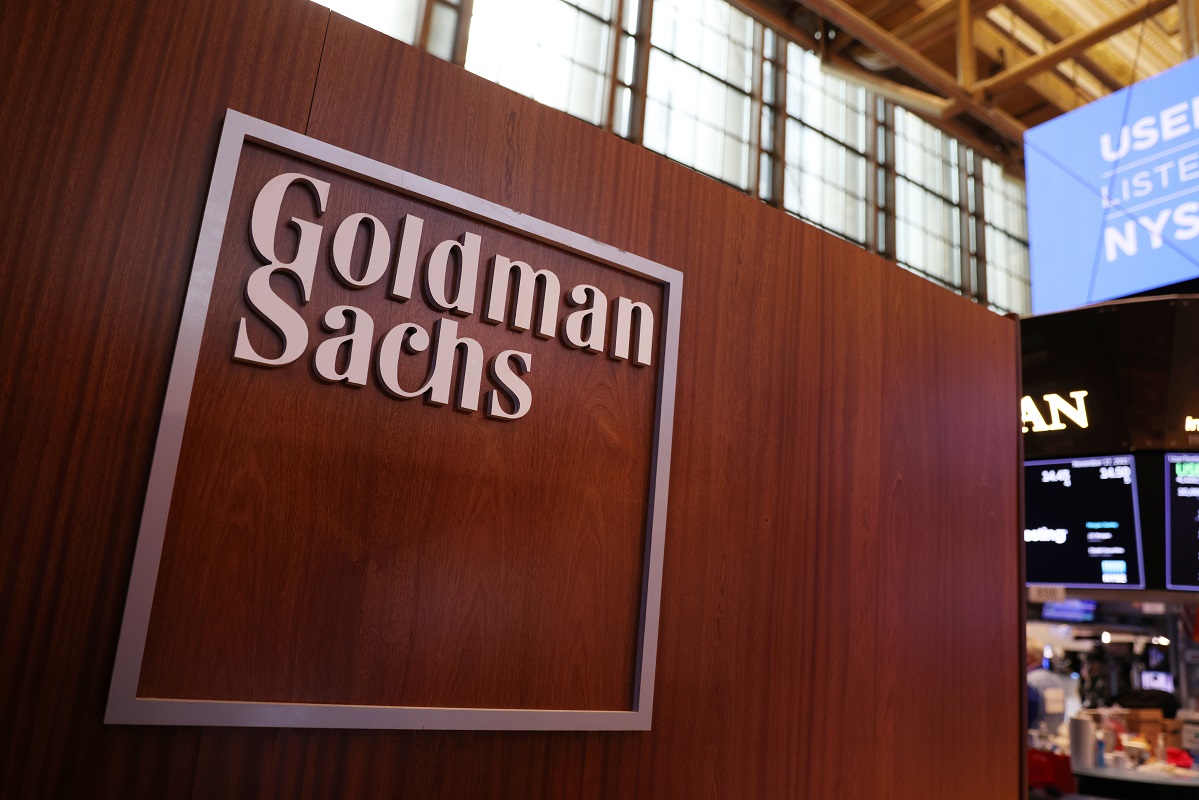
The logo for Goldman Sachs is seen on the trading floor at the New York Stock Exchange (NYSE) in New York City, New York, U.S., November 17, 2021. REUTERS/Andrew Kelly/Files

JPMorgan Chase has made its first investment under a new $1.5 trillion national security fund, backing Perpetua Resources — the Idaho-based company developing the largest antimony mine in the United States.

Under the agreement signed Sunday and released on Monday, JPMorgan will invest $75 million of its own funds for a nearly 3% stake in Perpetua, marking a rare direct investment by the Wall Street giant in a mining operation. The transaction is expected to close on Tuesday.

The bank will also have the option to exercise $42 million in warrants within three years. According to data from LSEG, JPMorgan currently holds about 20,000 shares of Perpetua.

Antimony is a metal essential for national defense — used in bullets, night vision gear, solar panels, flame retardants, and microelectronics — yet the United States currently has no domestic source of it.

China, which produces and processes the majority of the world’s supply, halted antimony exports in late 2024, disrupting global markets and prompting Western governments to scramble for new supply chains.

Perpetua’s Idaho project, located about 138 miles north of Boise, will produce more than 35% of the U.S. annual antimony needs once fully operational by 2028. It will also generate about 450,000 ounces of gold annually, providing a dual revenue stream that can help stabilize operations against commodity market swings or geopolitical disruptions.

“This is all about putting America first again relative to the supply chain, in this case for critical minerals,” said Jon Cherry, CEO of Perpetua Resources.

The project, which has estimated reserves of 148 million pounds of antimony and 6 million ounces of gold, is backed by billionaire investor John Paulson and has bipartisan support. Both President Donald Trump and former President Joe Biden approved the necessary permits, underlining the project’s national importance.

The Perpetua deal is the first investment from JPMorgan’s Security and Resiliency Initiative, a $1.5 trillion program unveiled earlier this month to support industries vital to U.S. defense and energy independence.

“With this investment, we are supporting a company in an industry critical to national security and American resiliency, precisely the focus of our new initiative,” said Doug Petno, co-CEO of JPMorgan’s commercial and investment banking division.

JPMorgan CEO Jamie Dimon previously said the initiative was born out of a “painfully clear” realization that “the United States has allowed itself to become too reliant on unreliable sources of critical minerals.”

Broader Industry Partnerships

In a parallel move, Agnico Eagle Mines Ltd., a Toronto-based gold producer, announced a $180 million investment in Perpetua for a 6.5% stake, as well as plans to assist in the mine’s development.

Both investments were priced at Perpetua’s closing stock price last Friday.

The U.S. Export-Import Bank is also considering a loan package to support the project, as part of a broader government effort to strengthen domestic production of critical minerals.

However, Perpetua still needs a refining partner for its antimony output. The company is in talks with Glencore, Trafigura, Clarios, and Sunshine Silver and expects to finalize a deal by the end of the year.

However, the project faces legal challenges from the Nez Perce Tribe in Idaho, which has raised environmental concerns, including the mine’s potential impact on salmon populations in nearby rivers.

Perpetua has said it will continue discussions with tribal representatives and environmental regulators to ensure the project meets all standards for water quality and habitat protection.

What It Means for U.S. Industry

The Perpetua investment underscores Washington’s growing focus on economic security through mineral independence, an area where China’s dominance has long been viewed as a strategic vulnerability.

JPMorgan’s entry into resource funding is believed to represent a turning point in how Wall Street views mining — traditionally seen as high-risk — as now essential to national resilience.

The Perpetua project is expected to serve as a blueprint for public-private cooperation in critical mineral development, marking a new era of U.S. industrial policy that blends corporate investment, federal support, and strategic resource planning.

Mobile Gaming Tech: How Chicken Road Drives Revenue

0

Chicken Road exemplifies mobile gaming revenue generation in 2025, leveraging innovative technology and strategic monetization to achieve sustainable profitability. The chickenroad.in platform demonstrates how smart design creates multiple income streams. This article explores revenue models, technological innovations, and business strategies driving Chicken Road’s success, offering insights for gaming entrepreneurs.

Core Revenue Streams

In-app purchases dominate earnings. Power-ups and skins generate 65% of income. This microtransaction model scales efficiently.

Advertisement integration provides steady cash flow. Rewarded videos boost session length by 40%. This non-intrusive approach maintains user satisfaction.

Subscription tiers offer premium benefits. Ad-free play and exclusive content retain 15% of users. This recurring revenue ensures stability.

Affiliate partnerships expand reach. Casino integrations drive referral commissions. This ecosystem approach multiplies earnings.

Merchandise sales capitalize on brand loyalty. Character-themed products convert 5% of players. This diversification strengthens income.

Technology Driving Monetization

AI personalization increases purchase likelihood. Targeted offers based on play patterns boost conversion 30%. This precision maximizes revenue per user.

Real-time analytics optimize pricing. Dynamic adjustments respond to demand fluctuations. This flexibility captures maximum value.

Cloud infrastructure scales cost-effectively. Pay-as-you-go model reduces overhead. This efficiency supports profit margins.

Blockchain enables secure microtransactions. Instant settlements reduce fees. This technology streamlines revenue flow.

5G connectivity enhances premium features. Lag-free multiplayer justifies subscriptions. This performance drives upgrade rates.

Business Strategies for Revenue Growth

User acquisition focuses on viral sharing. Referral bonuses encourage organic growth. This cost-effective method scales efficiently.

Retention programs reduce churn significantly. Daily login rewards maintain 70% monthly active users. This consistency builds predictable income.

Seasonal events spike revenue temporarily. Limited-time challenges increase spending 200%. This timing capitalizes on engagement peaks.

Cross-promotion partnerships expand audience. Bundle deals with complementary apps. This collaboration accesses new markets.

Data licensing creates additional streams. Anonymized analytics sold to researchers. This B2B approach diversifies earnings.

Advanced Monetization Tactics

Dynamic difficulty adjustment encourages purchases. Increasing challenges prompt power-up buys. This psychological nudge boosts sales.

Limited-time offers create urgency. Flash sales convert 45% of viewers. This scarcity principle drives immediate revenue.

Tiered reward systems ladder player investment. Progressive benefits unlock with spending. This structure encourages escalation.

Personalized bundles match player preferences. AI-curated packages increase acceptance 60%. This customization maximizes value.

Exit-intent offers retain departing users. Discounted bundles prevent churn. This recovery tactic salvages potential losses.

The Future of Mobile Gaming Revenue

AI revenue managers will optimize pricing. Real-time adjustments based on user behavior. This automation maximizes profits continuously.

Global payment integration will expand markets. Local currencies and methods reduce barriers. This accessibility drives international growth.

Sustainable monetization will attract conscious consumers. Green servers and ethical practices. This positioning appeals to modern values.

Metaverse gaming will create new economies. Virtual real estate and assets. This innovation opens unprecedented revenue streams.

Community-funded development will emerge. Player investments shape features. This crowdfunding model ensures aligned incentives.

Revenue Sector Market Share (%) Examples of Strategy
In-App Purchases 40% Power-ups, premium skins
Advertising Models 25% Rewarded videos, banner ads
Subscription Tiers 20% Ad-free, exclusive content
Future Innovations 15% AI pricing, metaverse assets

Frequently Asked Questions (FAQ)

How does Chicken Road generate revenue?
In-app purchases and rewarded ads lead earnings.

What technology drives monetization?
AI personalization and cloud scaling optimize income.

Which strategies boost profits?
Dynamic pricing and limited-time offers excel.

What’s the future of gaming revenue?
AI managers and metaverse economies will transform models.