DD
MM
YYYY

PAGES

DD
MM
YYYY

spot_img

PAGES

Home Blog Page 2682

Nigeria Approves 50% Tariff Adjustment for Telecom Operators: Consumers Brace for Additional Costs

0

The Nigerian Communications Commission (NCC) has approved a 50% tariff adjustment for telecommunications operators, citing mounting operational costs and the urgent need to sustain the sector.

The decision, announced in a press statement signed by Reuben Muoka, Director of Public Affairs, underscores the Commission’s mandate under Section 108 of the Nigerian Communications Act, 2003, to regulate and approve tariffs for the telecommunications industry.

The approved hike, while significantly lower than the over 100% increase sought by some operators, comes as Nigerians grapple with worsening economic conditions, raising concerns about the added burden on consumers already facing declining purchasing power and high inflation.

Why the Tariff Adjustment Was Necessary

Telecom tariffs in Nigeria have remained largely static for over a decade, despite soaring costs in key operational areas such as diesel for powering network towers, foreign exchange for equipment purchases, and inflation-driven increases in labor and logistics expenses. The NCC explained that the adjustment was inevitable to address the financial strain on operators, ensure the sector’s sustainability, and foster much-needed investment in infrastructure.

In its statement, the Commission emphasized: “The adjustment, capped at a maximum of 50% of current tariffs, though lower than the over 100% requested by some network operators, was arrived at taking into account ongoing industry reforms that will positively influence sustainability.”

The move is expected to enable telecom operators to invest in upgrading their services, expanding network coverage, and addressing recurring service quality issues that have plagued the industry in recent years.

Impact on Consumers

While the NCC acknowledges the financial pressures faced by consumers, the decision has sparked widespread concerns about its potential impact on households and businesses. Many Nigerians are already struggling with squeezed disposable incomes, high fuel costs, and skyrocketing food prices, leaving little room for additional expenses.

Telecom services, once considered a luxury, have become essential for everyday communication, education, and business. The tariff hike means consumers will have to pay more for voice calls, data, and SMS services, further straining their already limited budgets.

The Commission attempted to reassure the public, stating: “The NCC recognizes the financial pressures faced by Nigerian households and businesses and remains deeply empathetic to the impact of tariff adjustments. To this end, the Commission has mandated that operators implement these adjustments transparently and in a manner that is fair to consumers.”

To mitigate the impact of the adjustment, the NCC has mandated telecom operators to adopt transparent practices implementing the new tariffs. Operators are required to educate consumers about the changes and provide measurable improvements in service delivery as a condition for the tariff increase.

The Commission also pledged to monitor the implementation closely to ensure compliance and fairness. This includes requiring operators to demonstrate how the additional revenue generated from the tariff adjustment will be used to enhance network quality and expand coverage to underserved areas.

The decision follows years of advocacy by industry stakeholders for a tariff review. The National Association of Telecommunications Subscribers (NATCOMS) had previously called for a marginal 10% increase to address rising operational costs, while some operators lobbied for a hike exceeding 100%.

Last year, the Federal Government intervened, capping the allowable increase at 60%. The Association of Telecommunication Companies of Nigeria (ATCON) welcomed the NCC’s decision, arguing that a tariff adjustment was long overdue to support the industry’s growth and maintain its critical role in Nigeria’s digital economy.

However, consumer advocacy groups have expressed reservations, warning that the increase could exacerbate economic hardship for millions of Nigerians.

The State of the Telecom Sector

Nigeria’s telecommunications sector is a key driver of economic growth and innovation, contributing significantly to the country’s GDP. However, the sector has faced persistent challenges, including high operational costs, power supply shortages, and foreign exchange constraints.

The NCC’s approval of a 50% tariff adjustment is part of broader reforms aimed at addressing these issues and ensuring the sector’s long-term viability. The move is also seen as an effort to align the sector’s pricing structure with current economic realities.

“Beyond protecting consumers, the Commission’s actions are designed to ensure the long-term sustainability of the industry, support indigenous vendors and suppliers, and promote the overall growth of Nigeria’s digital economy,” The NCC stated.

World Bank Debars Nigerian Firms and CEO Over Corruption in Social Safety Project

0

The World Bank Group has imposed a 30-month debarment on two Nigerian companies, Viva Atlantic Limited and Technology House Limited, along with their Managing Director and Chief Executive Officer, Norman Bwuruk Didam, for engaging in fraudulent, collusive, and corrupt practices related to the National Social Safety Nets Project (NSSNP).

The decision follows a detailed investigation by the Washington-based institution, which uncovered serious violations of its Anticorruption Framework. The findings revealed that during the 2018 procurement and contracting phases, the companies and their CEO were involved in actions that included misrepresentation, document falsification, and bribery.

According to the World Bank, Viva Atlantic Limited and Technology House Limited misrepresented their experience, falsified manufacturer authorization letters, and concealed conflicts of interest in their bids. These actions enabled them to gain access to confidential tender information through collusion with public officials, undermining the transparency and integrity of the procurement process. The firms also offered inducements to officials to secure contracts, violating core principles of accountability and fairness.

In its official statement, the World Bank condemned the actions as fraudulent, collusive, and corrupt, emphasizing that they directly contravened the institution’s strict anticorruption policies.

“According to the facts of the case and the general principles of the World Bank’s Anticorruption Framework, in connection with a 2018 procurement and subsequent contract, Viva Atlantic Limited, Technology House Limited, and Mr. Didam misrepresented a conflict of interest in the companies’ Letter of Bids and received confidential tender information from public officials, which constituted fraudulent and collusive practices, respectively.

“Further, Viva Atlantic Limited and Mr. Didam misrepresented Viva Atlantic Limited’s experience and submitted falsified manufacturer’s authorization letters, as well as offered and provided things of value to project public officials. These actions were fraudulent and corrupt practices, respectively,” the statement noted.

Consequences of the Debarment

The World Bank’s sanctions mean that Viva Atlantic Limited, Technology House Limited, and Norman Bwuruk Didam are barred from participating in any projects financed by the World Bank Group for the next 30 months. As part of a negotiated settlement, the sanctioned parties admitted to their misconduct and agreed to meet strict integrity compliance conditions to be considered for reinstatement after the debarment period.

The bank’s decision highlights its zero-tolerance approach to corruption and sends a strong signal to other contractors and stakeholders about the consequences of engaging in unethical practices. However, the case also highlights significant vulnerabilities in Nigeria’s governance frameworks, which must be addressed to prevent future infractions of this nature.

A Shadow Over Nigeria’s Financial Industry

The scandal has reignited concerns about systemic corruption within Nigeria’s financial and public procurement sectors. For years, the country’s financial industry has struggled with a reputation for fraud and lack of accountability, often casting a shadow over its ability to effectively manage development funds.

This development underscores the persistence of these challenges, despite efforts by international organizations and local authorities to improve governance standards. The NSSNP, designed to provide financial aid to vulnerable populations across Nigeria, now faces credibility issues, raising questions about the effectiveness of oversight mechanisms and the broader impact on intended beneficiaries.

The integrity of the entire procurement process was compromised by allowing the misrepresentation of qualifications and the falsification of critical documents. This casts doubt on how widespread such practices might be in other donor-funded initiatives.

Implications for Development Projects in Nigeria

The NSSNP, a critical initiative aimed at alleviating poverty and supporting Nigeria’s most vulnerable populations, has now been tainted by this corruption scandal. The revelations threaten to erode public and international confidence in Nigeria’s ability to manage large-scale development projects effectively.

Financial analysts note that the case highlights the urgent need for stricter oversight of public procurement processes in Nigeria, especially for donor-funded projects. They further note that enhanced governance frameworks, better monitoring mechanisms, and stricter penalties for violations are critical to restoring trust and ensuring that funds reach their intended beneficiaries.

It has been noted that for Nigeria to continue attracting international support for its development agenda, it must demonstrate a commitment to eradicating corruption. Anti-graft advocates are now calling for the World Bank’s intervention to serve as a catalyst for reforms within the country’s public and private sectors, particularly in the management of social programs and other critical initiatives.

SeamlessHR Secures $9 Million Series-A Extension to Drive Pan-African Expansion

0
Fund, money cash dollar

SeamlessHR, a world-class HR technology that simplifies processes and streamlines tasks for African businesses, has secured an additional $9 million in funding.

The funding round saw participation from the Gates Foundation and Helios Digital Ventures, bringing the company’s total capital raised to approximately $25 million since its inception in 2018.

Announcing the funding round via a blogpost, the founders noted that the company is poised to play a bigger role in directly tackling productivity amongst Africa’s workforce and improve the quality of life of Africa’s hardworking people. Hence, it further noted that the funding will enable the expansion to all English-speaking countries in Africa.

Part of the post reads,

“As we continue to enter new markets, strengthening our infrastructure is critical. SeamlessHR has always been about providing scalable, adaptable HR solutions that meet diverse industries’ needs across many regions. This investment will fuel the necessary infrastructure developments that will allow us to maintain our high standards of service while expanding our footprint. We are investing in the technology and human capital required to ensure that institutions experience seamless operations driven by our solutions.

“This series A extension gives us the resources to push the boundaries of what is possible. One key area of focus is leveraging Generative Al into our products to allow users to take a seat at the Al table. We will also scale our Design Partnership Program, which enables us to Collaborate and Co-create with our customers, allowing us to build customisable and tailored solutions for their needs.”

Over the last 5 years, SeamlessHR has expanded across the continent to become the dominant HR and Payroll Software for medium to large enterprises in Africa. The company’s software is currently being used by nearly 2000 businesses to manage HR and Payroll processes for about 300,000 employees across 20 African countries. With its innovative suit of products, the company was recognized by the Financial Times as one of Africa’s Fastest growing companies.

As global disruptions and conflicts impact African economies, Rising inflation, fluctuating exchange rates, and food shortages have disproportionately affected vulnerable working populations, exacerbating poverty. Seamless HR believes that its suite of embedded finance products can play a crucial role in alleviating these challenges.

By leveraging employment as collateral, the company aims to provide accessible and responsible credit to African workers. This will enable them to gain better access to essential needs such as housing, transportation, education, and food security.

In 2024, the payroll technology company, SeamlessHR announced the launch of its latest suite of business and employee enablement solutions- Payroll Financing & Employee Benefits in conjunction with partners. The newly introduced offerings aim to provide both employers and employees with critical financial tools to fuel their growth.

With SeamlessHR Payroll Financing, businesses have the necessary liquidity to meet payroll obligations without disrupting day-to-day operations. Flexible loan terms, quick and simple application processes, and seamless integration with existing payroll systems to ensure employees are always paid on time, maintaining the momentum for business operations.

Seamless HR’s innovative approach to embedded finance has garnered significant attention within the African tech ecosystem. This latest funding round underscores the company’s strong growth trajectory and its potential to revolutionize access to credit for millions of African workers.

The United States Has Basically Won The AI Race In All Forms!

0

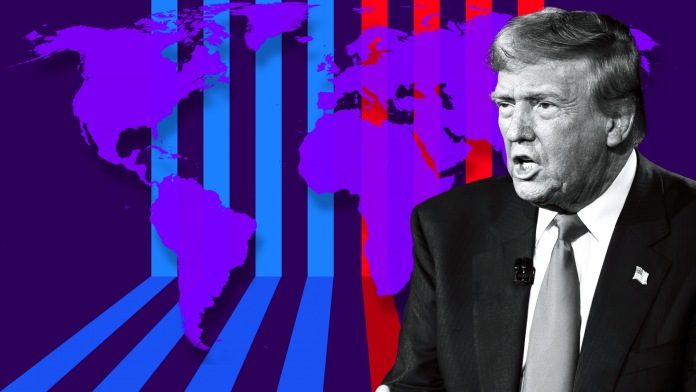
Trump takes off the gloves on the AI race and goes ballistic with an asymmetric strategy, dropping $500 BILLION to create a new basis of competition on AI: “In a landmark announcement, U.S. President Donald Trump on Tuesday revealed a massive $500 billion investment in artificial intelligence (AI) infrastructure.

“The initiative, spearheaded by a newly formed partnership called Stargate—comprising OpenAI, Oracle, and SoftBank—aims to accelerate the development of advanced AI technologies and related infrastructure. Texas will serve as the central hub for this ambitious project, which is expected to bolster the U.S.’s position in the global AI race.”

Trump’s dual actions, a sweeping investment in AI and the rollback of federal oversight, underline his administration’s belief that deregulation is essential for fostering innovation. During the announcement, Trump framed Biden’s AI executive order as a barrier to progress, echoing the sentiments of tech industry leaders who argue that overregulation stifles growth and competitiveness.

One of Trump’s most prominent supporters, Elon Musk, has been vocal about the need for deregulation in the tech industry, describing the current regulatory process as “slow strangulation by overregulation.” Musk, a co-founder of OpenAI who later distanced himself from the organization, has repeatedly criticized what he perceives as excessive government interference. He argues that overregulation hampers innovation and undermines the U.S.’s competitive edge in key technological domains.

Biden had already dropped $billions for companies like Intel and TSMC which will fabricate microprocessors even as OpenAI and others pioneer new algorithms and models. Simply, America wants to extend the frontiers and WIN in all ways.

I will be waiting to see how China will react since this race is between the US and China, with other countries voting “present”. Of course, Europe will impose fines via regulations and my lovely Africa will wait to buy.

Good People, this move has HUGE implications: America will suck the juice out of global capital as it becomes the absolute dominant home and destination of capital, and in the process reorder global economic architectures. Africa needs visionary political leaders, not tribal and religious representatives, as the economic distortion accelerates. Yes, if we do not, the Malthusian catastrophe comes, and we will see pockets of crisis hubs across African cities, as the new normal, over the next 50 years!

Trump Announces $500bn AI Investment, Rolls Back Key Safety Regulations Introduced By Biden

Trump Announces $500bn AI Investment, Rolls Back Key Safety Regulations Introduced By Biden

0

In a landmark announcement, U.S. President Donald Trump on Tuesday revealed a massive $500 billion investment in artificial intelligence (AI) infrastructure.

The initiative, spearheaded by a newly formed partnership called Stargate—comprising OpenAI, Oracle, and SoftBank—aims to accelerate the development of advanced AI technologies and related infrastructure. Texas will serve as the central hub for this ambitious project, which is expected to bolster the U.S.’s position in the global AI race.

This move follows Trump’s Monday decision to revoke a pivotal 2023 executive order issued by former President Joe Biden. The rescinded order had established stringent safety measures for AI development, requiring developers to share safety test results with the federal government before releasing potentially high-risk AI systems. It also directed federal agencies to set standards to address cybersecurity and national security risks, alongside other hazards posed by rapidly evolving AI technologies.

Trump’s dual actions, a sweeping investment in AI and the rollback of federal oversight, underline his administration’s belief that deregulation is essential for fostering innovation. During the announcement, Trump framed Biden’s AI executive order as a barrier to progress, echoing the sentiments of tech industry leaders who argue that overregulation stifles growth and competitiveness.

One of Trump’s most prominent supporters, Elon Musk, has been vocal about the need for deregulation in the tech industry, describing the current regulatory process as “slow strangulation by overregulation.” Musk, a co-founder of OpenAI who later distanced himself from the organization, has repeatedly criticized what he perceives as excessive government interference. He argues that overregulation hampers innovation and undermines the U.S.’s competitive edge in key technological domains.

To address these concerns, Trump on Monday, formally established the Department of Government Efficiency (DOGE), appointing Musk to lead the newly created agency. DOGE’s mandate includes reducing government waste, streamlining bureaucracy, and curtailing what Musk has called “government overreach.”

“Just wanted to express appreciation for President @realDonaldTrump and so many people, both inside & outside of government, supporting @DOGE I am confident that the American people will be happy with the outcome,” Musk said.

The world’s richest man said earlier that “DOGE will greatly improve government efficiency, saving your tax dollars and ending rampant inflation.”

The Stargate Partnership

The $500 billion investment through Stargate marks a significant step in scaling AI infrastructure. OpenAI CEO Sam Altman, Oracle founder Larry Ellison, and SoftBank CEO Masayoshi Son joined Trump for the announcement, emphasizing the project’s potential to revolutionize industries.

SoftBank’s Masayoshi Son, a long-time advocate for AI, has already committed $100 billion to U.S.-based AI projects over the next four years. This builds on his prior investments, including a $50 billion pledge during Trump’s first term. The partnership aims to position the U.S. as a leader in AI development, particularly in the face of stiff competition from China.

Trump’s emphasis on deregulation and investment aligns with broader market trends. Financial firm Blackstone recently estimated that the U.S. would see $1 trillion invested in data centers over five years, with an additional $1 trillion globally. Stargate is expected to capture a significant share of these investments, leveraging OpenAI’s leadership in the sector.

The Risks of Deregulation

While Trump’s moves have been lauded by industry leaders, analysts warn of the potential dangers of an unregulated AI industry. Biden’s 2023 executive order, which Trump repealed, sought to implement safeguards against AI misuse, including standards for safety testing and watermarking of AI-generated content to prevent disinformation.

Environmental and security advocates argue that these measures are critical for mitigating the risks associated with AI, such as job displacement, cybersecurity threats, and the potential misuse of generative AI for malicious purposes.

Trump aims to position the U.S. as a leader in AI development by prioritizing investment and deregulation. However, experts warn that the absence of federal oversight could leave the nation vulnerable to the unintended consequences of rapid technological advancement.